@davidclowery: Written Testimony to Georgia Legislature Against StubHub’s Bill

GEORGIA HOUSE OF REPRESENTATIVES

COMMITTEE ON REGULATED INDUSTRIES

ADAM POWELL, CHAIRMAN

WRITTEN TESTIMONY OF DR. DAVID C. LOWERY ON HB 398

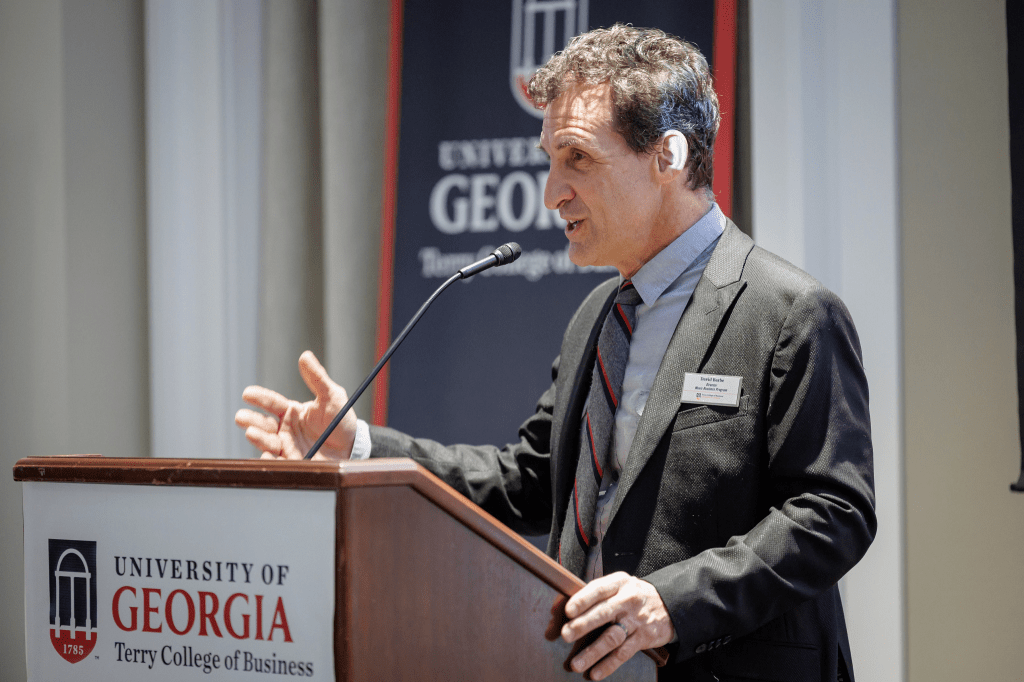
My name is David Lowery and I thank the Committee for allowing me to testify today on the StubHub legislation. By way of introduction, I am the founder of the musical groups Cracker and Camper Van Beethoven and a lecturer at the University of Georgia at Athens Terry College of Business.  I have filed amicus briefs in the U.S. Supreme Court in the cases of Google v. Oracle and Frank v. Gaos, testified before Congress on the topic of fair use policy[1] and I am a frequent commentator on copyright policy at the U.S. Copyright Office.  I advocate on artist rights in a variety of outlets, including founding and hosting the Artist Rights Symposium at the Terry College of Business (in its fourth year), my blog at TheTrichordist.com as well as Politico, the New York Times, Hypebot and other publications. Most notably I led the successful songwriter class action lawsuit against Spotify for failing to properly license and compensate self-published writers. Finally, I am a recipient of the National Music Council’s prestigious American Eagle Award “in recognition of his longstanding dedication to protecting the rights of music creators.” With this award I am in the company of such American music luminaries as Quincy Jones, Dizzy Gillespie and Stephen Sondheim.

In the interests of full disclosure, my wife has been a talent buyer at the iconic 40 Watt Club in Athens for many years and now works for LiveNation in a senior capacity.  My testimony today is my own based on my own experiences over many decades in the music business with my bands and my own research into ticketing.  My testimony today will focus on the effects of automated ticket scalping on Georgia’s many artists and resilient music ecosystem, but much of my concerns apply to all ticketed events from sporting events at taxpayer funded venues, to nonprofit fundraisers or even pledge drives for public broadcasting stations.

The Artist-Fan Social Contract Suffers When Bots Attack:  Artists and their fans enjoy a kind of social contract.  The vast majority of fans are small-dollar contributors that sustain their favorite artists.  Artist do not price their tickets at a face value that captures the present value of all revenue the artist will make on a single show.  Tickets are priced with the idea that the costs of sustaining the artist, paying the road crew, gasoline, sound, lights and vehicle equipment rental, housing, and promotion and marketing for an entire tour is amortized over an entire tour or leg of a tour. 

Pricing tickets must be decided so as to allow current and potentially new fans to see the band live which is the railhead of the artist-fan relationship and is one of the most delicate touch points of that relationship.  We do not want to price out loyal fans or new fans.

Ticket scalping has long been a problem that interfered with that social contract.  Like many other areas of our lives, when bots attack, humans suffer.  Companies like StubHub appear to allow or even welcome bot swarms as part of their business model and for all their Silicon Valley know-how, this Big Tech company seems to be unable to control their platform to avoid inflicting this suffering on fans and artists. 

Unlike the careful decision-making that goes into setting ticket prices for a tour in the pre-StubHub era, ticket prices set by these online market makers seem to play an arbitrage game that attempts to extract the maximum price that ticket traders are willing to pay for that one essential artist with the best seating and a well-heeled clientele, rather than the small dollar donor to the artist’s sustenance.  This arbitrage (some would say illegal market cornering) allows StubHub to free-ride on the artists reputation, marketing and other investments in their brand as well as the particular concert.

Ticket scalping has largely become another Silicon Valley racket in my view.  It is virtually impossible for artists to compete and it is impossible for all but the richest fans to get the tickets they want to see the artists they love at a price they can afford. I have come to the realization that it is impossible for artists and fans to fix the problem because it has become a free-rider problem. StubHub isn’t operating because of “fan freedom” or other feel-good bromides. They are drawn to the business for one reason.

StubHub wants to take a skim off the artist’s value and the fan’s love and enthusiasm by commoditizing this exchange at scale. StubHub’s platform is not that different than a commodities exchange; the good could be a Cracker show, a Bulldog’s football game, or a pork belly.  StubHub doesn’t seem to care; they do it for the money and just for the money.

Is StubHub Selling Securities as an Unlicensed Broker Dealer in Violation of the General Solicitation Rule?  I call the Committee’s attention to a phenomenon I discovered in my research for today’s hearing: StubHub appears to be making a market in selling opportunities to buy tickets, i.e., a commodity, that have yet to go on sale. In other words, StubHub appears to be selling an option to buy a ticket in the future that does not yet exist and that the seller doesn’t own. The careful wording of their boilerplate disclaimers is a little too clever, and suggests they are aware of this practice. (Please see Exhibit A that details the author’s purchase of what appears to be the promised delivery of a ticket in the future, rather than the purchase of an already existing ticket).

This practice appears to be selling an option to buy a commodity in the future by an unlicensed broker dealer in a general solicitation to the public without complying with applicable federal or state securities laws.

Paying it Forward: Resale Royalties for Scalpers:  StubHub may refuse to police itself but the State of Georgia can recover some of the value of StubHub’s free riding by establishing a resale royalty to be distributed to artists and venues for transactions occurring in Georgia. California already has a similar law on the resale of fine art. This is a very intriguing idea that would essentially force scalpers to return some of the value they have extracted from the artist’s brand to the state in which the transaction took place. I speak of the resale royalty as returned to artists and venues, but I am program-agnostic. The payment should also be returned to the performers, universities, or taxpayer funded venues around the state.

The resale royalty could be a way to continue to support communities that were hard hit by COVID and venues that survived based on the Save Our Stages funding.  It would be better to fund this support from parasitic free riders than from hard working Georgia taxpayers.

Anticorruption Protections:  When observing the amount of money and the number of high value transactions fixed by StubHub and other online marketplaces—effectively in cash—I am struck by the potential for bad actors to use the platform to hide cash transfers.  I see no reason why StubHub should be treated differently than a bank in reporting these transactions to authorities such as the Georgia Bureau of Investigation or the Department of Revenue.

I would encourage the Committee to work with these agencies to determine the need for more detailed reporting of the origin and destination of higher dollar transactions, such as $10,000 in a single deal or series of deals closed by StubHub and its progeny. It is also apparent that the Georgia Department of Revenue is not likely receiving proper short term capital gains reporting from StubHub.

Conclusion:  If this seems that these recommendations seem to advance the heavy hand of government, I will dispute that—these recommendations allow StubHub an opportunity to fix its own wagon.  As Judge Patel told Napster in 2001, you created this monster, now you fix it. Further as StubHub has come before this august body to urge legislation that would regulate the practices of its market competitors, artists and venues it’s only fair that StubHub receive the same treatment.


[1] See The Scope of Fair Use: Hearing before the Subcomm. on the Courts, Intellectual Property and the Internet of the H. Comm. on the Judiciary, 113th Cong. (Jan. 28, 2014) (statement of David Lowery) [hereinafter Scope of Fair Use].

National Association of Voice Actors: AI/Synthetic Voice Rider–Don’t lose your voice forever

[Chris Castle says: It’s like the antichrist without the morals. Voice over actors are being attacked by purveyors of artificial intelligence so that the actor’s voices can be re-used without consent or compensation even if they didn’t consent or at least didn’t object. Not only that, but voices can be used to train AI to speak in a completely different context. This is way worse that Netflix composer buyouts.

Check your name/image/likeness clauses folks–voice actors will not be the only ones caught up in the AI hellscape.]

AN OPEN LETTER FROM NAVA AND THE VOCAL VARIANTS TO THE VOICE OVER COMMUNITY

AI or Synthetic Voices are on the rise. We’re a group of concerned voiceactors working with union and non-union performers alike to make sure we don’t lose our voices forever by signing away our rights to various companies. Long story short, any contract that allows a producer to use your voice forever in all known media (and any new media developed in the future) across the universe is one we want to avoid. 

So we have put together some things we can all do to avoid the decimation of our industry.

Read the post on NAVA Voices site and stay in touch with your unions.

Press Release: Texas Governor Abbott Announces Statewide Plan Banning Use Of TikTok — Artist Rights Watch

“Owned by a Chinese company that employs Chinese Communist Party members, TikTok harvests significant amounts of data from a user’s device, including details about a user’s internet activity.”

Governor Greg Abbott today announced a statewide model security plan for Texas state agencies to address vulnerabilities presented by the use of TikTok and other software on personal and state-issued devices. Following the Governor’s directive, the Texas Department of Public Safety and the Texas Department of Information Resources developed this model plan to guide state agencies on managing personal and state-issued devices used to conduct state business. Each state agency will have until February 15, 2023 to implement its own policy to enforce this statewide plan.

“The security risks associated with the use of TikTok on devices used to conduct the important business of our state must not be underestimated or ignored,” said Governor Abbott. “Owned by a Chinese company that employs Chinese Communist Party members, TikTok harvests significant amounts of data from a user’s device, including details about a user’s internet activity. Other prohibited technologies listed in the statewide model plan also produce a similar threat to the security of Texans. It is critical that state agencies and employees are protected from the vulnerabilities presented by the use of this app and other prohibited technologies as they work on behalf of their fellow Texans. I thank the Texas Department of Public Safety and Texas Department of Information Resources for their hard work helping safeguard the state’s sensitive information and critical infrastructure from potential threats posed by hostile foreign actors.”

To protect Texas’ sensitive information and critical infrastructure from potential threats, the model plan outlines the following objectives for each agency:

  • Ban and prevent the download or use of TikTok and prohibited technologies on any state-issued device identified in the statewide plan. This includes all state-issued cell phones, laptops, tablets, desktop computers, and other devices of capable of internet connectivity. Each agency’s IT department must strictly enforce this ban.
  • Prohibit employees or contractors from conducting state business on prohibited technology-enabled personal devices.
  • Identify sensitive locations, meetings, or personnel within an agency that could be exposed to prohibited technology-enabled personal devices. Prohibited technology-enabled personal devices will be denied entry or use in these sensitive areas.
  • Implement network-based restrictions to prevent the use of prohibited technologies on agency networks by any device.
  • Work with information security professionals to continuously update the list of prohibited technologies.

In December 2022, Governor Abbott directed state agency leaders to immediately ban employees from downloading or using TikTok on any government-issued devices. The Governor also informed Lieutenant Governor Dan Patrick and Speaker Dade Phelan that the Executive Branch is ready to assist in codifying and implementing any necessary cybersecurity reforms passed during the current legislative session, including passing legislation to make permanent the Governor’s directive to state agencies.

Governor Abbott has taken significant action to combat threats to Texas’ cybersecurity, including signing the Lone Star Infrastructure Protection Act in 2021 to fortify certain physical infrastructure against threats that include hostile foreign actors.

View the statewide model security plan here.

Press Release: Texas Governor Abbott Announces Statewide Plan Banning Use Of TikTok — Artist Rights Watch–News for the Artist Rights Advocacy Community

@alliecanal8193: Spotify CEO admits he got ‘carried away’ investing, will rein in spending this year

[From ArtistRightsWatch: Editor Charlie sez: There are no words for the arrogance.]

Speaking on the company’s fourth quarter earnings call, Ek said certain mistakes were made after the company heavily invested in high-growth areas like podcasts, telling investors: “I probably got a little carried away and over-invested.”

Ek, who called out a shaky macroeconomic environment, emphasized the company will be tightening investments in 2023 across the board as the music streaming giant doubles down on streamlining efficiencies “with greater intensity.”

Read the post on Yahoo! Finance

Press Release: @UMG and @TIDAL Partner to Work on Artist-Centric Royalties — Artist Rights Watch

New York, January 31, 2023 – TIDAL, the global music and entertainment platform, and Universal Music Group (UMG), the world leader in music-based entertainment, today announced that the two companies will work together to explore an innovative new economic model for music streaming that might better reward the value provided by artists and more closely reflect the engagement of TIDAL subscribers with those artists and music they love.

Streaming has revolutionized music, catalyzed industry growth, transformed the entertainment experience and provided incredible opportunities for engagement, to the benefit of artists and fans alike. As it has gained mass adoption over the past decade, there is more desire from all parties to look at how to best economically align fans’ interests with those of their favorite artists.

TIDAL and UMG will research how, by harnessing fan engagement, digital music services and platforms can generate greater commercial value for every type of artist. The research will extend to how different economic models could accelerate subscriber growth, deepen retention, and better monetize fandom to the benefit of artists and the broader music community.

“From day one, TIDAL has stood out as artist-first, leading with a premium subscription tier to pay artists more and experimenting with new ideas like fan-centered royalties to see if there are fairer and more equitable ways to get artists paid,” said TIDAL Lead Jesse Dorogusker. “We are setting aside our current fan-centered royalties investigation to focus on this opportunity for more impact. We’re thrilled to partner and learn along the way about the possibilities for more innovative streaming economics. This partnership will enable us to rethink how we can sustainably improve royalties’ distribution for the breadth of artists on our platform.”

“As the digital landscape continues to evolve, it’s become increasingly clear that music streaming’s economic model needs innovation to ensure a vibrant and sustainable future,” said Michael Nash, UMG’s Executive Vice President, Chief Digital Officer. “Tidal’s embrace of this transformational opportunity is especially exciting because the music ecosystem can work better – for every type of artist and fan – but only through dedicated, thoughtful collaboration. Built on deeply held, shared principles about the value of artistry and the importance of the artist-fan relationship, this strategic initiative will explore how to enhance and advance the model in keeping with our collective objectives.”

For more information contact:

TIDAL: Sade Ayodele, Head of Communications – sayodele@tidal.com

Universal Music Group, Global Communications: James Murtagh-Hopkins  james.murtagh-hopkins@umusic.com

Read the press release

h/t Sharkey Laguana and Artist Rights Symposium II panelist Michael Nash.

Are Songwriters and Artists Financing Inflation With Their Credit Cards? — Music Tech Solutions

If streaming mechanicals are the most important income for songwriters, why doesn’t streaming get inflation protection?

Are Songwriters and Artists Financing Inflation With Their Credit Cards? — Music Tech Solutions

By Chris Castle

Recent data suggests that songwriters and artists are financing the necessities in the face of persistent inflation the same way as everyone else–with their credit cards. This can lead to a very deep hole, particularly if it turns out that this inflation is actually the leading edge of stagflation (that I predicted in October of 2021).

According to the first data release for the US Census Bureau’s recent Household Plus survey, over 1/3 of Americans are using credit cards to finance necessities at an average interest rate of 19%. Credit card balances show an increase that maps the spike in inflation CPI over the same time period. This spike results in a current debt balance of $16.51 trillion (including credit cards). There’s nothing “transitory” about credit card debt no matter the helping of word salad from the Treasury Department. Going into the Christmas season (a bit after this chart) U.S. credit card debt increased to the highest rate in 20 years

According to the Federal Reserve Bank of New York:

These balance increases, being practically across the board, are not surprising given the strong levels of nominal consumption we have seen. With prices more than 8 percent higher than they were a year ago, it is perhaps unsurprising that balances are increasing. Notably, credit card balances have grown at nearly double that rate since last year. The real test, of course, will be to follow whether these borrowers will be able to continue to make the payments on their credit cards. Below, we show the flow into delinquency (30+ days late) grouped by zip code-income. Here, it’s clear—delinquency rates have begun increasing, albeit from the unusually low levels that we saw through the pandemic recession. But they remain low in comparison to the levels we saw through the Great Recession and even through the period of economic growth in the ten years preceding the pandemic. For borrowers in the highest-income areas, delinquency rates remain well below historical trends. It will be important to monitor the path of these delinquency rates going forward: Is this simply a reversion to earlier levels, with forbearances ending and stimulus savings drying up, or is this a sign of trouble ahead?

What does it mean for artists and songwriters? It is more important than ever that creators work is valued and compensated. When it comes to government-mandated royalty rates like webcasting for artists and streaming for songwriters, due to the long-term nature of these government rates, it is crucial that creators be protected by a cost of living adjustment. (Remember, a cost of living adjustment or “COLA” is simply an increase in a government rate based on the rise of the Consumer Price Index, also set by the government.)

Of course, songwriters are in the position that the MLC could issue low to no interest credit cards to help them through hard times at least until the MLC was able to distribute the $500 million in black box they are sitting on.

Thankfully, the webcasting rates (set in “Web V”) are protected by the benchmark cost of living adjustment, as are the mechanical royalty rates paid to songwriters for physical and download. 

The odd man out, though, is the streaming mechanical rate which has no cost of living adjustment protection. This is troubling and exposes songwriters to the ravages and rot of inflation in what we continue to be told is the most important income stream for songwriters. If it’s the most important royalty, why shouldn’t it also have the most protection from inflation?

Urgent call to action! Call @SenatorLeahy to Support the American Music Fairness Act (202) 224-4242

We have a chance to make history today––the American Music Fairness Act, our bi-partisan congressional bill, is on the runway to pass but we need the support of just one Senator who is holding it up:

Call @SenatorLeahy and tell him to support The American Music Fairness Act: (202) 224-4242

We don’t ask you to take time out of your day to support legislation very often, but this is one of those times and YOUR CALL MATTERS!

We have all worked together on the #IRespectMusic campaign towards this moment for years, and our moment has finally arrived. Make your voices heard, please call @SenatorLeahy and urge him not to turn his back on American artists in our hour of need!

DID YOU KNOW the USA is the only democratic country in the world where artists don’t get paid for radio airplay? DID YOU KNOW only Iran & North Korea share the USA’s position on this issue? Tell Senator Leahy that it is time to get America off this list!

@repdarrellissa on #AMFA: The right number is not zero #IRespectMusic

Starting with Frank Sinatra on December 12, 1988–nearly 34 years ago to the day–artists have campaigned for fair treatment in line with the rest of the world and get a performance royalty for broadcast radio. The House Judiciary Committee led by the stalwart Rep. Jerry Nadler moved that goal a little closer this week by passing HR 4130, the American Music Fairness Act, out of committee.

Almost as significant as the vote was the comments by Rep. Jim Jordan and Rep. Darrell Issa (the remaining author of the bill after the wonderful Rep. Ted Deutch announced he would not run for reelection). Given the party change in the House next session, Rep. Jordan is the front runner for Chair of the House Judiciary Committee. He was very clear that the committee will be taking up the bill if it doesn’t pass in the lame duck, because it is time to resave this unfairness. Rep. Darrell Issa summed it up: It is time for bipartisan compromise so that America is not in the same category as North Korea, Cuba and Iran, and whatever the right number is it is not zero. 

This is not where we needed up before on prior versions of the legislation. We are in a much, much better place than before. I would say that’s for two reasons. First, because the legislation itself addresses radio’s objections and makes the NAB’s mean-spirited lobbying tactics ring hollow and cheap. That dog just won’t hunt anymore.

The other reason is because of a superb messaging effort by the MusicFirst Coalition under new management. MusicFirst under Joe Crowley took their job seriously and understood their job to be very simple: We win, they lose. Too often, lobbyists view their job as perpetuating the conflict so the money keeps flowing. You can tell when you are in one of those because the organization doesn’t seem to quite get it that when you have fewer points when the clock runs out, we call that losing. Even in Washington.

Turning this beast around was a tough job and the entire MusicFirst team deserves recognition and appreciation. We’re not done–there may still be some magic tricks left in this session. But as Congressmen Jordan and Issa said, if the bill doesn’t pass this session, they are committed to taking it up early next session and getting it passed in the House.

Godspeed to everyone who has worked so hard for so long to make this a reality for all of our artists and musicians who need it. It’s what Frank would do.

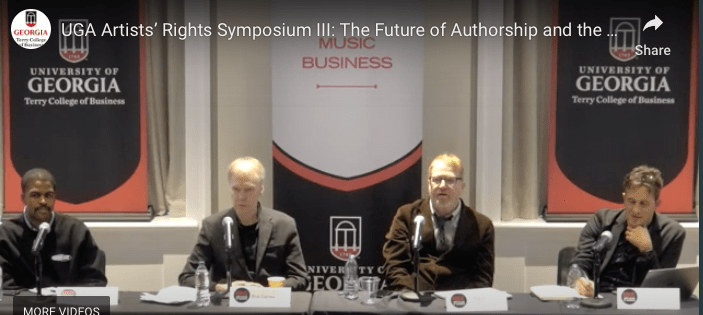
Artist Rights Symposium III at @TerryCollege at UGA, Keynote by @MMercuriadis of @HipgnosisSongs

We’re back! David Lowery hosted the third annual Artist Rights Symposium at the University of Georgia’s Terry College in Athens on November 15 as an in-person event. The Symposium is an all-day event that allows students in the Music Business program to participate and interact with panelists as part of the music business program.

Our keynote speaker was the inspiring Merck Mercuriadis, long time songwriter advocate, manager and music industry veteran who founded and runs the Hipgnosis Songs Fund. Merck is an active songwriter advocate around the world, particularly with the recent inquiry into the music streaming economy by the UK Parliament’s Digital Culture Media & Sport Committee and the UK Competition and Markets Authority. As Kristin Robinson reported on Billboard

Merck explained why he feels the industry is in the “age of the songwriter.” “There has been a massive paradigm shift,” he said. “Forty years ago, the power was in the artist brand,” but now, most songs that top the Billboard charts are written by a larger number of songwriters than ever, meaning the demand has never been higher for good hitmakers. “But songwriters have to have a place at the negotiating table now,” he said, citing that in the United States, rates for mechanicals are set by the government’s Copyright Royalty Board, barring “free market” negotiations. “Let’s face it, [the government controlling rates] is insulting to songwriters.”

This year’s symposium topic was “The Future of Authorship and the US Copyright Office” and Merck and the stellar panelists had a lot to say about the many advocacy issues facing contemporary songwriters.

Fortunately, thanks to Terry College the symposium is available on YouTube at no charge and you can watch it in its entirety.

Welcome/Opening remarks

9:00 AM -9:10 AM David Barbe, Director, Terry College Music Business Program

Georgia Legislative Overview and Agenda 9:10 AM- 9:30 AM

Panel 1: Libraries vs Authors: The Internet Archive’s “Controlled Digital Lending” and Fair Renumeration for Authors. 9:35 AM- 10:50 AM

Panelists

Janice Pilch.  Rutgers University
John Degen:  Writer, Head of Writers Union Canada.
Stephen Carlisle: Copyright Officer Nova Southeastern University,Florida
Mary Rasenberger, CEO, Authors Guild and Authors Guild Foundation.

Panel 2 Managing a longer Table at the Copyright Royalty Board 11:10 AM to 12:25 PM

Dr. David C. Lowery Moderator
Rick Carnes, Songwriters Guild of America
David Turner, Penny Fractions, SoundCloud
Crispin Hunt, Songwriter, Ivors Academy, #BrokenRecord

Lunch and Fireside Chat with Merck Mercuriadis 12:45– 2:00 PM

Panel 3 #DoubleStat: The Future of Compulsory Rates 2:20 PM – 03:35 PM

Chris Castle Moderator, Founder Christian L. Castle, Attorneys, Austin and MusicTechPolicy blog
Richard Burgess, CEO of the American Association of Independent Music (A2IM)
Helienne Lindvall, President, European Composers and Songwriters Association
Samantha Schilling, Songtradr, IAFAR

Metadata, Matching and Claiming at the MLC 3:55 – 5:10 PM

Moderator Abby North, North Music Group
Erin McAnally, Artist Rights Alliance
Helienne Lindvall President, European Composers and Songwriters Association
Melanie Santa Rosa, Word Collections, The MLC

Please leave a comment if you have any questions!

Trickle-Down Streaming Mechanical Royalties Will be Be Up for Discussion

You may have noticed that a cost of living adjustment for statutory royalties was front and center in the recent (and still ongoing) physical mechanicals rate setting. Unfortunately, the idea of a COLA seems to have disappeared in the streaming mechanicals proceeding.

Note that it’s different music users on the physical mechanicals than on streaming. The physical mechanicals are paid by record companies and streaming mechanicals are paid by some of the biggest corporations in history, namely Amazon, Apple and Google and other wealthy public companies like Spotify and Pandora/SiriusXM. All these companies have market capitalizations greater than the gross national product of some countries. 

You may have also noticed that after years of frozen subscription rates, Apple is the first of the streaming subscription services to raise rates by $1 on several of its services including Apple Music. Tim Ingham is asking if Spotify will follow (you know, one of those price fixing agreements inferred from conduct). Who knows, but what’s interesting about this is the effect it will have on streaming mechanical rates, or more pointedly the effect that the Big Tech cartel would like you to think it will have.

The calculation for streaming mechanicals is absurdly complicated. You do have to wonder which of the genii came up with that one. About the only thing that is certain is that the negotiation of that rate every five years (and judicial appeals occasionally) guarantees employment for lots of lawyers and lobbyists on both sides, although definitely skewed toward Big Tech’s share of the 46 lawyers on the docket.

The streaming rates are so bizarre that the Copyright Royalty Judges seem to have lost trust in the process and have issued two separate orders instructing the participants in the streaming mechanical proceedings to either disclose or “certify” that they have come clean with the Judges as to any side deals that may have artificially lowered the rates–the second order makes for interesting reading.

Unlike the physical mechanical, the settling parties rejected a cost of living adjustment in these historically inflationary times. Why they rejected a COLA is hard to understand aside from the fact that they thought they could get away with it.

One thing that is clear, however, is that any argument that a COLA is not necessary with streaming mechanicals because the rate is theoretically based on increases or decreases in revenue is a particularly insulting form of trickle down gaslighting. 

It must be said that the record company group of music users that pays the physical mechanical rate voluntarily agreed a COLA on their rates that is currently pending approval by the Judges. There really is no excuse for the streaming services to rely on the discredited trickle down theory to pawn off their Rube Goldberg royalty structure on songwriters for streaming mechanicals.