Hey Budweiser, You Give Beer a Bad Name

In a world where zero royalties becomes a brag, and one second of music is one second too far.

Let me set the stage: Cannes Lions is the annual eurotrash…to coin a phrase…circular self-congratulatory hype fest at which the biggest brands and ad agencies in the world if not the Solar System spend unreal amounts of money telling each other how wonderful they are. Kind of like HITS Magazine goes to Cannes but with a real budget. And of course the world’s biggest ad platform–guess who–has a major presence there among the bling and yachts of the elites tied up in Yachtville by the Sea. And of course they give each other prizes, and long-time readers know how much we love a good prize, Nyan Cat wise.

Enter the King of Swill, the mind-numbingly stupid Budweiser marketing department. Or as they say in Cannes, Le roi de la bibine.

Credit where it’s due: British Bud-hater and our friend Chris Cooke at CMU flagged this jaw-dropper from Cannes Lions, where Budweiser took home the Grand Prix for its “One‑Second Ad” campaign—a series of ultra-short TikTok clips that featured the one second of hooks from iconic songs. The gimmick? Tease the audience just long enough to trigger nostalgia, then let the internet do the rest. The beer is offensive enough to any right-thinking Englishman, but the theft? Ooh la la.

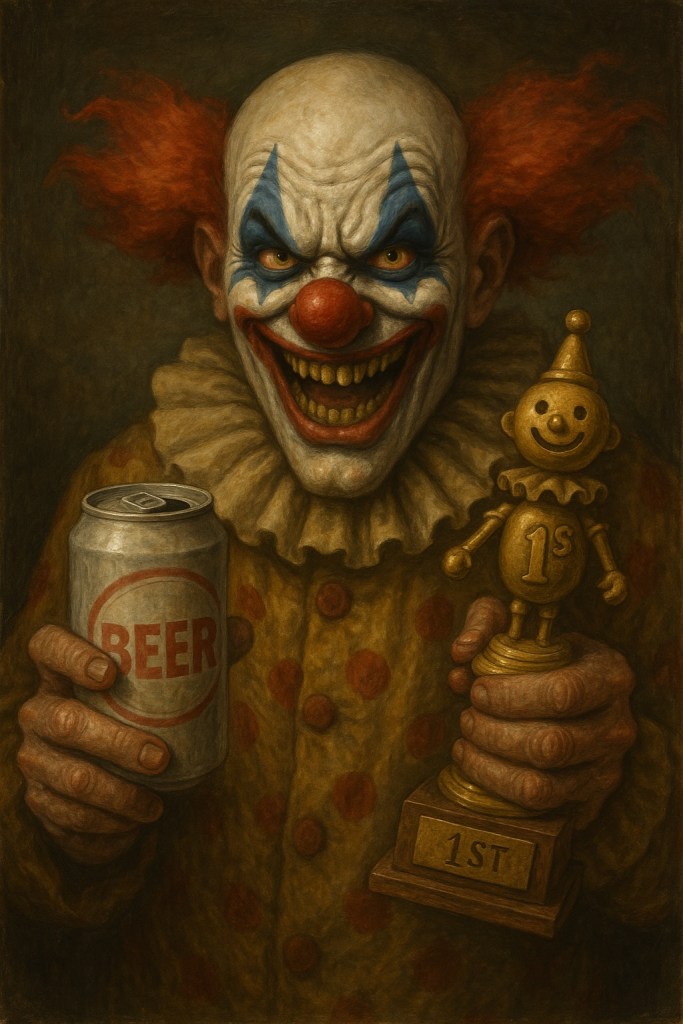
Cannes Clown

Budweiser’s award-winning brag? “Zero ads were skipped. $0 spent on music right$.” Yes, that’s correct–“right$”.

That quote should hang in a museum of creative disinformation.

There’s an old copyright myth known as the “7‑second rule”—the idea that using a short snippet of a song (usually under 7 seconds) doesn’t require a license. It’s pure urban legend. No court has ever upheld such a rule, but it sticks around because music users desperately want it to be true. Budweiser didn’t just flirt with the myth—it took the myth on a date to Short Attention Span Theater, built an ad campaign around it, and walked away with the biggest prize in advertising to the cheers of Googlers everywhere.

When Theft from artists Becomes a Business Model–again

But maybe this kind of stunt shouldn’t come as a surprise. When the richest corporations in commercial history are openly scraping, mimicking, and monetizing millions of copyrighted works to train AI models—without permission and without payment—and so far getting away with it, it sends a signal. A signal that says: “This isn’t theft, it’s innovation.” Yeah, that’s the ticket. Give them a prize.

So of course Budweiser’s corporate brethren start thinking: “Me too.

As Austin songwriter Guy Forsyth wrote in Long Long Time“Americans are freedom-loving people, and nothing says freedom like getting away with it.” That lyric, in this context, resonates like a manifesto for scumbags.

The Immorality of Virality

For artists and the musicians and vocalists who created the value that Budweiser is extracting, the campaign’s success is a masterclass in bad precedent. It’s one thing to misunderstand copyright; it’s another to market that misunderstanding as a feature. When global brands publicly celebrate not paying for music–in Cannes, of all places—the very tone-deaf foundation of their ad’s emotional resonance sends a corrosive signal to the entire creative economy. And, frankly, to fans.

Oops!… I Did It Again, bragged Budweiser, proudly skipping royalties like it’s Free Fallin’, hoping no one notices they’re just Smooth Criminals playing Cheap Thrills with other people’s work. It’s not Without Me—it’s without paying anyone—because apparently Money for Nothing is still the vibe, and The Sound of Silence is what they expect from artists they’ve ghosted.

Because make no mistake: even one second of a recording can be legally actionable particularly when the intentional infringing conspiracy gets a freaking award for doing it. That’s not just law—it’s basic respect, which is kind of the same thing. Which makes Budweiser’s campaign less of a legal grey area and more of a cultural red flag with a bunch of zeros. Meaning the ultimate jury award from a real jury, not a Cannes jury.

This is the immorality of virality: weaponizing cultural shorthand to score branding points, while erasing the very artists who make those moments recognizable. When the applause dies down in Yachtville, what’s left is a case study in how to win by stealing — not creating.

Creators Rally Behind Cyril Vetter’s Termination Rights Case in the Fifth Circuit

by Chris Castle

Songwriter and publisher Cyril Vetter is at the center of a high-stakes copyright case over his song “Double Shot of My Baby’s Love” with massive implications for authors’ termination rights under U.S. law. His challenge to Resnik Music Group has reached the Fifth Circuit Court of Appeals, and creators across the country are showing up in force—with a wave of amicus briefs filed in support including Artist Rights Institute.  Let’s consider the case on appeal.

At the heart of Vetter’s case is a crucial question: When a U.S. author signs a U.S. contract governed by U.S. law and then later the author (or the author’s heirs) invokes their 35-year termination right under Sections 203 and 304 of the U.S. Copyright Act, does that termination recover only U.S. rights (the conventional wisdom)—or the entire copyright, including worldwide rights?  Vetter argued for the worldwide rights at trial.  And the trial judge agreed over strenuous objections by the music publisher opposing Cyril.

Judge Shelly Dick of the U.S. District Court for the Middle District of Louisiana agreed. Her ruling made clear that a grant of worldwide rights under a U.S. contract is subject to U.S. termination. To hold otherwise would defeat the statute’s purpose which seems obvious.

I’ve known Vetter’s counsel Tim Kappel since he was a law student and have followed this case closely. Tim built a strong record in the District Court and secured a win against tough odds. MTP readers may recall our interviews with him about the case, which attracted considerable attention. Tim’s work with Cyril has energized a creator community long skeptical of the industry’s ‘U.S. rights only’ narrative—a narrative more tradition than law, an artifact of smoke filled rooms and backroom lawyers.

The Artist Rights Institute (David Lowery, Nikki Rowling, and Chris Castle), along with allies including Abby North (daughter-in-law of the late film composer Alex North), Blake Morgan (#IRespectMusic), and Angela Rose White (daughter of the late television composer and music director David Rose), filed a brief supporting Vetter. The message is simple: Congress did not grant a second bite at half the apple. Termination rights are meant to restore the full copyright—not just fragments.

As we explained in our brief, Vetter’s original grant of rights was typical: worldwide and perpetual, sometimes described as ‘throughout the universe.’ The idea that termination lets an author reclaim only U.S. rights—leaving the rest with the publisher—is both absurd and dangerous.

This case is a wake-up call. Artists shouldn’t belong to the  ‘torturable class’—doomed to accept one-sided deals as normal. Termination was Congress’s way of correcting those imbalances. Terminations are designed by Congress to give a second bite at the whole apple, not the half.

Stay tuned—we’ll spotlight more briefs soon. Until then, here’s ours for your review.

TikTok Sale Extended…Again

By Chris Castle

Imagine if the original Napster had received TikTok-level attention from POTUS?  Forget I said that.  The ongoing divestment of TikTok from its parent company ByteDance has reached yet another critical point with yet another bandaid.  Congress originally set a January 19, 2025 deadline for ByteDance to either sell TikTok’s U.S. operations or face a potential ban in the United States as part of the Protecting Americans from Foreign Adversary Controlled Applications Act or “PAFACA” (I guess “covfefe” was taken). The US Supreme Court upheld that law in TikTok v. Garland.

When January 20 came around, President Trump gave ByteDance an extension to April 5, 2025 by executive order. When that deadline came, President Trump granted an extension to the extension to the January 19 deadline by another executive order, providing additional time for ByteDance to finalize a deal to divest. The extended deadline now pushes the timeline for divestment negotiations to July 1, 2025.

This new extension is designed to allow for further negotiation time among ByteDance, potential buyers, and regulatory authorities, while addressing the ongoing trade issues and concerns raised by both the U.S. and Chinese governments. 

It’s getting mushy, but I’ll take a stab at the status of the divestment process. I might miss someone as they’re all getting into the act. 

I would point out that all these bids anticipate a major overhaul in how TikTok operates which—just sayin’—means it likely would no longer be TikTok as its hundreds of millions of users now know it.  I went down this path with Napster, and I would just say that it’s a very big deal to change a platform that has inherent legal issues into one that satisfies a standard that does not yet exist.  I always used the rule of thumb that changing old Napster to new Napster (neither of which had anything to do with the service that eventually launched with the “Napster” brand but bore no resemblance to original Napster or its DNA) would result in an initial loss of 90% of the users. Just sayin’.

Offers and Terms

Multiple parties have expressed interest in acquiring TikTok’s U.S. operations, but the terms of these offers remain fluid due to ongoing negotiations and the complexity of the deal. Key bidders include:

ByteDance Investors:  According to Reuters, “the biggest non-Chinese investors in parent company ByteDance to up their stakes and acquire the short video app’s U.S. operations.” This would involve Susquehanna International Group, General Atlantic, and KKR. ByteDance looks like it retains a minority ownership position of less than 20%, which I would bet probably means 19.99999999% or something like that. Reuters describes this as the front runner bid, and I tend to buy into that characterization. From a cap table point of view, this would be the cleanest with the least hocus pocus. However, the Reuters story is based on anonymous sources and doesn’t say how the deal would address the data privacy issues (other than that Oracle would continue to hold the data), or the algorithm. Remember, Oracle has been holding the data and that evidently has been unsatisfactory to Congress which is how we got here. Nothing against Oracle, but I suspect this significant wrinkle will have to get fleshed out.

Lawsuit by Bidder Company Led by Former Myspace Executive:  In a lawsuit in Florida federal court by TikTok Global LLC filed April 3, TikTok Global accuses ByteDance, TikTok Inc., and founder Yiming Zhang of sabotaging a $33 billion U.S.-based TikTok acquisition deal by engaging in fraud, antitrust violations, and breach of contract. TikTok Global LLC is led by Brad Greenberg the former MySpace executive and Internet entrepreneur. The factual allegations in the complaint start in 2020 with the executive order in Trump I, and alleges that:

This set the stage for what should have been a straightforward process of acquisition and divestment, but instead, it became a twisted tale of corporate intrigue, conspiracy, and antitrust violations….Plaintiff would soon discover, the game was rigged from the start because ByteDance had other plans, plans that circumvented proper procedures, stifled competition, and maintained ByteDance’s control over TikTok’s U.S. operations – all under the guise of compliance with the executive order.

The fact-heavy complaint alleges ByteDance misled regulators, misappropriated the “TikTok Global” brand, and conspired to maintain control of TikTok in violation of U.S. government directives. The suit brings six causes of action, including tortious interference and unjust enrichment, underscoring a complex clash over corporate deception and national security compliance. Emphasis on “alleged” as the case is pretty fact-dependent and plaintiff will have to prove their case, but the well-drafted complaint makes some extensive claims that may give a window into the behind the scenes in the world of Mr. Tok. Watch this space, it could be a sleeper that eventually wakes up to bite, no pun intended.

Oracle and Walmart: This proposal, which nearly closed in 2024 (I guess), involved a sale of TikTok’s U.S. business to a consortium of U.S.-based companies, with Oracle managing data security and infrastructure. ByteDance was to retain a minority stake in the new entity. However, this deal has not closed, who knows why aside from competition and then there’s those trade tariffs and the need for approval from both U.S. and Chinese regulators who have to be just so chummy right at the moment.

AppLovin: A preliminary bid has been submitted by AppLovin, an adtech company, to acquire TikTok’s U.S. operations. It appears that AppLovin’s offer includes managing TikTok’s user base and revenue model, with a focus on ad-driven strategies, although further negotiations are still required.  According to Pitchbook, “AppLovin is a vertically integrated advertising technology company that acts as a demand-side platform for advertisers, a supply-side platform for publishers, and an exchange facilitating transactions between the two. About 80% of AppLovin’s revenue comes from the DSP, AppDiscovery, while the remainder comes from the SSP, Max, and gaming studios, which develop mobile games. AppLovin announced in February 2025 its plans to divest from the lower-margin gaming studios to focus exclusively on the ad tech platform.”  It’s a public company trading as APP and seems to be worth about $100 billion.   Call me crazy, but I’m a bit suspicious of a public company with “lovin” in its name.  A bit groovy for the complexity of this negotiation, but you watch, they’ll get the deal.

Amazon and Blackstone: Amazon and Blackstone have also expressed interest in acquiring TikTok or a stake in a TikTok spinoff in Blackstone’s case. These offers would likely involve ByteDance retaining a minority interest in TikTok’s U.S. operations, though specifics of the terms remain unclear.  Remember, Blackstone owns HFA through SESAC.  So there’s that.

Frank McCourt/Project Liberty:  The “People’s Bid” for TikTok is spearheaded by Project Liberty, founded by Frank McCourt. This initiative aims to acquire TikTok and change its platform to prioritize user privacy, data control, and digital empowerment. The consortium includes notable figures such as Tim Berners-Lee, Kevin O’Leary, and Jonathan Haidt, alongside technologists and academics like Lawrence Lessig.  This one gives me the creeps as readers can imagine; anything with Lessig in it is DOA for me.

The bid proposes migrating TikTok to a new open-source protocol to address concerns raised by Congress while preserving its creative essence. As of now, the consortium has raised approximately $20 billion to support this ambitious vision.  Again, these people act like you can just put hundreds of millions of users on hold while this changeover happens.  I don’t think so, but I’m not as smart as these city fellers.

PRC’s Reaction

The People’s Republic of China (PRC) has strongly opposed the forced sale of TikTok’s U.S. operations, so there’s that. PRC officials argue that such a divestment would be a dangerous precedent, potentially harming Chinese tech companies’ international expansion. And they’re not wrong about that, it’s kind of the idea. Furthermore, the PRC’s position seems to be that any divestment agreement that involves the transfer of TikTok’s algorithm to a foreign entity requires Chinese regulatory approval.  Which I suspect would be DOA.

They didn’t just make that up– the PRC, through the Cyberspace Administration of China (CAC), owns a “golden share” in ByteDance’s main Chinese subsidiary. This 1% stake, acquired in 2021, grants the PRC significant influence over ByteDance including the ability to influence content and business strategies.

Unsurprisingly, ByteDance must ensure that the PRC government (i.e., the Chinese Communist Party) maintains control over TikTok’s core algorithm, a key asset for the company. PRC authorities have been clear that they will not approve any sale that results in ByteDance losing full control over TikTok’s proprietary technology, complicating the negotiations with prospective buyers.  

So a pressing question is whether TikTok without the algorithm is really TikTok from the users experience.  And then there’s that pesky issue of valuation—is TikTok with an unknown algo worth as much as TikTok with the proven, albeit awful, current algo.

Algorithm Lease Proposal

In an attempt to address both U.S. security concerns and the PRC’s objections, a novel solution has been proposed: leasing TikTok’s algorithm. Under this arrangement, ByteDance would retain ownership of the algorithm, while a U.S.-based company, most likely Oracle, would manage the operational side of TikTok’s U.S. business.

ByteDance would maintain control over its technology, while allowing a U.S. entity to oversee the platform’s operation within the U.S. The U.S. company would be responsible for ensuring compliance with U.S. data privacy laws and national security regulations, while ByteDance would continue to control its proprietary algorithm and intellectual property.

Under this leasing proposal, Oracle would be in charge of managing TikTok’s data security and ensuring that sensitive user data is handled according to U.S. regulations. This arrangement would allow ByteDance to retain its technological edge while addressing American security concerns regarding data privacy.

The primary concern is safeguarding user data rather than the algorithm itself. The proposal aims to address these concerns while avoiding the need for China’s approval of a full sale.

Now remember, the reason we are in this situation at all is that Chinese law requires TikTok to turn over on demand any data it gathers on TikTok users which I discussed on MTP back in 2020. The “National Intelligence Law” even requires TikTok to allow the PRC’s State Security police to take over the operation of TikTok for intelligence gathering purposes on any aspect of the users’ lives.  And if you wonder what that really means to the CCP, I have a name for you:  Jimmy Lai. You could ask that Hong Konger, but he’s in prison. 

This leasing proposal has sparked debate because it doesn’t seem to truly remove ByteDance’s influence over TikTok (and therefore the PRC’s influence). It’s being compared to “Project Texas 2.0,” a previous plan to secure TikTok’s data and operations.  I’m not sure how the leasing proposal solves this problem. Or said another way, if the idea is to get the PRC’s hands off of Americans’ user data, what the hell are we doing?

Next Steps

As the revised deadline approaches, I’d expect a few steps, each of which has its own steps within steps:

Finalization of a Deal: This is the biggest one–easy to say, nearly impossible to accomplish.  ByteDance will likely continue negotiating with interested parties while they snarf down user data, working to secure an agreement that satisfies both U.S. regulatory requirements and Chinese legal constraints. The latest extension provides runway for both sides to close key issues that are closable, particularly concerning the algorithm lease and ByteDance’s continued role in the business.

Operational Contingency:  I suppose at some point the buyer is going to be asked if whatever their proposal is will actually function and whether the fans will actually stick around to justify whatever the valuation is.  One of the problems with rich people getting ego involved in a fight over something they think is valuable is that they project all kinds of ideas on it that show how smart they are, only to find that once they get the thing they can’t actually do what they thought they would do.  By the time they figure out that it doesn’t work, they’ve moved on to the next episode in Short Attention Span Theater and it’s called Myspace.

China’s Approval: ByteDance will need to secure approval from PRC regulatory authorities for any deal involving the algorithm lease or a full divestment. So why introduce the complexity of the algo lease when you have to go through that step anyway?  Without PRC approval, any sale or lease of TikTok’s technology is likely dead, or at best could face significant legal and diplomatic hurdles.

Legal Action: If an agreement is not reached by the new deadline of July 1, 2025, further legal action could be pursued, either by ByteDance to contest the divestment order or by the U.S. government to enforce a ban on TikTok’s operations.  I doubt that President Trump is going to keep extending the deadline if there’s no significant progress.

If I were a betting man, I’d bet on the whole thing collapsing into a shut down and litigation, but watch this space.

[This post first appeared on MusicTech.Solutions]

@ArtistRights Institute Newsletter 3/17/25

This image has an empty alt attribute; its file name is ari-basic-logo-3.jpg

The Artist Rights Institute’s news digest Newsletter

Take our new confidential survey for publishers and songwriters!

UK AI Opt-Out Legislation

UK Music Chief Calls on Ministers to Drop Opposition Against Measures to Stop AI Firms Stealing Music

Human Rights and AI Opt Out (Chris Castle/MusicTechPolicy) 

Ticketing

New Oregon bill would ban speculative ticketing, eliminate hidden ticket sale fees, crack down on deceptive resellers (Diane Lugo/Salem Statesman Journal-USA Today)

AI Litigation/Legislation

French Publishers and Authors Sue Meta over Copyright Works Used in AI Training (Kelvin Chan/AP);

AI Layoffs

‘AI Will Be Writing 90% of Code in 3-6 Months,’ Says Anthropic’s Dario Amodei (Ankush Das/Analytics India)

Amazon to Target Managers in 2025’s Bold Layoffs Purge (Anna Verasai/The HR Digest)

AI Litigation: Kadrey v. Meta

Authors Defeat Meta’s Motion to Dismiss AI Case on Meta Removing Watermarks to Promote Infringement

Judge Allows Authors AI Copyright Infringement Lawsuit Against Meta to Move Forward (Anthony Ha/Techcrunch)

America’s AI Action Plan Request for Information

Google and Its Confederate AI Platforms Want Retroactive Absolution for AI Training Wrapped in the American Flag (Chris Castle/MusicTechPolicy)

Google Calls for Weakened Copyright and Export Rules in AI Policy Proposal (Kyle Wiggers/TechCrunch) 

Artist Rights Institute Submission

Selected Quotes from Keynote Presentation by DiMA CEO Graham Davies, Nov. 20 4th Annual @ArtistRights Symposium at @AmericanU’s @KogodBIZ

RICK

I think this is the beginning of a beautiful friendship.

from Casablanca, Screenplay by Julius J. Epstein and Howard Koch 

Following are excepts from Graham Davies keynote at the 4th Annual Artist Rights Symposium

“The issue – and challenge – of incomplete metadata is one close to my heart, as I worked for many years dealing with finding solutions to reduce the significant cost that collecting societies incur, trying to find this missing data. This is why I started the Credits Due initiative when I was at Ivors [Academy], to raise awareness of the problem and support industry wide solutions that enable accurate metadata to be attached to recordings at the earliest point in the creation process.

This was how I first encountered [Digital Media Association], who have supported the initiative from the beginning. The supply of recordings with accurate metadata is in the interests of creators, rightsholders and streaming services alike.”

“The previous pre-[Music Modernization Act] approach to licensing musical compositions was not particularly effective before and became entirely unfit when it was overtaken by the speed of adoption of streaming. And to understand why this was the case, let’s step through how the licensing process worked – or didn’t – pre-MMA.”

“To date, DIMA’s members and other streaming services have paid more than $160 million dollars for the operation of the [Mechanical Licensing Collective], including meeting all of the requirements for its setup. And the MLC has now distributed more than $2 billion dollars in revenues collected from the streaming services. 

This is a great success. The MMA has given certainty to licensees and rightsholders alike, whether major publishers, independent publishers and songwriters.”

“It is our collective role to ensure the MLC embraces its responsibility – actually, it’s statutory obligation – to serve its three key stakeholders – songwriters, publishers, and streaming services.”

Let me be clear –  any efforts to unravel the MMA will not improve licensing or improve the growth and success of the music industry. Rather, such moves will lead to an upheaval of the whole system and likely return to the problems of the past.” 

Are You Better Off Today Than You Were Five Years Ago? Selected comments on the MLC Redesignation: John Guertin of ClearRights

The Copyright Office is soliciting public comments about how things are going with the MLC to help the Office decide whether to permit The MLC, Inc. to continue to operate the Collective (see this post for more details on the “redesignation” requirement). We are impressed with the quality of many of the comments filed in the “Initial Comments” at the Copyright Office. As there will be an opportunity to comment again, including to comment on the comments, we will be posting selected Initial Comments to call to your attention. You can read all the comments at this link. If you are hearing about this for the first time, you have until June 28 to file a “reply comment” with the Copyright Office at this link.

You will see that there is a recurring theme with the comments. Many commenters say that they wish for The MLC, Inc. to be redesignated BUT…. They then list a number of items that they object to about the way the Collective has been managed by The MLC, Inc. usually accompanied by a request the The MLC, Inc. change the way it operates.

That structure seems to be inconsistent with a blanket ask for redesignation. Rather, the commenters seem to be making an “if/then” proposal that if The MLC, Inc. improves its operations, including in some cases operating in an opposite manner to its current policies and practices, then The MLC, Inc. should be redesignated. Not wishing to speak for any commenter, let it just be said that this appears to be a conditional proposal for redesignation. Maybe that is not what the commenters were thinking, but it does appear to be what many of them are saying. Perhaps this conditional aspect will be refined in the Reply Comments.

For purposes of these posts, we may quote sections of comments out of sequence but in context. We recommend that you read the comments in their entirety.

Today’s featured comment is from John Guertin, the highly knowledgeable independent publishing administrator who operates ClearRights in Austin, Texas. He works with many Texas artists whose music represents generations of Texas music vital to the Texas economy such as Marcia Ball, Guy Forsyth, Vallejo, Quiet Company and the South Austin Moonlighters.

Like other commenters, Mr. Guertin focuses on The MLC, Inc.’s failures to adopt world-class metadata standards. He offers insight to the Copyright Office similar to information the Office could get if they actually did a proactive deep dive on the MLC standards and practices rather than wait for commenters to get so disillusioned that they will sit down and write up their grievances when their frustration exceeds their fear of retaliation.

If Mr. Guertin is correct about bad old HFA data populating the MLC’s data, one consequence arises when the MLC, Inc. distributes its data feed to dozens of users. Does this mean that anyone who uses the MLC’s mediocre HFA data also has error-ridden data? What is the plan to unwind that one?

Lack of transparency
How does the automated matching process work and what is the logic for a match? We submit quite a bit of data to The MLC, yet titles go unmatched. It is hard to understand how a match does not happen when the system has been provided the song title, writers, isrc and supplementary data such as iswc, recording artist etc. It begs the question, what is the matching logic? If the song title, isrc and songwriter match 100%, how is a match not created? Having worked in the digital music space in the early 2000s at the onset of online digital subscription and download services, there was a fuzzy logic matching employed to help clear thousands of songs at a time. A fuzzy logic matching criteria would have to require a certain percentage of a given data field to match and thus enable matches to be made when there was punctuation or additional wording in the sound recording title such as “Live”. It’s hard to understand how so many line items go unmatched at The MLC when there are small variations in titles etc. Is a fuzzy logic protocol being employed, and if so, is it too tight?

New System , Same Old Player
The forward-facing organization we see is The MLC and its staff, however the vendor(s) used by the MLC is the same player, The Harry Fox Agency. The MLC data is often powered by and supplied by HFA. The HFA system, being a for profit, proprietary system, has been known for years to have old, outdated and/or incorrect data. One can often find the same song registered two, three or more times in the system. In most cases the publisher/owner is different or variant. This “bad data” has been allowed to proliferate the MLC system and has basically resulted in the same issues of old.

Having said vendor(s) also operating as match makers raises several concerns/questions, especially when incorrect matches are made based on this bad or outdated data. When an incorrect match is made (again how does this happen if the titles and songwriters don’t match yet publisher submitted data matches 100% and a match isn’t made?), the publisher is paid royalties.

The burden then falls upon the recipient to find the incorrect match, and then take action to remedy it by either returning monies to the MLC or having it deducted from future payments for other, non-related publishers and songs.

In some cases, the dollar amount of monies is significant and results in the publisher and/or songwriter being debited for the amount all at one time and unable to earn future royalties until the debited amount has been recouped. This can result in financial burden and distress for the publisher/songwriter. The publisher/songwriter may be dependent on these royalties to live on and due to no fault of their own, are subjected to a recoupment process for something they did not initiate. Why is this and why do we think this methodology works? Additionally, we are often told to contact the other party and get the money from them.

Lots of matches, yet even more unclaimed monies
An 80-85% match rate seems impressive until you look at the amount of money that remains unmatched each month. Approx $20 million in monies each month go unmatched and/or unclaimed. That’s over $200 million in a year. How and when is this going to be addressed? Yes, it’s much easier to ignore that and simply distribute that money via market share. But does artist/songwriter X really need more limos and vacation homes when the large majority of these royalties are indie songwriters that either don’t know about this, don’t understand it, or have been frustrated over the years and trained to think that they get micro-pennies for their efforts? We can’t blame this segment for not being totally engaged or not being educated on the complexities of the music industry. If we can put a man on the moon, why can’t we figure this out?

Lack of innovative strategy to clear the back-log of unmatched line items
What exactly is the process used to currently address this [old mediocre HFA data] and how is it being measured? We are told that outside vendors are contracted to perform this function, yet we see approx. $20 million each month in unmatched royalties. Clearly this strategy is not reducing the amount of “black box” monies at a fast enough rate and raises several concerns.

The first is that our senior songwriters and publishers are not getting younger by the day. They do not have time to wait 5 or 10 years for this to be straightened out. Many depend on the fruits of their past labor to live on. They deserve better.

With regard to the apparent inability to make matches and reduce the unmatched royalties, there seems to be other ways to approach this, which may currently be employed but we don’t really know due to the lack of transparency. Many of these unmatched recordings are songs that are registered at PROs. Those PROs have the songwriters and publishers, along with any recording data submitted by the songwriters and publishers. This is a good source of data which also has the contact info for those entities. A strategic partnership with other industry organizations, such as the PROs, should be made to help share and communicate data to bridge the gap with missing data which would allow matches to happen.

Also, where is the data that is being used to match coming from? Most indie artists use aggregators such as CD Baby, TuneCore, Distrokid etc. to distribute to dsps. This is the source of data that feeds to dsps. Such aggregators allow the input of inaccurate data without verification. All one must do is write something in the required data column (i.e. songwriters) and it goes through the system and starts populating everywhere. So bad data in results in bad data going out and reducing the likelihood matches can be made. Industry wide cooperation is required if we are to streamline these processes and make things efficient.

Read the entire comment at this link.

They Deserve It: TikTok Forced Sale Legislation Advances to Senate

The most remarkable aspect of the pending legislation in Congress that would force a sale of TikTok is how much money and how many high profile lobbyists have taken the CCP’s shilling (or maybe yuan) to push the obviously corrupt company’s water. And yet…the legislation is advancing by leaps and bounds and TikTok is failing.

David was interviewed by Billboard to give a perspective. The headline here is that TikTok appears to be doing the same thing that Spotify was doing when Spotify was sued by Melissa Ferrick and David–using songs without a license.

The music industry’s view of the proceedings in Washington is mixed. The perspective of artists and songwriters is arguably best expressed by David Lowery, the artist rights activist and frontman for the bands Cracker and Camper Van Beethoven, who also was one of more than 200 creators that, in early April, signed an open letter to tech platforms urging them to stop using AI “to infringe upon and devalue the rights of human artists.”

“The rates TikTok pays artists are extremely low, and it has a history — at least with me — of using my catalog with no licenses,” Lowery says. “I just checked to make sure and there are plenty of songs that I wrote on TikTok, and I have no idea how they have a license for those songs.” 

As a result, Lowery says that while “I’m kind of neutral as to whether TikTok needs to be sold to a U.S. owner, the bill pleases me in a general way because I feel that they’ve gotten away with abusing artists for so long that they deserve it. I realize the bill doesn’t punish them for doing that,” he continues, “but that’s why a lot of musicians feel they really deserve it.” 

Show Me the Splits: Tiffany Red Illuminates Stealing Publishing

By Chris Castle
(A version of this post appeared on MusicTechPolicy and on Hypebot)

It’s unfortunately an old story, but that doesn’t make it right.

One of the most underpaid creatives in our business are songwriters who “just” write songs. “Just” is an odd word to use but it’s a common way to refer to those who give artists a voice because it really does all start with the song. And as Tiffany Red says in her video, the system is simply unjust.

“The system” is what has always been called “stealing publishing”. This is when an artist or a producer (and it happens with producers but for different reasons) threatens songwriters who created a song the artist may record with not covering that song unless the artist gets a chunk of the publishing. The amount can range all over the place, but often is at least 25% of the copyright. So not only are they not entitled to song’s earnings as a financial interest, they are definitely not entitled to the copyright because they created nothing.

On top of it, songwriters often have to eat many costs in order to get the song written, demoed and pitched. (I can’t tell you the number of times the songwriter demo essentially becomes the arrangement of the final recording, so “demo” is relative.). There’s a bunch of opportunities along the way for people to write themselves into the song when all they did was a job that they were probably being paid to do anyway. I have even encountered producers whose managers demanded a piece of publishing for the producer to even listen to an artist’s demos. 

On the producer side, some producers want a piece of all publishing on the record and if they actually write they want their contributor share as a writer ON TOP of the publishing they are already stealing. Why? What possesses anyone to think they are entitled to do this? And “entitled” is exactly the right word. 

One reason they steal publishing is because the producer royalty is unlikely to even recoup the producer advance in a streaming reality unless the track is a huge hit. (Remember that a producer gets a percentage of what the artist gets, say 30%ish, and the artist gets somewhere around 50% of the fraction of a penny per stream.) This is especially true of producers who enjoyed a lifestyle in the pre-streaming era and are trying to keep it going. It’s understandable, but that doesn’t make it right. 

And remember, the songwriter isn’t getting an advance. On top of the insult of stealing publishing, the artist has no intention of paying for it because the songwriter should consider themselves lucky to get the cover–which often is a career making record for the artist opening up income streams the songwriter never participates in.

When faced with these overreaching demands, songwriters have to make some hard choices. Occasionally I get to tell the artist’s team to fuck off. More often though–as Tiffany says–songwriters acquiesce.

I think Tiffany is also hitting at a point that Merck Mercuriadis made at the last Artist Rights Symposium that David hosts at the University of Georgia:

Let’s face it—this is insulting.  If I sat down and explained to my decent Greek working class parents that this is how songwriters get paid, they’d be shocked.  If you went to your bank manager and explained how songwriters get paid, they’d be shocked.  Doctors, lawyers, everyone who has some understanding of the economics of the world or what drives an industry and what creates value for an industry would be shocked by how songwriters are paid. 

But nobody can bring the frustration home like a songwriter on the receiving end of this injustice. Watch Tiffany’s video. Take 15 minutes out of your life and watch it from beginning to end with no distractions. She’s absolutely correct that until the artists stop, until they let their team know that stealing publishing is not acceptable and if they do it they are not only not helping the artist, but they’ll be fired–then it will start to change. 

She’s right about something else, too. A songwriter shouldn’t need a gatekeeper to protect them in a situation that should not be happening in the first place. There’s a line that we all learn from parents, teachers, coaches, mentors, the line between acceptable and unacceptable treatment of other humans, right and wrong if you like although that’s a bit simplistic. Stealing publishing is wrong, stealing publishing is on the wrong side of that line. This is what I think whenever I have to deal with the situation–how do you sleep at night?

Watch the video. it’s not a rant, it’s the truth.

@musicbizworld: UNIVERSAL MUSIC GROUP RESPONDS TO ‘FAKE DRAKE’ AI TRACK: STREAMING PLATFORMS HAVE ‘A FUNDAMENTAL RESPONSIBILITY TO PREVENT THE USE OF THEIR SERVICES IN WAYS THAT HARM ARTISTS’

The track, heart on my sleeve, credited to the ‘artist’ ghostwriter, has racked up more than 230,000 plays on YouTube, and more than 625,000 plays on Spotify.

In addition to AI-replicated vocals of Drake, the track – a seemingly original composition – also features AI-replicated vocals of The Weeknd’s voice.

Both Drake and The Weeknd release their (real life) records via UMG and its Republic Records.

Said UMG in a statement to MBW in the wake of today’s news: “UMG’s success has been, in part, due to embracing new technology and putting it to work for our artists–as we have been doing with our own innovation around AI for some time already.

“With that said, however, the training of generative AI using our artists’ music (which represents both a breach of our agreements and a violation of copyright law) as well as the availability of infringing content created with generative AI on DSPs, begs the question as to which side of history all stakeholders in the music ecosystem want to be on: the side of artists, fans and human creative expression, or on the side of deep fakes, fraud and denying artists their due compensation.

Read the post on Music Business Worldwide

@musicbizworld: UNIVERSAL MUSIC GROUP RESPONDS TO ‘FAKE DRAKE’ AI TRACK: STREAMING PLATFORMS HAVE ‘A FUNDAMENTAL RESPONSIBILITY TO PREVENT THE USE OF THEIR SERVICES IN WAYS THAT HARM ARTISTS’ — Artist Rights Watch–News for the Artist Rights Advocacy Community

Save the Date: Artist Rights: The Future of the Copyright Royalty Board for Songwriters Webcast 4/7/23 at 1:45pm CT

More information here https://utcle.org/studio/ZAQ23/ and register here https://utcle.org/conferences/ZAQ23/order-form/

We are excited announce that Chris Castle will be moderating a panel on the future of the Copyright Royalty Board for songwriters (the “Phonorecords” proceedings) as part of the University of Texas School of Law Continuing Legal Education Artist Rights series.

The panelists are Mitch Glazier, RIAA, Clark Miller, Clark Miller Consulting, and Abby North of North Music Group.

The panel will be assessing both voluntary and statutory changes to make the Phonorecords process more representative and efficient and reprises the topic that David and Chris spoke on for the “Smartest People in the Room” series.