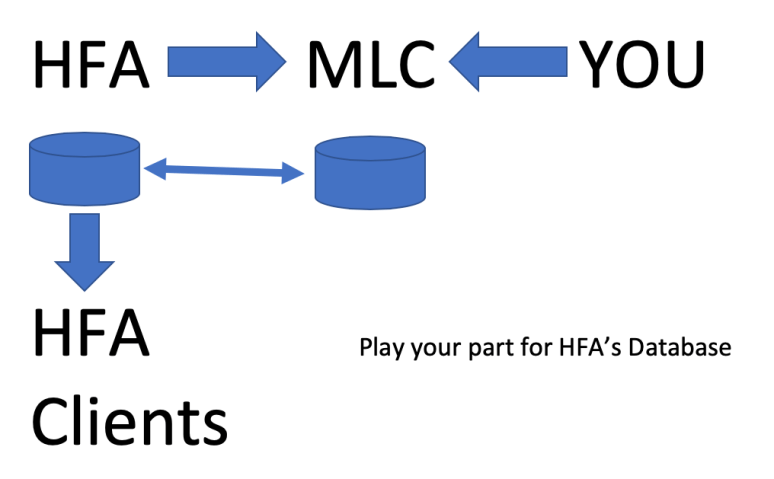
Is The MLC Updating the HFA Database?

The MLC announced an aspirational tool for publishers to confirm whether the MLC’s data is correct for their songs.  Apparently this is planned to be a quality control check for song metadata that The MLC has already acquired. As far as we can tell, the tool doesn’t actually exist yet.

VaporwareHere’s the press release language:

For Music Publishers, Administrators and CMOs: Data Quality Initiative (DQI)
The MLC created the Data Quality Initiative (DQI) to provide a streamlined way for music publishers, administrators and foreign collective management organizations (CMOs) to compare large schedules of their musical works’ data against The MLC’s data. Through the DQI, The MLC will provide participants with reports that highlight the discrepancies between the two sets of data so that they can more easily address those discrepancies and improve the quality of The MLC’s data.

The MLC has begun working directly with a number of music publishers and administrators to on-board them into the initiative. The MLC is also working with software vendors to help them enhance their platforms to enable users of their systems to participate in the initiative. The MLC looks forward to working with other music publishers, administrators, CMOs and software system vendors interested in participating in The MLC’s Data Quality Initiative.

“One of the biggest and most time-consuming challenges for music publishers, administrators and CMOs is checking the accuracy of their musical works’ data,” said Richard Thompson, CIO of The MLC. “We launched the Data Quality Initiative to help those parties increase the efficiency and effectiveness of this process. Participants in the initiative will be able to see where their musical works data does not match The MLC’s data, so that they can then take the necessary corrective action.”

Of course, The MLC has yet to permit songwriters (or anyone for that matter) to register their songs with The MLC at least not publicly.  Neither have they given anyone access to whatever data they actually have ingested–and still won’t with the DQI tools. When you use the DQI tool, you sit outside The MLC’s database and they give you “reports” so you may take “the necessary corrective action”.  At your own expense, of course.  You know, “Play Your Part On Your Dime to Keep Us Relevant.”

So if the goal of the Data Quality Initiative is for “The MLC [to] provide participants with reports that highlight the discrepancies between the two sets of data so that they can more easily address those discrepancies and improve the quality of The MLC’s data” we have to ask how did The MLC come to have any data to check for quality control in the first place?

Chances are pretty good that the source of The MLC’s data set is the Harry Fox Agency–if they’ve even bothered to copy the HFA data into The MLC’s database.  (One reason they send you a “report” is so the source of that report is not disclosed as if it were just the HFA database being queried, it might raise some hackles among songwriters and especially the DLC who is paying millions for the whole show.)

As has been noted, The MLC’s Richard Thompson announced that The MLC was working with HFA since The MLC was first designated by the Copyright Office as the MLC. (even before they announced that HFA was their vendor)  This is the HFA that services Spotify.  Spotify has been sued…ahem…a number of times for failures to license songs in historic litigation that led to their latest get-out-of-jail-free goal-post-moving exercise also known as the Music Modernization Act.  In fact, HFA is currently being sued alongside Spotify by Eminem’s publishers for all sorts of nasty things (which have yet to be proved).  But make no mistake, HFA was picked as best of breed by everyone’s favorite MLC, The MLC.

So what The MLC is really saying here is that they want everyone to take the time to check your own data against the HFA database and then correct it.  And who wants to bet that all those corrections–which could be a vast number of corrections and song-share updates–will end up back at HFA for HFA to use as it chooses (or its Rumblefish affiliate).

Play Your Part for HFA

But wait, there’s more.  Don’t forget:  The reason for this exercise in data cleaning is to “improve the quality of The MLC’s data“.  Why do you care about the quality of The MLC’s data? Very simple.  The government makes you do it.  What could be worse than a compulsory license?  A compulsory license with a safe harbor for massive infringers like Spotify and an industry-wide market share black box controlled by the for-profit companies that most benefit from the market share black box.

So what The MLC is really saying is “play your part” to “improve the quality of The MLC’s data” or we will take your money and there’s sweet F-all that you can do about it.  In the middle of a global pandemic.  The truth doesn’t read quite so well, right?  Oh, and by the way–you get to pay the costs of this data clean up job yourself even though it’s for the benefit of The MLC.  And why are you compelled to cover those costs?

Because they’ll take your compulsory royalties if you don’t.  And given the way these people work, maybe even if you do.  How would you ever know?

But wait, there’s still more.  Remember that the Eminem publisher’s case is about Spotify’s failure to match properly which is a condition of the MMA safe harbor that somebody decided was a good idea for the rest of us.  Let’s say that those publishers are wrong and that the services have actually been matching like crazy to keep their safe harbor (albeit in the background because the sainted MMA does not have any oversight or transparency about matching).

We don’t believe this, of course.  But let’s just say that they’re wrong for argument’s sake.

If The MLC got their data from the services instead of from HFA, then presumably all that matching being done by the biggest tech companies in human history would probably result in a greater match rate than HFA–particularly since HFA has been at the heart of many, many lawsuits against their clients for failing to match.  Let’s face it–many, many publishers have already burned a huge amount of energy fixing Google’s weak Content Management System alone.  Want to bet that CMS has a higher match rate than HFA?

So we don’t think that the song data that is being checked so you can “Play Your Part On Your Dime” is from anywhere but HFA.  We also think that if no one stops them, The MLC will simply hand over all those corrections to HFA for use in its own database for unrelated clients, such as for bundled performance licenses.  And who benefits from that besides HFA?  If you said the publishers with direct deals on services that engage HFA or Rumblefish to handle their licensing,  you probably would not be too far wrong.

Remember this?

Facebook Inc. has engaged HFA’s Rumblefish services to offer to publishers the opportunity to enter into a direct license agreement with Facebook for Facebook, Instagram, Messenger and Oculus. This opportunity is available to all publishers.

This license agreement will grant Facebook Inc. reproduction, display, synchronization, and public performance rights. As an HFA Affiliate you have already authorized HFA to act on behalf of your publisher with respect to licensing offers for the rights mentioned above other than performance, which means we need your written permission to accept this offer on your behalf.

So be sure to fire up that credit card and “Play Your Part”.  And be quick about it.  Your betters are waiting.

Guest Post: Follow the Money: YouTube’s Failure to Pay Retroactively Gives “Conversion Rate” a Whole New Meaning

[Cross-posted from MusicTechPolicy]

by Chris Castle

Conversion

A performance metric one hears from the digerati is the term “conversion rate.”   “Conversion rate” for a streaming service usually means the rate at which users of an ad-supported free service are “converted” to paying users.  That motivation is usually because they are so fed up with the advertising they are willing to pay.  (This was one of the many failed pitches from Spotify before people stopped trying to justify hanging on until the IPO riches flowed in.)

YouTube, of course, has never been too terribly interested in anything that moves users away from advertising.  That resistance (and potential internal competition between the massive ad sales team and the ever changing YouTube managers), may explain the many failed efforts at launching a YouTube subscription service by a company that knows more about user behavior than anyone in history.  They just couldn’t seem to get it right for the longest time.  You don’t suppose that YouTube’s apparent lack of interest in getting large numbers of users to substitute away from free to subscription was because YouTube made a lot more money from the ads than they ever would from the subscriptions?

One of the ways that YouTube (and Google) makes money from advertising is by taking money that is not theirs to take (sometimes called “monetizing” content).  The civil law calls that act a claim of “conversion” and   the criminal law calls it the crime of “theft”.  Conversion and theft are two sides of the same coin and often one implies the other, albeit with different burdens of proof.

theft

YouTube’s Content ID tool is a way for copyright owners to block or permit advertising on user-generated content that includes their copyrights, often music.  Users of Content ID will tell you that it works just well enough that Google can say it is an effective tool, but even with Content ID music still gets through (and is often monetized by YouTube) for a variety of reasons.  This requires time consuming and costly manual searches.  Companies like AdRev make it a bit easier, but are essentially third party Content ID users.  These companies are compensated with a commission on infringing works they find on YouTube that they convert–there’s that word again–from infringing to monetized, which means that YouTube now splits the advertising revenue with the copyright owners who in turn split their share with an AdRev.

But see what happened there?  If you have Content ID, you can block on the upload some of the time, or you can do a search.  If you don’t have Content ID (see Maria Schneider’s class action) then you can’t block on the upload only chase the infringements manually.  But quite rightly from an economic perspective, companies like AdRev are not that interested in doing that work on a rev share basis if there’s no rev share when you block.

Here’s the point–you have a property right in your copyright.  You have a property right to license that copyright.  Any revenue derived from exploitations of that copyright is your money.  YouTube uses its monopoly power to impose a deal to monetize your copyright (under duress, of course, due to whack a mole DMCA).  That deal involves a revenue share.  (Let’s just assume you decide to take the King’s shilling and accept Google’s deal under duress which you shouldn’t have to do and which may not even be enforceable.)

The question is, when should that revenue share attach–when they start exploiting your copyright in violation of your property rights or when you catch them doing it.  And if (1) you catch them violating your property rights and (2) agree to monetize, when should they pay you your agreed upon share of the revenue from monetizing?  Should they pay retroactively to the first exploitation?  Or only prospectively after you catch them?

The correct answer is they should pay retroactively.  But they don’t.  They just keep the money.  For millions of infringements.  And they get away with it because of their monopoly power, which leaves one choice most artists won’t make, which is to sue them like Maria has.

Remember–Content ID operates largely like any other fingerprinting tool.  (Psychoacoustic fingerprinting is old technology–remember Jonesy in “The Hunt for Red October”?  That’s fingerprinting.  A “fingerprint” is simply a mathematical rendering of the waveform of an audio file.)

There is a reference databases of recordings that are “known knowns” (which is why it is important to be included in the Content ID database as Maria Schneider correctly points out in her class action.)  The fingerprinting tool encounters a new file, takes a fingerprint, then looks for a match in the reference database and reports a result that triggers an action.  Typically, fingerprinting tools are binary:  match or no match.  What happens after the tool finds a match is entirely in the control of the operator.  (So while the tool could have a match rate of 90%, the operator could report a random number of matches or a fixed number of matches, like one every ten, or one every 1000.  That means 90% accuracy could turn into a much lesser percentage of reported matches.  It’s important to know how many matches trigger an action.)

Having had some experience with audio fingerprints, I think you will find that once a fingerprint is in the reference database, the recognition tool (Content ID in this case) will spot the reference fingerprint a very, very high percentage of the time.  The fingerprinting tool I’m most aware of caught matches over 90% of the time.  I can’t imagine that a tool developed by the biggest technology company in commercial history would do less–unless they wanted it to.  Remember, this is not taking into account re-records unless the re-record is itself in the database, or pitch bends.  This is an exact match which is very common use of Content ID.  (See Maria’s class action complaint, and Kerry Muzzey has a great description of this in his recent Senate testimony.)

If Content ID is actually missing matches to known knowns on the upload (assuming exact matching is possible), I find it very odd that Content ID is missing much.  Maybe it’s not, but one way to find out is to force Google to reveal the inner workings through discovery in the class action case.

But if Content ID does miss exact matches, it would be interesting to know what percentage of those misses end up being monetized, and of those, what percentage end up getting caught later by a subsequent use of Content ID or a manual investigative process.  This will give an idea of the scale of the retroactive payment issue.

As Maria rightly points out, it is virtually impossible for an artist or film maker without Content ID to catch YouTube monetizing infringing works.  But I think the analysis has to go a step further–even if you have Content ID, at the moment you catch YouTube monetizing illegal versions, you are in no different position than the artist who lacks access to the Content ID tool.

Both have the same problem–YouTube is profiting from illegal copies.  If when you catch them you then elect to monetize, YouTube will pay you going forward, i.e., prospectively.  But I do not believe they will pay you retroactivelyfor the illegal use.  (There is a rumor that some music publishers do get paid retroactively under some settlement, but that needs to be confirmed.)

That means that YouTube is directly profiting from piracy for the retroactive views which could total into the hundreds of millions per day given the massive number of daily views on YouTube.  If you elect to monetize due to YouTube’s monopoly power, you are essentially releasing them from liability under duress.  If you catch them.

So YouTube takes your property, monetizes it, and refuses to pay you for how much they made before you caught them if you ever do catch them.  They dare you to sue them because you would be taking on the biggest company in commercial history that controls 90% of the access to information in the world and routinely defies governments.  Not everyone has the spine of Maria Schneider.

Failing to license at all or failing to pay retroactively means that YouTube profits from piracy by converting your property to their own.  And as Maria rightly points out, Google scrapes user data through non-display uses in the background even if YouTube is not monetizing overtly which they then use to compile user profiles in “millions of buckets” (which dribbled out before Judge Koh in the Gmail litigation (In Re: Google, Inc. Gmail Litigation,  Case No. 13-MD-02430-LHK, (U.S.D.C. N.D. California, San Jose Division, Sept. 26, 2013)).

In either case, the value of the amount converted or stolen should rightly include the value of these user profiles scraped in the background, as well as the advertising revenue.

And don’t forget that Google is controlled by Larry Page, Sergei Brin, and Eric Schmidt through their “supervoting” shares of stock.  It’s hard to believe that this YouTube policy was created without their blessing.

The simplest move for Google would be to simply pay both retroactively and (if the copyright owner elects to monetize) prospectively.  Otherwise, it seems like a huge number of crimes are going on in a very planned and organized way dreamed up by YouTube and Google employees.  “Dreamed up” is also called a conspiracy, and if there’s an actual conspiracy it’s not a theory (which came up in an interesting trade secret misappropriation RICO case against Google they managed to wriggle out of, at least for the moment).

The law has another word for organized theft at scale–we sometimes call it “racketeering.”

racketeering


Guest Post: The Royal Scam: Content ID and Google’s Massive Profits From Piracy and Crime

By Chris Castle

Google and YouTube have managed to create a scam that has gone both largely undetected and largely unpunished for a decade–illicit activity that can be both seen and quantified through the sale of advertising and is also unseen and unquantified through data scraping in the background.  (I leave it to you to speculate which is more valuable.)

It is rare for Google to get caught like they were with the massive multi-agency sting operation and grand jury investigation by the then-U.S. Attorney for Rhode Island that led to the $500,000,000 punishment and non prosecution agreement in 2011.  (Which led to a very expensive shareholder lawsuit against Google’s board of directors and bizarre settlement.  We’ll come back to the board of directors issue here.)

If you had to put your finger on a moment in time that Google began buying Washington in earnest, it was this sting.  It was also the closest that Larry Page ever came to going to prison with all its earthly delights.  That evidently got his attention.

Google has also faced down civil RICO claims for racketeering through the theft of intellectual property.  The last reported RICO case against Google offers a checklist for how to make a civil RICO claim stick against the Leviathan of Mountain View.  I like the YouTube case a lot better than the inventor’s case they beat back.

But most of the time Google just keeps the money when they get caught.  A prime example is YouTube’s standard practice of refusing to pay a revenue share retroactively after you catch them infringing your work using Content ID.  That unjust enrichment creates an incentive to sharply limit the number of artists or songwriters who get access to Content ID in the first place.  I think this is why Google massively overreacted to Mississippi Attorney General Jim Hood’s Civil Investigate Demand and subpoena that they never did respond to.  Maybe they were covering up the same crimes that got them prosecuted in Rhode Island and they did not want to go through that again.

And therein lies the rub and our topic today:  If Google never gets caught, Google quietly keeps all the money.   For our world, this happens because they’ve artificially limited the tools that independent creators can use to catch the massive infringements.  And even if the majors and a handful of independents get the Content ID tool, YouTube still has the incentive to make Content ID just good enough that they can say it works, but not so good as to actually stop the infringement before it starts.

The majors using Content ID have to employ still other means to catch them, sometimes manually, at great cost.  In fact, you have to wonder if net-net the total costs of administering the YouTube deals actually exceeds the minimum guarantee and royalty payable.  Those tools are simply beyond the reach of the creators, even the few who YouTube grants access to Content ID.

And of course, any user of Content ID (big or small) has to sign up to the take-it or leave-it shakedown deal that limits what you can do about it when you catch them.  Which is just another form of the protection rackets.

This criminal enterprise comes in two flavors (at least):  Ad sales for illegal products (like the drugs, counterfeit tickets and the like), and selling legitimate advertising around content that Google knows or should have known was illegal (like YouTube’s monetization of infringing works).  And, of course, Google scrapes data in the background on all these criminal activities to its great–and secret–profit.

As we saw with the drugs case, Google knew exactly what it was doing, and I’m not willing to believe their rudderless ad sales teams don’t also know exactly what they are doing (remember Google’s ad sales team gave credit terms to infringers, and the drugs sting operation also shows that they brainstormed many criminal dodges to deceive Google’s own best practices team).

What little evidence we can lay hands on in the open source demonstrates that Google must know very well that it engages in criminal behavior–why else was Eric Schmidt advised by then-counsel David Drummond to refuse to answer Senator John Cornyn’s questions regarding the drugs case when Schmidt testified before a 2011 Senate Antitrust Subcommittee hearing?  (Also known as “taking the Fifth.”)  After engaging in a weak attempt at misdirection.  Did they think this question wouldn’t come up so didn’t prepare for it?  I doubt that very much.  (If they cooked up this story without the lawyers, this might well have been a conspiracy.  Attorneys take note:  Crime/fraud execution?)

schmidt senate
Eric Schmidt Takes the Fifth on drugs case to Senator John Cornyn: ” I have been advised — unfortunately, I’m not allowed to go into any of the details and I apologize, Senator”

Now that the U.S. Senate is investigating the effectiveness of the safe harbors under DMCA, this would be a good time for the Department of Justice to investigate Google’s business practices and potential criminal activities.  Smells like RICO to me.

As independent composer (and MTP guest poster) Kerry Muzzey highlighted in his recent testimony before the United States Senate regarding Content ID:

My name is Kerry Muzzey, and I am a film and television and modern classical composer.

I am one of the very few independent artists who has access to YouTube’s Content ID system; and most of my experience with notice and takedown has been on YouTube. Content ID has become a core piece of my licensing business: it is the x-ray that reveals the theft of my music to me. This is why I am also nervous about speaking out today – because I fear retaliation by YouTube and Google. I am concerned that they may take Content ID away from me for raising my concerns publicly. The technology behind Content ID is nothing short of brilliant, and I don’t want to lose access to it.

Growing up, my mom always said: “You’re not allowed to complain unless you’re gonna do something about it.” Senators, my being here today is my “doing something about it.” Today, I have the most unique opportunity I have ever had in my lifetime. I have the opportunity to ask Members of my United States Senate to fix a broken law.

Let’s also not forget the way Google is governed (as is Facebook, Spotify and many others).   Larry Page, Sergei Brin and Eric Schmidt hold a special class of  “supervoting” shares, what SEC Commissioner Robert Jackson has called “corporate royalty”.

These insiders get 10 votes for every one share they own of a special class of supervoting stock.  This means that the insiders control over 60% of the voting stock and win all shareholder votes—including votes to appoint the board of directors.

Supervoting shares give insiders absolute control of Google–one of the most successful public companies in commercial history.  Because they control every aspect of Google’s operations, Google truly is their “alter ego.”  One purpose of Google’s lobbying spend must be to keep the corporate royalty out of prison.

These supervoting Google Class B shares are not available to the public.  The public can buy two classes of stock:  GOOGL shares are Class A (one vote per share) and GOOG shares are Class C (no votes per share).  (GOOG shares were issued in a dividend to GOOGL holders.)  GOOGL shares typically trade slightly higher than GOOG which may demonstrate that the market has priced in a lack of meaningful voting rights in GOOGL.

It should not be surprising that Google shareholder meetings are a one-way communication event. The supervoting corporate royalty tell the other shareholders how things are going to be and vote down any move by GOOGL holders to change the status quo—like converting supervoting shares into one share one vote.  As Floyd Norris reported in his New York Times “Economix” column, “Rarely has a shareholder vote been less suspenseful.”

So Google’s profit from evil is not an accident.  If Congress wants to fix the DMCA, let’s fix all of it.  And as U.S. Attorney Peter Neronha discovered ten years ago, that requires a grand jury.


Guest Post: #FairTradeofMusic Initiative Goes After $330 million in the New Reciprocity Campaign for Artist Rights (#irespectmusic)–Artist Rights Watch

Guest Post by Chris Castle (cross posted from Artist Rights Watch)

I cannot tell you the number of times U.S. artists have said to me, “I don’t need to join SoundExchange, I’m already a member of BMI.”  (Or ASCAP.)  Then I have to explain to them why SoundExchange collects an entirely different royalty–for the performance of the sound recording not the song.  It’s SoundExchange for recordings, PROs for songs.  Say it like a mantra.  It is a testament to the decades of propaganda from the National Association of Broadcasters and especially SiriusXM that has kept U.S. artists in the dark.

Strangely–and I’m being sarcastic–I never get this question from artists who are not Americans.  They are very aware of the performance royalty for sound recordings.

What neither the US nor the UK artists know very often is that when an American artist is played in the UK, the US artist receives no royalty due to decades-old trade rules.  But when a UK artist is played in the US, the UK artist receives their full royalty from SoundExchange as a matter of law.  A new organization called the Fair Trade of Music campaign  wants to change that so that artists are treated the same in the UK regardless of where they call home.

Why do we care?

We care because Fair Trade of Music estimates that U.S. artists lose about $330,000,000 each year due to this lack of fairness and reciprocal treatment.

FTOM Logo
Fair Trade of Music

We care because due to COVID-19, live music income has collapsed to zero or near zero.  Public performance income from SoundExchange is one of the few income streams left that American artists can count on.  And this is not a Yank thing.  The idea that American artists are generating income that is denied to them because of ancient trade laws is just as maddening to their sisters and brothers among artists in the UK as it is to the Americans.

We care because fixing this inequity is not a zero sum game.  UK artists should not make a penny less if US artists get their rightful share.  The money is already being paid and the rates are already determined–it’s just that the payment of the money for US artists must be redirected.

We care because we have a chance to fix the ancient trade rules that perpetuate this inequity.  There are a lot of trade rules about many different products and services including the rules for these payments to American artists.  Those rules can be changed by vehicles like the upcoming UK/US trade agreement.

Right now the focus is on the UK because we have a vehicle to take a big step toward fixing this treatment (which is true in many other countries, too).  That vehicle takes the form of the upcoming UK/US trade agreement which may be signed in the next few months.  Even if it isn’t actually signed it will be negotiated, and the outlines of the UK/US deal will likely be much better defined before the end of the year. (This “bilateral” trade agreement with the UK must be put in place due to the UK leaving the European Union.)

We need to be at that table.  Now is the time to take action.

If you want to sound off to the powers that be about fixing this loophole, you can sign a petition to support fair treatment at the Fair Trade of Music site.  I don’t often ask you guys to do something like this, but I really think you should sign up.

As Ann Richards said, if you’re not at the table, you’re on the menu.

Copyright Office Regulates @MLC_US: Selected Public Comments on MLC Transparency: @MusicReportsInc

This post first appeared on Artist Rights Watch.

[Editor Charlie sez: The U.S. Copyright Office is proposing many different ways to regulate The MLC, which is the government approved mechanical licensing collective under MMA authorized to collect and pay out “all streaming mechanicals for every song ever written or that ever may be written by any songwriter in the world that is exploited in the United States under the blanket license.”  The Copyright Office is submitting these regulations to the public to comment on.  The way it works is that the Copyright Office publishes a notice on the copyright.gov website that describes the rule they propose making and then they ask for public comments on that proposed rule.  They then redraft that proposed rule into a final rule and tell you if they took your comments into account. They do read them all!

The Copyright Office has a boatload of new rules to make in order to regulate The MLC.  (That’s not a typo by the way, the MLC styles itself as The MLC.)  The comments are starting to be posted by the Copyright Office on the Regulations.gov website.  “Comments” in this world are just your suggestions to the Copyright Office about how to make the rule better.  We’re going to post a selection of the more interesting comments.

There is still an opportunity to comment on how the Copyright Office is to regulate The MLC’s handling of the “black box” or the “unclaimed” revenue.  You can read about it here and also the description of the Copyright Office Unclaimed Royalties Study here.  It’s a great thing that the Copyright Office is doing about the black box, but they need your participation!

This comment from Music Reports gives some interesting insights into how The MLC is favoring the NMPA’s formerly wholly-owned Harry Fox Agency (HFA) which has been on the wrong side of most of the licensing debacles.  Chris posted some analysis on MediaNet’s comment about criticisms of the HFA-The MLC contract as well as its rather odd timeline as revealed at The Copyright Office roundtables on the next cluster jam, the unclaimed royalties.  At least that has the entertainment value of watching them steal in plain site with the Copyright Office drinking game of who will make the excuses for them this time like we don’t notice.  We’re not big MRI fans (or MediaNet fans for that matter), but when they’re right, they’re right.

The sad truth is that this entire MLC exercise has become about the rich getting richer from a data land grab for independent songwriters and publishers who have been duped into thinking it’s all for their benefit.  It was all so predictable, but nobody listened.  This is what they wanted, and now they’ve got it.  How about a rule that says if you had your fingerprints on any part of the debacle of the last 20 years, you are immediately disqualified?  Bye bye HFA, NMPA, MRI, MediaNet.  Unfortunately that is not and never will be the rule because these are the same people who make the rules and are the same people who gave songwriters frozen mechanicals from 1909-1978 and are still freezing the 9.1¢ statutory royalty for fourteen years.

MRI could have done with some editing, but stick with it, they make a lot of sense.]

Read Music Reports entire comment here.

Music Reports generally agrees with, endorses, and echoes the views of MediaNet as stated in the response to the NOI it filed today.

Music Reports also takes note of the MLC’s selection of HFA as a major provider of the capabilities required for its core operations. While the MLC is narrowly limited by the MMA to the principal purpose of administering the blanket license for Section 115-compliant audio-only streaming music services in the United States, and specifically prohibited from storing data about or administering public performance licenses, HFA/SESAC is not so constrained.

On the contrary, HFA/SESAC is free, as a non-regulated, for profit commercial music rights administration service, to administer any type of mechanical licenses. Moreover, SESAC, administers performance rights on a for-profit basis in competition with other PROs. Being hired by the MLC does not change the fact that HFA/SESAC is in competition with other commercial music rights administration services that are not the beneficiaries of a long term, highly-paid contract with the MLC. This is fair enough, so far is it goes.

snakeoil-cover-700x400-1

But as noted above, the boundaries between HFA/SESAC’s database and that which the MLC must build and make publicly available are completely unknown [want to bet that’s because they don’t exist?], as is the timeframe during which the former will substitute for the latter, and whether a proprietary MLC database built independently of HFA’s data will ever be the basis on which the MLC renders royalty distributions.

What is known, however, is that the MLC will enjoy publicity generated by its own statutory mandates (subsidized by the DLC), by the DLC itself, and by the Office, all of whom are authorized and required to devote budgetary allocations to direct publishers’ attention to registering their rights data with the MLC (the database of which is, for the foreseeable future, that of HFA/SESAC). Notwithstanding that the primary purpose of these provisions may be to publicize the existence of the database and of available unclaimed royalties, the consequence will be the direction of resources toward the focus of copyright owners’ attention on just one of several important, pre-existing music rights registries. This is in effect a set of reinforcing government subsidies of which one private enterprise, in competition with other marketplace actors, is the beneficiary.

To the extent HFA/SESAC directly benefits unfairly from a privileged place in the data ecosystem by virtue of this arrangement, the goal of the MMA to create a healthier music rights administration ecosystem will be perversely harmed by the creation of an uneven playing field that penalizes the investments in data made by other services. To be sure, other commercial services are free to compete with HFA to offer services to the MLC and others in the marketplace. But over time, a privileged place in the market’s information flow may distort competition to the determent of copyright owners and their administrators, DMPs, and the public.

Luckily, the Office can prevent this result quite simply by requiring that the MLC provide access to its public database on a competition-neutral basis.

As was noted above, there is an important temporal aspect to the management of music rights data. In order for two administrators to efficiently interoperate, they must be able to have a more or less shared contemporary view of the data about the works they are administering, even if they don’t always agree on every detail.

Therefore, the specific prescription called for here is a combination of the points made in the previous sections above: (a) the Office should use its authority under the MMA to adopt such regulations as it deems necessary to clarify that the public database which the MLC must establish and maintain will be identical to or at least contain the same data as the database on which the MLC will distribute royalties; (b) the MLC should make its public database available contemporaneously with the commencement of its royalty distribution efforts; and (c) the MLC must offer eligible parties bulk, machine-readable access to such data “on a basis that is both comprehensive and as frequent as necessary to efficiently manage the licensing and royalty distribution activities of the mechanical licensing collective itself, and not less than daily access to changed information within a day of any change to such information.”

Guest Post: Who Owns The MLC Database of Songs?

[This is crossposted from MusicTech.Solutions and is adapted from the author’s comment to the Copyright Office in the MLC regulations.]

By Chris Castle

If you’ve been following the evolution of the “aircraft carrier” revision of the U.S. Copyright Act styled the “Music Modernization Act,” you will remember that America now has a blanket license for the mechanical reproduction of songs (or will have as of 1/1/21).  The “MMA” comes in three parts (or as I say three and one-half):

  • Title I which establishes the blanket license, a willing-buyer willing-seller standard for mechanical royalty rate setting, the Mechanical Licensing Collective (called the “MLC”), the all-important safe harbor for Big Tech’s massive infringement of songs, and authorized the creation of the “musical works database” which is the subject of this post;
  • Title I-1/2 which gives certain small benefits to ASCAP and BMI;
  • Title II which provides meaningful relief and largely fixes the pre-72 loophole that the Turtles sued over (formerly the CLASSICS Act); and
  • Title III which gives producers a statutory basis for SoundExchange royalties, another truly meaningful change.

I supported Title II and Title III, but I have lots of bones to pick with Title I, not the least of which has to do with the musical works database.  A lot of my issues have to do with what I perceive as sloppy drafting and a mad rush to “get a bill” at all costs which has led to a strong need to “fix” a lot of “glitches” in Title I itself (such as the failure to dovetail the major change in the compulsory mechanical from a per-song basis to a blanket basis. This in turn has an affect on other copyright provisions such as the termination right for songwriters which is now having to get solved–maybe–through the caulking of regulations to cover sloppy workmanship.  (Caulk cracks.)

For those of us who sweep up behind the elephants in the circus of life, I fear that the musical works database of other people’s things is an 11th Century solution to a 21st Century problem–a list of things that will be very difficult to get right and even more difficult to keep right, not unlike William the Conqueror’s Domesday Book.  Static lists of dynamic things necessarily are out of date the moment they are fixed.

Domesday-book-1804x972

Who Owns the Crowdsourced Musical Works Database?

We are going to discuss Title I musical works database today from a very simple threshold question:  Who owns it?

Spoiler alert:  The public owns it.  This is logical, but like so many things in the drafting of Title I, the drafting is glitchy, which is what you call it if you’re in a good mood.  I apocryphally attribute the term “glitch” when applied to massive Internet data breaches to the Fathers of the Internet who did not take care that the cracks were sealed (looking at you, Vint Cerf).

When you consider that the most valuable asset of the MLC is going to be the song database, ownership matters.  This database of other people’s things must be created by the efforts of potentially hundreds of thousands of songwriters given no choice in the matter.  It would be a bit much for the U.S. Congress to require all this only to enrich one U.S. corporation controlled by the U.S. publishers by leveraging a compulsory license to create a very valuable private asset.  Particularly a database paid for by still other people that might then get taken and given to a replacement MLC.  (There’s that “taken” word again.)  That’s typically not what Congress does.

Ownership matters to the Digital Licensee Coordinator, too.  Let’s also remember that on paper, the MLC does not pay a penny for the cost of its operations, including the creation of the database.  The entire cost of the MLC’s operations is borne by the users of the blanket license through an organization called the Digital Licensee Coordinator.  (If you’re thinking what’s with these names, I know, I know.  Forget it, Jake, it’s Washington.)

This database ownership issue has been raised to authorities a couple times, and no one has answered it.  I made it part of a recent comment I filed with the Copyright Office in the current rule making for regulations implementing Title I.  Maybe they’ll get around to answering the question this time.  After a while, you have to wonder why they have not.

The MLC’s Short Track Record on Ownership of Other People’s Things

A side note demonstrating both that ownership matters and that The MLC is thinking about ownership:  a service mark registration for “The MLC”.  (A service mark is a kind of trademark.)  There is a difference between “the MLC” and “The MLC”.  That’s because “the MLC” is the organization envisioned by the Congress that has to be redesignated (think “re-approved”) by the Copyright Office every five years.  On the other hand, “The MLC” refers to “The MLC, Inc.” which is the corporation created by the super popular proponents of Title I who were designated the first MLC and who style themselves “The MLC” using the definite article. But if I told you that there was a difference between “the MLC” and “The MLC” would you find that confusing?

The clear implication of the definite article seems to be that they don’t envision any future in which they will not be the MLC, i.e., will not be redesignated.  They also probably don’t envision a future where a different corporation would be designated the MLC and The MLC would be looking for something to do.  Maybe they know something we don’t, but there it is.

This also raises some interesting trademark questions should The MLC seek to prevent a successor from trading under the name “MLC”, interesting enough to stop The MLC from claiming a proprietary interest in the statutory description.  That mark is arguably descriptive and probably should be denied.  In fact it’s so descriptive it actually asserts a private intellectual property interest in the statutory language that describes the organization created by statute.  Sort of like asserting a trademark in “TVA” or “ICC” or “FOIA”.

MLC TM Registration

Should Songwriters Bust a Move to Create Value for The MLC?

Let’s be clear about who owns the Congressional database.  As you will see, the musical works database does not belong to either the MLC or The MLC.  If there is any confusion about that, the Copyright Office should clear it up right away (which would save having to go to other avenues to do the same thing).  There really isn’t a practical alternative to the Copyright Office jurisdiction.  Congress gave the Copyright Office broad regulatory powers over the MLC (and, therefore, The MLC).

The public “musical works database” that Congress envisioned in Title I of the Music Modernization Act is largely a crowdsourced asset.  Congress has asked the world’s songwriters or copyright owners to spend considerable time preparing their catalogs in whatever format The MLC and the DLC determine is good for The MLC (with the Office’s blessing through regulations).  There inevitably will be quality control and accuracy review costs invested by the world’s songwriters and copyright owners in making sure that their catalogs are correctly reflected in the musical works database.  “Copyright owners” may also include sound recording copyright owners asked to contribute their ISRCs or other data that they, too, have invested considerable expense in creating and maintaining.

Unfortunately, the transaction cost to the songwriter and copyright owner for participation in The MLC and crowdsourcing Congress’s database is an unfunded mandate at the moment.  From a commercial perspective, the dynamic evolution of data is a potentially limitless expense, yet we have both this unfunded mandate which will spike in the early years but continue on a rolling basis essentially forever.  Yet the MLC’s administrative assessment appears to be capped at a fixed increase by a settlement agreement.  Again, a “glitch.”  Still, The MLC’s executives seem positively giddy about their prospects with all the relief of someone who got tapped for lifetime employment with a pension (no doubt) while the songwriters these leaders are to serve are having the fight of their lives for survival.

What Did Congress Do?  Or Not Do?

Yet, it seems clear that at the time of passing Title I, Congress had no intention of using a public law to create a private asset.  Neither was their intention to use the law to leverage the creation of an asset for private ownership by whoever the head of the U.S. Copyright Office designated to be the MLC, regardless of how “popular” they might have been.

The creation of the musical works database is replete with hidden costs paid or incurred by songwriters and copyright owners.  Neither the Congress nor the Copyright Royalty Judges  were asked to directly address these hidden costs of creating the musical works database.   (The Copyright Royalty Judges (or “CRJs”) are relevant because they approve the DLC’s financial contribution to the MLC through the “Administrative Assessment.”  The assessment is intended to cover the “collective total costs” which includes broad categories of cost items related to the database.)  And as usual, these costs appear to have gone straight over the heads of the Congressional Budget Office in their mandated assessment of the costs of Title I.

Even so, the MMA Conference Report from Congress addresses the cost issue head on:

The [Congress] rejects statements that copyright owners benefit from paying for the costs of collectives to administer compulsory licenses in lieu of a free market. Therefore, the legislation directs that licensees should bear the reasonable costs of establishing and operating the new mechanical licensing collective. This transfer of costs is not unlimited, however, since it is strongly cabined by the term ‘‘reasonable.’’[1]

It will be impossible for the “new mechanical licensing collective” to fulfill its statutory duties or build the complete musical works database to which the United States aspires without songwriters and copyright owners around the world doing the intensive and costly spade work to prepare their data to be exported to The MLC.[2]  It is clear that the reasonable costs of preparing and exporting that data should be borne by The MLC[3] as part of the “Administrative Assessment.”[4]  This material cost clearly is covered by the definition of “collective total costs”[5] and so was, or should have been, included in the current Administrative Assessment,[6] unless the intention was to cover The MLC’s side of these costs and force songwriters and copyright owners to eat their side of the same transaction.  If that is the case, it would be helpful for the Copyright Office to clarify that intention in the name of transparency through their broad regulatory authority.

If there is another drafting glitch there, it is worth noting that the CRJs clearly contemplated revisiting the Administrative Assessment  on their own motion for good cause.[7]  If there were ever good cause, the staggering cost of registering potentially millions of songs would be it.[8]

It should be clear that no one’s intention was for the services to pay to create the musical works database and for the songwriters and copyright owners to labor to export their data to make the musical works database complete, only to have The MLC claim ownership of the musical works database, particularly if The MLC were not redesignated as the MLC following the five-year review by the Copyright Office.  That unhappy “take my ball and go home” arbitrage event is foreseeable and would entirely cut against the “continuity” contemplated by Congress.[9]

It is critical that the Copyright Office clarify in regulations that neither The MLC nor any other MLC owns the musical works database.  In fact, the MMA clearly states that “if a new entity is designated as the mechanical licensing collective, [the Office shall] adopt regulations to govern the transfer of licenses, funds, records, data, and administrative responsibilities from the existing mechanical licensing collective to the new entity.”[10]  Since The MLC will have to transfer the musical works database and the other statutory materials to the new MLC if they fail to be redesignated, there should be no misconceptions that The MLC “owns” the database and could withhold all or part of it.[11]  Because The MLC is just An MLC.

It should also be made clear that any MLC or DLC vendor does not obtain an ownership interest in any copy of all or part of the musical works database they may obtain for any reason.

Again, just like the termination right “glitch”, these are threshold questions that should have been answered in the statute itself.

Clarifying ownership of The MLC’s most important asset should be an easy ask of the Copyright Office.  Watch this space to find out if it is.

          * * * * * * * * *

[1] Report and Section-by-Section Analysis of H.R. 1551 by the Chairmen and Ranking Members of Senate and House Judiciary Committees, at 1 (2018) at 2 (emphasis added).

[2] This effort is referred to as “Play Your Part™” a business process trademarked by The MLC available at https://themlc.com/preparing-2021.

[3] I would point out that the way The MLC should work—and in the end probably will end up functioning as a practical matter–is that The MLC needs to be able to handle however songwriters ingest their data.  Instead, it appears that The MLC is trying to dictate to all the songwriters in the world how they should assemble their song data beforethey register with The MLC. If The MLC wants to shift that burden, they should expect to pay for it.  Otherwise, this is exactly backwards.

[4] 17 U.S.C. §115 (d)(7)(D).  The Administrative Assessment is what makes the MLC different from other PROs or CMOs where members bear their own cost of participation.  The Administrative Assessment is to cover the entire cost of creating the musical works database, not just The MLC’s startup or overhead costs.  If nothing else, another way to treat these out of pocket costs is as a contribution to the operating costs of The MLC by songwriters and copyright owners that should be offset against future Administrative Assessments.

[5] 17 U.S.C. § 115 (e)(6).

[6] Order Granting Participants’ Joint Motion to Adopt Proposed Regulations, In re Determination and Allocation of Initial Administrative Assessment to Fund Mechanical Licensing Collective (U.S. Copyright Royalty Judges Docket No. 19-CRB-0009-AA (Dec. 12, 2019)).

[7] The CRJs included this footnote in their ruling on the administrative assessment (emphasis added):  “The Judges have been advised by their staff that some members of the public sent emails to the Copyright Royalty Board seeking to comment on the proposed settlement agreement. Neither the Copyright Act, nor the regulations adopted thereunder, provide for submission or consideration of comments on a proposed settlement by non-participants in an administrative assessment proceeding. Consequently, as a matter of law, the Judges could not, and did not, consider these ex parte communications in deciding whether to approve the proposed settlement. Additionally, the Judges’ non-consideration of these ex parte communications does not: (i) imply any opinion by the Judges as to the substantive merits of any statements contained in such communications; or (ii) reflect any inability of the Judges to question, [on their own motion without a filing from a participant] whether good cause exists to adopt a settlement and to then utilize all express or reasonably implied statutory authority granted to them to make a determination as to the existence…of good cause [to reject the settlement now or in the future].”   Order Granting Participants’ Joint Motion to Adopt Proposed Regulations, In re Determination and Allocation of Initial Administrative Assessment to Fund Mechanical Licensing Collective (U.S. Copyright Royalty Judges Docket No. 19-CRB-0009-AA (Dec. 12, 2019) n.1 (emphasis added)).

[8] There is a simple solution to determining these costs to songwriters and copyright owners.  The Copyright Office could designate several metadata companies who could compete to handle the various steps of creating and exporting metadata to The MLC, such as in the CWR format, for example North Music Group and Crunch Digital have such tools.  To avoid picking winners and losers and to preserve competition, the Office could alternatively establish a benchmark of quality control or some other criteria for becoming an approved company.  The costs charged would likely vary depending on the size of the catalog, but The MLC need only pay the invoice of these companies which would be included in the Administrative Assessment.  Obviously, the entity performing such work should be independent of The MLC, the DLC or any of its members, or any of their respective vendors.  This would, of course, introduce the concept of competition into the monopoly which may interest no one but might benefit everyone.

[9] See H. Rep. 115-651 (115th Cong. 2nd Sess. April 25, 2018) at 6 (hereafter “House Report”); S. Rep. 115-339 (115thCong. 2ndSess. Sept. 17, 2018) at 5 (together with identical language, hereafter “legislative history”) (“Although there is no guarantee of a continued designation by the collective, the Committee believes that continuity in the collective would be beneficial to copyright owners so long as the entity previously chosen to be the collective has regularly demonstrated its efficient and fair administration of the collective in a manner that respects varying interests and concerns. In contrast, evidence of fraud, waste, or abuse, including the failure to follow the relevant regulations adopted by the Copyright Office, over the prior five years should raise serious concerns within the Copyright Office as to whether that same entity has the administrative capabilities necessary to perform the required functions of the collective.”)

[10] 17 U.S.C. § 115 (d)(3)(B)(ii)(A)(II).

[11] It seems that if an incumbent MLC that was not redesignated and continued to operate, it would almost unavoidably compete with the newly designated MLC but with a substantial leg up.  I realize there have been some statements made about The MLC taking on work beyond the blanket license, such as voluntary licenses.  That additional work might require additional investment, or a sharing of the total collective costs by third parties.  I have not addressed that allocation as I for one would like to see The MLC stick to their knitting and succeed at the job they are obligated to do, and, frankly, paid to do, before worrying about expanding into profitable roles for the non-profit corporation.   It does seem that if The MLC is not redesignated, there would not be much for them to do once they transfer the public’s assets to the new MLC.

Copyright Office Regulates @MLC_US: Selected Public Comments on MLC Transparency: @KerryMuzzey

[Editor Charlie sez: The U.S. Copyright Office is proposing many different ways to regulate The MLC, which is the government approved mechanical licensing collective under MMA authorized to collect and pay out “all streaming mechanicals for every song ever written or that ever may be written by any songwriter in the world that is exploited in the United States under the blanket license.”  The Copyright Office is submitting these regulations to the public to comment on.  The way it works is that the Copyright Office publishes a notice on the copyright.gov website that describes the rule they propose making and then they ask for public comments on that proposed rule.  They then redraft that proposed rule into a final rule and tell you if they took your comments into account. They do read them all!

The Copyright Office has a boatload of new rules to make in order to regulate The MLC.  (That’s not a typo by the way, the MLC styles itself as The MLC.)  The comments are starting to be posted by the Copyright Office on the Regulations.gov website.  “Comments” in this world are just your suggestions to the Copyright Office about how to make the rule better.  We’re going to post a selection of the more interesting comments.

There is still an opportunity to comment on how the Copyright Office is to regulate The MLC’s handling of the “black box” or the “unclaimed” revenue.  You can read about it here and also the description of the Copyright Office Unclaimed Royalties Study here.  It’s a great thing that the Copyright Office is doing about the black box, but they need your participation!]

Read the comment by Kerry Muzzey

The launch of iTunes in 2001 began the democratization of music distribution: suddenly independent artists had a way to reach their fans without having to go through the traditional major label gatekeepers. Unfortunately most of those independent artists didn’t have a music business background to inform them about all of the various (and very arcane) royalty types and registrations that were required: and even if they did, Harry Fox didn’t let individual artists register for mechanicals until only recently.

The result? 19 years’ worth of unclaimed royalties by so many independent artists who have no idea how to access them.

We had hoped that the MMA would fix this, but the “black box” of unclaimed royalties is going to be distributed to the major publishers based on market share. We independent artists don’t have “market share” – but we do have sales and streams that are significant enough to make a difference to our own personal economies. A $500 unclaimed royalty check is to an independent musician what a $100,000 unclaimed royalty check is to a major publisher: it matters. Those smaller unclaimed royalty amounts are pocket change or just an inconsequential math error to the majors but they’re the world to an independent writer/publisher. And that aside, these royalties don’t belong to the majors: they belong to the creators whose work generated them.

Please, please, please: you have to make that database publicly accessible and searchable like Soundexchange does. There needs to be a destination where all of us can point our friends and social media followers to, to say “you may have unclaimed royalties here: go search your name.” They can’t remain in the black box and they can’t go to the major publishers. These royalties must remain in escrow and all means necessary should be used to contact the writers and publishers whose royalties are in that black box: absolute transparency is required here, as is a concentrated press push by the MLC to all of the music trades and music blogs (Digital Music News, Hypebot, et al) and social media platforms encouraging independent artists to go to the public-facing database and search their name, their publisher name, their band name, and by song title, for possible unclaimed royalties.

Please: the NMPA can’t be allowed to hijack royalties that do not belong to them. Publishers are fully aware of how complex royalty types and royalty collections are: they and the NMPA must make every effort here to ensure that unclaimed royalties reach their rightful legal and moral recipients.

Brewster Kahle Gets Another Tillis-Gram For Internet Archive’s National Emergency Ripoff, this Time with Added Songs and No Mechanicals — Music Technology Policy

June 10, 2020

Mr. Brewster Kahle
Founder and Digital Librarian
Internet Archive
300 Funston Avenue
San Francisco, CA 94118 Dear Mr. Kahle:

I write to you again as Chairman of the Senate Judiciary Committee Subcommittee on Intellectual Property. In my April 8, 2020 letter, I expressed my concern that the Internet

Archive’s announcement of a National Emergency ” Library” filled with 1.4 million books that had been digitized and made available to the public without restrictions and without the permission of copyright owners appeared to be a blatant infringement of thousands – if not more-of copyrights.1   Indeed, the U.S. Copyright Office analyzed  publicly available facts and concluded that though some works included in the National Emergency “Library” might be permitted under fair use, many would not be. The Copyright Office went on to say that “while the Internet Archive’s goal of making research and educational materials publicly available may be laudable, so is respect for copyright.”2

I write now after learning that the Internet Archive is engaged in other initiatives that involve the unauthorized digitization and dissemination of copyright-protected creative works- in this case sound recordings .

According to a May 15, 2020 article in the Seattle Times, the Internet Archive has purchased Bop StreetRecords full collection of 500,000 sound recordings with the “inten[t] to digitize the recordings and put them online, where they can be streamed for free.”3 It is not clear from the article, or others, if you intend to digitize all of the sound recordings acquired  from Bop Street. But it is clear that these sound recordings were very  recently  for sale in a commercial  record shop and likely contain many sound recordings that retain significant commercial value. This raises serious alarms about copyright infringement.

As I understand, Bop Street Records, which the Wall Street Journal once deemed a top-five record shopin the country, focuses on collectible-quality vinyl records across a diverse range of musical genres. According to its website, there sound recordings includes “Rock, Soul/R&B, Jazz, Blues, Classical, Country, World and many other genres from the 1920’s to 1990’s.” The overwhelming majority-if not all-of these sound recordings are protected by U.S. copyright law, and thus may not be digitized and streamed or downloaded without authorization.

In a similar vein, I am aware of the Internet Archive’s “Great 78 Project,” which has already digitized-and continues to digitize daily-a vast trove of 78 rpm recordings, many of which are also commercially valuable recordings already in the marketplace, and has made those recordings available to the public for free through unlimited streaming and download. I understand that the Internet Archive is framing this and its other sound recording projects­ which include both obscure gems for music fans and hits from the likes of Elvis Presley, Chuck Berry, and Johnny Cash-as preservation, but your current practices raise numerous potential issues of copyright infringement. The Bop Street collection is likely to add to that. Among other things, your sound recording projects do not appear to comply with the relevant provisions of the Orrin G. Hatch-Bob Goodlatte Music Modernization Act (MMA), which deals only with pre- 1972 sound recordings and would not allow for streaming or downloading. Moreover, there are additional copyrights, such as the musical composition and the album artwork, that are displayed on the Internet Archive website and would not be covered by an exception for preservation.

I recognize the value in preserving culture and ensuring that it is accessible by future generations, such as the Library of Congress’s Recorded Sound Collection and National Recording Registry projects. But I am concerned that the Internet Archive thinks that it-not Congress-gets to determine the scope of copyright law.  With its sound recording projects, the Internet Archive does not even pretend that a national emergency like the Covid-19 pandemic creates a special need for these sound recordings to be freely streamed or downloaded.  Rather, the Internet Archive seems to be daring copyright owners to sue to enforce their rights, or else effectively forfeit them-something many copyright owners, particularly individuals and smaller enterprises, cannot afford to do.

Our copyright system is designed with important limitations and exceptions that ensure that the public can make appropriate uses of copyrighted works even when the copyright owner seeks to prevent such uses-but those are the exception, and free use for those who disagree with the concept of exclusive rights is notone of them. Accordingly, I once again invite you to share with me the legal support, in copyright law or elsewhere, for reproducing and distributing copyrighted works that are owned by others. In particular, how do the Internet Archive’s sound recording digitization and streaming projects-in particular the Great 78 Project-fit within case law interpreting the fair use doctrine and within the relevant provisions of section 108 and the MMA?

Please respond by July 10 , 2020. If you have any quest ions, please do not hesitate to contact me.

Sincerely,

Thom Tillis
Chairman
Subcommittee  on Intellectual Property


1 Since then , I understand  that  major  American  book publishers-  Hachette  Book Group,  HarperCollins  Publishers, John Wiley & Sons and  Penguin  Random  House  –  filed  a  lawsuit  alleging  copyright  infringement  and  seeking  to enjoin uses of their copyrighted books in the  National  Emergency  Library  or  the  Internet  Archive’s  “Open  Library,” which had offered the same catalog of books but  with  some  limitations , such as checkout  waitlists.  SeHatchette Book Grp. v. Internet Archive, No. I :20- cv- 041 60 (S. D.N .Y . filed June I , 2020).

2   Letter from  Maria Strong, Acting  Register  of Copyrights,  U.S. Copyright  Office , to Sen. Tom  Udall , at 21  (May 15, 2020).

3 Paul de Barros , A Happy Ending for Seattle’s Bop Street Records: A Nonprofit Buys Up the Entire Collection, SEATTLE TIMES (May 15, 2020) , https://www .seattletimes.com /entertainment/music/a-happy-ending-for-seattles­ bop-street-records-a- nonprofit-buys- up -the-entire-collection/.

via Brewster Kahle Gets Another Tillis-Gram For Internet Archive’s National Emergency Ripoff, this Time with Added Songs and No Mechanicals — Music Technology Policy

Copyright Office Regulates @MLC_US: Selected Public Comments on MLC Transparency: @JonathanCoulton

[Editor Charlie sez: The U.S. Copyright Office is proposing many different ways to regulate The MLC, which is the government approved mechanical licensing collective under MMA authorized to collect and pay out “all streaming mechanicals for every song ever written or that ever may be written by any songwriter in the world that is exploited in the United States under the blanket license.”  The Copyright Office is submitting these regulations to the public to comment on.  The way it works is that the Copyright Office publishes a notice on the copyright.gov website that describes the rule they propose making and then they ask for public comments on that proposed rule.  They then redraft that proposed rule into a final rule and tell you if they took your comments into account. They do read them all!

The Copyright Office has a boatload of new rules to make in order to regulate The MLC.  (That’s not a typo by the way, the MLC styles itself as The MLC.)  The comments are starting to be posted by the Copyright Office on the Regulations.gov website.  “Comments” in this world are just your suggestions to the Copyright Office about how to make the rule better.  We’re going to post a selection of the more interesting comments.

There is still an opportunity to comment on how the Copyright Office is to regulate The MLC’s handling of the “black box” or the “unclaimed” revenue.  You can read about it here and also the description of the Copyright Office Unclaimed Royalties Study here.  It’s a great thing that the Copyright Office is doing about the black box, but they need your participation!]

Read the comment by Jonathan Coulton

I am an independent musician, and I make my living full time as such. I have spent years dealing with the wide array of entities who collect royalties on my behalf. Errors happen all the time – songs are misattributed, missing, publisher information is wrong, royalty splits are wrong. This is to be expected when the dataset is this vast and complicated, and coming from many disparate sources. This is why for me, absolute transparency is essential. I need to be able to search for my name and my song titles so that I can look for errors like these and make sure I am getting paid all the royalties I am due. As an independent, my slice of the pie is very small on the scale of the entire industry, but it is essential to me and my ability to make a living. I have nobody but myself representing me in this process. Even with the best intentions, an entity like the MLC cannot possibly look out for all of us, so I hope that this structure provides us the tools with which we can look out for ourselves.

I very strongly encourage maximum transparency, granularity, and searchability be provided to rightsholder with regards to this data.

Copyright Office Regulates @MLC_US: Selected Public Comments on MLC Transparency: @zoecello — Artist Rights Watch

[Editor Charlie sez: The U.S. Copyright Office is proposing many different ways to regulate The MLC, which is the government approved mechanical licensing collective under MMA authorized to collect and pay out “all streaming mechanicals for every song ever written or that ever may be written by any songwriter in the world that is exploited in the United States under the blanket license.”  The Copyright Office is submitting these regulations to the public to comment on.  The way it works is that the Copyright Office publishes a notice on the copyright.gov website that describes the rule they propose making and then they ask for public comments on that proposed rule.  They then redraft that proposed rule into a final rule and tell you if they took your comments into account. They do read them all!

The Copyright Office has a boatload of new rules to make in order to regulate The MLC.  (That’s not a typo by the way, the MLC styles itself as The MLC.)  The comments are starting to be posted by the Copyright Office on the Regulations.gov website.  “Comments” in this world are just your suggestions to the Copyright Office about how to make the rule better.  We’re going to post a selection of the more interesting comments.

There is still an opportunity to comment on how the Copyright Office is to regulate The MLC’s handling of the “black box” or the “unclaimed” revenue.  You can read about it here and also the description of the Copyright Office Unclaimed Royalties Study here.  It’s a great thing that the Copyright Office is doing about the black box, but they need your participation!]

Comment by Zoë Keating:

Some version of the usage data that the DSPs report to the MLC should be easily accessible to the public so that songwriters do not need to hire a legal team in order to independently verify if their statements from the MLC are correct. Major publishers can and will continue to get usage reports directly from music services. Self-published songwriters must rely on the MLC to collect and administer royalties on their behalf. Given that the major publishers of the NMPA are directing the design of the MLC, transparency of the reported data from DSPs will help eliminate any conflicts of interest.

Related to this, given the past occurrence of and future likelihood of metadata reporting errors*, usage data for compositions that are unmatched to any owner should be publicly searchable. Songwriters and other entities should be able to search for likely misspellings and errors, thereby offering crowd-sourced assistance to the persistent problem of unmatched royalties. (*Anecdotally I have heard of metadata errors preventing the collection of mechanicals and it happened to me. The mechanical royalties for my songs went unclaimed for 10 years until 2019 until I was able to raise an employee of HFA via twitter who then “found” $5000 that had been unmatched due to an unspecified metadata error.)

via Copyright Office Regulates the MLC: Selected Public Comments on MLC Transparency: @zoecello — Artist Rights Watch–News for the Artist Rights Advocacy Community