It’s Back: The National Defense Authorization Act Is No Place for a Backroom AI Moratorium

David Sacks Is Bringing Back the AI Moratorium

WHAT’S AT STAKE

The moratorium would block states from enforcing their own laws on AI accountability, deepfakes, consumer protection, energy policy, discrimination, and data rights. Tennessee’s ELVIS Act is a prime example. For ten years — or five years in the “softened” version — the federal government would force states to stand down while some of the most richest and powerful monopolies in commercial history continue deploying models trained on unlicensed works, scraped data, personal information, and everything in between. Regardless of whether it is ten years or five years, either may as well be an eternity in Tech World. Particularly since they don’t plan on following the law anyway with their “move fast and skip things” mentality.
Ted Turns Texas Glowing

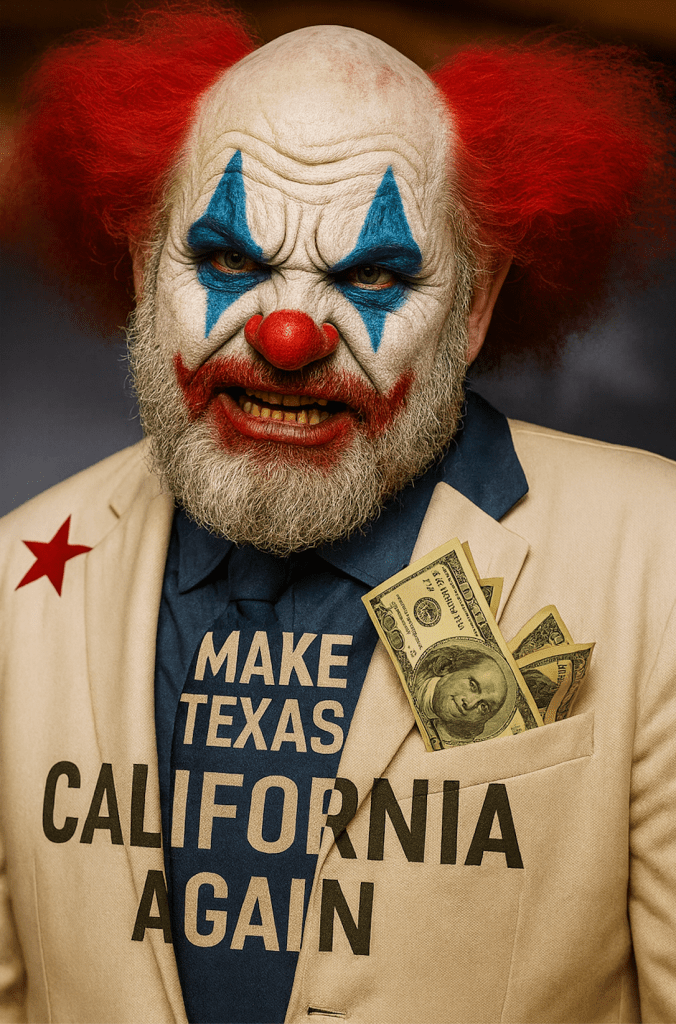
99-1/2 just won’t do—Remember the AI moratorium that was defeated 99-1 in the Senate during the heady days of the One Big Beautiful Bill Act? We said it would come back in the must-pass National Defense Authorization Act and sure enough that’s exactly where it is courtesy of Senator and 2028 Presidential hopefull Ted Cruz (fundraising off of the Moratorium no doubt for his “Make Texas California Again” campaign) and other Big Tech sycophants according to a number of sources including Politico and the Tech Policy Press:

It…remains to be seen when exactly the moratorium issue may be taken up, though a final decision could still be a few weeks away.

Congressional leaders may either look to include the moratorium language in their initial NDAA agreement, set to be struck soon between the two chambers, or take it up as a separate amendment when it hits the floor in the House and Senate next month.

Either way, they likely will need to craft a version narrow enough to overcome the significant opposition to its initial iterations. While House lawmakers are typically able to advance measures with a simple majority or party-line vote, in the Senate, most bills require 60 votes to pass, meaning lawmakers must secure bipartisan support.

The pushback from Democrats is already underway. Sen. Brian Schatz (D-HI), an influential figure in tech policy debates and a member of the Senate Commerce Committee, called the provision “a poison pill” in a social media post late Monday, adding, “we will block it.”

Still, the effort has the support of several top congressional Republicans, who have repeatedly expressed their desire to try again to tuck the bill into the next available legislative package.

In Washington, must-pass bills invite mischief. And right now, House leadership is flirting with the worst kind: slipping a sweeping federal moratorium on state AI laws into the National Defense Authorization Act (NDAA).

This idea was buried once already — the Senate voted 99–1 to strike it from Trump’s earlier “One Big Beautiful Bill.” But instead of accepting that outcome, Big Tech trying to resurrect it quietly, through a bill that is supposed to fund national defense, not rewrite America’s entire AI legal structure.

The NDAA is the wrong vehicle, the wrong process, and the wrong moment to hand Big Tech blanket immunity from state oversight. As we have discussed many times the first time around, the concept is probably unconstitutional for a host of reasons and will no doubt be immediately challenged.

AI Moratorium Lobbying Explainer for Your Electric Bill

Here are the key shilleries pushing the federal AI moratorium and their backers:

Lobby Shop / OrganizationSupporters / FundersRole in Pushing MoratoriumNotes
INCOMPAS / AI Competition Center (AICC)Amazon, Google, Meta, Microsoft, telecom/cloud companiesLeads push for 10-year state-law preemption; argues moratorium prevents ‘patchwork’ lawsIdentified as central industry driver
Consumer Technology Association (CTA)Big Tech, electronics & platform economy firmsLobbying for federal preemption; opposed aggressive state AI lawsHigh influence with Commerce/Appropriations staff
American Edge ProjectMeta-backed advocacy orgFrames preemption as necessary for U.S. competitiveness vs. China; backed moratoriumUsed as indirect political vehicle for Meta
Abundance InstituteTech investors, deregulatory donorsArgues moratorium necessary for innovation; publicly predicts return of moratoriumMessaging aligns with Silicon Valley VCs
R Street InstituteMarket-oriented donors; tech-aligned fundersOriginated ‘learning period’ moratorium concept in 2024 papers by Adam ThiererNot a lobby shop but provides intellectual framework
Corporate Lobbyists (Amazon/Google/Microsoft/Meta/OpenAI/etc.)Internal lobbying shops + outside firmsPromote ‘uniform national standards’ in Congressional meetingsOperate through and alongside trade groups

PARASITES GROW IN THE DARK: WHY THE NDAA IS THE ABSOLUTE WRONG PLACE FOR THIS

The National Defense Authorization Act is one of the few bills that must pass every year. That makes it a magnet for unrelated policy riders — but it doesn’t make those riders legitimate.

An AI policy that touches free speech, energy policy and electricity rates, civil rights, state sovereignty, copyright, election integrity, and consumer safety deserves open hearings, transparent markups, expert testimony, and a real public debate. And that’s the last thing the Big Tech shills want.

THE TIMING COULD NOT BE MORE INSULTING

Big Tech is simultaneously lobbying for massive federal subsidies for compute, federal preemption of state AI rules, and multi-billion-dollar 765-kV transmission corridors to feed their exploding data-center footprints.

And who pays for those high-voltage lines? Ratepayers do. Utilities that qualify as political subdivisions in the language of the moratorium—such as municipal utilities, public power districts, and cooperative systems—set rates through their governing boards rather than state regulators. These boards must recover the full cost of service, including new infrastructure needed to meet rising demand. Under the moratorium’s carve-outs, these entities could be required to accept massive AI-driven load increases, even when those loads trigger expensive upgrades. Because cost-of-service rules forbid charging AI labs above their allocated share, the utility may have no choice but to spread those costs across all ratepayers. Residents, not the AI companies, would absorb the rate hikes.

States must retain the power to protect their citizens. Congress has every right to legislate on AI. But it does not have the right to erase state authority in secret to save Big Tech from public accountability.

A CALL TO ACTION

Tell your Members of Congress:
No AI moratorium in the NDAA.
No backroom preemption.
No Big Tech giveaways in the defense budget.
@Artist Rights Institute Newsletter 4/7/25

The Artist Rights Institute’s news digest Newsletter

The Artist Rights Watch podcast returns for another season!  First episode is Tim Kappel discussing the Vetter v. Resnik landmark copyright termination case. Follow us wherever you get your podcasts.

New Survey for Songwriters: We are surveying songwriters about whether they want to form a certified union. Please fill out our short Survey Monkey confidential survey here! Thanks!

Streaming Meltdown

White Noise Is Hugely Popular on Streaming Services. Should It Be Devalued? (Kristin Robinson/Billboard) (Subscription)

Polly Pockets Strikes Again: DANIEL EK POCKETS ANOTHER $27.6M FROM SELLING SPOTIFY SHARES – CASHING OUT OVER $750M SINCE 2023 (Mandy Daludgug/MusicBusinessWorldwide)

THY ART IS MURDER Vocalist Quits Over Finances: “I Can’t Live Like This Anymore” (Robert Pasbani/Metal Injection)

AI Litigation

U.S. District Judge Sidney Stein order in New York Times et al v. Microsoft, OpenAI et al

NYT v MSFT-OpenAI MTDDownload

Judge explains order for New York Times in OpenAI copyright case (Blake Brittan/Reuters)

OpenAI, Google reject UK’s AI copyright plan (Joseph Bambridge/Politico EU)

Mechanical Licensing Collective

Shhh…It’s a Secret! How is the MLC “Hedge Fund” Performing in the Global Market Crash (Chris Castle/MusicTechPolicy)

Ticketing

If it Looks Like a Duck and Quacks Like a Duck, Deny Everything: The ALEC Ticketing Bill Surfaces in Texas to Rip Off Artists (Chris Castle/MusicTechPolicy)

Tickets to Beyonce’s ‘Cowboy Carter’ Shows Bottoming Out at $25 In LA, New Jersey (Ashley King/Digital Music News)

TikTok Divestment

TikTok Extended Again (Chris Castle/MusicTech.Solutions)

And After All That, TikTok Could Still Go Poof (Paul Resnikoff/Digital Music News)

Books

Understanding the China Threat by Lianchao Han and Bradley A. Thayer

Brookings experts’ reading list on US-China strategic relations

Global Soft Power Index 2024 by Konrad Jagodzinski/Brand Finance

Guest post by @TheBlakeMorgan: A musician’s view of the TikTok legislation

Here’s a musician’s perspective on the TikTok legislation before Congress: I hope it passes, both as an American, and as a music maker. (The bill is “Protecting Americans From Foreign Adversary Controlled Applications Act, (HR 7521),” It was recently introduced by Representatives Mike Gallagher (R-Wi.) and Raja Krishnamoorthi (D-Ill.)The bill passed the House by a vote of 352-65, demonstrating deep bipartisan support)

First––this bill restricts TikTok, it does not “ban” the app. It forces the company to separate its ties to the Chinese Communist Party and prevents them from accessing the data of Americans. That’s a good thing.

The bill doesn’t mandate or regulate speech, it’s focused on national security: the FCC called TikTok “a clear and present danger” to our country.

Second––music makers already know what music lovers are just now learning: TikTok is the worst, most exploitative streaming platform for music, anywhere. The vast majority of music on TikTok generates virtually no revenue for the musicians who made it, and even more music on the platform is completely unlicensed (stolen), copied (stolen via AI), or pirated (stolen).

Simply put, TikTok is trying to build a music-based business without paying music makers fair value for the music.

Lastly––musicians (and Americans) are all too familiar with being underpaid and undervalued, with our data being scraped and sold, with platforms which promote hate speech, bigotry, and bullying.

But TikTok does all of this and more, while posing an existential national security threat to our country.

It’s rare to see independent musicians (like me) stand with major labels, and it’s rare to see Republicans and Democrats stand together about anything. But here we are. I hope it passes the Senate and that President Biden signs it.

Selected Comments on the Copyright Office Proposed Rule on Termination Rights and MLC Operations: John Barker

The Copyright Office has asked for comments from the public on important issues for rulemakings under the Music Modernization Act. This will potentially affect the operations of The MLC and related rights especially because the Copyright Office recently extended the scope of that rulemaking. The proposal drew a mixed response.

We will be posting selected comments that we think might be interesting to Trichordist readers. The project is a bit wonky, but important to stay informed on. This comment by Nashville publisher John Barker who founded ClearBox Rights, the IP rights management company is a great introduction to the termination issue and how we got to where we are today by a deep thinker on copyright.

In today’s digital streaming marketplace, there is rarely a need for a traditional re-release of a recording into a collection, best-of, or other packaging combination, since most streaming services offer single song selections, with the ability to create a custom “play list” to suit the consumer’s taste. The basic result is, once a song is recorded, licensed and utilized on a DMP, there is little need for new licenses for that recording/song combination with the DMP provider. The significant portion of compensation writers and heirs had experienced through new licenses of that recording/song in the mechanical world has been reduced to almost nothing.

What had been an accepted practice of Terminating Claimants participating in licensing and receiving royalties for older recordings with new licenses was thwarted to a considerable extent through the unintended consequences of this modern-day digital distribution method.

The combination of the negative impact through the MLC’s Notice and Dispute Policy, along with the consequences of the digital marketplace replacing recorded re-packaging, makes this issue of the Copyright Office ruling even more critical for writers and heirs.

So here we are, dealing with this again.

@musicbizworld: Spotify’s Mission Statement is Preposterous. Its latest announcements prove it.

[Chris sez: It is not enough for a Silicon Valley company to have a good idea or a compelling product or service. No, no–like Elizabeth Holmes the convicted felon, or Google, who probably should be convicted felons, these people have to convince themselves that they are saving the world. Literally. This is true no matter how ordinary their accomplishments. 

Like the self-hypnotist, they convince themselves that their powers of commerce are transcendent and otherworldly. History begins with them. Never should their revelatory accomplishments be compared to building a better mousetrap.

Spotify is no different, and they will damn well prove that their mission statement has no less than the predictive power of the oracle of Balaam. But of course they fail, flesh and blood being what it is in this time before the Singularity. 

Tim Ingham fries up Spotify’s “mission statement” in this must read expose. (Read the post on Music Business Worldwide.) But realize this–you can rest assured that if Daniel Ek didn’t write this claptrap himself, he definitely must have approved it. So if you ever wondered whether Ek had a grip on reality, it appears that his grip is weak. But you know, in the beginning was the word, et cetera, et cetera.]

In Spotify’s words, Loud & Clear exists for one reason above any other: “[To] provide a valuable foundation for a constructive conversation”.

Thing is, it’s not the surface-level data on Loud & Clear – the data that Spotify wants you to pay attention to – that makes for the most “constructive conversation” about the music industry and where it’s headed.

To get to the good stuff, you’ve got to dig a little deeper than that….

Taken at face value, these figures point to the ever-widening base of artists earning decent payouts from the world’s largest subscription streaming platform.

Spotify obviously likes that narrative a lot. As its Loud & Clear site boasts: “More artists are sharing in today’s thriving music economy compared to the peak of the CD era.”

Thing is, any half-credible analysis of these numbers has to take into account how they’ve changed over time.

And when we start treading this path, these figures begin to take on a different nature – one that flies in the face of Spotify’s wonderfully earnest, but laughably silly, mission statement.

Read the post on Music Business Worldwide

Press Release: @MarshaBlackburn, @SenAlexPadilla Reintroduce Bipartisan Bill to Ensure Artists Are Paid for Their Music Across All Platforms #irespectmusic

The US is still the only Western democracy that stiffs artists on royalty payments for radio airplay. Let’s fix that!

[Editor Charlie sez: Anyone who tells you that artists can’t pass legislation to get fair pay for radio play is either a charlatan or full of shit and they are not on our side of the football.]

U.S. Senators Marsha Blackburn (R-Tenn.) and Alex Padilla (D-Calif.), along with Senators Thom Tillis (R-N.C.) and Dianne Feinstein (D-Calif.), introduced the bipartisan American Music Fairness Act to ensure artists and music creators receive fair compensation for the use of their songs on AM/FM radio. This legislation will bring corporate radio broadcasters in line with all other music streaming platforms, which already pay artists for their music. 

Congressmen Darrell Issa (R-Calif.) and Jerry Nadler (D-N.Y.) led the legislation in the U.S. House of Representatives.

“From Beale Street to Music Row to the hills of East Tennessee, Tennessee’s songwriters and artists have undeniably made their mark,” said Senator Blackburn. “However, while digital music platforms compensate music performers and copyright holders for playing their songs, AM/FM radio stations only pay songwriters for the music they broadcast. This legislation takes a long overdue step toward leveling the music industry playing field and ensuring creators are fairly compensated for their work.”

“California’s artists play a pivotal role in enriching and diversifying our country’s music scene, but for too long, our laws have unfairly denied them the right to receive fair compensation for their hard work and talent on AM/FM radio broadcasts,” said Senator Padilla. “As we celebrate the accomplishments of our musical artists at the Grammy Awards in Los Angeles this weekend, we must commit to treating them with the dignity and respect they deserve for the music that they produce and that we enjoy every day.”

“Protecting one’s intellectual property is the signature right of every American who dares to invent. Every artist who first picked up a drumstick, sang to their mirror, or wrote lyrics from the heart did so because they had a dream and wanted to share it with the world. I look forward to working with stakeholders and colleagues to achieve this overdue reform,” said Congressman Issa.

“The United States is an outlier in the world for not requiring broadcast radio to pay artists when playing their music, while requiring satellite and internet radio to pay,” said Chairman Nadler. “This is unfair to both artists and music providers. I’m proud to sponsor the American Music Fairness Act which would finally correct this injustice.  This is what music creators want and deserve.”

“It’s clear that the movement for music fairness continues to gain momentum, bringing us closer than ever before to ending Big Radio’s ability to deny artists the fair pay they deserve. This week’s House and Senate introductions of the American Music Fairness Act is evidence of that. We thank Senators Padilla and Blackburn and Representatives Issa and Nadler for their leadership in the effort to secure economic justice for our nation’s music artists and creators, and look forward to working together to drive continued progress in the coming months,”said Congressman Joe Crowley, Chairman of musicFIRST.

“Music creators have been forced to give away their work for far too long. It is time for Congress to demonstrate that they stand behind the hard-working Americans that provide the music we all love by finally passing the American Music Fairness Act. This bill has the broad support of artists, labels, small broadcasters, unions, and others because it strikes a fair balance by respecting creators for their work and protecting truly local broadcasters. No more excuses, no more waiting in line for their turn. Music creators demand the economic justice AMFA provides,” said Michael Huppe, President and CEO of SoundExchange.

“As we prepare to focus our attention on celebrating music this weekend at the GRAMMY Awards, the Recording Academy also renews its commitment to ensuring music creators are always compensated fairly for their work. We applaud Reps. Issa, Nadler, McClintock, and Lieu and Senators Padilla, Blackburn, Feinstein, and Tillis for reintroducing the American Music Fairness Act and look forward to working with them to build on the historic progress we made last year on this important legislation,” said Harvey Mason jr., CEO of the Recording Academy.

“The American Music Fairness Act is practical compromise legislation that has already passed the House Judiciary Committee with bipartisan support last Congress. It takes a smart, calibrated approach towards solving a decades old problem in the radio industry. When enacted into law, AMFA will ensure recording artists and copyright owners are paid fairly for recorded music regardless of the technology used to broadcast it while carefully protecting small and noncommercial stations to preserve truly local radio our communities depend upon,” said Mitch Glazier, Chairman and CEO of the Recording Industry Association of America.

“For far too long, our broken and unfair system has let AM/FM radio stations — many of which are owned by just a few massive media corporations — get away with refusing to pay artists when they play their music. While these big corporate broadcast companies gobble up billions upon billions in advertising dollars, the session and background musicians, whose work makes all of it possible, receive no compensation whatsoever for their creations. It’s time to right this wrong, and the American Music Fairness Act aims to do just that. It’s vital that Congress protects the livelihoods of those who create the music we know and love,” said Ray Hair, International President of the American Federation of Musicians.

“I want to thank Congressman Jerry Nadler, Congressman Darrell Issa, Senator Alex Padilla and Senator Marsha Blackburn for their leadership on this crucial legislation. When you consider the billions of dollars the big radio corporations generate in revenue and profits, it’s shocking that recording artists, vocalists and musicians don’t receive a penny when their work is played on AM/FM radio. Since when do workers in America get exploited without pay? This is an unfair and egregious loophole especially since both streaming and digital services pay for the use of artists’ work. AM/FM radio has had a free ride for decades and it’s time to put a stop to it! I urge Congress to fix this outdated practice by passing the American Music Fairness Act,” said Fran Drescher, President of SAG-AFTRA. 

“We are grateful that our champions are making it crystal clear that the fight for fairness continues in this new Congress. By reintroducing the American Music Fairness Act, Senators Blackburn and Padilla, along with Representatives Issa, Nadler, McClintock, and Lieu, as defenders of property rights and supporters of artistic expression, have put the mega broadcasting conglomerates on notice that it is time to erase their stain on America’s history,” said Dr. Richard James Burgess, President and CEO of the American Association of Independent Music.

Currently, the United States is the only democratic country in the world in which artists are not compensated for the use of their music on AM/FM radio. By requiring broadcast radio corporations to pay performance royalties to creators for AM/FM radio plays, the American Music Fairness Act would close an antiquated loophole that has allowed corporate broadcasters to forgo compensating artists for the use of their music for decades.

In recognition of the important role of locally owned radio stations in communities across the U.S., the American Music Fairness Act also includes strong protections for small, college, and non-commercial stations.

The American Music Fairness Act will positively impact artists and the music industry at large by:

  • Requiring terrestrial radio broadcasters to pay royalties to American music creators when they play their songs.
  • Protecting small and local stations who qualify for exemptions — specifically those that fall under $1.5 million in annual revenue and whose parent companies fall under less than $10 million in annual revenue overall — by allowing them to play unlimited music for less than $500 annually. 
  • Creating a fair global market that ensures foreign countries pay U.S. artists for the use of their songs overseas.

The American Music Fairness Act is endorsed by: the AFL-CIO, the American Association of Independent Music (A2IM), the American Federation of Musicians, the Recording Academy, the Recording Industry Association of America (RIAA), SAG-AFTRA and SoundExchange.

Full text of the bill is available here.

###

https://www.blackburn.senate.gov/2023/2/blackburn-padilla-reintroduce-bipartisan-bill-to-ensure-artists-are-paid-for-their-music-across-all-platforms

Press Release: @MarshaBlackburn, @SenAlexPadilla Reintroduce Bipartisan Bill to Ensure Artists Are Paid for Their Music Across All Platforms #irespectmusic — Artist Rights Watch–News for the Artist Rights Advocacy Community

3rd Annual UGA Artist Rights Symposium: The Future of the Copyright Royalty Board and the Copyright Office

Tomorrow! Live stream 3rd Artist Rights Symposium at @TerryCollege with @MMercuriadis David Lowery, @MusicTechPolicy @richardjburgess @helienne @northmusicgroup Samantha Schilling @crispinhunt @smalldrinkofh20 David Turner @jkdegen Steve Carlisle, Janice Pilch Mary Rassenberger

Livestream tomorrow (Nov 15) at 9am ET at this link https://www.facebook.com/ugambus

Thinking Outside the Pie: @legrandnetwork Study for GESAC Highlights Streaming Impact on Choking Diversity and Songwriter Royalties

By Chris Castle

[This post first appeared in MusicTech.Solutions]

Emmanuel Legrand prepared an excellent and important study for the European Grouping of Societies of Authors and Composers (GESAC) that identifies crucial effects of streaming on culture, creatives and especially songwriters. The study highlights the cultural effects of streaming on the European markets, but it would be easy to extend these harms globally as Emmanuel observes.

For example, consider the core pitch of streaming services that started long ago with the commercial Napster 2.0 pitch of “Own Nothing, Have Everything”. This call-to-serfdom slogan may sound good but having infinite shelf space with no cutouts or localized offering creates its own cultural imperative. And that’s even if you accept the premise the algorithmically programed enterprise playlists on streaming services should not be subject to the same cultural protections for performers and songwriters as broadcast radio–its main competitor.

[This] massive availability of content on [streaming] platforms is overshadowed by the fact that these services are under no positive obligations to ensure visibility and discoverability of more diverse repertoires, particularly European works….[plus]  the initial individual subscription fee of 9.99 (in Euros, US dollars, or British pound) set in 2006, has never increased, despite the exponential growth in the quality, amount of songs, and user-friendliness of music streaming services.

Artists working new recordings, especially in a language other than English, are forced to fight for “shelf space” and “mindshare”–that is, recognition–against every recording ever released. While this was always true theoretically; you never had that same fight the same way at Tower Records.

This is not theoretically true on streaming platforms–it is actually true because these tens of millions of historical recordings are the competition on streaming services. When you look at the global 100 charts for streaming services, almost all of the titles are in English and are largely Anglo-American releases. Yes, we know–Bad Bunny. But this year’s exception proves the rule.

And then Emmanuel notes that it is the back room algorithms–the terribly modern version of the $50 handshake–that support various payola schemes:

The use of algorithms, as well as bottleneck represented by the most popular playlists, exacerbates this. Furthermore, long-standing flaws in the operations of music streaming platforms, such as “streaming fraud”, “ghost/fake artists”, “payola schemes”, “royalty free content” and other coercive practices [not to mention YouTube withholding access to Content ID] worsen the impact on many professional creators….

This report suggests solutions to bring greater transparency in the use of algorithms and invites stakeholders to undertake a review of the economic models of streaming services and evaluate how they currently affect cultural diversity which should be promoted in its various forms — music genres, languages, origin of performers and songwriters, in particular through policy actions.

Trichordist readers will recall my extensive dives into the hyperefficient market share distribution of streaming royalties known as the “big pool” compared to my “ethical pool” proposal and the “user centric” alternative. As Emmanuel points out, the big pool royalty model belies a cultural imperative–if you are counting streams on a market share basis that results in the rich getting richer based on “stream share” that same stream share almost guarantees that Anglo American repertoire will dominate in every market the big streamers operate.

Emmanuel uses French-Canadian repertoire as an example (a subject I know a fair amount about since I performed and recorded with many vedettes before Quebecoise was cool).

A lot of research has been made in Canada with regards to discoverability, in particular in the context of French-Canadian music, which is subject to quotas for over the air broadcasters which however do not apply to music streaming services. The research shows that while the lists of new releases from Québec studied are present in a large proportion on streaming platforms, they are “not very visible and very little recommended.” 

It further shows that the situation is even worse when it is not about new releases, including hit music, when the presence of titles “drops radically.” It is not very difficult to imagine that if we were to swap Québec in the above sentence with the name of any country from the European Union [or any non-Anglo American country], and even with music from the European Union as a whole, we could find similar results.

In other words, there may be aggregators with repertoire in languages other than English that deliver tracks to streamers in their countries, but–absent localized airplay rules–a Spotify user might never know the tracks were there unless the user already knew about the recording, artist or songwriter. (Speaking of Canada, check the MAPL system.)

This is a prime example of why Professor Feijoo and I proposed streaming remuneration in our WIPO study to allow performers to capture the uncompensated capital markets value to the enterprise driven by these performers. Because of the market share royalty system, revenues and royalties do not compensate all performers, particularly regional or non-featured performers (i.e., session players and singers) who essentially get zero compensation for streaming.

Emmanuel also comments on the imbalance in song royalty payments and invites a re-look at how the streaming system biases against songwriters. I would encourage everyone to stop thinking of a pie to be shared or that Johnny has more apples–when the services refuse to raise prices in order to tell a growth story to Wall Street or The City, measuring royalties by a share of some mythical royalty pie is not ever going to get it done. It will just perpetuate a discriminatory system that fails to value the very people on whose backs it was built be they songwriters or session players.

We must think outside the pie.