Jared Leto Exploited by Rapidshare, VW, Go Pro, LG, Emirates Airlines, Adobe, Ford and Target

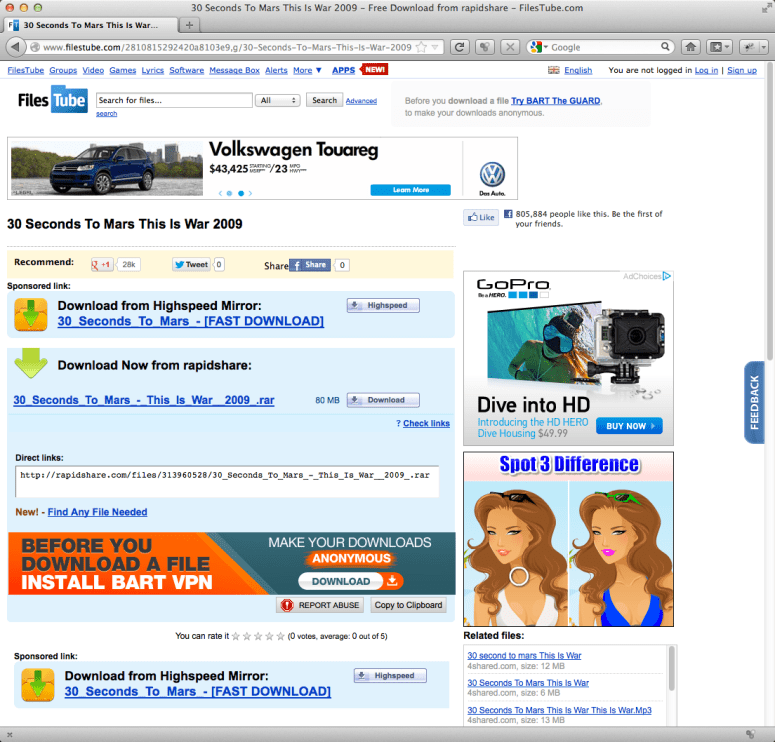
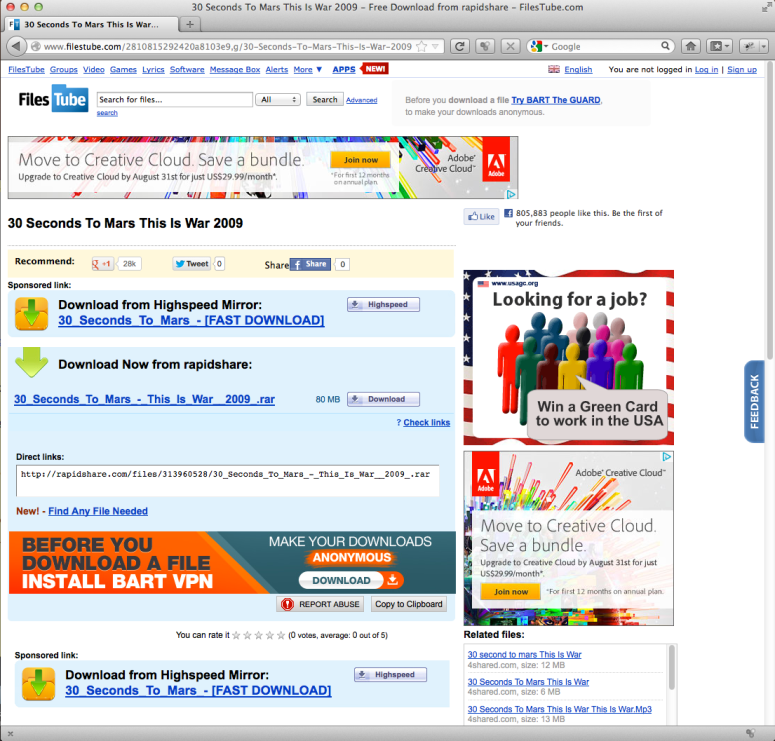
In this round we find advertisers exploiting Jared Leto‘s band 30 Seconds To Mars by Volkswagon, Go Pro cameras, LG electronics and appliances, Emirates Airlines, Adobe software, Ford and Target. It’s also interesting to note that in this series of screen shots the infringing links appear to be hosted on Rapidshare. This is the same Rapidshare that has been offended by being put on a piracy watch list. It seems to us that if Rapidshare wants to champion best practices for cyberlockers, they would do well to clean up their own business first.

The hits just keep on coming… How much money do we have to follow before there is some accountability on behalf of the brands and advertising networks? Let us be clear about this. Piracy is being financed by advertising dollars, originating with major brands, trusted to advertising agencies and then ultimately distributed to questionable online advertising networks and then to the pirate sites themselves.

This is not about free speech. This is not about censorship. It’s about money. It’s about a lot of money. It’s about a lot of money being made by advertising networks and pirate sites and not paying artists a penny. This is the exploitation economy where anyone and everyone can profit from a creators work, except the creator themselves.

FilesTube points to Rapidshare as a host of infringing uploads of artists work. Also not the Adobe advertising. Wouldn’t be ironic if users searched FilesTube and RapidShare for Adobe software products?

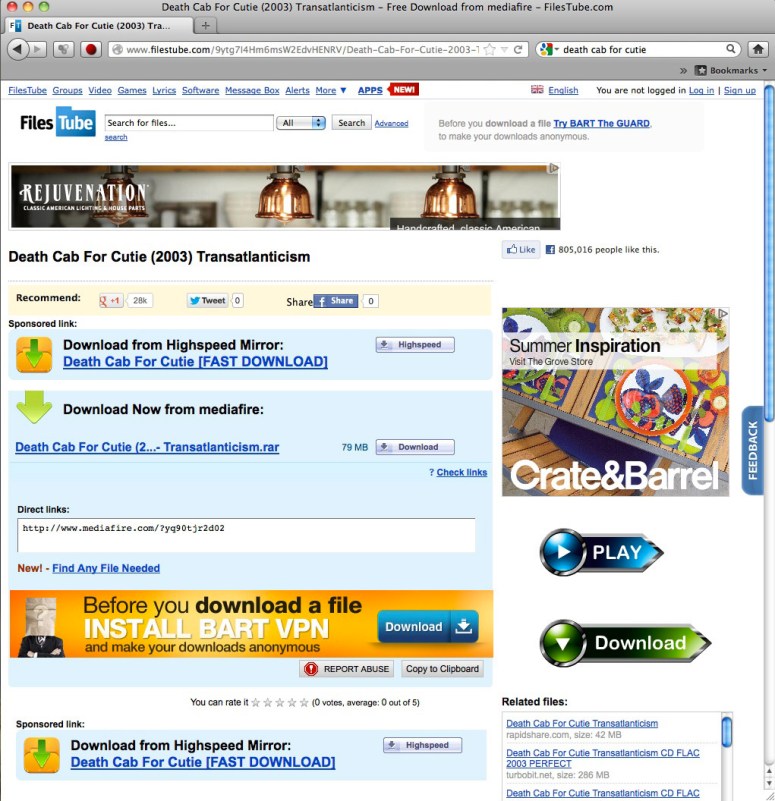
Death Cab For Cutie Exploited by Google, Target, AT&T, Ford, Urban Outfitters, United Airlines, Rejuvenation and Crate and Barrel

Google was right. This is a follow the money story. As reported by PC Pro Magazine, Google says,

“Instead of imposing blocks or filters that might damage fundamental freedoms, governments should construct coalitions with reputable advertising networks, payment processors and rightsholders. Together, these coalitions can crack down and squeeze the financing behind online infringement.”

We’d like to think that Google themselves would be one of the “reputable advertising networks.” As pictured below, Google appears to be not just the ad network serving the ad, but also the brand buying the advertising for it’s product, Google Advertising. Needless to say this is a disappointing find given the recent report.

What’s worse is that major consumer brands are benefiting from having access to the audience (and key demographics) built by individual artists. In this case Death Cab For Cutie who based on the advertisers seems to be a very good demographic indeed supporting ads from Target, SC Johnson and AT&T and that’s just on one site with infringing material.

What incentive is there for brands and advertisers to work with artists and creators to create ad campaigns when the brands can simply “steal” access to the artists audience by paying ad networks to turn a blind eye to sites dedicated to infringing activity?

So far we’ve seen that Google understands, and recommends that advertising networks be accountable to where they are serving ads, despite the fact that Google themselves appears to be still serving ads to sites entirely dedicated to copyright infringement. We’ve also seen above how the music of Ben Gibbard‘s band Death Cab For Cutie is able to draw advertising revenue from Target and AT&T.

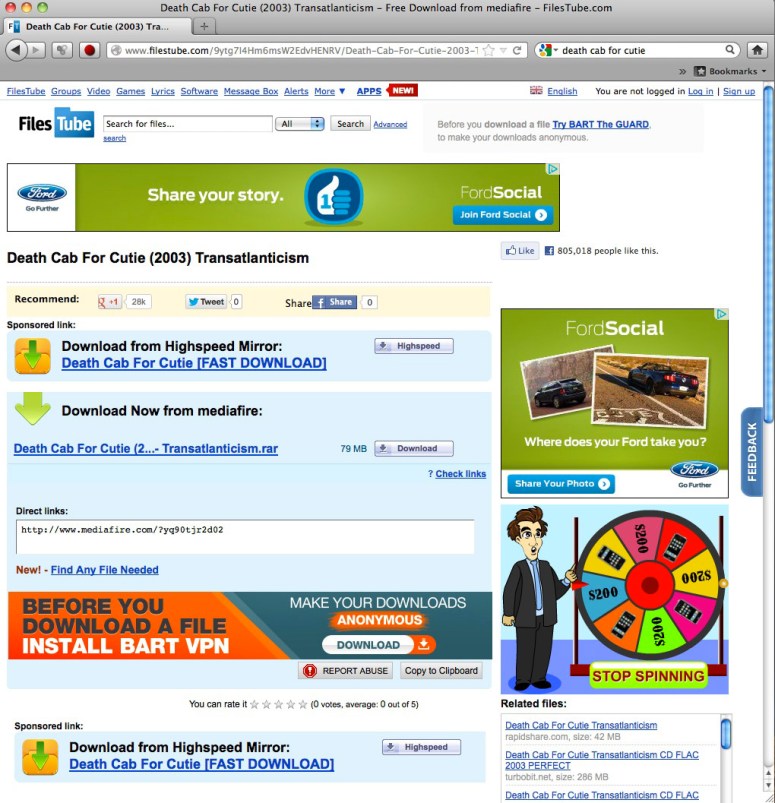
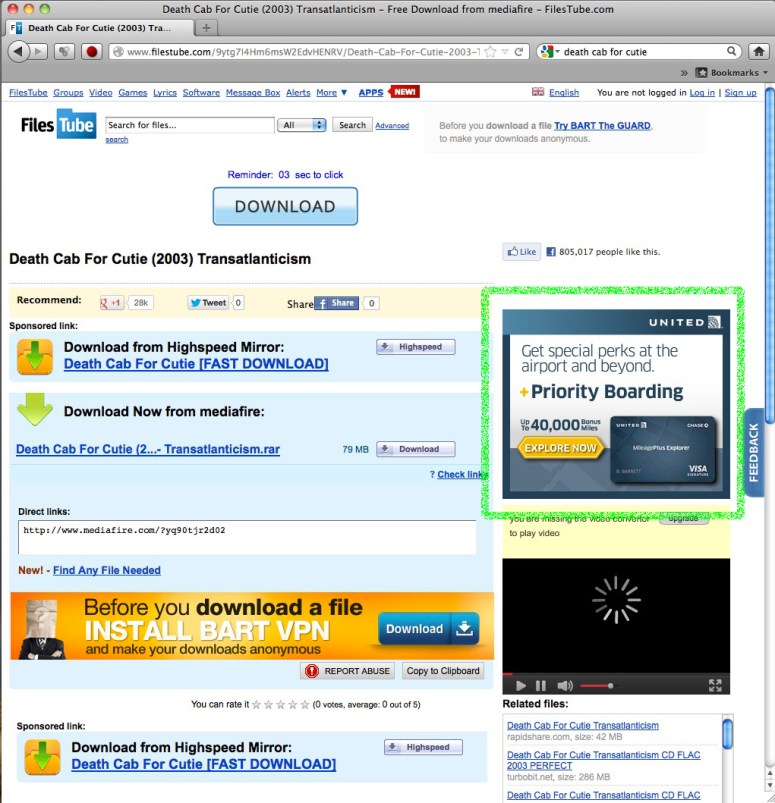
Below we see how deep this really goes. By focusing on just FilesTube we can see that Death Cab For Cutie draws advertising revenue to the site from Ford, Urban Outfitters, United Airlines, Rejuvenation and Crate & Barrel. These are all well respected brands, that appeal to a demographic with considerable disposable income. And yet, none of these brands compensate Ben Gibbard, Death Cab For Cutie or any of the various rights holders for access to the bands music and fans.

So yes, this is a follow the money story. When we follow the money it leads to major brands and online advertising networks all profiting from the artists work and paying nothing to the artists. Not one single penny. Zero. Zilch. Nadda. That’s what makes this discussion about free beer, and not free speech as some would like to propose.

Music Technology Policy

We got this nice comment today from Francine Hardaway on behalf of Zedo (who we called out in an earlier post).  It’s gratifying to hear that a company in the ad network business cares enough about artists to respond to criticism.  This exchange highlights the most important aspect of the collision of legitimate companies with the seedy underbelly of the Internet–it’s not enough to sit back and wait for someone to formally notify you when things are going wrong.

Ad networks are the Pinto of the 21st Century and it’s important not to cover up responsibility as it will only come back to bite in the end.  Not to mention that good companies are run by good people who want to do the right thing.

I’m particularly glad to get this response because Esther Dyson’s book “Release 2.0” inspired me in the 90s.  We look forward to not seeing Zedo show up on pirate…

View original post 144 more words

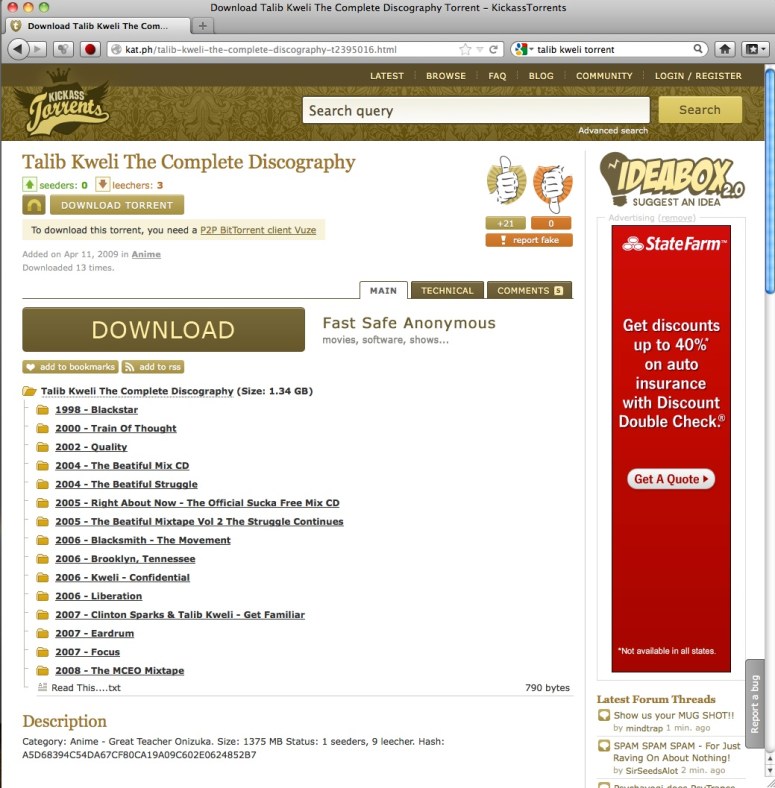
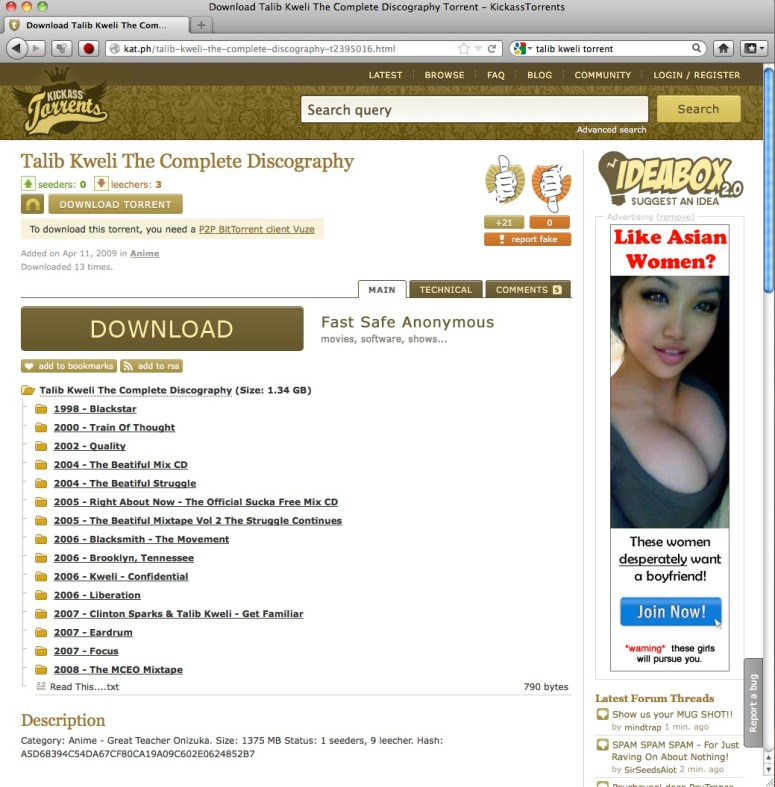
Talib Kweli Exploited by State Farm Insurance, Neiman Marcus, Ferguson/Kohler, The Ad Council, Google, Ad Choices and Desk Top Strippers

Still think that the illegal exploitation of artists work is about freedom and sharing? From the looks of the screen shots below it’s about mass scale, enterprise level ad laundering with money originating on Madison Avenue. Or, in the case of Neiman Marcus maybe 5th Avenue?

These are major brands and corporations like State Farm Insurance, Neiman Marcus, Ferguson, Kohler, Register.com, Google and even the Ad Council who are aiding in the exploitation of, and profiting from the infringement of the artists work.

Yes Google we’re following the money and it leads back to these major brands and companies (like Google).

We’re not sure how Talib Kweli feels about all this, but maybe we’ll tweet him to find out.Earlier this summer we noticed Talib retweeted the “Letter To Emily.”

Talib Kweli Greene ‏@TalibKweli
RT @SLondonChicinFL: EXCELLENT must read for anyone who has downloaded music illegally http://tinyurl.com/7rqlppb

of course one of the greatest irony’s of pirate culture is protecting their IP while profiting from everyone else’s…

Copyrights and Trademarks
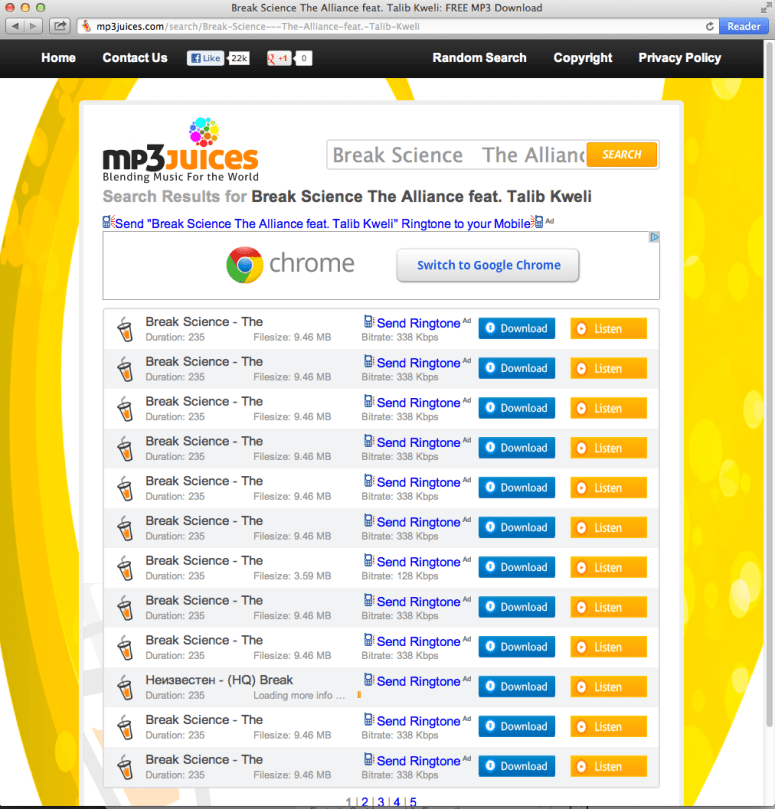
All contents of this Web site are: Copyright © 1999-2012 MP3Juices or its suppliers. All rights reserved. The MP3Juices logo, trademarks and other marks that appear throughout this Web site, its affiliates or third party trademark owners, and are protected by U.S. and international trademark laws. You are prohibited from using any of the marks appearing throughout this Web site without express written consent from the respective trademark owner, except as permitted by applicable laws.

How to DMCA : Google Web Search, De-Listing Infringing Links

WARNING! The following is for informational purposes only and does not constitute legal advice. We strongly recommend seeking the advice of a lawyer.

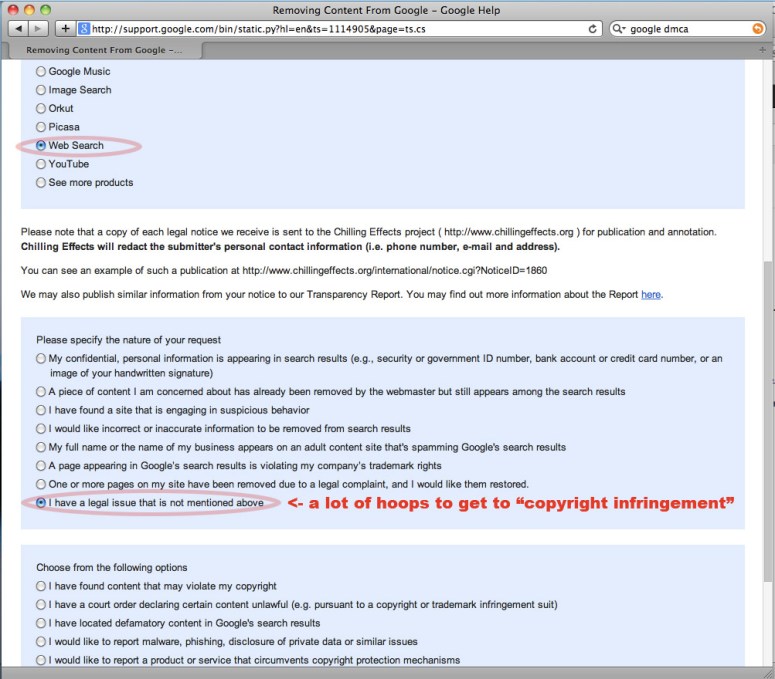
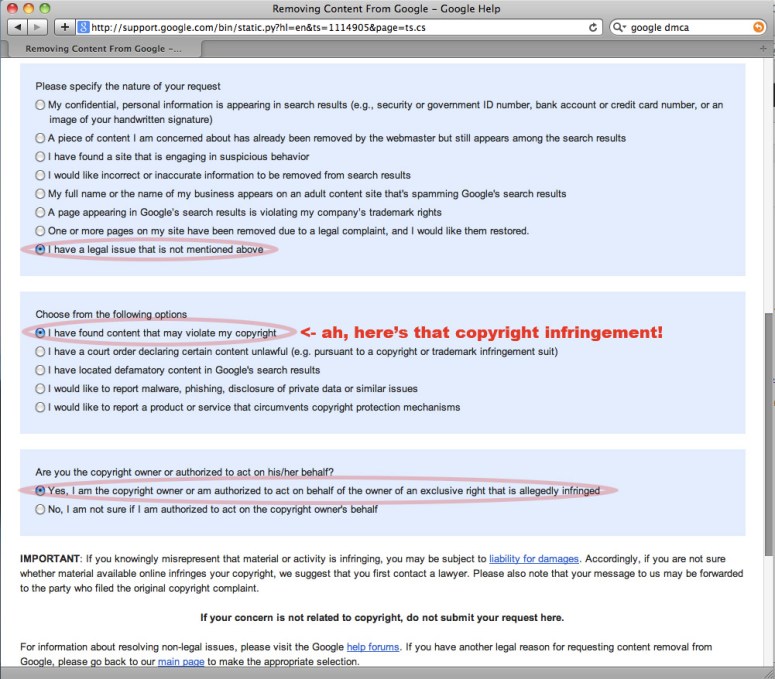
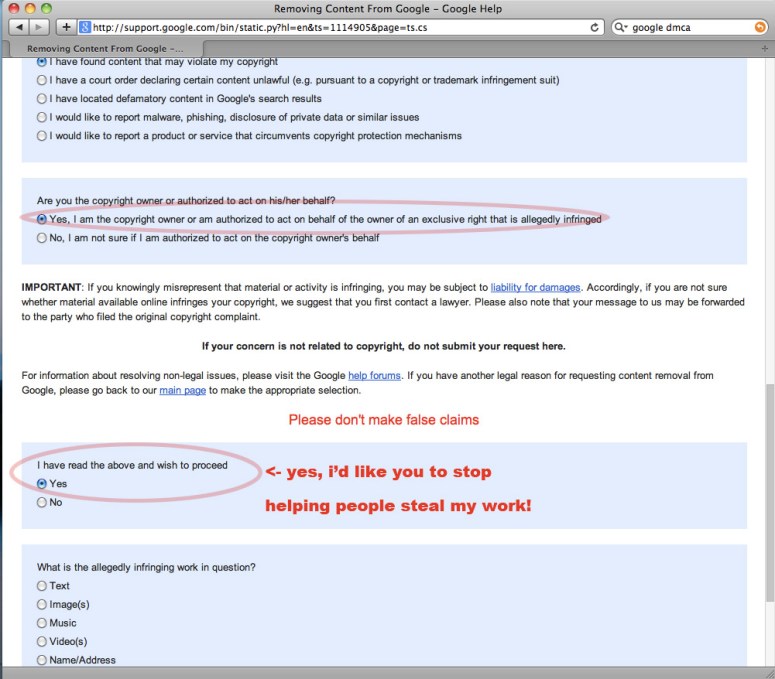
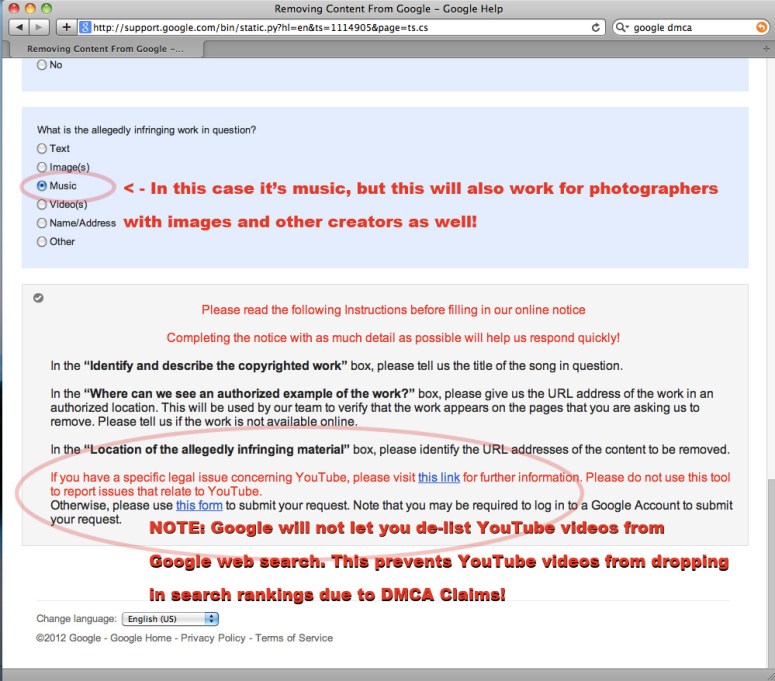
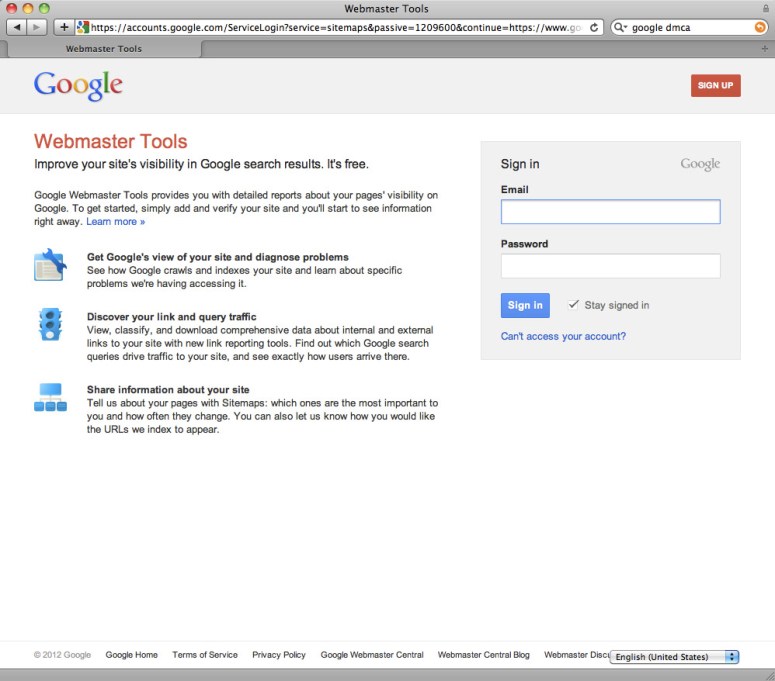
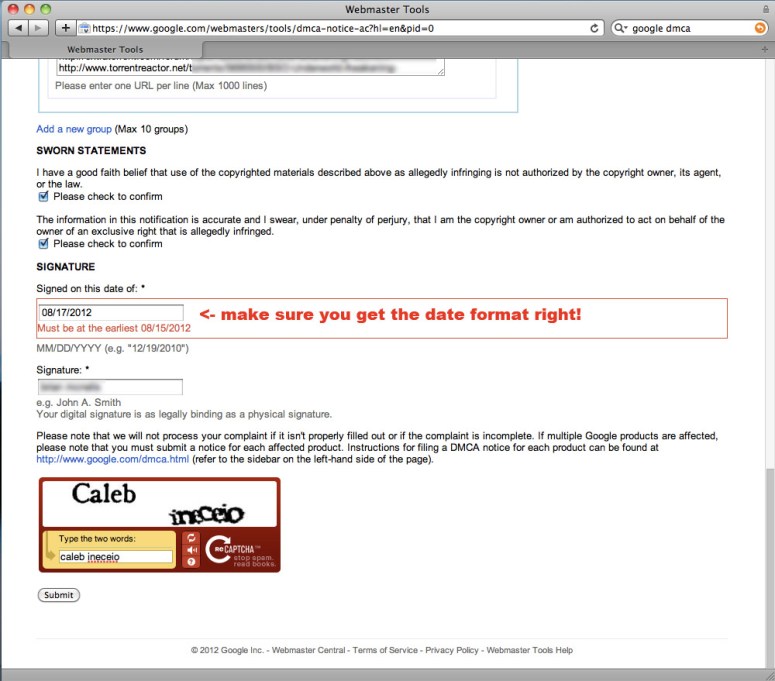
Find below easy to follow step by step instructions to de-list your infringing links from Google Web Search. As you scroll down the page and make your selections, more questions will appear. Just keep scrolling down the page and making your selections as shown below.

###

Start Here:
http://support.google.com/bin/static.py?hl=en&ts=1114905&page=ts.cs

Step One – Select “Web Search” from the options. This is how to get your links to infringing material hidden from the Google search return results.

Step Two – Google does not make de-listing links easy by describing it as such. Make sure you select the box, “I have a legal issue not mentioned above.”

Step Three -Select the box that says, “I have found content that may violate my copyright.”

Step Four – It goes without saying that if you are working to de-list infringing works from Google Search, please make sure you are authorized to do so by either owning/controlling the rights to the material being infringed, or working under the authority and direction of those who do. Then select the box, “Yes, I am the copyright owner or am authotized to act on behalf of the owner of an exclusive right that is allegedly infringed. “

Step Five – Select the box that says “Music.” This process can be used to de-list links to images, text, videos (other than YouTube), etc.

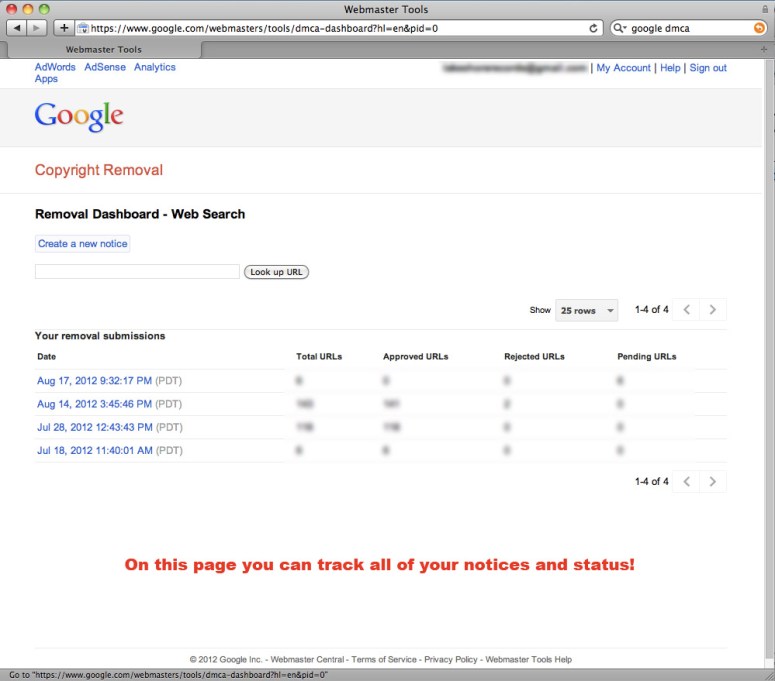
Step Six – At this point you will be prompted to log into your Gmail account or create one. We suggest you create a dedicated Gmail account just for your DMCA Claims Tracking. Eventually, you’ll have a webtools dashboard to track all of your link submissions.

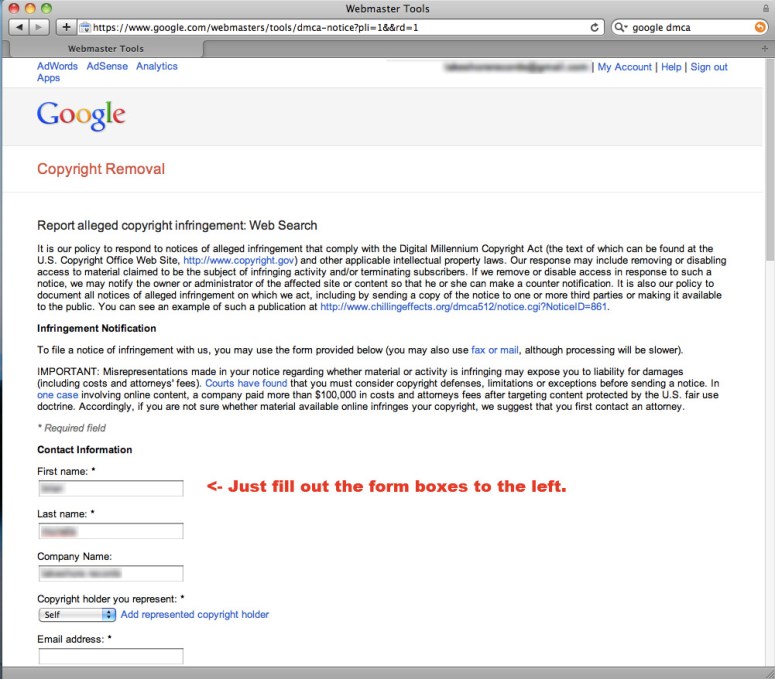
Step Seven – Just fill out the boxes with your information. Note that this information will become publicly available on Chilling Effects. DMCA notices are a legal process and should not be done lightly or without clarity over the allegedly infringing rights.

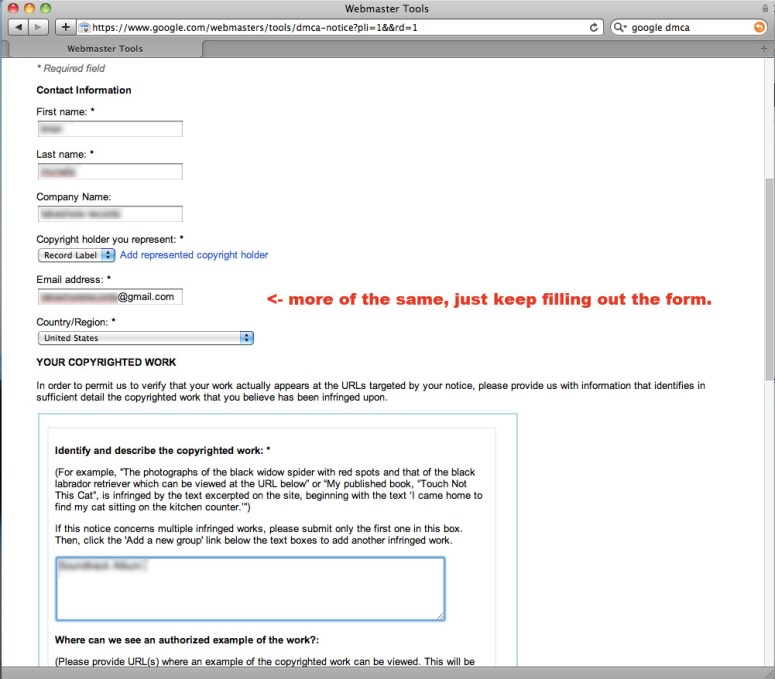
Step Eight – Just keep filling out the form, you’re almost there…

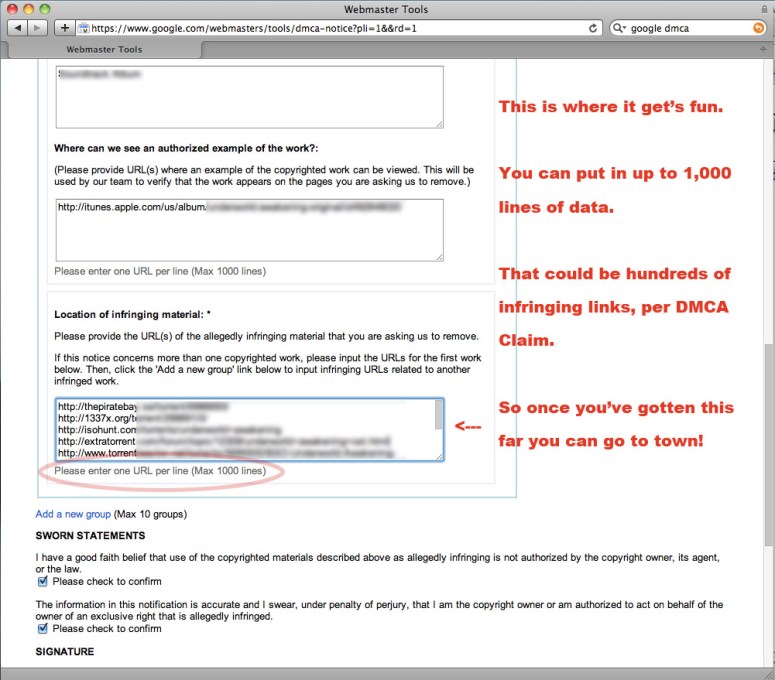
Step Nine – Fill out the three boxes. This is where it gets fun. Box One, describe the work being infringed, such as “Record Album by <insert artist/s name>.” Box Two, provide a link where a legal version of this item exists. We usually use link from either Itunes or Amazon as they are the most common and easy to find. Box Three, you can copy/paste in as many as 1,000 infringing links! And it get’s better, you can add nine more boxes of 1,000 infringing links each.

In a single DMCA request form you can submit up to ten thousand (10,000) infringing links!

Step Ten – Make sure all the fields are filled out correctly. You will get errors if you make a mistake.

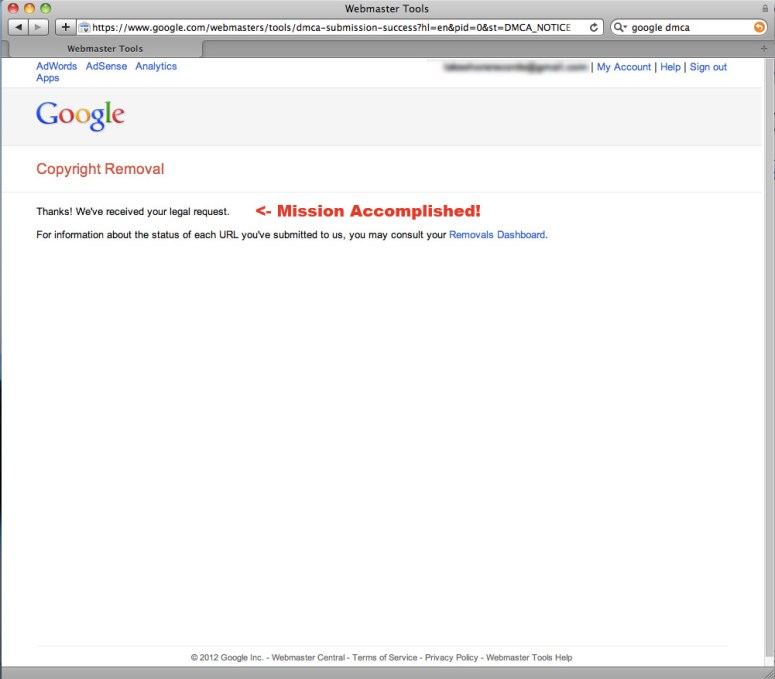
Step Eleven – Google will tell you that you have successfully submitted your links.

Step Twelve – Monitor the activity of your claims in your “Removal Dashboard for Web Search.

That’s it. Happy hunting. We usually compile all of the infringing links into a word document or spreadsheet before filling out the form. Using a spread sheet is a great way to log all of your infringing links by line so that they can be cut and pasted into the submission boxes in the Google form.

We applaud Google for making this form available as up until recently they only excepted DMCA Claims for Web Search from Mail and Fax as shown in this current claim page for Google Docs.

WARNING! The preceeding is for informational purposes only and does not constitute legal advice. We strongly recommend seeking the advice of a lawyer.

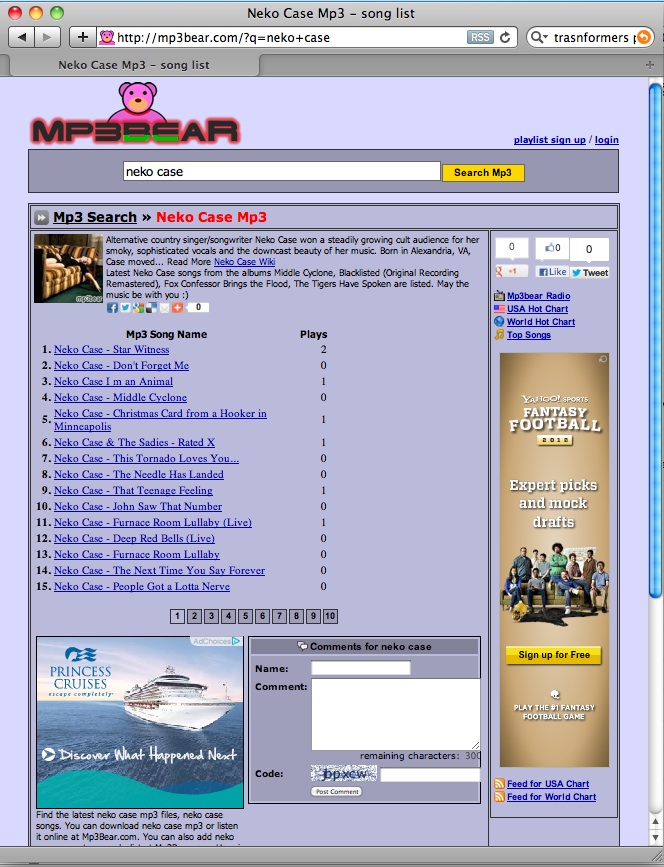
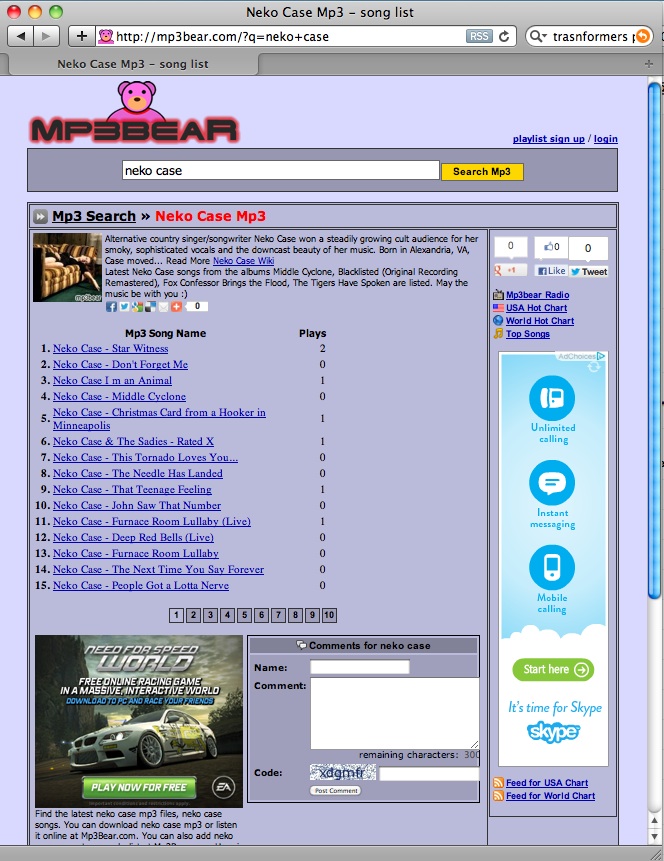
Neko Case Exploited by Macy’s, Levi’s, Princess Cruises, Skype, Yahoo, Marvel and Electronic Arts

Wow. Just wow. It’s not like Neko Case is Lady GaGa sitting on gazillions of dollars (and not that it should make a difference). This is how the Exploitation Economy works. It’s about money. Advertising money. A lot of advertising money. None of which is shared or distributed to the artists, ever. Not one penny. Not one single cent. Nothing. Zero. Zilch. Nadda.

And yet there are those who confuse free beer with free speech. Nothing here is about censorship. This really appears to be about mass scale, enterprise level, orchestrated infringement farms for profit.

SXSW Panels for Artists Rights – Show Your Support @ SXSW Panel Picker

Please show your support to advance the conversation for Artists Rights by voting for these two panels being considered for this year’s SXSW. We hope to see you in Austin. Deadline for voting is Friday August 31st.

###

MUSIC: “Who’s Ripping Me Off Now”
http://panelpicker.sxsw.com/vote/3736

Description

In June, a blog post by musician David Lowery set off a firestorm. Written to an intern at NPR who admitted to not having paid for the 11,000 tracks in her collection, the post generated more than a million views in just one week and numerous media stories.

In its wake, musicians, fans and the industry were all re-evaluating long held beliefs. Who is “the man” today? Can the Internet be both innovative and ethical? Who speaks for the artists? And what obligation does the fan have to his or her favorite artists (if any).

Join David Lowery, Cake’s John McCrea and experts from music and tech policy as they try to answer these timely and controversial questions.

Questions Answered

1. Is the new boss (tech) worse than the old boss (labels)?

2. What policy changes need to be considered to make the internet fairer for music creators

3. Can artists make a living without making money from recordings?

4. Who’s profiting from Spotify?

5. What obligation does the music fan have (if any) to the music creator?

###

INTERACTIVE: “Innovative, Open, Ethical & Sustainable Internet”
http://panelpicker.sxsw.com/vote/6170

Description

Everyone agrees the internet needs to be Open and encourage Innovation, but does it have to be “permissionless innovation” as some are proposing? The internet and digital technology have opened up many new opportunities for artists, but it has also opened up new opportunities for those who wish to exploit those artists.

This panel asks the difficult questions about the balance of rights of all citizens, including the rights of the individual citizens who are themselves both creators and consumers participating in both sides of the debate. The reality of contemporary online content distribution is that a blind eye has been turned to enterprise level, mass scale, for profit, businesses who are not including creators participation in the monetization of the value chain. This is both unethical and in the long term unsustainable.

This panel will explore mutually beneficial solutions for all stakeholders WITHOUT the need for new or additional legislation to do so.

Questions Answered

1. Why is premissionless innovation necessary? Consent is the cornerstone of civilization. How do we find the balance in the rights of all citizens to BOTH privacy and protection of individual rights such as copyright? Perhaps through the use of a master rights registry or database would make it possible to not require case by case “permission” but still have rights granted by consent.

2. Why isn’t there a way to create online indie record stores that specialize in specific genres superserving those consumers (death metal for example)? Rights Holders need to work with developers to create an easy “One Stop” rights licensing solution to encourage competition and innovation without cumbersome requirements. Ideally there would be an online equivalent to old school “One Stops” who sold records to indie stores before they developed credit lines with the distros directly. SNOCAP?

3. Why does there seem to be so much confusion between the what is the actual freedom of expression and wanting to illegally exploit that very expression? Ice-T’s “Cop Killer” or 2Live Crew’s “Me So Horny” are actual artistic expressions protected by the Constitution. The illegal coping and distribution of those expressions without the creators permission is simply exploitation without consent or compensation to the artists themselves.

4. The mutual respect granted by intellectual property rights allows individual creators the freedom to determine what permissions they wish to grant and at what price. No one has to pay that price, but the creator is entitled to set it.

5. Why are consumers willing to pay more for Fair Trade coffee but not willing to pay for music, movies and other content? Public attitudes about creators rights are not aligned with the reality of most people struggling to sustain professional creative careers. All this begs the question, if the internet is working for musicians, why are less musicians working professionally now than prior to the internet. The promise of empowerment has failed.

###

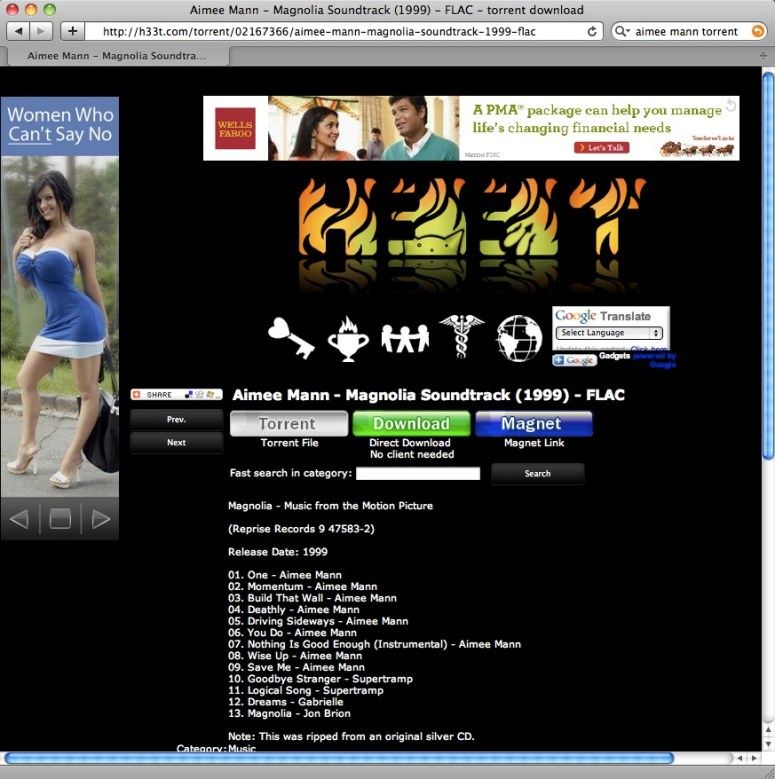
Aimee Mann Exploited by Russian Brides, Wells Fargo Bank and Nationwide Insurance

When an artist signs a contract with a record label and publishing company there is a customary clause that governs how the artists music can be used in association with brands, marketing and the context of commercial placements including films and television shows. This provision grants the artist authority and control over how they are represented to the world and often coincides with the artists personal values (such as political campaign uses).  These concepts track the laws against misappropriation of the artist’s right of publicity and laws against falsely implied endorsements.  Not to mention the moral rights of artists.

The online exploitation of artists work, beyond the obvious illegal distribution of their work without permission or compensation now extends into brands leveraging the appeal of the artist to promote their product or service (like banking or insurance). In the examples below both Wells Fargo Bank and Nationwide Insurance are specifically benefiting from gaining direct access to fans of Aimee Mann. Unfortunately Aimee is not consulted, has not been given rights of approval, and last but not least, is not being compensation for the value her brand brings to these companies.

But it get’s worse. We’ve been reading a lot about how human trafficking has become a real problem online. We don’t know that the sites specifically advertising on The Pirate Bay are operating illegally, but they are most likely not the type of advertiser or service that we could imagine an artist such as Aimee Mann supporting.

So to add insult to injury, not only do brands run roughshod over artists’ rights to compensation for the consumption of their work, but they also ignore the artists’ right to control how they are represented to their peers and to the public.  Major brands literally trade off the artist’s name by associating their products with the artist. And the worst of it is, there are businesses that may be profiting from human trafficking and also using the artists name and work to promote that human suffering.

Isn’t it about time that everyone stopped playing games and start holding those bad actors responsible and accountable–beginning with the brands and advertising networks that make it possible?

MegaUpload (MegaVideo) Smoking Gun? Did the site illegally charge for Streaming Movies?

These screen shots appear to show that Kim Dotcom’s Megaupload was selling streaming movies that it did not have the rights to sell.

Megaupload was allegedly paid uploaders per stream from files they uploaded to Megaupload. That is why there were so many links that Google autopopulated Megavideo after you entered Star Wars in the search field.

Then Google estimated that there were 4.3 million web pages that had the words “star wars megavideo” on them.  Legitimate file locker sites like Dropbox, don’t allow any public links to copyrighted content.  In fact Dropbox just banned Boxopus, a torrent tool from using its API.

Megavideo let you play the first 45 minutes of Star Wars and thousands of other movies for free (after they had served you and profited from dozens ads) . . .

But then, to watch past 45 minutes, you had to enter your credit card and pay $9.99 a month to keep watching.

 Carpathia Hosting, the CDN that the FBI raided because it was getting paid for caching these illegal movies for Megaupload.  Here is data from a packet analysis we ran in August 2011.  86% of the first 45 minutes of the Star Wars stream captured above came from IP address 173.245.127.21, who ARIN says is assigned to Carpathia Hosting.

IP 173.245.127.21

    Packets 39,908

Bytes 60,314,666 IP Assigned To: Carpathia Hosting, Inc.

% of Total Packets 86.2%

Weekly News and Recap! Sun Aug 19, 2012

Grab the Coffee!

After a brief break the weekly news is back. We also encourage our readers to send us news and stories you discover that you’d like to share with other Trichordist readers. Send your submissions to:  the trichordist (one word) at mail dot com. That’s mail dot com, no “g”.

Recent Posts:
* BMW’s Response to Ads for Its Brands on Pirate Sites
* Isohunt: Bringing People Together on the Wall of Shame
* Mullets, Platform Shoes, Mack Daddies and Public Knowledge
* Dead Kennedy’s Exploited by Charter, Blizzard, Alaska Airlines and 1-800Flowers
* Dear American Express: Stop advertising on sites that illegally exploit my music.
* Free Pussy Riot Now! This is what Real CENSORSHIP Looks Like.
* Who Speaks For The Internet? Do Artists have No Voice Online?

Pussy Riot sentenced to Jail Time, where is the internet Protest and Black Out in response to Real Censorship?
– This is what real and true censorship and oppression looks like and the internet is oddly silent. As yet we’ve not seen the kind of outrage (and outage) sparked by both SOPA and ACTA, which protected artists rights against exploitation. It is sad and confusing that the internet freedom fighters such as Google, Wikipedia and others have not come to the aid of true oppression and censorship. But then again, Pussy Riot is experiencing their troubles in the real world, not online. This is a very important story and we urge all of our readers to educate themselves about it. Mark Levine writes for Al Jazeera, “There are hundreds of artists who perform under threat to their freedom and lives, who also deserve our solidarity.”
* Amnesty International
http://amnestyusa.org/pussyriot
* Free Pussy Riot
http://freepussyriot.org/

Google changes search ranking policy, internet and tech blogosphere have fetal meltdown:
– Google announced that it will start dropping the rankings of sites with a history of infringement in it’s search rankings. We and many others have been advocating this for a long time. It is both encouraging and frustrating that these seemingly impossible policies (like youtube content management and audio fingerprinting) just make it appear to us that Google is the boy who cried wolf. That said we applaud Google, for these policy changes that have the tech blogosphere whining like a baby without a bottle. Let’s be clear about this, these policies are, have been and will be about money and Google’s best interest. Eric Goldman’s piece in Forbes is representative of the kind of fetal meltdown the Google faithful are experiencing, including the EFF. Politico noted Google’s stat that  of the 4.3 Million DMCA requests filed in one month, 97% we in fact infringing. We fully expect to see more inevitable policy changes along these lines in the future, let the screaming begin…

Related : Pirate Sites lose their cookies over Google’s policy change:
– Hmmm… it’s funny how when the pirates need to “adapt and evolve” how much whining we hear. Torrent Freak reports on how The Pirate Bay and Isohunt are in a defcon 4 panic because they know, like we do, once Google acknowledges that these sites are infringing we have started down the road to real progress for creators and artists.

Pirates eat their own in response to uTorrent’s announcement to include adware in the client:
– It never fails to amaze us how those infringing and exploiting artists feel they deserve to be paid for their labor, despite running a site that denies artists the ability to be compensated for their labor. We love this quote from one of the uTorrent developers reacting to the stream of criticisms, “µTorrent is an excellent application which comes for free, but you must understand that its development doesn’t. You just have no authority to sit in judgment over that.” Yes, please tell us more about the importance of being compensated for your labor…

Topspin’s Ian Rogers joins in letter arguing against the protection of Artists Rights:
– We like Ian Rogers alotl. Readers of The Trichordist will know that we frequently refer to Ian’s awesome post-sopa editorial on hypebot calling for non-legislative, cooperative solutions between the tech and content industries in the form of a content database and registry. It is with great disappointment that we saw Ian’s signature on a letter with many people who aggressively campaign against artists rights from the illegal exploitation of their work and fair compensation online. I’m not sure what artists are using Topspin these days, but it gives us pause when the CEO is so aligned with those who are seemingly so opposed to artists rights.

Controversial Tunecore CEO Jeff Price has exited the company:
– We can’t say that we’re surprised. We love Jeff for his passionate and unapologetic opinions about the record industry but often wondered about the accuracy of his perception. Jeff no doubt has done a lot of good on behalf of artists at Tunecore, but also was a bit too defensive and combative when called upon to engage in serious conversations about the reality of life for musicians in the piracy age. Jeff missed the mark and missed the point with an ill informed abusive rant aimed at the widely embraced “Letter To Emily” by David Lowery here on the Trichordist. We believe Tunecore offer a great service to many musicians, but the model would appear to have a glass ceiling. Only so many people are going to keep renewing fees for a service from which they can not recoup those fees, and/or the actual costs to make, market and promote an album. We always thought Jeff would have been better served understanding the real enemy of artists in the 21st Century is for profit piracy and not the major labels (which he oddly defends in the case of Spotify). We hope wherever Jeff lands he will have learned from this experience and continue to be a vocal advocate for artists rights.

Red State reports on the state of the Internet Policy:
– We’re always encouraged to see the issues facing artists and creators reaching a wider audience and greater awareness. Neil Stevens reports in this post from Red State on how Google still makes good money off of slavery and copyright infringement, the ever changing stories told by Kim Dotcom, and comments that Anonymous hasn’t gotten past banging on the table and screaming for what they want: free stuff, legal or not.

AdLand reports on how major brand advertising appears on sites with infringing content exploiting artists:
– We highly recommend checking the AdLand website. A lot of very useful and informative info. We like their no holds barred attitude in addressing the inequities happening online.

Things we like to see, Fair Trade Music Seattle:
– We hope to see more organizations like this for musicians and artists rights. We been saying for a while that people are willing to pay more for fair trade coffee once they’ve been educated, so fair trade music should benefit from the same philosophy to benefit working musicians.

What do Aimee Mann, Neko Case, Talib Kweli all have in common? Tune in this week and find out…
– Starting this week, we’ll be exploring the real word effects of the exploitation economy as we look at how brands, agencies and ad networks appear to be benefiting from the infringing and illegal exploitation of not only artists work in their music, but also the artists name and brand itself.

Reader Comment of the Week:
– This week’s user comment is from Bill Rosenblatt in response to the post Who Speaks For The Internet? Do Artists have No Voice Online? in which we discuss the parties who claim to speak for everyone online. Bill’s comment, “As for Mike Masnick, he’s the Rush Limbaugh of the Internet – he and his Dirtoheads…”