Artists, Know Thy Enemy – Who’s Ripping You Off and How…

Musicians have been getting the short end of the stick for a long time. There are no shortage of stories about the wrong doings of managers, booking agents, etc and of course record labels.

But today we find ourselves in a battle with an enemy few of us understand. If we were to believe the writings and ramblings of the tech blogosphere, than they would have us believe that our enemy is our fans. This is simply not true.

The enemy are the for profit businesses making money from our recordings and songwriting illegally. Let’s be clear about this, our battle is with businesses ripping us off by illegally exploiting our work for profit. This is not about our fans. It is about commercial companies in the businesses of profiting from our work, paying us nothing and then telling us to blame our fans. That is the ultimate in cowardice and dishonesty.

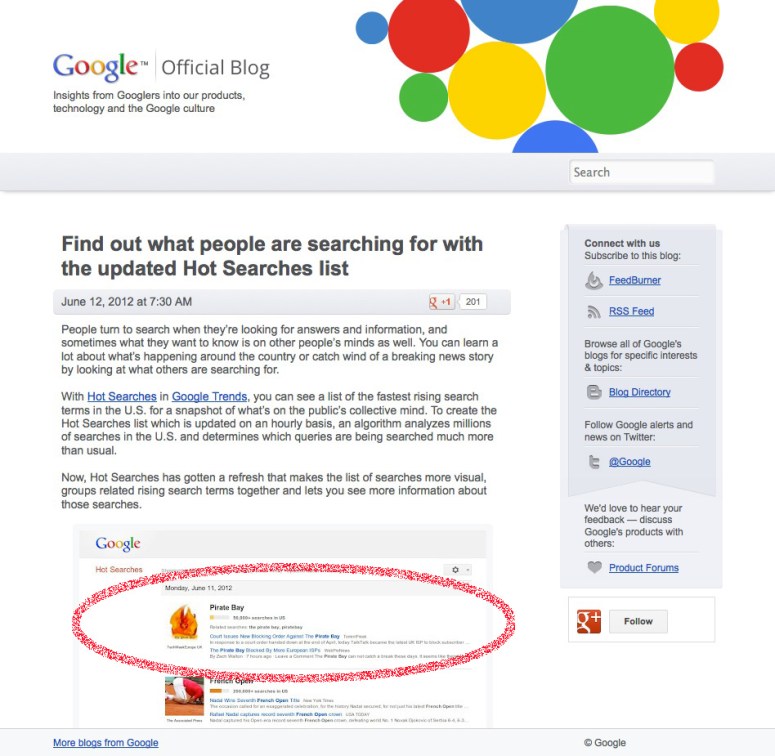
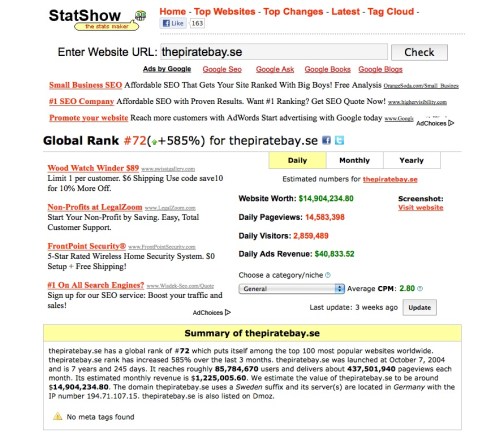
Who are these companies? You know some of them, the ones that have been prosecuted and are no longer operating, Napster, Limewire, Grokster and Kazaa to name a few. Some have been convicted of operating illegally and are running from the law, switching servers to jurisdictions outside the reach of justice, such as The Pirate Bay. And, there are other still others who have yet to go to trial like Megaupload who alone made a billion for it’s owner Kim Dotcom who paid artists nothing, nadda, zero, zilch, zippo…

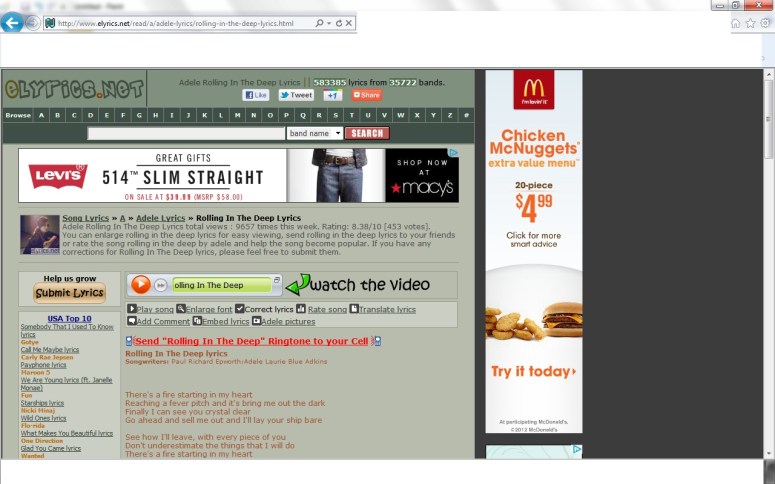
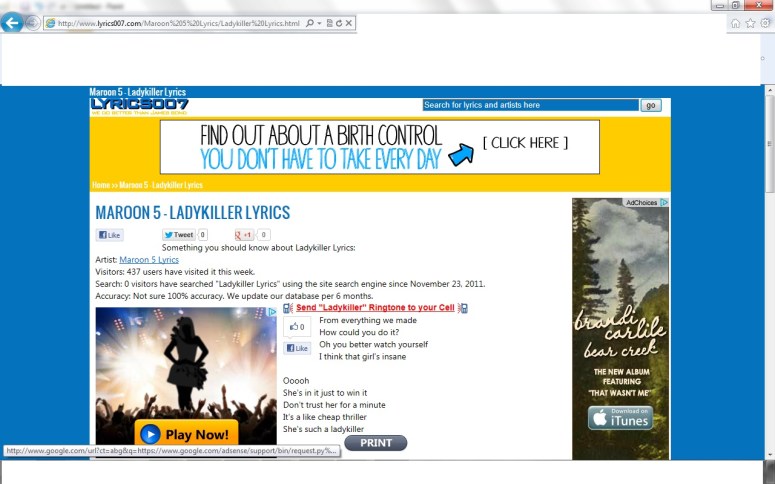
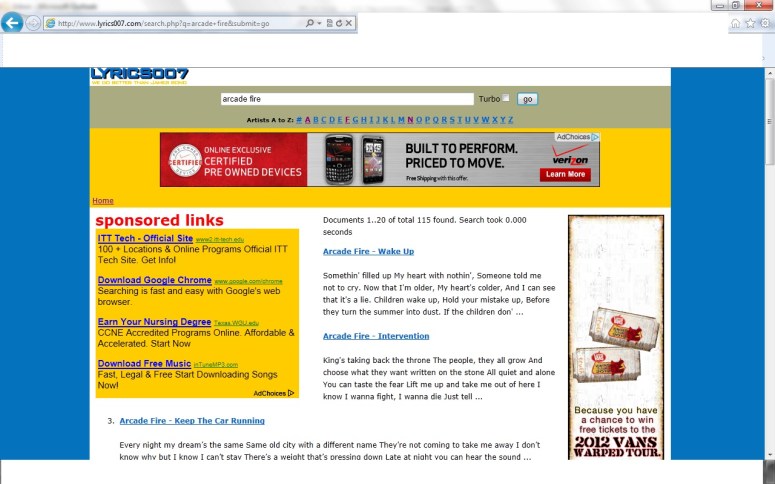
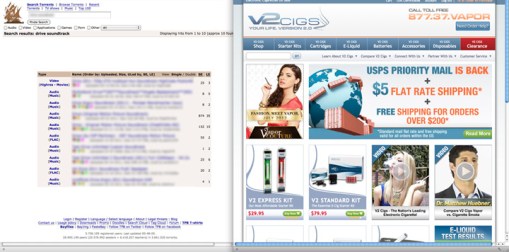
Our friends over at Ethical Fan recently published a Wall of Shame showing not only the sites who are profiting, but also who is paying for the advertising. This is no different than your music being used in a TV Commercial by AT&T, Time Warner, Verizon, State Farm Insurance, etc. Virtually all of these Artist Exploitation sites such as The Pirate Bay, Demonoid, Iso Hunt and others are operating for profit. Again, this is not about fans sharing, this is about illegally operating businesses making millions (and more likely Billions collectively) of dollars a year from the exploitation of artists work and not sharing any of the revenue with artists.

To the uninitiated, it might seem odd that what seems like a simple question of right or wrong is even being debated, but these sites that exploit artists are supported and promoted by faux civil liberty groups opposed to protecting creators rights — and internet giants are happy to throw their support behind them. Together, they have crafted a narrative of creator rights as quaint and outdated, offering artists a brave new online world where they can throw off the shackles of labels (or publishers, or studios, etc.) and give away their work to find fame and fortune. However, after a decade of half baked ideas, faulty business models, and outright lies, we know this is simply untrue. If the internet is working for musicians, why aren’t more musicians working professionally?

We may not always be fans of record labels, but at least the labels negotiate contracts, pay advances, market and promote artists, and are contractually accountable for wrong doing. However, the Artist Exploitation sites who are operating illegally and completely above the law are making 100% of the money from work created by musicians and artists. We would love to see the day when these sites license music legally, governed by fairly negotiated contracts.

Being able to collect 100% of the money from exploiting the work of artists is no doubt profitable when these companies don’t have to share any of that money with the artists themselves. This is expressly why copyright exists, specifically to protect artists and musicians from corporate interests who would illegally exploit the artist for profit. This is why record labels, publishing companies as well as the producers of films and television must negotiate with artists for the use of their work. And the artist has the free agency to decline. The artist has no such enforceable rights online today in the Exploitation Economy.

In other words, artists, creators and musicians have become road kill on the information super highway.

Opponents of the enforcement of Artists Rights online often cite what a powerful tool the internet is for distributing music cheaply. We are encouraged by many new and promising services to musicians that are being developed. But is absolutely false to assert that an artist’s work must be exploited illegally for the artists to enjoy the benefits of the internet.

Nothing is stopping any artist from sharing or giving away their work online through legitimate sites such as Soundcloud and Bandcamp.  Artists have the full right and capability to distribute their work freely, and by choice without having to be exploited illegally to the benefit and profit of an exploitative  company or corporation.

This is not about being for, or against technology or the internet, this is about being opposed to illegally operating businesses on the internet exploiting artists for commercial gain. It’s really just that simple. 

Those attacking Artists Rights also want you to believe that if you want to be paid you must be against technology and for censorship. Nothing could be more wrong. The internet is a amazing tool and most musicians we know are also early adopters of new technology (especially of the musical variety!). More so, it was artists and record labels who have historically fought against censorship and for freedom of expression. No where was this been more evident than in the 90’s battles against the PMRC in regards to record labeling with “Explicit Lyrics” stickers. Many artists have been on the front line of the battle for freedom of expression such as ICE-T, Jane’s Addiction and many others.

Let’s be clear, there is a difference between protecting the right to the freedom of expression, and profiting from the illegal exploitation of that expression itself.

In other words, artists and musicians are champions of freedom of expression and new technology. The only question that we ask is, is the use of the technology legal and does it respect artists rights as expressed in copyright. Copyright serves as the foundation that enables an artist the free agency to make the choices for themselves that are meaningful to them. Without the enforcement of copyright artists are bullied into forced collectivism by the new gate keepers who control the access to distribution revenues of music exploited illegally.

An economy built on the illegal exploitation of artists, is very simply an Exploitation Economy.

Any wrong doing of illegally operating businesses ripping off artists and illegally exploiting their work should be held accountable, even if they are on the internet.

How Copyright Encourages Creativity and Opportunity in Hollywood

We hear a lot from the copyleft and opponents of Artist’s Rights that copyright stifles creativity, but this is simply not true. We’re not going to go down the tired road of the arguments about remixing, which can be read in this excellent article at Copyhype titled, “Remix Without Romance.

The truth is, the best ecosystem for creativity is the one where all stakeholders are compensated. This is why in the early 90s sample clearance statutes were defined, and as a result we’ve seen some of the most innovative music, in the history of recorded music. This creativity has been achieved legally by creating fair and balanced policy. Historically, that is how policy evolves, such as it did with phonographs and radio — when both were getting off the ground, the law eventually recognized that artists have a right to be compensated, and both eventually flourished, also benefiting all stakeholders.

There are also other areas where copyright encourages creativity and innovation, as opposed to the illegal exploitation of previously existing works. We had an interesting conversation recently with one of our friends who is a music supervisor working on major feature films.

What they noted as being interesting is that many of the people opposed to Artist’s Rights and fair compensation on the internet often cite the use of licensing music to films as a potential revenue stream for developing artists. This is one thing we can agree with them on, but the revenue is only possible because of the very copyright laws that the copyleft are opposed to.

What if “sharing” extended to all uses of the artists work? What if Hollywood producers were able to illegal exploit artists work with impunity the same way The Pirate Bay and other illegally operating businesses do? How does it work when no one ever has to compensate artists for the commercial exploitation of their work? And yet, this is essentially what is proposed by those on the copyleft  who are opposed to Artists Rights!

Proposing that the rules of fairness and ethics applied respectfully and legally in Hollywood for music licensing do not apply to companies online is a self-serving double standard promoted by the illegally operating internet businesses to serve their own agenda and profits. The irony of course is that these same people often attack Hollywood as being unfair to artists.

It is the very Right of the artist to choose how their work is used and distributed that allows for new creativity and opportunities. We’ve been told that there are many times when working on a major motion picture there will be the desire to use a song by a very well known artist. Sometimes this song may be a massive current hit, or perhaps an iconic older song that has a deep nostalgic value. In either case, the production can not simply use the first and perhaps most obvious choice for the film.

The creators of the song, that is the songwriters and the performers of the recording, must first be consulted and approve of the use. Once the use is approved, the songwriters and performers (or their respective representatives) also get to negotiate the fee and terms of the use.

As creators who respect the Rights of others, and the law which protects creators, those who work in film music are often faced with situations, where for whatever reason, the song first selected for the use in a film is not approved. We don’t see these people going around whining about how unfair it is that they can’t use something against the artist’s wishes. They don’t go around whining about how the law is unfair because it protects the artist’s choice to participate or not.

Perhaps the artist does not feel the film represents them in a way that they want to be represented. Perhaps the artist feels they bring more value to the proposed use than the film’s producers do. It’s all about respecting the Artist’s Right to chose.

Whatever the case, those in Hollywood do not just exploit the artist’s song illegally and then complain that those who disagree with them are dinosaurs and “don’t get it.” Instead what they do in Hollywood is, they get creative.

Hollywood respects the artist and innovates! True creativity and innovation is working within the limitations presented and seeking new opportunities that would not have been discovered from constant unlimited access to the low hanging fruit and the path of least resistance. It’s always exciting to see the prospect of discovering new talent that can create fantastic new music to compliment a cinematic expression. This is not something to complain about, it’s something to be celebrated. A film like Drive,  illustrates this concept very well by featuring what were, largely unknown indie and DIY artists.

So when an artist of major stature or iconic acclaim disagrees with the vision of filmmakers for the use of their song, it just means that an opportunity has been created for another artist! This is the way it should be.

When we hear people talking about how copyright stifles creativity and opportunity, we have to wonder what their actual experience is working with artists and respecting their Rights?

There is nothing respectful about the state of the online exploitation economy that takes from artists without consent or compensation. Artists Rights are expressed in copyright to protect creators from being taken advantage of by companies and corporations who otherwise would illegally profit from the artists work with impunity. This is the sad truth of how artists are being treated by illegally operating businesses online.

So the next time some tech blogger wants to point to Hollywood as exploiting artists, I think they should be looking in the mirror. Thus far, at a little over a decade in, there has been no greater disrespect to artists rights than the rampant illegal exploitation of artists online, and for profit.

As illustrated above, there’s no reason why companies, corporations and commercial business online should be able to exploit artists work without consent or compensation.


[ THE 101 ] [NEW BOSS / OLD BOSS ] [ SPOTIFY ] [GROOVESHARK ] [ LARRY LESSIG ]
[ JOHN PERRY BARLOW ] [ HUMAN RIGHTS OF ARTISTS ] [ INFRINGEMENT IS THEFT ]
[ THE SKY IS RISING : MAGIC BEAVER EDITION ] [SF GATE BLUNDERS PIRACY FACTS ]
[ WHY ARENT MORE MUSICIANS WORKING ] [ ARTISTS FOR AN ETHICAL INTERNET ]

If the Internet is working for Musicians, Why aren’t more Musicians Working Professionally?

We keep hearing from web/tech gurus about how empowered artists are in the internet age, but yet, the numbers just don’t add up. It’s also ironic that tech bloggers like to promote the idea of  “touring and t-shirts” as a solution to the difficulties musicians are having online. But it really sounds to us, more like an admission that there is no money for artists online in the Exploitation Economy to develop new and sustainable professional creative careers.

This is why, an ethical internet for all citizens is so important. Sometimes, the facts are just so simple…

Ted Cohen: Breaking Through The Noise | | midemblogmidemblog

“The Internet was supposed to be the ultimate leveler, great music would be able to find its audience, the ‘big label’ gatekeepers would no longer control access to the masses.

It hasn’t exactly played out that way. According to my friend, Tommy Silverman/Tommy Boy Records and the co-founder of the New Music Seminar recently told me that he did the math and only 228 artists broke 10,000 units for the first time last year out of 105,000 albums.

That’s 2.17% but only 15 of those did it without the help of a real label.

That’s not very encouraging to the other ninety-eight percent. While tens of thousand of artists are self-releasing their music, their ability to get noticed in a meaningful way is stifled by the sheer volume of music that is arriving daily at iTunes, Amazon, Spotify, MySpace Music, Yahoo, Rhapsody, Pandora, iHeart and others. Ten years ago, there were roughly twenty-five thousand album releases a year.

In 2009, it is estimated that there will be over one hundred thousand albums put into digital distribution. That’s roughly a million new tracks a year, four million minutes of music, or almost three thousand days-worth of song. But, maybe, if I listen really, really fast, I could….nope!”

The numbers below are equally sobering. Not only did the volume of sales drop from 2009 to 2010, but also the number of new releases also dropped. Many promoting the exploitation of artists are also proposing that the new lower barriers for access to distribution will increase creative output, but that also appears to be false.

Business Matters: 75,000 Albums Released In U.S. In 2010 — Down 22% From 2009 | Billboard.biz

75,000 Albums Released In U.S. In 2010 — Down 22% From 2009

Not only were fewer albums released, but the weakest sellers took up a smaller share of new release sales. The 60,000 titles that sold from 1 to 100 units represented 0.7% of all sales from titles released in 2010. In 2009, 0.9% of sales came from the 80,000 titles that sold from 1 to 100 units.

So there were quite a few new albums that sold fewer than ten units.

Put another way, the 60,000 new releases that sold 100 or fewer units averaged just 13.3 units per title.

The statistics above do not support the assertion of the tech blogosphere that the internet has created more opportunities for professional creative careers, or expanded a working middle class of musicians. It’s actually very much so the opposite of their claim.

It’s clear from the numbers above (and continued below) that the democratization of production and distribution has not democratized talent. The most exploited music, is not surprisingly, the most popular. These are the artists and titles which are also developed and promoted by traditional media outlets.

Here’s another interesting stat reported by Digital Music News. Does this look like the empowerment of a new creative middle class to you?

99.9% of Tunecore Artists Make Less Than Minimum Wage…

99.875% – or nearly all – of Tunecore artists are making less than minimum wage through the platform, based on revenue figures recently shared by the company.

Despite this fact, some tech bloggers can’t even understand how the simplest mechanisms function in the recorded music business. In an attempt to discredit some of the reports above one tech blog let lose with this gem below, alleging that because Tunecore and CDBaby releases are not reported directly to Soundscan their releases are not counted in Soundscan stats creating a massive unreported pool of revenue being ignored by the industry.

TuneCore does not report results to Nielsen Soundscan and it puts out a hell of a lot of releases. Similarly, CDBaby/Disc Makers points out that Soundscan doesn’t count its releases either — which number around 50,000.

The problem with the above is not understanding that Tunecore and CDBaby can’t report to Soundscan, because Soundscan collects the data from the point of sale such as Itunes, Amazon, etc. So in fact, all Tunecore and CDBaby releases and sales are actually cataloged and reported by Soundscan afterall. So much for all that unreported sales and revenue.

But of all the numbers, this one is the bottom line. Salon recently reported stats from the Bureau of Labor Statistics that number of working professionals in the music industry are suffering a catastrophic decline. If these numbers were reported by any other industry it would make national headlines:

No Sympathy for the Creative Class

“Musical groups and artists” plummeted by 45.3 percent between August 2002 and August of 2011.”

This is also graphically represented here at Digital Music News:

musiciansindecline


All of this gave us pause when we saw a report given by The Future Of Music Coalition (FOMC) in Digital Music News that artists earnings are benefiting from digital technologies? How? As opposed to what? I can see that some digital technologies may be helping artists, but “overall” is simply, statistically, not true given the information above. So it trouble’s us to see statements like the one below made in public by the organization’s Kristin Thomson at SF Music Tech in February of 2012.

 “Overall, digital technologies seem to be having a positive impact on musicians’ earnings capacity”

Really? Maybe it’s not surprising that FOMC is also aligned with Public Knowledge who held a joint workshop to help musicians understand that, “Copyright law is changing rapidly in the face of new technologies.” The only problem is, copyright law is not actually “changing rapidly,” but it appears that Public Knowledge would like it too! Make no mistake about it, Public Knowledge is advocating for less artists rights and protections.

So the real truth is this; if the internet is working for musicians, why aren’t more musicians working professionally?

###

Robin Gibb Remembered 1949 – 2012

It is with great sadness that we report on the passing of Robin Gibb who in his later years was a strong and vocal champion of Artists Rights serving as the President of the International Confederation of Societies of Authors and Composers (CISAC) for the past five years.

Robin served as the President of CISAC, acting as the voice of three million creators around the world as the leader of the members of CISAC’s 232 authors’ societies in 121 countries. Following a first term as president, Robin was unanimously re-elected for an additional three-year mandate in June 2010.

Below is his impassioned closing speech from the World Copyright Summit in 2009 in which he said, “I’m proud to be President of CISAC, and I will keep on fighting for creators’ rights as long as I can draw breath.”

More here:
Robin Gibb Website
CISAC.org

The Sky Is Rising : Magic Beaver Edition

It’s unfortunate that some people are gullible enough to take a tech lobby funded Computer and Communications Industry Association (CCIA) sponsored report “The Sky Is Rising” researched by a tech blogger as fact. As we detailed in our post about the SF Gate blundering the facts (obviously without fact checking!) here are some quick responses to the grossly selective and highly biased reasoning that enables such propaganda, and should have everyone questioning the credibility of such work.

Eventually there will a complete break down of the fallacy’s presented by a real economist but until then here are five quick standouts of absurdity:

#1 :  This is not an academic study or serious scientific study. It is a tech / internet industry commissioned (CCIA) lobby report.

#2   : The report falsely claims that the value of global music business grew from 130 billion to 160 billion. They do this by including iPod and music instrument sales. We are not joking about this!!

#3:  To claim that the entertainment business grew 50%  they include revenues from computer and video games.  Video gaming has exploded over the decade. And global gaming revenues are about 5x the size of global recorded music revenues. Console Gaming also has very robust DRM booting users off console networks if pirated or cracked copies are detected (Xbox, Playstation, Wii).

#4 :  Instead of showing the fact that gross recorded music revenues which have fallen over 50%,  the report uses the number of transactions.  Of course there are more transactions since a single album is now available by tracks which can contribute 10-15 times more “transactions.” Clearly the use of this metric is intended to deceive. This chart from The New York Times represents the actual facts.

#5  : Number of tracks cataloged?  Pointless.  This is mostly hobbyists using Tunecore and CD baby to “release” their tracks.   How do we know this?  Of 75,000 albums released in 2010, 60K sold less than 100 copies. Here’s more info spelled out by Ted Cohen and Tom Silverman from a Midem Presentation.

This all really begs the question, if the internet is really working for musicians than why are there less musicians working professionally?  Salon reports a decrease of over 45% less working “Musical groups and artists” from 2002 – 2011 according to the Bureau Of Labor Statistics. The tech / internet community it seems has confused  the democratization of distribution with the democratization of talent.

Of course coming from people who insist that “the internet is different,” (different from what?) and “old economic laws do not apply to the cyber economy,” (despite Google’s Chief Economist disagreeing with them) it’s not hard to take the leap to such absurd and nonsensical beliefs that a magic beaver lives in a space ship under the googleplex, which could also lead to the distorted magical thinking that produced The Sky Is Rising.

It’s also important to understand the near religious devotion some in the tech and internet community have taken to these issues. There is a fanaticism that is blind to all logic and reason that can only be described in the cult like obsession of “The Singularity,” as Jaron Lanier comments.

###

[ THE 101 ] [NEW BOSS / OLD BOSS ] [ SPOTIFY ] [GROOVESHARK ] [ LARRY LESSIG ]
[ JOHN PERRY BARLOW ] [ HUMAN RIGHTS OF ARTISTS ] [ INFRINGEMENT IS THEFT ]
[ THE SKY IS RISING : MAGIC BEAVER EDITION ] [SF GATE BLUNDERS PIRACY FACTS ]
[ WHY ARENT MORE MUSICIANS WORKING ] [ ARTISTS FOR AN ETHICAL INTERNET ]

The Human Rights of Artists

By Chris Castle

Given the plight of Chinese poet Zhu Yufu today is a good day to think about the human rights of artists. The human rights of artists is a different concept from intellectual property rights, such as copyright. Intellectual property rights are created by national laws, and the human rights of artists are recognized as the fundamental rights of all persons by all of the central human rights documents to which hundreds of countries have agreed.

These rights resonate in a number of international and national documents, but a good international agreement to consider first is the International Covenant on Economic, Social and Cultural Rights that was ratified by the United Nations General Assembly on December 16, 1966. It is important to remember that human rights are fundamental, inalienable and universal entitlements belonging to individuals, individual artists in our case. As a legal matter, human rights can be distinguished from intellectual property rights as intellectual property rights are arguably subordinate to human rights and actually implement at the national level the human rights recognized as transcending international and national intellectual property laws.

The Covenant recognizes everyone’s right—as a human right–to the protection and the benefits from the protection of the moral and material interests derived from any scientific, literary or artistic production of which he or she is the author. This human right itself derives from the inherent dignity and worth of all persons. The Covenant recognizes these rights of artists (in article 15, paragraph 1 (c):“The right of everyone to benefit from the protection of the moral and material interests resulting from any scientific, literary or artistic production of which he or she is the author.”

These human rights are transcendent and timeless expressions of fundamental entitlements of humanity that safeguards the personal link between authors and their creations as well as their basic material interests. These rights are personal to the authors and artists concerned and are arguably of broader scope than the rights that can be enforced under particular national intellectual property regimes.

The human rights of authors are recognized in a multitude of international agreements, including article 27, paragraph 2, of the Universal Declaration of Human Rights: (“Everyone has the right to the protection of the moral and material interests resulting from any scientific, literary or artistic production of which he is the author”); article 13, paragraph 2, of the American Declaration of the Rights and Duties of Man of 1948 (“Every person has the right…to the protection of his moral and material interests as regards his inventions or any literary, scientific or artistic works of which he is the author”); ; article 14, paragraph 1 (c), of the Additional Protocol to the American Convention on Human Rights in the Area of Economic, Social and Cultural Rights of 1988 (the Protocol of San Salvador) (“The States Parties to this Protocol recognize the right of everyone…[t]o benefit from the protection of moral and material interests deriving from any scientific, literary or artistic production of which he is the author”); and article 1 of Protocol No. 1 to the Convention for the Protection of Human Rights and Fundamental Freedoms of 1952 (the European Convention on Human Rights) (“Every natural or legal person is entitled to the peaceful enjoyment of his possessions. No one shall be deprived of his possessions except in the public interest and subject to the conditions provided for by law and by the general principles of international law”).

These precedents clearly enunciate the goals of the international community. The Covenant is closely linked with the right to own property (recognized in article 17 of the Universal Declaration of Human Rights) and workers’ rights to adequate remuneration. The “material interests” protected by the Covenant are protected under the right to an adequate standard of living.

These moral rights include the right of authors to be recognized as creators of their works and to object to any modification of their works that would be “prejudicial to their honor and reputation.” The protected interests of artists include the right to just remuneration for their labor as well as the moral right to the “intrinsically personal and durable link” between creators and their creations that survives even after the passing of the work into the public domain. This rule will no doubt come as a shock to those wishing to sell consumer electronics devices to the “remix culture” bent on perpetuating regurgitative “art.”

And what bothers me the most about the massive, worldwide infringement of artist human rights is not just that major multinational corporations like Google are knee-deep in perpetuating this exploitation economy. It is that the governments of the world have—until last year—done very little or nothing to stop it. And in that regard, these governments have failed to protect the human rights of artists.

If there seems to be a coordinated effort in many countries to oppose the rights of creators, that’s because there is—a complex effort very well described in the book Winning the Web, written by the former head of the Open Rights Group and sponsored by the Open Society Institute (www.soros.org). (The Open Rights Group (or “ORG”) is essentially the UK version of the Electronic Frontier Foundation and is a voice in the opposition to artist rights protection under the UK Digital Economy Act.)

But these coordinated attacks on artists’ rights also extend to some unlikely places—such as the United Nations Human Rights Council. This is not surprising because there has been a sustained effort to define away an artist’s ability to protect these transcendent rights (“it’s not really theft”)–the success of the anti-copyright crowd in destroying artists is in part dependent on getting over this issue. If the ORG, EFF and Google can define away an artist’s right to protect their rights through ridicule (such as Lessig’s obliging piece “The Starving Artist Canard“) , or by making them small as Lessig said on a Pirate Party UK video, “we” should not “break the Internet” to protect a “tiny industry” such as the hated “Hollywood”, then it will be easier for Google to roll over artists. Then it is easier to define an artist’s human rights out of existence altogether. And doesn’t that just sound like a human rights violation? Their reach is deep–I find it very strange that the Special Rapporteur for the UN Human Rights Commission fails to address the human rights of artists even once. The Special Rapporteur’s conclusions would impose grave burdens on artists, yet bends over backwards to protect the rights of corporate intermediaries online–and specifically mentions Google.

Of course it is not enough that the States of the General Assembly merely recognize these rights of artists in a number of international agreements—the States also have undertaken the affirmative obligation to protect these rights of authors. Those protections include adequate legislation and regulations, as well as making effective administrative, judicial or other appropriate remedies available to authors within each jurisdiction. Access to such remedies must be affordable, or as I have said in the past—violations of moral rights cannot be remedied only if the rich seek to enforce their rights.

Anyone who takes seriously the international human rights of artists will find “Big Tech’s” dismissive use of “moral panic” to be deeply offensive to professional creators. It is Orwellian to describe as a “moral panic” an allegation of immorality being associated with massive illegal downloading that deprives creators of their ability to pursue work which they freely chose and remuneration for that work enabling them to achieve an adequate standard of living.

Google’s Patry has, in fact, travelled the world speaking to NGOs and universities trying to make his case that using the language of morality to describe massive online theft is somehow insidious and that it should stop immediately. Or, as his employer Google might say, “Don’t be moral.” This “don’t be moral” admonition obscures much more than mere lusting for commercial gain on the part of Google and the Pirate Bay. The protection of artist rights—many of the rights of the professional creative class—are entitled to protection as human rights.

The human rights of artists have nothing to do with intellectual property laws that apply to corporations, or “Big Music”, or the even bigger “Big Tech”, it has nothing to do with superstars. A national artist in the smallest country has equal protection with the global superstar under the U.N. human rights treaties.

This is a complex topic that is well worth studying further.

###

[ THE 101 ] [NEW BOSS / OLD BOSS ] [ SPOTIFY ] [GROOVESHARK ] [ LARRY LESSIG ]
[ JOHN PERRY BARLOW ] [ HUMAN RIGHTS OF ARTISTS ] [ INFRINGEMENT IS THEFT ]
[ THE SKY IS RISING : MAGIC BEAVER EDITION ] [SF GATE BLUNDERS PIRACY FACTS ]
[ WHY ARENT MORE MUSICIANS WORKING ] [ ARTISTS FOR AN ETHICAL INTERNET ]

The Paradox of Pirate Logic : Music Versus Music Software – Full Post

by Chris Whitten
(Copyright in the Author, Posted with Permission)

The bottom line for many in the often heated piracy debate is this: “Give us a good product at a fair price, make it convenient and easy to obtain and we’ll buy it”.

There is a digital product that ticks most of those boxes. So by comparing two products I wonder if we can learn anything about the chances of reducing music and movie piracy by making it better quality, more affordable and easy to download?

I’m of course talking about music production software.

About 7 years ago I was involved in creating a virtual drum instrument in collaboration with a Swedish music software producer Toontrack. Our product has been critically acclaimed, is a best seller, but is also unfortunately a favourite with software pirates. The pirate’s ‘advice’ to “adapt or die” appears then to ring hollow. As a performance musician I added music software creation to my resume by adapting to new technology, but all that happened was the pirates followed me.

With a foot in each camp, music technology and music performance, I’d like to take a look at the claim that “if you build it they will come.” Let’s see if the available evidence supports that idea.

Straight away we need to acknowledge two things: firstly, no one has ever suggested music software has gone backwards in quality over the last few years. It’s also pretty easy to obtain, including plenty of free alternatives, often offered by new companies trying to build a customer base, or by hobbyist’s happy with the kudos of creating a popular plug-in. Secondly, music software is heavily pirated.

So the signs don’t look good, and the more you look at music software piracy, the more the excuses and arguments made by movie and music pirates seem questionable. Let’s look at a couple of them:

Entertainment pirates claim they are fighting corporate greed. Movies and music need to be liberated from the clutches of billionaires who remain powerful by buying political influence.

This rhetoric may sound compelling, but the reality is that most music software companies are small privately owned businesses, and/or collectives of young innovators and entrepreneurs. Most were founded no earlier than the late 1990’s and still retain the same management and design teams that started the business in the first place. In fact, many music software producers comprise one or two people working from home.

The biggest and longest established names like Spectrasonics and Native Instruments employ between 50 and 270 staff, but those are the exceptions. Even so, we are hardly talking ‘megacorps’ here. For example, one of the hottest names in computer sequencing and recording software, Cockos (producers of Reaper), has a staff of three. Cockos has an instant download demo of Reaper available. They also offer a discounted purchase price of $60 for Reaper, if you declare earnings of less than $20,000 from its commercial use each year. So you could be Donald Trump and buy Reaper for $60 as long as music is your hobby. And yet Reaper appears prominently for free download on piracy sites.

Entertainment pirates claim movies and music are overpriced.

Music software users though have many free options. Apart from the new producers and hobbyists mentioned above, many established software producers offer free products.

For example, Elysia’s Niveau Filter:
https://www.plugin-alliance.com/en/plugins/detail/elysia_niveau_filter.html

And Sonimus’ SonEQ:
http://sonimus.com/site/page/downloads/

One of my own offerings, a sample pack for Toontrack’s EZdrummer, has a retail price of $89.00, but regularly sells for $39.99 from certain online retailers.

To use these software plug-ins you need a computer audio workstation, known as a ‘DAW’. Technology giant Apple give you one free with every computer; Garageband.  Audacity is a multi-track audio recorder and editor that is also free. And as mentioned above Reaper is $60.  Even the more expensive DAW’s like Logic Studio (Apple) and Live (Ableton) come bundled with a host of free software instruments, fx plug-ins and audio loops – something not dreamed of 10 years ago.

So can we still claim music software is over priced? No, not reasonably so.

Entertainment pirates cite what they see as false barriers to access as a major factor driving them to pirate sites.

So is music software easy and convenient to obtain? The answer surely has to be yes. Most music software is available for instant download. Some music software can even be used immediately as a demo without payment.

I was working on some music a few months ago and realized late one night I needed a certain FM synth sound resembling a Yamaha DX7. Not having the keyboard to hand, I went to Native Instrument’s webshop, bought and downloaded FM8, a virtual instrument based on similar architecture to the DX7. Granted it’s quite a large program and I have a basic broadband connection, but I was using FM8 in my project about one hour later.

By the way, FM8 cost me a fraction of the original price DX7’s sold for in the early 80’s. And smaller programs like plug-in EQ’s and compressors are much quicker to download and even with anti-piracy security, you can be using them within minutes. Modern musicians are drawn to music software exactly because it is cheap and convenient.

Music pirates claim digital music has no value.                                                                                  

 MP3’s for example are just ‘1’s and 0’s’ that can be infinitely reproduced at zero cost. Well then I guess digital music software is the same, just 1’s and 0’s, something that can be copied endlessly at no cost. Music pirates say they expect free digital music because it is free to produce, but they will support music by buying concert tickets, which directly fund true performance.

If you superimpose this claim on to music software, the logic falls apart immediately. Would the people who pirate EZdrummer be likely to pay $40 to see EZdrummer live on tour? What form would that tour take? I’m imagining a ‘technerd’ onstage for 12 hours coding the software, or maybe 12 hours of me sampling drums, one drum hit at a time, both of which are akin to paying good money to watch paint dry. What about merchandising? Well I must admit there are some cool Ableton Live t-shirts, but I still feel it’s the incredible music tool I should be valuing, not a Hanes in XL.

And what about the zero cost of reproducing the product indefinitely? Well I don’t agree with that either. Music software has to be maintained, developed and supported full time by a team of workers. Like many things these days, customers demand answers within hours of contact, even if they’ve emailed their query at midnight on Easter Sunday.

Then there is the initial investment in the creation of the software. If a hobbyist doesn’t count their man hours, a basic software plug-in like a softsynth, or compressor can be produced at low or no cost – but only IF they don’t count their man hours. However, sample based music software is much more costly to produce. For example, my most recent EZdrummer sample pack was recorded over four days at a commercial studio in New Jersey. I don’t live in New Jersey, the recording engineer doesn’t live in New Jersey, the Toontrack production team don’t live in New Jersey. My drums and cymbals aren’t located in New Jersey.

So why work there? Well because it was the right studio for the product we wanted to create. But let’s be clear: the costs involved are significant. To produce the included midi content alone, I recorded my own v-drum performances over two days. Then I spent two weeks, working ten hour days editing that midi. So again, are we working for free, for the ‘fun’ of it, or is it a job, or better still a career? The answer according to the pirates is it’s up to me to decide, but don’t expect to be paid. They say if I don’t like the work conditions and lack of pay, someone else will, or at least be more flexible and accepting than me.

But there are no free equivalents to EZdrummer. Why? Because it costs a lot of money to record several drum kits over several days in a decent recording studio, and hobbyists, or the free software evangelicals, aren’t prepared to spend that kind of money, or work that hard, then give away the end product without recompense.  So I guess you can argue that digital copying is zero cost, but when people pirate music software, they aren’t just taking 1’s and 0’s without payment, they aren’t ‘paying back’ by contributing anything towards the production cost of the original product.

Put another way, our first EZdrummer customer could pay $25,000, then all subsequent customers could take it without payment. More fairly however, I’d suggest the first customer and every customer subsequently should pay the same small share towards the production costs, say $39.99?

Entertainment pirates claim Hollywood and the music industry have failed to innovate and failed to listen to their customers.

They go on to state they’ll pay for movies and music if the content industries offer “a good product at a fair price, while making it convenient and easy to obtain”.

Meanwhile, the music software industry has responded to customer demands. While continuously improving their products, they’ve priced them competitively and fairly, many producers encouraging customers to audition products freely first. Almost all music software is available for instant download, wherever you are and at whatever time of the day or night.

Those customers who buy their music software are funding new ideas from young innovators and entrepreneurs directly, not giving money to middlemen who keep most of it for themselves while passing on a pittance to the creative employees, as is claimed happens in the music industry.

And yet music software products like Live (Ableton), EZdrummer (Toontrack), FM8 (Native Instruments) and Omnisphere (Spectrasonics) all appear on unauthorized file sharing sites for people to download without paying. Are the pirates therefore sincere in their promise to buy if the product is right and the price is fair, or is the only ‘fair’ price no price?

###

you may also be interested in: You Can’t Have A Healthy Market Economy Without Property Rights
https://thetrichordist.wordpress.com/2012/05/05/full-post-you-cant-have-a-have-a-healthy-market-economy-without-property-rights-why-do-so-many-in-tech-blogosphere-want-to-abolish-cyber-property-rights-and-cripple-the-cyber-economy/

###

[ THE 101 ] [NEW BOSS / OLD BOSS ] [ SPOTIFY ] [GROOVESHARK ] [ LARRY LESSIG ]
[ JOHN PERRY BARLOW ] [ HUMAN RIGHTS OF ARTISTS ] [ INFRINGEMENT IS THEFT ]
[ THE SKY IS RISING : MAGIC BEAVER EDITION ] [SF GATE BLUNDERS PIRACY FACTS ]
[ WHY ARENT MORE MUSICIANS WORKING ] [ ARTISTS FOR AN ETHICAL INTERNET ]

The Paradox of Pirate Logic : Music Versus Music Software – Part 2

by Chris Whitten
(Copyright in the Author, Posted with Permission)

Entertainment pirates cite what they see as false barriers to access as a major factor driving them to pirate sites.

So is music software easy and convenient to obtain? The answer surely has to be yes. Most music software is available for instant download. Some music software can even be used immediately as a demo without payment.

I was working on some music a few months ago and realized late one night I needed a certain FM synth sound resembling a Yamaha DX7. Not having the keyboard to hand, I went to Native Instrument’s webshop, bought and downloaded FM8, a virtual instrument based on similar architecture to the DX7. Granted it’s quite a large program and I have a basic broadband connection, but I was using FM8 in my project about one hour later.

By the way, FM8 cost me a fraction of the original price DX7’s sold for in the early 80’s. And smaller programs like plug-in EQ’s and compressors are much quicker to download and even with anti-piracy security, you can be using them within minutes. Modern musicians are drawn to music software exactly because it is cheap and convenient.

Music pirates claim digital music has no value.                                                                                  

 MP3’s for example are just ‘1’s and 0’s’ that can be infinitely reproduced at zero cost. Well then I guess digital music software is the same, just 1’s and 0’s, something that can be copied endlessly at no cost. Music pirates say they expect free digital music because it is free to produce, but they will support music by buying concert tickets, which directly fund true performance.

If you superimpose this claim on to music software, the logic falls apart immediately. Would the people who pirate EZdrummer be likely to pay $40 to see EZdrummer live on tour? What form would that tour take? I’m imagining a ‘technerd’ onstage for 12 hours coding the software, or maybe 12 hours of me sampling drums, one drum hit at a time, both of which are akin to paying good money to watch paint dry. What about merchandising? Well I must admit there are some cool Ableton Live t-shirts, but I still feel it’s the incredible music tool I should be valuing, not a Hanes in XL.

And what about the zero cost of reproducing the product indefinitely? Well I don’t agree with that either. Music software has to be maintained, developed and supported full time by a team of workers. Like many things these days, customers demand answers within hours of contact, even if they’ve emailed their query at midnight on Easter Sunday.

Then there is the initial investment in the creation of the software. If a hobbyist doesn’t count their man hours, a basic software plug-in like a softsynth, or compressor can be produced at low or no cost – but only IF they don’t count their man hours. However, sample based music software is much more costly to produce. For example, my most recent EZdrummer sample pack was recorded over four days at a commercial studio in New Jersey. I don’t live in New Jersey, the recording engineer doesn’t live in New Jersey, the Toontrack production team don’t live in New Jersey. My drums and cymbals aren’t located in New Jersey.

So why work there? Well because it was the right studio for the product we wanted to create. But let’s be clear: the costs involved are significant. To produce the included midi content alone, I recorded my own v-drum performances over two days. Then I spent two weeks, working ten hour days editing that midi. So again, are we working for free, for the ‘fun’ of it, or is it a job, or better still a career? The answer according to the pirates is it’s up to me to decide, but don’t expect to be paid. They say if I don’t like the work conditions and lack of pay, someone else will, or at least be more flexible and accepting than me.

But there are no free equivalents to EZdrummer. Why? Because it costs a lot of money to record several drum kits over several days in a decent recording studio, and hobbyists, or the free software evangelicals, aren’t prepared to spend that kind of money, or work that hard, then give away the end product without recompense.  So I guess you can argue that digital copying is zero cost, but when people pirate music software, they aren’t just taking 1’s and 0’s without payment, they aren’t ‘paying back’ by contributing anything towards the production cost of the original product.

Put another way, our first EZdrummer customer could pay $25,000, then all subsequent customers could take it without payment. More fairly however, I’d suggest the first customer and every customer subsequently should pay the same small share towards the production costs, say $39.99?

Entertainment pirates claim Hollywood and the music industry have failed to innovate and failed to listen to their customers.

They go on to state they’ll pay for movies and music if the content industries offer “a good product at a fair price, while making it convenient and easy to obtain”.

Meanwhile, the music software industry has responded to customer demands. While continuously improving their products, they’ve priced them competitively and fairly, many producers encouraging customers to audition products freely first. Almost all music software is available for instant download, wherever you are and at whatever time of the day or night.

Those customers who buy their music software are funding new ideas from young innovators and entrepreneurs directly, not giving money to middlemen who keep most of it for themselves while passing on a pittance to the creative employees, as is claimed happens in the music industry.

And yet music software products like Live (Ableton), EZdrummer (Toontrack), FM8 (Native Instruments) and Omnisphere (Spectrasonics) all appear on unauthorized file sharing sites for people to download without paying. Are the pirates therefore sincere in their promise to buy if the product is right and the price is fair, or is the only ‘fair’ price no price?