The Tech Industry is a “Special Interest” too!

Vox Indie’s Ellen Seidler points out that the Tech Industry is a special interest too in response to Derek Khanna’s assertion that “Hollywood” or rather the musicians, artists, filmmakers, photographers and other creators are a “special interest” who should not have a voice in how the fruits of their own labor are monetized and exploited, and by whom.

Let us not forget that these are rights not just granted by the United States Constitution but also in Article 27 of the Universal Declaration of Human rights proclaimed by the United Nations General Assembly in Paris on 10 December 1948.

Derek Khanna argues that the special interest that is the elite Silicon Valley internet and tech businesses who profit from exploiting artists should be making the rules. Fancy that, self serving, self interests for profit hungry corporations the size of a nation states wanting to make their own rules over the proceeds from individual labor.

Mr. Khanna gives readers a list of examples that, to him, demonstrate why copyright law is bad for creators and industry innovators alike. Why’s that a problem? Well, it’s a problem because, as is often the case with the copy-left, he doesn’t see fit to talk to tell the full story as to how crucial copyright protection is for those whose livelihoods depend on content creation. Khanna lists Hank Shocklee of Public Enemy, as an example of an artist constrained by current copyright law, but fails to mention that while Shocklee is a musician, he’s known for work often derived from sampling the work of others. His situation is not exactly representative of all artists, musical or otherwise, who have a stake in this debate.

Why not talk to some 45% of professional musicians who are no longer working in large part because our current copyright law is flouted by today’s digital pirate profiteers? Why not make mention of the independent filmmakers whose innovations are routinely stolen and monetized by bootleggers and online thieves?

READ THE FULL POST HERE AT VOX INDIE:
http://voxindie.org/Derek-Khanna-one-sided-copyright-reform

YOU MAY ALSO ENJOY:
Derek Khanna is Wrong: Copyleft Mystery Man’s Misleading Memo Creates its Own Myths…

Time For Silicon Valley To Grow Up And Take Responsibility For Their Online Advertising Business Model.

The EFF assumes the worst – of everyone else.

An interesting look at the Electronic Frontier Foundation’s highly selective reasoning regarding the DMCA by David Newhoff at The Illusion Of More.

“The long and shameful history of the Digital Millennium Copyright Act file takedown abuse teaches us that intellectual property owners cannot be trusted with the enforcement tools they already have  we should hardly be giving them new ones.”  The “long and shameful” true history of the DMCA is how utterly useless the mechanism is for rights holders to protect their works.

Many creators have demonstrated over an over again that the DMCA notice and takedown procedure is spitting in the wind for even very large, well-funded producers, and completely hopeless for independent and smaller rights holders.

Meanwhile, it is the (internet/tech) industry that funds the EFF, who have made sure that DMCA remains a fly swatter in a storm of raptors.  And that’s bad enough, but to add insult to injury, McSherry sticks this fact in a paper bag and lights in on fire on our doorstep when she says the DMCA has a “history of abuse” by rights holders.  And one reason we can know she’s full of it, is the flimsiness of the cases her own organization chooses to take on as exemplary of this so-called abuse.

READ THE FULL POST HERE AT THE ILLUSION OF MORE:
http://illusionofmore.com/eff-assumes-worst/

DMN : 7 Reasons Why Artists Should Skip a BitTorrent ‘Media Partnership’

Worth repeating here from Digital Music News by Helienne Lindvall.

Lately, BitTorrent, Inc. has made a concerted effort to appear “legit”, courting both artists and their managers.  It’s even managed to become a “tech partner” of the UK Music Managers Forum.  But is partnering with BitTorrent – and its uTorrent client – really a good idea for artists?

READ THE FULL POST HERE AT DIGITAL MUSIC NEWS:
http://www.digitalmusicnews.com/permalink/2013/20130529bittorrentjustsaynoearbud

Quincy Jones talks music, legacy and piracy…

Quincy Jones is a living legend. We find it interesting that despite the common insights of some of the most respected artists, songwriters, performers and producers there are still those who claim musicians are better off in the post-internet world, and that piracy has not negatively effected them. Quincy disagrees, and rightfully so.

Q: How have you adapted over the years to the way the industry has changed?

A: The industry doesn’t change your production – you still do what you believe in. What’s sad is that there is 98 percent music piracy everywhere on the planet. It’s just terrible.

What if these kids (who download music illegally) worked for me for two months and then I said, “I’m not going to pay you.” That’s just not right.

READ THE FULL INTERVIEW HERE:
http://www.accessatlanta.com/weblogs/atlanta-music-scene/2013/may/21/quincy-jones-talks-music-legacy-and-why-he-likes-l/

Jerry Cantrell (Alice In Chains) Talks Music Piracy: You hardly have any control over your own music.

Jerry Cantrell of Alice In Chains talks about another important issue about music piracy that effects both the band and it’s fans, the inability to safely share new material.

But with the advent of the Internet and sharing and shit going everywhere, you can’t do that anymore. We really haven’t been playing anything off the new record that’s not out yet.

We used to play new stuff all of the time. When we were touring ‘Facelift,’ we probably played half of ‘Dirt’ on the end of that tour. It’s a cool thing to be able to do, but you hardly have any control over your own music.

We’d rather wait until you get the best quality version of what we created before you start getting shitty iPhone versions from crappy gigs.

READ THE FULL STORY HERE:
http://www.ultimate-guitar.com/news/general_music_news/jerry_cantrell_talks_music_piracy

BUY THE DEVIL PUT DINOSAURS HERE AT ITUNES:
https://itunes.apple.com/us/album/the-devil-put-dinosaurs-here/id622941441

ADWEEK : “Ad Industry Takes Major Step to Fight Online Piracy”… Again…

Stop me, oh uh, stop me, if you think you’ve heard this one before…

The advertising industry took a major step Thursday in fighting rogue websites that steal copyrighted material and sell counterfeit goods. To cut off the financial support that keeps rogue sites alive, the nation’s two major ad industry associations recommended agencies and marketers take steps to keep brands’ ads off those sites.

While the debate remains contentious, there has been universal agreement that the key to shutting down rogue websites was to cut off the money that keeps them alive.

Recognizing advertising was the first line of attack, GroupM last year became the first ad shop to adopt a comprehensive anti-piracy policy, compiling last summer an updatable black list of some 2,000 websites that are cut off from ads from blue-chip clients like Ford, AT&T, Unilever and Dell.

READ THE ABOVE FULL ARTICLE HERE AT ADWEEK:
http://www.adweek.com/news/technology/ad-industry-takes-major-step-fight-online-piracy-140014

So the above is from May 3, 2013… and here’s an insightful article below from the advertising trade publication CLICKZ.COM on April 18, 2011… Yes, 2011…

What is the purpose of me bringing this up? To raise awareness and perhaps ask publicly that those involved in this industry become better corporate citizens. If you are running one of those exchanges or networks and feel that it’s only a “transparency” issue, please consider that you are funding not only these websites but organized criminal organizations that run them.

This is not a victimless crime, but instead one that is affecting musicians, programmers, artists, designers – and businesses of all sizes.

As an industry, here are some suggestions of what we can do:

1. Ensure every network that you work with has a no-warez/piracy/torrent policy. Ask around about the networks that do support this. Even if they claim that your ads aren’t going on there, be aware that many of these networks aren’t honest.

2. Put pressure on exchanges that you work with to ensure no network that has this type of inventory is on that exchange. If a few agencies call the exchanges and make it clear they won’t buy media until they are assured these sites are completely off the exchange, then maybe those in charge will consider it a serious issue.

3. Refuse to pay networks that you discover violate this policy and show your advertisements on those sites. Make it clear that you find this behavior not only illegal, but unacceptable for your agency, network, or product.

YOU CAN READ THE FULL ARTICLE HERE (FROM 2011) AT CLICKZ:
http://www.clickz.com/clickz/column/2041366/advertising-networks-supporting-piracy

Accountability?
Responsibility?
Transparency?
Anyone?
Hello?

The Constitutional Foundations of Intellectual Property Law

via copyhype:

Randolph May and Seth Cooper of the Free State Foundation look at some of the philosophical underpinnings that drove the inclusion of copyright and patent protection into the United States Constitution. According to May and Cooper, the origin of the right is explicitly Lockean, while the protection of the right is explicitly Madisonian. An engaging and enlightening read.

READ THE FULL REPORT HERE:
The Constitutional Foundations of Intellectual Property Law

Trichordist Bookshelf – Essential Reading for Artists Rights

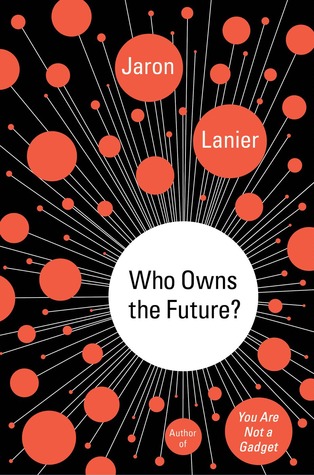
“WHO OWNS THE FUTURE” by JARON LANIER – BUY AT AMAZON:
http://www.amazon.com/Who-Owns-Future-Jaron-Lanier/dp/1451654960/

The Dazzling New Masterwork from the Prophet of Silicon Valley

Jaron Lanier is the bestselling author of You Are Not a Gadget, the father of virtual reality, and one of the most influential thinkers of our time. For decades, Lanier has drawn on his expertise and experience as a computer scientist, musician, and digital media pioneer to predict the revolutionary ways in which technology is transforming our culture.

Who Owns the Future? is a visionary reckoning with the effects network technologies have had on our economy. Lanier asserts that the rise of digital networks led our economy into recession and decimated the middle class. Now, as technology flattens more and more industries—from media to medicine to manufacturing—we are facing even greater challenges to employment and personal wealth.

But there is an alternative to allowing technology to own our future. In this ambitious and deeply humane book, Lanier charts the path toward a new information economy that will stabilize the middle class and allow it to grow. It is time for ordinary people to be rewarded for what they do and share on the web.

Insightful, original, and provocative, Who Owns the Future? is necessary reading for everyone who lives a part of their lives online.

“FREELOADING” by CHRIS RUEN – BUY AT AMAZON:
http://www.amazon.com/Freeloading-Insatiable-Content-Starves-Creativity/dp/1935928996

“A wonderful book that catches an encouraging shift in the zeitgeist. Ruen’s epiphany regarding the effects of his own piracy and freeloading of the bands he loves was eye opening.” – David Byrne

“Fascinating.” – The Village Voice

“The original slacker’s dream of free everything may have been realized by the Internet-but along with it came the slacker’s nightmare of never getting paid for one’s creativity. Freeloading seeks-and to a large extent succeeds-to wrestle with the collapse of the commons and the possibilities for a renewed social contract.” – Douglas Rushkoff

“Brooklyn’s Chris Ruen is one of the most compelling and forward thinking critics of our current download culture.” – M3 Music Conference, Netherlands

“A book…that promises to contribute greatly to copyright debates.” – Terry Hart, Copyhype

Author Chris Ruen, himself a former dedicated freeloader, came to understand how illegal downloads can threaten an entire artistic community after spending time with successful Brooklyn bands who had yet to make a significant profit on their popular music. The product of innumerable late-night, caffeine-fueled conversations and interviews with contemporary musicians such as Craig Finn of The Hold Steady, Ira Wolf Tuton of Yeasayer, and Kyp Malone of TV on the Radio, Freeloading not only dissects this ongoing battle-casting a critical eye on the famous SOPA protests and the attendant rhetoric-but proposes concise, practical solutions that would provide protection to artists and consumers alike.

“FREE RIDE” by ROBERT LEVINE – BUY AT AMAZON:
http://www.amazon.com/Free-Ride-Parasites-Destroying-Business/dp/0307739775

“A book that should change the debate about the future of culture….With this stylishly written and well-reported manifesto, Levine has become a leading voice on one side of our most hotly contested debate involving law and technology.”
—Jeffrey Rosen, The New York Times Book Review

“Turbo-reported….Free Ride is a timely and impressive book–part guilt trip, part wake-up call, and full of the kind of reporting that could only have been done with a book advance from an Old Media company.”
—Businessweek

“[A] smart, caustic tour of the modern culture industry.”
—Fortune

“Brilliant…A crash course in the existential problems facing the [media].”
—Richard Morrison, The Times

“The most convincing defense of the current predicament of the creative industries that I have read.”
—James Crabtree, Financial Times

“With penetrating analysis and insight, Levine, a former executive editor of Billboard magazine, dissects the current economic climate of the struggling American media companies caught in the powerful fiscal grip of the digital industry…. This incisive book is a start at an informed dialogue.”
—Publishers Weekly

“Can the culture business survive the digital age? That’s the burning question Robert Levine poses in his provocative new book. And his answer is one that will get your blood boiling. Rich with revealing stories and telling tales, Free Ride makes a lucid case that information is actually expensive – and that it’s only the big technology firms profiting most from the work of others that demand information be free.”
—Gary Rivlin, author of Broke, USA

“One of the great issues of the digital age is how people who create content will be able to make a living. Robert Levine’s timely and well-researched book provides a valuable look at how copyright protection was lost on the internet and offers suggestions about how it could be restored.”
—Walter Isaacson, President/CEO of the Aspen Institute and author of Benjamin Franklin

“This book thoroughly documents a wide-spread outbreak of cyber amnesia. Despite libertarian delusions, industries often get Free Rides, especially in their early days, but they eventually give back. Taxpayers build roads, then get hired to build cars. The Internet gives back a lot in exchange for its Free Ride, but one thing it defiantly isn’t giving back is a way for enough people to make a living. No matter how amusing or addictive the Internet becomes, its foundation will crumble unless it starts returning the favors it was given and still depends on.”
—Jaron Lanier, author of You Are Not a Gadget

“Free Ride is a brilliantly written book that exposes the dark side of the Internet. A must read for anyone interested in the horrific undermining of our intellectual culture.”
—Edward Jay Epstein, author of The Big Picture: Money and Power in Hollywood

“Robert Levine deftly dissects the self-serving Orwellian freedom-speak being served up by Silicon Valley’s digital new lords as they amass fortunes devaluing the work of artists, journalists and other old-fashioned ‘content creators.’ Free Ride begs us to remove our blinders and take a hard look down a cultural dead-end road.”
—Fred Goodman, author of Fortune’s Fool: Edgar Bronfman Jr., Warner Music, and an Industry in Crisis

“Without being a Luddite, Levine makes the phony digital media gurus of our day seem as simple-minded as their slogans.”
—Ron Rosenbaum, author of How the End Begins and Explaining Hitler

“YOU ARE NOT A GADGET” by JARON LANIER – BUY AT AMAZON:
http://www.amazon.com/You-Are-Not-Gadget-Manifesto/dp/0307389979

A NATIONAL BESTSELLER

A programmer, musician, and father of virtual reality technology, Jaron Lanier was a pioneer in digital media, and among the first to predict the revolutionary changes it would bring to our commerce and culture. Now, with the Web influencing virtually every aspect of our lives, he offers this provocative critique of how digital design is shaping society, for better and for worse.

Informed by Lanier’s experience and expertise as a computer scientist, You Are Not a Gadget discusses the technical and cultural problems that have unwittingly risen from programming choices—such as the nature of user identity—that were “locked-in” at the birth of digital media and considers what a future based on current design philosophies will bring. With the proliferation of social networks, cloud-based data storage systems, and Web 2.0 designs that elevate the “wisdom” of mobs and computer algorithms over the intelligence and wisdom of individuals, his message has never been more urgent.


Universal Declaration of Human Rights – Article 27

Somethings are so simple, fundamental and common sense they cross the boundaries of countries and culture. If only these same principles could penetrate the fortress walls of Silicon Valley which now claims “the internet” as a nation state outside the governance or protection of human rights.

Universal Declaration of Human Rights

The Universal Declaration of Human Rights (UDHR) is a milestone document in the history of human rights. Drafted by representatives with different legal and cultural backgrounds from all regions of the world, the Declaration was proclaimed by the United Nations General Assembly in Paris on 10 December 1948 General Assembly resolution 217 A (III) (French) (Spanish) as a common standard of achievements for all peoples and all nations. It sets out, for the first time, fundamental human rights to be universally protected.

Article 27.

(1) Everyone has the right freely to participate in the cultural life of the community, to enjoy the arts and to share in scientific advancement and its benefits.

(2) Everyone has the right to the protection of the moral and material interests resulting from any scientific, literary or artistic production of which he is the author.
