
Hey Budweiser, You Give Beer a Bad Name

In a world where zero royalties becomes a brag, and one second of music is one second too far.

Let me set the stage: Cannes Lions is the annual eurotrash…to coin a phrase…circular self-congratulatory hype fest at which the biggest brands and ad agencies in the world if not the Solar System spend unreal amounts of money telling each other how wonderful they are. Kind of like HITS Magazine goes to Cannes but with a real budget. And of course the world’s biggest ad platform–guess who–has a major presence there among the bling and yachts of the elites tied up in Yachtville by the Sea. And of course they give each other prizes, and long-time readers know how much we love a good prize, Nyan Cat wise.

Enter the King of Swill, the mind-numbingly stupid Budweiser marketing department. Or as they say in Cannes, Le roi de la bibine.

Credit where it’s due: British Bud-hater and our friend Chris Cooke at CMU flagged this jaw-dropper from Cannes Lions, where Budweiser took home the Grand Prix for its “One‑Second Ad” campaign—a series of ultra-short TikTok clips that featured the one second of hooks from iconic songs. The gimmick? Tease the audience just long enough to trigger nostalgia, then let the internet do the rest. The beer is offensive enough to any right-thinking Englishman, but the theft? Ooh la la.
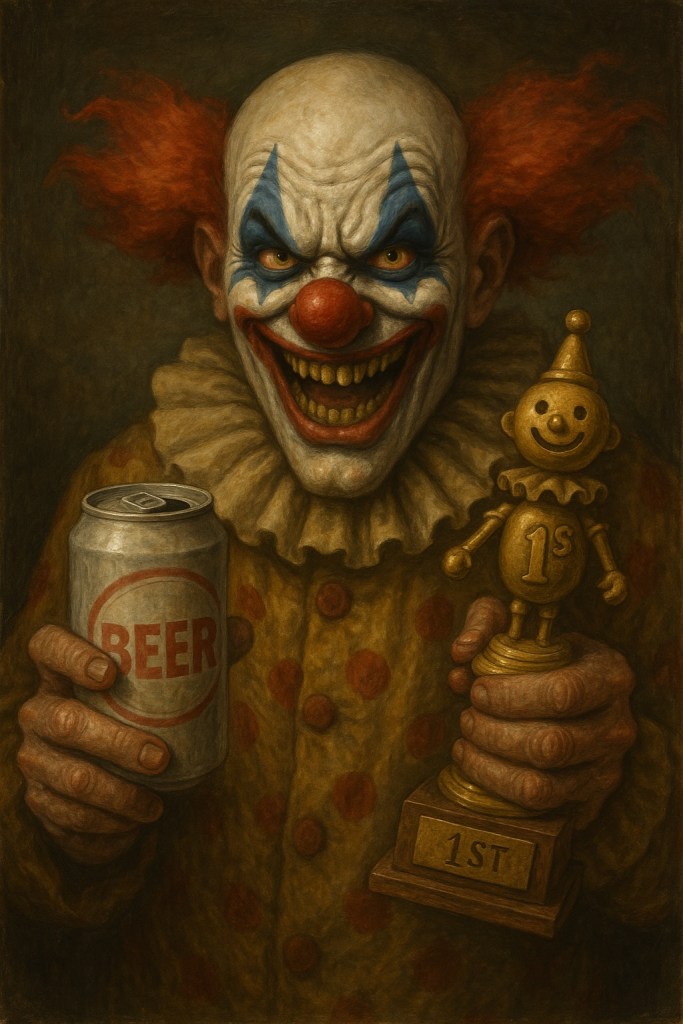
Cannes Clown

Budweiser’s award-winning brag? “Zero ads were skipped. $0 spent on music right$.” Yes, that’s correct–“right$”.

That quote should hang in a museum of creative disinformation.

There’s an old copyright myth known as the “7‑second rule”—the idea that using a short snippet of a song (usually under 7 seconds) doesn’t require a license. It’s pure urban legend. No court has ever upheld such a rule, but it sticks around because music users desperately want it to be true. Budweiser didn’t just flirt with the myth—it took the myth on a date to Short Attention Span Theater, built an ad campaign around it, and walked away with the biggest prize in advertising to the cheers of Googlers everywhere.

When Theft from artists Becomes a Business Model–again

But maybe this kind of stunt shouldn’t come as a surprise. When the richest corporations in commercial history are openly scraping, mimicking, and monetizing millions of copyrighted works to train AI models—without permission and without payment—and so far getting away with it, it sends a signal. A signal that says: “This isn’t theft, it’s innovation.” Yeah, that’s the ticket. Give them a prize.

So of course Budweiser’s corporate brethren start thinking: “Me too.

As Austin songwriter Guy Forsyth wrote in Long Long Time“Americans are freedom-loving people, and nothing says freedom like getting away with it.” That lyric, in this context, resonates like a manifesto for scumbags.

The Immorality of Virality

For artists and the musicians and vocalists who created the value that Budweiser is extracting, the campaign’s success is a masterclass in bad precedent. It’s one thing to misunderstand copyright; it’s another to market that misunderstanding as a feature. When global brands publicly celebrate not paying for music–in Cannes, of all places—the very tone-deaf foundation of their ad’s emotional resonance sends a corrosive signal to the entire creative economy. And, frankly, to fans.

Oops!… I Did It Again, bragged Budweiser, proudly skipping royalties like it’s Free Fallin’, hoping no one notices they’re just Smooth Criminals playing Cheap Thrills with other people’s work. It’s not Without Me—it’s without paying anyone—because apparently Money for Nothing is still the vibe, and The Sound of Silence is what they expect from artists they’ve ghosted.

Because make no mistake: even one second of a recording can be legally actionable particularly when the intentional infringing conspiracy gets a freaking award for doing it. That’s not just law—it’s basic respect, which is kind of the same thing. Which makes Budweiser’s campaign less of a legal grey area and more of a cultural red flag with a bunch of zeros. Meaning the ultimate jury award from a real jury, not a Cannes jury.

This is the immorality of virality: weaponizing cultural shorthand to score branding points, while erasing the very artists who make those moments recognizable. When the applause dies down in Yachtville, what’s left is a case study in how to win by stealing — not creating.

MTP Interview: Attorney Tim Kappel and Abby North Discuss Landmark Vetter v. Resnick case with Chris Castle

In a rare treat, Abby North and Chris Castle got to speak with New Orleans attorney Tim Kappel about his client’s case Vetter v. Resnick. The landmark case stands for winning the long-fought principle that termination rights in copyright cause the transfer of the worldwide copyright not just US rights as had been the business practice. The case is a major victory for songwriters and their heirs.

Cyril Vetter and Don Smith co-wrote the song “Double Shot (Of My Baby’s Love)” in 1962. They assigned all their interests in the song to Windsong Music Publishers. Vetter later served a termination notice on Resnick to recapture his rights under the U.S. Copyright Act, arguing that this termination applied globally, not just in the U.S. Resnick rejected Vetter’s global termination and Vetter sued for declaratory relief in the Middle District of Louisiana.

In a major win for songwriters and their heirs, Chief District Judge Shelly D. Dick agreed with Vetter, granting him worldwide rights to the song, which contradicted established but inequitable business practices in the U.S. music publishing industry. In the podcast, Chris Castle and Abby North discuss the case with Vetter’s attorney, Tim Kappel. These documents are referenced in the podcast.

#FrozenMechanical Crisis: @RosanneCash’s Must-Read Comment to Copyright Royalty Board

[Rosanne Cash brings a heartfelt and vitally important songwriter’s perspective to the Copyright Royalty Board’s public comments on the frozen mechanical rulemaking. Download and share her comment at this link.]

Rosanne Cash

New York, NY

Copyright Royalty Judge David R. Strickler
Chief Copyright Royalty Judge Jesse M. Feder
Copyright Royalty Judge Steven Ruwe

US Copyright Royalty Board
101 Independence Avenue S.E.
Washington, DC 20024

Your Honors:

Electronically Filed

Docket: 21-CRB-0001-PR (2023-2027) Filing Date: 08/02/2021 03:16:26 PM EDT

I welcome this opportunity to comment on the review of rates and terms for royalties for songwriters. Songwriting is an honorable profession, and a lifelong vocation with the same discipline, attention to detail, and devotion to craft as every other creative pursuit which elevates our humanity and expresses our deepest feelings. ‘It all begins with a song’, as a recent documentary about songwriters was titled.

I am a guest teacher in music and writing departments at various universities around the country— Yale, NYU, University of Iowa, University of Pennsylvania, and more, as well as a songwriter for forty-plus years. I’m enormously grateful for the gift of being able to weave poetry and stories into melodies, and have applied a rigorous discipline to better myself in my work over the decades. The intensity of purpose and willingness to work hard which I see in young songwriters when I hold writing workshops is heartwarming, and often heartbreaking, because I know so few of them will actually ‘make it’ in the music business.

One of the most reliable ways a songwriter can still make a minimum-to-decent wage is through mechanical royalties from sales of songs— both download and physical purchases— but the small percentage of these sales going to songwriters has not been raised or even been adjusted for inflation since the rate was set 15 years ago. Vinyl sales are increasing— which is wonderful news for creators. Young music consumers are newly enamored of vinyl records. They want something they can own, and hold in their hands. They want to read liner notes and pull out the inserts and see who the musicians are, and who wrote the songs, and read the lyrics. I am by no means a young or new artist, but even my audience is slowly turning back to vinyl, as partly evidenced by the number of vinyl records I sign after each show.

There are many things that need to be changed to support the creative class and show writers and artists that they are valued members of society, and that they deserve to be paid for their work as much as any other professional who provides service— and we are indeed a service industry, albeit one for the heart and soul.

One easy change is to release songwriters from a 20 year freeze-out (to use a term from songwriter Bruce Springsteen, who, by the way, is doing fine financially, but I assume would want young songwriters coming up behind him to also do fine), to increase the rate, and adjust for inflation.

I value the next generation of songwriters deeply, and I don’t want to see an entire population give up their passion and their chosen vocation, because they can’t pay the rent. I am also fine financially (not as fine as Bruce or Beyonce, but who is?) but there are many, many struggling songwriters who critically depend on a fair rate for physical sales.

The need for fair pay in regards mechanical royalties from sales of songs is more dire because of the lack of fairness in compensation from streaming services. Streaming services are not in the music business. They are in the tech business, and they have built multi-billion dollar profit machines on the back of songwriters and musicians whom they use as loss-leader content. Again, a modicum of equity and fairness could be created for songwriters in a place that can be controlled by setting a fair rate, adjusted for inflation. It’s only a beginning in our determination to protect and value the creative population, but it’s a very real-world, common sense step, and I hope you consider who is behind the music that sustains, nurtures, and uplifts you in your lives, and adjust this critical royalty rate.

It all begins with a song.

Respectfully,

Rosanne Cash

Songwriter
Board member, Artist Rights Alliance

New York City August 1, 2021