Four Simple Reasons Why the Pandora Radio Act Screws Musicians (EZ Reader)

The intentionally misnamed “Internet Radio Fairness Act” (IFRA) should actually be called the “Pandora Greed Screwing Musicians Bail Out Act” and here’s four simple reasons that everyone can understand why the rate setting in this bill, is in fact UnFair.

1) Pandora negotiated their royalty rate based on functionality.  Other formats of digital radio have different functionality, so they pay different rates.  If Pandora wants to pay a rate like another format of digital radio, then Pandora should function like that format.  They don’t. That’s why Pandora’s rates were fairly negotiated after carefully determining how Pandora actually functions.  As Westergren said in 2009–“The royalty crisis is over!”  Until it’s not, apparently.

2) Other online content services that are dependent upon music for their primary source of revenue such as Spotify and Itunes distribute 70% of their gross keeping a 30% margin for all operating costs. Pandora is complaining about paying only 50% of gross revenues and Tim Westergren wants to pay even less so that he can show Wall Street analysts that Pandora can make more profit.   Not to mention propping up the price of his own Pandora stock for a little bit longer (that he’s selling for about $1 million a month.)

3) It seems strange that Pandora could sell investors on the profitability of its business model during it’s IPO but now seems to think that model doesn’t work. Is this incompetence, or a deliberately dishonest and greedy transfer of wealth in a Wall Street Style bail out by asking Congress to change the law and move the goal posts? A two year old could figure out this is UnFair. Did Pandora think they could make a go of their business at the current rates during the IPO when they cashed out, or have they abandoned that idea now?

4) Pandora uses recordings on a government-mandated compulsory license which means artists have no ability to remove their music from Pandora even if they feel the rates are unfair. (This is like the compulsory license and statutory rate for songs–aka, “prison”.)  Again, both Spotify and Itunes allow artists to remove their music from those services if they so chose. Pandora will force artists into a deal they can not opt out of, this is UnFair.
You May Also Like More Info about PANDORA:

Screw You Too, Pandora. Part I. Pandora The Union Buster! Jail time for Collective Bargaining?

Tim Westergren’s Sophomore Slump. New Bill Sucks, Old Radio Fairness Bill Was Way Better.

Screw You Too, Pandora. Part I. Pandora The Union Buster! Jail time for Collective Bargaining?

As you may or may not know Pandora is trying to push a bill through Congress that would slash payments to artists by as much as 85%.   By “pushing through Congress” we  actually mean paying-oops er we mean being a “top contributor” to Rep. Chaffetz according to Open Secrets, and then Chaffetz magically sponsors the IRFA bill which will pretty much just benefit Pandora.    Pandora pays hundreds of thousands of dollars to lobbyists including a former legislative director of a leading member of the House Judiciary Committee (a lobbyist who also was a board member of the union busting Net Coalition as well as the Digital Media Association according to the lobbyist’s “revolving door” profile on Open Secrets).  It will let Pandora get around agreements it made with artists unions and copyright holders. This is like Delta Airlines going to Congress and asking them to pass a law to force  their pilots and flight attendants into accepting an 85% pay cut.  We don’t do this in this country.  Screw these guys.

So every day this week we are gonna highlight something that we particularly offensive about Pandora and this bill.

Tell Congress: Don’t Slash Music Creators’ Pay

http://musicfirst-coalition.rallycongress.com/7986/tell-congress-dont-slash-music-creators-pay/

#1.  Egad Smithers! Release the Pinkertons!

Liberals and progressives are constantly derided by conservative commentators as being out of touch with common people and constantly siding with the elites.  This is best exemplified by the “latte sipping liberals” slur.  Normally I find this to be an unfair characterization.  Normally, but not always. When it comes to anything involving copyright, technology and the web.  Then it’s totally accurate.

For instance  on  Social Media I keep seeing naive “progressive” friends passing around the Pandora sponsored “Internet Radio Fairness Act” hashtag.  Clearly they haven’t read the bill.  Cause it’s anything but “progressive”.

Forget for a moment that  it’s the ultimate in crony capitalism: A Congressional bill  basically designed to  increase the profit of one company!

Forget for a moment that  founder  Tim “I’m also a Musician” Westergren  is gonna “help” artists by paying artists 85% less than he’s paying them now.

Forget the fact that Pandora was fine with these rates when it was selling its IPO on its roadshow!

Forget all that.  For now just focus on one thing.  This bill is an anti-collective bargaining bill! A union busting bill for artists.   Now why exactly are you folks–who were the ones who were recently sending money to Wisconsin to recall Scott Walker–now against the workers and for bosses?  Why exactly are you folks for the Congress passing a bill that would strip musicians right of those same collective bargaining rights and for the bosses being authorized to threaten criminal prosecutions for speaking out (for “impeding” direct licensing)!  Talk about a “chilling effect”!

I quote directly from the “Internet Fairness Radio Act”

(B) by adding at the end the following: `Nothing in this paragraph shall be construed to permit any copyright owners of sound recordings acting jointly, or any common agent or collective representing such copyright owners, to take any action that would prohibit, interfere with, or impede direct licensing by copyright owners of sound recordings [including artists who own their own sound recordings] in competition with licensing by any common agent or collective, and any such action that affects interstate commerce shall be deemed a contract, combination or conspiracy in restraint of trade in violation of section 1 of the Sherman Act (15 U.S.C. 1).’.  [For which there are both civil and criminal penalties.]

The Sherman Act?  I mean my draw dropped when I saw this.   I’m no lawyer but are we really talking prosecution here for collective bargaining? Is it 1894?*

I was gonna say this is a play out of the Google Anti-Union playbook (see google books lawsuit, the Net Coalition’s “union thugs” memo) but it’s more like a play out of the 19th century robber barron playbook.  What’s next is Pandora gonna send in the Pinkertons?

++++++++++++++++++++++++++++++++++++++++++++++++++

*Ironically the Sherman act was intended to be used against corporate monopolies but its first use was in 1894 when it was misused in an attempt  try to break up the American Railway Union.

Also we applaud Tim Westergren and Pandora for their amazing historical re-enactment of the 1890’s.  What amazing attention to detail!!  We just hope that when they show up for the Congressional hearing they dress the part.   Top hat and Monocle?

Tim Westergren’s Sophomore Slump. New Bill Sucks, Old Radio Fairness Bill Was Way Better.

As you may or may not know Pandora is trying to push a bill through congress that would slash payments to artists by as much as 85%.   By “pushing through congress” we  actually mean paying-oops er we mean being a “top contributor” to Rep. Chaffetz according to Open Secrets, and then Chaffetz magically sponsors the IRFA bill which will pretty much just benefit Pandora.    Pandora pays hundreds of thousands of dollars to lobbyists including a former legislative director of a leading member of the House Judiciary Committee.  It will let Pandora get around agreements it made with artists unions and copyright holders. This is like Delta Airlines going to congress and asking them to pass a law to force  their pilots and flight attendants into accepting an 85% pay cut.  We don’t do this in this country.  Screw these guys.

So every day this week we are gonna highlight something that we find particularly offensive about Pandora and this bill.

Tim’s Sophomore Slump.  New Bill Sucks Old Bill Was Better.

We just found this old blog post from Tim Westergren founder of Pandora.

http://blog.pandora.com/pandora/archives/2009/07/important-updat-1.html

July 7, 2009

Important update on royalties

For more than two years now I have been eagerly anticipating the day when I could finally write these words: the royalty crisis is over!

Webcasters, artists, and record labels have reached a resolution to the calamitous Internet radio royalty ruling of 2007. Pandora is finally on safe ground with a long-term agreement for survivable royalty rates. This ensures that Pandora will continue streaming music for many years to come!

Not only that in this post Tim reveals that he is supporting HR848 the Radio Fairness Act, which would have closed the loophole that exempts terrestrial radio from performance royalties.  See it would make all forms of radio pay royalties to performers.

The system as it stands today remains fundamentally unfair both to Internet radio services like Pandora, which pay higher royalties than other forms of radio, and to musical artists, who receive no compensation at all when their music is played on AM/FM radio. We, along with the artists whose music we play, strongly support the establishment of a level playing field, a truly fair system, as articulated in a new bill called the Performance Rights Act (H.R. 848).

But now Tim has sold out. Now he’s saying the opposite.  He’s going for the cash and mainstream radio airplay.  Or something like that.  Now his new bill the Internet Radio Fairness Act would fire the Copyright Royalty Judges and replace them with a Kangaroo Court.   Now Sophomore Slump Tim wants to slash artist’s royalties.   As Tim is a musician there is really only one reasonable response:  Sell Out!

If Pandora wants Terrestial Radio Royalty Rates, Act Like It – Problem Solved!

We have no problem with Pandora getting parity with terrestrial radio royalty rates, just disable all of the user interactivity and function exactly like Terrestrial Radio to get exactly the same rates. Isn’t this just obvious?

Simple. Done.

Fair.

In truth, Terrestrial Radio in just about every country outside the USA pays performance royalties to artists and rights holders. So yes, there also should be parity, and Terrestrial Radio in the USA should be paying artists performance royalties as well. The selective reasoning of those who seek to exploit artists seems to know no bounds in it’s lack of consistency or logic.

Stay tuned for more…

Tell Congress: Don’t Slash Music Creators’ Pay

http://musicfirst-coalition.rallycongress.com/7986/tell-congress-dont-slash-music-creators-pay/

Remembering Steve Jobs

This week marked the one year anniversary of the passing of Steve Jobs. He was by most accounts a complex man of many contradictions. One thing was clear about him however, he loved music and respected artists. It was this genuine appreciation for the arts that is said to have driven his sense of design, look, feel and performance of Apple products. With the iPod and iTunes Steve and Apple made the most significant change to the record business probably since the introduction of the 12″ long play album.

It’s easy to slip into revisionist history about the iPod, but the truth is that the product launch was delayed pending the verdict in the Digital River Mp3 player trial. Only after it was clear that the iPod was not violating any rights did the product launch. Apple very well could have also achieved market dominance of the iPod without introducing a legally paid music store, but Steve recognized an opportunity that would be mutually beneficial to both Apple and artists alike.

Although controversial when it launched in 2003 (for ala carte song downloads), the Itunes Store is still the most successful online music start-up ever. Most important in recognition of that fact is acknowledging Itunes is a model that takes into account and benefits all stakeholders fairly. The prevailing wisdom of the internet and tech community was then (and sadly remains largely so today) to be one of greed and exploitation of both artists and rights holders.

It is precisely this intention and respect that makes the iTunes store great. When Steve rolled out iTunes for indie labels he said, “Things for you are going to get worse, they are not going to get better. Payment is optional, this will help you compete against illegally free by providing a better user experience, at a reasonable price.” He was right on all counts.

Thanks Steve, if only more people in the internet and technology community had as much respect for the arts and artists as you did we’d all probably be a lot better off. We miss you, sail on.

Mythbusting : Music Is Too Expensive!?

Music has never been less expensive to own, legally. We often hear that if music were cheaper, artists would sell more, but this is simply not true. Myth busted, read on.

Digital Music News – Worse Than Worst Ever? Tommy Boy Starts Number-Crunching Again…

“The first Beatles album in America came out in 1964 at $4.98 list,” Tommy Boy continued. “In today’s dollars that would be $35 for a 28 minute, monophonic 8-song album.”

In other words, using today’s pricing of $9.99 for an Itunes album would have only cost $1.35 in 1964… Even if you wanted to entertain a $20 CD (are there any $20 CDs these days?), the same would have only cost $2.70 in 1964. That’s nearly half of what it actually cost then.

So in the very worst case scenario, music is STILL 45% less expensive today than it was in 1964! And that’s calculated on a $20 CD! If you calculate the difference for an Itunes download, and full album today costs 86% LESS than it did in 1964…

Inflation Calculator: Bureau of Labor Statistics

Today’s $8.00 hr Min Wage equates into only $1.08 in 1964. But, the Federal minimum wage in 1964 was actually $1.25… so today’s minimum wage, adjusted for inflation actually has MORE buying power than it did in the 60s.

This is the weakest argument ever for the decline in music sales… the weakest… And, low ticket items (like 99 cent songs) or the most resilient in a bad economy. It’s durable goods like cars and washing machines that take the big hit.

Let’s look at 35 years of historical data 1973 – 2008 (Source IFPI). *

73-08salesnapsteritunesSo it looks like the economy and consumer competition really isn’t that big of a factor after all, again, looking at 35 years of data… the late 90’s may have been the peak, but that’s only because of the onset of illegal exploitation of content without compensation that began at the turn of the century.

Let’s also remember that each decade saw it’s own added consumer competition.

The 70s saw the initial release of VCRs and Video Cassettes as well as video game consoles and cartridges.

The 80s saw home video boom as VHS matured, cable tv boomed, new types of youth sports took hold.

The 90s saw the introduction of DVDs, home computers became household items, people started paying for internet service, and cell phones began to be common place… each offering competition to music sales, but not free music itself.

Yet through each one of those decades (without rampant online piracy) sales grew steadily until p2p sharing and broadband reaches ubiquity at the turn of the century…and then, the sales plummet.

It’s also important to note that sales of recorded music (in all formats combined) started dropping with the onset of Napster and affordable broadband. Many assign the decline of recorded music sales to the introduction of ala carte song sales and Itunes. However, Itunes didn’t launch until the end of 2003 and this introduction of legal ala carte song sales did not accelerate the decline of paid sales (nor did it slow it).

* Chart includes all formats including Track Equivalent Albums whereby every 10 songs = 1 logical album unit.

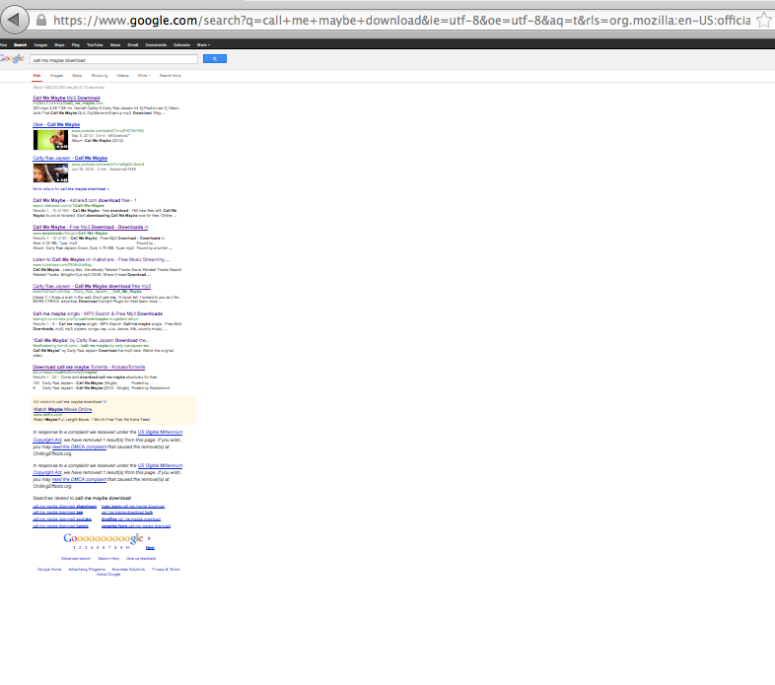
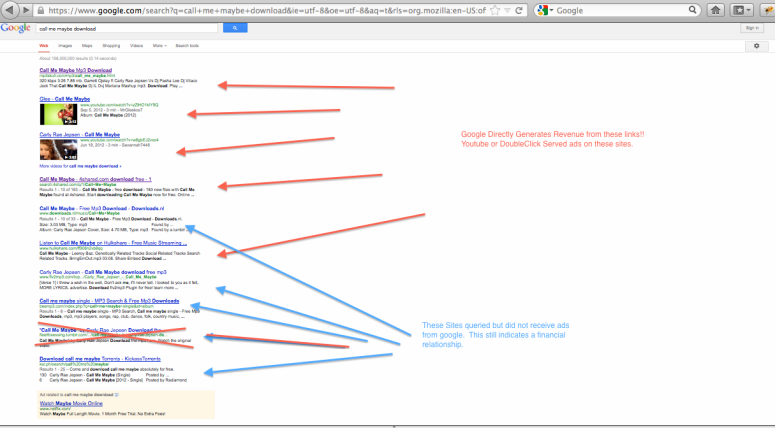
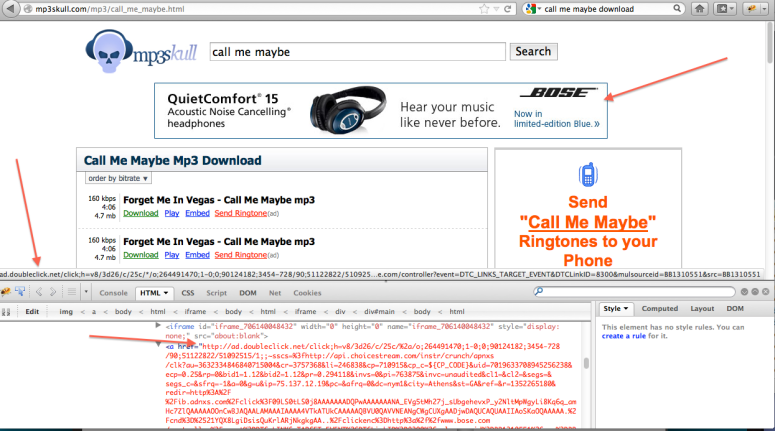
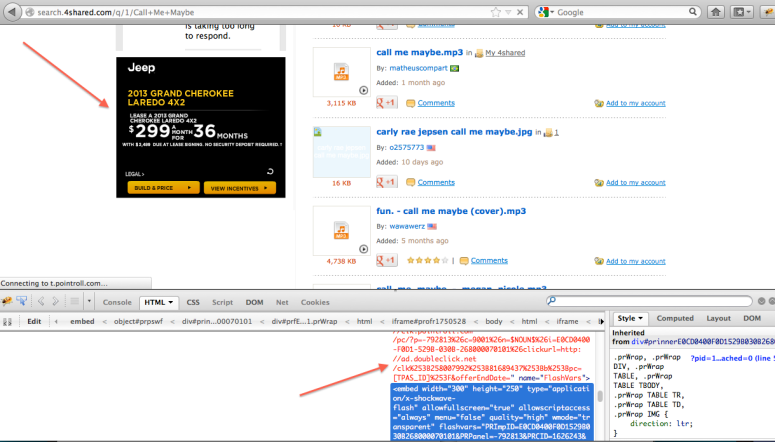
Amex must really like advertising on #1 copyright infringing and illegal porn linking site Filestube

<<<Editors note.  This story is from Aug 30th,  we didn’t run it because we expected to hear something from American Express after the initial story.  We never did.  Maybe this time we will get an explanation from American Express.>>>

Aug 30th.

A couple of weeks ago the Trichordist along with http://www.Adland.tv  caused a little bit of a fuss by showing Amex was advertising on the #1 copyright infringing site http://www.filestube.com. They were giving money to the shysters ripping off my music.

As shitty as that is, we know that most of brouhaha  had nothing to do with Amex getting caught advertising on yet another file-sharing site. No, http://www.filestube.com is not just any disreputable copyright infringing site. It goes a step farther. It likes  to promote it’s “recently watched videos” on virtually every page and A LOT of the time these “recently watched videos” appear to be  illegal pornography.   So you have an iconic American brand like AMEX sitting right next to some pretty disgusting links.  (Screenshots were provided.)

Our post seemed to generate a good reaction.  Indeed, it appears the mother of all ad networks DoubleClick stopped advertising on the site, at least as far as we can see into the labyrinth of ad networks.

We tweeted out our post and follow up to @AmericanExpress and notified their ad agency. We figured that was the last we’d see of American Express on that site.

We were wrong.  Apparently someone working for or on behalf of American Express  must really like advertising on this site, cause they are still advertising there. If DoubleClick stopped serving ads  at filestube.com did Amex switch to a different company that serves ads at fielstube!!? WTF?

Now I’m not an advertising expert  maybe people who don’t want to pay for music AND watch bestiality videos are American Express’s ideal target audience.  But it doesn’t seem likely and…

How stupid do you have to be to get caught doing this twice?

More amusement follows if you look at the website for the company that served the AMEX ad the second time:

Drive results with Sojern

With greater scrutiny than ever on advertising strategies, budgets and results, Sojern is the powerful partner you need to reach premium audiences in ways that no one else can.

  • Exclusive audiences – Sojern reaches the most desirable demographic groups: with higher incomes, more frequent travel for business and leisure, more income to spend – and a greater inclination to do so.

Pure comedy gold. Or out and out fraud.  I don’t see how whoever is doing this to American Express could keep their job.  We wrote Sojern to alert them of this situation and try to get a comment for this article but as of this morning we have heard nothing from them.  I dunno maybe you can get them to comment:

http://www.sojern.com/contact_us/pr-media

Also Ogilvy and Mather appears to be the ad agency for American Express.  Perhaps they can explain the rationale behind advertising on this site.

Amex–stop giving money to people in Moldova that exploit my work.  Stop giving money to people who appear to  distribute illegal pornography.  And if you didn’t intend to advertise on this site?  Do your shareholders a favor and demand an audit and rebates from your advertising agency and the advertising networks.

We still haven’t seen Coca Cola, Pepsi or Apple advertising on any of these sites. It can be done.

filestube lyric page with search for camper van beethoven.

Sign the @musiciansunion (AFM) Letter: Friends don’t let friends get IRFA’d!

If you’ve been following the growing opposition to IRFA, the Internet Radio Fairness Act (aka the “Pandora Shakedown Act”), you won’t be surprised to know that Pandora has now enlisted the Über National Association of Broadcasters to help them screw musicians.  (NASDAQ: P)

You’ll remember the NAB–they are the ones who led the dirty tricks campaign against the Performance Rights Act that would have really leveled the playing field by paying American musicians and singers for the same rights that every other country pays them for when records are played on the radio.

So it’s not surprising to see Pandora lining up the lobbying muscle and huge political donations of the dreaded NAB, one of the few trade associations that has a news outlet in every Congressional district.

Do we just have to take it and get bullied?  Not without fighting back.

Here’s a start, a few things you can do:

First–make sure you and your band are registered to vote.  Can I Vote? is a good place to start if you’re not.  If you’re going to be on the road on election day, be sure you find out about early voting or getting an absentee ballot.

You can look up your representative at Tweet Congress and tweet them to vote against IRFA.

You can follow us on Twitter and search for #opposeirfa, then you can decide if you want to retweet our tweets or RTs to Members of Congress, especially members of the House and Senate Judiciary Committees, or

You can use the letter to Congress interface that the American Federation of Musicians has put together for you.  The link will lead you to an interface to enter your zip code to find out who your representatives are, then it pulls up an editable suggested form letter.  You can either use that letter or write your own using the web page.

And remember–friends don’t let friends get IRFA’d!

Weekly Recap & Links Sunday Sep 30, 2012

Grab the Coffee!

Trichordist Recently Posted:
Why are Internet Freedom Fighters always fighting against the Internet Freedom of Artists?
Is The New Internet Association Really Just A Pro-Corporate Version Of The Pirate Party? No It’s a Transparent Ploy by Google To Curry Favor With Congressional Republicans.
Artists Utilize Power of Internet to Get Paid 
Ad Sponsored Piracy Gains Attention and Awareness in Europe
Is it The Pirate Party, or The Pirate Lobby?
Mythbusters, Why Internet Pirates Will Not Win (and should just get over it)
Class Act: Amanda Palmer.
Pandora, Please Stop discrimination against Musicians!
So much for Post-Scarcity, unless Electricity is free?
Google Pro-Artist Policy Changes Challenge Allegations of “Net Censorship”

From Around the Web:

FastCompany:
* Samsung Muscles In On New Territory – Providing Digital Content

VoxIndie via NPR:
* via NPR-How Much do Artists Make on Youtube?
* YouTube Shares Ad Revenue With Musicians, But Does It Add Up?

CopyHype:
* Friday’s Endnotes 09/28/12

Digital Music News:
* Spotify Is Almost Profitable in Europe?
* Deadmou5 witholding latest album from Spotify
* Gee, That’s Funny: Grooveshark Has the Entire deadmau5 Album…

Torrent Freak:
* Canadian Government Learns about the rogue nature of Ad Networks
* Six Strikes Cooperative ISP/Content Initiative coming soon?
* More pirate convictions, this time Jail and 1.1m Euros Fine

Ethical Fan:
* Comcast May Owe Content Owners $1.6B A Year Or More

Music-Tech-Policy:
* Not So Stoopid After All: Firedoglake Reports that Google Pulls Utoopi App
* Updated: A New Twist on Artist Consent Provisions: Protect Your Right to Say No to @mcdonalds ads on pirate sites
* The Wall of Shame Diaspora Jumps the Pond: UK Authors Speak Out on Brand-Supported Piracy

Copyright Alliance:
* Internet Freedom and Protection of Authorship: A Winning Ticket

Why are Internet Freedom Fighters always fighting against the Internet Freedom of Artists?

We’re always a little amazed when site like Hypebot takes up the fight for internet freedom, as long as that freedom does not include artists rights. Recently the site has confused the difference between a $20 settlement for illegal downloadingversus a $9,250 per song judgement for copyright infringement.

It seems to us, that getting off the hook for $20 per song is a pretty good deal. Should a person downloading also be found to be uploading and distributing (you know, infringing copyright) than they might want to think twice before pushing back too hard or they could end up like Joel Tenenbaum and Jammie Thomas. Both of whom were found guilty of copyright infringement by a Jury of their peers and awarded damages upheld by the courts.

It’s troubling when sites that state they are trying to help musicians are actually making arguments to support the people who exploit artists and rip them off, but not the artists themselves.