
Registration is open for Artist Rights Symposium V at Eventbrite!
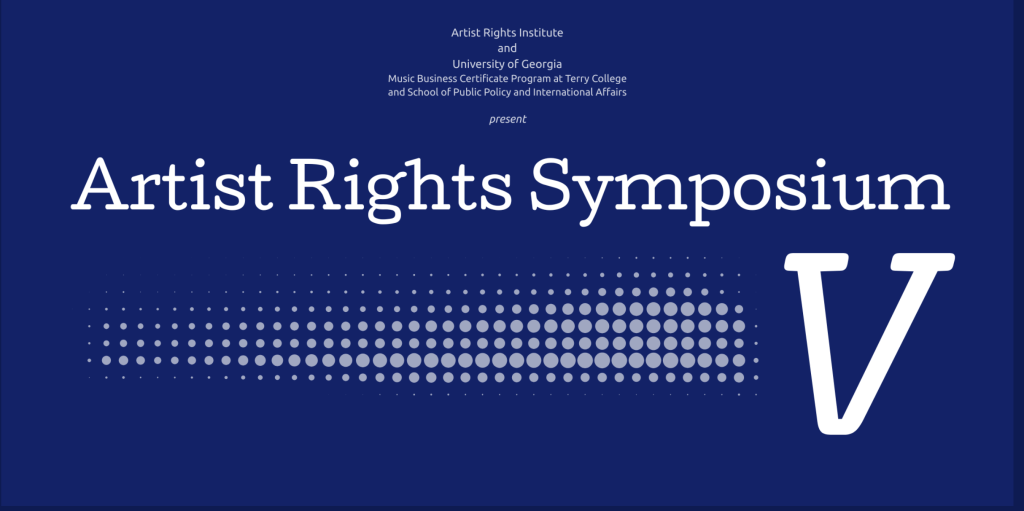
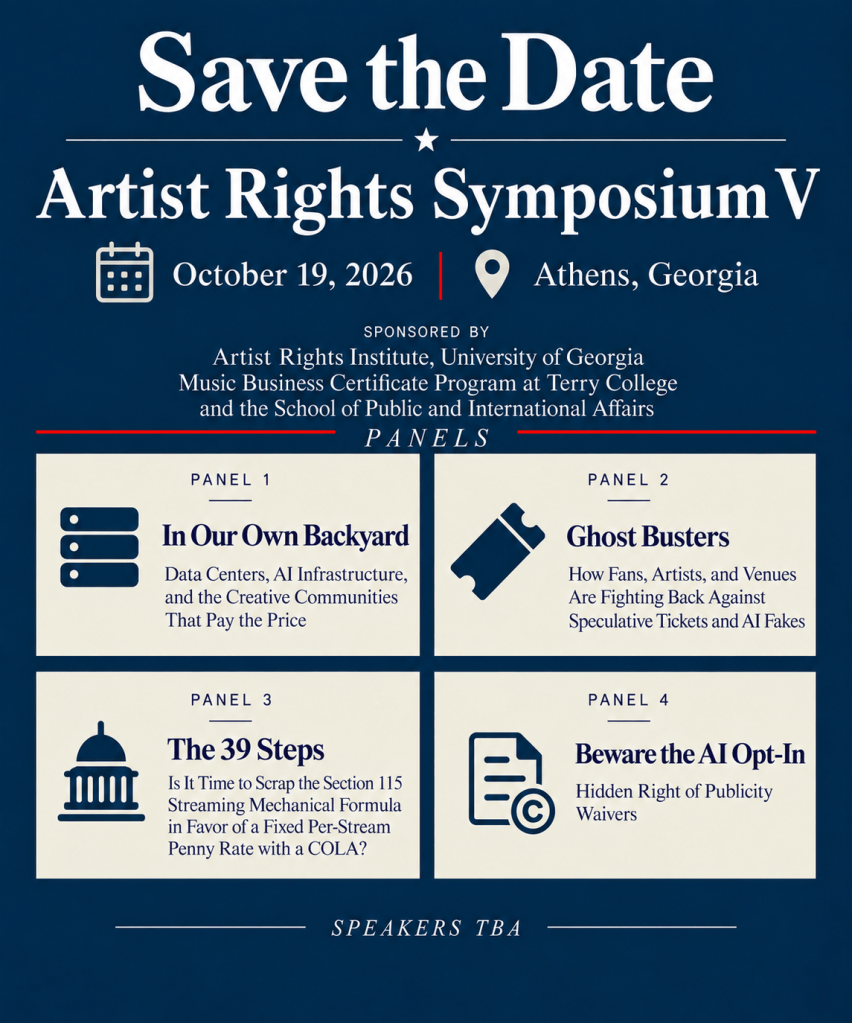
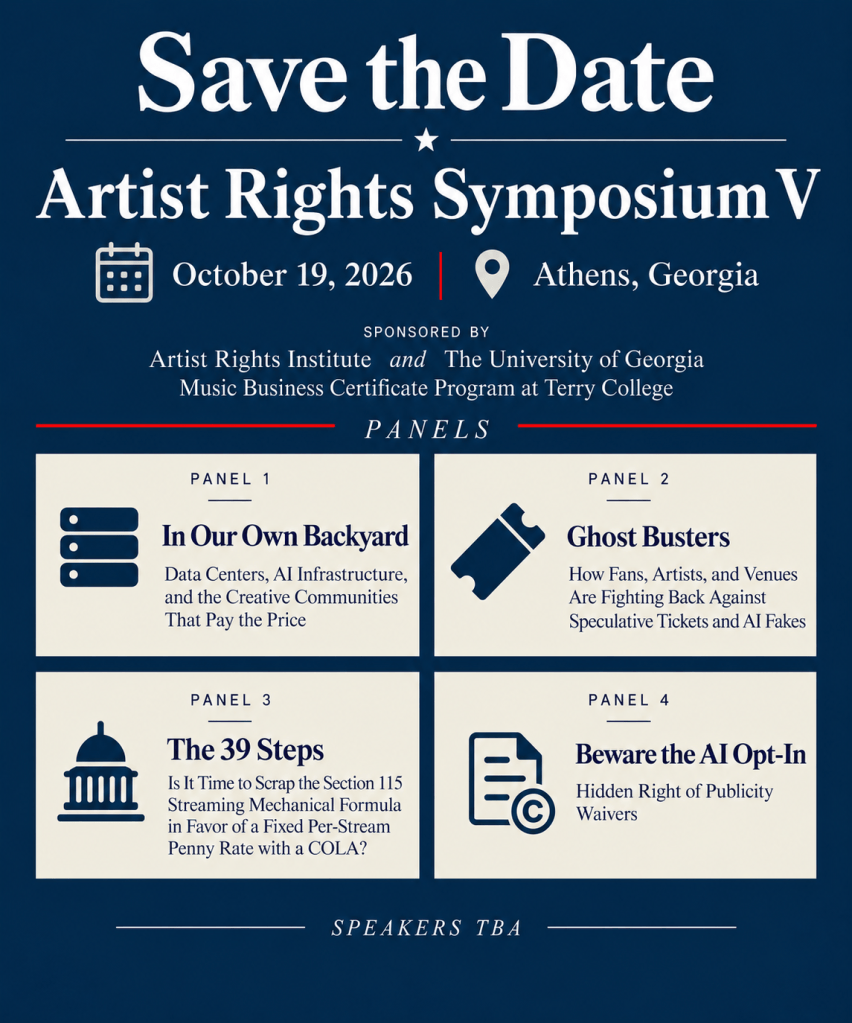
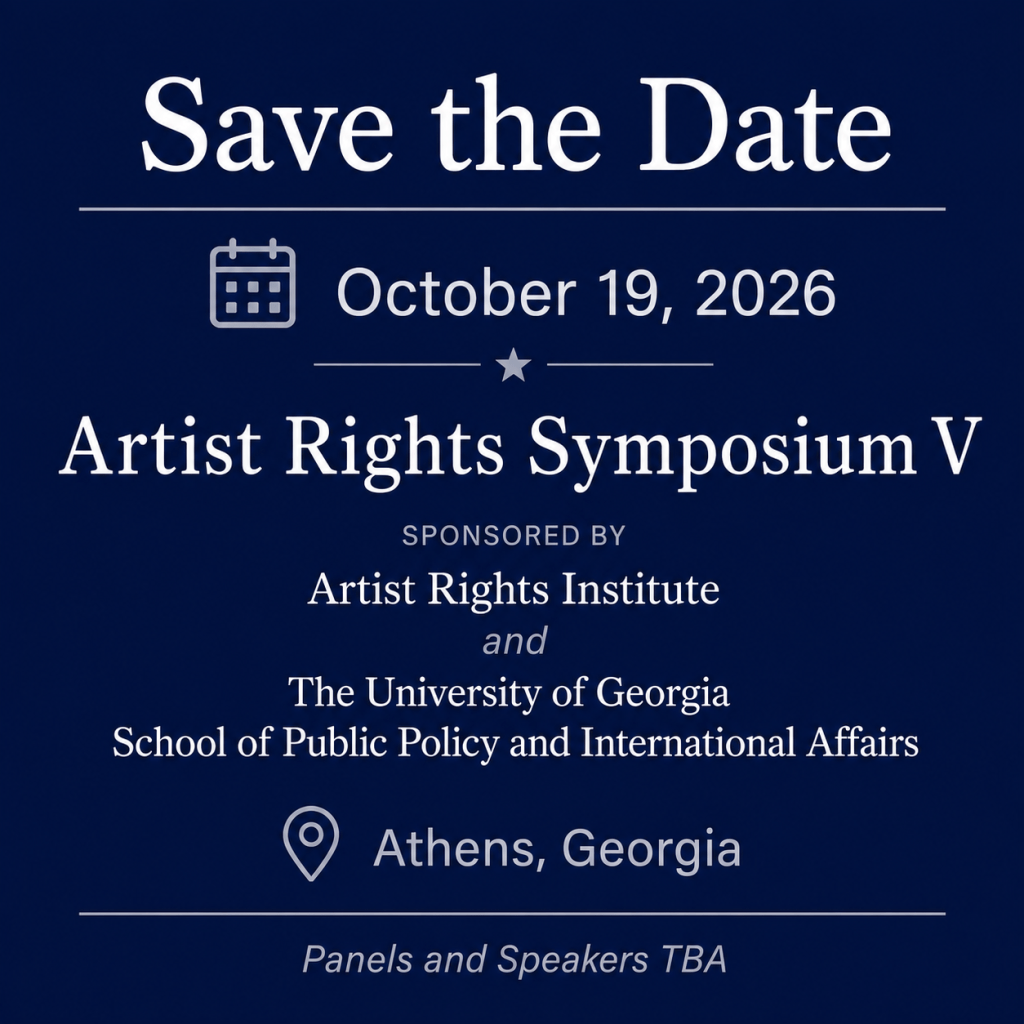
The Artist Rights Symposium V is coming on October 19 at Tweed Recording in Athens, GA hosted by the University of Georgia Terry College of Business Music Certificate Program and the School of Policy and International Affairs, and the Artist Rights Institute. More about the Symposium here and register on Eventbrite here. We’ll be posting panel overviews to introduce you to the speakers, this post is about the connection between data center opposition and artist rights.
When AI Comes for Your Dreams
Artificial intelligence is usually presented as something almost immaterial: software in the cloud, trained on data, producing an answer, an image or a song at the push of a button. But there is nothing immaterial about the massive physical infrastructure behind it.
Does somebody else’s need for your property give them the right to take it?
That is the connection we’ll explore at Artist Rights Symposium V with Ansley Brown; Georgia State Senator Sonya Halpern; and Dr. Moiya McTier of the Human Artistry Campaign and Moderator Chris Castle of Artist Rights Institute—bringing together community, public-policy and artist-rights perspectives on different sides of the same extraordinary AI buildout.
The panel highlights the increasingly important connection between data center protests and artist rights, bringing together leading human-creator advocates with a prominent Georgia community advocate whose family home was taken for data centers.
The panel will examine how AI not only depends on scraping vast swaths of human culture, but also requires enormous data centers, staggering amounts of electricity and water, sprawling new transmission infrastructure—real land in real communities. Someone bears the costs when family farms, homes and intellectual property become inputs to the AI economy.
Readers of the Data Center Backlash SITREP will remember Ansley Brown and her family’s fight in Coweta County, Georgia, where a proposed hyperscale data-center development brought AI’s extraordinary power demands quite literally to her doorstep—including Georgia Power’s effort to use eminent domain to take her family home for data center transmission lines.
Ansley did not set out to become a public advocate. She became one because a multibillion-dollar development threatened something deeply personal: the home and life her family had built in Coweta County, Georgia.
But Ansley’s story is also the story of thousands like her across America—and, indeed, around the world—as communities confront unprecedented demands for land, electricity, water and transmission capacity to support the accelerating AI buildout. At the same time, creators are watching their works appropriated by AI platforms that flood the attention economy with AI-generated content that competes directly with the human works used to build those systems.
Who bears the cost when someone else’s dream is reduced to an input for AI?
Artists have been asking essentially the same question—whether they’re protesting data centers next to the Nashville Zoo or suing to protect their works and personhood from unauthorized AI exploitation. Songwriters, recording artists, musicians, actors, writers and other creators have watched their work become an input into enormously valuable AI systems—without consent or compensation, if there even is a price for taking their dreams.
The AI economy has both i nputs and infrastructure. It needs creative works to build its products, and it needs land, power and water to run them. The legal issues are different, but the underlying question is remarkably similar: Ansley has described the human consequence in memorable terms: having to take the dream you built in one place and try to recreate it somewhere else—somewhere you hope will be safe from the next wave of AI development.
A family home and an artist’s life’s work are very different kinds of property. But neither becomes free for the taking merely because somebody else needs it to build a business.
What happens when the price of somebody else’s technological dream is that you have to surrender your own?
That’s the discussion we’re bringing to Athens on October 19 at Artist Rights Symposium V. Registration is open at Eventbrite!



You must be logged in to post a comment.