Crowd Sourced Charitable Funding and FEMA

If you’re affected by the Los Angeles fires, you may want to determine if you are eligible for funding by the Federal Emergency Management Agency (FEMA). Hypebot has a handy page devoted to resources for those affected by the fires that you can access here.

It’s always a good idea to let FEMA tell you what the current rules are that apply to your particular situation as these may change. The basic rules are available on the FEMA website and are quite extensive. You can access the FEMA rules on FEMA’s website here. This falls under the general heading of “eligibility requirements for FEMA assistance”. This post is not meant to be legal advice, just a heads up about some of the bureaucracy involved with disaster relief.

Some of this involves proving who you are, your citizenship status, residence and a few other things. FEMA lists the kinds of documents they accept to prove eligibility. As these are also the kinds of documents that may get lost in a rushed exit from your residence in the face of a fire or were stored in bank safe deposit box in a bank that burned down, consider how you are going to get these documents together. If you have been blessed enough not to have been affected by the fires, consider organizing these documents in an cloud based or paper folder that you can grab in a hurry or access online at any time (or both).

Sometimes you may be eligible for a crowd funded charitable source of money like gofundme. Realize that this very likely has to be disclosed to FEMA and is addressed in their online FAQ:

When individuals apply for federal emergency aid through FEMA, FEMA assesses their needs and what aid they have already received from other sources. This includes any funds raised through platforms like GoFundMe.

Here’s how it generally works:

  • Duplication of Benefits: FEMA’s assistance is designed to help individuals and communities recover from disasters, and it cannot duplicate the benefits received from other sources. If fire victims receive aid through GoFundMe or other donations for the same expenses FEMA would cover (like home repairs, temporary housing, medical expenses, etc.), those funds might be counted against the federal assistance they’re eligible for.
  • Transparency and Documentation: When applying for federal aid, it’s crucial for individuals to be transparent about all the financial assistance they have received. FEMA will require documentation of all income sources, including any funds from GoFundMe.
  • Types of Assistance: While GoFundMe can provide immediate relief for specific needs, FEMA assistance covers a broader range of recovery efforts. It’s important to understand that FEMA provides different types of aid which might not be addressed by GoFundMe campaigns, such as grants for rebuilding and repair, rental assistance, and other necessary expenses not covered by insurance.

To sum it up:

  1. Setting up a GoFundMe page doesn’t automatically disqualify fire victims from FEMA aid.
  2. It’s important to disclose all received funds when applying for federal assistance to avoid duplication of benefits.
  3. GoFundMe donations might affect the amount of federal aid provided, depending on the use of the funds.

It may help to state that a GoFundMe is to cover items not covered by FEMA with the understanding that you will likely have the need before you get approved by FEMA, and the GoFundMe monies may be available sooner than the FEMA monies. There will likely be a true up between the two at some point.

When in doubt, ask FEMA if you apply for aid.
@Hypebot Posts Claim Forms for PledgeMusic Bankruptcy

Thanks to the good work by Bruce Houghton at Hypebot, we now have the form you need to file if you are owed money by PledgeMusic (which of course Pledge didn’t bother to post) and an email address to send it to.

This is good for fans who pledged but believe their money never got to the artist, the artists who are owed money by Pledge and of course the vendors who are owed money for goods they made or services rendered for Pledge campaigns (like Bandwear that is apparently owned $200,000).

Here’s the info from Hypebot:

“On the subject of filing a claim for monies due, Insolvency Examiner Erica Baker wrote:

“If you are owed money by the company then you should arrange for a Proof of Debt form to be submitted as soon as possible – I will ask the case officer to send you a form.”

While lacking a firm deadline, the form is fairly straightforward. Any artist, label or fan affected should fill out the form and send it in with any receipts or proof asap. Download it here.

UPDATE: The form can be returned via email to Sultana.Begum@insolvency.gov.uk

We’d love to hear from artists and others their experiences with the Insolvency Service.”

We would love to hear, too, so if you want to leave a comment and we will post them.

You can read the full Hypebot post here.

Researchers Claim That Releasing YouTube Music Videos Reduces Album Sales | Hypebot

In 2009, Warner blocked videos on YouTube by not only their artists but by anybody using bits of their music. This period gave researchers a chunk of data to compare and after doing their statistical magic on all other causes, found that the “blackout had both statistically and economically significant positive effects on album sales, specifically the best-selling albums in a week.”

The paper is available for free:

“Online Music, Sales Displacement, and Internet Search: Evidence from YouTube”

The key point seems to be that for top-selling albums by artists with which listeners are already familiar, YouTube’s free listening acts as direct competition to sales of such albums. In fact, they seem to claim that not having videos on YouTube increased sales by “on average 10,000 units per week for top albums.”

READ THE FULL STORY AT HYPEBOT:
http://www.hypebot.com/hypebot/2014/04/report-claims-that-releasing-youtube-music-videos-reduces-album-sales.html

Hypebot Have No Defense of Ad Supported Piracy So They Resort To Name-Calling.

East Bay Ray of The Dead Kennedys  and I had an informal bet going.  Well maybe not a bet,  just a sort of prediction that once Ray spoke against ad supported piracy at SF Music Tech,  the music tech bloggers would start with the usual name calling. 
 
 Sure enough right on cue we see Bruce Houghton’s Hypebot giving Mike Masnick (see the “Google Shill List”) a platform to bash Ray and other  artists. “Whining” “Old” “Grumpy” and “Rant” were some of the unfair and unbalanced terms  that Ray and I predicted they would use in the de rigueur  postSF Music Tech cyber bullying. And they did.
 
This is pretty sad since ending ad supported piracy is a no-brainereven Google and Yahoo! fall over themselves to try to explain their unexplainable connection (see USC Annenberg Innovation Lab report).   Both artists and the legitimate music tech firms are negatively affected by ad supported piracy.  For instance legitimate music streaming services have to compete against these same unlicensed services for ad revenue.   Why the music tech space bloggers fail to grasp this is a mystery.
 
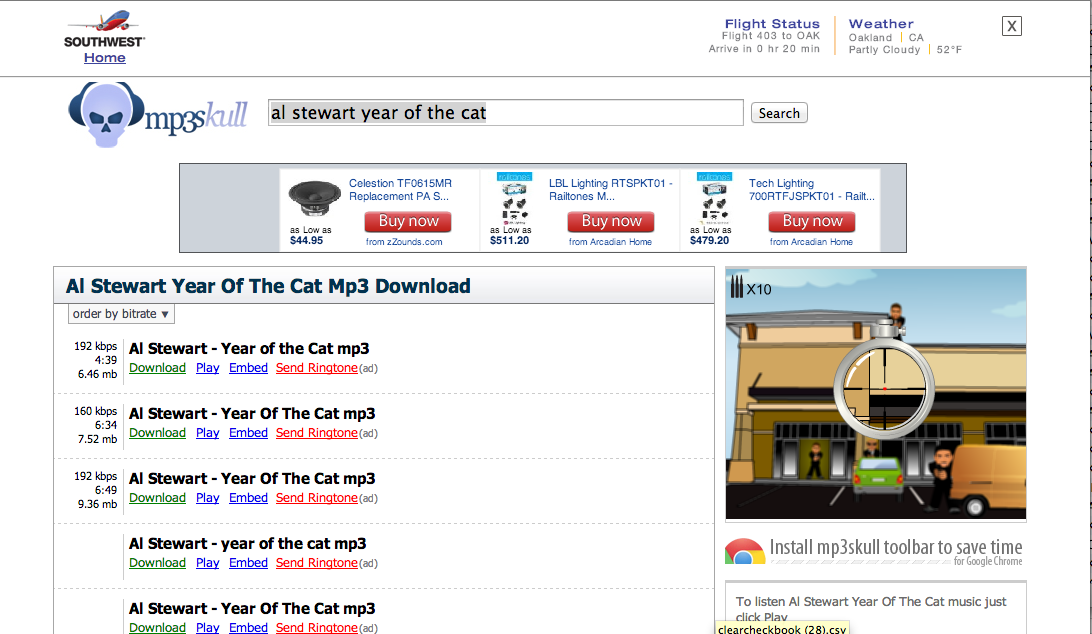
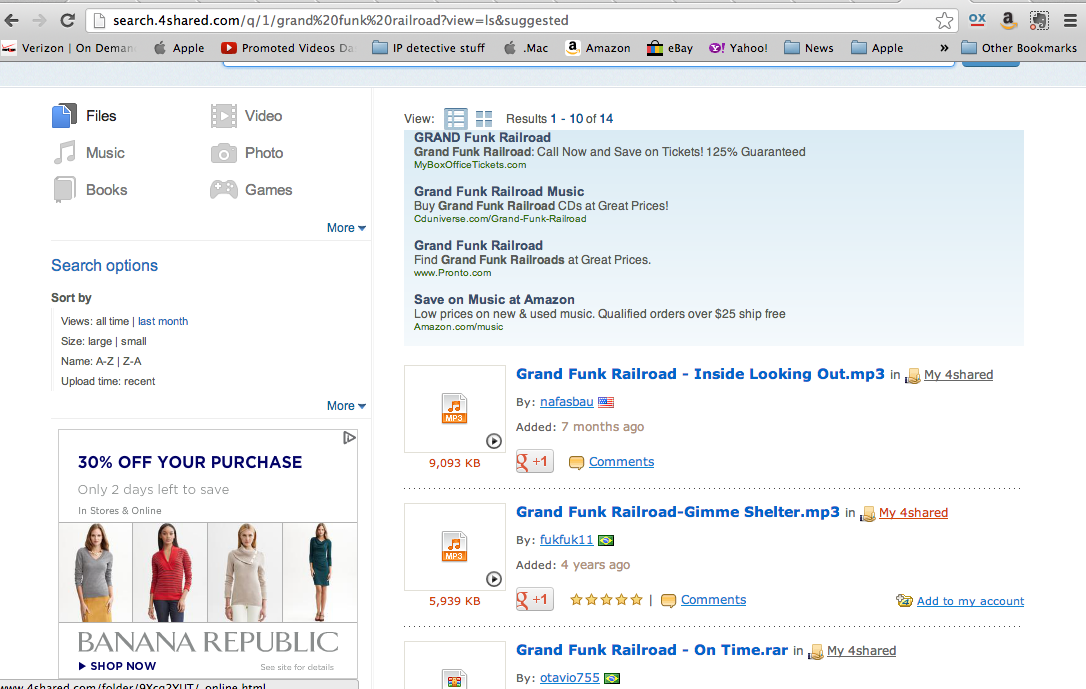
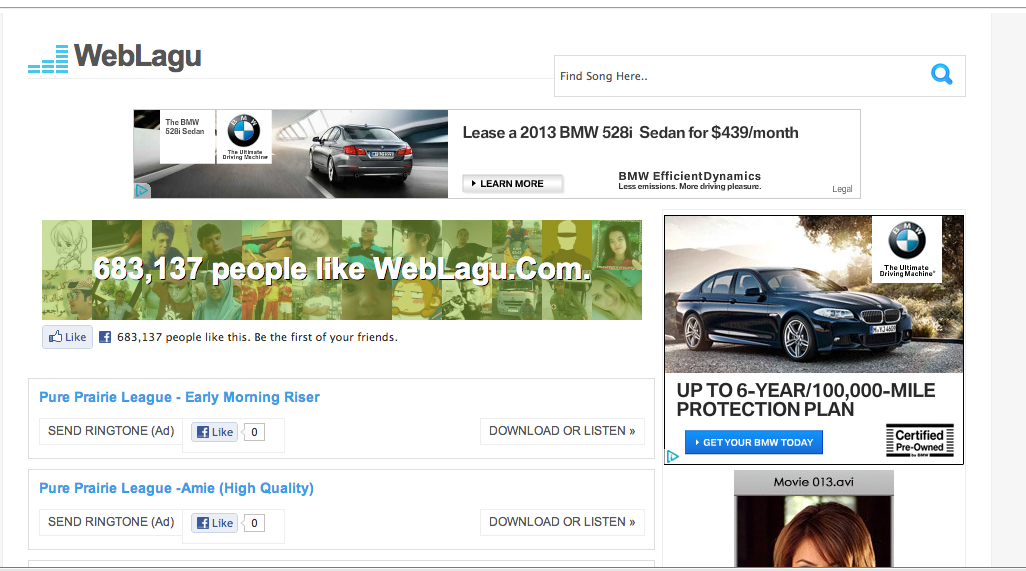
Bruce Houghton also owns the talent agency  Skyline Agency.   This agency tends to have a lot of “Old” and “Grumpy” artists that would probably go on a “Rant” if they were to see that their agency head is tacitly defending this practice.  So we prepared a few screenshots.  
 
Any comment Bruce?  Do you think that this practice is acceptable?  How do our “future” music models like streaming compete with the  guys that don’t pay any royalties to artists?   We’re all ears. 

Pure Prairie League piracy brought to you by BMW.

Screen Shot 2013-02-22 at 3.57.36 PM

Al Stewart By Celestion and zZounds.

Screen Shot 2013-02-22 at 7.23.02 PM

The Smithereens By Priceline

Screen Shot 2013-02-22 at 7.29.48 PM

Grand Funk Railroad By Banana Republic, Amazon and others. 

Screen Shot 2013-02-22 at 7.32.59 PM

Artists Rights Watch – Sunday Jan 20, 2013

Grab the coffee!

Recent Posts:
* Well this is Embarrassing, a Tunecore Ad on 4Shared…
* Don’t Get IRFA’d: Westergren’s Fake “Tour Support”
* Golden Globe Winner Adele Exploited by American Express, AT&T, British Airways, Target and Nissan

From Around The Web:

COPYRIGHT ALLIANCE:
* The Silver Lining of the SOPA Debate

ADLAND:
* Youtube and Google have money problems

GRAPHIC LEFT OVERS:
* Creatives Stunning Revolt Against Big Bad Business

As best I can determine, none of the creators of these images were asked to participate in a program that paid them peanuts (a one time payment of $12) and gives away their work hundreds of thousands of times. This is a great deal for Google and its users and a complete disaster for the photographers who participate against their will.

“D-Day” (Deactivation Day) is set for February 2nd and a growing number of contributors are pledging to deactivate their portfolios or pull large numbers of images until the one million image mark is met.

MICROSTOCK POSTS:
* Photographers plan to remove images from iStockphoto

THE CURTIS AGENCY:
* More Horror Stories from the Digital Book Bazaar

I have often written that piracy is the biggest threat to the e-book business. (visit Pirate Central). This is a good instance why. – Richard Curtis

DIGITAL MUSIC NEWS:
* Study: A Majority of Americans Would Support Moderate Piracy Enforcement…

MEDIABISTRO:
* How to Stop Piracy: Carnegie Mellon Professor Michael Smith at DBW

“The shutdown of Megaupload caused a statistically significant increase in digital sales,” he said, comparing numbers between countries with high Megaupload usage to countries with low Megaupload usage.

LAS VEGAS REVIEW JOURNAL:
* At adult expo, fans hunt autographs while pros battle piracy

PHILSTAR.COM:
* TFC Japan all-out in its anti-piracy campaign

“We have an office here that provides em- ployment as it serves the community it is in. We are grateful that the new anti-piracy laws in Japan recognize the ‘sensur- round’ value of the busi- ness that we bring and the empowering impact of the content that we deliver to our target audience,” says Olives.

“There are naysayers who said that piracy is an unwinnable war,” narrates Lopez. “But we believed that piracy should be treated like a disease that needs to be eliminated. You always start effective disease preven- tion through mass information. People need to know what the disease is and what it does. And you need partners who share the same faith in the cause. We found one in OMB chairman Ronnie Ricketts.”

SE TIMES.COM:
* Balkans need better intellectual property protection

“Potential investors are not much interested to invest in a country where intellectual rights are not protected,” Blagojevic said, adding that infringement of these rights has caused substantial losses to Serbia’s economy.

Citing International Data Corporation statistics, Blagojevic said the value of pirated software in Serbia in 2011 was estimated at nearly 87 million euros.

“If the piracy rate would be dropped 10 percent, the state budget revenues could increase $20 million [14.9 million euros] and some 10,000 jobs could be opened, primarily in the IT industry,” Blagojevic said.

AD AGE:
* If Pandora Can’t Monetize Mobile, Can Anyone?

MUSIC TECH POLICY:
* What’s all this then? Google’s “Ad Cops” Are Missing the Point
* How the Rate Court Cottage Industry is Leading to the Destruction of Collective Licensing
* Brand Sponsored Piracy and Award Shows: British Airways Delivers the ultimate insult to Adele

TECH CRUNCH:
* Keen On… Incubus: Limousines, Feeling Dirty and Being Kicked In The Balls (TCTV)

HYPEBOT:
* Ted Cohen On Music Tech And The Music Industry [INTERVIEW]

Do you still favor subscription over advertising-based music services?

Yes, I do. I don’t think that the advertising model so far has proved to be sustainable. I think that we have undervalued subscription. I am paying $150 a month for cable. I watch 20 or 30 hours of TV a week. I probably listen to 50 to 60 hours of music a week. I’d argue with you that music is worth more than $10 a month subscription service.

The labels were so concerned about (piracy)—and I was there at the time—that we had to come up with a price that was just a little bit more than free to convince people that they should pay. So far, we have not been able to raise the price. I think that music is worth at least $20 or $25 a month.

THE PRECURSOR:
* The Google Lobby Defines Big Internet’s Policy Agenda

READ WRITE:
* Is Kim Dotcom’s New Site, Mega, The Wild West Of Piracy?

UPDATE FROM THE CES “PRO-ARTIST” PANEL:

CES Panel Moderator and CNET writer Declan McCullagh discloses artists and creators representatives were not actually invited despite CES claiming they were. As we reported, the panel was comprised of anti-artist and anti-copyright publicly acknowledged Google paid shills.

MARIA BUSTILLOS:
* Yes and No (Lessig, Swartz and Society)

Why are Internet Freedom Fighters always fighting against the Internet Freedom of Artists?

We’re always a little amazed when site like Hypebot takes up the fight for internet freedom, as long as that freedom does not include artists rights. Recently the site has confused the difference between a $20 settlement for illegal downloadingversus a $9,250 per song judgement for copyright infringement.

It seems to us, that getting off the hook for $20 per song is a pretty good deal. Should a person downloading also be found to be uploading and distributing (you know, infringing copyright) than they might want to think twice before pushing back too hard or they could end up like Joel Tenenbaum and Jammie Thomas. Both of whom were found guilty of copyright infringement by a Jury of their peers and awarded damages upheld by the courts.

It’s troubling when sites that state they are trying to help musicians are actually making arguments to support the people who exploit artists and rip them off, but not the artists themselves.