
The American Music Fairness Act is still alive in the 119th Congress in the post-Labor Day political season, and with Congress heading toward the final stretch of the year, it is worth remembering both what the bill actually does and why it matters.
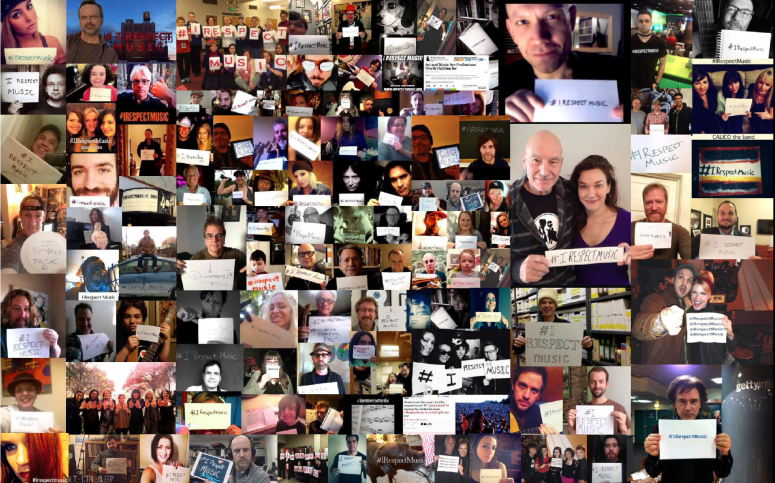
The basic proposition behind AMFA is remarkably simple: when terrestrial radio uses a sound recording to make money, the people who made the recording should be paid. That is not currently the law in the United States, and that’s what the #I Respect Music campaign is all about.
Songwriters and music publishers receive public-performance royalties when AM/FM radio plays a song. But the recording artists, background singers, session musicians and owners of the sound recording receive nothing for the terrestrial performance of that recording. Digital radio services, by contrast, already pay sound-recording performance royalties.
AMFA—S. 326 in the Senate and H.R. 861 in the House—would finally close that anomaly by extending the Section 106(6) sound-recording performance right to terrestrial audio transmissions and bringing AM/FM broadcasts within the Section 114 statutory licensing system.
This Is Not a Small-Radio-Killer Bill
One of the more persistent arguments against AMFA is that a new royalty would threaten small and community broadcasters. Congress has addressed that concern rather directly.
Under S. 326, a qualifying station with less than $100,000 in annual revenue would pay $10 per year. Qualifying public broadcasters with revenues between $100,000 and $1.5 million would pay $100 per year, while other qualifying stations in that range would pay $500. Those protections are limited to genuinely smaller operations; among other requirements, the station’s owner and affiliated entities must have aggregate revenues below $10 million. Let’s be real; that’s a fair deal for small broadcasters, come on.
For everyone else, the Copyright Royalty Judges would establish the rate. And Congress expressly tells the judges that they can consider radio’s much-invoked “exposure” value when determining that rate. (I’m so sure they’ll net out the indie payments, but hush my mouth.)

In other words, “radio promotes records” is not ignored by AMFA. It becomes an economic proposition that can be tested in an actual rate-setting proceeding rather than a vague slogan chanted by NAB lobbyists in sack cloth and ashes justifying a permanent entitlement for large broadcasters to use recordings for free.
And Artists Actually Get Paid
There is another important feature of AMFA that deserves considerably more attention. The bill plugs a potential direct-licensing loophole. If a copyright owner directly licenses transmissions that otherwise could have been made under the Section 114 statutory license, the broadcaster doesn’t get to use that deal to contract the performers out of their statutory share. The transmitting entity must pay 50 percent of the applicable direct-license royalties to SoundExchange (the collective Congress designated to distribute Section 114 royalties), which then distributes the money according to the statutory performer allocations.
That protection is important. It means AMFA isn’t merely creating another revenue stream payable to record companies with the hope that something eventually trickles through an artist’s recording agreement around recoupment in the royalty waterfall. The legislation deliberately preserves a statutory payment path for featured and nonfeatured performers.
That’s an important piece of artist protection and one of the better features of the bill.
The Whip Count
The reality is that AMFA is not sitting on the President’s desk. Neither chamber has reported the bill so far, and that’s the reality in the cold light of dawn. But— look at the Senate sponsorship.
S. 326 is led by Sen. Marsha Blackburn (R-TN) and now has Thom Tillis (R-NC), Bill Hagerty (R-TN), Alex Padilla (D-CA), Cory Booker (D-NJ), and Adam Schiff (D-CA) aboard. That is a 3–3 Republican/Democratic lineup, and importantly, Tillis chairs the Senate Judiciary Intellectual Property Subcommittee while Schiff is its ranking member.
That’s only six senators including the sponsor, so this is certainly not a 60-vote whip count. But six names don’t tell the whole story. Having the chairman and ranking member of the relevant subcommittee supporting the legislation is rather different from having six random cosponsors.
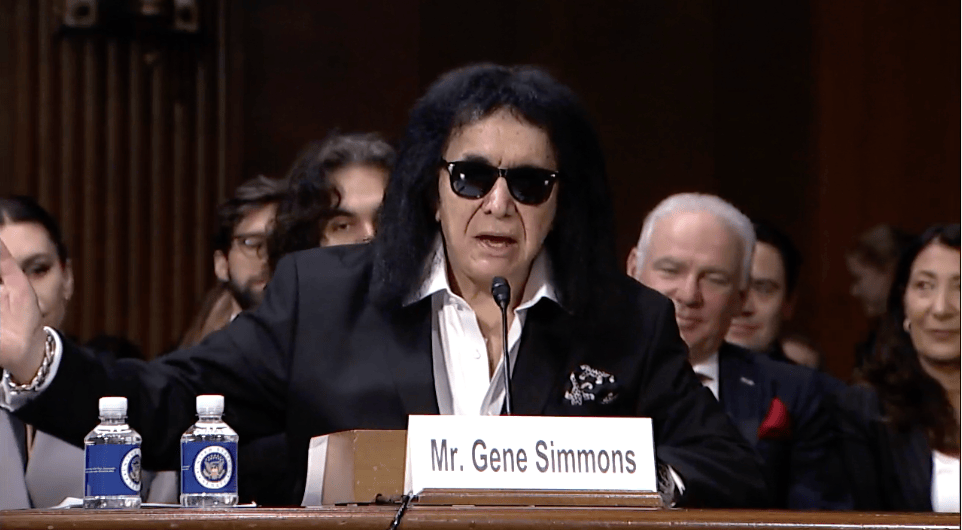
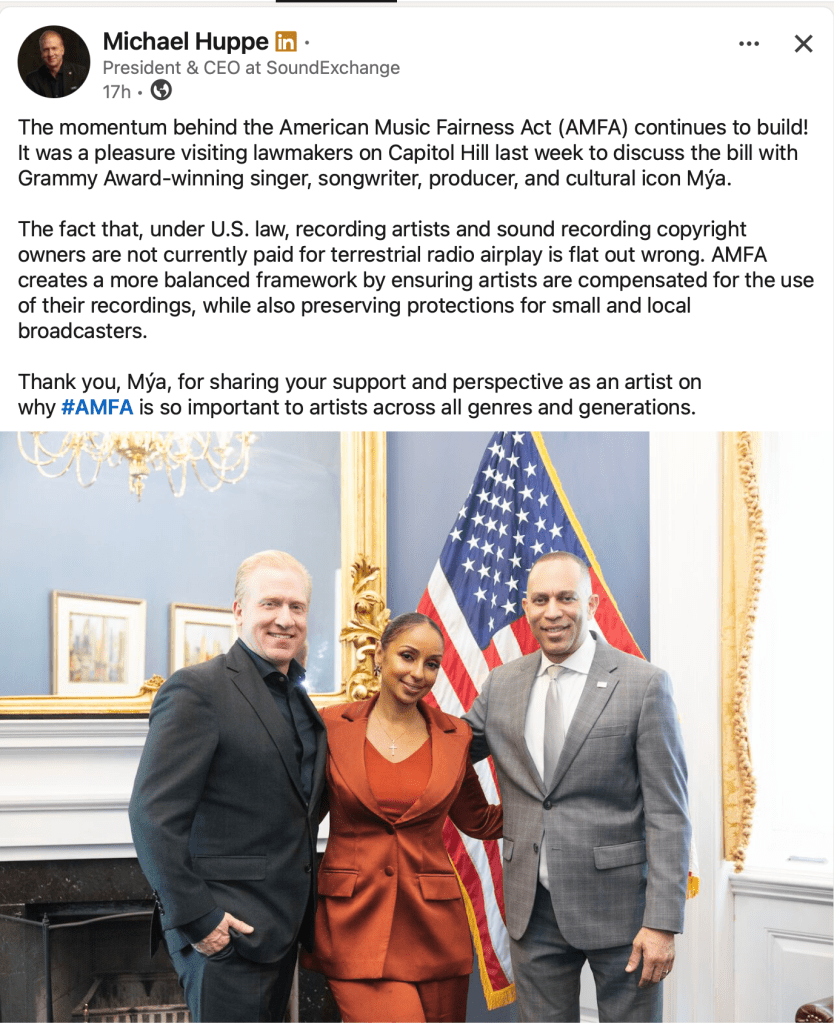
The Senate also did something important in December: it held an actual IP Subcommittee hearing on terrestrial performance rights, with Gene Simmons and SoundExchange President Michael Huppe making the case for performers and broadcasters presenting the opposing view. And when Gene Simmons makes the case before Congress (“the word ‘if’ is for losers….”) and in his Washington Post op-ed, that’s a sight to behold and is must-see TV if you haven’t watched it.
AMFA support in the House of Representatives is also bipartisan. H.R. 861 is sponsored by Rep. Darrell Issa (R-CA), with support that crosses the aisle, including our long-time supporters Jerry Nadler and Ted Lieu. The House bill has accumulated additional cosponsors since introduction, although it likewise has not yet been reported from Judiciary.
So call the whip count what it is: not enough yet, but unusually well positioned institutionally for a music bill that hasn’t moved through committee. And let’s be clear—fighting the National Association of Broadcasters is tough work, right up there with the Augean Stables and Sisyphus. Although closer to the Stables in our opinion.
Don’t Rule Out the Lame Duck
That brings us to the calendar. There isn’t much legislative runway remaining in the 119th Congress, and AMFA still faces formidable opposition from the broadcast lobby. A conventional committee-to-floor path is getting increasingly difficult. But Congress will return after the November elections, and that is where things could get interesting before January 3, 2027 when unpasted bills die.
Music legislation has a history of moving when bipartisan agreement finally intersects with a legislative vehicle. The Music Modernization Act itself ultimately became a package containing several pieces of music legislation and passed with overwhelming bipartisan support.
AMFA now has something it did not have at the beginning of this Congress: a Senate hearing, bipartisan support from the leadership of the relevant IP subcommittee, bipartisan sponsorship in both chambers, and a legislative record establishing both the case for paying performers and the protections afforded small broadcasters.
While that doesn’t guarantee anything, it does make AMFA a plausible candidate for a lame-duck legislative vehicle if the right copyright, intellectual-property or broader year-end package starts moving. Stranger things have happened.
And this is one of those issues where Congress has been “studying” the problem for a very long time. As SoundExchange CEO Mike Huppe reminded the Senate last December, the Senate Judiciary Committee actually reported the predecessor Performance Rights Act in 2009. It never reached the floor.
Seventeen years later, the underlying inequity is still the law: American radio broadcasters can build a commercial business around recorded performances without paying the performers for those performances. Digital services pay. Broadcasters in most other developed music markets pay. American terrestrial radio does not. Artists still die of exposure.
The American Music Fairness Act would finally change that.
Six Senate sponsors isn’t 60 votes. But with Blackburn, Tillis, Hagerty, Padilla, Booker and Schiff already aboard—and Tillis and Schiff occupying the two key positions on the IP Subcommittee—there may be enough bipartisan infrastructure here to keep watching very closely as Congress heads toward the lame duck.
Sometimes the last few weeks of a Congress are when supporters of legislation that has been waiting years finally ride Justice across the finish line.


You must be logged in to post a comment.