Why Streaming Music Isn’t Like Bottled Water… | Digital Music News

Streaming music is just like bottled water, right?  Not all, actually.

1. People happily pay outrageous premiums for bottled water (a glass of tap water costs about $0.001).
Relatively few people actually pay for streaming music.

2.  People are convinced that there’s a difference between bottled water and tap water.
Not enough people feel there’s a difference between ad-based (free) streaming and premium (paid) streaming.

3. Sometimes, tap water tastes funny.
Free streaming always tastes good!  You just have to wait for it a little longer.

4. Bottled water is a proven, $100 billion industry that’s been around for decades.
Streaming music isn’t a profitable industry, hasn’t been around for more than a decade, and remains financially speculative.

READ THE REST OF THE 11 POINT LIST AT DIGITAL MUSIC NEWS:
http://www.digitalmusicnews.com/permalink/2014/02/26/bottledwaterstreaming

Homegrown Music: The Challenges Of Running A Record Label in D.C. | DC Music Download

“I don’t think people understand the idea that music is someone else’s property because it’s just in digital bits,” Feigenbaum says. “It’s intangible. People who feel music has no value and want to steal from you will steal from you. It’s so ubiquitous—it’s so easy”.

“I have people come up to me and tell me how much they love what I do, and I’ll be like, ‘That’s great, where do you buy it?’” notes Feigenbaum. “And you can see they weren’t expecting that and they start to stammer. It’s like, ‘You’re not helping me. You’re not a fan-you’re a leech.’”

“I could go on and on about the things I don’t like about iTunes,” he says, “But they do pay. It’s not my favorite business model, but I get paid from them.” Spotify, however, is another matter.

“They don’t pay shit,” he says. “The only people who make money off of Spotify is Spotify. We were getting thousands of listens on Spotify, which added up to literally one and a quarter pennies. So we opted out.”

READ THE FULL STORY AT DC MUSIC DOWNLOAD:
http://dcmusicdownload.com/2014/02/12/homegrown-music-the-challenges-of-running-a-record-label-in-d-c/

The Tyranny of Legality | The Cynical Musician

Music piracy is a subject that has been talked to death over the past decade. So much, in fact, that it seems scarce conceivable that we could say anything more of interest on the subject.

The fundamental point I’d like you to take away from this is: it’s a lot more important to keep a watchful eye on ostensibly legal services – recall that both Pandora and (perhaps to a lesser extent) YouTube are legit – than to agonize over overt piracy.

That pirate services should be hunted to as close to extinction as is feasible goes without saying, but we mustn’t lose sight of the fact that nobody deserves a medal for going legit. It’s what you’re f-ing supposed to do.

READ THE FULL POST AT THE CYNICAL MUSICIAN:
http://thecynicalmusician.com/2014/01/the-tyranny-of-legality/

How You’re Murdering the Music Industry. | unEARTH Music Hub

Oddly, few people are talking about how much money they are actually making through Spotify, but it’s estimated that the average play is worth an abysmal $0.005. That’s half a cent…if you’re getting anything at all. An artist needs to rack up 200 plays to make $1. How are we letting this happen?! Is the general population truly oblivious to the tremendous effort and cost involved in making music?

Surprise! Songs don’t just pop out of artists like perfectly polished Easter eggs. These creative humans have dedicated a large amount of their time, money and soul to create a tangible piece of art for your listening pleasure. Studio time is expensive! Rehearsal space is expensive! Gas is expensive! Instruments are expensive! Craft beer is expensive!!! Strike that last one.

But seriously guys, when you buy music, you’re not just paying for a song, you’re supporting the artist and the process.

READ THE FULL STORY AT unEARTH MUSIC Hub:
http://unearthmusichub.com/articles/streaming-music/

Spotify seeks to hire U.S. filings expert as bankers eye IPO | Reuters

* Move adds to speculation about IPO

* Senior banker says firm to be valued at $7-8 bln

* Spotify doubled revenue but registered loss in 2012

STOCKHOLM, Feb 17 (Reuters) – Online music streaming service Spotify is recruiting a U.S. financial reporting specialist, adding to speculation that the Swedish start-up is preparing for a share listing, which one banker said could value the firm at as much as $8 billion.

Meeting U.S. Securities and Exchange Commission (SEC) standards for filing financial disclosures is essential for any firm planning to go public and bankers and lawyers said they inferred from the job ad that the company is getting ready for an initial public share offering (IPO), possibly next year.)

READ THE FULL STORY AT REUTERS:
http://www.reuters.com/article/2014/02/17/spotify-idUSL6N0LM2E520140217

RELATED:

If Spotify is saving Swedish music sales, why aren’t indies celebrating?

While Artists are Bitching About Spotify Royalties… Google, YouTube and Grooveshark are in the Getaway Car…

Get Ready For The Streaming-Music Die-Off

Camper Van Beethoven’s 2013 Net Profit Was $645 Million Dollars Higher Than Twitter.

Technologists in Silicon Valley love to tell artists we need to update our business model.

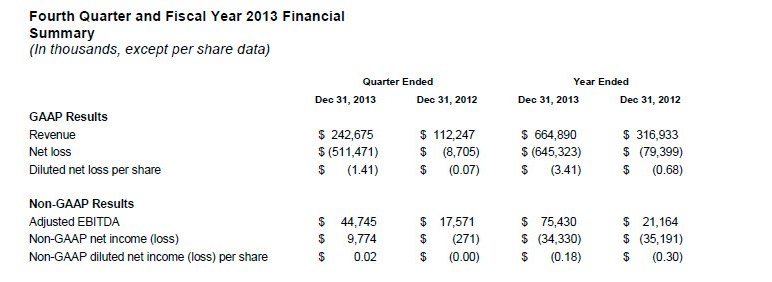
This is hilarious since each of my businesses have been profitable for decades. Stunning when you look at just how unprofitable these Silicon Valley Companies actually are.  Twitter for instance lost $645 million dollars last year.   Jaw dropping when you consider that their total revenues were $646 million dollars.   They spent 2 dollars for every 1 dollar of revenue.  And if you look at their losses they are accelerating.

Screen shot 2014-02-19 at 10.59.36 AM

Source: https://investor.twitterinc.com/releasedetail.cfm?ReleaseID=823321

Now consider the fact that the City of San Francisco also gave them approximately $56 million in tax beaks.  This is while the city has been pushing to slash benefits to city workers. 

Yes maybe Camper Van Beethoven needs to update our business model to include tax breaks and political cronyism.

RELATED:

http://irespectmusic.org

Internet Consultants Are Wrong : Confused About Musicians, The Internet and Piracy

My Song Got Played On Pandora 1 Million Times and All I Got Was $16.89

7 royalty cheques that’ll make you lose your faith in the music industry | AUX

How little does the music industry pay artists? Shockingly little. Spotify, the dominant streaming music source in the U.S., is leaking money. They reportedly dole out 70 per cent of their revenue to royalties, and while that number seems high, consider this: each song stream pays an artist between one-sixth and one-eight of a cent. One source claimed that, on streaming music services, an artist requires nearly 50,000 plays to receive the revenue earned from one album sale. Ouch.

Indeed, things are getting dire. And here are seven examples of how bad things can get.

READ THE FULL STORY AT AUX:
http://m.aux.tv/news/100455-7-royalty-cheques-that-ll-make-you-lose-your-faith-in-the-music-industry

The Music Industry’s YouTube Problem | Music Ally

“Google are not music people, and that scares me.” This single quote from Colin Daniels, of Australian independent music firm Inertia, summarised a whole conference worth of anti-Google unrest at this year’s Midem, which spilled over onto YouTube too.

Whenever a YouTube exec appeared in a panel session, they were put on the defensive about the company’s approach to music and creators, often by pointed questions from audience members – and on one occasion, angry heckling.

After the last year of Spotify taking constant flak over streaming’s value to artists, at Midem that company was being praised – “everyone there are music people,” said Daniels before making his Google comment in a session on indie label strategies – while YouTube (and, more surprisingly, Facebook) were being attacked.

Music good, Big Tech evil. We’ve been writing about this clash for years now, but it was more open and more emotional than we remember at any previous Midem. Yet we also found a more positive, if challenging takeaway from this year’s conference: the music industry can shed its victim status and make these Big Tech platforms work better for rightsholders and creators.

READ THE FULL STORY AT MUSIC ALLY:
http://musically.com/2014/02/07/music-allys-midem-recap-the-music-industrys-youtube-problem/

RELATED:

Meet the New Boss: Google’s Kent Walker Shows Us What Monopoly Looks Like

Kent Walker’s Grooveshark Problem

Worshiping the Great God Scale: Google’s Four Great Lies as read to you by Kent Walker

If Spotify is saving Swedish music sales, why aren’t indies celebrating? | The Guardian UK

It’s often hailed as a model for the future of digital music, but the reality is that many smaller labels can’t survive on streaming

When Swedish independent artist/producer/songwriter and label owner David Elfström Lilja checked his admin page on Phonofile, his distributor, the other day to find out how much he had made from his latest single Worlds Collide in its first few weeks of release, his heart sank. For 18,035 streams he had received 8.70 SEK (£0.80). Meanwhile it had sold two copies on iTunes, for which he received 36.37 SEK (£3).

“No one can say that streams don’t cannibalise sales, cause I can’t imagine those streams wouldn’t have generated at least a few sales [if people couldn’t stream it unlimited times],” he reflects.

It’s worth noting that 2013’s 5% rise of music sales in Sweden represents a slowdown, as sales rose by 13.8% in 2012. You’d be hard pressed to find anyone in Sweden that doesn’t know about Spotify by now, so perhaps we’re getting closer to the point where the market is saturated, when all those willing to pay for it are already paying (the company recently dropping listening limits for free users is not exactly helping to push people towards paid subscriptions). And yet revenue levels are nowhere close to where they were in the early noughties.

READ THE FULL STORY AT THE GUARDIAN:
http://www.theguardian.com/media/media-blog/2014/jan/30/spotify-swedish-music-deles-streaming?

While Artists are Bitching About Spotify Royalties… Google, YouTube and Grooveshark are in the Getaway Car…

While artists bitch about low payments from Spotify royalties,  YouTube,  Grooveshark and The Pirate Bay pay artists less or even nothing.  The reason Spotify pays so little is because it’s forced to compete with illegally operating, unlicensed sites who pay nothing at all. Artists need to focus on the big picture.

Spotify has become the symbol of inequity for artists in the digital age, and we’re not saying artists are wrong to focus on the Spotify royalty payments as an example of this inequity. We’ve written our own criticisms of Music Streaming Math and our doubts that Spotify could ever actually scale to be a sustainable business for both artists and labels.

Whatever the criticisms we may have of Spotify it is important to note that they are legal and licensed with secured rights.

The truth is that Spotify is only a symptom of a much larger disease.  The actual cause of the inequity is mass scale, enterprise level, corporate sanctioned piracy for profit. Ad Funded Piracy is the primary mechanism by which the work of artists and musicians has been devalued to fractions of cent and here’s how it works.

Imagine creating a business where you could profit by attracting every fan of every musician and band.

Imagine not requiring any licenses or permission from any of the musicians and bands.

Imagine selling advertising based on not only the overall popularity of the musicians and bands, but also from providing free streaming and/or downloads to the music of the musicians and bands.

Imagine not having to pay musicians and bands and keeping all of the advertising (and/or subscription/access fee) money.

GOOGLE:

One of the most accessible points of piracy starts at Google search and they can absolutely do more to assist legal and licensed businesses that pay artists. Digital Music News recently reported that “Google Receives Its 100 Millionth Piracy Notice. Nothing Changes…” As we’ve seen with Google’s swift retribution to Rap Genius, search can very effective to discourage or remove bad actors from the legitimate marketplace (When it is in Google’s business interest to do so!). Google is also tracking over 200,000 known domains engaged in active piracy. This seems like an easy problem to solve.

Not only did a series of research studies by the USC Annenberg Innovation Lab identify Google as one of the primary companies feeding advertising to pirate sites, but there is actually a longer darker history of Google assisting illegally operating business online.

Artists don’t get paid anything from pirate sites profiting from advertising revenue. This is the big one, those who pay nothing at all but distribute the most music at the highest volumes.

YOUTUBE:

YouTube is a company that was intentionally founded and designed to profit by ripping off artists, musicians and creators. These practices are well known from court documents published by sources such as Daily Finance.

It appears that much of the music on YouTube may still be generating profit for YouTube but not so much for musicians. East Bay Ray of the Dead Kennedy’s details the state of things here on NPR.

Even when YouTube is paying, they are paying half as much (or less) than Spotify on a per play basis.

GROOVESHARK:

We’d love to hear from artists (musicians and songwriters) who actually have their music legally licensed on Grooveshark. And, for those who do, we’d love to see what some of those royalty statements look like. We can’t imagine that Grooveshark is paying better than Spotify and that’s only for those artists who may actually have a valid license from Grooveshark.

As of this writing Grooveshark is still embattled in a number of lawsuits, which at one time included every major label. Essentially Grooveshark designed their business to be like an audio and music only version of YouTube. We detailed their practices in the post “Grooveshark, Notice and Shakedown”.

We don’t know how much money Grooveshark is making, but it’s enough to put the companies founders on the Forbes 30 Under 30 List… It seems that it is the (new boss) gatekeepers controlling the money and once again it is the artists themselves getting screwed.

PANDORA:

As of this writing Pandora has abandoned it’s ill conceived attempt at legislation that would have reduced artists royalties by 85%. But let us not forget that the arguments used by Pandora for attempting that move were also motivated by the downward economic pressure placed on artists whereby the majority of music consumption is happening with no compensation at all due to various forms of Ad Funded Piracy.

Welcome to the Exploitation Economy.

We suggest that artists focus on the disease that is creating the symptoms of businesses like Spotify.

RELATED:

Google, Advertising, Money and Piracy. A History of Wrongdoing Exposed.

Lou Reed and Dead Kennedys Go Public Against Ad Funded Piracy with Facebook Posts