The Times They Are A-Changin | Guest Post by Marc Ribot

Guest post by Marc Ribot.

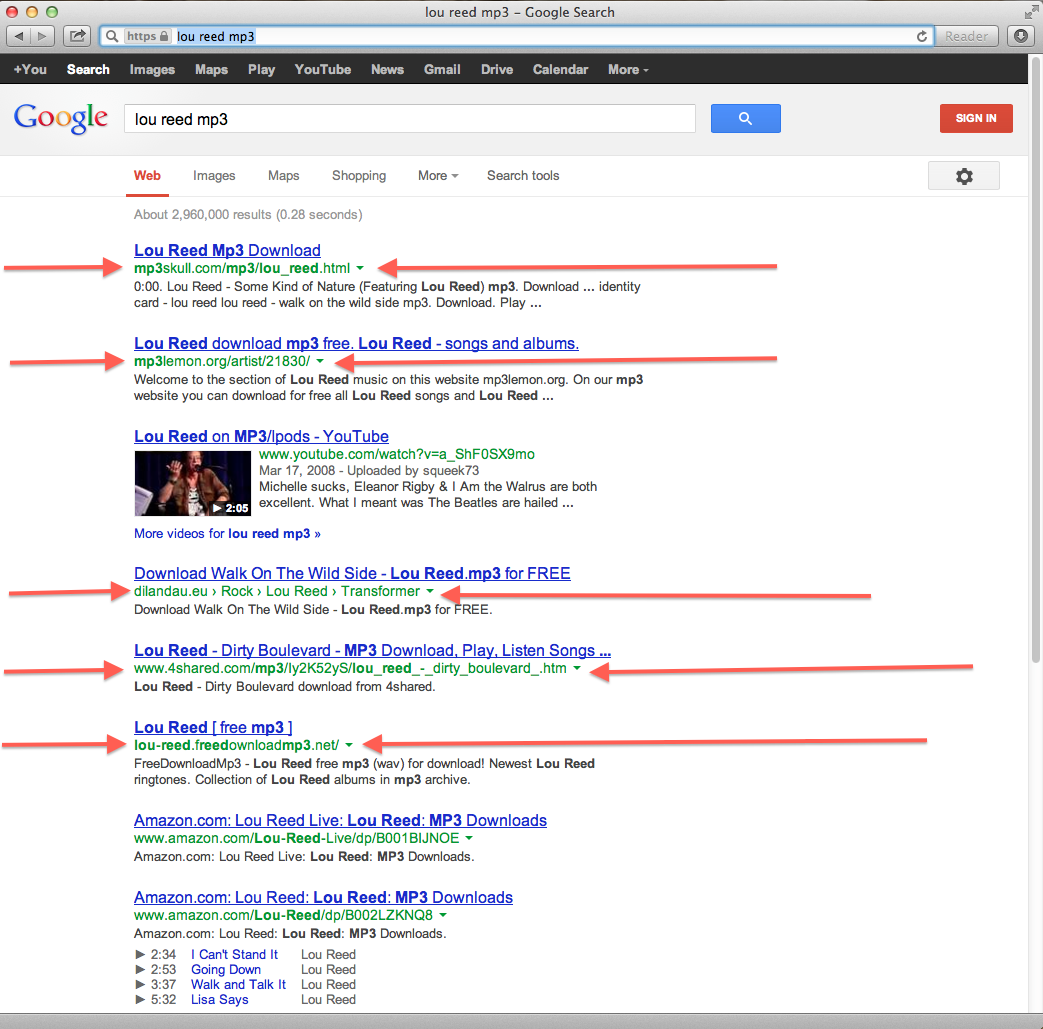
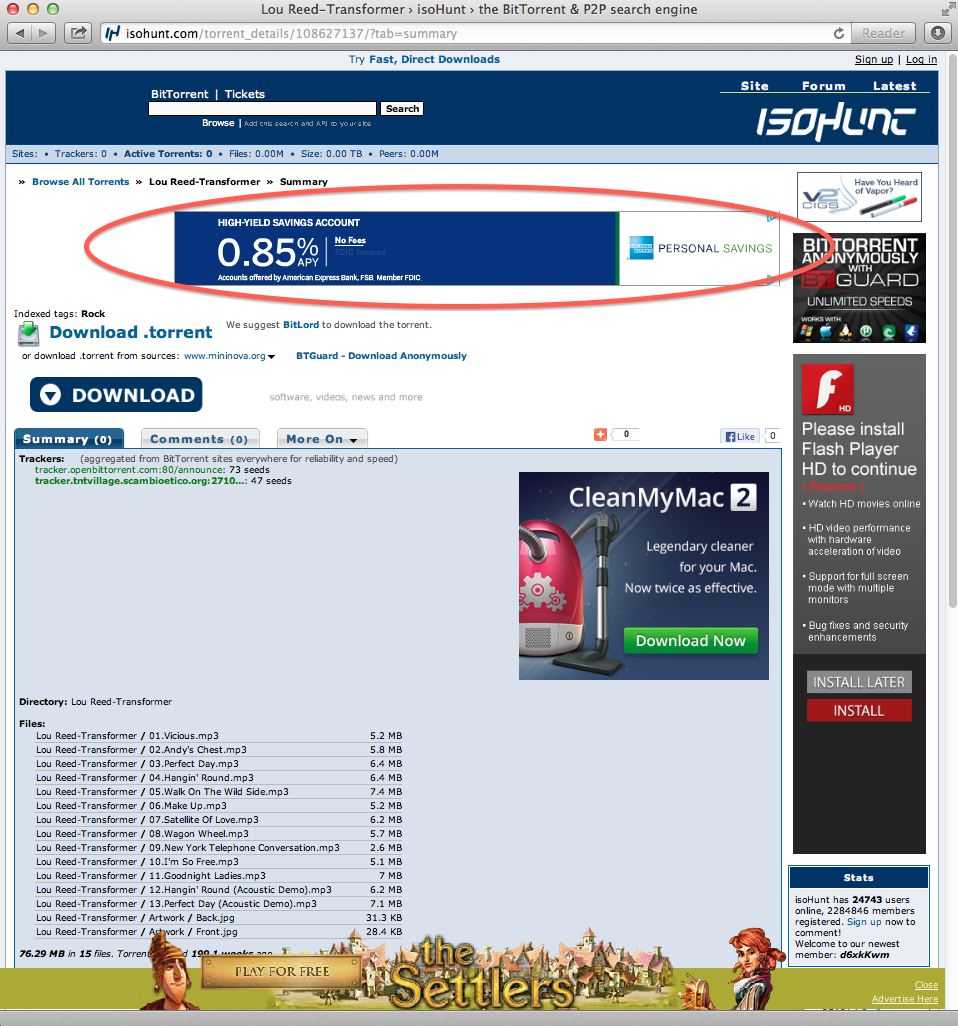
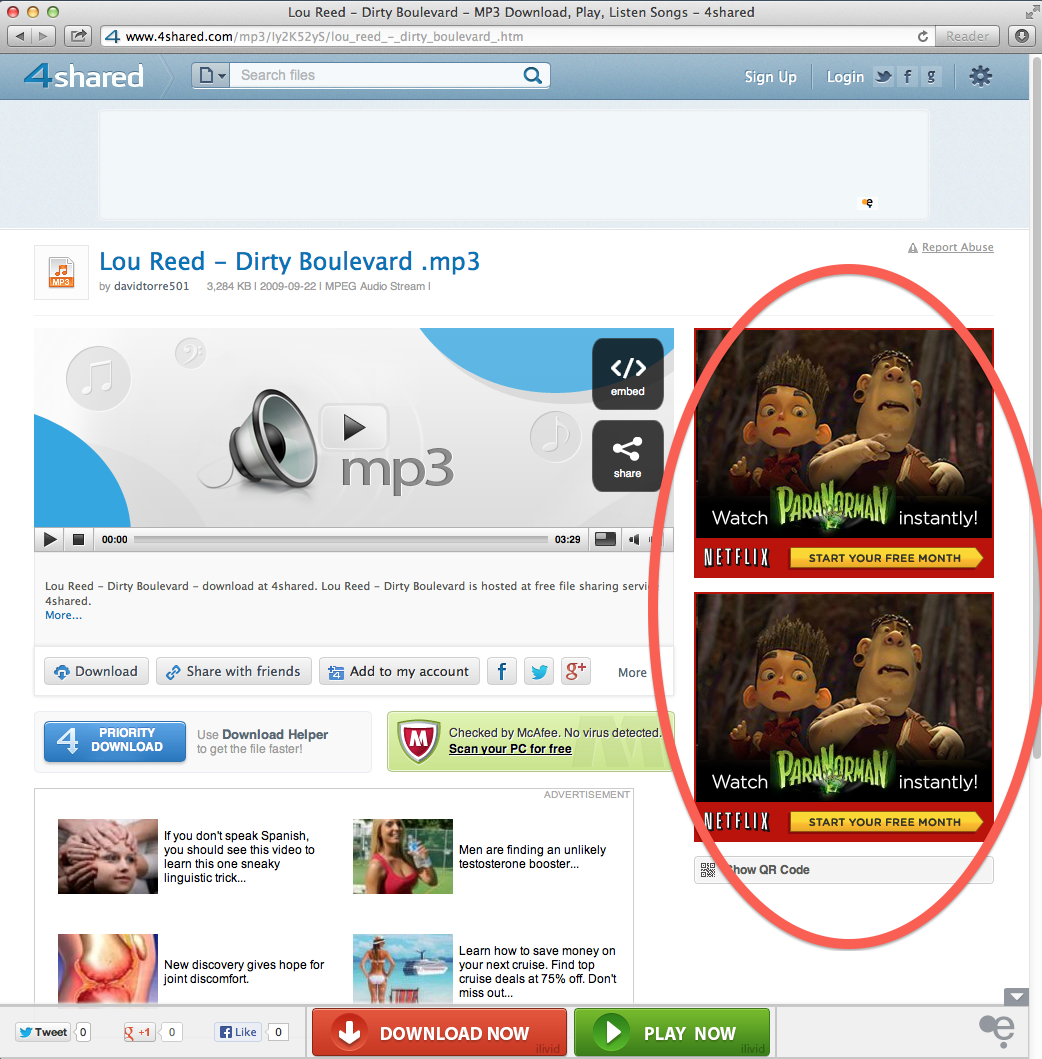
The deceptive premises of the NYTimes Editorial “Keep the Internet Free of Borders” 8/10, begin with the title, which leads one to believe that this ITC case will take something away that actually exists.   In fact, the Internet is not now and has never been,  “free of borders”. Copyright law prohibits unlawful distribution of copyrighted works outside national borders and has strict provisions on import and export of copyrighted works. The Internet has never been free of copyright law, because copyright  is nation-based. That’s why a new treaty was adopted to address the cross-border issue of distribution of works for blind and reading impaired persons- the Marrakesh Treaty adopted in 2012-, and why a global treaty for libraries is now under discussion: to make cross-border distribution legal in certain cases,  precisely because right now it’s restricted.  Even Google knows that the Internet has national borders.  It found a way to respect them for Google Books-  a mechanism to prevent export of copyrighted works to other countries. There are patent rules too.  All universities have policies regarding import and export of patented material. Export control rules and guidelines already cover patented material/trade competition and have NEVER  been restricted to physical goods.

When the editorial extrapolates its argument to the record industry, it goes even further afield.  ” The I.T.C. has long had the power to forbid companies from importing physical goods like electronics, books and mechanical equipment that violate the patents, copyrights and trademarks of American businesses…The commission’s order to ClearCorrect was the first time it had sought to bar the transfer of digital information.”

The Times takes the RIAA to task for supporting the decision: “Groups like the…Recording Industry Association of America are supporting the commission’s view… that, as trade increasingly becomes digital, the definition of “article” should include data.”

Yet when there was actually legislation on the table supporting the alternative remedies to ITC intervention that the editorial now claims to favor,  the NY Times took the exact opposite position ( Beyond SOPA 1/28/12), and supported empowering the ITC:  “By giving the International Trade Commission sole authority to determine infringement, [the OPEN Act] would…[give]  copyright holders powerful new tools to protect themselves [while] protecting legitimate expression on  the Web from overzealous content owners.

Funny how ‘Times’ change.

In any case, the alternate remedies proposed in last weeks editorial simply don’t apply to recording artists works.  “There are far better ways to [protect…patents and copyrights]….Align could sue ClearCorrect and seek damages for patent infringement. Or the company could ask a judge to order ClearCorrect to stop selling products made using the information contained in the files.”

Sounds great: but asking a judge to order an infringing company to stop selling [physical] products made using information contained in infringing files’ isn’t relevant for people whose product is the files themselves.  And  of course, suing companies profiting from infringement is precisely what musicians can’t do, thanks to the Safe Harbor Clause of the DMCA. That clause exempts online businesses from the normal responsibility of companies for violations of the law occurring on their premises.

Is the NY Times now going to support ending Safe Harbor protection for companies whose business models are based on aiding, abetting, and profiting  from infringement?  Such a position would be the only way musicians could have access to its suggested remedy.

We certainly hope so, because while congress has failed to effectively regulate the unfair black market destroying the value of our work, our industry has crashed and our livelihoods are suffering.

Our problem isn’t new technology itself, but the failure of government to regulate new and unfair forms of exploitation. The internet has borders: it is bound internationally by the laws of sovereign nations, and internally by laws which protect the rights of citizens. It also has hugely powerful corporations attempting to violate those borders on a massive scale in order to create consumer ‘facts on the ground’ which render those rights politically un-enforceable.

International borders aren’t the only boundaries threatened by big tech’s drive to profit from infringement: the consequences of the failure of government to stand up to this corporate manipulation won’t stay neatly contained within the music industry.  Nor will the effective nullification of citizens rights stop at those protecting artists.  Its a slippery slope, baby.

– M ribot

The New York Times sells out artists: Shallow data paints a too-rosy picture of “thriving” creative class in the digital age| Salon

A must read from Scott Timberg at Salon.

Musicians, writers, and other creative folk are still scratching their heads over the cover story in Sunday’s New York Times Magazine: “The New Making It” — packaged online as “The Creative Apocalypse That Wasn’t” — looked at how the Internet economy, instead of destroying creative careers, had redrawn them in “complicated and unexpected ways.” The story’s author, Steven Johnson, is an engaging writer, and the piece is told largely through statistics, which most readers assume to be beyond criticism. So why are so many people who work in the world of culture wondering why the article seemed to describe a best-of-all-worlds planet very different from the one they live on?

READ THE FULL STORY AT SALON:
http://www.salon.com/2015/08/24/the_new_york_times_sells_out_artists_shallow_data_paints_a_too_rosy_picture_of_thriving_creative_class_in_the_digital_age/

The 1 Percent: Income Inequality Has Never Been Worse Among Touring Musicians… | Digital Music News

One of the mantra’s that we always hear about the internet and musicians is that the revenue has shifted from recording sales to live ticket sales. So the great accomplishment of the internet according to Silicon Valley wisdom (and Steven Johnson of the NY Times Mag) is that artists can hit the road. “The dream of the 90s is alive, the 1890s…”

Well, if you’re not an established hit artist, here’s how that is working out in the post-napster era. Oh, and by the way, songwriters don’t tour, record producers don’t tour, recording engineers don’t tour… well, you get the point. Here’s the stat as reported by Digital Music News.

Note that in 1982 almost 40% of the revenue was divided between the “bottom” 95% of artists, while in 2003 they received only 15% of all revenue.

Could it be that these top-grossing artists benefited from launching in an era when artists didn’t have to be in the top 1% to develop a healthy live following over years of touring?

READ THE FULL POST AT DIGITAL MUSIC NEWS:
http://www.digitalmusicnews.com/2013/07/05/onepct/

Updated: Recording Sales Declines & Musician Employment, 1999-2011… | Digital Music News

This week there will be a lot of discuss about Steven Johnson’s piece in the NYTimes Magazine. It’s important to note that there are some very serious questions about how Johnson arrived at his conclusions. This piece from Digital Music News from 2013 offers another perspective, and one that is far more consistent with what we see.

There’s more music being created than ever before, but paradoxically, musicians are making less. Which means there are also fewer musicians and music professionals enjoying gainful employment, thanks to a deflated ecosystem once primed by major labels and marked-up CDs.

It’s a difficult reality to stomach, especially given years of misguided assumptions about digital platforms.  But it’s not really a revolution if it’s not getting people paid.  And according to stats supplied by the US Department of Labor, there are 41 percent fewer paid musicians since 1999.

READ THE FULL STORY AT DIGITAL MUSIC NEWS:
http://www.digitalmusicnews.com/2012/08/25/recording/

Steven Johnson & A Thesis That Isn’t | The Illusion Of More

If we strip away some of the color and simply look at the assertions being made, then the basic structure of the article reveals an important fallacy. First Johnson states that most of the evidence of harm done to creators in the digital age is anecdotal, and this is partly true — although anecdotes from professionals should not be misconstrued as mere random complaining. So, to get beyond the anecdotal, Johnson then cites macroeconomic data, compiled by the Labor Department, most of which suggests a big-picture view that creative people in all media are doing better than they were a decade ago. But, having previously scorned the anecdotal negative, Johnson then cherrypicks bits and pieces of the anecdotal positive — some of which he misrepresents — in order to support his interpretation of the economic data he cites.

READ THE FULL POST AT THE ILLUSION OF MORE:
http://illusionofmore.com/steven-johnson-thesis-isnt/

Technology Apologist Complex : Steven Johnson Strikes Again | Jonathan Taplin @ Medium

This week’s apology episode from Johnson is entitled The Creative Apocalypse That Wasn’t — and its one of the most brain dead pieces that the New York Times Magazine has ever published. I’m shocked the Public Editor has not already taken Johnson to task. I won’t go into all the details because David Newhoff has already destroyed most of Johnson’s argument that the Internet monopolies have actually been a boon to the average artist. This is total nonsense as this chart shows.

READ THE FULL POST AT MEDIUM:
https://medium.com/@jonathantaplin/technology-apologist-complex-eafcf14df530

Why is the New York Times Coverage on Artist Rights So Oddly Inconsistent?

Chris Castle at Music Tech Policy does a takedown of the NYT Magazine anti-artists disinformation piece… read on…

Music Technology Policy

If you read the New York Times Sunday Magazine (which probably means you’re over 40 or live inside of the Acela corridor), you may have noticed a story last week titled “The Creative Apocalypse That Wasn’t“.  This piece is another of these “Sky is Rising” type things bankrolled by the Computer & Communications Industry Association, aka Google.  I’m not accusing the author of being on anyone’s payroll (except perhaps the Times itself…more about that later), but I can’t help noticing the similarities.

Here is the author’s thesis:

But starting with [Lars] Ulrich’s [2000] testimony [in the Napster case and hearings], a new complaint has taken center stage, one that flips those older objections on their heads. The problem with the culture industry is no longer its rapacious pursuit of consumer dollars. The problem with the culture industry is that it’s not profitable enough. Thanks to its legal…

View original post 2,004 more words

Essential Reading on the Internet’s Emerging Exploitation Economy.

We write a lot about the issues facing creators, but we’re only just the first to be effected by the Exploitation Economy.


Uber and the Lawlessness of ‘Sharing Economy’ Corporates | The Guardian

It’s not only about musicians and creators, we are just the first to be effected.  The same Silicon Valley scam is going to exploit more and more people. Read on…

“Nullification is a wilful flouting of regulation, based on some nebulous idea of a higher good only scofflaws can deliver. It can be an invitation to escalate a conflict, of course, as Arkansas governor Orville Faubus did in 1957 when he refused to desegregate public schools and president Eisenhower sent federal troops to enforce the law. But when companies such as Uber, Airbnb, and Google engage in a nullification effort, it’s a libertarian-inspired attempt to establish their services as popular well before regulators can get around to confronting them. Then, when officials push back, they can appeal to their consumer-following to push regulators to surrender.”

READ THE FULL STORY AT THE GUARDIAN:
http://www.theguardian.com/technology/2015/jul/28/uber-lawlessness-sharing-economy-corporates-airbnb-google


Stop calling it the “Sharing Economy.” That isn’t what it is. | Olivier Blanchard

What it is, is the Exploitation Economy…

“Disruption rocks though!”

No, it doesn’t. The right kind of disruption rocks. The kind that has value, that solves a problem, that improves an imperfect system. But disruption for the sake of disruption is just noise. It can even be destructive, and that doesn’t rock. It doesn’t rock at all.

Because Apple was “disruptive,” anything deemed disruptive now somehow borrows from Apple’s cachet. “Disruption” has become another meaningless buzzword appropriated by overzealous cheerleaders of the entrepreneurial clique they aspire to someday belong to. And look… every once in a while, someone does come up with a really cool and radical game-changing idea: Vaccines, the motorcar, radio, television, HBO, the internet, laptops, smart phones, Netflix, carbon fiber bicycles, drought-resistant corn, overpriced laptops that don’t burn your thighs in crowded coffee shops… Most of the time though, “disruption” isn’t that. It’s a mirage. It’s a case of The Emperor’s New Clothes, episode twenty-seven thousand, and the same army of early first-adopter fanboys that also claimed that Google Plus and Quora and Jelly were going to revolutionize everything have now jumped on the next desperate bandwagon. What will it be next week? Your guess is as good as mine.”

READ THE FULL POST AT OLIVIER BLANCHARD:
http://olivierblanchard.net/stop-calling-it-the-sharing-economy-that-isnt-what-it-is/


The Crowdsourcing Scam | The Baffler

It’s all the same Silicon Valley scam. Whether you are a musician or a cab driver, this about labor, and you could be next…

Silicon Valley calls this arrangement “crowdsourcing,” a label that’s been extended to include contests, online volunteerism, fundraising, and more. Crowdsourced work is supposed to be a new, more casual, and more liberating form of work, but it is anything but. When companies use the word “crowdsourcing”—a coinage that suggests voluntary democratic participation—they are performing a neat ideological inversion.

The kind of tentative employment that we might have scoffed at a decade or two ago, in which individuals provide intellectual labor to a corporation for free or for sub-market wages, has been gussied up with the trappings of technological sophistication, populist appeal, and, in rare cases, the possibility of viral fame.

But in reality, this labor regime is just another variation on the age-old practice of exploiting ordinary workers and restructuring industrial relations to benefit large corporations and owners of the platforms serving them. The lies and rhetorical obfuscations of crowdsourcing have helped tech companies devalue work, and a long-term, reasonably secure, decently paying job has increasingly become a MacGuffin—something we ardently chase after but will likely never capture, since it’s there only to distract us from the main action of the script.

READ THE FULL POST AT THE BAFFLER:
http://thebaffler.com/salvos/crowdsourcing-scam


Silicon Valley Is Not a Force for Good | The Atlantic

We don’t need to throw the baby out with the bath water, what we need is fair and ethical businesses.

It’s been a long journey from Google to Snapchat—or to apps that enable drivers to auction off the public street-parking spot they’re about to leave in San Francisco. With a few exceptions, the Valley’s innovations have become smaller, and smaller-minded. Many turn on concepts (network effects, regulatory arbitrage, price discrimination) that economists would say are double-edged, if not pernicious. And while the Web was touted as a great democratizing force, recent tech innovations have created lots of profits at the top of the ladder and lots of job losses lower down. The tech sector itself has proved disappointing as a jobs engine and at times hostile to women.

READ THE FULL POST AT THE ATLANTIC:
http://www.theatlantic.com/magazine/archive/2015/07/silicon-valley-shrinking-vision/395309/


Jaron Lanier: The Internet destroyed the middle class | Salon

Jaron Lanier was the first to identify and speak about this issue. We’re glad to see others catching up to him. Here’s a refresher…

“Here’s a current example of the challenge we face,” he writes in the book’s prelude: “At the height of its power, the photography company Kodak employed more than 140,000 people and was worth $28 billion. They even invented the first digital camera. But today Kodak is bankrupt, and the new face of digital photography has become Instagram. When Instagram was sold to Facebook for a billion dollars in 2012, it employed only 13 people. Where did all those jobs disappear? And what happened to the wealth that all those middle-class jobs created?”

“Future” also looks at the way the creative class – especially musicians, journalists and photographers — has borne the brunt of disruptive technology.

READ THE FULL STORY AT SALON:
http://www.salon.com/2013/05/12/jaron_lanier_the_internet_destroyed_the_middle_class/


Sleeping Through a Revolution | Jonathan Taplin @ USC

This presentation by Jonathan Taplin at the Annenberg Innovation Lab breaks it all down. Required Viewing.