
Tashaki Miyaki Asks People to Please Stop Pirating Music

It’s not just mainstream artists like Tom Yorke and Beck who are speaking up about the challenges facing the new generation of musicians. We’re seeing more artists are speaking up as they face the financial reality that music piracy is having on their careers. We applaud Tashaki Miyaki for taking a public stand in an effort to educate and inform their fans about the challenges musicians are facing today.

the large number of people who are okay with uploading music which one does not own, is truly unfortunate. many musicians have multiple jobs in order to be able to tour and make recordings without becoming homeless. aside from it being copyright infringement, which is an illegal act, uploading tracks onto these torrent sites is robbing the artist of money which would otherwise allow him or her to continue to work. it doesn’t matter the level of the artist. more successful artists support more people, and often successful acts support their label, which then allows the label to take a chance on signing smaller, unknown artists.

please stop pirating music.

Support the band and read the full post here on their Facebook Page:
https://www.facebook.com/tashakimiyaki/posts/744509558897013

Rap Genius Says It Will Seek Licenses for Lyrics | NYT

It’s been an interesting week in the battle over unlicensed lyric websites. These lyric sites, likes music piracy sites earn revenue from advertising but don’t “share” any of that revenue with artists and songwriters. The New York Times reports.

Rap Genius, a website that was accused by music publishers on Monday of reprinting thousands of song lyrics without permission, revealed that it had a major licensing deal all along — and also indicated that the site was likely to pursue more such deals in the future rather than fight with publishers over copyright.

“We want to spend our time building an interesting product and community instead of building a legal case, even though we’re sure it would be interesting,” he said. “We chose to partner up with the music publishers and license the lyrics so we could get on with our work and establish closer ties to songwriters and artists.”

David Israelite, the president of the publishers’ trade association, said of Rap Genius’s deal with Sony/ATV, “I think it proves that what Rap Genius is doing is not fair use, and I am hopeful it is a first step toward becoming a fully licensed site.”

READ THE FULL STORY AT THE NEW YORK TIMES:
http://www.nytimes.com/2013/11/15/business/media/rap-genius-says-it-will-seek-licenses-for-lyrics.html

The High Cost of Free | Music | East Bay Express

A new documentary takes a hard look at how the digital age has eroded the value of music and the ability of musicians to make a living.

Unsound, which is currently in the midst of an Indiegogo campaign to raise $52,000 to finish an edit of the film, marks Count’s first foray into the documentary format — an endeavor that required him to take a two-year break from his music career. In a phone interview, Count said he was “the last person in the world” who he thought would take an activist stance on an issue, but this was something he couldn’t ignore.

Thirteen years since the Internet Revolution, I watched all of the artists around me make less and less while their popularity increased,” he said. “I saw how unfair that was. I saw how afraid people were to speak out. How could it be as artists — who are the most vocal during times of injustice — how are they so afraid that they weren’t writing about this? I thought that was a little shocking. This is a very compelling story.

READ THE FULL STORY AT:
http://www.eastbayexpress.com/oakland/the-high-cost-of-free/Content?oid=3762154

Congresswoman Judy Chu: Too Many Americans Think Piracy is OK | THE WRAP

The American public doesn’t understand the consequences to piracy. There are large segments of it that even think it’s okay.

We need to have a greater understanding of [piracy] by the American public. Piracy affects one of the main American exports. It’s a huge industry for the United States, and Americans have to understand it is not right to pirate information.

The MPAA just did a study on how people get pirated content. 74 percent said they first were introduced to infringing content through search engines.

We need to develop a better system for fighting piracy than a whack-a- mole project.

READ THE FULL STORY AT THE WRAP:
http://www.thewrap.com/congresswoman-judy-chu-many-americans-think-piracy-okay/

In Music Piracy Battles, Lyrics Demand Respect Too | NYT

David Israelite, the president of the trade group, said that his organization was filing take-down notices against what it called the 50 “worst offenders” based on a web search conducted by David Lowery, a researcher at the University of Georgia. Mr. Lowery, best known as the lead singer of the alternative rock bands Camper Van Beethoven and Cracker, has become an outspoken advocate for artists’ rights in the digital age, which has often put him at odds with technology companies large and small.

“These lyric sites have ignored the law and profited off the songwriters’ creative works, and N.M.P.A. will not allow this to continue,” Mr. Israelite said in a statement, referring to his organization. “This is not a campaign against personal blogs, fan sites or the many websites that provide lyrics legally. N.M.P.A. is targeting 50 sites that engage in blatant illegal behavior, which significantly impacts songwriters’ ability to make a living.”

READ THE FULL STORY AT THE NEW YORK TIMES:
http://www.nytimes.com/2013/11/12/business/media/in-music-piracy-battles-lyrics-demand-respect-too.html

The Recording Industry: Fiddling while Rome burns. | AdLand

Here come the YouTube Music Awards. YouTube pays artists less per play than Spotify and YouTube get an awards show with artists support. We get what we deserve?

In terms of artists getting their royalties fucked so royally, no one beats Big Tech. The money that should be distributed to musicians is going to google or to ad-supported pirate sites rather than the content creators themselves.

Yet Big Tech is doing what the recording industry can’t. In terms of innovation, the recording industry’s been asleep as the wheel since Napster first rolled out.

READ THE FULL POST AT ADLAND:
http://adland.tv/node/156185#qmSjKtWGAhJ3HzaA.99

RELATED:
YouTube Shares Ad Revenue With Musicians, But Does It Add Up? | NPR

Study Finds That Piracy Is Growing Rapidly and Becoming More Profitable… | DMN

Streaming services may be paying you pennies, but at least they’re lowering piracy. But what if that isn’t true?

At present, there are three major types of piracy ecosystems that are used worldwide: they are BitTorrent, video streaming, and direct download cyberlockers.

The vast majority of BitTorrent sites make money through advertising.

So the piracy sites that we’ve focused on for this study are very much driven by profit: they are generating revenue from advertising, they are generating revenue sometimes from premium subscription fees. And obviously when enforcement shuts these sites down and or shuts down their payment processors, it’s hitting directly at their revenue streams.

READ THE FULL STORY AT DIGITAL MUSIC NEWS:
http://www.digitalmusicnews.com/permalink/2013/10/21/studymediapiracy

As Downloads Dip, Music Executives Cast a Wary Eye on Streaming Services | New York Times

As sales of CDs plunged over the last decade, the music industry clung to one comfort: downloads continued to sell briskly as people filled their computers and iPods with songs by the billions.

Now even that certainty seems to have disappeared, as downloads head toward their first yearly decline.

So far this year, 1.01 billion track downloads have been sold in the United States, down 4 percent from the same time last year, according to the tracking service Nielsen SoundScan. Album downloads are up 2 percent, to 91.9 million; combining these results using the industry’s standard yardstick of 10 tracks to an album, total digital sales are down almost 1 percent.

READ THE FULL STORY AT THE NEW YORK TIMES:
http://www.nytimes.com/2013/10/21/business/media/as-downloads-dip-music-executives-cast-a-wary-eye-on-streaming-services.html?_r=1&

Breaking Bad Creator : “Piracy Is A Problem… We All Need To Eat and Get Paid”

In a recent BBC interview Breaking Bad’s creator Vince Gilligan has been quoted talking about the effect of internet piracy on the show.

Piracy is “ultimately a problem and will continue to be a problem going forward,” Gilligan said. “Because we all need to eat. We all need to get paid.”

It’s been reported that the show’s final episode was illegally downloaded over 500,000 times in 12 hours of the first pirated copy turning up on piracy and torrent sites. Many have seized on Gilligan’s remark that piracy helped the popularity of the show.  That’s highly unlikely as those seeking the illegal copies, were seeking them as demand for the show grew from conventional marketing. These people were opposed to paying for the show from the many outlets where the episodes were legally available like Netflix and Itunes. Gilligan clearly understand the impact…

“The downside is a lot of folks who worked on the show would have made more money, myself included, if all those downloads had been legal.”

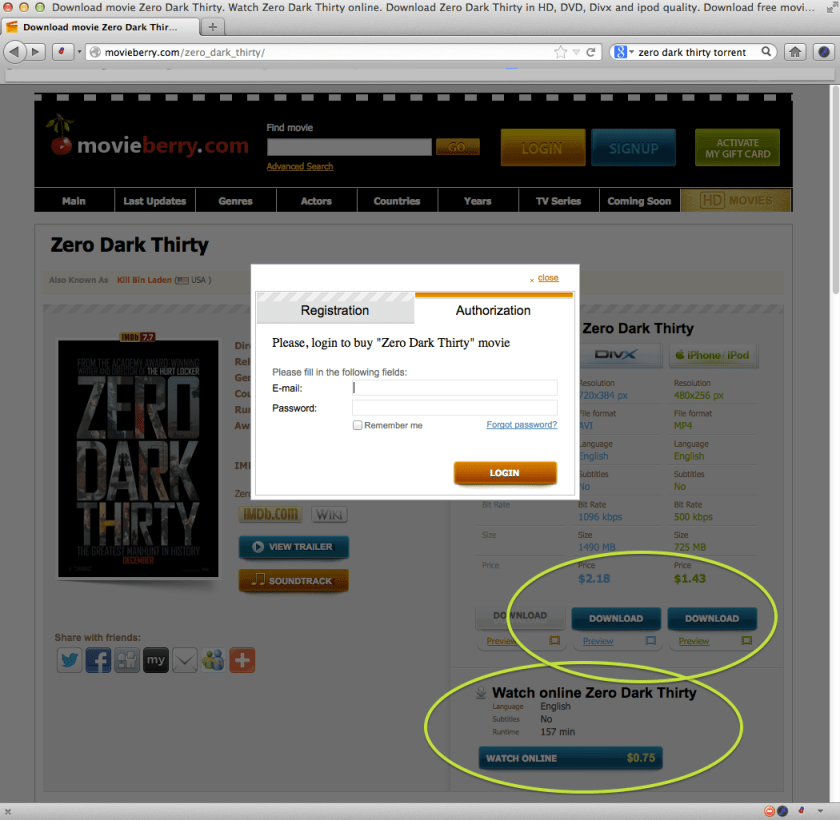
Many piracy apologists and proponents are quick to suggest (incorrectly) that not every illegal download represent a lost sale, but we disagree and here’s why. Looking at the links below you can quickly see that the piracy sites are monetizing the access and availability of the illegal downloads with advertising. Additionally some sites even charge greatly discounted transactional fees via dubious payment processors.

Simply put, piracy is about infringement as a business model. Every illegal download generates revenue for the pirate sites and ad tech companies, none of which is “shared” with the creators.

Zero Dark Thirty, Best Picture Academy Award Nominee, Exploited by AT&T, Verizon, MetroPCS, Nissan, H&R Block, British Airways, Progresso, and more…