21st Century Piracy: The Demise of the Music Industry | THE WIP

EDM artist Victoria Aitken speaks out.

The Internet pirates have made me, and thousands of other musicians, walk the plank. We now have to swim in shark-infested waters where the big fish gobble up our dues and the pirates laugh their way to the bank.

I believe this basic injustice must be remedied – Internet pirates are white-collar criminals. They should pay the royalties they have stolen or be answerable to the law, like looters, burglars, and fraudsters.

READ THE FULL STORY AT THE WIP:
http://thewip.net/contributors/2013/08/music_industry_killed_by_pirat.html

RELATED:
Google, Advertising, Money and Piracy. A History of Wrongdoing Exposed.

Lou Reed and Dead Kennedys Go Public Against Ad Funded Piracy with Facebook Posts

We’d just like to say a very big thank you to both Lou Reed and the Dead Kennedys who publicly posted to Facebook this week our posts showing how they are being exploited by major brands and big tech internet advertising corporations.

LOU REED FACEBOOK POST:
https://www.facebook.com/LouReed/posts/10151804045145953

DEAD KENNEDYS FACEBOOK POST:
https://www.facebook.com/deadkennedys/posts/10151784946510638

In the recent weeks we’ve heard from Aimee Mann, Pink Floyd, Thom Yorke, Blake Morgan, Lou Reed and the Dead Kennedys on various issues negatively effecting artists in the “digital economy.”

These artists have presented their concerns ranging from Spotify royalty rates, Pandora’s dishonest attempts to cut  their currently mandated rates by 85% and of course Ad Funded Piracy which pays artists absolutely nothing.

In each of the cases addressed above artists are speaking out against the exploitative practices of corporate interests destroying the ability of professional musicians to maintain sustainable careers.

Change happens when artists speak up and speak out.

Why Spotify is NOT the Enemy of Artists, and Who Is…

Spotify has been taking a beating in the press lately and we understand why. We have offered our own criticisms which mostly revolve around royalty rates and transparency. But we’ve also stated that Spotify is a symptom of a much larger disease of illegally operating, infringing businesses who make millions individually and billions collectively while paying absolutely zero to artists and rights holders.

As much as we disagree with Spotify over their rates and PR spin on several issues, we also recognize that they are legal, licensed and pay out royalties as they have been negotiated. Artists are able to opt out of Spotify individually (and also if their label permits).  It is for these reasons that Spotify are NOT the enemy.

However this begs the question, if Spotify are not the enemy, who is? Well, as we stated above it is the massively deceptive Ad Tech businesses who have been financing mainstream music piracy for over a decade. This is the Silicon Valley internet tech lobby (lead by Google) who seek to dismantle and destroy copyright protection for individual creators.

Yes, we hear a lot of lip service about how these people say they are really pro-copyright and pro-artist, but when every meaningful action and suggestion is to the contrary of protection and compensation of the artists work and labor it all rings a bit hollow. We now know after a decade plus of internet/tech snake oil salesmen there is no magic bullet and that “touring and t-shirts” is an admission of the failure of these online businesses to provide sustainable earnings for creators.

Piracy is NOT Promotion

Exploitation is NOT Innovation

In our ongoing “Exploited By…” series of posts we illustrate how major Fortune 500 companies, represented by Madison Avenue Advertising Agencies have been, and continue to finance the destruction of the creative community.

So we say this…

Let us focus first on the many who pay nothing at all to musicians while pocketing 100% of the Profit. Let us focus our energies on the illegally operating companies and corporations who have made infringement for profit their business model.

We are encouraged to see Spotify also take up this mutually beneficial fight against those companies and business who have so greatly devalued the work of musicians as well as impeding the growth potential of legal and licensed companies to create sustainable models for all stakeholders.

Will Page a Spotify spokesperson had this to say in The Register UK:

“Copyright infringing websites are big businesses … 2/3 of piracy sites have advertising, and 1/3 also include credit card logons. This competition is real: consider how ad pricing is distorted by those unlicensed sites who offer more scale and no content costs.”

This is the first step towards making real change that will remove the bad actors from the marketplace and move towards a sustainable ecosystem for all legal and licensed stakeholders.

We’ve commented before that we believe that Spotify is unsustainable at current rates. It is also worth noting that Spotify pays significantly MORE than YouTube, a business that was founded and built on the premise of infringement for profit. Although YouTube and Google have made improvements in their services for rights management they still fundamentally devalue the work of artists hiding behind the DMCA.  Google and YouTube also continue to create and distribute anti-copyright and anti-artist propaganda asserting that any “remix” of an artists work is “fair use.” It is not.

In the end Spotify needs to increase it’s revenue per stream so it can increase it’s royalties per stream to be sustainable for artists. The number one way to do this is to capture the millions or even billions in advertising revenue that are financing illegally operating and infringing businesses that pay artists nothing.

In closing, the enemy is not so much those who pay so little offering artists both consent and compensation, but more so those who are paying nothing at all and deny the artists consent.

Exhibit A:

Lou Reed Exploited By American Express, AT&T, Chevorlet, Chili’s, Lysol, Pottery Barn, Vons, Domino’s Pizza, Netflix, Galaxy Nexus and Ron Jeremy!

But This Time We Mean It… Welcome To The Ad Tech Time Machine…

Welcome to the Interactive Advertising Time Machine… set the dial for 2010

“The Interactive Advertising Bureau (IAB) has pledged to work with content producers to make sure that ads don’t inadvertently end up on sites peddling unauthorized copyrighted material.”

That was back in 2010 when NPR aired the story, “Feeding Pirates: When Legit Companies Advertise On Shady Sites.” That’s right, 2010 when filmmaker Ellen Seidler brought the issue to light when she documented the piracy around the release of her indie film “And Then Came Lola.” Highly recommended reading is Ellen’s highly detailed blog, PopUpPirates.

Ok, so maybe not far enough back for you? Set your Interactive Advertising Time Machine to the year 2007...

Here’s  the case of easydownloadcenter.com which found Google caught red handed actually helping the site improve it’s SEO to maximize advertising revenue. This as reported by DailyTech at the time:

“The two men said in sworn statements that Google offered them credit as an easy start to advertise on Google’s search engine, and that the search company also suggested ad keywords such as “bootleg movie download,” “pirated,” and “download harry potter movie.” According to the report, Google received $809,000 for its advertisements.”

And this was Google’s response at the time (arguably the biggest member of the IAB):

“Google declined to comment on the specific clash over its ads, but did say that it is working on ways to screen out ads that violate the company’s policies.

A spokesman for Sony Pictures said, “Discussions with Google have been ongoing for a while, and there’s hope it can result in a mutually satisfactory arrangement whereby Google will not give support to pirate sites.”

Read that again. “Discussions with Google have been ongoing for a while,” that was in 2007 for activity that dates back to 2003.

So please forgive us if we are less than optimistic over the latest so-called “Best Practices” announced by the IAB. This is not a new or unknown issue and what’s worse is that actual knowledge by Google and other members of the IAB dates back at least to 2003, a decade ago.

Think we’re biased? Ok, fair enough but DigiDay calls the latest appeasement “Toothless” and it is a trade publication that reports on internet advertising that is owned by The Economist:

There are also plenty of built-in outs. The networks, for instance, can keep ads running on sites engaging in piracy if those sites have “substantial non-infringing uses.” Also, the agreement lets networks simply remove ads from pages engaging in piracy, while leaving ads running on the rest of the site. The agreement places the onus on the rights holder to notify the networks about pirated content, not requiring the networks to monitor the content themselves. The agreement “cannot, be used in any way as the basis for any legal liability.” The agreement excludes ad servers and ad exchanges.

The agreement may not be not much of an agreement at all.

Yeah, that’s pretty much what we think too. So, what does the creative community have to do to protect itself from the blatant exploitation of its products and labor from internet robber barons? Stay tuned…

YOU MAY ALSO BE INTERESTED IN READING:

The Ad Network Transparency Conspiracy

Thom Yorke Vs Spotify : Why Doesn’t Spotify Speak Out Against Ad Funded Piracy?

Thom Yorke’s announcement to boycott Spotify is just the latest public acknowledgement that the pay rates and business models of streaming services need to adapt and evolve to pay sustainable rates to artists and rights holders. We’ve previously offered our own point of view on Spotify whereby we believe that current streaming based models are fundamentally flawed at the level of their pay rates and are especially devastating to developing artists.

Both Thom Yorke of Radiohead and Trent Rezenor of Nine Inch Nails were two of the first artists to explore and experiment with potentially new music business models on the internet. However, the realities of those experiments have become apparent this year as Thom Yorke spoke out about Google and Trent Reznor against music streaming services being unfair to artists.

But it’s also important to remember that despite our disagreements over the revenue distribution models of Spotify and Pandora these are legal and licensed services. The primary reason that these streaming businesses even exist is in response to a decade plus of infringing and illegally operating business who pay nothing at all, zero, zilch, nada.

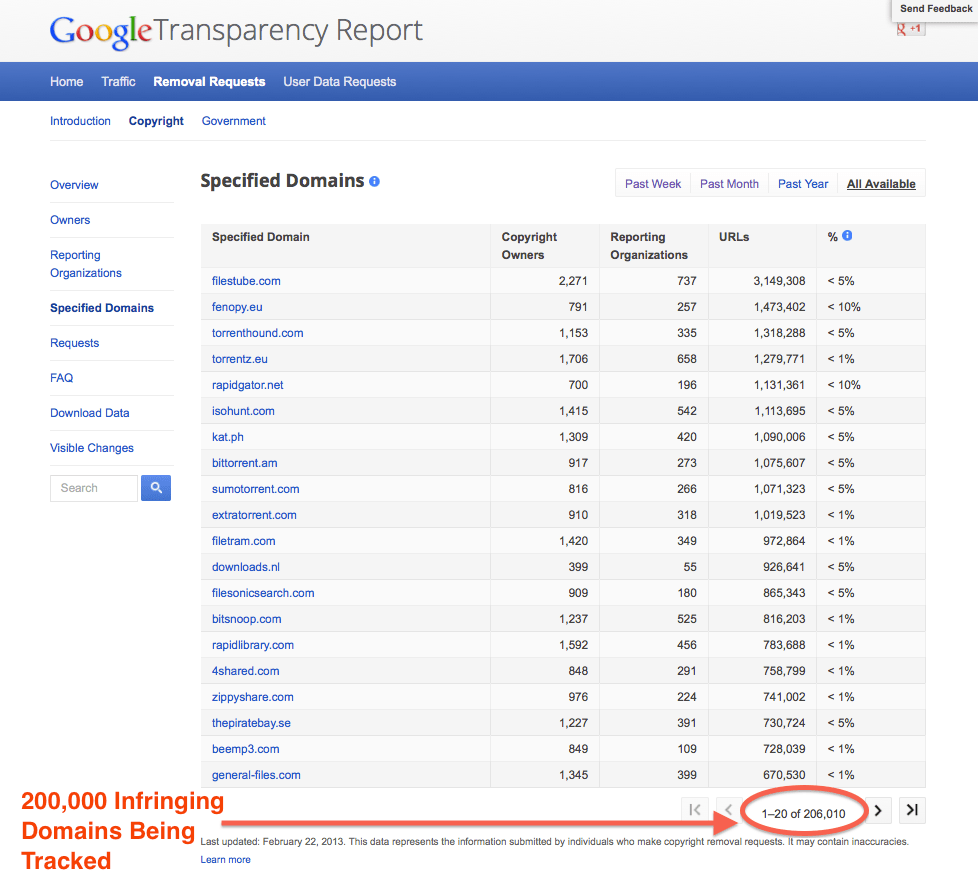
Let’s get really real for one second… One of the primary reasons Spotify pays so little is because so many more pay nothing at all. Google alone is tracking millions and millions of infringement notices to over 200,000 known illegally operating businesses.

For those who unaware, Ad Sponsored Piracy is the mechanism by which illegal and infringing online businesses get paid to display advertising on their sites. These sites do not license any of the music they distribute nor do they share any of this revenue with artists or rights holders. In other words Silicon Valley corporate interests pocket 100% of the money and pay artists nothing.

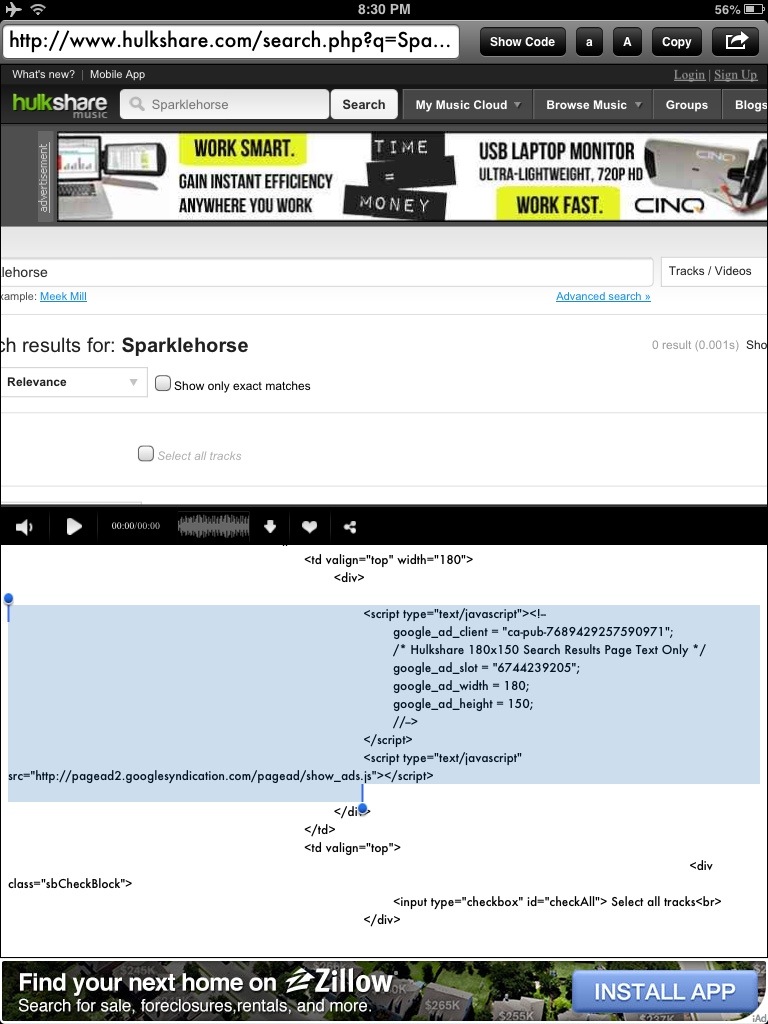
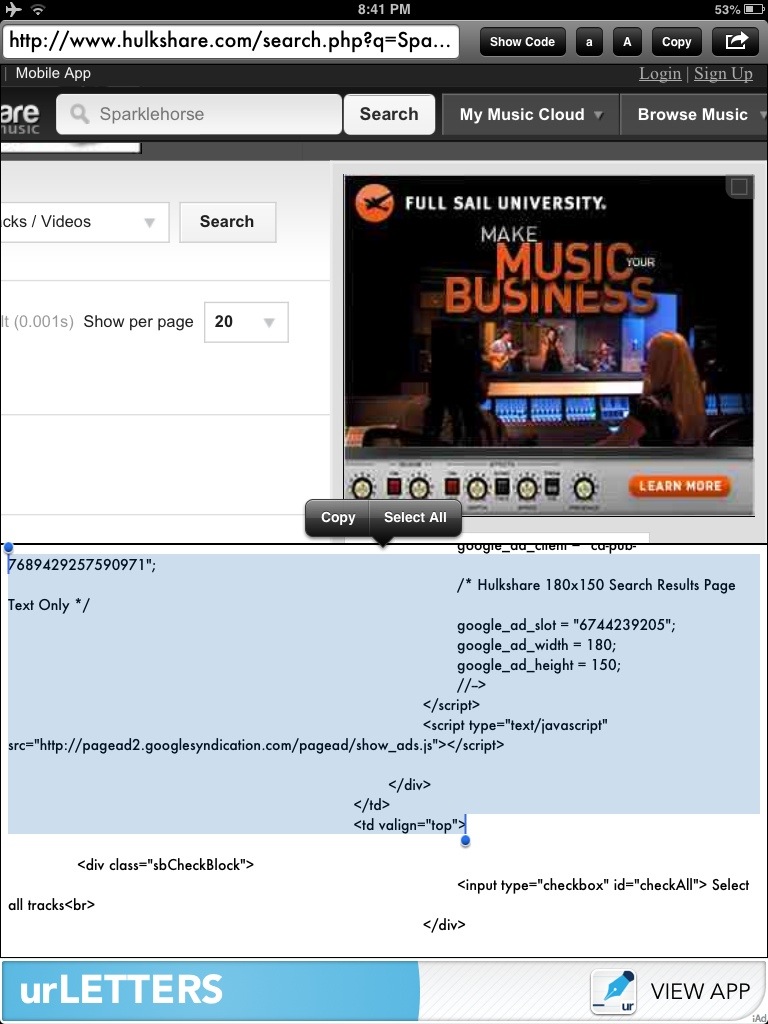
Simply put, ad supported piracy is the practice whereby ad networks like Google’s Adsense profit by placing ads on pirate sites like www mp3skull com.

Brand $$$-> Ad Agency $$$-> On Line Ad Services $$$-> Ad Exchanges $$$-> Illegal and Infringing Sites Profit from Ad Placements.

Any legally licensed, legitimate internet music business has to acknowledge that mass scale, enterprise level, commercial infringement of music only harms their business. The devaluation of advertising inventory on infringing sites harms both the legitimate businesses ability to grow, and the ability to pay sustainable rates to musicians.

So why doesn’t Spotify join with artists by insisting on better controls and regulation of online advertising? Spotify’s existence alone is not the solution as the payments to artists and rights holders simply do not scale as we have previously pointed out (also note how much less YouTube pays than Spotify – more on this later).

Music Streaming Math, Can It All Add Up?

Maybe we’re missing something. If streaming is the future how does $2.5b in revenue from a massively successful Spotify replace the loss of $8.3b in annual earnings?

Solutions for Artist Rights must include the acknowledgement that the mathematical facts of streaming services is that they are unsustainable at current rates (see chart above). Therefore, there must be regulatory enforcement to protect artists and other creators (authors, filmmakers, etc) from Ad Sponsored Piracy.

We have previous identified over 50 Major Brands Supporting Illegal and Infringing online businesses here:

Over 50 Major Brands Supporting Music Piracy, It’s Big Business!

See more Corporate Advertising Funded Exploitation of Artists:
Tom Waits * Neil Young * Aimee Mann * Neko Case * U2 * Ben Gibbard/Death Cab For Cutie * East Bay Ray / Dead Kennedy’s * Billy Corgan/Smashing Pumpkins

Google in Spotlight for Links to Criminal Websites… Again…

Just like groundhog’s day for Google… Here we go… Again…

“On every check we have made, Google’s search engine gave us easy access to illegal goods including websites which offer dangerous drugs without a prescription, counterfeit goods of every description, and infringing copies of movies, music, software and games,” said Attorney General Hood.  “This behavior means that Google is putting consumers at risk and facilitating wrongdoing, all while profiting handsomely from illegal behavior.”

If reading this triggers a sense of deja vu, don’t worry– you’re not crazy.  Less than 2 years ago, in August of 2011, Google agreed to a 500 million dollar settlement with the U.S. Justice Department over online advertisements for illegal Canadian pharmacies.

READ THE FULL POST AT VOX INDIE:
http://voxindie.org/google-links-to-criminal-websites-under-scrutiny

YOU MAY ALSO BE INTERESTED IN READING:
Google, Advertising, Money and Piracy. A History of Wrongdoing Exposed.

AND:
ADWEEK : “Ad Industry Takes Major Step to Fight Online Piracy”… Again…

The EFF assumes the worst – of everyone else.

An interesting look at the Electronic Frontier Foundation’s highly selective reasoning regarding the DMCA by David Newhoff at The Illusion Of More.

“The long and shameful history of the Digital Millennium Copyright Act file takedown abuse teaches us that intellectual property owners cannot be trusted with the enforcement tools they already have  we should hardly be giving them new ones.”  The “long and shameful” true history of the DMCA is how utterly useless the mechanism is for rights holders to protect their works.

Many creators have demonstrated over an over again that the DMCA notice and takedown procedure is spitting in the wind for even very large, well-funded producers, and completely hopeless for independent and smaller rights holders.

Meanwhile, it is the (internet/tech) industry that funds the EFF, who have made sure that DMCA remains a fly swatter in a storm of raptors.  And that’s bad enough, but to add insult to injury, McSherry sticks this fact in a paper bag and lights in on fire on our doorstep when she says the DMCA has a “history of abuse” by rights holders.  And one reason we can know she’s full of it, is the flimsiness of the cases her own organization chooses to take on as exemplary of this so-called abuse.

READ THE FULL POST HERE AT THE ILLUSION OF MORE:
http://illusionofmore.com/eff-assumes-worst/

Time For Silicon Valley To Grow Up And Take Responsibility For Their Online Advertising Business Model.

Time For Silicon Valley To Grow Up And Take Responsibility For Their Online Advertising Business Model.

Whitelist vs Blacklist Advertising.

Last week much of the world was horrified to learn that Facebook was serving ads from major brands on pages devoted to what the Huffington post described as:

horrific rape-oriented Facebook pages… (including) graphic images of gore and horror, beaten children, naked children, women bound and gagged, or thrown down stairs.

The public outcry against the brands and Facebook was overwhelming. Facebook and many brands were forced to apologize and revise policies (let’s see how long this lasts!).  Dove may have suffered long term damage to their brand.

WAM (Women Action Media), feminist Soraya Chemaly and Everyday Sexism should be commended for bringing this issue to light and achieving real change (and the stunning coordination of their campaign should be a lesson to artists advocates).

What we find interesting here at The Trichordist  is that many of our brands were the usual ad-supported piracy suspects.  In particular  Nationwide and American Express.  We have repeatedly called out these companies for advertising on cyberlocker sites that exploit artists and others.  And as we have noted over and over again this is not just about music.  Generally these sites  include links to bestiality, rape, illegal pornography videos as well as music (Urban Outfitters and Lexus advertising against beastiality links.)  We’ve both publicly and privately reached out to many of these advertisers to no avail. www.adland.tv  actually ran an article entitled “American Express Thinks You Might Like Piracy and Child Pornography” after reviewing my research.

Just as Facebook was long aware of these horrific pages, American Express and many other companies have long known their advertising was ending up on these pages. This latest brouhaha shows (as we have noted) they have yet to take effective action.

And we know why.  Total obfuscation by the online advertising ecosystem: in house ad buyer, Madison Avenue advertising agency, online ad network, ad exchanges and possibly complicity by the brands themselves.

We have seen and documented the following responses from the online advertising ecosystem (In fact I just got a refresher course May 28th at Westminster College in London as I participated in a panel discussion  “Follow The Money: Can The Business Of Ad-Funded Piracy Be Throttled?):

Lame Excuse #1.   We can’t control where these ads end up.

Response:  Then why on earth would anyone pay for your product?  Are you  admitting that your product is faulty? Cause I can think of a couple of lucrative class action lawsuits.   We think you can control where the ads end up. You just want the money.

Lame Excuse #2:  We are not the internet’s policeman (most recently by Google at Westminster College London).

Response: This is a “straw man” argument.  No one is asking YOU to be the web’s policeman. We are simply asking you to run your  company ethically and responsibly. Please stop obfuscating.  Sure the police arrest the thieves, but just like pawnshops, Google and the rest of the online advertising ecosystem have a ethical, moral and LEGAL obligation to make sure they are not selling stolen pageviews.  If a pawnshop used this excuse to sell stolen goods they would be shut down and the owners would go to jail.

Lame Excuse #3:  We don’t know who the bad guys are.

Response:   Really? Then who get’s the money for the CPMs  and/or Clicks?  Are you just leaving suitcases of cash in lockers at greyhound stations?  And if you are doesn’t that seem a tad suspicious? Who pays the taxes on these transactions?   If you don’t know you are probably in violation of many tax laws in many countries. And that’s how they put Al Capone in jail. Don’t mess with the tax man.

Lame Excuse #4:  Apple and Coca Cola don’t end up on these sites because they use “White Lists”.   This was the response from Alexandra Scott the UK Public Policy Executive for Internet Advertising Bureau.  This as always was delivered with an undertone of dismissiveness. As if Apple and Coca Cola just “don’t get it!” and should be advertising on shitty file infringing sites next to trojan downloads and Russian bride ads.

Response: Exactly. Whitelists.  They actually vet the websites on which they are advertising. They check to see if these sites are legitimate sites.  Using the pawn shop analogy.  They actually check to see if the goods-in this case pageviews- are stolen.

And this brings us to the fundamental problem with the internet advertising ecosystem.  It’s not the obligation of artists, feminists, anti-human trafficking activists and animal rights groups to tell you where you should not be advertising. It’s your job. Grow up. Quit trying to force us to do your job for you.

Blacklist systems too often put the burden on the victims or advocates for the victims while enabling brand advertising and Madison Ave/Silicon Valley profits at the expenses of others.

Whitelist systems put the burden on those reaping the benefits:  Brands, Madison Ave. Silicon Valley and Publishers.   This is the ethical model.

Note:  whitelists and blacklists are not created by the government.  These lists are designed for a narrow purpose–brands should be able to spend their advertising dollars in a predictable way that results in the brand being able to control the brand’s own speech.  These lists are not designed to block anyone’s speech.

There’s another way to look at this from the brand’s point of view, which may be better than developing “lists” that are either/or lists that put a site in or out or operation.  It is entirely consistent with the brand’s ability to control the integrity of their products and their right to not be defrauded out of advertising money for the brand to put together lists of sites that they want to avoid, or “undesirable” sites as Google’s Theo Bertand said on our panel in London.

Time for the internet advertising ecosystem and their Silicon Valley enablers to learn to act ethically and responsibly.  Companies like Starbucks and Costco have figured it out.  Companies like Walmart that came under criticism for various unethical practices mostly addressed these problems.  What is Silicon Valley’s response?  “Censorship” and “You silly people don’t understand the internet.”

I call bullshit on this argument.  And we “silly people” understand you better than you think.

Silicon Valley is the new wall street.  Sure they have green buildings and make the occasional charitable donations.   But mob bosses were notorious for making donations to the local orphanages and policemen benevolence societies.

Silicon valley doesn’t give a damn how it makes money. It will do anything to make money.  No matter what the moral implications.   It has a fake censorship argument that it uses to mask it’s fundamental amorality and greed.   Entire PR campaigns (including fake paid bloggers and fake public interests groups) are devoted to promoting a techno Nihilism: If you can do it on the internet-no matter how horrific that act may be-stopping someone from doing it is “censorship” and  infringes someone’s “freedom”.

This is the kind of argument a 13 year old wouldn’t even make.  And it’s amazing that the mainstream press never calls them out on this.  Again why is it left to a 50 year old  moderately successful indie rocker to call them out on this bullshit?

Look it’s very simple.

Grown up style freedom:

“My right to swing my fist ends at the tip of the other man’s nose.”

Silicon Valley petulant 13 year old style freedom:

“My right to swing my fist is absolute.  And you’re not the boss of me!”

Silicon Vallley and the rest of the online advertising ecosystem needs to grow up.

YOU MAY ALSO ENJOY READING:

Google, Advertising, Money and Piracy. A History of Wrongdoing Exposed.

ADWEEK : “Ad Industry Takes Major Step to Fight Online Piracy”… Again…

Over 50 Major Brands Supporting Music Piracy, It’s Big Business!

Look who’s Pirating now! University Of Georgia Music Business Program’s Preliminary Study Of Advertising On Copyright Infringing Sites.


Quincy Jones talks music, legacy and piracy…

Quincy Jones is a living legend. We find it interesting that despite the common insights of some of the most respected artists, songwriters, performers and producers there are still those who claim musicians are better off in the post-internet world, and that piracy has not negatively effected them. Quincy disagrees, and rightfully so.

Q: How have you adapted over the years to the way the industry has changed?

A: The industry doesn’t change your production – you still do what you believe in. What’s sad is that there is 98 percent music piracy everywhere on the planet. It’s just terrible.

What if these kids (who download music illegally) worked for me for two months and then I said, “I’m not going to pay you.” That’s just not right.

READ THE FULL INTERVIEW HERE:
http://www.accessatlanta.com/weblogs/atlanta-music-scene/2013/may/21/quincy-jones-talks-music-legacy-and-why-he-likes-l/