Guest post by @TheBlakeMorgan: A musician’s view of the TikTok legislation

Here’s a musician’s perspective on the TikTok legislation before Congress: I hope it passes, both as an American, and as a music maker. (The bill is “Protecting Americans From Foreign Adversary Controlled Applications Act, (HR 7521),” It was recently introduced by Representatives Mike Gallagher (R-Wi.) and Raja Krishnamoorthi (D-Ill.)The bill passed the House by a vote of 352-65, demonstrating deep bipartisan support)

First––this bill restricts TikTok, it does not “ban” the app. It forces the company to separate its ties to the Chinese Communist Party and prevents them from accessing the data of Americans. That’s a good thing.

The bill doesn’t mandate or regulate speech, it’s focused on national security: the FCC called TikTok “a clear and present danger” to our country.

Second––music makers already know what music lovers are just now learning: TikTok is the worst, most exploitative streaming platform for music, anywhere. The vast majority of music on TikTok generates virtually no revenue for the musicians who made it, and even more music on the platform is completely unlicensed (stolen), copied (stolen via AI), or pirated (stolen).

Simply put, TikTok is trying to build a music-based business without paying music makers fair value for the music.

Lastly––musicians (and Americans) are all too familiar with being underpaid and undervalued, with our data being scraped and sold, with platforms which promote hate speech, bigotry, and bullying.

But TikTok does all of this and more, while posing an existential national security threat to our country.

It’s rare to see independent musicians (like me) stand with major labels, and it’s rare to see Republicans and Democrats stand together about anything. But here we are. I hope it passes the Senate and that President Biden signs it.

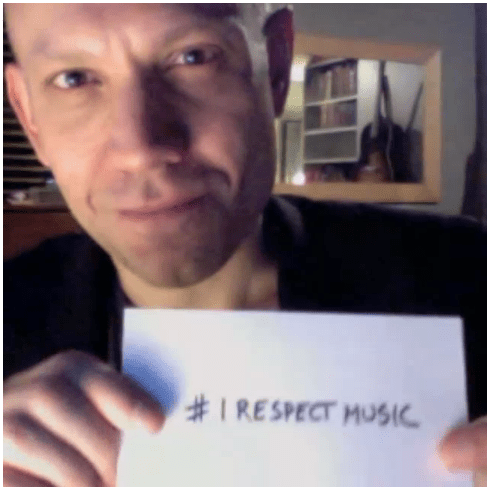
The Broadcasters are Still Free Riding on Artists #IRespectMusic

Broadcasters set the example followed by Google, YouTube, Spotify and now TikTok. Let’s tell Congress broadcasters have to pay reasonable royalties in the bi-partisan American Music Fairness Act.

Please join the fight and sign the petition at the MusicFirst Coalition!

MTP Interview: We ask @Creators_ECSA President @Helienne Lindvall to Explain the European Parliament’s Streaming Economy Report from the Committee on Culture and Education

This post first appeared on MusicTechPolicy by Chris Castle.

The Culture and Education of the European Parliament issued an important report on the state of the creative economy. Our friend Helienne Lindvall, President of the European Composer and Songwriter Alliance, gives us some insights into the report and the context.

I know ECSA was involved in testifying for the EU cultural diversity report, can you tell us a little about the report, what prompted it and how does it help or hurt?

Streaming and the amount of issues it brought with it has been at the top of the agenda for European songwriters since the launch of Spotify. As an Ivors Academy Board Director, I was part of the inception of the UK #FixStreaming campaign which resulted in the UK Government calling for a complete overhaul of music streaming, and for the creation of music industry working groups to fix these problems. Meanwhile, similar lobbying efforts have been applied in Brussels by music creators across Europe. The EU has a fine history of promoting, supporting and protecting culture – in 2019, legislators proved it by adopting the DSM Copyright Directive. Now we need it to step up to help create a sustainable streaming environment. 

Rapporteur Iban Garcia del Blanco and his fellow CULT MEPs took their time to really listen to and understand the reality that music authors (ie songwriters and composers) face, and our proposed remedies, and I think the report reflects that.

Is the report designed to shape future legislation or rulemaking in the EU?

We look forward to seeing the European Commission work on such a strategy and take concrete actions to build a fair and sustainable music streaming ecosystem for all music creators.. 

MEP Garcia del Blanco said at the press conference that he would prefer if the industry stakeholders could sit down and fix these problems without further legislation, but judging from our experience in the UK, certain areas are easier to get a consensus on than others. The UK metadata working group has set parameters for improvements, which I believe can easily be adopted across Europe and beyond. However, when it comes to remuneration and making it fairer for songwriters and performers, we have met with resistance from labels and platforms – unsurprisingly, perhaps. Getting increased transparency has also proved more difficult. If this resistance remains we will keep pushing for Government intervention and legislation. 

The report calls for a comprehensive and ambitious strategy based on independent data and a structured dialogue with all stakeholders, and we stand ready to work with the entire music value chain towards a fairer distribution of revenues, and we support the establishment of a European Music Observatory to collect and analyse data.

I noticed this language in the report calling on EU parliament:  “Calls for action to be taken at the European Union level to guarantee the visibility and accessibility of European musical works, considering the overwhelming amount of content constantly growing on music streaming platforms and the lack of Union rules to regulate them in a harmonised manner”.  and algorithmic dominance? 

It may come as no surprise that American and major label records still dominate on streaming platforms.

Is this designed to keep local language artists from being overwhelmed by English language tracks due to algorithmic bias or Spotify’s stream discrimination plans?

The short answer is: yes. During our stakeholder testimonials in the EU Parliament, Spotify claimed that streaming has increased diversity. And, yes, it may be true that some European countries have seen plenty of local acts in their local charts, though by no means all countries have experienced this, but on an international level there’s still a huge dominance of Anglo-American repertoire. Then we have the issue of the dominance of legacy artists and catalogue albums, such as ABBA, Fleetwood Mac and Elton John. 

In a post-Brexit reality, does the report have any effect on the UK?

The EU doesn’t have any legislative powers when it comes to the UK, due to Brexit, but as streaming is cross-border, as is the music industry, an improvement in either would have an impact on both. Some EU members have already implemented their own versions of equitable remuneration, such as Belgium and Spain – and France is establishing a streaming tax to support local music – but we would like to see solutions and changes that help ALL music creators, in particular songwriters, who currently are at the bottom when it comes to their share of the streaming royalty “pie”, and are finding it next to impossible to survive on their music, despite getting millions of streams. 

Given the attention that the Bad Dog story is getting, would the metadata accuracy proposals in the report help to stop outright fraud and impersonation? 

Yes, it would. Overall, we need more transparency, accountability and accuracy to deal with fraud. These are all words that get thrown around the industry willy-nilly but are rarely truly abided by. In this industry, companies rarely make an effort when it comes to accuracy unless there is an incentive for them to do so. What is the incentive for distributors and platforms to clean up their act and make an effort to prevent bad actors from profiting from fraudulent streams when they still get a share of those streams? I make the comparison to physical stores: If a supermarket sold counterfeit products, they’d be in trouble with the law. Why not these platforms and distributors? And this is before we even get into what’s happening on TikTok, which is the wild west when it comes to unlicensed usage. 

Does the metadata accuracy help to enforce “know your customer” type minimum indentifiable data requirements?

Accurate metadata is vital for so many reasons. Not only because more than 20% of all song revenue is unallocable and won’t go to the rightful recipient, but it will help in the fight against fraud. The way I put it to legislators is: You wouldn’t be able to buy a tuna sandwich in the supermarket without being able to read EXACTLY what is in it on the package, or the trader knowing who to pay for those ingredients. So how can it be legal for streaming services to accept, display and charge for recordings without knowing who created the underlying composition? How can they collect money without having any information on who to pay it to? And, as we’ve discovered with cases such as the Bad Dog story and Swedish criminal gangs using Spotify streams to launder money, that money could even be funding drug and weapons trafficking. 

Anything else you think is important about the report? 

The report calls for action when it comes competition issues and the dominance of a handful of labels and platforms, issues that we believe suppresses our bargaining power. It also stresses that authors, performers and other rights holders should be allowed to reserve and license the rights for the use of their work for AI training, and it acknowledges that this requires transparency. Overall it’s an important report that aims to correct the imbalances that have led to the unsustainable situation music creators find themselves in, and to build a sustainable, thriving and diverse cultural future. It couldn’t come soon enough. 

In the fight for AI Justice, “The music industry is the tip of the spear” @MikeHuppe #IRespectMusic

Get smart about the NO AI Fraud Act with this MTP Mini Brief on the NO AI Fraud Act.

@RepMariaSalazar and @RepDean Introduce No AI Fraud Act to protect artists against AI Fakes #irespectmusic @human_artistry

Press Release

SUPPORT THE No AI FRAUD ACT

AI-Generated Fakes Threaten All Americans

New personalized generative artificial intelligence (AI) cloning models and services have enabled human impersonation and allow users to make unauthorized fakes using the images and voices of others. The abuse of this quickly advancing technology has affected everyone from musical artists to high school students whose personal rights have been violated.

AI-generated fakes and forgeries are everywhere. While AI holds incredible promise, Americans deserve common sense rules to ensure that a person’s voice and likeness cannot be exploited without their permission.

The Threat Is Here

Protection from AI fakes is needed now. We have already seen the kinds of harm these cloning models can inflict, and the problem won’t resolve itself.

From an AI-generated Drake/The Weeknd duet, to Johnny Cash singing “Barbie Girl,” to “new” songs by Bad Bunny that he never recorded to a false dental plan endorsement featuring Tom Hanks, unscrupulous businesses and individuals are hijacking professionals’ voices and images, undermining the legitimate works and aspirations of essential contributors to American culture and commerce.

But AI fakes aren’t limited to famous icons. Last year, nonconsensual, intimate AI fakes of high school girls shook a New Jersey town. Such lewd and abusive AI fakes can be generated and disseminated with ease. And without prompt action, confusion will continue to grow about what is real, undermining public trust and risking harm to reputations, integrity, and human wellbeing.   

Inconsistent State Laws Aren’t Enough

The existing patchwork of state laws needs bolstering with a federal solution that provides baseline protections, offering meaningful recourse nationwide.

The No AI FRAUD Act Provides Needed Protection

The No AI Fake Replicas and Unauthorized Duplications (No AI FRAUD) Act of 2024 builds on effective elements of state and federal law to:

  • Reaffirm that everyone’s likeness and voice is protected, giving individuals the right to control the use of their identifying characteristics.
  • Empower individuals to enforce this right against those who facilitate, create, and spread AI frauds without their permission.
  • Balance the rights against the 1st Amendment to safeguard speech and innovation.

The No AI FRAUD Act is an important and necessary step to protect our valuable and unique personal identities.

@mikehuppe on American Music Fairness Act #IRespectMusic

We’re still looking for the phalanx of industry leaders making this point about the irony of broadcasters enriching themselves at the expense of songwriters when they don’t pay artists–so far it’s just Mr. Huppe who has been here with us before. Complete Music Update has the story:  iHeartMedia confirms incoming $100 million pay day as a result of BMI sale

The boss of US record industry collecting society SoundExchange has used the news that iHeartMedia will make $100 million from the sale of BMI to again call for politicians to back the American Music Fairness Act.

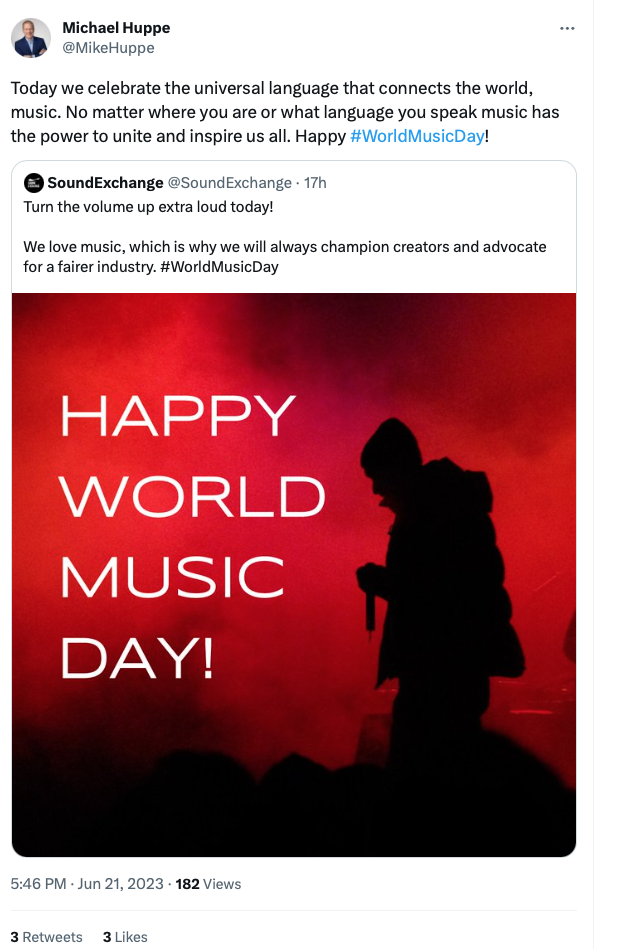
SoundExchange CEO Michael Huppe wrote on Twitter: “The irony of a radio giant profiting millions while underpaying performers is yet another reason why the American Music Fairness Act is so vital for #MusicFairness”.

BMI’s Insult that Keeps On Insulting! @hypebot: Radio doesn’t pay performers, but iHeart will get $100M from BMI sale to Google/Private Equity

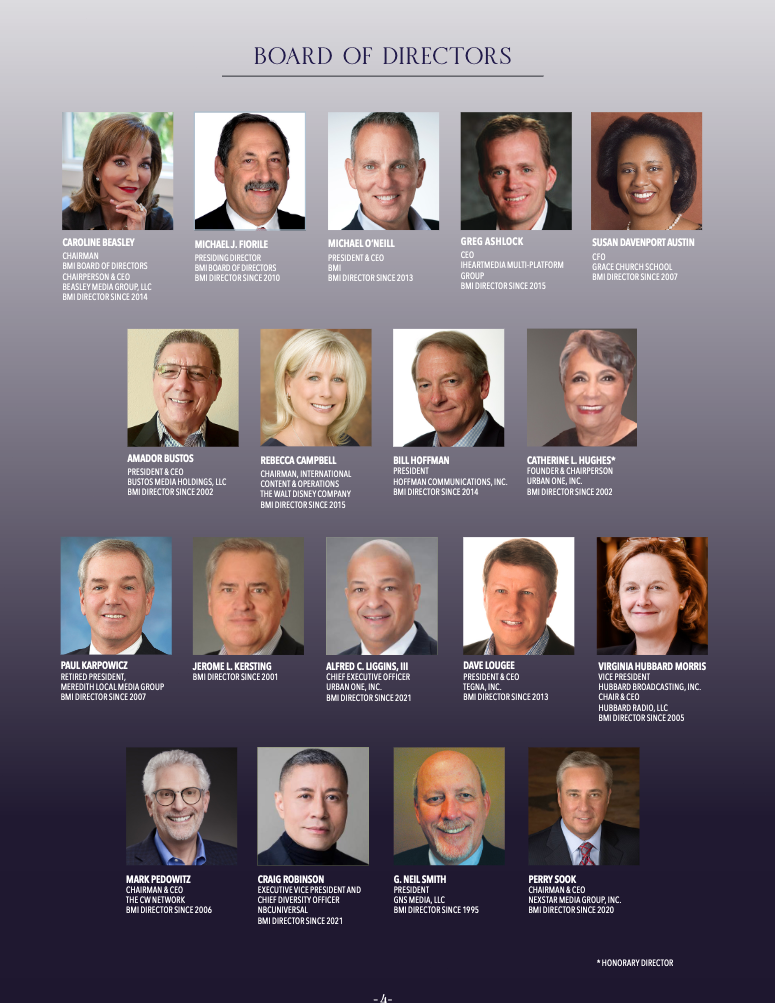
[T Editor sez: Remember how we have all fought alongside #IRespectMusic, Blake Morgan and MusicFirst to get artists paid for radio play of their recordings on terrestrial radio? Remember how iHeartMedia and the rest of the National Association of Broadcasters used their lobbying muscle to block our heroes in Congress like Reps. Jerry Nadler, Ted Deutch, and Darrell Issa and Senators Marsha Blackburn and Alex Padilla from passing the American Music Fairness Act? And are blocking it to this day? Well, adding insult to injury, the broadcasters who apparently own BMI, the for-profit PRO, are making serious bank for selling their shares to Google and private equity fund New Mountain. You know, Broadcast(er) Music, Inc.? Thus screwing songwriters, but screwing artist/songwriters TWICE. Who are they? According to the most recent BMI annual report we could find they are probably the same companies with board seats which are these smiling faces:

Bruce Hougton at Hypebot fills us in on the details of just how profitable the sale for Google’s blood money really is for one stockholder owner of BMI, iHeart Media (formerly Clear Channel). iHeart is, of course, the largest radio station owner in the US and poster child for media consolidation and screwing artists. iHeart profits from blood money stealing from artists and then does it again stealing from songwriters. And if iHeart is doing it, the rest of the BMI owners are, too. Of course you can complain to your songwriter-board member of BMI…oh wait, you don’t have any. Unlike ASCAP and SoundExchange. Of course, the question is whether those Members of Congress who worked so hard on the American Music Fairness Act and its predecessors will exercise their oversight role and investigate the sale. As well as the series of moves that lead to Google acquiring songwriter personal data that we don’t think belonged to BMI in the first place. It may not just be insulting, it may also be illegal. And answer the musical question, how big is your black box?]

 In an ironic twist, iHeart Media, the largest owner of broadcast radio stations in the US, will receive $100 million from the sale of BMI to New Mountain Capital [and Google’s CapitalG venture fund]. The windfall is a result of iHeartMedia’s equity interest in BMI.

Read Bruce’s post on Hypebot

Press Release: Rep. @DeboarahRossNC Introduces Protect Working Musicians Act of 2023 #IRespectMusic

September 19, 2023

Today, Congresswoman Deborah Ross (NC-02) introduced the Protect Working Musicians Act of 2023. This legislation will give small independent artists and music creators the power to collectively negotiate with both streaming platforms and generative artificial intelligence (AI) developers for fair compensation.

Under current laws, small and independent musicians have little ability to bargain for market value rates for the use of their music by global streaming platforms, such as Spotify and Apple Music. Instead, they are forced to accept whatever terms are offered by these platforms, while also having almost no ability to engage with AI companies who routinely scrape and use their music without permission or consent. This legislation allows independent artists to band together and collectively negotiate with large streaming platforms and AI developers, without the obstacles of antitrust laws. 

“North Carolina has long been home to outstanding artists and a vibrant music scene that plays a vital role in our state’s culture and economy,” said Congresswoman Ross. “Working musicians and small independent labels face urgent challenges to their livelihoods posed by the market power of streaming platforms as well as the explosion of AI applications that use their work without licensing or pay. This legislation will help give small, independent music creators a level playing field, empowering them to stand together for fairer compensation and giving them a voice in important negotiations that will determine the future of the music industry.” 

The Protect Working Musicians Act is endorsed by the American Association of Independent Music (A2IM) and the Artist Rights Alliance (ARA).

“Musicians today are fighting for fair treatment on so many fronts, including both in the online streaming marketplace and against the growing threat posed by AI companies who exploit creators’ work without permission,” said Jen Jacobsen, ARA Executive Director. “The ‘Protect Working Musicians Act’ will give small and independent artists a shot at facing these challenges by allowing them to negotiate collectively with the large and powerful entities who profit from musicians’ hard work. We thank Rep. Ross for her leadership in empowering creators with tools to navigate this ever-changing market.”

“Thank you, Rep. Deborah Ross, for championing the rights of artists through the introduction of the Protect Working Musicians Act,” said Dr. Richard James Burgess MBE, President & CEO of A2IM. “The PWMA would help level the playing field for indie artists who struggle to make a living from the mega corporations that control the streaming marketplace.” 

“I’m so grateful to my fellow North Carolinian Deborah Ross for fighting for independent music and the future of creativity,” said singer-songwriter Tift Merritt, Co-Chair of the Artist Rights Alliance. “Artists, songwriters, and independent labels have never needed each other more, and this legislation will ensure our voices are heard and we receive fair pay for our work.” 

“The Protect Working Musicians Act is a necessary tool for independent artists and labels to compete in today’s marketplace and receive fair compensation for their work from streaming platforms and AI companies,” said ARA Co-Founder John McCrea of CAKE. “It is amazing that it even needs to be said, but people who make things have a fundamental right to negotiate with the giants who use and distribute their work.” 

“We at Merge would like to thank Congresswoman Ross for endorsing the North Carolina music scene as the strong cultural and economic force it is and taking this step to make sure we can compete and succeed in the digital world,” said Laura Ballance, Co-Founder, Merge Records and member of the band Superchunk.

The bill text is available here