Homegrown Music: The Challenges Of Running A Record Label in D.C. | DC Music Download

“I don’t think people understand the idea that music is someone else’s property because it’s just in digital bits,” Feigenbaum says. “It’s intangible. People who feel music has no value and want to steal from you will steal from you. It’s so ubiquitous—it’s so easy”.

“I have people come up to me and tell me how much they love what I do, and I’ll be like, ‘That’s great, where do you buy it?’” notes Feigenbaum. “And you can see they weren’t expecting that and they start to stammer. It’s like, ‘You’re not helping me. You’re not a fan-you’re a leech.’”

“I could go on and on about the things I don’t like about iTunes,” he says, “But they do pay. It’s not my favorite business model, but I get paid from them.” Spotify, however, is another matter.

“They don’t pay shit,” he says. “The only people who make money off of Spotify is Spotify. We were getting thousands of listens on Spotify, which added up to literally one and a quarter pennies. So we opted out.”

READ THE FULL STORY AT DC MUSIC DOWNLOAD:
http://dcmusicdownload.com/2014/02/12/homegrown-music-the-challenges-of-running-a-record-label-in-d-c/

The Tyranny of Legality | The Cynical Musician

Music piracy is a subject that has been talked to death over the past decade. So much, in fact, that it seems scarce conceivable that we could say anything more of interest on the subject.

The fundamental point I’d like you to take away from this is: it’s a lot more important to keep a watchful eye on ostensibly legal services – recall that both Pandora and (perhaps to a lesser extent) YouTube are legit – than to agonize over overt piracy.

That pirate services should be hunted to as close to extinction as is feasible goes without saying, but we mustn’t lose sight of the fact that nobody deserves a medal for going legit. It’s what you’re f-ing supposed to do.

READ THE FULL POST AT THE CYNICAL MUSICIAN:
http://thecynicalmusician.com/2014/01/the-tyranny-of-legality/

Beats Music Hires Artist Bully as Artist Advocate

Billboard Magazine is reporting that Beats Music has hired long time artist bully Dave Allen as their so called Artist Advocate.  This is fantastic news for artists rights bloggers and music journalists as they were close to running out of ways to imply Dave Allen is a shill for streaming services.  By taking this job at Beats Dave Allen has made it easy for all of us.  Now we can just come out and say he’s paid by the streaming services!

If you don’t know, Dave Allen is the former bass player for the Marxist Rock band Gang of Four.  Allen has made a name for himself by rudely lecturing songwriters like David Byrne, Thom Yorke and myself on streaming, globalization and the inner workings of free markets. Rich right?

And it looks like he intends to continue.  Check the featured quote from the Billboard story announcing his hiring:

“It is hard for me to understand why intelligent people like David Byrne and Thom Yorke do not appear to understand that we are in the midst of new markets being formed,” Allen wrote. “I have concluded that we can only look to what internet and mobile users are doing or want to do, and then note how their actions drive technologists to provide platforms for them. Put very simply, that is how markets work.”

(Wow.  This is his first day as Artist Advocate? Off to a bad start-Ed)

No Dave.  It’s the opposite of markets.  By Government mandate our songs have been “collectivized” for use by these streaming and webcasting services.  Further government rate courts set the prices.  There is no “market” for songs.  He’s purposely leaving out the part where the government forces us to license our songs to the technologists at below market rates!

Allen knows this.  Everyone in the business knows this.  I mean that’s why  U.S. Rep Doug Collins of Georgia introduced this week this bill to establish fair market pricing for songs!

While we have some generally positive things to say about the Beats service (the lack of a free tier means their effective per spin rate to songwriters and performers will be higher than many other services) we note that the appointment of Allen does not bode well for Beats Music.

This is a ham-fisted move that won’t solve the fundamental PR problem that all streaming services have with the general public: low payouts to artists and a lack of transparency. No amount of shouting and name calling by Allen will fix that problem.  Quite the opposite.

RELATED:

Music Streaming Math, Can It All Add Up?

Streaming Services Will Never Become Profitable, Study Finds… | Digital Music News

It’s time to end compulsory licensing for digital music | Tech Liberation

How You’re Murdering the Music Industry. | unEARTH Music Hub

Oddly, few people are talking about how much money they are actually making through Spotify, but it’s estimated that the average play is worth an abysmal $0.005. That’s half a cent…if you’re getting anything at all. An artist needs to rack up 200 plays to make $1. How are we letting this happen?! Is the general population truly oblivious to the tremendous effort and cost involved in making music?

Surprise! Songs don’t just pop out of artists like perfectly polished Easter eggs. These creative humans have dedicated a large amount of their time, money and soul to create a tangible piece of art for your listening pleasure. Studio time is expensive! Rehearsal space is expensive! Gas is expensive! Instruments are expensive! Craft beer is expensive!!! Strike that last one.

But seriously guys, when you buy music, you’re not just paying for a song, you’re supporting the artist and the process.

READ THE FULL STORY AT unEARTH MUSIC Hub:
http://unearthmusichub.com/articles/streaming-music/

Digital albums overtake CDs in the US, but iTunes music revenues down | Music Ally

We’re more interested in its estimates for the revenue growth in 2013 of the various content categories in iTunes: apps up 105%, video up 19%, but music downloads down 14% of the year.

Streaming music’s impact isn’t a surprise, but it’s good to have more data to quantify what’s happening – albeit without the corresponding global increase in revenues from streaming services.

READ THE FULL STORY AT MUSIC ALLY:
http://musically.com/2014/02/12/digital-albums-overtake-cds-in-the-us-but-itunes-music-revenues-down/

Spotify seeks to hire U.S. filings expert as bankers eye IPO | Reuters

* Move adds to speculation about IPO

* Senior banker says firm to be valued at $7-8 bln

* Spotify doubled revenue but registered loss in 2012

STOCKHOLM, Feb 17 (Reuters) – Online music streaming service Spotify is recruiting a U.S. financial reporting specialist, adding to speculation that the Swedish start-up is preparing for a share listing, which one banker said could value the firm at as much as $8 billion.

Meeting U.S. Securities and Exchange Commission (SEC) standards for filing financial disclosures is essential for any firm planning to go public and bankers and lawyers said they inferred from the job ad that the company is getting ready for an initial public share offering (IPO), possibly next year.)

READ THE FULL STORY AT REUTERS:
http://www.reuters.com/article/2014/02/17/spotify-idUSL6N0LM2E520140217

RELATED:

If Spotify is saving Swedish music sales, why aren’t indies celebrating?

While Artists are Bitching About Spotify Royalties… Google, YouTube and Grooveshark are in the Getaway Car…

Get Ready For The Streaming-Music Die-Off

Streaming Services Will Never Become Profitable, Study Finds… | Digital Music News

“The streaming business has to slowly move from a free economy to a paid economy as the sustainability of ad-supported revenue model is a big question mark.”

The grim financial outlook comes as rumors intensify over plans by Spotify to go public.  But just like Pandora, Spotify’s financials remain ugly and are unlikely to improve. “Pandora has never made a profit and we think that the company will never make a profit, unless there is a major change in strategy,” Generator concluded.

READ THE FULL STORY AT DIGITAL MUSIC NEWS:
http://www.digitalmusicnews.com/permalink/2014/02/18/profitless

RELATED:

Music Streaming Math, Can It All Add Up?

No, Streaming is not more profitable than Transactional Sales… Not Today, Maybe Not Ever…

Beck on Spotify: “The Model Doesn’t Work. And the Quality Sucks.” | DMN

Camper Van Beethoven’s 2013 Net Profit Was $645 Million Dollars Higher Than Twitter.

Technologists in Silicon Valley love to tell artists we need to update our business model.

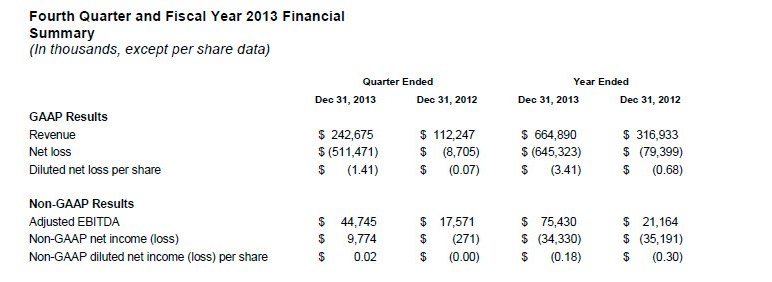
This is hilarious since each of my businesses have been profitable for decades. Stunning when you look at just how unprofitable these Silicon Valley Companies actually are.  Twitter for instance lost $645 million dollars last year.   Jaw dropping when you consider that their total revenues were $646 million dollars.   They spent 2 dollars for every 1 dollar of revenue.  And if you look at their losses they are accelerating.

Screen shot 2014-02-19 at 10.59.36 AM

Source: https://investor.twitterinc.com/releasedetail.cfm?ReleaseID=823321

Now consider the fact that the City of San Francisco also gave them approximately $56 million in tax beaks.  This is while the city has been pushing to slash benefits to city workers. 

Yes maybe Camper Van Beethoven needs to update our business model to include tax breaks and political cronyism.

RELATED:

http://irespectmusic.org

Internet Consultants Are Wrong : Confused About Musicians, The Internet and Piracy

My Song Got Played On Pandora 1 Million Times and All I Got Was $16.89

Pandora Suit May Upend Century-Old Royalty Plan | NY Times

After federal antitrust investigations, both groups agreed to government supervision in 1941.

This system has hummed along for decades. But with the rise of Internet radio, publishers have complained that the rules are antiquated and unfair. They point to the disparity in the way Pandora compensates the two sides of the music business: Last year, Pandora paid 49 percent of its revenue, or about $313 million, to record companies, but only 4 percent, or about $26 million, to publishers.

“It’s a godawful system that just doesn’t work,” said Martin N. Bandier, the chairman of Sony/ATV, the world’s largest music publisher.

The wider music world has been galvanized by the issue of low royalties from fast-growing streaming companies.

For songwriters, Ascap and BMI have also been among the most reliable institutions in the music industry, and few want to see them go. But Rick Carnes, a Nashville songwriter and president of the Songwriters Guild of America, said that while these organizations had served him and his colleagues well, the Justice Department agreements that govern them were outdated and must be changed.

“This is a horse-and-buggy consent decree in a digital environment,” Mr. Carnes said. “There’s no way that works now.”

READ THE FULL STORY AT THE NEW YORK TIMES:
http://www.nytimes.com/2014/02/14/business/media/pandora-suit-may-upend-century-old-royalty-plan.html?

7 royalty cheques that’ll make you lose your faith in the music industry | AUX

How little does the music industry pay artists? Shockingly little. Spotify, the dominant streaming music source in the U.S., is leaking money. They reportedly dole out 70 per cent of their revenue to royalties, and while that number seems high, consider this: each song stream pays an artist between one-sixth and one-eight of a cent. One source claimed that, on streaming music services, an artist requires nearly 50,000 plays to receive the revenue earned from one album sale. Ouch.

Indeed, things are getting dire. And here are seven examples of how bad things can get.

READ THE FULL STORY AT AUX:
http://m.aux.tv/news/100455-7-royalty-cheques-that-ll-make-you-lose-your-faith-in-the-music-industry