The Copyright Office has asked for comments from the public on important issues for rulemakings under the Music Modernization Act. This will potentially affect the operations of The MLC and related rights especially because the Copyright Office recently extended the scope of that rulemaking. The proposal drew a mixed response.
We will be posting selected comments that we think might be interesting to Trichordist readers. The project is a bit wonky, but important to stay informed on. This comment by attorney Allison Stillman representing the Digital Licensee Coordinator (who controls the purse strings for The MLC) has some interesting complaints about The MLC that are food for thought in light of the MLC’s potential redesignation coming next year.
The DLC’s firm view is that any additional costs associated with a proposed rule that upends the practices of the entire industry, without actually facilitating the payment of royalties to songwriters or music publishers, as a matter of law would not be “reasonable collective total costs” that could be imposed on the DMPs, through the administrative assessment or otherwise….
As noted in the DLC’s Initial Comments…the [Copyright Office] raises important issues regarding the need for the MLC to have a fair, efficient and transparent methodology for administering corrections and adjustments to payments. These are issues that apply…more broadly to any form of payment adjustment that may be necessary….
While some other commenters echoed similar concerns, the MLC suggests that error corrections, adjustments, disputes and payee changes outside of the specific and purportedly unique termination context “do not represent a controversial topic that would require regulation of operational details” and merely constitute part of “the normal course of business, which The MLC can administer without additional regulation.”
But the DLC members’ experiences in waiting for corrections and adjustments from the MLC where the issue has arisen so far indicate otherwise, and that is before the MLC has had to operationalize the anticipated regular practice of DMPs’ over-estimating monthly royalties [or Phonorecords III retroactive adjustments]…. The same principles underlying any regulatory approach to ensuring the prompt and transparent correction of erroneous payments to one rightsholder vs another as a result of copyright termination apply equally to require the prompt and transparent correction of [other payments to DMPs or rights holders].
Before we get to George’s letter, a little context. If you’re coming to this subject for the first time, mechanical royalties are paid to songwriters (and their publishers) for the mechanical reproduction of their songs. The federal government established a compulsory license for this purpose and corresponding royalty rates starting in 1909. The license has evolved over time and now includes physical configurations like vinyl (paid by record companies) and digital transmissions like streaming (paid by DSPs like Spotify).
Until the Music Modernization Act, songs were licensed on a song-by-song basis notice-based system except for catalog licenses. Or at least theoretically–pre-MMA most of the streaming services didn’t take advantage of the statutory license they were entitled to because they couldn’t be bothered. (Until David’s class action called them out. We note that the Copyright Office, in particular a former lawyer at the Office now representing Big Tech against songwriters, allowed the streamers to get away with tens of millions of flawed “address unknown NOIs” that a cynic might say was a catastrophe with a purpose. Chris has an article about this fiasco that went largely unreported except by Hypebot.)
Fast forward to today. Every five years the Copyright Office is required to review the company that the Office has designated to run the Mechanical Licensing Collective. Currently that entity is The MLC, Inc. designated by the Copyright Office on July 8, 2019. Remember that The MLC, Inc. was independently chosen by the Copyright Office as the best in breed of all applicants after a rather odd beauty contest. This is their thing, and the MLC, Inc. is their idea. So do you think that creates an incentive to create a five year review that everything is peachy and they were geniuses for creating this dumpster fire?
Even though the first five year review is set to happen next year, Congress has already held a hearing about the MLC, Inc. which frankly did not go well for the company. Nobody got their ears nailed to the barn door, but the hearing was not the usual love fest. The review is to be conducted by the Copyright Office, so there’s a question as to why Congress decided that the House Judiciary Committee IP Subcommittee should conduct the first of what may be multiple hearings.
Everyone assumed that the Copyright Office would choose the first MLC as the NMPA-backed entry, The MLC, Inc. That company was so confident of winning the contract their confidence made people ask why anyone else bothered to try out. And when the next charade resulted in The MLC, Inc. choosing the former NMPA affiliate the Harry Fox Agency as their data vendor, everyone knew there was definitely gambling at Rick’s. All paid for by Big Tech (or maybe we should say Really Big Tech) because not even the taxpayer is stupid enough to fall for this BS. After all, nothing blew up and nobody died.
So the lobbyists and lawyers and the Copyright Office were busily building up a new bureaucracy to drive mechanical licensing back to the future and essentially preserve the 1909 compulsory license that George refers to. Because what they didn’t do was throw out the compulsory license and come up with an alternative more in keeping with streaming. You know, modernization.
In fact, they never really considered how one might implement mechanical licensing without the compulsory part. And that’s probably because there is a cottage industry of lobbyists, lawyers, and government clerks built up around compulsory licensing that would simply be out of a job if the compulsory were rejected. But they will get out the green eyeshades and the furrowed brow and tell you that mere songwriters cannot appreciate the complexity of getting rid of the compulsory license that governs their lives and has done for over a century.
But then there’s this five year review. What is the review reviewing if it never takes into account the compulsory license itself. Are we to just assume that the compulsory lasts forever? Are they just to review how The MLC, Inc. and HFA are doing administering a law that itself doesn’t work? Where does the failure of one start and the other begin?
The effectiveness of the statute itself really must be part of the five year review as well as a review of the MLC.
Enter George Johnson. George is a songwriter who has effectively represented himself at the Copyright Royalty Board and is fighting hard for increased songwriter royalty rates, holding up a mirror to the emperor in the Imperial City of Washington, DC. Needless to say, George has made no new friends among the grandees and courtiers who all see the advantage in complementing the emperor on his new clothes and complain that George does not shut up and let his betters run things the way they like. Billboard did an extensive profile on George during the frozen mechanicals crisis in which he played a major part.
George has written a timely letter to the Copyright Office anticipating the need for a review of the compulsory license statute itself from which spring all these problems for the obvious reason that you can’t really talk about the MLC with out talking about that statute (17 USC §115). (You may want to take a look at a proposal that David made a few years ago for a US version of extended collective licensing.) Just remember that it’s not really that difficult to transition off of song-by-song licensing to a blanket license administered by the MLC fiasco compared to extended collective licensing with an opt-in for songwriters who want to get away from HFA and the compulsory licesne.
Following is George’s letter to the Copyright Office and we will later post the Copyright Office response. You can read George’s white paper here.
Monday, June 12, 2023
Via Email
Attn: Ms. Shira Perlmutter,
Register of Copyrights and Director
U.S. Copyright Office
101 Independence Ave. S.E.
Washington, D.C., 20559-6000
Re: Study to Repeal §115 Compulsory License & Ex Parte Meetings to benefit Congress and all U.S. Songwriters and Music Publishers
Dear Register Perlmutter,
For the benefit of all American songwriters and music publishers “bound by” 1 the 114 year old §115 compulsory license, and to benefit Congress in their upcoming 2 decision making processes involving intellectual property law and music copyright policy, I respectfully request that the Copyright Office please initiate a compulsory license study and roundtables regarding it’s full repeal, including ex parte meetings.
The century old compulsory license is no longer an incentive or profitablefor all U.S. songwriters and music publishers, and there are many problems arising from it’s use, and misuse, not intended by Congress, the Constitution, and copyright law.
The 1909 compulsory license was designed for a different time, for the local sale of piano rolls and not contemplated to be used by the largest trillion-dollar corporations in the history of the world, with teams of attorneys, with no sale, by “access”, on “computers” or telephones, distributed digitally, through the air, and all for free from songwriters and publishers? Now, with no COLA for streaming.
Former Register Ms. Marybeth Peters initiated several studies 3 that questioned the continued necessity of the compulsory license, and for it’s full repeal or fullreform 4. Unfortunately, those studies are now outdated and considering the vast changes in the delivery of musical works and sound recordings, experts5 6 now think a new study would be very helpful in updating Congress on how the license is functioning post Music Modernization Act (MMA), to benefit their 2024 MLC review, but primarily so Congress can make an informed decision on full repeal or full reform?
While my comments here are my own and separate from my participation in the current Phonorecords III & IV proceedings at the Copyright Royalty Board, please feel free to notify me if there is any conflict or other legal protocol to be followed.
Other than the obvious economic arguments to finally pay songwriters the true value of their copyrights, the primary reason I believe compulsory license roundtables are necessary and so dire is the 3 major record labels’ current anticompetitive misuse of the compulsory license 7 at the CRB (See #1, 2, 3 in the attached white paper) that I’ve experienced as a 4 time CRB participant and appellant in Sound Exchange v. CRB 8 and Johnson v. CRB 9. The 3 major labels’ misuse of the license is the #1 issue including several dozen other serious issues.
The license, the rate-structure, and the CRB process are all trulybroken in almost every way and must be fixed immediately or completely abandoned. All rational market actors who currently use private collective blanket licensing providers would certainly switch, proving no need for federal licensing to operate efficiently.
We all could really benefit from the Copyright Office’s input, ideas, and legal opinions on these extremely important issues since each and every songwriter cannot compete with RIAA and NMPA counsel, nor 25 years of their regulatory capture.
We songwriters truly need Congress and the Copyright Office’s help and guidance.
We pray the Copyright Office 11 will initiate a study with roundtables, in addition to ex parte communications and meetings to benefit Congress, and all American songwriters and music publishers “subject to”11 the license — for these good reasons, good cause, and those contained in the following white paper attached below.
Thank you for your time and thoughtful consideration.
2. Upcoming 5 year work product review of the Music License Collective (“MLC”) by Congress in 2024.
3. https://www.copyright.gov/newsnet/2022/981.html September 30, 2022 — In Memory of Marybeth Peters. “Her leadership of the Office also included the generation of several landmark studies, such as those on statutory licenses…”
4. To me, a full overhaul in dollars of the “nano-penny” rate-structure in §385 Subpart C streaming.
5. https://musictechpolicy.com/2023/04/05/should-the-copyrightoffice-begin-at-the-beginning-with-the-mlcs-first-five-year-review/ April 5, 2023 — by attorney and Phonorecords IV Commenter Mr. Chris Castle. Should the Copyright Office Begin at the Beginning With The MLC’s First Five year Review “The continued need for a song compulsory license is just the kind of information that Reps. Jordan and Issa could use in case they were inclined to just get rid of it. It would be a great topic for the Copyright Office to study and hold round tables on, this time preferably lead by a Copyright Office lawyer who was not being recruited by Spotify.”
7. …through NMPA’s, et al. re-writing all laws and definitions, and MMA, to fit label business models, not U.S. songwriters. This is also in no way the Judges fault, they have to deal with it too, so reform would help them. The Judges are great and not to blame when I say the process is broken.
11. https://app.crb.gov/document/download/3715 September 29, 2016, SDARS IIIOrder Denying Services’ Motion To Dismiss George D. Johnson d/b/a Geo Music Group. “The Services’ reliance on the Librarian’s decision in PSS II—a decision that involved neither a copyright owner nor a copyright user—is misplaced because it is based on an erroneous premise. Unlike the party in PSS II, GEO is subject to the license at issue…and GEO would have no say in the matter—that is the essence of a statutory license. For the forgoing reasons, the Judges DENY the Services’ Motion.”
Companies using artificial intelligence software are shamelessly ripping off artists from film and music, and it will get worse if not regulated, members of the entertainment industry told U.S. Senators at a hearing Wednesday.
“AI in the service of artists and creativity can be a very, very good thing,” executive vice president of business and legal affairs for Universal Music Group Jeffrey Harleston said. “But AI that uses or worse yet appropriates the work of these artists, their name, their image, their likeness, their voice, without authorization, without consent, simply is not a good thing. Congress needs to establish rules that ensure creators are respected and protected.”
Long before an AI-generated recording imitating Drake and The Weeknd – both Universal Music artists – went viral and captured the attention of press and policymakers, UMG has been thinking about artificial intelligence. One of our companies, Ingrooves, has three patents in AI to assist with marketing independent artists. And AI has long been used as a tool in the studio: For example, Apple Logic Pro X to generate drum tracks, or Captain Plugins to generate chord progressions. We also use AI regularly as a tool to assist in creating Dolby Atmos immersive audio music. It’s a great technology when employed responsibly – and one that we and our artists use.
However, we are before you today because generative AI is raising fundamental issues of responsibility in the creative industries and copyright space. Each day, troubling examples emerge. We know some generative AI engines have been trained on our copyrighted library of recordings and lyrics, image generators have been trained on our copyrighted cover art, and music generators have been trained on our copyrighted music, all without authorization.
We have a robust digital music marketplace, and UMG has hundreds of legitimate partners who’ve worked with us to bring music to fans in a myriad of ways. Those companies and services properly obtained the rights they need to operate from UMG, or from the associated record labels and publishers. So, it’s unfathomable to think AI companies and developers think the rules and laws that apply to other companies and developers don’t apply to them.
HEARING BEFORE THE UNITED STATES HOUSE OF REPRESENTATIVES COMMITTEE ON THE JUDICIARY Select Subcommittee on Courts, Intellectual Property, and the Internet
June 27, 2023 Testimony of Abby North SUMMARY STATEMENT Mr. Chairman, Members of the Subcommittee:
My name is Abby North. I am an independent music publisher and publishing administrator. I am a songwriter advocate. I am a technologist. I am a small business owner.
I began my career writing music, engineering and mixing recordings and ultimately created a production music library. The library introduced me to music publishing.
My husband’s father was a film composer and songwriter named Alex North. When our family had a worldwide reversion of rights in Alex’s song “Unchained Melody,” I wanted to learn about global music publishing. “Unchained Melody” is a “standard” that has been recorded by thousands of artists but is best known as a recording by The Righteous Brothers in 1965. It is an “American Songbook” composition: one of the great songs of the 20th Century. Together, my family and the family of “Unchained Melody” lyricist Hy Zaret formed Unchained Melody Publishing LLC in 2013, and I began to administer our jointly owned copyright.
Unchained Melody Publishing then joined various foreign collective management organizations (CMOs) and in doing so, I was able to identify incorrect or missing work and party metadata. By correcting that metadata, I significantly increased our royalty collections. This is partly because once I corrected our CMO registrations, our metadata stayed corrected over time. Soon, other legacy songwriters and their families asked if I would administer their works as well.
As a music publishing administrator, I am responsible for accurately and comprehensively maintaining metadata related to the musical works owned and created by my songwriter and composer clients, their families and heirs. I must accurately and comprehensively register their works with collective management organizations around the world.
These global CMOs rely on their music publisher affiliates to deliver works registrations that clearly identify information about the musical works, about the songwriters and their publishing entities, about the shares of the works that we own and collect, and about sound recordings that embody these songwriter’s works.
If we publishers do not register our works, we do not get paid and neither do our songwriters. It’s a simple equation: accurate, comprehensive metadata equals accurate, comprehensive royalty distribution.
THE MUSIC MODERNIZATION ACT When I first heard about the Music Modernization Act and the possibility of a mechanical blanket license administered by one central CMO, I was pleased and hopeful. The previous method of one-off mechanical licensing was inefficient, unscalable, and absolutely not meant for the digital distribution of music and the limitless supply of sound recordings being delivered to the Digital Service Providers. Blanket licenses can create efficiencies if based on authoritative and complete metadata.
In fact, every other CMO I am aware of outside of the United States has been blanket licens mechanical rights for years. How exciting to see the United States catch up to the rest of the world’s CMOs!
That the Music Modernization Act was wholeheartedly supported by every sector of the music business: songwriters, publishers, labels, artists and producers seemed like a modern-day miracle. We all have competing interests, but we came together, and the Music Modernization Act passed. I believed (and was promised) that the intention of the MMA was for a new authoritative database to be engineered and created, with closely interrogated and vetted, accurate, authoritative, comprehensive musical work, songwriter, publisher, performer and even sound recording data.
The music industry was told that The MLC’s data set was going to be the gold star standard that every global CMO could access and rely on.
Songwriters need this, and that’s what we were promised.
And, we were promised that the DSPs would pay for The MLC to perform this fundamental obligation.
THE MECHANICAL LICENSING COLLECTIVE The MLC Inc. won the assignment to be the first Mechanical Licensing Collective as created by the MMA. We were told that after interviewing many competitors, The MLC, Inc. opted to engage the Harry Fox Agency as its data and back-end operations and administration vendor for an “unprecedented and truly revolutionary project.”
HFA has been integral to the music business since 1927. But the industry is well-aware that like every other collective, HFA’s data is incomplete and sometimes inaccurate. Incomplete accounting by HFA was one driver of the push for the MLC in the first place.
One data set is not enough for the Herculean task of creating the best-in-class musical works database. Based on my experience as a publishing administrator and technologist, I think that The MLC must license data from many providers, including HFA, Music Reports, SX Works/CMRRA, Xperi, and others.
Thus far, to my knowledge, the promised newly-created MLC database and new data set do not exist.
When The MLC launched, it used slogans like “Play Your Part” to drive music publishers and self-administered songwriters to sign up with The MLC, register their works and confirm the completeness of The MLC’s data, often manually and on a song-by-song basis. But, it seems that “Playing Our Part” means doing The MLC’s job and devoting our own resources to the tasks the DSPs pay The MLC to do. Publishers have to go to The MLC to search for their works, one-by-one to see if the data and shares are correct. Publishers have to slowly and painstakingly search through the MLC’s Matching Tool to find unmatched recordings of their works. MATCHING SOUND RECORDING TO MUSICAL WORK Publishers and songwriters receive statutory mechanical royalties when recordings of their works are streamed or downloaded.
A significant part of The MLC’s mandated role is to match sound recordings to musical works in its database. If a sound recording is not matched to a musical work, the publisher and songwriter do not receive mechanical royalties for that recording’s streams and downloads. As an example of one kind of problem I’ve experienced with The MLC’s data, per The MLC, “Unchained Melody” has been recorded by more than 30,000 performers. I would like to diligence those recordings by comparing The MLC’s data to my own data to confirm and track payments.
As part of my due diligence, I asked The MLC for a list of those sound recordings that The MLC claims to have matched to the “Unchained Melody” composition. That type of list should be exportable by The MLC for copyright owners and is available from other CMOs. However, The MLC told me it was not possible for The MLC to export such a list. I was told if I had access to the MLC’s vast data dump, then I could go find the information for my one song. In order for publishers to perform mechanical royalty income tracking exercises, we must know the International Standard Recording Code (ISRC) of the sound recording so we may confirm we have accurately been paid for the correct number of streams or downloads.
With a song like “Unchained Melody” and other very important and iconic American Songbook songs, there are possibly hundreds, or thousands of new cover recordings released every year. Publishers use various sources to identify and track royalties received (or not received) for streams and downloads of those recordings.
Fortunately, I do have access to The MLC’s data dump. I paid tens of thousands of dollars to create tech that allows me to compare data from The MLC and other sources in order to identify data gaps and errors. In order to get a sense of the quality of The MLC’s data, I queried The MLC data on behalf of various clients. For one well-known legacy song, 11% of the sound recording to composition matches were incorrect. For another, 20% of the sound recording to composition matches were incorrect. This is why I wanted to export a list of sound recording matches made by The MLC. I can’t be the only publisher who needs a streamlined, efficient way to access, view and analyze The MLC’s data.
THE BLACK BOX Prior to the inception of The MLC, the DSPs held approximately $424,000,000—that we know of–in unallocated royalties, otherwise known as Black Box money. After the MMA passed, the DSPs transferred that money to The MLC, which has held those monies and even more unallocated sums for years.
If I licensed my works to DSPs pre-MMA and if I now register my works with The MLC, my money should not be in that Black Box. But sometimes I have co-publishers who deliver different data about our shared works that overwrites data I delivered. Sometimes I am unaware of a recording of my work, perhaps because it’s in a foreign language, or perhaps because as in Jamaica where “Unchained Melody” is popularly known as “Unchanged Melody” the recording has a known title permutation inconsistent with the US song title.
Foreign songwriters or songwriters from within the United States who are not affiliated with established CMOs and/or who are unfamiliar with the registration process undoubtedly have money in that Black Box. This is especially likely for songwriters who create in languages other than English, such as Spanish-language songwriters.
Foreign language characters such as accents or tildes often come across as jumbled data on reporting statements from The MLC. Asian characters may be extremely difficult to translate. It is understandable that all collectives have some unidentified works and parties from time to time, but by statute, The MLC is mandated to aggressively work and create technology to reduce that Black Box significantly. The world is experiencing rapid growth and development of Artificial Intelligence talent and technology. AI and machine learning technology utilized and trained well could assist in making composition to sound recording matches and identification of works and their parties.
Some of the money that is referred to as “Black Box” is actually claimed and matched but has been held as The MLC awaits the final decision regarding CRB Phonorecords III rates and terms. These 2018 – 2022 royalties apparently will soon be distributed by The MLC. We must prevent the wrong parties from receiving these royalties. As per above, my own research showed recordings matched to the wrong musical works.
The MLC must develop or license and utilize the best technology, the best and most comprehensive data and extremely attentive human beings to improve its quality of data.
AGGREGATORS OPENING FLOODGATES OF BAD DATA
Another example of a recurring problem I have with the MLC involves misclaimed copyright shares by independent, DIY artists, of which there are thousands. Sound recording distribution aggregators such as Tunecore and CDBaby have lowered the barrier for delivery to DSPs in a dramatic way. Today, approximately 100,000 recordings per day are distributed to the various DSPs.
However, in creating the unfettered opportunity for anyone to distribute a sound recording, these aggregators have also flooded the CMOs with incorrect musical work data. It is an honor and a blessing to control a song that so many performers choose to record. However, it is time-consuming to constantly police the erroneous data provided by so many of these performers. This is particularly frustrating when I have already corrected the same data. In order to deliver a sound recording via an aggregator, the label or independent artist is required to provide information regarding the musical works embodied in the sound recordings to be distributed. Even if that artist has no idea who the writer or publishers are, that artist must provide some data.
Giving them the benefit of the doubt, many of these independent artists are unfamiliar with the fact that the sound recording copyright is different from the composition copyright, and they regularly identify themselves as writer and copyright owner when they are neither, and then falsely assign publishing administration to the aggregator’s publishing services. The aggregator’s publishing administration provider then executes its administrative role and attempts to collect this infringing share.
At least on a monthly basis. I must play whack-a-mole, searching The MLC’s portal to find new registrations of “Unchained Melody” that make no mention of Alex North as composer, Hy Zaret as lyricist, or of our publishing entities.
We, as an industry, must force some vetting and validation mechanism in between the aggregators and The MLC (and other CMOs) and the DSPs. Musical work data must not be delivered into the music ecosystem until it has been vetted and validated. Every American Songbook and most frequently covered song I have reviewed at The MLC has the same problem with infringing data delivered on behalf of unknowing independent artists, and we need a solution.
When I claim these infringing registrations at The MLC, my underlying registration of “Unchained Melody” goes into suspense. Meaning, “Unchained Melody” is iconic and well-known worldwide, and our data is easily searchable at other CMOs who do know who the writers and publishers are.
Unfortunately, music publishers have to repeatedly fight for our rights and our data at The MLC. This is not the gold standard. With all the promise and hope of The MLC, I expected that the US collective would be at least as good as, if not better than, the best foreign CMO.
I suggest that some iconic musical works should have flags preventing the wrong parties from making claims. For example, if the song was a hit written and performed by a band, that song’s writers are widely known, and no other person should be able to submit a registration claiming that work. If I try to claim I am a writer of the Mancini/Mercer composition, “Moon River,” The MLC should be aware I have no rights to that work. Our precious American Songbook treasures and their songwriters must be protected.
The MLC was presented as a savior to songwriters. With the passing of the MMA, songwriters were promised they’d finally receive all the mechanical royalties they are entitled to. Protecting the works created by songwriters is a powerful step in this direction. It’s been three years and the MLC is a long way from best in class. In fact, US publishers are engaging the Canadian collective CMRRA, for a fee, to fix their data problems at The MLC. In my experience, I have never heard of one CMO cleaning another CMO’s data. And, the publishers are paying for this service despite promises to the contrary.
CLAIM OVERLAP/DISPUTE RESOLUTION To make the above even more complicated, there is no claim overlap/dispute resolution portal within The MLC’s website.
With tens of millions of dollars paid by the DSPs to The MLC for operations and technology development, The MLC has the opportunity to create truly innovative products, including at least a basic claim overlap/dispute resolution portal. Other collectives, such as SoundExchange and CMRRA have functional claiming portals.
A claiming overlap/dispute resolution tool could allow the parties to upload documents substantiating claims, could allow the parties to directly communicate via the portal and facilitate resolution.
In the “Moon River” example above, this claiming portal could have information about “Moon River” and its writers and parties that alerts others they have no right to claim this work, and also indicates to The MLC that it must block the infringing new claim. Preventing the infringing claims from occurring in the first place would also prevent “Moon River’s” mechanical royalties from going into suspense.
MLC CREATING BUSINESS RULES THAT CONTRADICT EXISTING LAW AND REGULATIONS AND CREATE DOUBLE STANDARDS The US copyright law permits authors or their heirs, under certain circumstances, to terminate the exclusive or non-exclusive grant of a transfer or license of an author’s copyright in a work. The ability to recapture rights via the United States copyright termination system truly provides composers, songwriters and recording artists and their heirs, a “second bite of the apple.” Many of my clients exercise this right and subsequently become the original publisher in the United States. The unilateral decision made by The MLC that rights held at the inception of the new blanket license might remain, in perpetuity, with the original copyright grantee was frightening. Not recognizing that the derivative work exception does not apply in the context of the mechanical blanket license would unquestionably have benefited the major publishers who control the bulk of legacy copyrights. It would have harmed songwriters and their families.
Fortunately, the US Copyright Office stepped in clarify that the appropriate payee under the mechanical blanket license to whom the MLC must distribute royalties in connection with a statutory termination is the copyright owner at the time the work is used.
The MLC has made unilateral decisions regarding how it treats public domain works. It invoices the DSPs for streams of recordings that embody these public domain works, but no publisher is entitled to these royalties. That means the MLC may collect money it may not pay out. This makes little sense.
CONCLUSION Music publishing administration and collective management of rights are very challenging businesses. I control one of the most iconic of all of the American Songbook works, but I am truly an independent publisher. I work for my family and the other heirs who use the royalties we receive from our musical works to pay for mortgages, college educations, and food. I realize that The MLC considers me to be annoying and difficult, but I am responsible for the livelihood of others, and I am responsible for keeping alive the legacies of Alex North, Hy Zaret and the many other legacy songwriters I represent.
As such, I will continue to push for The MLC to meet the promises made by the MMA. As a songwriter advocate, it is so important to me that songwriters collect every penny they are due. Without songwriters and the songs they create, there is no music business. Songs connect people, define eras and bring joy.
The MLC must use its resources to perform its mandated duty to create a truly authoritative, accurate, comprehensive database. It must use its resources to identify unidentified works and parties. And it must make sure the wrong parties do not receive songwriter royalties. The MLC must not make unilateral decisions that affect the lives of songwriters and music publishers. If there is a question regarding a law, regulation or internal policy, the US Copyright Office must be consulted and must participate in the decision- or rule-making process to take corrective action or refer a matter to someone who can.
The MMA does not authorize The MLC to make legal decisions. The MLC is not judge, not jury, and not arbiter. Rather, it was created to be a neutral mechanical royalty pass-through entity. On behalf of songwriters who were told The MLC was going to get them paid, The MLC must engage every resource, every data set, every technique and technology available in order to identify the unidentified and the misidentified. The MLC has the money and it has the staffing.
The MLC simply must do the job the DSPs are paying it to do. Until these tasks are completed, songwriters are not only being ill-served, songwriters are being harmed.
Pathetic and gutless Daniel Ek kowtows for the money: Spotify Says Distributor Removed ‘Glory to Hong Kong’ Amidst Chinese Government Crackdown https://t.co/fFen3lG3ff
Congress is considering whether to renew The MLC, Inc.‘s designation as the mechanical licensing collective. If that sentence seems contradictory, remember those are two different things: the mechanical licensing collective is the statutory body that administers the compulsory license under Section 115. The MLC, Inc. is the private company that was “designated” by Congress through its Copyright Office to do the work of the mechanical licensing collective. This is like the form of a body that performs a function (the mechanical licensing collective) and having to animate that form with actual humans (The MLC, Inc.), kind of like Plato’s allegory of the cave, shadows on the wall being what they are.
Congress reviews the work product of The MLC, Inc. every five years (17 USC §115(d)(3)(B)(ii)) to decide if The MLC, Inc. should be allowed to continue another five years. In its recent guidance to The MLC, Inc. about artificial intelligence, the Copyright Office correctly took pains to make that distinction in a footnote (footnote 2 to be precise. Remember–always read the footnotes, it’s often where the action is.). This is why it is important that we be clear that The MLC, Inc. does not “own” the data it collects (and that HFA as its vendor doesn’t own it either, a point I raised to Spotify’s lobbyist several years ago). Although it may be a blessing if Congress fired The MLC, Inc. and the new collective had to start from scratch.
But Congress likely would only re-up The MLC, Inc. if it had already decided to extend the statutory license and all its cumbersome and byzantine procedures, proceedings and prohibitions on the freedom of songwriters to collectively bargain. Not to mention an extraordinarily huge thumbs down on the scales in favor of the music user and against the interest of the songwriters. The compulsory license is so labyrinthine and Kafka-esque it is actually an insult to Byzantium, but that’s another story.
Rather than just deciding about who is going to get the job of administering the revenues for every songwriter in the world, maybe there should be a vote. Particularly because songwriters cannot be members of the mechanical licensing collective as currently operated. Congress did not ask songwriters what they thought when the whole mechanical licensing scheme was established, so how about now?
Before the Congress decides to continue The MLC, Inc. many believe strongly that the body should reconsider the compulsory license itself. It is the compulsory license that is the real issue that plagues songwriters and blocks a free market. The compulsory license really has passed its sell by date and it’s pretty easy to understand why its gone so sour. Eliminating the Section 115 license will have many implications and we should tread carefully, but purposefully.
Party Like it’s 1909
First of all, consider the actual history of the compulsory license. It’s over 100 years old, and it was established at a time, believe it or not, when the goal of Congress was to even the playing field between, music users and copyright owners. They were worried about music users being hard done by because of the anticompetitive efforts of songwriters and copyright owners. As the late Register Marybeth Peters told Congress, when Congress created the exclusive right to control reproduction and distribution in 1909, “…due to concerns about potential monopolistic behavior [by the copyright owners], Congress also created a compulsory license to allow anyone to make and distribute a mechanical reproduction of a nondramatic musical work without the consent of the copyright owner provided that the person adhered to the provisions of the license, most notably paying a statutorily established royalty to the copyright owner.”
Well, that ship has sailed, don’t you think?
This is kind of incredible when you think about it today because the biggest users of the compulsory license are those who torture the bejesus out of songwriters by conducting lawfare at the Copyright Royalty Board–the richest corporations in commercial history that dominate practically every moment of American life. In fact, the statutory license was hardly used at all before these fictional persons arrived on the scene and have been on a decades-long crusade to hack the Copyright Act through lawfare ever since. This is particularly true since about 2007 when Big Tech discovered Section 115. (And they’re about to do it again with AI–first they send the missionaries.)
If the purpose of the statutory scheme was to create a win-win situation that floats all boats, you would have expected to see songwriters profiting like never before, right? If the compulsory was so great, what we really needed was for everyone to use Section 115, right? Actually, the opposite has happened, even with decades of price fixing at 2¢ by the federal government. When hardly anyone used the compulsory license, songwriters prospered. When its use became widespread, songwriters suffered, and suffered badly.
Songwriters have been relegated to the bottom of the pile in compensation, a sure sign of no leverage because whatever leverage songwriters may have is taken–there’s that word again–by the compulsory license. I don’t think Google, a revanchist Microsoft, Apple, Amazon or Spotify need any protection from the anticompetitive efforts of songwriters. Google, Amazon, Apple, Microsoft, Spotify are only worried about “monopolistic behavior” when one of them does it to one of the others. The Five Families would tell you its nothing personal, it’s just business.
Yet these corporate neo-colonialists would have you believe that the first thing that happens when the writing room door closes is that songwriters collude against them. (Sounding very much like the Radio Music Licensing Committee–so similar it makes you wonder, speaking of collusion.)
The Five Year Plan
Merck Mercuriadis makes the good point that there is no time like the present to evolve: “In the United States, we have a position of stability for the next five years – at the highest rates paid to songwriters to date – in the evolution of the streaming economy. We are now working towards improving the songwriters’ share of the streaming revenue ‘pie’ yet further and, eventually, getting to a free market.” The clock is ticking on the next five years, a reference to the rate period set by the Copyright Royalty Board in the Phonorecords IV proceeding. (And that five years is a different clock than the five years clock on the MLC which is itself an example of the unnecessary confusion in the compulsory license.)
What would happen if the compulsory license vanished? Very likely the industry would continue its easily documented history of voluntary catalog licenses. The evidence is readily apparent for how the industry and music users handled services that did not qualify for a compulsory license like YouTube or TikTok. However stupid the deals were doesn’t change the fact that they happened in the absence of a compulsory license. That Invisible Hand thing, dunno could be good. Seems to work out fine for other people.
Let’s also understand that there is a cottage industry complete with very nice offices, pensions and rich salaries that has grown up around the compulsory license (or consent decrees for that matter). A cottage industry where collecting the songwriters’ money results in dozens of jobs paying more in a year than probably 95% of songwriters will make, maybe ever. (The Trichordist published an excerpt from a recent MLC tax return showing the highest compensated MLC employees.) Generations of lawyers and lobbyists have put generations of children through college and law school from legal fees charged in the pursuit of something that has never existed in the contemporary music business–a willing buyer and a willing seller. Those people will not want to abandon the very government policy that puts food on their tables, but both sides are very, very good at manufacturing excuses why the compulsory license really must be continued to further humanity.
The even sadder reality is that as much as we would like to simply terminate the compulsory license, there is a certain legitimacy to being clear-eyed about a transition. (An example is the proposals for transitioning from PRO consent decrees–ASCAP’s consent decree has been around a long time, too.) There would likely need to be a certain grandfathering in of services that were pre or post the elimination of the compulsory, but that’s easily done, albeit not without a last hurrah of legal fees and lobbyist invoices. Register Pallante noted in the well-received 2015 Copyright Office study (Copyright and the Music Marketplace at 5) “The Office thus believes that, rather than eliminating section 115 altogether, section 115 should instead become the basis of a more flexible collective licensing system that will presumptively cover all mechanical uses except to the extent individual music publishers choose to opt out.” An opt out is another acceptable stop along the way to liberation, or even perhaps a destination itself. David Lowery had a very well thought-out idea along these lines in the pre-MLC era that should be revisited.
X Day
However, while there is a certain attractiveness to having a plan that the dreaded “stakeholders” and their legions of lobbyists and lawyers agree with, it is crucially important for Congress to fix a date certain by which the compulsory license will expire. Rain or shine, plan or no plan, it goes away on the X Day, say five years from now as Merck suggests. So wakey, wakey.
That transparency drives a wedge into the process because otherwise millions will be spent in fees for profiting from moral hazard and surely the praetorians protecting the cottage industry wouldn’t want that. If you doubt that asking for a plan before establishing X Day would fail as a plan, just look at the Copyright Royalty Board and in particular the Phonorecords III remand. Years and years, multiple court rulings, and the rates still are not in effect. Perseveration is not perseverance, it’s compulsive repetition when you know the same unacceptable result will occur.
But don’t let people tell you that the sky will fall if Congress liberates songwriters from the government mandate. The sky will not fall and songwriters will have a generational opportunity to organize a collective bargaining unit with the right to say no to a deal.
Who can forget Sally Fields in Norma Rae?
The closest that Congress has come to a meaningful “vote” in the songwriting world is inviting public comments through interventions, rule makings, roundtables and the like–information gathering that is not controlled by the lobbyists. Indeed, it was this very process at the Copyright Royalty Board that resulted in many articulate comments by songwriters and publishers themselves that were clearly quite at odds with what the CRB was being fed by the lobbyists and lawyers. So much so that the Copyright Royalty Judges rejected not only the “Subpart B” settlement reached by the insiders but the very premise of that settlement. Imagine what might happen if the issue of the compulsory license itself was placed upon the table?
Now that songwriters have had a taste of how The MLC, Inc. has been handling their money, maybe this would be a good time to ask them what they think about how things are going. And whether they want to be liberated from the entire sinking ship that is designed to help Big Tech. And you can start by asking how they feel about the $500 million in black box money that is still sitting in the bank account of The MLC, Inc. and has not been paid–with an infuriating lack of transparency. Yet is being “invested” by The MLC, Inc. with less transparency than many banks with smaller net assets.
This “investment” is another result of the compulsory license which has no transparency requirements for such “investments” of other peoples’ money, perhaps “invested” in the very Big Tech companies that fund the The MLC, Inc. That wasn’t a question that was on the minds of Congress in 1909 but it should be today.
Attention Must Be Paid
Let’s face facts. The compulsory license has coexisted in the decimation of songwriting as a profession. That destruction has increased at an increasing rate roughly coincident with the time the Big Tech discovered Section 115 and sent their legions of lawyers to the Copyright Royalty Board to grind down publishers, and very successfully. That success is in large part due to the very mismatch that the compulsory license was designed to prevent back in 1909 except stood on its head waiting for loophole seekers to notice the potential arbitrage opportunity.
The Phonorecords III and IV proceedings at the Copyright Royalty Board tell Congress all they need to know about how the game is played today and how it has changed since 1909, or the 1976 revision of the Copyright Act for that matter. The compulsory license is no longer fit for purpose and songwriters should have a say in whether it is to be continued or abandoned.
We see the Writers Guild striking and SAG-AFTRA taking a strike authorization vote. When was the last time any songwriters voted on their compensation? Maybe never? Voting, hmm. There’s a concept. Now where have I heard that before?
We knew this would happen. The Copyright Office has empowered the Mechanical Licensing Collective to decide whether a song (or a sound recording) can be copyrighted all under the guise of AI. If the MLC–not the Copyright Office–decides that your song is not capable of being registered for copyright, the MLC can hold your money essentially forever.
Where’s the regulation on this important subject? Did you get a chance to comment on these crucial regulations and precedent?
Ah…no. You didn’t miss any notices in the Federal Register. No, we know this because of this cozy “guidance letter” to MLC CEO Kris Ahrend from the general counsel of the Copyright Office. That’s right, a letter that we just happened to run across. That letter states:
More specifically, the Office advises that a work that appears to lack sufficient human authorship is appropriately treated by The MLC as an “anomal[y],” consistent with its Guidelines for Adjustments, and The MLC should “place [associated] Royalties in Suspense while it researches and analyzes the issue.” Such research could include corresponding with the individual or entity claiming ownership of the work or [could include] inquiring whether the Office has registered the work and whether there are any disclaimers or notes in the registration record.
If The MLC subsequently concludes that the work qualifies for copyright protection and the section 115 license, it should distribute any royalties and interest in suspense to the copyright owner. Alternatively, if The MLC believes that the work does not qualify for copyright protection following its research and analysis, it should notify the individual or entity claiming ownership of the work of its determination and that associated royalties will be subject to an adjustment. This conclusion and adjustment may be challenged by initiating an “Adjustment Dispute” consistent with The MLC’s policies. If legal proceedings are initiated to challenge The MLC’s actions, the disputed royalties and interest should remain suspended until those proceedings are resolved.
So just in one paragraph, the Copyright Office has effectively delegated its role in the U.S. government to a private corporation controlled by the largest music publishers and financed by the largest tech companies in the world (actually the largest corporations in the history of commerce). If the MLC decides that your song “appears to lack sufficient human authorship” The MLC can hold your money while they research the issue.
Note this doesn’t say who makes that decision, it doesn’t say when they have to notify you, it doesn’t say they have to give you an opportunity to be heard, it places no timeline on how long all this may take. “The MLC” (whoever that is) could sit on your money for years without ever telling you they are doing it and also keep invoicing the DSPs for your royalties while they “research and analyze the issue”.
The only time they have to give you notice if they “believe” (whatever that means) “that the work does not qualify for copyright protection” then “it should” (not the mandatory “shall”, but the permissive “should”) notify you of that determination. You can then file an “adjustment dispute” based on the MLC’s own guidelines which you will not be surprised to learn places no disclosure obligations on them, imposes no timeline and cannot be appealed.
Note that this guidance from the Copyright Office pretty expressly contemplates that the MLC may dispute a work that has already been registered for copyright without qualification–which raises the question of what a copyright registration actually means, and where is it written that the MLC has the authority to challenge a conformed Copyright Office registration.
It also places the MLC in a superior position to the Copyright Office because it allows the MLC to initiate a dispute resolution system outside of the Copyright Office channels. Is this written somewhere besides a burning bush on Mount Horeb?
The letter does seem to suggest that you can always sue the MLC or that the MLC could be prosecuted for state law crimes, perhaps, like conversion, but it would help to know who at the MLC is actually responsible.
This also raises the question of why the MLC is invoicing the DSPs in the first place and what happens to the money every step along the path. Because of the idiotic streaming mechanical royalty calculation, it seems inevitable that the royalty pool will be overstated or understated if the MLC is claiming works that are not subject to copyright (like it would for public domain works it invoiced).
Ever wonder what prompts letters like this to get written?
[Chris sez: It is not enough for a Silicon Valley company to have a good idea or a compelling product or service. No, no–like Elizabeth Holmes the convicted felon, or Google, who probably should be convicted felons, these people have to convince themselves that they are saving the world. Literally. This is true no matter how ordinary their accomplishments.
Like the self-hypnotist, they convince themselves that their powers of commerce are transcendent and otherworldly. History begins with them. Never should their revelatory accomplishments be compared to building a better mousetrap.
Spotify is no different, and they will damn well prove that their mission statement has no less than the predictive power of the oracle of Balaam. But of course they fail, flesh and blood being what it is in this time before the Singularity.
Tim Ingham fries up Spotify’s “mission statement” in this must read expose. (Read the post on Music Business Worldwide.) But realize this–you can rest assured that if Daniel Ek didn’t write this claptrap himself, he definitely must have approved it. So if you ever wondered whether Ek had a grip on reality, it appears that his grip is weak. But you know, in the beginning was the word, et cetera, et cetera.]
In Spotify’s words, Loud & Clear exists for one reason above any other: “[To] provide a valuable foundation for a constructive conversation”.
Thing is, it’s not the surface-level data on Loud & Clear – the data that Spotify wants you to pay attention to – that makes for the most “constructive conversation” about the music industry and where it’s headed.
To get to the good stuff, you’ve got to dig a little deeper than that….
Taken at face value, these figures point to the ever-widening base of artists earning decent payouts from the world’s largest subscription streaming platform.
Spotify obviously likes that narrative a lot. As its Loud & Clear site boasts: “More artists are sharing in today’s thriving music economy compared to the peak of the CD era.”
Thing is, any half-credible analysis of these numbers has to take into account how they’ve changed over time.
And when we start treading this path, these figures begin to take on a different nature – one that flies in the face of Spotify’s wonderfully earnest, but laughably silly, mission statement.
Suzanne Wilson General Counsel and Associate Register of Copyrights U.S. Copyright Office 101 Independence Avenue S.E. Washington D.C. 20559 Re: Notice of Proposed Rulemaking: Termination Rights and the Music Modernization Act’s Blanket License Docket No. 2022-5 Comment
Dear General Counsel Wilson:
Thank you for the opportunity to make this comment on the docket referenced above.[i]
I am a music lawyer in Austin, Texas and write this comment on my own behalf only and not on behalf of anyone else.
Others will address the substantive termination issues that are well-described and assayed in the Notice, so I will focus on the procedural tension between The Mechanical Licensing Collective, Inc. (“The MLC, Inc.”) currently designated as the mechanical licensing collective (“MLC”), its officers and directors, and the law as described in the Notice.
I argue that the need for this Notice is symptomatic of a larger problem in the relationship between Congress and The MLC, Inc. I hope the Office will consider resolving this tension as it has been authorized to do under the Music Modernization Act[ii] such as through regulations establishing the type of code of conduct that is common for other federal contractors.
This tension is alarming. The Notice states the MLC “does not follow the Office’s rulemaking guidance”[iii] regarding terminations, and that The MLC, Inc. “declin[es] to heed the Office’s warning….”[iv] These disclosures are diametrically at odds with the clear intent of Congress in crafting the MLC’s role.[v]
The disclosures confirm clearly that there are governance and oversight controversies at The MLC, Inc. that in my view need to be conclusively disposed of, and quickly.[vi] These governance issues are symptomatic of what may be much greater problems with the administrative capabilities of The MLC, Inc. that may be metastasizing but have not yet risen to the level of a public inquiry.
The recklessness that gives rise to the Notice also highlights The MLC, Inc.’s general lack of accountability and suggests a conscious disregard for the Copyright Office’s oversight role on a significant matter of law that is not capable of proper resolution through any “business rules.”[vii]
I also note this troubling statement in the Notice:
But, having reviewed the MLC’s policy, the Office is concerned that it conflicts with the MMA, which requires that the MLC’s dispute policies ‘‘shall not affect any legal or equitable rights or remedies available to any copyright owner or songwriter concerning ownership of, and entitlement to royalties for, a musical work.’’[viii]
It seems clear that The MLC, Inc.’s conscious failure to comply with Congressional intent as well as the Office’s guidance is, or ought to be, a decision of some import that surely must have been taken by someone—that is, one or more persons—employed or appointed by the MLC. It seems likely to be a subject that would have been reviewed both by its General Counsel and as part of the millions in outside counsel fees[ix] spent by The MLC, Inc.
The fact that the decision-making process is not readily known is itself of concern and leads one to further consider developing a code of conduct for The MLC, Inc. to assure the Office, the Congress and the public of its administrative capabilities.
Respectfully, I request that you determine how this decision was arrived at and what internal controls The MLC, Inc. has put in place to assure the Congress, the Office and interested parties that these mistakes will not happen again. This should not be an “oh well” moment and should be taken seriously by The MLC, Inc.
If The MLC, Inc. fails to disclose what it is doing by establishing opaque “business rules”, it is essentially creating de facto regulations that have the practical effect of law or regulations made behind closed doors unless the Office or other oversight agency happens to catch them out. The public will never know that the business rule was established, how the “business rule” was arrived at, or have a meaningful opportunity to comment such as in response to this Notice.
For example, do the minutes of The MLC, Inc.’s board of directors or statutory committees reflect a discussion or vote on the adoption of the MLC’s policies on termination treatment? Did such a vote implicate any conflicts of interest? Who determined that there was or was not a conflict of interest in the MLC’s decision to adopt the termination policy, however it was taken? Were there any dissenting votes recorded? Did an officer or director of The MLC, Inc. certify the completeness of the record in these findings in the corporate minute book?
This leads to other concerns under public discussion regarding the hundreds of millions of “black box” monies being held by The MLC, Inc. Given that the public has very little information available to it regarding the results and implications of the MLC’s operational decisions, I respectfully request that you determine what, if any, financial implications have arisen as a result of The MLC, Inc.’s reckless failure to comply with the law and the guidance of the Office in implementing its termination policy. Such determination should likely include any funds[x] that The MLC, Inc. is apparently trading in the market for its own account.[xi] Any curative action required by the Office should, of course, be retroactive in scope which will require considerable before-and-after accounting disclosures.
It must be asked whether the “business rule” established for terminations increases or decreases the enormous black box which was of considerable interest to Chairman Leahy at the recent Copyright Office oversight hearing at which the Register testified.[xii] This is particularly true if the implementation of the business rule results in financial harm to interested parties who rely on The MLC, Inc. to get it right.
The subject of black box came up in the Questions for the Record from Chairman Leahy. The Copyright Office’s response to Chairman Leahy’s inquiry about the hundreds of millions in black box held by the MLC directed the Chairman to the MLC’s annual report for answers.
Respectfully, I find this odd. Chairman Leahy did not ask what the MLC told the world in its annual report; rather he asked, “What can the Copyright Office do to help ensure that the MLC is working to make sure that rightful owners of music works are identified and paid?”[xiii]The question is transitive: We have oversight of you, you have oversight of The MLC, Inc., therefore we have oversight of the MLC.
Surely no one is surprised by this. The question many have is why The MLC, Inc. itself—a quasigovernmental organization operated by inferior officers[xiv] of the United States–is not the subject of an oversight hearing at Senate Judiciary regarding the hundreds of millions it is sitting on. Maybe next time.
It must also be said that the answer to Chairman Leahy goes on:
Notably, the MLC plans to wait to process historical unmatched royalties from the Phonorecords III rate period [2018-2022] until the Copyright Royalty Judges finalize those rates in the ongoing remand proceeding and digital music providers provide adjusted reports of usage and royalty payments. It is the Office’s understanding that the bulk of historical unmatched royalties come from that period.[xv]
Without getting into the timeline of what came when, how is it exactly that The MLC, Inc. took the decision in February 2021—nearly two years ago–to sit on top of hundreds of millions of other peoples’ money that they were somehow investing under their undisclosed “Investment Policy”? Was anyone asked? Who gave the MLC the permission to do this? Do they not hold the black box corpus in trust for songwriters and copyright owners yet to be identified? Does this not compound the already painful series of failures that resulted in the black box in the first place, the delay in accounting to songwriters (or their families) under Phonorecords III remand, and still more delay while legions of lobbyists and lawyers argue over the post-remand true up accountings?
The MLC reported $2,529,910 investment income on its 2021 US Federal tax return 990
Respectfully, there is also, of course, a larger question that the Office may consider answering: If The MLC, Inc. adopts a policy or takes some action outside of the law or its remit, is that policy binding on any future entities designated by the Office as the MLC?
These are all questions that I would expect to have answers that are readily available to the public given that The MLC, Inc. is in a position of public trust administering a compulsory license on behalf of the United States and has been given great privileges under the MMA.[xvi]
Thank you again for the opportunity to comment.
Very truly yours,
Christian L. Castle
CLC/ko
[i] U.S. Copyright Office, Notice of Proposed Rulemaking, Termination Rights and the Music Modernization Act’s Blanket License 87 FR 64405 (Oct. 25, 2022) (Doc. No. 2022-5) (hereafter “Notice”).
[ii]Orrin G. Hatch-Bob Goodlatte Music Modernization Act, Public Law 115–264, 132 Stat. 3676 (2018) (“MMA”) and specifically Title I thereof.
[v]See S. Rep. 115-339 (115th Cong. 2nd Sess. Sept. 17, 2018) at 7 (“Senate Report”). (“The collective is expected to operate in a transparent and accountable manner.”)
[vi] I would hope that this failure will be weighed and measured by the Copyright Office as part of The MLC, Inc.’s quinquennial review as is required under the legislative history. See, e.g., Senate Report at 5 (“[E]vidence of fraud, waste, or abuse, including the failure to follow the relevant regulations adopted by the Copyright Office, over the prior five years should raise serious concerns within the Copyright Office as to whether that same entity has the administrative capabilities necessary to perform the required functions of the collective.”)(emphasis added).
[vii] It must be said that the MLC’s disregard for this particular matter may present a moral hazard (at best) for the publishers represented by at least some of its board members.
[x]See the MLC’s annual report stating that the MLC invests the black box according to its internal “Investment Policy” established by its board of directors but not made public. MLC 2021 Annual Report at p. 4 available at https://www.themlc.com/hubfs/Marketing/23856%20The%20MLC%20AR2021%206-30%20REFRESH%20COMBINED.pdf(“Annual Report”) (“Investment Policy: This policy covers the investment of royalty and assessment funds, respectively, and sets forth The MLC’s goals and objectives in establishing policies to implement The MLC’s investment strategy. The anti-comingling policy required by 17 U.S.C. § 115(d)(3)(D)(ix)(I)(cc) is contained in [The MLC, Inc.’s] Investment Policy. The Investment Policy was approved by the Board in January 2021.”) (emphasis added).
[xi] Realize that every CMO is confronted with the decision about what to do with the royalty float and black box, but not every CMO decides to invest these funds in the market. If they do invest the funds, it is generally the case that any trading profits, dividends or interest goes to offset the CMO’s administrative costs that otherwise would be deducted from collected royalties. However, the MLC, Inc.’s administrative costs are paid by the users of the blanket license (making the United States, I believe, the only country in history or the world that charges for the use of a statutory license). Therefore, the return on the MLC’s investment of the songwriters’ money would not be used for the same purpose as all the world’s CMOs that follow a similar practice. The continuity in ownership for profits derived from The MLC, Inc.’s trading is also unclear; if The MLC, Inc.’s existing designation is not continued but securities are being held or profits generated, what happens?
[xii]Senate Judiciary Committee, Subcommittee on Intellectual Property, Oversight of the U.S. Copyright Office, Responses to Questions for the Record by Shira Perlmutter, Register of Copyrights and Director of the Copyright Office (Sept. 7, 2022), available at https://artistrightswatchdotcom.files.wordpress.com/2022/10/qfr-responses-perlmutter-2022-09-07.pdf. (“Questions for the Record”) (“With respect to the historical, pre-2021, unmatched royalties, which were reported to be about $426 million, the annual report says that the MLC recently started distributing those that it has been able to match. It also says that the MLC has begun making associated usage data for historical unmatched royalties available to copyright owners, which will facilitate further claiming and matching.”)
[xiv] President Donald J. Trump, Statement on Signing the Orrin G. Hatch-Bob Goodlatte Music Modernization Act (October 11, 2018) available athttps://www.govinfo.gov/content/pkg/DCPD-201800692/pdf/DCPD-201800692.pdf (“Because the directors are inferior officers under the Appointments Clause of the Constitution, the Librarian must approve each subsequent selection of a new director.”)
[xvi]See, e.g., Senate Report at 5 (emphasis added). “For the responsibilities described in subparagraphs (J) [distribution of unclaimed royalties] and (K) [dispute resolution] of paragraph (3), the collective is only liable to a party for its actions if the collective is grossly negligent in carrying out the policies and procedures adopted by the Board of Directors pursuant to section 115(d)(11)(D). Since the Register has broad regulatory authority under paragraph (12) of subsection (d), it is expected that such policies and procedures will be thoroughly reviewed by the Register to ensure the fair treatment of interested parties in such proceedings given the high bar in seeking redress.”
Government intervention into the economy can, and usually does, produce negative externalities (or unanticipated harms). Government interference with price can produce the negative externality of poverty. While we can sue if we are harmed by some negative externalities, we usually can’t sue the government for causing poverty.
Understanding poverty often considers the government’s interaction with citizens. Do the government’s policies increase poverty or reduce poverty?
One of those analytical inquiries is whether the government gives the people too much or too little agency in establishing poverty policy. Does poverty policy remember to allow people the ability to have a meaningful effect on their lives and outcomes based on their own efforts and human agency? Or does poverty policy trap them and limit or even take away their agency?
The Compulsory License as Poverty Program
I can’t think of a better example of the government limiting the outcomes of a class of people than the compulsory mechanical license. Minimum wage tries to influence poverty favorably by establishing a lower bound of fair compensation for employees. Minimum wage policy anticipates that some employers will pay above minimum wage because employees will be able to quit a lower paying job and strive for a higher paying job.
Employees exercise agency because the government policy does not stop them from doing so and gives them a seat at the table in negotiating their own compensation. Money isn’t the only consideration, but it is a core issue. And employees can walk across the street and get a better paying job. Unlike the minimum wage, the compulsory license places a limit on what the biggest corporations in the world are required to pay a specific class of people–songwriters.
Neither can I think of a better example of the government working with Big Tech to destroy human agency than the Copyright Royalty Board–which is strangely consistent with Big Tech’s dehumanizing data trafficking business model.
The New Streaming Mechanical Rates
The Copyright Royalty Judges have issued their final ruling on the rates and terms under the government-mandated compulsory license for streaming mechanicals. That ruling is to be published in the Federal Register in the coming days and is based on a settlement among the National Music Publishers Association, Nashville Songwriters International, Amazon, Apple, Google, Pandora, and Spotify.
The CRJs mostly discuss the 20 comments they received on the proposed version of their rule and don’t really spend much time defending why they are adopting the settlement reached by the richest corporations on Earth (and in Earth’s history) on the one hand and–let’s be honest (and we’ll come back to this)–the major publishers on the other hand. The Judges are adopting the deal these parties made essentially because the CRJs can’t find anything unreasonable or illegal about it.
Said another way, the Judges can’t find a reason to take the heat of rejecting it. That’s unfortunate, because they did reject the “frozen mechanicals” settlement as is their role in the Copyright Royalty Board process required by Congress.
I’m not going to argue about the rates and terms of the settlement itself. I could and I know others will, but I’m going to focus on one economic point today: the absence of a cost of living adjustment (or COLA). There are some other points that should also be addressed that are more nuanced and policy oriented which I’ll come to in another post.
It’s important to understand one aspect of the CRB’s procedural nomenclature: Participants and commenters. There is only one individual songwriter who is a participant in Phonorecords IV–a songwriter named George Johnson who represents himself. Being a “participant” means that you are appearing before the Judges as a legal matter. In the case of settlements that the Judges intend to approve and adopt as law, the Judges are required to make those settlements available for public comment which they did. Those comments are posted in the CRB’s docket for the particular proceeding, styled as “Phonorecords IV” in our case today. Note that if the Judges did not make those settlements available, no one who is answerable to the electorate would be involved in the rate setting.
It is important to understand that the voluntary settlement excludes George Johnson from negotiation and drafting of the settlement even though he is a participant. Commenters are also excluded and only find out the terms of the proposed settlement once the Judges post the settlement as a proposed rule and seek public comments.
Unless commenters persuade the Judges to reject a settlement (which MTP reader will recall happened in the “frozen mechanicals” proceeding), this means that the only people who have a meaningful opportunity to affect the outcome are the important people: The National Music Publishers Association, Nashville Songwriters International, Amazon, Apple, Google, Pandora, and Spotify, that is, “Big Tech.”
Nobody else.
It should be noted that the smart money is betting that the next session of Congress will not be a pleasant experience for any of these DSPs based on public statements of a number of Members, including House Judiciary Chairman-select Jordan. It will be easy for songwriters to point to the latest insult in the form of the streaming mechanical ruling as yet another example of that special combination of Big Tech, the compulsory license and the nine most terrifying words in the English language. One novel issue of law at least at the CRB that the Copyright Office may wish to opine on is what happens if one or more participants in a proceeding negotiate an oppressive voluntary agreement but cease to exist when it is put into effect. Just sayin.
But songwriters will be able to point to the poverty-creating externality of the compulsory rate and the human agency-destroying effect of Congress’s Copyright Royalty Board.
The Failure to COLA
As the Judges confirm in the streaming mechanicals ruling, George Johnson and the commenters who opposed the settlement all support some version of a cost of living adjustment applied to the statutory rate. A COLA is the standard government approach to preserving buying power in a number of areas of the economy driven by government intervention including the physical mechanical royalty for the same songs.
However, since the important people did not agree to a COLA as part of their settlement for the streaming mechanical, the Judges evidently believed they were unable to add a COLA in the final rule because it might disturb the “negotiation” by the biggest corporations in commercial history and God know we wouldn’t want to do that. They might get mad and there’s no poverty at Big Tech.
The Judges authority is an issue that one day may be decided in another forum, perhaps even the Supreme Court. I’m not so sure the role of the Judges was to ignore the utility of a COLA and merely scriven into law the deal the lobbyists and lawyers made while ignoring George and all the public comments in this case supporting a COLA.
This is of particular interest because the Judges had just adopted a COLA in Phonorecords IV for physical records and permanent downloads and have adopted COLAs in other compulsory licenses (and have done so for many years). It must be said that one reason there is a COLA in the “Subpart B” proceeding for physical royalties is becausethe Judges themselves suggested it when they rejected the initial Subpart B settlement. Presumably the Judges could have done the same thing in the streaming mechanicals proceeding despite the tremendous political clout wielded by Big Tech, at least for the moment.
For some reason, the Judges decided not to treat likes alike when it involved the richest corporations on Earth. This means that the exact same writers with the exact same songs will have the value of the government’s compulsory rate protected by a COLA when exploited on vinyl but not when the exact same song and the exact same writers on the exact same recordings are streamed.
If that’s not arbitrary, I’m looking forward to the explanation. I’m all ears.
Bootstrapping for Rich People
One might think that this unequal treatment wasn’t arbitrary because the Judges are directed by Congress to favor adopting as the law applicable to all songwriters voluntary settlements agreements on rates and terms reached among some or all of the participants in a proceeding like Phonorecords IV. Of course Congress made it so expensive to be a participant in a proceeding (and that negotiation) that it’s likely that if you are both a participant and also a party to any voluntary settlement, you must be one of the rich kids.
What is very interesting about Phonorecords IV is that the proceeding was divided between physical and streaming mechanicals. Although the publisher representatives were the same (NMPA and NSAI), the music users were, of course different: The major labels were in the physical negotiation and the DSPs were in the streaming. Faced with strident opposition from commenters and continued opposition from George Johnson, the major labels came up with a solution that included a COLA and got the publishers to agree. That solution increased the minimum penny rate from 9.1¢ to 12¢ as a base rate with an annual COLA.
Why this difference between labels and DSPs? Could it be because the labels understand that they are in the age of the songwriter and they need to be certain that songwriters thrive? You know, no hits, no hit records? Could it be because the DSPs are so blinded by leverage, wealth and political power that they and their THIRTY SIX LAWYERS lack this understanding?
The label deal was acceptable to a lot of people, albeit begrudgingly in some cases, but it closed. And the deal was a step toward what I would call the primary goal of government rate setting–stop bullying songwriters with insulting rates while repeating nonsense talking points that nobody in the trenches believes for a second. It should not be forgotten that the label deal also came with a renewed commitment to finding a way toward a longer table with more people at it to negotiate these deals in the future. We’ll see, but the labels should expect to be reminded about this in the future.
But–nothing like this common sense approach to inclusion happened on the streaming side with DSPs. Why not? Probably because the rich kids were calling the shots and did not give a hoot about what the songwriters thought. They used their situational leverage as participants throughout the Phonorecords IV proceeding to jam through an insulting deal no matter how much they embarrassed themselves in the process. The conduct of the DSPs–and did I mention their THIRTY SIX LAWYERS–was the complete opposite of how the major labels conducted themselves.
You may notice that I refer to the DSPs and the labels as calling the shots in these negotiations. There’s a very simple reason for that–the government has put its thumb on the scale because of the compulsory license. Songwriters can’t say “no” (much less “Hell, no”), so are forced to fight a rear guard action because the outcome is predetermined–unless the settling parties do something to change that outcome. To their great credit, the labels did. But to their great–and highly predictable–shame the DSPs–and did I mention their THIRTY SIX LAWYERS–didn’t. The way the government has constructed the CRB procedures songwriters are thrown into the arena to engage in what amounts to slow motion begging and managed decline.
When the Judges’ ruling is subject to legal review, this arbitrary distinction may be difficult to defend and the Judges certainly don’t put much effort into that defense in their ruling. They say, for example:
[T]he Judges observe the broad increases within the Settlement, including the headline percentage rate applicable to Service Revenue, the percentage of Total Content Costs, and each of the fixed per subscriber elements. The Judges find that the structure and increases are a reasonable approach to providing an organic cost of living adjustment.
In other words, the DSPs and the Judges are pushing a “trickle down” approach that a rising tide lifts all boats. They ignore the underlying algebra that is the flaw at the heart of the “big pool” royalty calculation that’s as true for songwriters as it is for artists. The more DSPs keep prices the same and the more songs are added to the big pool denominator, the lower the per-song royalty trends (particularly for estates because the numerator cannot grow by definition). If the rate of change in the denominator is greater than the rate of change in revenue or the number of songs being paid out in the numerator, the Malthusian algebra demands that the per-writer rate declines over time. It may be less obvious in streaming mechanicals due to the mind bending greater of/lesser than formula, TCC, etc., but gravity always wins.
Why COLA?
There is a common misapprehension of what the COLA is intended to accomplish as well as the government’s compulsory license rate. A COLA is not an increase in value, it is downside protection to preserve value. Stating that the headline rate increases over time so you don’t need a COLA compares apples to oranges and gets a pomegranate. It’s a nonsense statement.
Plus, no element of the Judge’s list of producer supply side inputs have anything to do with cost items relevant to songwriters providing songs to DSPs (or publishers and labels for that matter). The relevant costs for COLA purposes are the components of the Consumer Price Index applicable to songwriters who receive the government’s royalty such as food at home, rent, utilities, gasoline and the like. That’s why you have a COLA–otherwise the real royalty rate declines BOTH because of inflation AND because of the Malthusian algebra. And that creates the negative externality of poverty among songwriters and discourages new people from taking up the craft.
There’s a reason why Big Tech never wants to talk about per-stream rates on either recordings or songs. That’s because if you explained to the average person or Member of Congress what the rates actually were in pennies, the zeros to the right would make it obvious how insulting the entire proposal is to songwriters.
One of the surest ways to cause poverty is for the government to cap income and destroy human agency. But this is what has happened with the streaming mechanicals. Songwriters are crushed again by Big Tech–and did I mention their THIRTY SIX LAWYERS?
And don’t forget–if no one writes hits, no one has hit records. Eventually, this will become a catalog business and American culture will be impoverished right along side the impoverishment of songwriters.



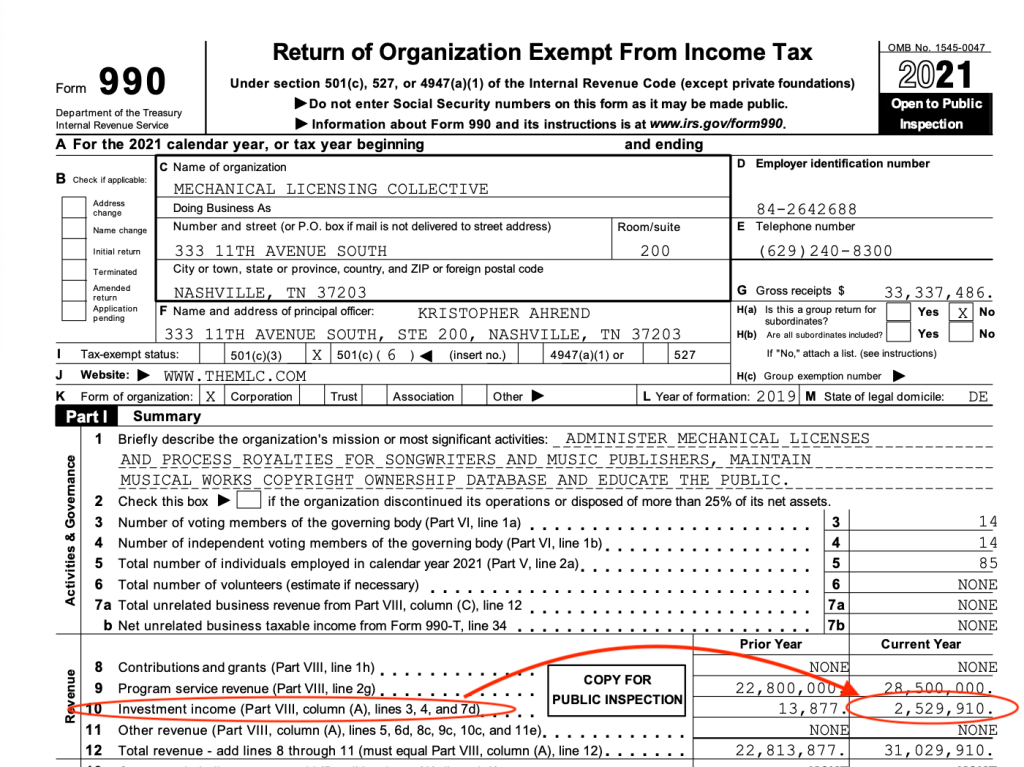
 The Trichordist
You must be logged in to post a comment.