The origin of the outrage is telling: Sweden is widely regarded as a model country for streaming and access, thanks to massive adoption and recovering recording revenues. The threatened suits suggest that not everyone is celebrating or, more importantly, enjoying the early spoils.
Regardless of the locale, the issue comes ahead of very difficult juncture for Spotify. Mega-artists like Thom Yorke continue to raise uncomfortable questions about paltry payouts, but more perilous questions are dangling on the financial side. Recent financial figures show an unsustainable level of cash burn at Spotify, and potentially serious problems attracting more capital as a result. And after burning through hundreds of millions of dollars, Spotify is getting dangerously close to depleting its funding tranche.
Google has a lot of excuses for why they profit from piracy, but what is inexcusable is how YouTube profits from hate videos and war porn. It is difficult to understand how Lady Gaga and other artists slated to perform on the “YouTube Music Awards” would be able to turn a blind eye to this evil, no matter the fee and no matter how much “promotion” a media giant like Google can bring to bear.
The Problem from Hell is Easily Solved
What is difficult to understand about YouTube’s hate problem is how Google could just ignore it–particularly when these videos no doubt violate some policy that Google pays lip service to. Fortunately, the Anti-Defamation League has compiled a list that Google could easily use to enforce violations of their dormant terms of service when it comes to hate speech.
I tried YouTube searches by picking a few names from…
[Editor Charlie sez: Here’s a recent “content warning” video embedded from YouTube:
So YouTube makes it look like they are screening violent videos, but all they are really doing is grabbing users email addresses to sell them other stuff and preserving Google’s monopoly over video traffic by allowing grotesque videos to drive traffic to YouTube through referring sites.
YouTube–the #1 music destination online–is also the home of all sorts of grotesque videos, monetized by YouTube and Google. Try searching YouTube for “beheading” and you’ll get the idea. 544,000 search results all available for streaming directly into your home, right now, all over Internet television.
Not only is YouTube available at home, but it’s also linked to Google’s education apps, government apps, and by the Android. And these are not just an odd video here and there, these videos account for millions of views.
Streaming services may be paying you pennies, but at least they’re lowering piracy. But what if that isn’t true?
At present, there are three major types of piracy ecosystems that are used worldwide: they are BitTorrent, video streaming, and direct download cyberlockers.
The vast majority of BitTorrent sites make money through advertising.
So the piracy sites that we’ve focused on for this study are very much driven by profit: they are generating revenue from advertising, they are generating revenue sometimes from premium subscription fees. And obviously when enforcement shuts these sites down and or shuts down their payment processors, it’s hitting directly at their revenue streams.
Ads for Adidas, Acura, Bertolli, Crest, Charmin, Domino’s, Ford, Geico, Hellmann’s, Lowe’s, Panera, Papermate, PG&E, Post and more share space with sex ads.
Ad Industry Best Practices?
The ad industry and ad service providers have made a show of agreeing to voluntary “best practices” agreements to fight ad-sponsored piracy, but despite their talk and White House support, not much has changed. Take a look at the graphic below…What kind of industry “best practices” do these ad placements represent?
As sales of CDs plunged over the last decade, the music industry clung to one comfort: downloads continued to sell briskly as people filled their computers and iPods with songs by the billions.
Now even that certainty seems to have disappeared, as downloads head toward their first yearly decline.
So far this year, 1.01 billion track downloads have been sold in the United States, down 4 percent from the same time last year, according to the tracking service Nielsen SoundScan. Album downloads are up 2 percent, to 91.9 million; combining these results using the industry’s standard yardstick of 10 tracks to an album, total digital sales are down almost 1 percent.
A new study from North Eastern University is getting some attention and it’s interesting how some people are spinning the numbers, so we decided to take a look.
“For Megaupload (MU) the researchers found that 31% of all uploads were infringing, while 4.3% of uploads were clearly legitimate. This means that with an estimated 250 million uploads, 10.75 million uploads were non-infringing. For the remaining 65% the copyrighted status was either unknown, or the raters couldn’t reach consensus.” – Torrent Freak
In a recent BBC interview Breaking Bad’s creator Vince Gilligan has been quoted talking about the effect of internet piracy on the show.
Piracy is “ultimately a problem and will continue to be a problem going forward,” Gilligan said. “Because we all need to eat. We all need to get paid.”
It’s been reported that the show’s final episode was illegally downloaded over 500,000 times in 12 hours of the first pirated copy turning up on piracy and torrent sites. Many have seized on Gilligan’s remark that piracy helped the popularity of the show. That’s highly unlikely as those seeking the illegal copies, were seeking them as demand for the show grew from conventional marketing. These people were opposed to paying for the show from the many outlets where the episodes were legally available like Netflix and Itunes. Gilligan clearly understand the impact…
“The downside is a lot of folks who worked on the show would have made more money, myself included, if all those downloads had been legal.”
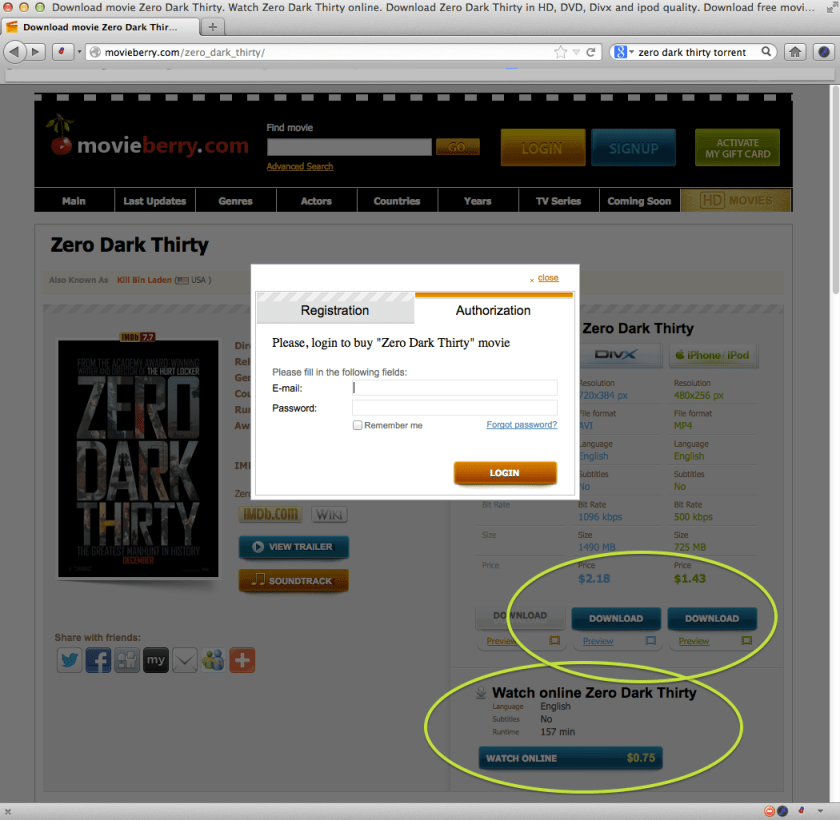
Many piracy apologists and proponents are quick to suggest (incorrectly) that not every illegal download represent a lost sale, but we disagree and here’s why. Looking at the links below you can quickly see that the piracy sites are monetizing the access and availability of the illegal downloads with advertising. Additionally some sites even charge greatly discounted transactional fees via dubious payment processors.
Simply put, piracy is about infringement as a business model. Every illegal download generates revenue for the pirate sites and ad tech companies, none of which is “shared” with the creators.
The BitTorrent Billboard advertising campaign story has taken an interesting turn spawning a satirical response spoof banner ad campaign appearing on sites such as Grooveshark, Mashable, MediaFire and Rollingstone.com. The banner ads read “All your content are belong to us” and “Instead of paying artists, we spent money on banners.”
Clicking on the faux ad banners lands on the site RightTheMusic.Org that presents internet piracy fun facts such as “Worldwide, 432.0m unique internet users explicitly sought infringing content during January 2013” and provides an additional click through the source of the quote.
We can’t help but notice that when an artist publicly criticizes Spotify there are three bloggers that seem to quickly post rebuttals as if they are members of a synchronized swimming-er blogging team. To paraphrase Spin Magazine on these guys: “#TeamSpotify.”
Meanwhile Jay Frank calls David Byrne “bad at Math.” Now while Jay is always careful to be right, if you look at the big picture it turns out he’s arguing over things like whether it takes 150 million Spotify spins or 75 million Spotify spins a year to reach minimum wage (and is that federal or state minimum wage, and which state Jay? ) . Does that really matter? Byrne’s points still stand. Either way it’s a fuckload and it’s not sustainable. Yes Jay, technically you’re right but It’s like a Larry David episode. You’re making my brain hurt and I AM A MATHEMATICIAN.
But here’s the real problem with these guys: I can’t take them seriously.
And it’s not because I don’t like what they write. It’s because there are just three of them.
If 6 is the number of The Beast. 3 is the number of the comedian.
“Dave Allen, Bob Lefsetz, and Daniel Ek walk into a bar”
If you want to be seen as a powerful, elite or even sinister force three is not a good number. Think about it. “Three Stooges”, “Three Blind Mice”, “The Three Amigos”, “The Jonas Brothers” etc etc.
Four is much better. Four is a masculine world-changing number.
“The Fab Four” “The Fantastic Four” and of course “The Four Horsemen of the Apocalypse.”
These guys will not be taken seriously until they add another horseman.
The pro-spotify-anti-artist-blogging business is no different from the boy band business. You need some variety among your bloggers for broadest appeal. And the more bloggers the better. They should really take a cue from some of the great boy bands of the past. As Bob Lefsetz might say “Work hard, be excellent, and add another member” “The Four Horsemen of the Spotocalypse” is so much more serious sounding.
And they are almost there. They’ve got three great ingredients already!





You must be logged in to post a comment.