Sy Damle Strikes Again

[This post first appeared on MusicTechPolicy referenced by David in his post below from X]

Remember the millions of flawed “address unknown” NOIs that the Copyright Office allowed to be filed by the largest corporations in commercial history, including Google, because they were unable to locate the copyright owners? Aside from the sheer hilarity of the statement “Google can’t find [X]” it is almost certain that the absence of the line of researchers at the Copyright Office at the time suggests that the big tech companies never really did all the research and were allowed to file false statements with the government. Any guesses as to which Copyright Office lawyer was principally involved in allowing them to get away with that massive charade to the tune of approximately 100,000,000 notices? (See my article from the ABA Entertainment & Sports Lawyer.). That might be the one who left the Copyright Office for the riches of private practice shortly after the incident. Mr. Damle also has pretty consistently represented the Digital Licensee Coordinator. More on that later.

Another fake enterprise seems to have been uncovered by Politico this week, this time apparently in what I think is Mr. Damle’s latest assault on creators, his fascination with Open AI. As Politico reports:

The message in the open letter sent to Congress on Sept. 11 was clear: Don’t put new copyright regulations on artificial intelligence systems.

The letter’s signatories were real players, a broad coalition of think tanks, professors and civil-society groups with a stake in the growing debate about AI and copyright in Washington.

Undisclosed, however, were the fingerprints of Sy Damle, a tech-friendly Washington lawyer and former government official who works for top firms in the industry — including OpenAI, one of the top developers of cutting-edge AI models. Damle is currently representing OpenAI in ongoing copyright lawsuits.

Damle did not sign the letter, and did not reply to multiple attempts to contact him with questions about his involvement. But data contained in a publicly posted PDF of the letter show the document was authored by “SDamle,” and three signatories confirmed to POLITICO that Damle was involved in its drafting and circulation. Two of them said they were first made aware of the letter by Damle, and signed it at his invitation.

The letter’s covert origin offers a window into the deep and often invisible reach of Big Tech influence in the Washington debate over AI — a fast-moving part of the policy landscape where Congress is hungry for outside advice, and which is still new enough to create strange political bedfellows. Signatories included the American Library Association, the progressive nonprofit Public Knowledge and the free-market R Street Institute. 

Oh my. This bears all the hallmarks of Google policy washing, while the company is at the same time engaging in a charade with artists through the YouTube AI Music Incubator. And as usual, Mr. Damle is only too happy to accommodate.

Oh snap. It’s Tuesday.

Fakery Abounds: DLC Lawyer Caught

Read up on MusicTechPolicy. Remember the “DLC” is the Digital Licensee Coordinator who represents the services against songwriters and pays for the MLC. Talk about your interlocking boards!

@modernistwitch on @songtradr’s Bandcamp Layoff Tragedy

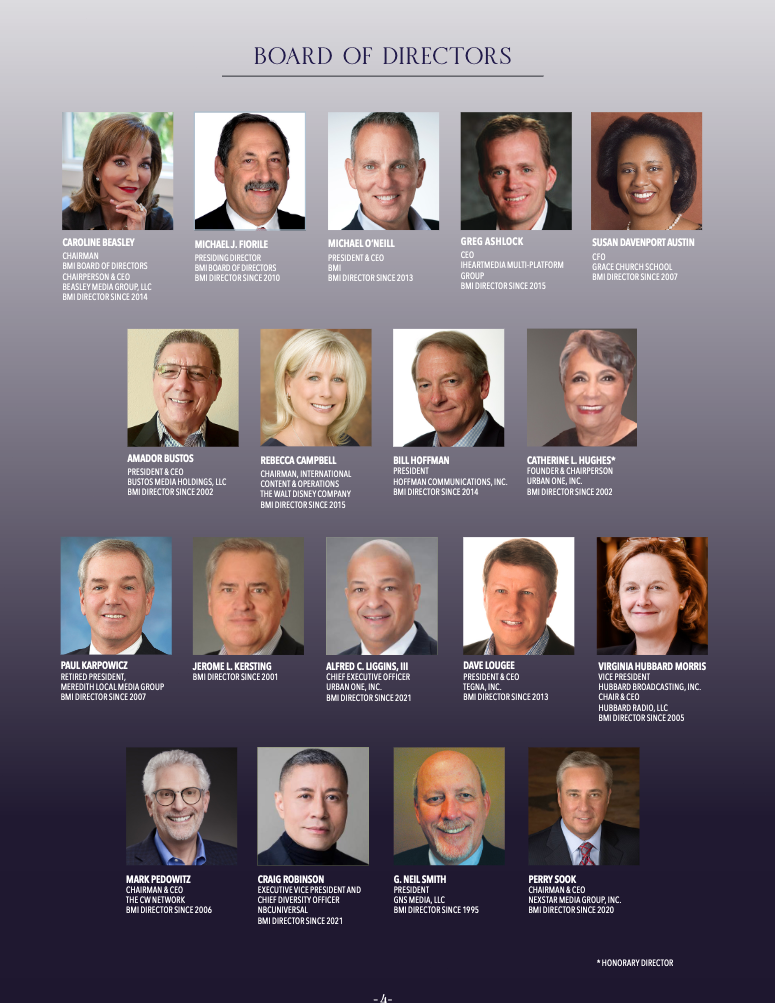
BMI’s Happy Talk Campaign Has Failed

By Chris Castle

According to Billboard, Complete Music Update, and the awesome MusicAlly, nobody appears to be buying what they’re selling over to the BMI. For what seems like the second time in less than 30 days, Artist Rights Alliance, Black Music Action Coalition, Music Artists Coalition, SAG-AFTRA and Songwriters of North America rejected the hummina, hummina, hummina happy talk from BMI’s comms shop which comes out to trickle down mixed with a rising tide.

It’s really a shame because it would have been so easy to provide concrete answers if for no other reason than SAG-AFTRA is on a war footing already and is likely not going to back down. And with SAG-AFTRA comes the AFL-CIO which for BMI’s benefit are unions, see, unions that have been down this path before and are…oh, yes…on strike right now. How close are we to signs like this showing up outside of BMI HQ in New York? It’s OK, Larry and Sergey didn’t think they’d get one, either. Thank goodness we have the smart people to guide us. But BMI should look closely at this picture of a Google labor action and think about what they’d do if it happened to them.

When the CEO is trying to sell the company, in a very real sense they are auditioning for continued employment. Do you think this helps or hurts? Friends don’t let friends become a closing condition.

[This post first appeared on MusicTechPolicy]

The Videogame Industry is Larger Than Film and TV Combined, Why Aren’t They Paying Musicians Fairly?

The videogame industry is larger than the film and tv industries, combined. Despite this, most if not all of the composers creating original videogame music are not paid the same as they would be doing the same work for films and tv shows. Here’s why.

Composers who create the music for your favorite films and tv shows are paid a fee which generally covers the actual hard costs of writing, producing and recording the music for that show. Most of the time that fee doesn’t leave a lot for the composer to live on after the hard costs listed above. However, film and tv composers also typically receive a royalty in the form of an additional payment when the film or show is broadcast or streamed.

This is called a public performance royalty. In most countries the composers are also paid in the same manner for theatrical exhibition (the United States is one of the few countries that does not pay this).

In addition to the public performance royalty most countries also pay a mechanical reproduction royalty. Both of these royalties may vary slightly from territory to territory but both are long established norms for the composer as the songwriter, and hence the creator of the copyright of the original music.

It is these royalties that have long been established as an essential form of compensation that allows composers to actually make a living. Videogame Composers however do not receive these long established payments that their film and tv composer counterparts receive.

To be fair to the videogame industry the early distribution methods of games and gameplay operated in a very different manner than that of film & tv. Even in the 90s for example, games were still distributed on cartridges and music was written for the hardware chipset of each console (or standard pc soundcard).

Since that time the videogame industry has evolved significantly with emerging technologies bringing the gameplay closer to traditional media in user experience and workflow. In fact the videogame industry has grown so large, that its annual revenues now exceed those of the film & tv industries combined. Unfortunately for videogame composers, they are still being compensated under a business model that is half a century old, where music was played by a chipset, not a live orchestra (and the commercial internet was in its infancy).

Game composers are now working under many of the same requirements and expectations as film and tv composers, delivering massively epic scores recorded at major studios with large classical orchestras. In fact, the process of writing music for videogames is a larger and more complex process and requires writing much, much more music due to the scale of the games.

The distribution methods of games has changed as well with many now streamisng in real-time multiplayer modes across a range of consoles, computers, phones and tablets. Some streaming games are free to play, but generate billions of dollars from in-game purchases. Videogame Composers do not participate in any of these revenues created by the new distribution technologies (both downloads or streaming).

The current labor strikes in Hollywood by Writers and Actors highlight and underscore the changing economic realities for creatives presented by these new distribution technologies such as streaming media. A similar situation affects the videogame industry who are transitioning from physical transactional sales to various types of streaming models. Streaming equals broadcast. Broadcast requires both public performance and mechanical reproduction royalties (although these may differ slightly from territory to territory). Streaming is not a transactional model. Streaming is a real-time broadcast and delivery of the media. This is not controversial. Even audio only interactive music streaming services are also bound by these same long established standards and norms.

There is talk of SAG (the Screen Actors Guild) extending the reach of their strike from traditional linear media to video game production. It should be noted that film & tv composers are barred from unionizing and have no collective bargaining power. It is against this backdrop that Videogame Composers recognize their need to advocate for the same royalties that have been long established by traditional media which are currently being reevaluated and updated for the streaming era.

In conclusion, now is the time for this fundamental and long overdue misaligned inequity to be addressed and resolved. A healthy industry is one the invests in itself, its talent and its next generation of creatives who will continue to ensure the growth of the business.

Press Release: Rep. @DeboarahRossNC Introduces Protect Working Musicians Act of 2023 #IRespectMusic

September 19, 2023

Today, Congresswoman Deborah Ross (NC-02) introduced the Protect Working Musicians Act of 2023. This legislation will give small independent artists and music creators the power to collectively negotiate with both streaming platforms and generative artificial intelligence (AI) developers for fair compensation.

Under current laws, small and independent musicians have little ability to bargain for market value rates for the use of their music by global streaming platforms, such as Spotify and Apple Music. Instead, they are forced to accept whatever terms are offered by these platforms, while also having almost no ability to engage with AI companies who routinely scrape and use their music without permission or consent. This legislation allows independent artists to band together and collectively negotiate with large streaming platforms and AI developers, without the obstacles of antitrust laws. 

“North Carolina has long been home to outstanding artists and a vibrant music scene that plays a vital role in our state’s culture and economy,” said Congresswoman Ross. “Working musicians and small independent labels face urgent challenges to their livelihoods posed by the market power of streaming platforms as well as the explosion of AI applications that use their work without licensing or pay. This legislation will help give small, independent music creators a level playing field, empowering them to stand together for fairer compensation and giving them a voice in important negotiations that will determine the future of the music industry.” 

The Protect Working Musicians Act is endorsed by the American Association of Independent Music (A2IM) and the Artist Rights Alliance (ARA).

“Musicians today are fighting for fair treatment on so many fronts, including both in the online streaming marketplace and against the growing threat posed by AI companies who exploit creators’ work without permission,” said Jen Jacobsen, ARA Executive Director. “The ‘Protect Working Musicians Act’ will give small and independent artists a shot at facing these challenges by allowing them to negotiate collectively with the large and powerful entities who profit from musicians’ hard work. We thank Rep. Ross for her leadership in empowering creators with tools to navigate this ever-changing market.”

“Thank you, Rep. Deborah Ross, for championing the rights of artists through the introduction of the Protect Working Musicians Act,” said Dr. Richard James Burgess MBE, President & CEO of A2IM. “The PWMA would help level the playing field for indie artists who struggle to make a living from the mega corporations that control the streaming marketplace.” 

“I’m so grateful to my fellow North Carolinian Deborah Ross for fighting for independent music and the future of creativity,” said singer-songwriter Tift Merritt, Co-Chair of the Artist Rights Alliance. “Artists, songwriters, and independent labels have never needed each other more, and this legislation will ensure our voices are heard and we receive fair pay for our work.” 

“The Protect Working Musicians Act is a necessary tool for independent artists and labels to compete in today’s marketplace and receive fair compensation for their work from streaming platforms and AI companies,” said ARA Co-Founder John McCrea of CAKE. “It is amazing that it even needs to be said, but people who make things have a fundamental right to negotiate with the giants who use and distribute their work.” 

“We at Merge would like to thank Congresswoman Ross for endorsing the North Carolina music scene as the strong cultural and economic force it is and taking this step to make sure we can compete and succeed in the digital world,” said Laura Ballance, Co-Founder, Merge Records and member of the band Superchunk.

The bill text is available here

The Copyright Office Sends Modernized Regrets

As we reported in a prior post about George Johnson’s grass roots effort to ask the Copyright Office to review that status of the compulsory license which is the raison d’être for the existence of their Mechanical Licensing Collective, the US Copyright Office turned him down. The Office has refused to look into a study on the continued viability of the compulsory license in the United States as part of the five year review of their Mechanical Licensing Collective. The five year review is the perfect opportunity to consider whether the compulsory license itself is fit for purpose.

This is particularly true after the near-fiasco of the MLC’s testimony to the House IP Subcommittee which is well worth watching, particularly the Subcommittee’s “show me the money” questioning about what the MLC is doing with the hundreds of millions that the MLC is “investing”. The only reason the MLC has these hundreds of millions is because of the compulsory license. This requires an explanation that nobody seems interested in making to the songwriters like George Johnson.

It seems to us impossible to consider one without the other and we appreciate George Johnson taking the time to make that argument to the Copyright Office. In coming days we will have some additional thoughts about the continued viability of the compulsory and look forward to a robust debate on the topic. We may have to conduct that conversation outside of the Imperial City, but that’s OK. There are many international interests involved as well as motivated constituents all around this country.

Here is the Copyright Office rejection letter. There are a number of assumptions it makes, such as the negotiation of Title I of the MMA was a free and open process and not a star chamber for the insiders. We’ll get to these in coming days.

Dear George,

Thank you for your letter requesting a study concerning repealing the section 115 compulsory license.  As you know, the section 115 license was previously explored by the Office and it was recently amended by Congress as part of the Music Modernization Act (MMA).  As the changes made to the license through the MMA have been effective only for the past two and a half years, the Office believes that it would be premature at this time to engage in a new study of the section 115 license.

To briefly recap this history, in 2015, the Copyright Office issued its policy report “Copyright and the Music Marketplace,” which reviewed the then-current conditions affecting the U.S. music marketplace and made various suggestions for reform, including with respect to the section 115 license.  The report was built on input we received from organizations and individuals, including yourself, who shared their insights and experiences in written comments and in roundtable discussions. 

With respect to the section 115 license, the report observed that “[m]any parties have called for either the complete elimination or modernization of section 115, citing issues such as the administrative challenges of the license, the inaccuracy and slowness of the ratesetting process, and frustration with government-mandated rates.”  Ultimately, however, the Office recommended modernizing, but not repealing, the section 115 license.  While the Office was sympathetic to arguments in favor of repealing the license, it was also concerned that eliminating the license would cause extraordinary difficulties associated with negotiating individual licenses for the millions of musical works offered on digital music providers’ services.

Three years later, Congress updated the section 115 license as a part of the MMA—an Act that Senator Grassley referred to as “the product of long and hard negotiations and compromise.”  One of the Act’s cornerstones was the new compulsory blanket section 115 license, which became available on January 1, 2021.  

Although we do not intend to undertake a new study of the section 115 license at this time, we want to remind you that the Office welcomes input from stakeholders and members of the public to better inform our decision-making.  I would like to thank you again for your letter and any additional views that you may wish to provide to the Office in the future.

Sincerely,

Suzy Wilson

General Counsel and Associate Register of Copyrights

U.S. Copyright Office

Copyright Office Rejects George Johnson’s Request for a new Study of the Effectiveness of the Compulsory License as Part of MLC Five Year Review

Before we get to George’s letter, a little context. If you’re coming to this subject for the first time, mechanical royalties are paid to songwriters (and their publishers) for the mechanical reproduction of their songs. The federal government established a compulsory license for this purpose and corresponding royalty rates starting in 1909. The license has evolved over time and now includes physical configurations like vinyl (paid by record companies) and digital transmissions like streaming (paid by DSPs like Spotify).

Until the Music Modernization Act, songs were licensed on a song-by-song basis notice-based system except for catalog licenses. Or at least theoretically–pre-MMA most of the streaming services didn’t take advantage of the statutory license they were entitled to because they couldn’t be bothered. (Until David’s class action called them out. We note that the Copyright Office, in particular a former lawyer at the Office now representing Big Tech against songwriters, allowed the streamers to get away with tens of millions of flawed “address unknown NOIs” that a cynic might say was a catastrophe with a purpose. Chris has an article about this fiasco that went largely unreported except by Hypebot.)

Fast forward to today. Every five years the Copyright Office is required to review the company that the Office has designated to run the Mechanical Licensing Collective. Currently that entity is The MLC, Inc. designated by the Copyright Office on July 8, 2019. Remember that The MLC, Inc. was independently chosen by the Copyright Office as the best in breed of all applicants after a rather odd beauty contest. This is their thing, and the MLC, Inc. is their idea. So do you think that creates an incentive to create a five year review that everything is peachy and they were geniuses for creating this dumpster fire?

Even though the first five year review is set to happen next year, Congress has already held a hearing about the MLC, Inc. which frankly did not go well for the company. Nobody got their ears nailed to the barn door, but the hearing was not the usual love fest. The review is to be conducted by the Copyright Office, so there’s a question as to why Congress decided that the House Judiciary Committee IP Subcommittee should conduct the first of what may be multiple hearings.

Everyone assumed that the Copyright Office would choose the first MLC as the NMPA-backed entry, The MLC, Inc. That company was so confident of winning the contract their confidence made people ask why anyone else bothered to try out. And when the next charade resulted in The MLC, Inc. choosing the former NMPA affiliate the Harry Fox Agency as their data vendor, everyone knew there was definitely gambling at Rick’s. All paid for by Big Tech (or maybe we should say Really Big Tech) because not even the taxpayer is stupid enough to fall for this BS. After all, nothing blew up and nobody died.

So the lobbyists and lawyers and the Copyright Office were busily building up a new bureaucracy to drive mechanical licensing back to the future and essentially preserve the 1909 compulsory license that George refers to. Because what they didn’t do was throw out the compulsory license and come up with an alternative more in keeping with streaming. You know, modernization.

In fact, they never really considered how one might implement mechanical licensing without the compulsory part. And that’s probably because there is a cottage industry of lobbyists, lawyers, and government clerks built up around compulsory licensing that would simply be out of a job if the compulsory were rejected. But they will get out the green eyeshades and the furrowed brow and tell you that mere songwriters cannot appreciate the complexity of getting rid of the compulsory license that governs their lives and has done for over a century.

But then there’s this five year review. What is the review reviewing if it never takes into account the compulsory license itself. Are we to just assume that the compulsory lasts forever? Are they just to review how The MLC, Inc. and HFA are doing administering a law that itself doesn’t work? Where does the failure of one start and the other begin?

The effectiveness of the statute itself really must be part of the five year review as well as a review of the MLC.

Enter George Johnson. George is a songwriter who has effectively represented himself at the Copyright Royalty Board and is fighting hard for increased songwriter royalty rates, holding up a mirror to the emperor in the Imperial City of Washington, DC. Needless to say, George has made no new friends among the grandees and courtiers who all see the advantage in complementing the emperor on his new clothes and complain that George does not shut up and let his betters run things the way they like. Billboard did an extensive profile on George during the frozen mechanicals crisis in which he played a major part.

George has written a timely letter to the Copyright Office anticipating the need for a review of the compulsory license statute itself from which spring all these problems for the obvious reason that you can’t really talk about the MLC with out talking about that statute (17 USC §115). (You may want to take a look at a proposal that David made a few years ago for a US version of extended collective licensing.) Just remember that it’s not really that difficult to transition off of song-by-song licensing to a blanket license administered by the MLC fiasco compared to extended collective licensing with an opt-in for songwriters who want to get away from HFA and the compulsory licesne.

Spoiler alert–the Copyright Office rejected George’s request. Their rejection does not mean George was wrong, it just means that the right person didn’t ask the question,

Following is George’s letter to the Copyright Office and we will later post the Copyright Office response. You can read George’s white paper here.

Monday, June 12, 2023

Via Email 

Attn:  Ms. Shira Perlmutter,

Register of Copyrights and Director

U.S. Copyright Office

101 Independence Ave. S.E.

Washington, D.C., 20559-6000

Re:  Study to Repeal §115 Compulsory License & Ex Parte Meetings to benefit Congress and all U.S. Songwriters and Music Publishers

Dear Register Perlmutter,

For the benefit of all American songwriters and music publishers “bound by” 1 the 114 year old §115 compulsory license, and to benefit Congress in their upcoming 2 decision making processes involving intellectual property law and music copyright policy, I respectfully request that the Copyright Office please initiate a compulsory license study and roundtables regarding it’s full repeal, including ex parte meetings.

The century old compulsory license is no longer an incentive or profitablefor all U.S. songwriters and music publishers, and there are many problems arising from it’s use, and misuse, not intended by Congress, the Constitution, and copyright law.

The 1909 compulsory license was designed for a different time, for the local sale of piano rolls and not contemplated to be used by the largest trillion-dollar corporations in the history of the world, with teams of attorneys, with no sale, by “access”, on “computers” or telephones, distributed digitally, through the air, and all for free from songwriters and publishers?  Now, with no COLA for streaming. 

Former Register Ms. Marybeth Peters initiated several studies 3 that questioned the continued necessity of the compulsory license, and for it’s full repeal or full reform 4. Unfortunately, those studies are now outdated and considering the vast changes in the delivery of musical works and sound recordings, experts 5 6 now think a new study would be very helpful in updating Congress on how the license is functioning post Music Modernization Act (MMA), to benefit their 2024 MLC review, but primarily so Congress can make an informed decision on full repeal or full reform?

While my comments here are my own and separate from my participation in the current Phonorecords III & IV proceedings at the Copyright Royalty Board, please feel free to notify me if there is any conflict or other legal protocol to be followed.

Other than the obvious economic arguments to finally pay songwriters the true value of their copyrights, the primary reason I believe compulsory license roundtables are necessary and so dire is the 3 major record labels’ current anticompetitive misuse of the compulsory license 7 at the CRB (See #1, 2, 3 in the attached white paper) that I’ve experienced as a 4 time CRB participant and appellant in Sound Exchange v. CRB 8 and Johnson v. CRB 9.   The 3 major labels’ misuse of the license is the #1 issue including several dozen other serious issues.

The license, the rate-structure, and the CRB process are all truly broken in almost every way and must be fixed immediately or completely abandoned.  All rational market actors who currently use private collective blanket licensing providers would certainly switch, proving no need for federal licensing to operate efficiently.

We all could really benefit from the Copyright Office’s input, ideas, and legal opinions on these extremely important issues since each and every songwriter cannot compete with RIAA and NMPA counsel, nor 25 years of their regulatory capture. 

We songwriters truly need Congress and the Copyright Office’s help and guidance.

We pray the Copyright Office 11 will initiate a study with roundtables, in addition to ex parte communications and meetings to benefit Congress, and all American songwriters and music publishers “subject to”11 the license — for these good reasons, good cause, and those contained in the following white paper attached below.

Thank you for your time and thoughtful consideration. 

Respectfully,

George D. Johnson

Singer/Songwriter

PO Box 22091

Nashville, TN, 37202

@georgejohnson

cc: Librarian of Congress                                                 

     General Counsel of the Copyright Office   

     U.S. House Judiciary Committee

     U.S. Senate Judiciary Committee

     Office of the TN Attorney General

1.  https://www.federalregister.gov/documents/2022/03/30/2022-06691/determination-of-royalty-rates-and-terms-for-making-and-distributing-phonorecords-phonorecords-iv  March 30, 2022 Withdrawal of Subpart B Final Rule by the Copyright Royalty Board.  Referencing §801(b)(7)(A) “That provision directs the Judges to provide those who would be bound by the negotiated rates and terms an opportunity to comment on the agreement.” Page 3 (emphasis added)

2.  Upcoming 5 year work product review of the Music License Collective (“MLC”) by Congress in 2024.

3.  https://www.copyright.gov/newsnet/2022/981.html  September 30, 2022 — In Memory of Marybeth Peters.  “Her leadership of the Office also included the generation of several landmark studies, such as those on statutory licenses…”

4.    To me, a full overhaul in dollars of the “nano-penny” rate-structure in §385 Subpart C streaming.

5. https://musictechpolicy.com/2023/04/05/should-the-copyrightoffice-begin-at-the-beginning-with-the-mlcs-first-five-year-review/  April 5, 2023 — by attorney and Phonorecords IV Commenter Mr. Chris Castle.  Should the Copyright Office Begin at the Beginning With The MLC’s First Five year Review “The continued need for a song compulsory license is just the kind of information that Reps. Jordan and Issa could use in case they were inclined to just get rid of it. It would be a great topic for the Copyright Office to study and hold round tables on, this time preferably lead by a Copyright Office lawyer who was not being recruited by Spotify.”

6.  https://musictechpolicy.com/2023/05/28/should-the-compulsory-license-be-re-upped/ May 28, 2023, Should the Compulsory License Be Re-Upped? by music attorney and official CRB Commenter Mr. Chris Castle.

7. …through NMPA’s, et al. re-writing all laws and definitions, and MMA, to fit label business models, not U.S. songwriters.  This is also in no way the Judges fault, they have to deal with it too, so reform would help them.   The Judges are great and not to blame when I say the process is broken.

8.  https://www.cadc.uscourts.gov/internet/opinions.nsf/8AE80A6C0FBDFB7B8525830C004D863A/$file/16-1159-1751123.pdf  SoundExchange, Inc. v. Copyright Royalty Board and Librarian of Congress, Case No. 16-1159, consolidated with 16-1162 (DC Cir. Sept. 18, 2018) (Srinivasan, J)

9.  https://www.cadc.uscourts.gov/internet/opinions.nsf/720464D843B0D6C7852585C10074B11B/$file/19-1028-1856124.pdf  George Johnson v. Copyright Royalty Board and Librarian of Congress, Case No. 19-1028, (D.C. Cir. Aug. 7, 2020) (Henderson, Garland, and Millett)

10.  https://www.govinfo.gov/content/pkg/FR-2023-02-17/pdf/2023-03392.pdf Ex parte.

11.  https://app.crb.gov/document/download/3715  September 29, 2016, SDARS III Order Denying Services’ Motion To Dismiss George D. Johnson d/b/a Geo Music Group.  “The Services’ reliance on the Librarian’s decision in PSS II—a decision that involved neither a copyright owner nor a copyright user—is misplaced because it is based on an erroneous premise. Unlike the party in PSS II, GEO is subject to the license at issue…and GEO would have no say in the matter—that is the essence of a statutory license.  For the forgoing reasons, the Judges DENY the Services’ Motion.”