“Options, not rules”: BitTorrent Profits from Piracy By Serving Ads To UTorrent Client

We highly recommend not just reading this post at MTP, but also don’t miss the hyperlinks!

RELATED:
Only 0.3% of files on BitTorrent confirmed to be legal | Ars Technica

This report echoes similar results out of Princeton that were published earlier this year. Though the top categories were slightly different—Princeton found that movies and TV were the most popular, while music fell behind games/software, pornography, and unclassifiable files—that study found that all of the movie, TV, and music content being shared was indeed infringing. Overall, Princeton said that 99 percent of the content on BitTorrent was illegal.

Music Technology Policy

As galling as it may be, About.com actually has a post calledThe Best Torrent Downloading Software 2013.”  And who is the winner of the best client to use for stealing music and movies?

“Here they are: the most popular ‘music pirate’ downloading software for torrent file sharing. This list is compiled from hundreds of user comments and reader suggestions. Currently, the two most popular tools are uTorrent and Tixati. But definitely look at all the choices below for yourself.”

So what is “uTorrent”?  Why the handy application from SF Music Tech sponsor Bit Torrent, Inc. of course.  uTorrent has been downloaded over 20 million times from download.com alone, so you won’t be surprised to hear that the ad supported application servesover 5 billion ads a month.

According to Torrentfreak:

Based on the stats reported by BitTorrent, the uTorrent client serves more than five billion ads…

View original post 899 more words
ADWEEK : “Ad Industry Takes Major Step to Fight Online Piracy”… Again…

Stop me, oh uh, stop me, if you think you’ve heard this one before…

The advertising industry took a major step Thursday in fighting rogue websites that steal copyrighted material and sell counterfeit goods. To cut off the financial support that keeps rogue sites alive, the nation’s two major ad industry associations recommended agencies and marketers take steps to keep brands’ ads off those sites.

While the debate remains contentious, there has been universal agreement that the key to shutting down rogue websites was to cut off the money that keeps them alive.

Recognizing advertising was the first line of attack, GroupM last year became the first ad shop to adopt a comprehensive anti-piracy policy, compiling last summer an updatable black list of some 2,000 websites that are cut off from ads from blue-chip clients like Ford, AT&T, Unilever and Dell.

READ THE ABOVE FULL ARTICLE HERE AT ADWEEK:
http://www.adweek.com/news/technology/ad-industry-takes-major-step-fight-online-piracy-140014

So the above is from May 3, 2013… and here’s an insightful article below from the advertising trade publication CLICKZ.COM on April 18, 2011… Yes, 2011…

What is the purpose of me bringing this up? To raise awareness and perhaps ask publicly that those involved in this industry become better corporate citizens. If you are running one of those exchanges or networks and feel that it’s only a “transparency” issue, please consider that you are funding not only these websites but organized criminal organizations that run them.

This is not a victimless crime, but instead one that is affecting musicians, programmers, artists, designers – and businesses of all sizes.

As an industry, here are some suggestions of what we can do:

1. Ensure every network that you work with has a no-warez/piracy/torrent policy. Ask around about the networks that do support this. Even if they claim that your ads aren’t going on there, be aware that many of these networks aren’t honest.

2. Put pressure on exchanges that you work with to ensure no network that has this type of inventory is on that exchange. If a few agencies call the exchanges and make it clear they won’t buy media until they are assured these sites are completely off the exchange, then maybe those in charge will consider it a serious issue.

3. Refuse to pay networks that you discover violate this policy and show your advertisements on those sites. Make it clear that you find this behavior not only illegal, but unacceptable for your agency, network, or product.

YOU CAN READ THE FULL ARTICLE HERE (FROM 2011) AT CLICKZ:
http://www.clickz.com/clickz/column/2041366/advertising-networks-supporting-piracy

Accountability?
Responsibility?
Transparency?
Anyone?
Hello?

Why I Was Banned From Speaking At San Francisco Music Tech #SFMUSICTECH

this photo says it all

“This says It all”

I was supposed to speak at the SF Music Tech Summit Feb 19th 2013.   A few days before my scheduled appearance I received a call from  SF Music Tech and Fututre of Music Coalition co-founder Brian Zisk explaining that I would not be allowed to speak because I tweeted/blogged the above picture with the following caption “this says it all.”   Further he noted that “certain sponsors” would not “appreciate” me speaking at this event.

I love the hypocrisy of the Silicon Valley. They are all for free speech until they aren’t.

The fundamental American right is Free Speech. SF Music Tech (and Silicon Valley in general) do not really respect this right. Especially when it begins to interfere with their bottom line.

So what do you say we just end the charade? SF Music Tech Summit is biased against creators/musicians and their rights. It’s a pro-tech industry event.  It’s held in the Kabuki Hotel in San Francisco.  Because it is a giant Kabuki.

Three times a year  you find Tech Industry “entrepreneurs” who’ve never turned a profit “debate” un-elected artists rights advocates who as it turns out work for opaque 501C  foundations and organizations  that are funded by technology companies like Google.

If it’s not clear I’m talking about you, Future of Music Coalition and Cash Music.  Sorry guys/gals you had your chance to do the right thing and  speak out publicly against me being banned and you didn’t.  That makes you at best quislings and at worst shills.

SF Music Tech and Brian Zisk have every right to do whatever they want with their #SFMUSICTECH summit but I just ask them to stop pretending it reperesents anything other than the technologists that wish to exploit artists.

Have a good SF Music Tech.  I’ll be off touring the UK.

Ready The Clown Car : Kim Dotcom Contemplates Suing Google, Twitter and Facebook

Serious folks, we can’t make this up.

“Twitter introduces Two-Step-Authentication. Using my invention. But they won’t even verify my Twitter account?!,” Dotcom tweeted.

“Google, Facebook, Twitter, Citibank, etc. offer Two-Step-Authentication. Massive IP (intellectual property) infringement by U.S. companies. My innovation. My patent,” he added.

But it get’s better…

“I never sued them. I believe in sharing knowledge & ideas for the good of society. But I might sue them now cause of what the US did to me,” he said.

However, he said a more productive approach would be if the tech giants helped cover his legal bills to fight prosecution under the Digital Millennium Copyright Act (DCMA), which he estimated would exceed US$50 million.

“Google, Facebook, Twitter, I ask you for help. We are all in the same DMCA boat. Use my patent for free. But please help fund my defence,” he tweeted.

So essentially he’s threatening to sue the very same people he’s asking for money. Interesting strategy. We’re not sure that Google, Facebook and Twitter feel they are in the same boat. It’s difficult to believe these companies would want to be anywhere near the imploding public spectacle known as Kim Dotcom.

READ THE FULL STORY HERE:
http://www.channelnewsasia.com/news/technology/kim-dotcom-mulls-suing-tech-giants-for-c/685072.html

you may also enjoy…

UPDATE:
Kim Dotcom claims he invented two-factor authentication—but he wasn’t first | Ars Technica

Dotcom’s European patent was revoked in 2011 largely because AT&T had a patent on the same technology with a priority date from 1995. (Thanks to Emily Weal of patent law firm Keltie for pointing out Dotcom’s European patent travails in the IP Copy blog.)

While Dotcom’s patent in the US is still in force, AT&T also has a US patent pre-dating hisThe Guardian pointed out that Ericsson and Nokia also have patent filings for two-factor systems predating Dotcom’s.

The Constitutional Foundations of Intellectual Property Law

via copyhype:

Randolph May and Seth Cooper of the Free State Foundation look at some of the philosophical underpinnings that drove the inclusion of copyright and patent protection into the United States Constitution. According to May and Cooper, the origin of the right is explicitly Lockean, while the protection of the right is explicitly Madisonian. An engaging and enlightening read.

READ THE FULL REPORT HERE:
The Constitutional Foundations of Intellectual Property Law

Two Sincere Questions for The Future Of Music Coalition #SFMUSICTECH

We notice that Future of Music Coalition has submitted testimony to congress asking that they “represent” artists in the Copyright Reform process begun by Congress.

So since they’ve  volunteered to represent us.  We feel it only fair that they answer these two questions:

1. Who selects your advocacy positions?  
AFM, AFTRA, NARAS, Nashville Songwriters Assn, and ASCAP all have democratically elected boards who set the organizations’ positions.  Do you have members who vote for leadership?  If not, who is making those decisions?

2. Who funds your organization?
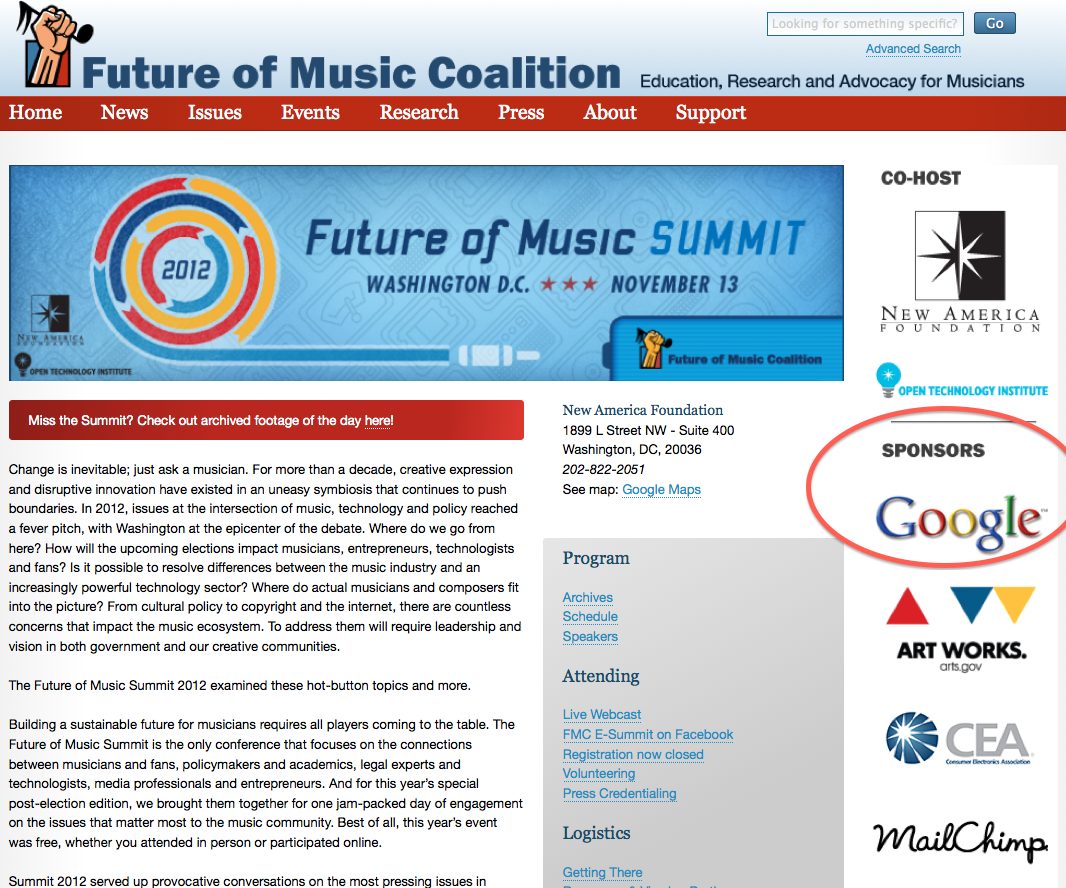
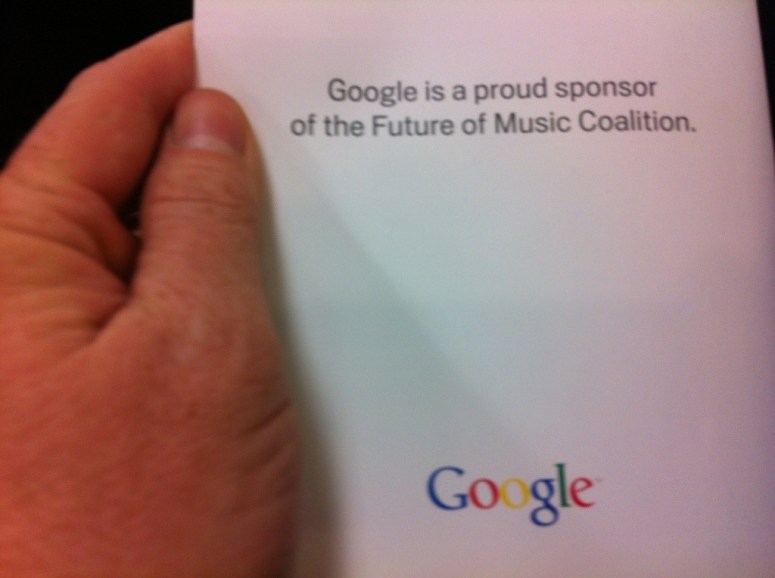
Google is listed as your first sponsor of your primary event.
http://futureofmusic.org/events/future-music-summit-2012

How much money do you get from Google?  Do you think you should be taking funding from a source many artists believe to be opposed to their interests?

FOMC Spondors

Loser Generated Content – The Exploitation Economy Explained

Essential reading by Soren Mork Petersen, “Loser Generated Content: From Participation to Exploitation.”

Abstract
In this article [1] some of the critical aspects of Web 2.0 are mapped in relation to labor and the production of user generated content. For many years the Internet was considered an apt technology for subversion of capitalism by the Italian post–Marxists.

What we have witnessed, however, is that the Internet functions as a double–edged sword; the infrastructure does foster democracy, participation, joy, creativity and sometimes creates zones of piracy. But, at the same time, it has become evident how this same infrastructure also enables companies easily to piggyback on user generated content.

Different historical and contemporary examples are provided to map how the architecture of participation sometimes turns into an architecture of exploitation.

READ THE FULL PAPER HERE:
http://journals.uic.edu/ojs/index.php/fm/article/view/2141/1948

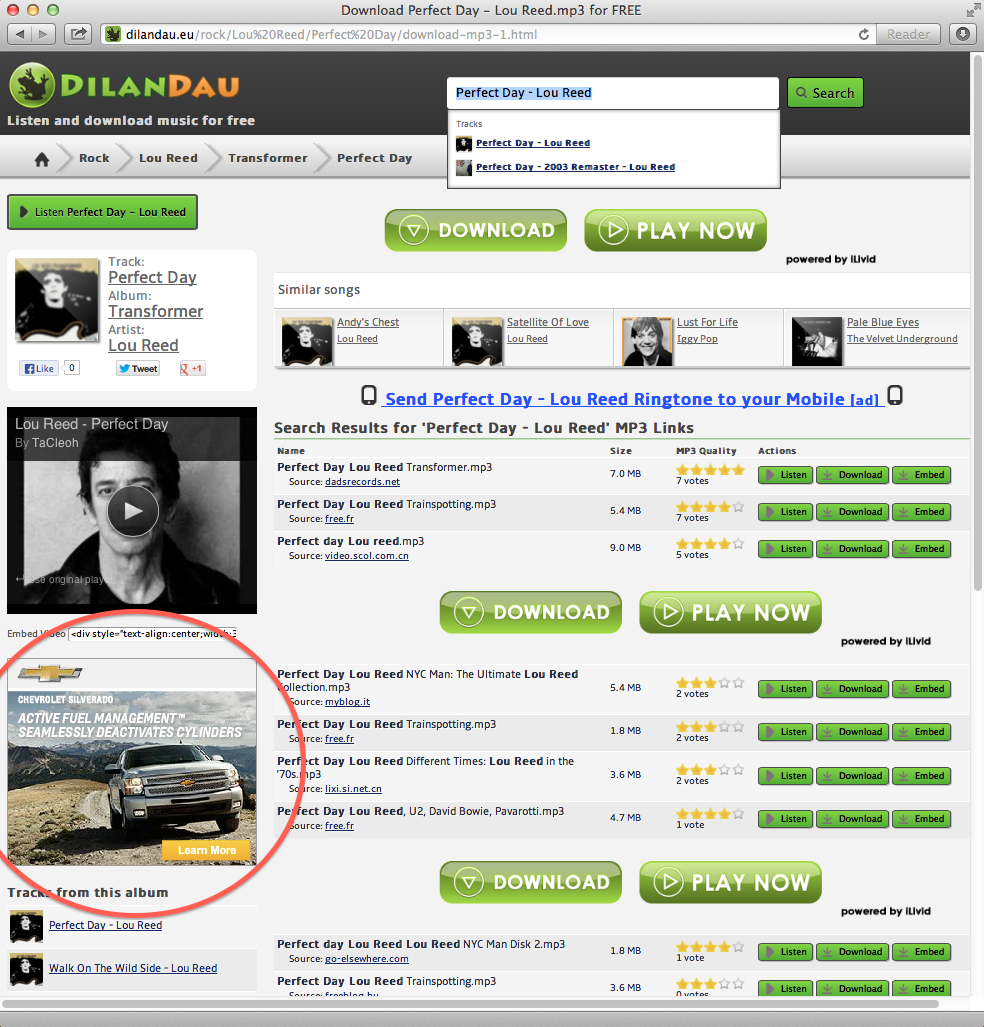
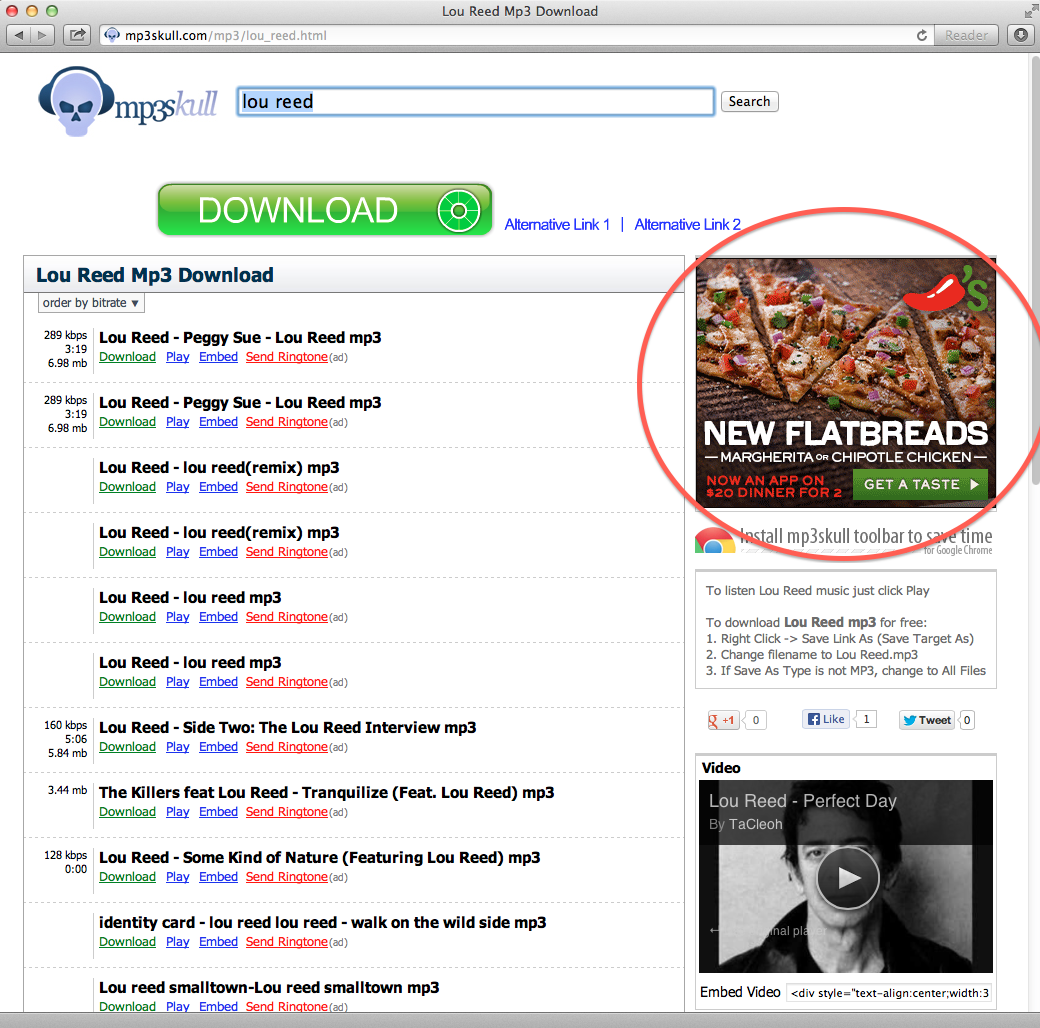
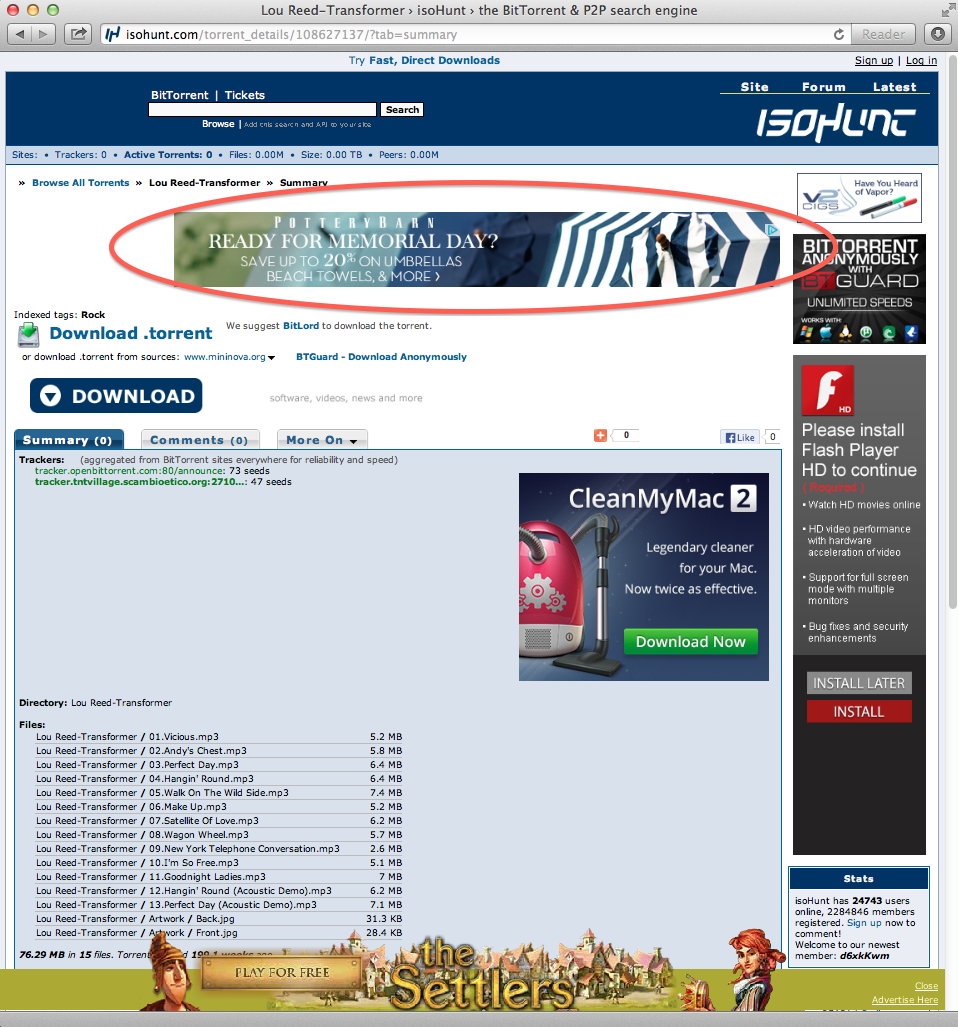
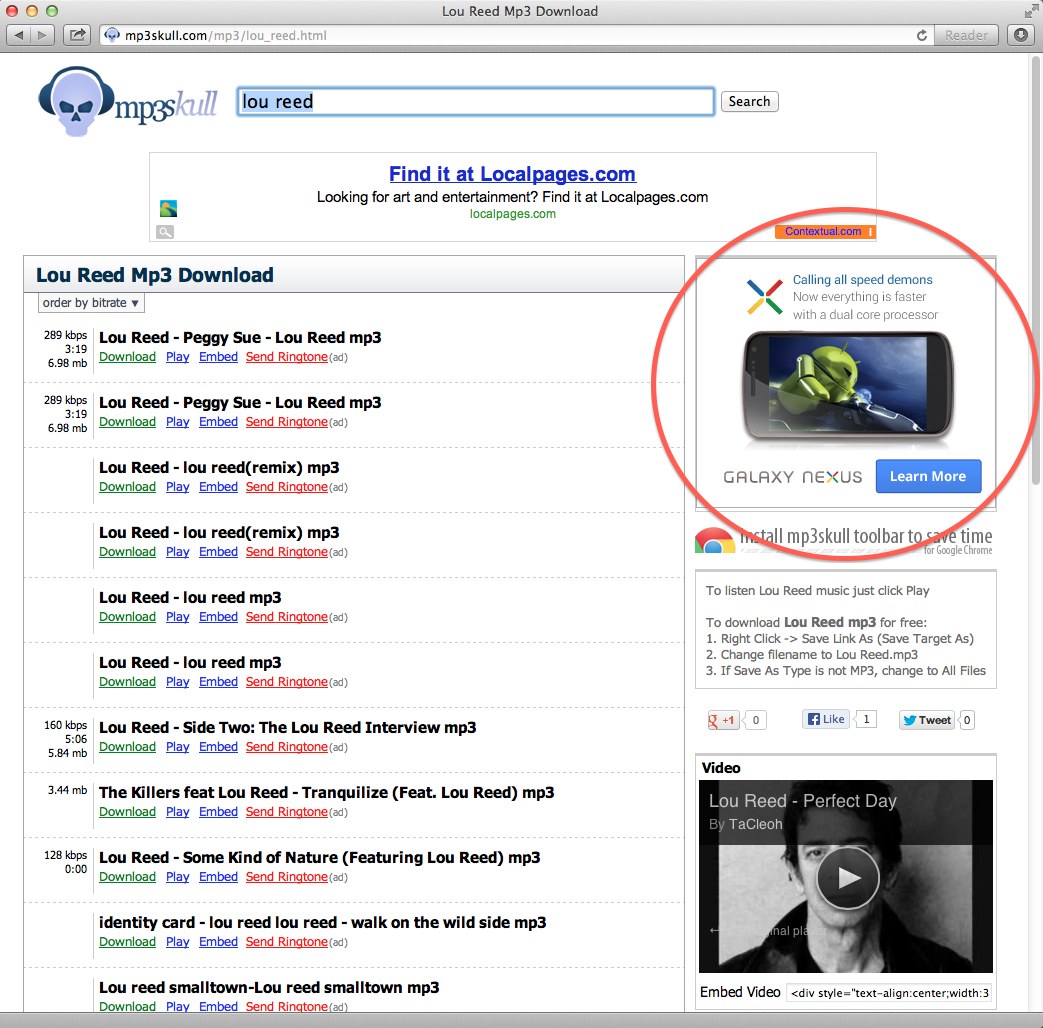
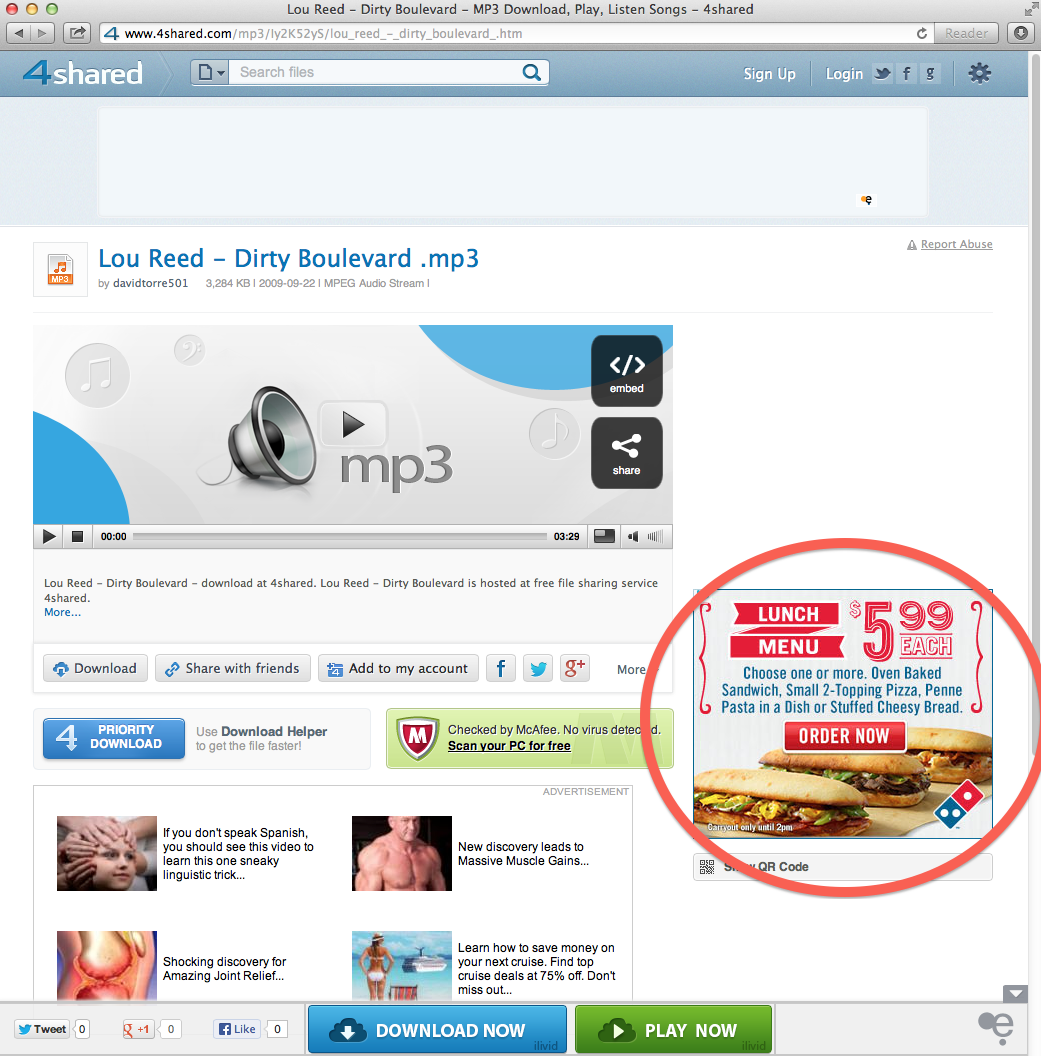
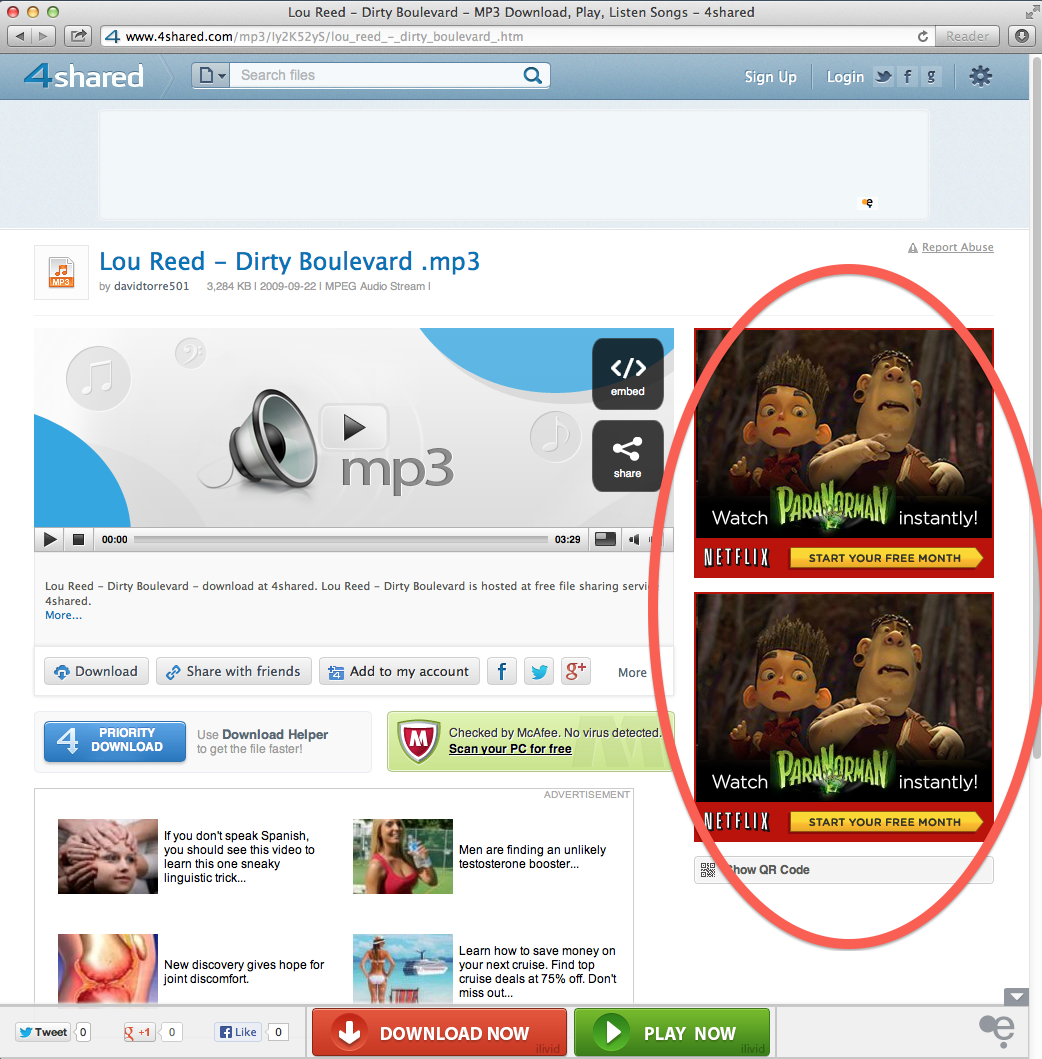
Lou Reed Exploited By American Express, AT&T, Chevrolet, Chili’s, Lysol, Pottery Barn, Vons, Domino’s Pizza, Netflix, Galaxy Nexus and Ron Jeremy!

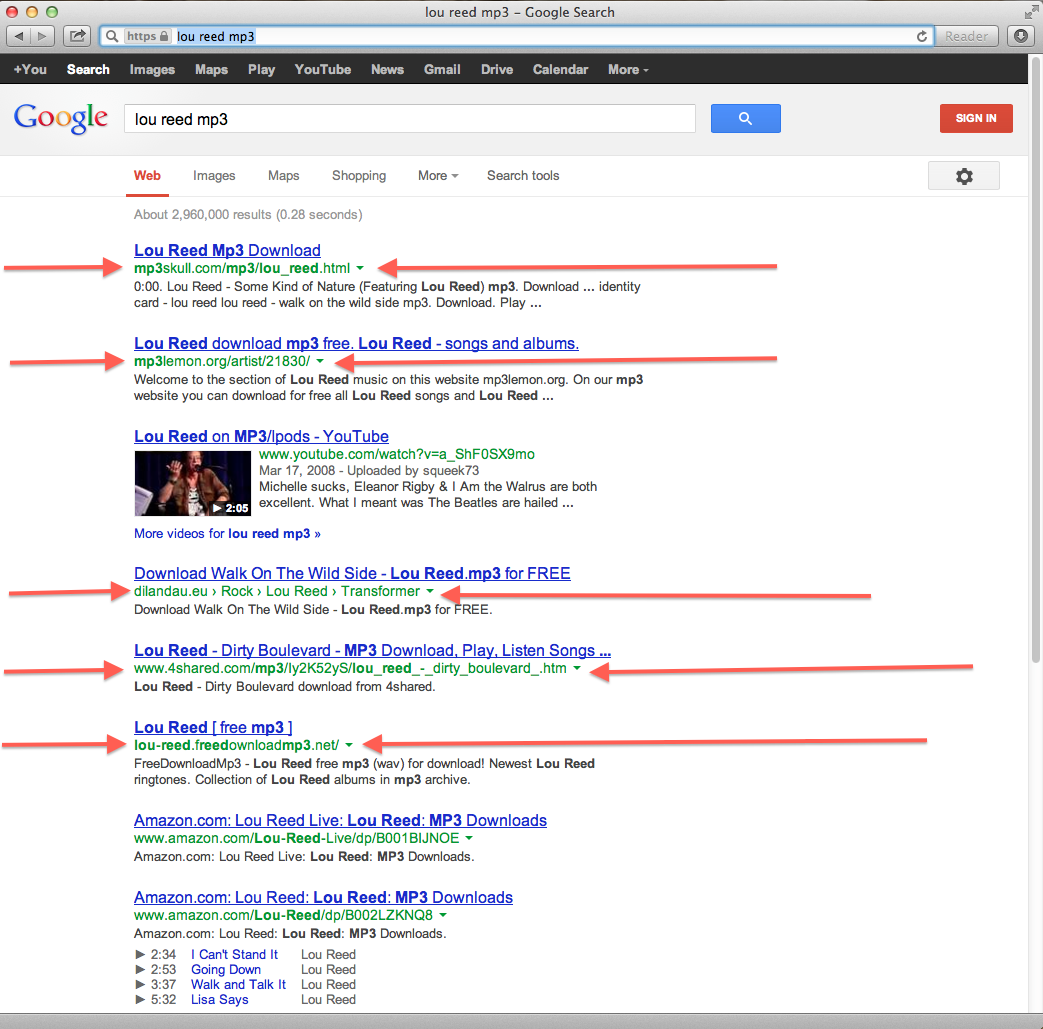
Here we go again… We can go to Google and within minutes search for an artist of stature such as Lou Reed and quickly find unlicensed and infringing internet businesses exploiting his life’s work illegally while paying the him nothing, zero, zilch, nadda, zippo.

There are many disappointing things about all of this, but the first is that when doing a simple Google search for “Lou Reed Mp3” the first five returns are for illegally operating and infringing sites.

This doesn’t count YouTube which may or may not be infringing, and may or may not actually be paying Lou from the advertising revenue (on this video, in the screen shots below for example). This is all the more troubling because we know that this can be easily filtered if there is the will to do so.

The ad networks have been highlighted in the fantastic work done by Jonathan Taplin in the USC Annenberg Innovation Lab’s Advertising Transparency Reports.

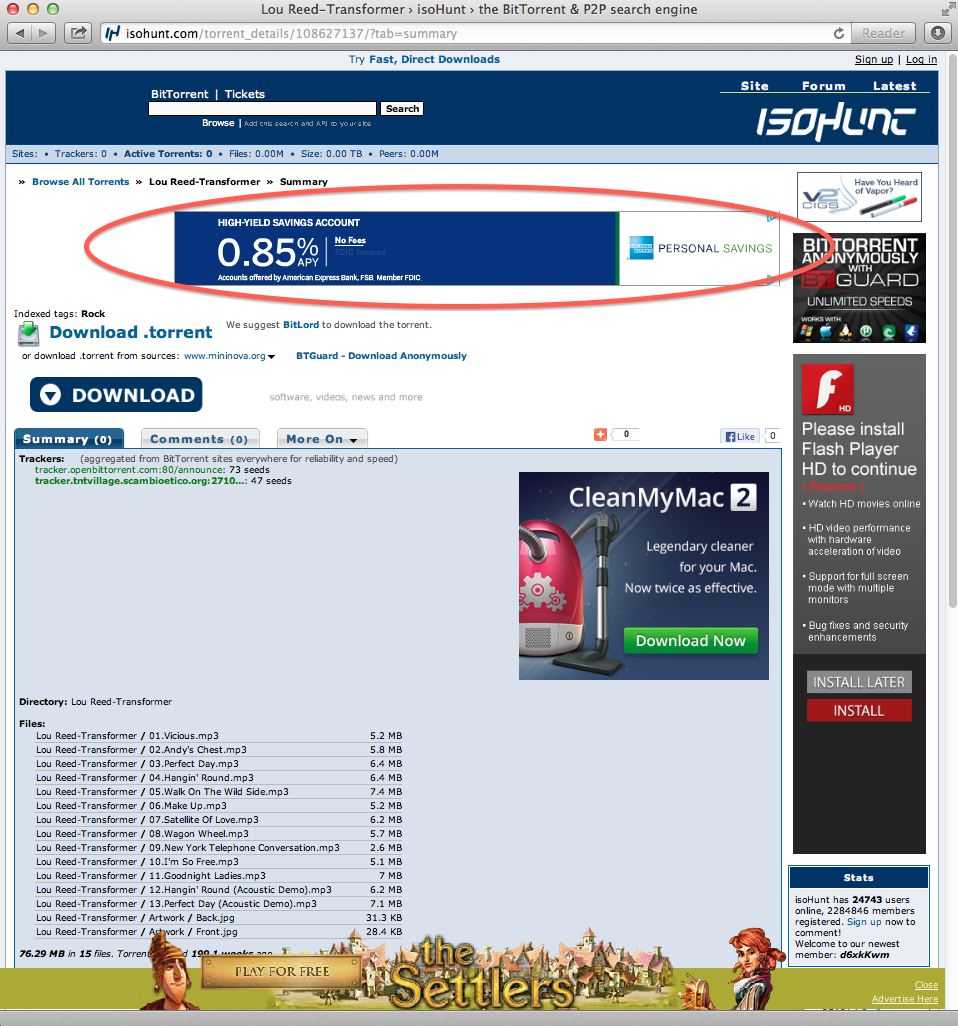
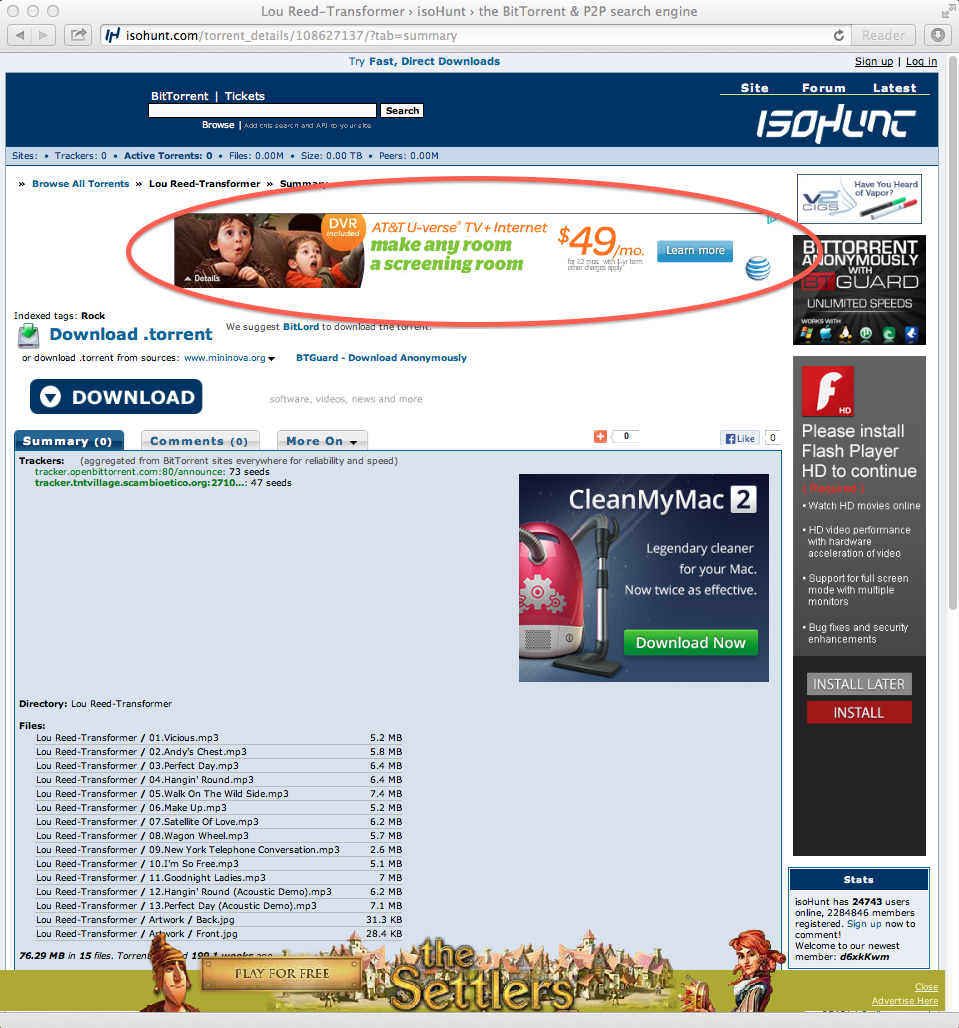
Perhaps most disappointing however is that major companies like American Express, AT&T Chevorlet, Chili’s, Lysol, Pottery Barn, Vons, Domino’s Pizza, Netflix and Galaxy Nexus are still supporting the this exploitation of artists with corporate advertising dollars. These companies not only supply the funding for these sites exploiting artists to exist, but perhaps even worse they add legitimacy to music piracy by lending their brand identity to it.

Clearly there is a lot of money being made in the distribution of music on the internet. Sadly not much of that money (or in this case NONE of it) is being distributed (or uhm, “shared”) with the artists themselves.

In any value chain where the artists work is being distributed and/or exploited for profit, the artist should be included in that value chain.

LouReedGoogleSearch

LouReedAMEX

LouReedATT

LouReedCHEVY LouReedCHILI'S LouReedLYSOL

LouReedPOTTERYBARN

LouReedGalaxyNexus

LouReedDOMINOS

LouReedNETFLIX

Not only do we see the major companies supporting these sites but there’s also the scam ads, rip offs and bogus services. And here’s where it gets even uglier…on sites like The Pirate Bay the work of Lou Reed is promoting adult (escort services?) and porn products like the one offered by Ron Jeremy below.

LouReedTPBPORN

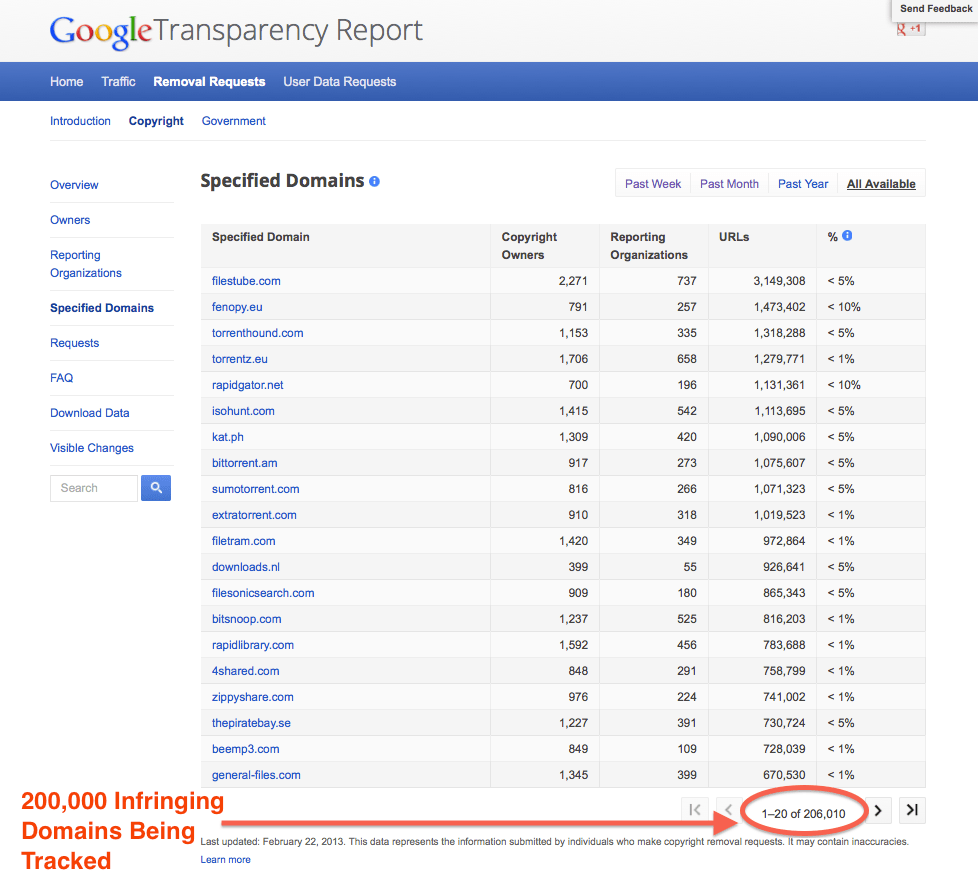
Let us not forget that the above examples represent a drop in the ocean of the over 200,000 infringing sites that Google alone is tracking.

See more Corporate Advertising Funded Exploitation of Artists:
Tom Waits * Neil Young * Aimee Mann * Neko Case * U2 * Ben Gibbard/Death Cab For Cutie * East Bay Ray / Dead Kennedy’s * Billy Corgan/Smashing Pumpkins

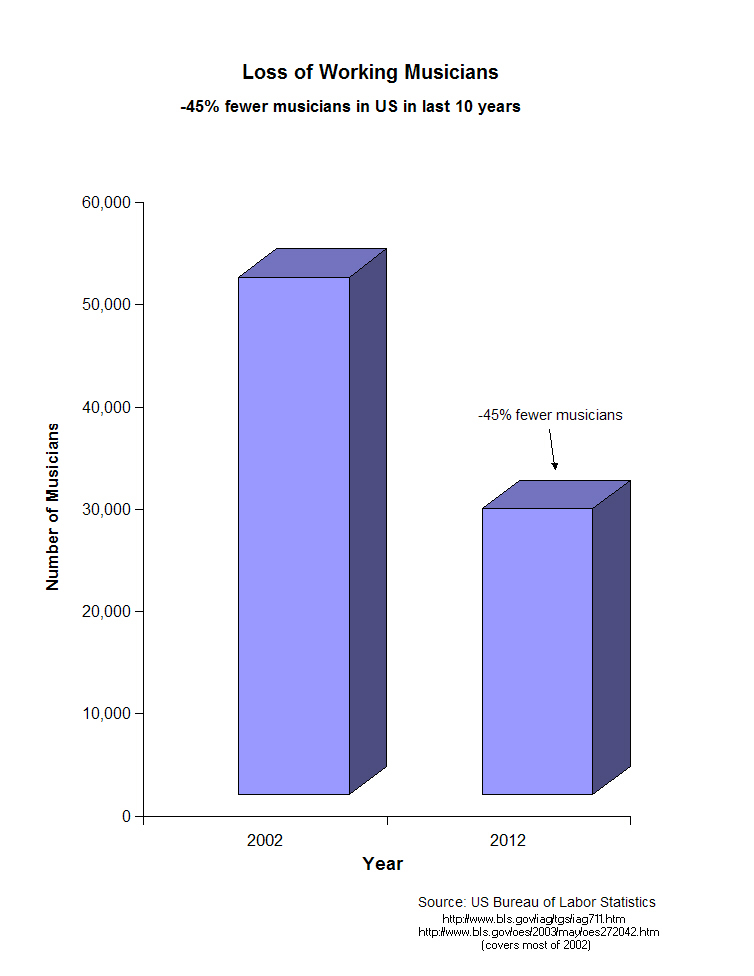
45% Fewer Professional Working Musicians Since 2002

The numbers are simple and staggering. The internet has not empowered musicians, it has exploited them.

-45% fewer working musicians-2

Of course there will always be people to nit pick the numbers, to argue and quibble about the Bureau Of Labor Statistics (BLS) methodology. It may be impossible to estimate the exact effect of unethical internet exploitation, but the trend is definite.

Those who debate the exact numbers are using that to delay action. Their job is similar to the commentators and ‘scientists’ funded by oil companies’ to deny global warming or say it needs “more study.”

The Bureau Of Labor Statistics is an agnostic government agency, not the RIAA.

It is also important to note that these cuts are made from the bottom up, not the top down. It is the struggling and middle class musician that gets hurt first. The difference between “making a living, making music” or not is represented in these numbers.

We should also like to point out that while musicians are making less money, those in Silicon Valley are making more money. Jaron Lanier says that “the internet destroyed the middle class” and we can see for ourselves that through the systematic process of removing the cost of labor from their offerings the elite few, are making more money, while everyone else is doing more of the work.