Who Speaks For The Internet? Do Artists have No Voice Online?

Does the internet speak for Artists? This doesn’t appear to the case. Who is the internet anyway?

We’re always kinda amazed when a singular entity or point of view “speaks for the internet” as if there is no social, economic, geographic or political diversity. Is the “Internet’ a demographic onto it’s own, and if so, what defines that demographic? Which begs the question, does “the internet” speak for you (as an artist, as an individual)? Though this entry is somewhat cute, it is also disturbing to see “the internet” as a single block with a Borg like hive mind… TechDirt reports:
http://www.techdirt.com/articles/20120718/18350719751/internet-wins-again-writer-gets-rapper-pitbull-exiled-to-alaskan-walmart.shtml

In another example we find it amusing when any ONE group alleges to speak for the internet. In the latest of what appears to be another round of Tech Funded astro turf and sock puppet groups enter the “Internet Association.” Why are we not surprised that Google, Facebook, Amazon and Ebay lead the list of members whose mandate is to represent “the interests of Internet companies.” Oh, ok, I get it now… the internet is a business and those who speak “for the internet” are really speaking for “corporate interests.” Phew, I’m glad we’re clear about that now… read on at Digital Media Wire:
http://www.dmwmedia.com/news/2012/07/26/new-advocacy-group-speaks-on-behalf-of-the-internet

What do you think? Does the tech lobby own the voice of the internet? Does no one but the internet and tech lobby have a say in the future of our online and digital lives?

Let us know what you think.

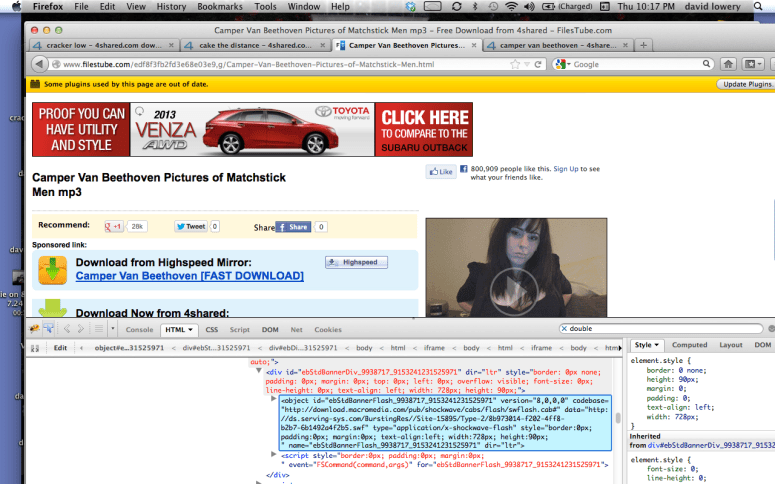
Uh Toyota… didn’t you get the memo? Why are you advertising on unauthorized sites that exploit my music?

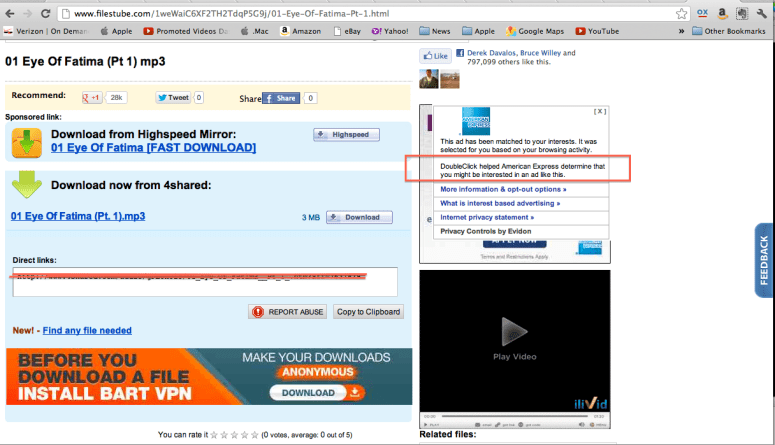
We recently ran a story about American Express advertising on Filestube, the site that infringes my copyrights while suggesting porno links next to my brand.  The American Express ad was served by Google’s DoubleClick ad network presumably at the behest of Ogilvy & Mather.

Yesterday a Google spokesperson told us that they had disabled “self serve” advertising for this site.  We weren’t really sure if that meant no more DoubleClick on FilesTube, or if it was some kind of semantic dodge. We’ve had a bunch of those dodging semantics on this issue.  However we monitored FilesTube yesterday and we see no sign of DoubleClick.   We applaud Google for taking this action!

Now not to look a gift horse in the mouth but we’d  love to see Google disable advertising for all those sites that they know are infringing copyright. The ones they mentioned in this handy press release. See it seems a little disingenuous to lower these sites rankings but at the same time to continue doing advertising business with them?  (And yes we are already monitoring advertising on these sites!!)

American Express is another matter. We have not heard back from American Express.  We’d love to hear what American Express has to say about their company helping to finance copyright infringement–not just mine, but all of the artists. We’d love to know how that happened and if they intend to continue advertising on these sites. Cause it doesn’t seem like a very good idea for an iconic American Brand.

Now  I’ve lost my handy pocket version of the RICO statute. People are always borrowing it!  But I’m almost certain that it says something about making plans to profit from copyright infringement as a RICO “predicate”.  I’m no lawyer but if I were a big company like American Express I wouldn’t want to get anywhere near a website  that even had the potential to get wrapped up in a RICO investigation.  Especially one based in Moldova.

Today FilesTube looks like a wasteland of QuiBid ads, MacKeeper popups and click shoot ads.  Pretty low grade.  Seems like it’s not just American Express which got the memo.

Toyota however did not get the memo!   So now it’s Toyota’s turn to answer the question?  Why  are you  advertising on this site?

Free Pussy Riot Now! This is what Real CENSORSHIP Looks Like.

This is what Real Censorship looks like for those who confuse easily. This is sad breaking news.

(Reuters) – Three women from Russian punk band Pussy Riot were sentenced to two years in jail on Friday for their protest against President Vladimir Putin in a church, an outcome supporters described as the Kremlin leader’s “personal revenge”.

http://www.reuters.com/article/2012/08/17/entertainment-us-russia-pussyriot-idUSBRE87F1E520120817

For those who remain confused about the difference between FREEDOM OF EXPRESSION and FREE BEER (er uhm music) please read this report from Amnesty International regarding  Pussy Riot and do take action.

Freedom of Expression is truly a right to be protected and preserved, as ARTISTS RIGHTS ARE HUMAN RIGHTS:

http://www.amnestyusa.org/news/news-item/russia-urged-to-release-pussy-riot-group-as-court-prolongs-detention

SIGN YOUR NAME:
http://amnestyusa.org/pussyriot

FREE PUSSY RIOT – GLOBAL PROTESTS:
http://freepussyriot.org/

Dear American Express: Stop advertising on sites that illegally exploit my music.

Dear American Express:

I write you today to ask why your ads are appearing on top rogue sites such as http://www.filestube.com? Sites like these are for-profit enterprise level organizations often with ties to organized crime. Sites like these appear to profit by illegally exploiting artists copyrights and monetizing their web traffic through advertising. Yes, advertising bought and paid for by American Express.

This is not an obscure site. Its Alexa ranking shows that it is one of the most popular websites in the world. I realize that you probably did not intend to have your ads appear on this site. However, I still hold you accountable for not properly auditing your advertising agency  Olgilvy & Mather  and your ad network DoubleClick. It should be noted that this site also links to some pretty prurient, possibly illegal videos; it’s entirely possible that I won’t be the only one holding you accountable.

I’m told that advertising agencies often hire companies to verify that their clients’ ads are being served to the approved websites. I am here to tell you that from what I have seen, these services are incompetent or worse. We have plenty of screenshots and source code showing major brands that surely use these services, advertising on illegal sites. (We’d be glad to share some of these screenshots and source code with you.)

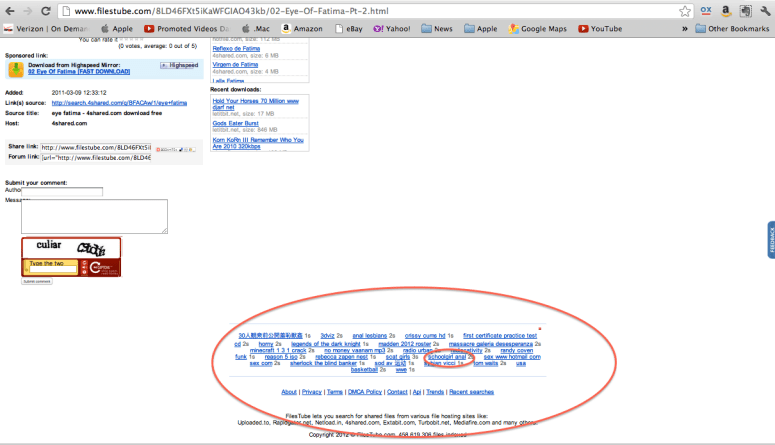
Here are screenshots that show an American Express advertisement on http://www.filestube.com apparently served by DoubleClick. This isn’t abstract to me–this page is a link to an illegal download of one of my songs. You should also note some of the other “suggested” searches on this same site are for some pretty nasty stuff.  I don’t like having my brand seen in these places and I’m sure you don’t either.

I suggest you do something I can’t do–audit everyone involved in this process . What’s the worse thing that could happen? Your brand not appearing on sketchy sites next to links to pornography?

Now that’s priceless.

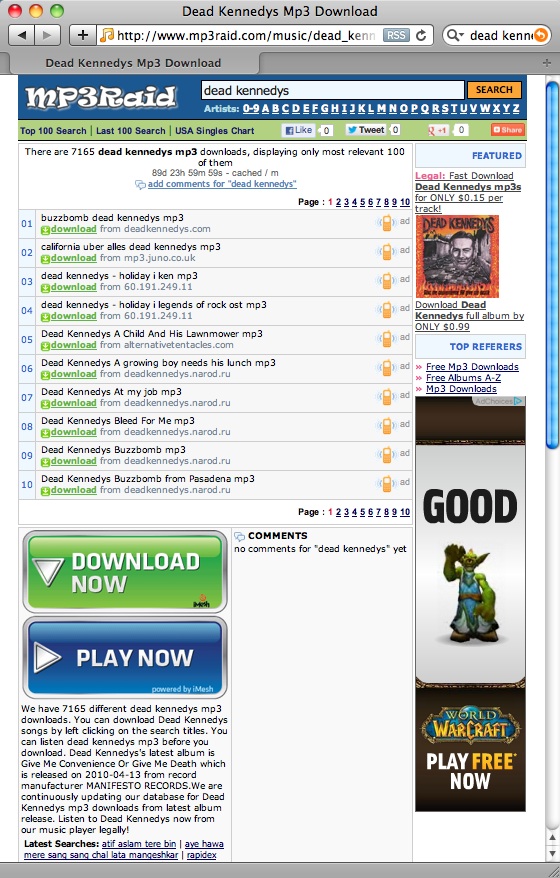
Dead Kennedys Exploited by Charter, Blizzard, @AlaskaAir and @1800Flowers

Music Piracy is not about fans sharing music. As we can see from the screen shots below this truly appears to be a mass scale, enterprise level, organized crime being funded by advertising dollars funded by major brands and companies laundered through online ad networks.

CORPORATE RELATIONS CONTACT INFO:

Alaska Airlines
Maria Koenig
maria.koenig@alaskaair.com

1-206-392-5101

1-800-Flowers
Elizabeth Castoro
ecastoro@1800flowers.com

1-516-237 4867

Mullets, Platform Shoes, Mack Daddies and Public Knowledge

Written by Chris Castle

“[W]hen it comes to the internet, there’s always someone in the middle, especially when it comes to handling the money.” Wired Magazine

Call me cynical, but I always keep an eye on Friday afternoon press releases–Friday afternoons are the great graveyard of bad news.

Google announced on August 10 (Friday) that they are doing something I understand they have been doing increasingly over the last few months: Pushing sites down in search results if Google gets a lot of takedown notices for those sites.  (This is a version of what Google promised to content licensors for Google Video–and of course no one believed them like you don’t believe a street drunk that they’re really going to buy food with your $5.)

Remember–Google has announced in its rather untransparent Transparency Report that it gets millions–millions–of takedown notices annually.  A Google lobbyist told the House Judiciary Committee that Google had “processed” five million DMCA notices as of November 2011 and had “processed” over three million in 2010.  (As usual, Google doesn’t use a good verb like “received” instead of the ambiguous “processed”.)

That five million number seems to have taken a big jump, and I doubt it suddenly happened in the last 10 months.  According to the Wall Street Journal, “The company on Friday said it is now receiving more than a million copyright notices related to its search engine per week.”  (When exactly is “now”? Before or after Google’s testimony to the Congress?)

That is on track for over 50 million notices a year for search alone.

Understand this–it is highly likely that every notice Google received was for a link on a page for which Google served–or profited from–at least one ad.  It’s also likely that those ads were from brands to which Google had promised that it would not serve ads on sites with infringing content.  And guess what happens when Google charges an advertiser for serving an ad in violation of its contract with an advertiser.

It’s called a rebate.

If even half of the notices for which Google has received a DMCA notice–bearing in mind that is a US-based remedy–also have advertising served by Google, then Google may well be on the hook for rebates for millions upon millions of ads for years and years and years.  You would never have thought about this rebate exposure if you relied on Google’s investor disclosures.  If Google stockholders want to blame anyone, they should take a close look at whoever did the legal analysis on setting up the Google advertising platform in the first place.  (Hint: He now works at Spotify.)

I would suggest that what is happening is the beginning of something along the lines of the market solution I have advocated  for a long time–a site-based rating system based on the raw number of DMCA notices received.  This would be along the lines of the restaurant rating system that LA County has in place and would provide a useful feedback to the Congress as well as consumers.  Disclose the information to the market and see what happens.  (Of course, Google doesn’t count DMCA notices sent to YouTube or the Blogger cesspools–but that’s another story addressed by Searchengineland.)

Actually giving effect to such a system would be a step toward ending the advertising supported organized crime that is a large part of the “hybrid economy” on the Internet.  Assuming Google really does what they say they will, this announcement may signal the beginning of the end of this dark fashion.

Not surprisingly, we see this press release from Public Knowledge:

For Immediate Release August 10, 2012

Public Knoweldge [sic] Raises Concerns About Changes to Google Search Algorithm

The following statement may be attributed to John Bergmayer, Senior Staff Attorney:

“It may make good business sense for Google to take extraordinary steps, far beyond what the law requires, to help the media companies it partners with.  That said, its plan to penalize sites that receive DMCA notices raises many questions.

“Sites may not know about, or have the ability to easily challenge, notices sent to Google.  And Google has set up a system that may be abused by bad faith actors who want to suppress their rivals and competitors.  Sites that host a lot of content, or are very popular, may receive a disproportionate number of notices (which are mere accusations of infringement) without being disproportionately infringing.  And user-generated content sites could be harmed by this change, even though the DMCA was structured to protect them.

“Google needs to make sure this change does not harm Internet users or the Internet ecosystem.”

This might be a faintly interesting comment except for one thing: it’s not.  According to Politico’s reporting:

Google said Friday it has received more than 4.3 million copyright removal requests in the past month — about 97 percent of which are valid. Many of the domains that are targets of the most requests are file-sharing and torrent sites. (emphasis mine)

It’s not surprising that Public Knowledge doesn’t get it.  Companies are increasingly aware that their valuable brands are being trashed by association with all manner of sketchy or outright illegal sites with advertising for illegal drugs, human trafficking, financial products and–yes, copyright infringement, but not just copyright infringement.  This at the same time as Google is trying to get into the mainstream entertainment business with Google Fiber and its various other products.
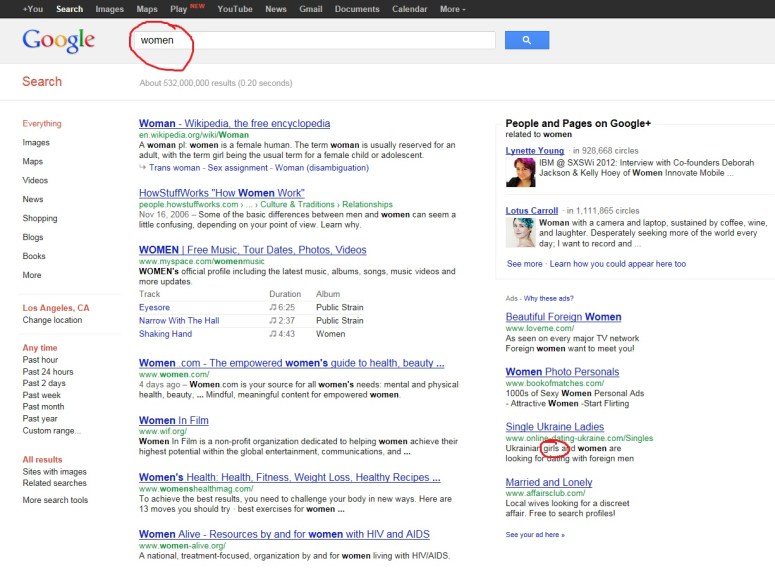
When fashion turns, it leaves all those people with mullets, platform shoes and superwide ties in the lurch.  A closet full of crap and a brain full of mush, weird hair and no dates.
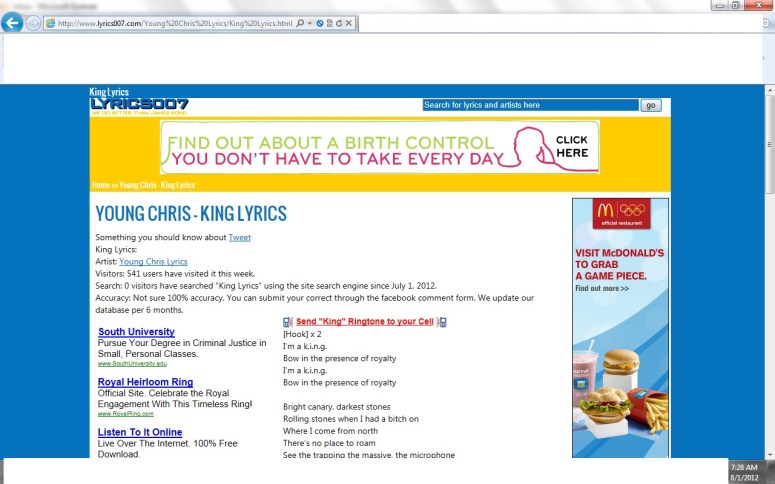
It’s the economics, stupid.  Who in their right mind could imagine that the world could continue to look this way?  Who would really think that many, many artists and media companies have anything but public and private contempt of the first order for Google?  An ontological level of distrust?

And who would really think that the brands that also court relationships with top athletes, musicians, artists and actors would continue to get ripped off by having their advertising served on millions of unsavory sites.  And guess what–when a big brand picks up the phone, they don’t want to hear about how Google is trying to bust another union or wants every link on every page to be adjudicated an infringer before they take action while reposting disabled links in near real time in the cesspool regions of Blogger.  Google’s excuses have nothing to do with the brands.  If brands don’t want their ads on site X, then the ads won’t go on site X.  End of discussion.  And Internet users will be the better for it.  Unless they’re trying to buy a bride or score some oxy.

And I have to believe that Attorney Bergmayer knows this.  He surely can’t be that sheltered.

Time for a haircut and spring cleaning.

Google offers the Mack Daddy special.
(A version of this post previously appeared on the Music Tech Policy blog)

Music Technology Policy

The Canadian bit torrent site and Geist darling Isohunt was found in 2010 to be a copyright infringer in no uncertain terms (probably because they are clearly a massive and intentional infringer).  According to the Financial Post:

…Canada’s most notorious file sharing Website is facing increasing legal pressure from legal authorities in the United States.

On Thursday, U.S. District Court Judge Stephen Wilson in Los Angeles issued a permanent enjoinment against Gary Fung, the Richmond, B.C. owner of Isohunt, one of the largest BitTorrent search engines on the Internet.

The ruling comes as a result of a lawsuit launched against the Canadian Website several years ago by the Motion Picture Association of America, the group which represents the biggest movie studios in Hollywood.

According to yesterday’s judgment, Judge Wilson decided to permanently enjoin Isohunt and the 27-year-old Mr. Fung from continuing to engage in copyright infringement because the MPAA “have…

View original post 389 more words

BMW’s Response to Ads for Its Brands on Pirate Sites

As they drive on–CUT TO:

 A PRETTY YOUNG WOMAN standing in the doorway of one of the Tudor houses. She is very pregnant. She knows instinctively who they are, and she dominates them in a genuinely proud female way. What I mean is, it’s her scene, and they’re suddenly embarrassed to be bothering her. 

                    WOODWARD

       To see Mr. Sloan. 

                    MRS. SLOAN

       He’s out.

              (There is a pause.  She studies them–)

       You’re those two from the Post, aren’t you.

              (they nod)

       I’ll tell him.

                     BERNSTEIN

              (as she’s about to step back inside)

       This must be a difficult time for the both of you.

                     MRS. SLOAN

       This is an honest house.

   From “All The President’s Men,” By William Goldman
____________________________________________

Several artists and rights holders wrote to BMW after reading the Trichordist “Wall of Shame” post about BMW’s ads being served on a pirate site that was illegally distributing the “Drive” soundtrack.  (See “Wall of Shame: BMW Willing to ‘Drive’ Without License.”)  I also wrote to BMW and outlined the key points to them, being:

1.  Someone in their house is in on it.  It may not be a BMW employee, but it is someone in the chain.

2.  Artists are told by companies like Google to “follow the money” through the labyrinth of advertising exchanges, advertising networks and real time bidding in between the brand and the pirate site.  I pointed out to BMW that we don’t need to know anything more than where the money starts–which is with the brand–and where it stops–which is with the pirate.  What happens in between is of no consequence to anyone but the brand (BMW in this case) that is no doubt being routinely lied to, and possibly to law enforcement.

3.  Brands like BMW are in a unique position to both (a) stop the money and (b) demand a rebate from their ad agency or ad network.  But then we are always told that none of these ad networks (or ad exchanges) profit from piracy because their contracts say they don’t.  Ah, well, in that case they must be innocent, right?  The demanding-the-rebate step is important because if they don’t do that, then the brand’s stockholders are being ripped off.  (Remember the stockholders?  They’re the ones who own the place.)

4.  What I suspect that artists really want is for the brands to step up to their responsibilities, especially the public companies, denounce these practices and stop funding the pirates.  This isn’t about following the money, it’s about stopping the money.  Following the money is a distraction, stopping the money is effective.

BMW was very responsive to my inquiry regarding the “Drive” campaign.  The company has informed me that due to readers of the Trichordist bringing the specific incident to their attention, they have not only stopped the ads from being served on the particular site in question but the incident triggered a complete audit of BMW’s digital buying practices.  This includes a review of their current agreements with all of their partner ad networks, as well as a review of their current verification provider (Double Verify in this case).  BMW are taking this seriously and seem to take a dim view of being used to undermine intellectual property rights.  Hopefully they will conduct their review with a critical eye for the obfuscation that we all believe is rampant.

So why is BMW’s response an important event?

Assuming they actually do what they say they will do–and I am willing to take them at their word until I have a reason to think otherwise–a very important brand in an nominally unrelated industry has recognized that they are being manipulated by a legion of thieves.  They didn’t try to blame the other guy, BMW took responsibility for their brand.

The government will do what it’s going to do to prosecute the criminals and the money launderers that infest online advertising.   That must be done, it is important work, but it will take time because although the wheels of justice do turn, they turn slowly.

This incident illustrates a few things we need to happen.

First of all, we need an immediate reaction from brands that are getting ripped off to make it stop.  Not just window dressing but actually stop.  I can’t say enough good things about BMW’s responsible reaction.  I hope others follow suit proactively.

The second thing we need to make clear is that if you work at an ad network, particularly a successful ad network, it is highly likely that you are associating yourself with bad guys.  I seriously doubt that any ad network or ad exchange is clean.  It is an occupation that is at best suspect and at worst a haven for money laundering.  It is also very likely that your paycheck includes profit from human misery from copyright infringement to mail order brides.

Finally, until such time as brands like BMW require third party certification and monitoring of sites where their ads appear in real or near real time, all ad networks and exchanges are suspect.

Why?  Because the ad inventory from illegal sites is just too vast for it not to affect everyone in the business.

So at least today, BMW has said it chooses to stand with the artists and not with the scumbags.  And that’s good for the artists.

Thanks to the artists and rights holders who wrote to BMW and to the Trichordist.  And special thanks to BMW for their quick reaction.  It’s a team effort, let’s keep it up.

Ultimately, the brands have to decide if they live in an honest house.

The Trichordist Random Reader Weekly News & Links Sun Aug 5

Grab the coffee!

Recent Posts:
* Kim Dotcom Parody Video Appears on YouTube
* Why Does YouTube Apologize to People who have Uploaded Illegally?
* A Kim Dotcom For All Seasons

Advocacy or Astroturf? Fortune reports on how Google and Facebook channel money to the EFF…
http://tech.fortune.cnn.com/2012/07/30/google-and-facebooks-new-tactic-in-the-tech-wars/

Essential reading, How Online Ad Networks support online piracy. This is business, Big Business. Music Tech Policy reports:
http://musictechpolicy.wordpress.com/2012/08/04/how-the-brands-and-ad-agencies-are-in-on-advertising-supported-piracy/

History repeats itself, Copyhype reports on James Frederick Willetts one of the OG content pirates, prosecuted in 1904:
http://www.copyhype.com/2012/08/enter-the-pirate-king/

Interesting, Demonoid under attack of DDOS strikes and domain redirection to virus software and malware, Torrent Freak reports:
http://torrentfreak.com/demonoid-starts-redirecting-to-ads-and-malware-120802/

Don’t believe the Hype, Facebook reports 83 million “Fake” users, and your band still can’t get 100,000 likes… Digital Music News reports:
http://www.digitalmusicnews.com/permalink/2012/120802facebook#2DUqPK9yMgrhd-3pomt14A

We’ve been disappointed by the delays of the “Six Strikes” ISP anti-piracy notification system going into effect, but the fact that it’s still upsetting to pirates warms our hearts. Torrent Freak reports:
http://torrentfreak.com/isp-six-strikes-anti-piracy-scheme-120803/

Spotify subscriber stats were released this week, but the question remains, will it scale? Digital Music News reports:
http://www.digitalmusicnews.com/permalink/2012/120731spotify#6orxX825bqy7BuKYOEPlpA

Ugh. The state of California bet almost 2% of it’s budget on the Facebook IPO hoping for easy money to help the states budget crisis. Guess what? Now it’s worse… Bloomberg reports:
http://mobile.bloomberg.com/news/2012-08-02/california-says-tax-revenue-at-risk-from-facebook-drop.html