The post is a very illuminating look inside the CRB process that many find mysterious, and also is a good demonstration of some of the concerns expressed by writers on The Trichordist on this subject. The three accomplished Nashville songwriters add some color commentary to the proceedings, particularly for those who may have been in high school or college during the 2006 CRB frozen mechanical rate setting that many think caused the problem.
The songwriters express a good deal of frustration and passion which is as understandable as the frustration and passion of those who feel that the CRB process is as inequitable, unwieldy and prohibitively expensive as these songwriters seem to be telling us that it is. Someone may want to do a point by point discussion of the many good issues that the three Nashville songwriters raise, but a couple things jump out.
First, they defend the streaming mechanical rate from the last CRB. No one criticized the streaming mechanical rate in the last CRB proceeding that is currently under appeal. If the rate survives the appeal and reworking at the CRB, and makes its way through the MLC, every songwriter should expect to see the promised increase in their streaming royalty check. That would be a great thing and everyone no doubt thanks everyone involved for the effort. The topic, though, was primarily the frozen mechanical not the streaming mechanical.
Also, who paid the $20 million cost for “our side” to participate in the CRB that the three Nashville songwriters refer to? Surely the publishers did not ask the songwriters to open up their own pocketbooks, even though each has been extraordinarily successful in their genre.
We couldn’t find any discussion by the three Nashville songwriters of what terms are in the private settlements referred to in their own filing. The point that many have made about public commentary about the private settlements is that the Copyright Royalty Judges can decide on who is “bound” by the settlements and that it is the motion at issue as filed that gets commented on unless the Judges ask that it be supplemented. Commenters said the “who” should be broadly construed. They also said that the “what” is crucially important. Many have made the point that public commentary about the settlements requires that all the terms of the settlements are made public. Until made public, the terms are private. The only thing we know about the settlements from the three Nashville songwriters’ own CRB filing is the terms that are disclosed—frozen rates. Even though their filing refers to settlements, we still don’t know anything further. Maybe we will in coming days. Any additional terms that exist may not be remarkable, but they might be. Presumably this is the kind of thing that important people in the negotiation process would know due to their special position. We just don’t know.
The three Nashville songwriters apparently believed they had a mandate to make decisions about what was worth pursuing in the CRB. If they did have that belief, presumably they base that belief on some kind of vote. Since their CRB settlement impacts every songwriter in the world, that’s the magnitude of decision that some might think is deserving of a vote of their membership, not just a board vote if that’s what happened—we just don’t know. It’s a real privilege to be in the position to make those kinds of decisions, so you might well think that it’s the kind of thing you wouldn’t want to take on by yourself or with only the approval of a limited number of people. But maybe not.
Be sure to read this post and thank these songwriters for their service to the community. They certainly deserve it.
Readers should now better understand the century of sad history for U.S. mechanical royalties that cast a long commercial shadow around the world. This history explains why extending the freeze on these mechanical rates in the current CRB proceeding (“Phonorecords IV”) actually undermines the credibility of the Copyright Royalty Board if not the entire rate setting process. The CRB’s future is a detailed topic for another day that will come soon, but there are many concrete action points raised this week for argument in Phonorecords IV today–if the parties and the judges are motivated to reach out to songwriters.
Let’s synthesize some of these points and then consider what the new royalty rates on physical and downloads ought to be.
1. Full Disclosure of Side Deals: Commenters were united on disclosure. Note that all we have to go on is a proposed settlement motion about two side deals and a draft regulation, not copies of the actual deals. The motion acknowledges both a settlement agreement and a side deal of some kind that is additional consideration for the frozen rates and mentions late fees (which can be substantial payments). The terms of the side deal are unknown; however, the insider motion makes it clear that the side deal is additional consideration for the frozen rate.
It would not be the first time that a single or small group negotiated a nonrecoupable payment or other form of special payment to step up the nominal royalty rate to the insiders in consideration for a low actual royalty rate that could be applied to non-parties. The rate—but not the side deal–would apply to all. (See DMX.)
In other words, if I ask you to take a frozen rate that I will apply to everyone but you, and I pay you an additional $100 plus the frozen rate, then your nominal rate is the frozen per unit rate plus the $100, not the frozen rate alone. Others get the frozen rate only. I benefit because I pay others less, and you benefit because I pay you more. Secret deals compound the anomaly.
This is another reason why the CRJs should both require public disclosure of the actual settlement agreement plus the side deal without redactions and either cabin the effects of the rate to the parties or require the payment of any additional consideration to everyone affected by the frozen rate. Or just increase the rate and nullify the application of the side deal.
It is within the discretion of the Copyright Royalty Judges to open the insider’s frozen mechanical private settlement to public comment. That discretion should be exercised liberally so that the CRJs don’t just authorize comments by the insider participants in public, but also authorize public comments by the general public on the insiders work product. Benefits should flow to the public–the CRB doesn’t administer loyalty points for membership affinity programs, they set mechanical royalty rates for all songwriters in the world.
2. Streaming Royalty Backfire: If you want to argue that there is an inherent value in songs as I do, I don’t think freezing any rates for 20 years gets you there. Because there is no logical explanation for why the industry negotiators freeze the rates at 9.1¢ for another five years, the entire process for setting streaming mechanical rates starts to look transactional. In the transactional model, increased streaming mechanicals is ultimately justified by who is paying. When the labels are paying, they want the rate frozen, so why wouldn’t the services use the same argument on the streaming rates, gooses and ganders being what they are? If a song has inherent value—which I firmly believe—it has that value for everyone. Given the billions that are being made from music, songwriters deserve a bigger piece of that cash and an equal say about how it is divided.
3. Controlled Compositions Canard: Controlled comp clauses are a freeze; they don’t justify another freeze. The typical controlled compositions clause in a record deal ties control over an artist’s recordings to control over the price of an artist’s songwriting (and often ties control over recordings to control over the price for the artist’s non-controlled co-writers). This business practice started when rates began to increase after the 1976 revision to the U.S. Copyright Act. These provisions do not set rates and expressly refer to a statutory rate outside of the contract which was anticipated to increase over time—as it did up until 2006. Controlled comp reduces the rate for artist songwriters but many publishers of non-controlled writers will not accept these terms. So songwriters who are subject to controlled comp want their statutory rate to be as high as possible so that after discounts they make more.
Because controlled comp clauses are hated, negotiations usually result in mechanical escalations, no configuration reductions, later or no rate fixing dates, payment on free goods and 100% of net sales, a host of issues that drag the controlled comp rates back to the pure statutory rate. Failing to increase the statutory rate is like freezing rate reductions into the law on top of the other controlled comp rate freezes—a double whammy.
It must be said that controlled compositions clauses are increasingly disfavored and typically don’t apply to downloads at all. If controlled comp is such an important downward trend, then why not join BMG’s campaign against the practice? If you are going to compel songwriters to take a freeze, then the exchange should be relief from controlled compositions altogether, not to double down.
4. Physical and Downloads are Meaningful Revenue: Let it not be said that these are not important revenue streams. [Ironically, Taylor Swift just broke the record for first week vinyl sales on her Evermore album.] As we heard repeatedly from actual songwriters and independent publishers, the revenue streams at issue in the insider motion are meaningful to them. Even so, there are still roughly 344.8 million units of physical and downloads in 2020 accounting for approximately $1,741.5 billion of label revenue on an industry-wide basis. And that’s just the U.S. Remember—units “made and distributed” are what matter for physical and download mechanicals, not “stream share”. If you don’t think the publishing revenue is “meaningful” isn’t that an argument for raising the rates?
U.S. Recorded Music Sales Volumes and Revenue by Format (Physical and Downloads) 2020
5. Inflation is Killing Songwriters: The frozen mechanical is not adjusted for increases in the cost of living, therefore the buying power of 9.1¢ in 2006 when that rate was first established is about 75% of 9.1¢ in 2021 dollars.
6. Willing Buyer/Willing Seller Standard Needs Correction: When the willing buyer and the willing seller are the same person (at the group level), the concept does not properly approximate a free market rate under Section 115. Because both buyers and sellers at one end of the market are overrepresented in the proposed settlement, the frozen rates do not properly reflect the entire market. At a minimum, the CRJs should not apply the frozen rate to anyone other than parties to the private settlement. The CRJs are free to set higher rates for non-parties.
7. Proper Rates: While the frozen rate is unacceptable, grossing up the frozen rate for inflation at this late date is an easily anticipated huge jump in royalty costs. That jump, frankly, is brought on solely because of the long-term freeze in the rate when cost of living adjustments were not built in. The inflation adjusted rate would be approximately 12¢ (according to the Bureau of Labor Statistics Inflation Calculator https://www.bls.gov/data/inflation_calculator.htm).
Even though entirely justified, there will be a great wringing of hands and rending of garments from the labels if the inflation adjustment is recognized. In fairness, just like the value of physical and downloads differ for independent publishers, the impact of an industry-wide true-up type rate change would also likely affect independent labels differently, too. So fight that urge to say cry me a river.
Therefore, it seems that songwriters may have to get comfortable with the concept of a rate change that is less than an inflation true up, but more than 9.1¢. That rate could of course increase in the out-years of Phonorecords IV. Otherwise, 9.1¢ will become the new 2¢–it’s already nearly halfway there. The only thing inherent in extending the frozen mechanicals approach is that it inherently devalues the song just at the tipping point.
Songwriters do not want the mechanical royalty rate for physical products and digital downloads to remain frozen through 2027 due to private party settlements without our input. Songwriters deserve transparency and a seat at the table. @thetrichordisthttps://t.co/rCJ8oYqhsW
— Austin Texas Musicians (@atxmusicians) May 27, 2021
Senator Richard Blumenthal 90 State House Square Hartford, CT 06103
Senator Chris Murphy Colt Gateway 120 Huyshope Avenue, Suite 401 Hartford, CT 06106
Hon. C.J. Jesse M. Feder Hon. J. David R. Strickler Hon. J. Steve Ruwe
US Copyright Royalty Board 101 Independence Ave SE / P.O. Box 70977 Washington, DC 20024-0977
Senators Blumenthal and Murphy, and Honorable Judges of the Copyright Royalty Board:
I am a Connecticut resident, attorney, and law professor, and the views expressed here are mine, and not necessarily those of any local or state bar association, or any employer. I am an active participant in politics local, state, and federal. I am a registered non-affiliate in New Haven. And I need your attention for about ten minutes.
On May 18, 2021, a “Notice of Settlement in Principle” was filed by parties to the proceedings before the Copyright Royalty Board about its Determination of Royalty Rates and Terms for Making and Distributing Phonorecords.[1] That Notice was followed on May 25, 2021 by a Motion To Adopt Settlement Of Statutory Royalty Rates And Terms For Subpart B Configurations, filed by the NMPA, Sony, Universal and Warner and NSAI.[2] I write today in reference to that proposed settlement.
This settlement outlines the terms by which mechanical royalty[3] and download rates will remain locked at the current rate of 9.1¢. The same almost-dime for each copy of a work manufactured and distributed. The same almost-dime that it’s generated since 2006. A paltry sum to be certain but a far cry from the 2¢ royalty rate mechanical royalties imposed for the better part of seventy years.[4] Starting in 1977, Congress mandated that the mechanical royalty be increased incrementally until 2006 when the rate of 9.1¢ was achieved. And there it has remained.
This proposed private settlement would extend that 2006 freeze until 2027.
In March 2017, a precursor to Phonorecords IV found the Copyright Royalty Board ruling that interactive streaming services must pay more in mechanical royalties over the course of the next five years.[5] Surely more than a simple inflation adjustment, but nonetheless a sign that the CRB thought costs and values needed to become more aligned for streaming—which is paid by the streaming platforms unlike the physical and download mechanical which is paid by the record companies. Now comes Phonorecords IV, and a proposed settlement from the major publishers and their affiliated major labels. Before this proposal can be accepted by the CRB, I asked for the simple opportunity of public comment.
As you well know, in nearly all other administrative proceedings public comment is an integral and indispensable component of the process. To see that the CRB may allow for a public comment period by members of the public beyond the participants in the proceeding or parties to the settlement is a step in the right direction, and my hope is that this development will be broadcast far and wide so that the CRB, and in turn, Congress, may get a full picture of the status of mechanical royalty rates, especially from those that are historically underrepresented. “Public comments” should be comments by the public and made in public; not comments by the participants made publicly.
Let me back up and state that I have a great deal of respect and admiration for the work put into the landmark copyright legislation that came about at the end of 2018, and for those that made it happen. So too for the members of the CRB, and in this space, I thank those Judges for taking the time to read a letter from an adjunct law professor with no economic stake in the outcome, but rather an interest in, and duty of, candor to the Court.
In an age of unprecedented political polarization, the consensus built in the passage of the Music Modernization Act showed that politics aside, when it’s time to make new laws that fix old problems, Congress can still get the job done. I know well the sweat-equity poured into its creation by the very same people that propose this settlement. I have found myself on the same side fighting the same fight as them many times. They have proven capable of navigating your halls and taking on those that would seek to devalue (or worse) the work of the songwriter, and musician. In this instance, I would like to see them fight the fight yet again. recognize the reasoning and intention behind the proposed settlement. Comment by the public made publicly is a way for that to happen.[6]
Our state, Connecticut, has a long and storied history with music. In 1956, The Five Satins recorded what would go on to be one of the most recognizable and beloved doo-wop songs in history. “In The Still of the Night” was ranked 90th in Rolling Stone’s list of Top 500 songs of all time.[7] Five years later, the 1961 Indian Neck Folk Festival was where a young Bob Dylan’s first recorded performance.[8] That young man turned into a fine songwriter, as evidenced by the 4,000+ covers recorded of his works, and his record sale last year of his publishing royalties.[9] And no one will forget Jim Morrison’s arrest at the old New Haven Arena, December 1967. Ticket price: $5.00. Connecticut is home to more than 14,000 registered songwriters, only a small percentage of whom have engaged a music publisher. These writers are considered “self-publishing”, but the reality is, they have no publishing. Ironically, it is these independent writers who rely disproportionately on physical sales, direct downloads, and Bandcamp Fridays.[10]
A year ago, I made the unilateral decision to pivot our consulting company, Ecco Artist Services, to purposefully work with, and advocate for, the traditionally and historically underserved and underrepresented in the music industry. Freezing the growth of rates for physical and digital sales that are already digging out of the residual effects of 70 years at 2¢ strikes at the heart of that community’s ability to generate revenues from their music.
Sadly, rate freezes for mechanical royalties are nothing new. I’ll tell you what has not been frozen since 2006: the cost of living. According to the U.S. Bureau of Labor Statistics, prices for rent of primary residence were 53.49% higher in 2021 versus 2006 (a $534.91 difference in value). Between 2006 and 2021 rent experienced an average inflation rate of 2.90% per year. This rate of change indicates significant inflation. In other words, rent costing $1,000 in the year 2006 would cost $1,534.91 in 2021 for an equivalent purchase. Compared to the overall inflation rate of 1.82% during this same period, inflation for rent was higher.[11] Milk? How about 19.48%.[12] Childcare? In Connecticut? Senators, you don’t even want to know.[13]
Now, it’s no secret the trade association for the US music publishing industry is funded by its music publisher members, and of course, as a professional trade organization, the association is bound to represent those members. Publishers have long enjoyed a better reputation amongst industry insiders than “the labels,” and for good reason, but the fact remains that writers signed to publishing deals are in contractual relationships with their publishers, and their interests are not always aligned. Such is the state of play in a consumer-driven marketplace, and especially now that publishers and labels are consolidating their businesses under the same tents.
Unfortunately, the independent songwriter lacks the resources to participate fully in the process, and although a signed songwriter may believe her interests and those of her publisher are one and the same, they may not always be. It would seem the economic analysis the publishers undertook in deciding the mechanical royalty was not worth the heavy cost and burden of fighting is the same calculus the writers need not do: they couldn’t afford the fight no matter the decision.
But I ask: if the mechanical royalty covered by the proposed settlement is a dying source of revenue, why would the fight be so onerous? By the RIAA’s 2020 year-end statistics, physical sales and downloads accounted for 15% of the music marketplace.[14] That’s a $12.2 billion marketplace, and that 15% amounts to $1.8 billion. Now, I know attorney’s fees can be exorbitant in regulatory matters, but I would think we could find a firm willing to take the case for less than that. As for sales, in 2020, 27.5 million vinyl LPs were sold in the United States, up 46-percent compared to 2019 and more than 30-fold compared to 2006 when the vinyl comeback began,[15] while some 31.6 million CD albums were sold.[16]
Median wages in the US, adjusted for inflation, have declined 9% for the American worker. Meanwhile, since the 9.1¢ rate freeze, the cost of living has gone up 31%, according to the American Institute of Economic Research[17]. The 2006 inflation rate was 3.23%. The current year-over-year inflation rate (2020 to 2021) is now 4.16%[18], which is all really to say, simply, an accurate cost-of-living increase would have a mechanical rate of at least 12¢ per sale. Twelve cents! You would think that would be an easy sell, but the streaming rates are fractions of that rate. The reality is a song would need to be streamed 250 times to generate enough money to buy it from iTunes. As my dear friend Abby North put it, the royalty amount for the digital stream of a song is a micro penny.[19]
An adjustment for inflation should require no briefing, let alone argument. If songwriters were employees, this would simply be line-item budgeted as a “cost-of-living adjustment.” If songwriters were unionized it would be a rounding error, but I digress.
A period and opportunity for the general public to comment publicly and on the record in these and other proceedings before the presentation to the CRB of this proposed settlement is in the interest of all involved. Even if it is true that the mechanical revenue is a lost and dying stream, by the RIAA’s own figures, there stand to be billions of dollars at stake. An opportunity to be heard, without having to sign with a publisher and then hope that publisher takes up the fight you want, maybe that’s all the independent writers of the industry—and, indeed, the world–need to be able to win.
In addition to a meaningful public comment period, and an inflation-adjusted cost-of-living update to the mechanical statutory royalty rate at issue, I’d ask that this letter be made a part of the Phonorecords IV public record and that you review the best practices of the Copyright Royalty Board. Not only so that those independent, self-published writers affected by its decision may voice their concerns through public comments that the CRB considers before it makes its final decision, but so that those of us that speak without financial stake in the matter can provide perspective from a policy and legal perspective.
I want to close by thanking the Board, and Copyright Office, the Judiciary Committee and the Intellectual Property Subcommittee, and the Copyright Royalty Board for their continued attention to the universe of copyright, licensing royalties, and the economy that exists therein. Lord knows there are lots of fires to be put out all over and the time spent and thought given to these policies is acknowledged and appreciated.
Kevin M. Casini New Haven, CT
Attorney-at-Law, Adj. Professor, Quinnipiac Univ. School of Law
[3] The term “mechanical royalty” dates back to the 1909 Copyright Law when Congress deemed it necessary to pay a music publishing company for the right to mechanically reproduce a musical composition on a player-piano roll. As a result, music publishers began issuing “mechanical licenses”, and collecting mechanical royalties from piano-roll manufacturers. The times, and the tech, changed, but the name stuck.
[6] The CRB arguably has the statutory obligation to publish the Motion in the Federal Register for public comment, but may have the discretion to construe those commenting to the participants in the proceeding and the parties to the settlement. 17 U.S.C. § 801(b)(7). It would be unfortunate if the Judges narrowly construed that rule to the exclusion of the general public, unlike the Copyright Office regulatory practice.
[7] “Rolling Stone’s 500 Greatest Songs of All Time”. Rolling Stone. April 2010.
[13] According to the U.S. Bureau of Labor Statistics, prices for childcare and nursery school were 52.57% higher in 2021 versus 2006 (a $5,256.98 difference in value).
Between 2006 and 2021: Childcare and nursery school experienced an average inflation rate of 2.86% per year. This rate of change indicates significant inflation. In other words, childcare and nursery school costing $10,000 in the year 2006 would cost $15,256.98 in 2021 for an equivalent tuition. Compared to the overall inflation rate of 1.82% during this same period, inflation for childcare and nursery school was higher.
[Editor T says pay close attention to Gwen Seale’s analysis of the side deal.]
Gwendolyn Seale, Esq.
May 26, 2021
The Hon. John Cornyn III 517 Hart Senate Office Building Washington, DC 20510
The Hon. Ted Cruz Russell Senate Office Building 127A Washington, DC 20510
SENT VIA EMAIL
Re: Potential Settlement of Mechanical Royalty Rates in CRB Phonorecords IV
Dear Senators Cornyn and Cruz,
I am a music lawyer in Austin, Texas, and represent songwriters located throughout our great state. The views I express here are my own and are not on behalf of any of my clients or the State Bar of Texas.
I am contacting you as I am deeply troubled by the private party settlement of mechanical royalty rates pertaining to physical product and digital sales in the “Determination of Royalty Rates and Terms for Making and Distributing Phonorecords (Phonorecords IV)” currently pending before the Copyright Royalty Board (CRB).
Background / Historical Context
With the constant consumption of music occurring via the streaming services, many do not realize the degree of revenue generated from the sale of physical products (vinyl, CDs) and digital downloads in the United States. Notwithstanding the devastating pandemic which forced the majority of workers to pivot, and resulted in at the very least the temporary shutdown of a significant amount of businesses, revenue from the physical music sales amounted to $1.13 billion dollars in 2020 (YEAR-END 2020 RIAA REVENUE STATISTICS). Additionally, vinyl record sales increased by more than 28% from 2019 to 2020. Physical and downloads accounted for 15% of worldwide revenue for U.S. recorded music in 2020.
The current statutory mechanical royalty rate pertaining to physical products and digital downloads in the United States is 9.1 cents per song per record sold and has been so since 2006. To give some historical context, this statutory rate was frozen at 2¢ from 1909 to 1978. Congress mandated that the rate be incrementally increased beginning in 1978, following the passage of the 1976 Copyright Act, from 2¢ to the 9.1 ¢ minimum rate in 2006. Prior to the passage of the 1976 Copyright Act, this rate had been frozen at 2 cents for 69 years.
The participants in this current private party settlement request that the 9.1¢ rate remain frozen through 2027, which results in this rate remaining the same for over 20 years. Note that the mechanical royalties pertaining to physical product sales are paid to songwriters and publishers by record companies and not by streaming services. The Big 3 record companies also own the Big 3 music publishers who are the major members of the National Music Publishers Association, so the licensee record companies literally take the money for mechanicals out of one pocket and place it in the other—songs and recordings are tied together.
Mechanical royalties from physical product sales are a crucial revenue stream for independent songwriters – for Texan songwriters. In contrast, the mechanical royalty “rate” pertaining to streams on Spotify Premium during April 2020 amounted to $0.00059 per stream (according to the Audiam U.S. Mechanical rate calculator: https://resources.audiam.com/rates/ ). The “rate” for the ad-supported tier of Spotify was even lower. Note that the mechanical royalties pertaining to interactive streaming are paid by the streaming services. The streaming services are not parties to the private party settlement.
The Private Party Settlement
I find it important to provide the aforementioned context because there is a serious lack of education regarding copyright, the various royalty streams pertaining to music and the innerworkings of the music industry. And if you happen to be a songwriter, particularly a songwriter outside of the Los Angeles, New York or Nashville hubs, this education gap expands exponentially. So now, let us draw our attention to this private party settlement.
The initial area of my concern pertains to the participants requesting the settlement. On one side, you have the major record companies, consisting of Universal Music Group, Sony Music Entertainment and Warner Music Group. On the other side, you have one trade organization, the NMPA, which represents certain music publishers, including publishing company affiliates of the major record companies (Universal Music Publishing Group, Sony Music Publishing, and Warner/Chappell Music Publishing) which companies have representation on the board of the NMPA. You also have another trade organization, the Nashville Songwriters Association International, which represents a fragment of the songwriter community. This unequivocally presents a conflict of interest: how can songwriters be adequately represented when one of the two parties to the settlement, which are claims to advocate for the songwriters and publishers, is comprised of affiliated major record companies on the opposite side of the negotiation? TheTrichordist asked the question—if the willing buyer and the willing seller are the same person, is that a free market?
The settlement participants stated the following in MOTION TO ADOPT SETTLEMENT OF STATUTORY ROYALTY RATES AND TERMS FOR SUBPART B CONFIGURATIONS, Docket No. 21-CRB-0001-PR (2023–2027) at 4:
“And because the Settlement represents the consensus of buyers and sellers representing the vast majority of the market for “mechanical” rights for [physical, permanent downloads, ringtones and music bundles]…”
This settlement does not represent the consensus of songwriters; this settlement represents “buyers” and “sellers” who are one in the same at the corporate level.
Songwriters should have been included in these negotiations from the outset. But, at the bare minimum, parties to transactions involving the fate of this critical revenue stream for songwriters should be transparent to the people they purport to represent. Neither of the foregoing are occurring. Only after the circulation of a rash of articles concerning this issue did the settlement participants respectfully request that the CRB post the royalty rates and terms of the settlement in the Federal Register for public notice and comment.
There are plenty of organizations that represent our country’s songwriters which could provide feedback and suggestions without the presence of conflict, and it is simply disingenuous to ask those parties for their comments following a settlement being presented to the CRB for adoption as a done deal. Any public comments are and will be utterly predictable; songwriter advocates simply ask for an increase in this mechanical rate. Songwriter advocates foresee history repeating itself, with an increase in this rate occurring sometime around this country’s Tri-centennial.
Transparency equates to honesty, and on the flip side of the coin, a lack of transparency leads to distrust. As such, along with providing my concerns about the nature of this settlement, and the dire need for honesty in connection with settlements that affect every Texan songwriter and every songwriter in this country, I request that you press the CRB to request that the settlement parties disclose not only the actual settlement agreement (not just the regulations giving effect to the settlement) but also the “Memorandum of Understanding” referenced in MOTION TO ADOPT SETTLEMENT OF STATUTORY ROYALTY RATES AND TERMS FOR SUBPART B CONFIGURATIONS, Docket No. 21-CRB-0001-PR (2023–2027) at 3.
“Concurrent with the settlement, the Joint Record Company Participants and NMPA have separately entered into a memorandum of understanding addressing certain negotiated licensing processes and late fee waivers.”
If this “Memorandum of Understanding” was irrelevant to this settlement, the language would not have been included in this motion filed by the settlement participants. Setting aside the broadly drafted “certain negotiated licensing processes,” the phrase “late fee waivers” is exceptionally concerning, given the aforementioned context. It sounds like money is changing hands and it is consideration for the frozen mechanical—but only for a select few who were invited to the multi-tiered negotiation.
Thank you for your time and I am more than happy to discuss these issues with you anytime.
While the publishers and songwriters are generally of one mind when it comes to the streaming mechanical rates, plenty of organisations representing songwriters in the US and beyond are not happy with what the NMPA and NSAI are proposing regarding the rate for discs and downloads.
That is right on because you don’t have to be against the streaming royalty to be against frozen mechanicals on physical and downloads. Why? What David said:
No big deal? Who buys physical? Or downloads. Well if you are in the indie world it’s often a significant part of your revenue. And while mechanical rates paid to songwriters by record labels have been frozen for 13 years , the list price on vinyl has skyrocketed…
It also looks like the songwriters coalition and the beginnings of press may have done the trick! Today the NMPA filed their motion to ask the CRB to adopt the frozen mechanicals. Which raises the question of if a willing buyer and a willing seller are the same person, does that equal a free market?
Filing the motion isn’t the end of the story or even the end of the beginning because they failed miserably to take into account the dissatisfaction with the whole idea of a frozen mechanical. AND the motion contains this sentence:
Concurrent with the settlement, the Joint Record Company Participants and NMPA have separately entered into a memorandum of understanding addressing certain negotiated licensing processes and late fee waivers.
That sounds like there’s a separate deal on the actual money. The motion doesn’t attach either the settlement or the side deal (which may be where the money is) just the draft changes to the royalty regulations that freezes the mechanical for the rubes. That kind of defeats the purpose of having a motion for public comment on a deal that the public doesn’t see. (And maybe not even the judges.)
Everyone should appreciate the coalition for apparently prompting the motion (which was expected to have been filed back on May 18 according to the CRB letter). It remains to be seen if the motion is worth commenting on or is just more secret sauce. Maybe the CRB can get the right information on file so that songwriters know what’s going on and know what they are getting bound to.
Chief Copyright Royalty Judge Jesse M. Feder Copyright Royalty Judge David R. Strickler Copyright Royalty Judge Steve Ruwe US Copyright Royalty Board 101 Independence Ave SE / P.O. Box 70977 Washington, DC 20024-0977
To Your Honors:
Music Creators North American (MCNA) and its numerous organizational supporters noted below wish to express our sincere thanks for the immediate reply to our letter dated May 17, 2021, which we received from the Copyright Royalty Board on May 18, 2021. As stated in our prior letter, we have had deep concerns regarding the proposed physical mechanical royalty rate settlement negotiated between the major record labels and their affiliated major music publishers (and the respective trade groups of each), and your assurances that all interested parties –including non-participating songwriters and composers– will have a chance to be heard on this matter prior to its disposition is very much appreciated.
Indeed, as previously noted, independent music creators and music publishers have not to our knowledge ever been contacted, let alone consulted, about a deal that will be binding on us and will ultimately have profound impact on our livelihoods. Our community of songwriters and composers proudly speaks for itself on such matters, and we very much look forward to presenting our views concerning a “settlement” that in no way could have been negotiated at arm’s length through fair dealing—the process and result that ought to be the goal of all CRB proceedings.
In addition to expressing our appreciation for the opportunity to comment, however, we also write to respectfully seek clarification concerning certain details. Specifically, in its May 18 response, the CRB stated that:
After the parties to the partial settlement file a motion to adopt [the] settlement, the Judges will publish the settlement in the Federal Register for comments by the participants in the proceeding and others who would be bound by the terms of the settlement. We haven’t received that motion yet, but it is due today.
As the CRB is now aware, the parties did in fact file notice with the CRB later that day (May 18, 2021) indicating that the terms of the settlement they had now reached was identical to the terms set forth in their prior “Notice of Settlement in Principle” filed on March 2, 2021 (https://app.crb.gov/document/download/23825).
The parties did not, however, file a motion asking the CRB to adopt the settlement as expected.
We believe that this procedural omission (whether permissible or not) may well be calculated to delay and/or compromise the ability of the independent music creator and music publishing communities to file comments in a timely manner, and could result in irreparable harm to our ability to present our views and pose our questions, for example, if one or more of the settling parties subsequently withdraws from the proceeding. Simply put, we believe the settling parties are seeking to stifle timely discussion and dissent through delay, a strategy which should be rejected as antithetical to due process.
Section 801 (b) (7) of the US Copyright Act provides that the CRB shall have the authority:
(A) To adopt as a basis for statutory terms and rates or as a basis for the distribution of statutory royalty payments, an agreement concerning such matters reached among some or all of the participants in a proceeding at any time during the proceeding, except that—
(i)
the Copyright Royalty Judges shall provide to those that would be bound by the terms, rates, or other determination set by any agreement in a proceeding to determine royalty rates an opportunity to comment on the agreement and shall provide to participants in the proceeding under section 803(b)(2)that would be bound by the terms, rates, or other determination set by the agreement an opportunity to comment on the agreement and object to its adoption as a basis for statutory terms and rates; and
(ii)
the Copyright Royalty Judges may decline to adopt the agreement as a basis for statutory terms and rates for participants that are not parties to the agreement, if any participant described in clause (i) objects to the agreement and the Copyright Royalty Judges conclude, based on the record before them if one exists, that the agreement does not provide a reasonable basis for setting statutory terms or rates. (emphasis added)
Pursuant to such authority, we urge the CRB to determine that the filings submitted by the settling parties on May 18, 2021 affirmatively triggered the fairness and transparency provisions of section 801 (b) (7) (a) (i), and that in the interests of equity and of sound economic and legal policy clearly intended by Congress, those “who would be bound by the terms of the settlement” now be permitted to timely file comments approving of, objecting to, or seeking more precise detail concerning the terms. Crucially, the plain language of the statute contemplates that every music creator in the world, living and dead, will be “bound” by the settlement of “participants” if adopted by the Board because the law will then impose the terms of that settlement on all songwriters and composers. Section 801 (b) (7) is designed specifically to timely promote openness, inclusivity and clarity in that process.
We thank you for your continued attention to this issue, which is of crucial importance to the future economic health and survival of the US and global music creator community.
Respectfully submitted,
Rick Carnes Ashley Irwin
President, Songwriters Guild of America President, Society of Composers and Lyricists
Officer, Music Creators North America Co-Chair, Music Creators North America
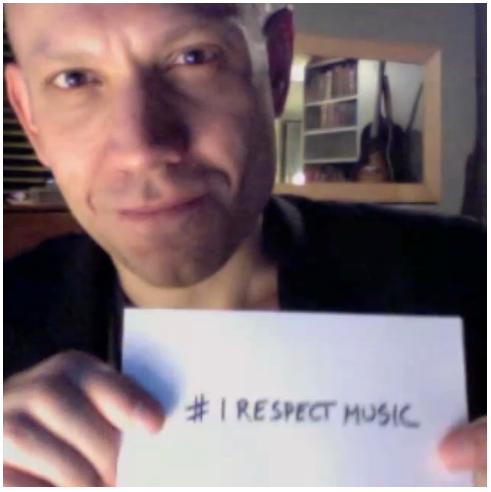
Blake Morgan songwriter, publisher, producer and label owner, two-time U.S. Supreme Court amicus, founder of the #irespectmusic campaign and relentless artist rights advocate joins the list opposing frozen mechanicals on vinyl and physical. “This is about so many things, but we simply must fight to keep digging out from a 68 year injustice. Big thanks to the inspirational Abby North for standing up for fairness and transparency!”
TY @northmusicgroup + @thetrichordist 🚀 The Copyright Royalty Board must allow songwriters + indy publishers to participate in CRB decisions. A public comments period would ensure that testimony not be limited to only wealthy, powerful interests.https://t.co/R1MQUwKadY



 The Trichordist
You must be logged in to post a comment.