
Guest Post: Who Owns The MLC Database of Songs?

[This is crossposted from MusicTech.Solutions and is adapted from the author’s comment to the Copyright Office in the MLC regulations.]

By Chris Castle

If you’ve been following the evolution of the “aircraft carrier” revision of the U.S. Copyright Act styled the “Music Modernization Act,” you will remember that America now has a blanket license for the mechanical reproduction of songs (or will have as of 1/1/21).  The “MMA” comes in three parts (or as I say three and one-half):

  • Title I which establishes the blanket license, a willing-buyer willing-seller standard for mechanical royalty rate setting, the Mechanical Licensing Collective (called the “MLC”), the all-important safe harbor for Big Tech’s massive infringement of songs, and authorized the creation of the “musical works database” which is the subject of this post;
  • Title I-1/2 which gives certain small benefits to ASCAP and BMI;
  • Title II which provides meaningful relief and largely fixes the pre-72 loophole that the Turtles sued over (formerly the CLASSICS Act); and
  • Title III which gives producers a statutory basis for SoundExchange royalties, another truly meaningful change.

I supported Title II and Title III, but I have lots of bones to pick with Title I, not the least of which has to do with the musical works database.  A lot of my issues have to do with what I perceive as sloppy drafting and a mad rush to “get a bill” at all costs which has led to a strong need to “fix” a lot of “glitches” in Title I itself (such as the failure to dovetail the major change in the compulsory mechanical from a per-song basis to a blanket basis. This in turn has an affect on other copyright provisions such as the termination right for songwriters which is now having to get solved–maybe–through the caulking of regulations to cover sloppy workmanship.  (Caulk cracks.)

For those of us who sweep up behind the elephants in the circus of life, I fear that the musical works database of other people’s things is an 11th Century solution to a 21st Century problem–a list of things that will be very difficult to get right and even more difficult to keep right, not unlike William the Conqueror’s Domesday Book.  Static lists of dynamic things necessarily are out of date the moment they are fixed.
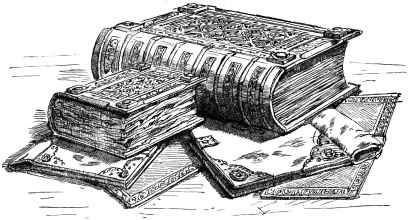
Domesday-book-1804x972

Who Owns the Crowdsourced Musical Works Database?

We are going to discuss Title I musical works database today from a very simple threshold question:  Who owns it?

Spoiler alert:  The public owns it.  This is logical, but like so many things in the drafting of Title I, the drafting is glitchy, which is what you call it if you’re in a good mood.  I apocryphally attribute the term “glitch” when applied to massive Internet data breaches to the Fathers of the Internet who did not take care that the cracks were sealed (looking at you, Vint Cerf).

When you consider that the most valuable asset of the MLC is going to be the song database, ownership matters.  This database of other people’s things must be created by the efforts of potentially hundreds of thousands of songwriters given no choice in the matter.  It would be a bit much for the U.S. Congress to require all this only to enrich one U.S. corporation controlled by the U.S. publishers by leveraging a compulsory license to create a very valuable private asset.  Particularly a database paid for by still other people that might then get taken and given to a replacement MLC.  (There’s that “taken” word again.)  That’s typically not what Congress does.

Ownership matters to the Digital Licensee Coordinator, too.  Let’s also remember that on paper, the MLC does not pay a penny for the cost of its operations, including the creation of the database.  The entire cost of the MLC’s operations is borne by the users of the blanket license through an organization called the Digital Licensee Coordinator.  (If you’re thinking what’s with these names, I know, I know.  Forget it, Jake, it’s Washington.)

This database ownership issue has been raised to authorities a couple times, and no one has answered it.  I made it part of a recent comment I filed with the Copyright Office in the current rule making for regulations implementing Title I.  Maybe they’ll get around to answering the question this time.  After a while, you have to wonder why they have not.

The MLC’s Short Track Record on Ownership of Other People’s Things

A side note demonstrating both that ownership matters and that The MLC is thinking about ownership:  a service mark registration for “The MLC”.  (A service mark is a kind of trademark.)  There is a difference between “the MLC” and “The MLC”.  That’s because “the MLC” is the organization envisioned by the Congress that has to be redesignated (think “re-approved”) by the Copyright Office every five years.  On the other hand, “The MLC” refers to “The MLC, Inc.” which is the corporation created by the super popular proponents of Title I who were designated the first MLC and who style themselves “The MLC” using the definite article. But if I told you that there was a difference between “the MLC” and “The MLC” would you find that confusing?

The clear implication of the definite article seems to be that they don’t envision any future in which they will not be the MLC, i.e., will not be redesignated.  They also probably don’t envision a future where a different corporation would be designated the MLC and The MLC would be looking for something to do.  Maybe they know something we don’t, but there it is.

This also raises some interesting trademark questions should The MLC seek to prevent a successor from trading under the name “MLC”, interesting enough to stop The MLC from claiming a proprietary interest in the statutory description.  That mark is arguably descriptive and probably should be denied.  In fact it’s so descriptive it actually asserts a private intellectual property interest in the statutory language that describes the organization created by statute.  Sort of like asserting a trademark in “TVA” or “ICC” or “FOIA”.

MLC TM Registration

Should Songwriters Bust a Move to Create Value for The MLC?

Let’s be clear about who owns the Congressional database.  As you will see, the musical works database does not belong to either the MLC or The MLC.  If there is any confusion about that, the Copyright Office should clear it up right away (which would save having to go to other avenues to do the same thing).  There really isn’t a practical alternative to the Copyright Office jurisdiction.  Congress gave the Copyright Office broad regulatory powers over the MLC (and, therefore, The MLC).

The public “musical works database” that Congress envisioned in Title I of the Music Modernization Act is largely a crowdsourced asset.  Congress has asked the world’s songwriters or copyright owners to spend considerable time preparing their catalogs in whatever format The MLC and the DLC determine is good for The MLC (with the Office’s blessing through regulations).  There inevitably will be quality control and accuracy review costs invested by the world’s songwriters and copyright owners in making sure that their catalogs are correctly reflected in the musical works database.  “Copyright owners” may also include sound recording copyright owners asked to contribute their ISRCs or other data that they, too, have invested considerable expense in creating and maintaining.

Unfortunately, the transaction cost to the songwriter and copyright owner for participation in The MLC and crowdsourcing Congress’s database is an unfunded mandate at the moment.  From a commercial perspective, the dynamic evolution of data is a potentially limitless expense, yet we have both this unfunded mandate which will spike in the early years but continue on a rolling basis essentially forever.  Yet the MLC’s administrative assessment appears to be capped at a fixed increase by a settlement agreement.  Again, a “glitch.”  Still, The MLC’s executives seem positively giddy about their prospects with all the relief of someone who got tapped for lifetime employment with a pension (no doubt) while the songwriters these leaders are to serve are having the fight of their lives for survival.

What Did Congress Do?  Or Not Do?

Yet, it seems clear that at the time of passing Title I, Congress had no intention of using a public law to create a private asset.  Neither was their intention to use the law to leverage the creation of an asset for private ownership by whoever the head of the U.S. Copyright Office designated to be the MLC, regardless of how “popular” they might have been.

The creation of the musical works database is replete with hidden costs paid or incurred by songwriters and copyright owners.  Neither the Congress nor the Copyright Royalty Judges  were asked to directly address these hidden costs of creating the musical works database.   (The Copyright Royalty Judges (or “CRJs”) are relevant because they approve the DLC’s financial contribution to the MLC through the “Administrative Assessment.”  The assessment is intended to cover the “collective total costs” which includes broad categories of cost items related to the database.)  And as usual, these costs appear to have gone straight over the heads of the Congressional Budget Office in their mandated assessment of the costs of Title I.

Even so, the MMA Conference Report from Congress addresses the cost issue head on:

The [Congress] rejects statements that copyright owners benefit from paying for the costs of collectives to administer compulsory licenses in lieu of a free market. Therefore, the legislation directs that licensees should bear the reasonable costs of establishing and operating the new mechanical licensing collective. This transfer of costs is not unlimited, however, since it is strongly cabined by the term ‘‘reasonable.’’[1]

It will be impossible for the “new mechanical licensing collective” to fulfill its statutory duties or build the complete musical works database to which the United States aspires without songwriters and copyright owners around the world doing the intensive and costly spade work to prepare their data to be exported to The MLC.[2]  It is clear that the reasonable costs of preparing and exporting that data should be borne by The MLC[3] as part of the “Administrative Assessment.”[4]  This material cost clearly is covered by the definition of “collective total costs”[5] and so was, or should have been, included in the current Administrative Assessment,[6] unless the intention was to cover The MLC’s side of these costs and force songwriters and copyright owners to eat their side of the same transaction.  If that is the case, it would be helpful for the Copyright Office to clarify that intention in the name of transparency through their broad regulatory authority.

If there is another drafting glitch there, it is worth noting that the CRJs clearly contemplated revisiting the Administrative Assessment  on their own motion for good cause.[7]  If there were ever good cause, the staggering cost of registering potentially millions of songs would be it.[8]

It should be clear that no one’s intention was for the services to pay to create the musical works database and for the songwriters and copyright owners to labor to export their data to make the musical works database complete, only to have The MLC claim ownership of the musical works database, particularly if The MLC were not redesignated as the MLC following the five-year review by the Copyright Office.  That unhappy “take my ball and go home” arbitrage event is foreseeable and would entirely cut against the “continuity” contemplated by Congress.[9]

It is critical that the Copyright Office clarify in regulations that neither The MLC nor any other MLC owns the musical works database.  In fact, the MMA clearly states that “if a new entity is designated as the mechanical licensing collective, [the Office shall] adopt regulations to govern the transfer of licenses, funds, records, data, and administrative responsibilities from the existing mechanical licensing collective to the new entity.”[10]  Since The MLC will have to transfer the musical works database and the other statutory materials to the new MLC if they fail to be redesignated, there should be no misconceptions that The MLC “owns” the database and could withhold all or part of it.[11]  Because The MLC is just An MLC.

It should also be made clear that any MLC or DLC vendor does not obtain an ownership interest in any copy of all or part of the musical works database they may obtain for any reason.

Again, just like the termination right “glitch”, these are threshold questions that should have been answered in the statute itself.

Clarifying ownership of The MLC’s most important asset should be an easy ask of the Copyright Office.  Watch this space to find out if it is.

          * * * * * * * * *

[1] Report and Section-by-Section Analysis of H.R. 1551 by the Chairmen and Ranking Members of Senate and House Judiciary Committees, at 1 (2018) at 2 (emphasis added).

[2] This effort is referred to as “Play Your Part™” a business process trademarked by The MLC available at https://themlc.com/preparing-2021.

[3] I would point out that the way The MLC should work—and in the end probably will end up functioning as a practical matter–is that The MLC needs to be able to handle however songwriters ingest their data.  Instead, it appears that The MLC is trying to dictate to all the songwriters in the world how they should assemble their song data beforethey register with The MLC. If The MLC wants to shift that burden, they should expect to pay for it.  Otherwise, this is exactly backwards.

[4] 17 U.S.C. §115 (d)(7)(D).  The Administrative Assessment is what makes the MLC different from other PROs or CMOs where members bear their own cost of participation.  The Administrative Assessment is to cover the entire cost of creating the musical works database, not just The MLC’s startup or overhead costs.  If nothing else, another way to treat these out of pocket costs is as a contribution to the operating costs of The MLC by songwriters and copyright owners that should be offset against future Administrative Assessments.

[5] 17 U.S.C. § 115 (e)(6).

[6] Order Granting Participants’ Joint Motion to Adopt Proposed Regulations, In re Determination and Allocation of Initial Administrative Assessment to Fund Mechanical Licensing Collective (U.S. Copyright Royalty Judges Docket No. 19-CRB-0009-AA (Dec. 12, 2019)).

[7] The CRJs included this footnote in their ruling on the administrative assessment (emphasis added):  “The Judges have been advised by their staff that some members of the public sent emails to the Copyright Royalty Board seeking to comment on the proposed settlement agreement. Neither the Copyright Act, nor the regulations adopted thereunder, provide for submission or consideration of comments on a proposed settlement by non-participants in an administrative assessment proceeding. Consequently, as a matter of law, the Judges could not, and did not, consider these ex parte communications in deciding whether to approve the proposed settlement. Additionally, the Judges’ non-consideration of these ex parte communications does not: (i) imply any opinion by the Judges as to the substantive merits of any statements contained in such communications; or (ii) reflect any inability of the Judges to question, [on their own motion without a filing from a participant] whether good cause exists to adopt a settlement and to then utilize all express or reasonably implied statutory authority granted to them to make a determination as to the existence…of good cause [to reject the settlement now or in the future].”   Order Granting Participants’ Joint Motion to Adopt Proposed Regulations, In re Determination and Allocation of Initial Administrative Assessment to Fund Mechanical Licensing Collective (U.S. Copyright Royalty Judges Docket No. 19-CRB-0009-AA (Dec. 12, 2019) n.1 (emphasis added)).

[8] There is a simple solution to determining these costs to songwriters and copyright owners.  The Copyright Office could designate several metadata companies who could compete to handle the various steps of creating and exporting metadata to The MLC, such as in the CWR format, for example North Music Group and Crunch Digital have such tools.  To avoid picking winners and losers and to preserve competition, the Office could alternatively establish a benchmark of quality control or some other criteria for becoming an approved company.  The costs charged would likely vary depending on the size of the catalog, but The MLC need only pay the invoice of these companies which would be included in the Administrative Assessment.  Obviously, the entity performing such work should be independent of The MLC, the DLC or any of its members, or any of their respective vendors.  This would, of course, introduce the concept of competition into the monopoly which may interest no one but might benefit everyone.

[9] See H. Rep. 115-651 (115th Cong. 2nd Sess. April 25, 2018) at 6 (hereafter “House Report”); S. Rep. 115-339 (115thCong. 2ndSess. Sept. 17, 2018) at 5 (together with identical language, hereafter “legislative history”) (“Although there is no guarantee of a continued designation by the collective, the Committee believes that continuity in the collective would be beneficial to copyright owners so long as the entity previously chosen to be the collective has regularly demonstrated its efficient and fair administration of the collective in a manner that respects varying interests and concerns. In contrast, evidence of fraud, waste, or abuse, including the failure to follow the relevant regulations adopted by the Copyright Office, over the prior five years should raise serious concerns within the Copyright Office as to whether that same entity has the administrative capabilities necessary to perform the required functions of the collective.”)

[10] 17 U.S.C. § 115 (d)(3)(B)(ii)(A)(II).

[11] It seems that if an incumbent MLC that was not redesignated and continued to operate, it would almost unavoidably compete with the newly designated MLC but with a substantial leg up.  I realize there have been some statements made about The MLC taking on work beyond the blanket license, such as voluntary licenses.  That additional work might require additional investment, or a sharing of the total collective costs by third parties.  I have not addressed that allocation as I for one would like to see The MLC stick to their knitting and succeed at the job they are obligated to do, and, frankly, paid to do, before worrying about expanding into profitable roles for the non-profit corporation.   It does seem that if The MLC is not redesignated, there would not be much for them to do once they transfer the public’s assets to the new MLC.

Guest Post: Copyright Office Regulates the MLC: Selected Public Comments on MLC Transparency: MediaNet

By Chris Castle

The wisest among us learn to use their portents well
There’s no need to hurry, it’s all downhill to hell.

From “Don’t Stand Still“, written by Original Snake Boy, performed by Guy Forsyth

The Copyright Office has solicited comments on the transparency of The MLC and received quite a few well-thought out comments (if I say so myself).  MediaNet

has raised some very interesting questions about the NMPA’s relationship with HFA and The MLC that many have questioned both in prior comments and in the many lawsuits against HFA clients like Spotify for its various licensing failures.  (Note that I don’t really fault HFA all that much because I think it really boils down to choices made by Spotify, another Internet company that is in a rush to enrich themselves at the expense  of songwriters and artists.  If you can fault HFA for one clear choice in that cluster, it’s that they didn’t resign from the job both during and after their ownership by NMPA and SESAC.  Maybe they got stock, too.)

MediaNet raises this interesting point:

In passing the MMA, Congress recognized that the party who controls the database may enjoy an economic advantage over others.9 Although not applicable to the MLC-HFA contract, The Federal Acquisition Regulation System, codified at 48 C.F.R. § 1.000 et seq., provides guidance regarding the principle cited by Congress under the MMA. For example, under FAR 9.505 a contracting officer cannot award a federal contract to a contractor where an organizational conflict of interest (or “OCI”) cannot be avoided or mitigated.

But here’s the clincher:

Applying the principles from the FAR, the arrangement between MLC and HFA raises a number of questions regarding the potential for unfair economic advantage to HFA as a consequence of its control over the operation and administration of the MLC database, including the following:

· Who owns the database, MLC or HFA? [The answer is neither]

· If HFA is terminated by MLC, does HFA own or have a claim to any proprietary or intellectual property rights in the database?

· Will HFA have access to “Confidential” or “Highly Confidential Information” (e.g., contract terms, payments and financial information) of music publishers or other similarly situated organizations such as PROs and administration service providers?

· Will HFA have access to the reporting of usage and required payments of the administrative assessment by significant nonblanket licensees (“SNBLs”) in the notices of nonblanket activity (“NNBAs”) required under the MMA?

· Sources suggest HFA may offer [an “ethical wall”] between its work on the MLC database and other work for third parties not using the blanket digital license, and an audit right to ensure HFA complies with this separation. Can HFA effectively separate such third party work from the database it administers for the MLC?

What are the remedies for non-compliance with such measures?

MediaNet respectfully requests that the Copyright Office, as part of its regulatory and oversight authority to ensure transparency, require that the agreements between MLC and all of its vendors be made publicly available, and with respect to the MLC agreement with HFA, if the information requested above is not disclosed in such agreement, require MLC and HFA to submit answers to the forgoing questions.

It should be obvious to everyone that there is an inherent conflict of interest between NMPA and HFA.  Insufficient care was taken at the Copyright Office and at The MLC to create systems to reduce the fact of this conflict negatively affecting the operations of The MLC which presents an opportunity to leave the bad days behind.  But that didn’t happen and here we are again.

But let’s not forget that The MLC is essentially a quasi-governmental organization and must comply with the Copyright Office’s oversight role despite the intimidation tactics.  And the Copyright Office is already looking a bit ragged around the edges from even the little connection to corrosion they’ve had to date.

For example, the Copyright Office announced that “the Butler Report” was commissioned by the Copyright Office to poll ex-US CMOs about their black box practices, knowledge which likely was common to everyone on The MLC’s board.  I must have missed where this work product was put out for bid, which leads me to think it was a single source consulting contract which is what they use to pave the road to hell when good intentions have supply chain disruptions.  Nothing against Susan Butler who is very competent and engaging, but I can think of several academics who would be better suited and would have been peer reviewed.  We can disagree about that, but why not have them submit proposals?  And also deliver all the work product that the taxpayer financed?

MediaNet raises many more excellent points about the inherent conflicts in the NMPA-The MLC-The HFA relationship and The Copyright Office’s designation process that are well worth reading.  You can find the full comment here.

And keep this in mind:

MLC executive Richard Thompson said at the Copyright Office panel on unclaimed royalties last December,[1] “[A] lot of the time since July has been spent working very closely with the staff at HFA and ConsenSys, really starting to nail down how all of this is going to work at the, you know, lowest operational level, all of the things that we need to work out.”  (Referencing the July 8, 2019 designation of The MLC as the MLC.)  Of course, The MLC didn’t announce the selection of HFA and ConsenSys until November 26, 2019. [2]

If The MLC was already working with HFA in July as Mr. Thompson says, why did they give the world the impression that they had not picked a vendor until November?


[1] Transcript, United States Copyright Office Unclaimed Royalties Study Kickoff Symposium (Dec. 6, 2019) at 28 ln 15.  (my emphasis)

[2] Tatania Cirisano, Mechanical Licensing Collective Selects Leadership, Partners for Copyright Database, Billboard (November 26, 2019).


Guest post: Attention BrewBros: Internet Archive Announces Closing of National Emergency Library

By Chris Castle

The eponymous Mr. Kahle announced with the usual huge heaping rasher of sanctimonious twaddle straight from the mollycoddle mumbletank that the so-called “National Emergency Library” was closing early.  Not because Brewster Kahle did anything wrong, not because he got a Tillis-gram, no no no.  It’s because there are other resources for the “Internet bound.”

Internet bound.  You read that right.  Yet the crepuscular “National Emergency Library” is fading into the sunset according to an Internet Archive blog post.  Personally, I’ll believe it when I see it.

Today we are announcing the National Emergency Library will close on June 16th, rather than June 30th, returning to traditional controlled digital lending. We have learned that the vast majority of people use digitized books on the Internet Archive for a very short time. Even with the closure of the NEL, we will be able to serve most patrons through controlled digital lending, in part because of the good work of the non-profit HathiTrust Digital Library. HathiTrust’s new Emergency Temporary Access Service features a short-term access model that we plan to follow.

We moved up our schedule because, last Monday, four commercial publishers chose to sue Internet Archive during a global pandemic.

Yes, those heartless “commercial publishers”.  You see, the saintly Mr. Kahle is not motivated by money (having already enriched himself with his snout in the Silicon Valley cash tank).  Those commercial publishers were enforcing their rights.  And during a pandemic, no less.  Any self-reflection there?  Not a bit.  No thought that Mr. Kahle himself was taking advantage of a pandemic to engage in price gouging, which is just white-collar looting.  As someone who grew up with both hurricanes and earthquakes, I have zero sympathy for the dude.

But this is the usual running for the exits that these people all try to hide behind.  You sue them for bad behavior and they think that if they just stop doing the bad thing once they were caught and called out, you should welcome them back to humanity.

Not really.

As the IA blog post takes note:

[T]his lawsuit is not just about the temporary National Emergency Library. The complaint attacks the concept of any library owning and lending digital books,   challenging the very idea of what a library is in the digital world. [Not really…just Mr. Kahle’s provocation.  And…cue violins…] This lawsuit stands in contrast to some academic publishers who initially expressed concerns about the NEL, but ultimately decided to work with us to provide access to people cut off from their physical schools and libraries. We hope that similar cooperation is possible here, and the publishers call off their costly assault.

Not bloody likely.  When did Noah build the Ark?  Before the rain, get it?  You take precautions before you are forced to by circumstances.

If you get down on your knees and beg to be sued, don’t be surprised if you are.  And when you are, at least have the courage to own up to the begging.  But wait…I thought that there was all that stuff about fair use was his superpower? What happened to that?


Why So Secretive? Copyright Office’s Public Consultation on Setting Rules for MLC’s Operation: Future of Music Coalition

[The Copyright Office is bravely trying to regulate The MLC to keep the MMA from becoming a feeding frenzy for the data lords.  As Chris Castle said in his comment on what should be stamped “Confidential” and kept away from songwriters: “The premise of confidential information under Title I is that there is in rock and roll certain information deserving of government-mandated secrecy.”  Or as Otis said, too hot to handle.  Keep that in mind–when they say “confidential information” they mean information they can keep away from you.

We are going to excerpt some of the good comments that support independents in the other Copyright Office “rulemaking” consultation that just closed devoted to confidential treatment of data by The MLC and the DLC.  You can read them all here.]

The Future of Music Coalition made some great points in their filing, read the whole thing here.

Restrictions on use by MLC and DLC Vendors and Consultants FMC shares concerns expressed by other commenters about the possibility of vendors using confidential data for competitive advantage or purposes beyond what the MLC was created to do. There should be no provision for HFA to use confidential data for “general use”, even on an opt-in basis. The risk of anti-competitive harm is too great.

Copyright Office Regulates @MLC_US: Selected Public Comments on MLC Transparency: @KerryMuzzey

[Editor Charlie sez: The U.S. Copyright Office is proposing many different ways to regulate The MLC, which is the government approved mechanical licensing collective under MMA authorized to collect and pay out “all streaming mechanicals for every song ever written or that ever may be written by any songwriter in the world that is exploited in the United States under the blanket license.”  The Copyright Office is submitting these regulations to the public to comment on.  The way it works is that the Copyright Office publishes a notice on the copyright.gov website that describes the rule they propose making and then they ask for public comments on that proposed rule.  They then redraft that proposed rule into a final rule and tell you if they took your comments into account. They do read them all!

The Copyright Office has a boatload of new rules to make in order to regulate The MLC.  (That’s not a typo by the way, the MLC styles itself as The MLC.)  The comments are starting to be posted by the Copyright Office on the Regulations.gov website.  “Comments” in this world are just your suggestions to the Copyright Office about how to make the rule better.  We’re going to post a selection of the more interesting comments.

There is still an opportunity to comment on how the Copyright Office is to regulate The MLC’s handling of the “black box” or the “unclaimed” revenue.  You can read about it here and also the description of the Copyright Office Unclaimed Royalties Study here.  It’s a great thing that the Copyright Office is doing about the black box, but they need your participation!]

Read the comment by Kerry Muzzey

The launch of iTunes in 2001 began the democratization of music distribution: suddenly independent artists had a way to reach their fans without having to go through the traditional major label gatekeepers. Unfortunately most of those independent artists didn’t have a music business background to inform them about all of the various (and very arcane) royalty types and registrations that were required: and even if they did, Harry Fox didn’t let individual artists register for mechanicals until only recently.

The result? 19 years’ worth of unclaimed royalties by so many independent artists who have no idea how to access them.

We had hoped that the MMA would fix this, but the “black box” of unclaimed royalties is going to be distributed to the major publishers based on market share. We independent artists don’t have “market share” – but we do have sales and streams that are significant enough to make a difference to our own personal economies. A $500 unclaimed royalty check is to an independent musician what a $100,000 unclaimed royalty check is to a major publisher: it matters. Those smaller unclaimed royalty amounts are pocket change or just an inconsequential math error to the majors but they’re the world to an independent writer/publisher. And that aside, these royalties don’t belong to the majors: they belong to the creators whose work generated them.

Please, please, please: you have to make that database publicly accessible and searchable like Soundexchange does. There needs to be a destination where all of us can point our friends and social media followers to, to say “you may have unclaimed royalties here: go search your name.” They can’t remain in the black box and they can’t go to the major publishers. These royalties must remain in escrow and all means necessary should be used to contact the writers and publishers whose royalties are in that black box: absolute transparency is required here, as is a concentrated press push by the MLC to all of the music trades and music blogs (Digital Music News, Hypebot, et al) and social media platforms encouraging independent artists to go to the public-facing database and search their name, their publisher name, their band name, and by song title, for possible unclaimed royalties.

Please: the NMPA can’t be allowed to hijack royalties that do not belong to them. Publishers are fully aware of how complex royalty types and royalty collections are: they and the NMPA must make every effort here to ensure that unclaimed royalties reach their rightful legal and moral recipients.

Brewster Kahle Gets Another Tillis-Gram For Internet Archive’s National Emergency Ripoff, this Time with Added Songs and No Mechanicals — Music Technology Policy

June 10, 2020

Mr. Brewster Kahle
Founder and Digital Librarian
Internet Archive
300 Funston Avenue
San Francisco, CA 94118 Dear Mr. Kahle:

I write to you again as Chairman of the Senate Judiciary Committee Subcommittee on Intellectual Property. In my April 8, 2020 letter, I expressed my concern that the Internet

Archive’s announcement of a National Emergency ” Library” filled with 1.4 million books that had been digitized and made available to the public without restrictions and without the permission of copyright owners appeared to be a blatant infringement of thousands – if not more-of copyrights.1   Indeed, the U.S. Copyright Office analyzed  publicly available facts and concluded that though some works included in the National Emergency “Library” might be permitted under fair use, many would not be. The Copyright Office went on to say that “while the Internet Archive’s goal of making research and educational materials publicly available may be laudable, so is respect for copyright.”2

I write now after learning that the Internet Archive is engaged in other initiatives that involve the unauthorized digitization and dissemination of copyright-protected creative works- in this case sound recordings .

According to a May 15, 2020 article in the Seattle Times, the Internet Archive has purchased Bop StreetRecords full collection of 500,000 sound recordings with the “inten[t] to digitize the recordings and put them online, where they can be streamed for free.”3 It is not clear from the article, or others, if you intend to digitize all of the sound recordings acquired  from Bop Street. But it is clear that these sound recordings were very  recently  for sale in a commercial  record shop and likely contain many sound recordings that retain significant commercial value. This raises serious alarms about copyright infringement.

As I understand, Bop Street Records, which the Wall Street Journal once deemed a top-five record shopin the country, focuses on collectible-quality vinyl records across a diverse range of musical genres. According to its website, there sound recordings includes “Rock, Soul/R&B, Jazz, Blues, Classical, Country, World and many other genres from the 1920’s to 1990’s.” The overwhelming majority-if not all-of these sound recordings are protected by U.S. copyright law, and thus may not be digitized and streamed or downloaded without authorization.

In a similar vein, I am aware of the Internet Archive’s “Great 78 Project,” which has already digitized-and continues to digitize daily-a vast trove of 78 rpm recordings, many of which are also commercially valuable recordings already in the marketplace, and has made those recordings available to the public for free through unlimited streaming and download. I understand that the Internet Archive is framing this and its other sound recording projects­ which include both obscure gems for music fans and hits from the likes of Elvis Presley, Chuck Berry, and Johnny Cash-as preservation, but your current practices raise numerous potential issues of copyright infringement. The Bop Street collection is likely to add to that. Among other things, your sound recording projects do not appear to comply with the relevant provisions of the Orrin G. Hatch-Bob Goodlatte Music Modernization Act (MMA), which deals only with pre- 1972 sound recordings and would not allow for streaming or downloading. Moreover, there are additional copyrights, such as the musical composition and the album artwork, that are displayed on the Internet Archive website and would not be covered by an exception for preservation.

I recognize the value in preserving culture and ensuring that it is accessible by future generations, such as the Library of Congress’s Recorded Sound Collection and National Recording Registry projects. But I am concerned that the Internet Archive thinks that it-not Congress-gets to determine the scope of copyright law.  With its sound recording projects, the Internet Archive does not even pretend that a national emergency like the Covid-19 pandemic creates a special need for these sound recordings to be freely streamed or downloaded.  Rather, the Internet Archive seems to be daring copyright owners to sue to enforce their rights, or else effectively forfeit them-something many copyright owners, particularly individuals and smaller enterprises, cannot afford to do.

Our copyright system is designed with important limitations and exceptions that ensure that the public can make appropriate uses of copyrighted works even when the copyright owner seeks to prevent such uses-but those are the exception, and free use for those who disagree with the concept of exclusive rights is notone of them. Accordingly, I once again invite you to share with me the legal support, in copyright law or elsewhere, for reproducing and distributing copyrighted works that are owned by others. In particular, how do the Internet Archive’s sound recording digitization and streaming projects-in particular the Great 78 Project-fit within case law interpreting the fair use doctrine and within the relevant provisions of section 108 and the MMA?

Please respond by July 10 , 2020. If you have any quest ions, please do not hesitate to contact me.

Sincerely,

Thom Tillis
Chairman
Subcommittee  on Intellectual Property


1 Since then , I understand  that  major  American  book publishers-  Hachette  Book Group,  HarperCollins  Publishers, John Wiley & Sons and  Penguin  Random  House  –  filed  a  lawsuit  alleging  copyright  infringement  and  seeking  to enjoin uses of their copyrighted books in the  National  Emergency  Library  or  the  Internet  Archive’s  “Open  Library,” which had offered the same catalog of books but  with  some  limitations , such as checkout  waitlists.  See  Hatchette Book Grp. v. Internet Archive, No. I :20- cv- 041 60 (S. D.N .Y . filed June I , 2020).

2   Letter from  Maria Strong, Acting  Register  of Copyrights,  U.S. Copyright  Office , to Sen. Tom  Udall , at 21  (May 15, 2020).

3 Paul de Barros , A Happy Ending for Seattle’s Bop Street Records: A Nonprofit Buys Up the Entire Collection, SEATTLE TIMES (May 15, 2020) , https://www .seattletimes.com /entertainment/music/a-happy-ending-for-seattles­ bop-street-records-a- nonprofit-buys- up -the-entire-collection/.

via Brewster Kahle Gets Another Tillis-Gram For Internet Archive’s National Emergency Ripoff, this Time with Added Songs and No Mechanicals — Music Technology Policy

Copyright Office Regulates @MLC_US: Selected Public Comments on MLC Transparency: @JonathanCoulton

[Editor Charlie sez: The U.S. Copyright Office is proposing many different ways to regulate The MLC, which is the government approved mechanical licensing collective under MMA authorized to collect and pay out “all streaming mechanicals for every song ever written or that ever may be written by any songwriter in the world that is exploited in the United States under the blanket license.”  The Copyright Office is submitting these regulations to the public to comment on.  The way it works is that the Copyright Office publishes a notice on the copyright.gov website that describes the rule they propose making and then they ask for public comments on that proposed rule.  They then redraft that proposed rule into a final rule and tell you if they took your comments into account. They do read them all!

The Copyright Office has a boatload of new rules to make in order to regulate The MLC.  (That’s not a typo by the way, the MLC styles itself as The MLC.)  The comments are starting to be posted by the Copyright Office on the Regulations.gov website.  “Comments” in this world are just your suggestions to the Copyright Office about how to make the rule better.  We’re going to post a selection of the more interesting comments.

There is still an opportunity to comment on how the Copyright Office is to regulate The MLC’s handling of the “black box” or the “unclaimed” revenue.  You can read about it here and also the description of the Copyright Office Unclaimed Royalties Study here.  It’s a great thing that the Copyright Office is doing about the black box, but they need your participation!]

Read the comment by Jonathan Coulton

I am an independent musician, and I make my living full time as such. I have spent years dealing with the wide array of entities who collect royalties on my behalf. Errors happen all the time – songs are misattributed, missing, publisher information is wrong, royalty splits are wrong. This is to be expected when the dataset is this vast and complicated, and coming from many disparate sources. This is why for me, absolute transparency is essential. I need to be able to search for my name and my song titles so that I can look for errors like these and make sure I am getting paid all the royalties I am due. As an independent, my slice of the pie is very small on the scale of the entire industry, but it is essential to me and my ability to make a living. I have nobody but myself representing me in this process. Even with the best intentions, an entity like the MLC cannot possibly look out for all of us, so I hope that this structure provides us the tools with which we can look out for ourselves.

I very strongly encourage maximum transparency, granularity, and searchability be provided to rightsholder with regards to this data.

Copyright Office Regulates @MLC_US: Selected Public Comments on MLC Transparency: @zoecello — Artist Rights Watch

[Editor Charlie sez: The U.S. Copyright Office is proposing many different ways to regulate The MLC, which is the government approved mechanical licensing collective under MMA authorized to collect and pay out “all streaming mechanicals for every song ever written or that ever may be written by any songwriter in the world that is exploited in the United States under the blanket license.”  The Copyright Office is submitting these regulations to the public to comment on.  The way it works is that the Copyright Office publishes a notice on the copyright.gov website that describes the rule they propose making and then they ask for public comments on that proposed rule.  They then redraft that proposed rule into a final rule and tell you if they took your comments into account. They do read them all!

The Copyright Office has a boatload of new rules to make in order to regulate The MLC.  (That’s not a typo by the way, the MLC styles itself as The MLC.)  The comments are starting to be posted by the Copyright Office on the Regulations.gov website.  “Comments” in this world are just your suggestions to the Copyright Office about how to make the rule better.  We’re going to post a selection of the more interesting comments.

There is still an opportunity to comment on how the Copyright Office is to regulate The MLC’s handling of the “black box” or the “unclaimed” revenue.  You can read about it here and also the description of the Copyright Office Unclaimed Royalties Study here.  It’s a great thing that the Copyright Office is doing about the black box, but they need your participation!]

Comment by Zoë Keating:

Some version of the usage data that the DSPs report to the MLC should be easily accessible to the public so that songwriters do not need to hire a legal team in order to independently verify if their statements from the MLC are correct. Major publishers can and will continue to get usage reports directly from music services. Self-published songwriters must rely on the MLC to collect and administer royalties on their behalf. Given that the major publishers of the NMPA are directing the design of the MLC, transparency of the reported data from DSPs will help eliminate any conflicts of interest.

Related to this, given the past occurrence of and future likelihood of metadata reporting errors*, usage data for compositions that are unmatched to any owner should be publicly searchable. Songwriters and other entities should be able to search for likely misspellings and errors, thereby offering crowd-sourced assistance to the persistent problem of unmatched royalties. (*Anecdotally I have heard of metadata errors preventing the collection of mechanicals and it happened to me. The mechanical royalties for my songs went unclaimed for 10 years until 2019 until I was able to raise an employee of HFA via twitter who then “found” $5000 that had been unmatched due to an unspecified metadata error.)

via Copyright Office Regulates the MLC: Selected Public Comments on MLC Transparency: @zoecello — Artist Rights Watch–News for the Artist Rights Advocacy Community

@ColinRushing of @SoundExchange: Congress Should Eliminate the Market Distortion of AM/FM Radio’s Free Ride on the Backs of Artists

[SoundExchange Chief Legal Officer Colin Rushing lays it down before Senate Judiciary]

Throughout the 80 years that the terrestrial radio performance right has been under discussion, broadcasters have argued in many ways that they are special and deserve different treatment than other business interests. Their arguments that their special status should result in them not paying performers– never valid – have now also been overtaken by events.

They say AM/FM radio is important because it is free, but they are no different than any other free ad-supported music platform available to consumers. They argue that providing public service announcements and news information is a reason to require music to subsidize their platform, and yet many music platforms provide these same services, not to mention that most digital music platforms are delivered over devices that provide local emergency notifications.

To the extent that AM/FM radio may be promotional, this is not a trait that sets them apart from other music services that compensate performers. Nor does it justify an uncompensated “taking” of musicians’ property. Rate-setting proceedings and licensing negotiations take promotional value into account as a matter of course, along with many other variables.

The potential for promotion exists in a lot of licensing arrangements. Television broadcast of a professional basketball game may promote a local team, but no one would suggest that the NBA should surrender the broadcast rights for free because of that “promotional value.” Why should music be any different?

Read his written testimony on the SoundExchange website.

Publishers Sue Internet Archive over Fake “National Emergency Library”–Artist Rights Watch

[This post first appeared in Artist Rights Watch]

As anticipated, several publishers have sued the Internet Archive run by the anti-artist technologist Brewster Kahle (a copy of the complaint is here, filed June 1 in the Southern District of New York).  The lawsuit concerns the Internet Archive’s so-called “national emergency library” which in reality is another end run around the copyright law by a rich technocrat grasping for relevance in our view.

The complaint sums up the problem for Mr. Kahle’s latest anti-artist activism:

Defendant [Internet Archive or] IA is engaged in willful mass copyright infringement. Without any license or any payment to authors or publishers, IA scans print books, uploads these illegally scanned books to its servers, and distributes verbatim digital copies of the books in whole via public-facing websites. With just a few clicks, any Internet-connected user can download complete digital copies of in-copyright books from Defendant.

The scale of IA’s scheme is astonishing: At its “Open Library,” located at http://www.openlibrary.org and http://www.archive.org (together, the “Website”), IA currently distributes digital scanned copies of over 1.3 million books. And its stated goal is to do so for millions more, essentially distributing free digital copies of every book ever written. Despite the “Open Library” moniker, IA’s actions grossly exceed legitimate library services, do violence to the Copyright Act, and constitute willful digital piracy on an industrial scale. Consistent with the deplorable nature of piracy, IA’s infringement is intentional and systematic: it produces mirror image copies of millions of unaltered in-copyright works for which it has no rights and distributes them in their entirety for reading purposes to the public for free, including voluminous numbers of books that are currently commercially available.

This is a very Googley case so expect to find the usual suspects showing up to defend the Lost Cause if they’re not too busy holding on to the elite’s other piggery, Section 230 of the Communications Decency Act.  ARW readers will remember that Spotify lawyer Christopher Sprigman and his mentor Lawrence Lessig were lead counsel on the losing side in Kahle v. Ashcroft (later v. Gonzales) which was Mr. Kahle’s unsuccessful challenge to the elimination of the renewal requirement under the 1992 Copyright Renewal Act in an attempt to revive that trap for the unwary. Professor Sprigman continued carrying Kahle’s water as a member of Pamela Samuelson’s “Copyright Principles” project and co-authored its paper that also advocated for the registration artifact (see Sec. IIIA of paper, “Reinvigorating Copyright Registration”).

Although the docket for the publishers’ case against the Internet Archive doesn’t reflect a lawyer for the Internet Archive as yet, it would not be surprising to see these names crop up, not to leave out Daralyn Durie who has repeatedly led the charge against authors, artists, and all the other creators that Google chews up and spits out.  Ms. Durie and her colleague Joseph Gratz proudly screwed over authors in the Google Books case with this kind of Orwellian logic according to Business Week:

Google attorney Daralyn Durie told Judge Denny Chin in federal court in Manhattan that authors and photographers would be better off fending for themselves because their circumstances varied widely, especially since the copyright issue for authors involves the display of small snippets of text.

Judge Chin, however, wasn’t buying this line of reasoning–which could easily have been summarized as “If it please the Court, Google would like to get away with it.”  Because after all, “nothing says freedom like getting away with it” and we know that Google is all about Internet Freedom.  We’ve never been too sure what “Internet Freedom” means, but it apparently includes attacking creator organizations (including unions).  According to Business Week, “[t]he judge agreed that Google is ‘hoping that individual authors won’t come forward.'”

This is the kind of maneuvering we can expect (and don’t forget that Ms. Durie led the charge against the Beastie Boys on behalf of one Goldieblox in its 15 minutes).

The Internet Archive attracted the attention of Senator Thom Tillis who is currently conducting a series of hearings into the continued utility of the DMCA safe harbor for the richest companies in commercial history (aka the value gap).  Senator Tillis wrote this letter to Mr. Kahle saying:

I understand that your “Library” will last until June 30, 2020 or the end of the coronavirus emergency in the United States, whichever is later, and that during this time, the Internet Archive will make 1.4 million books it has scanned available to an unlimited number of users. I am not aware of any measure under copyright law that permits a user of copyrighted works to unilaterally create an emergency copyright act. Indeed, I am deeply concerned that your “Library” is operating outside the boundaries of the copyright law that Congress has enacted and alone has jurisdiction to amend.

As I am sure you are aware, many authors and publishers are struggling during this pandemic. Just this past Monday, the president of the Authors Guild noted in the New York Times that: “Authors have been hit hard by the pandemic …. It could be a career-destroying time for some authors, many of whom are struggling to make a living.” At some point when the global pandemic is behind us, I would be happy to discuss ways to promote access to books in a manner that respects copyright law and the property interests of American authors and publishers.

Mr. Kahle, of course, responded and could not resist a snipe at the Authors Guild referencing the absurd Google Books case (although note that Internet Archive is being sued by the publishers, not the Authors Guild, so they are apparently not the “leading critic”):

The Authors Guild, the leading critic of the National Emergency Library, has been incorrect in their assessment of the scope and flexibility of the fair use doctrine in the past and this is another instance where we respectfully disagree.


And so, here we are.   Lessig, Sprigman, Samuelson and Durie all have some new raw meat to chew on as authors are on the menu again thanks to the Silicon Valley crowd.  It will be interesting to see who takes up Mr. Kahle’s cause this time.

For a deep dive into the issues, here’s a recent video from the Artist Rights Symposium II panel on the Internet Archive with the Anonymous Librarian, John Degen, David Lowery, Robert Levine, Jonathan Taplin, moderated by Terrica Carrington.  The Anonymous Librarian is a real librarian at a major education institution who remains anonymous due to feared retaliation from Google and the Google-backed librarian trade associations.