This Isn’t Just Copyright—It’s Trade Discrimination Against American Creators

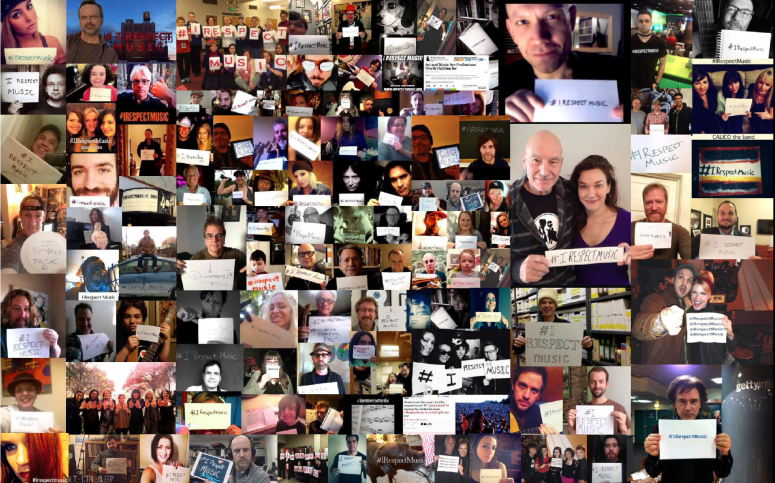
Readers of this blog know we’ve spent years supporting the American Music Fairness Act and its predecessor legislation, as well as the tireless efforts of the MusicFIRST Coalition and Blake Morgan’s #IRespectMusic campaign to modernize U.S. law. The argument has always been simple: the United States is virtually alone among developed nations in refusing to pay recording artists when their music is played on AM/FM radio. We’ve long argued that this is unfair to American performers.

Now it may become something even worse.

On July 8, an unusually broad coalition representing virtually every corner of the American music industry—including performers, musicians, independent labels, collecting societies, unions, songwriters’ organizations, managers, and the Recording Academy—sent a letter to U.S. Trade Representative Jamieson Greer warning that the European Commission has indicated it may consider legislation that could use this gap in U.S. law as the basis for reducing or denying royalties to American performers and record companies in Europe.

According to the coalition, nearly $300 million in annual royalties could be at risk if Europe abandons the longstanding principle of national treatment in favor of what proponents call “material reciprocity,” the latest mercantilist dodge.  The coalition urged the Administration to oppose any such proposal as a trade matter.  They identified passage of the American Music Fairness Act as the most direct way to eliminate the rationale behind Europe’s proposed policy shift.

That makes this story about far more than royalties for broadcasts (“neighboring rights”). It is about whether a longstanding defect in U.S. copyright law is beginning to produce real economic consequences for American creators overseas—and why organizations that rarely agree have united to ask the United States government to respond and protect American creators.

What Is National Treatment?

For generations, national treatment has been one of the foundational principles of international copyright and neighboring rights. Simply put, when another country uses an American recording, American performers generally receive the same treatment that country gives its own creators. That principle has helped ensure that American musicians, background singers, session players, independent artists, and record companies receive compensation when their recordings are broadcast or publicly performed overseas.

The policy now being discussed in Europe would move away from that principle in favor of what proponents call material reciprocity. The phrase sounds technical—even fair. It is anything but straightforward.

“Material reciprocity” sounds like a neutral rule requiring countries to treat one another equally. It is more accurately an optional exception to national treatment derived from the reservation provisions of the WIPO Performances and Phonograms Treaty. The treaty permits a country to limit protection to the extent another country has limited its own remuneration right; it does not require that result.

In practice, the proposed European approach would allow royalties generated by the use of American recordings in Europe to be withheld from the American performers whose recordings generated them, based on a defect in U.S. law over which those creators have little control and have done their best to rid themselves.

In other words, Europe would not be saying American recordings have no value. Make no mistake, those recordings would still be broadcast. Broadcasters would still pay royalties. The question—as usual—would simply become who gets the money? Spoiler alert—it’s not the artist who earned the money.

Why This Is Happening

The immediate backdrop is the 2020 decision of the Court of Justice of the European Union in RAAP, which held that American performers are entitled to equitable remuneration under existing European law. Following that decision, most EU member states amended their laws to comply.

Not everyone welcomed that result.

IMPALA, which represents independent record companies across Europe, has been among the organizations urging the European Commission to restore “material reciprocity” after RAAP. Its position is straightforward: European performers and labels should not be required to share European neighboring-rights royalties with American performers when the United States provides no comparable terrestrial radio right to Europeans—even if the U.S. performers earned those royalties in Europe.  Get it?

There is a certain irony here.

For years, supporters of the American Music Fairness Act argued that Congress should fix the terrestrial radio loophole because it unfairly denied American performers compensation at home. Now that same loophole is being cited overseas as justification for reducing compensation paid to American performers abroad.

Whether one agrees with IMPALA or not, the dispute illustrates that copyright policy increasingly operates as trade policy.

A Remarkably Broad Coalition

One of the most significant aspects of the coalition’s July 8 letter to the USTR is who signed up to it.  The coalition includes organizations representing performers, musicians, recording artists, independent labels, managers, unions, composers, songwriters, and collecting societies. These organizations represent different constituencies, pursue different priorities, and advocate competing legislative agendas.

Yet on this issue they have found common ground.  Their message is straightforward: American creators should continue receiving the same treatment in Europe that European countries provide their own creators.

That breadth of commitment is significant.

In an era when the music industry is often divided over artificial intelligence, streaming economics, licensing reform, Copyright Royalty Board proceedings, and virtually every other major policy debate, this level of agreement is unusual.

That alone should command policymakers’ attention.

This Is About More Than $300 Million

The dollar figure understandably grabs headlines.  But the larger issue is fundamental fairness.

American recordings account for a substantial share of music played on European radio—royalty generating plays on European radio. The royalties generated by those performances are not theoretical. They represent meaningful income for performers whose recordings continue to create value around the world, often years or decades after they were made.

Once governments begin replacing national treatment with reciprocity tests, the stability of international rights system begins to erode. Other countries may decide to revisit their own neighboring-rights systems, creating a patchwork of nationality-based rules that ultimately harms creators everywhere.

For many American performers—particularly independent artists, session musicians, and legacy performers—these foreign neighboring-rights royalties are not windfalls. They are earned compensation for recordings that continue to succeed internationally.

More Than Copyright: A Trade Issue

The coalition is not asking merely for a change in IP policy. It is asking the United States Trade Representative to treat this as a matter of international trade affecting American creators and one of America’s most successful cultural exports.

That is a significant development.

The music industry has long viewed copyright disputes primarily through the lens of intellectual property. This coalition letter recognizes that international copyright rules increasingly function as trade rules as well. Decisions made in Brussels can directly affect the income of American creators and the competitiveness of American cultural exports.  As the coalition letter states:

National treatment has long been a cornerstone of the global copyright system, ensuring American creators—including recording artists, musicians, and performers—are treated no less favorably than domestic rightsholders abroad. The Commission’s proposed shift to reciprocity would condition these protections on U.S. law, replacing a clear, rules-based system with one that is fragmented, uncertain and would directly disadvantage U.S. creators in foreign markets….Left unchecked, this approach will erode nondiscrimination principles, invite retaliatory measures, and weaken transatlantic cooperation on intellectual property.

The central trade question is not difficult to understand: should a foreign government be permitted to collect royalties generated by the exploitation of American recordings while denying those royalties to the American performers and producers whose work generated them?  Again from the letter:

USTR has already taken an important step by placing the European Union on the Special 301 Watch List. We encourage the Administration to build on this action by fully leveraging available trade tools—including sustained bilateral engagement, coordinated multilateral pressure, and, if necessary, targeted enforcement measures—to prevent the adoption of material reciprocity and ensure compliance with national treatment obligations.

Calling that result “material reciprocity” does not make it any less discriminatory in practice.

Why This Is Significant

International copyright rarely receives widespread public attention until the consequences become irreversible.  

The debate over artificial intelligence has reminded us how quickly longstanding norms can come under pressure. Whether the issue is AI training, streaming economics, or neighboring rights, the underlying question remains remarkably consistent:

Will creators continue to receive fair compensation when others profit from their work?

When the Industry Speaks With One Voice

The music industry rarely agrees on anything. Artists and record labels disagree. Major labels and independent labels disagree. Managers, unions, publishers, collecting societies, and digital services often find themselves on opposite sides of legislative and regulatory debates. That is precisely why this coalition is important..

Organizations representing performers, musicians, managers, independent labels, unions, composers, and collecting societies, have all concluded that this issue deserves the immediate attention of the United States government. Whether the European Commission ultimately moves forward with legislation remains to be seen. But the coalition deserves credit for bringing the issue to the attention of the U.S. Trade Representative before any formal legislative proposal has been introduced.

If nothing else, the letter serves as an early warning that international copyright policy and international trade policy are becoming increasingly intertwined—and that decisions made in Brussels can have significant consequences for American creators.

For now, the most important takeaway is simple: pay attention. The music industry rarely speaks with one voice. When it does, policymakers should listen.

This is a story worth watching, and we’ll continue to follow it as it develops.

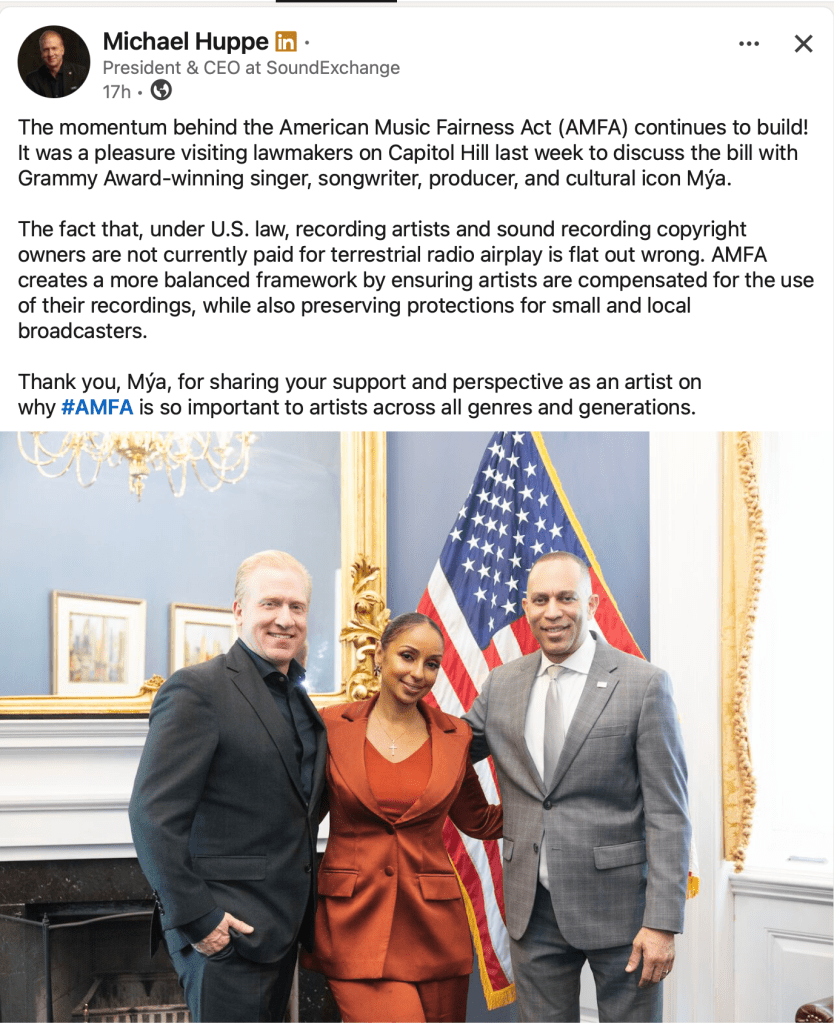
Mýa Backs AMFA as Momentum Builds for Fair Pay for Radio Play

L-R: SX CEO Mike Huppe, Mya, House Minority Leader Rep. Hakeem Jeffries

Momentum around the American Music Fairness Act is building, and that’s a good thing. When Michael Huppe says artists not being paid for terrestrial radio airplay is “flat out wrong,” he’s right. The American Music Fairness Act (AMFA) closes the loop on Congress’s work beginning in 1995 to create a digital performance right in sound recordings. It extends that framework to terrestrial radio, ensuring artists and sound recording owners are paid consistently across platforms while preserving protections for small and local broadcasters.

The U.S. remains an outlier globally, denying performers a basic neighboring right recognized nearly everywhere else. Mýa’s presence underscores what’s at stake: real artists, real livelihoods. AMFA is about correcting a structural imbalance—one that has allowed broadcasters to monetize recordings without compensating those who made them. We appreciate the growing number of leaders in Congress working to get this right.

For more information on the American Music Fairness Act and the broader policy effort to align U.S. law with global norms, see the musicFIRST Coalition. They track the legislation, outline the issues, and provide a way to stay informed or engage if you choose.

Gene Simmons and the American Music Fairness Act

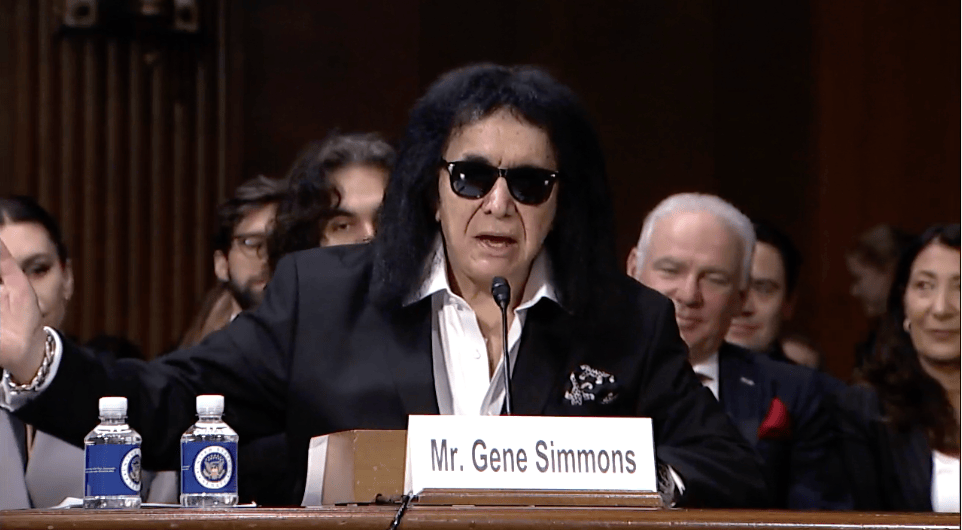
Gene Simmons is receiving Kennedy Center Honors with KISS this Sunday, and is also bringing his voice to the fair pay for radio play campaign to pass the American Music Fairness Act (AMFA).

Gene will testify on AMFA next week before the Senate Judiciary Committee. He won’t just be speaking as a member of KISS or as one of the most recognizable performers in American music. He’ll be showing up as a witness to something far more universal: the decades-long exploitation of recording artists whose work powers an entire broadcast industry and that has never paid them a dime. Watch Gene’s hearing on December 9th at 3pm ET at this link, when Gene testifies alongside SoundExchange CEO Mike Huppe.

As Gene argued in his Washington Post op-ed, the AM/FM radio loophole is not a quirky relic, it is legalized taking. Everyone else pays for music: streaming services, satellite radio, social-media platforms, retail, fitness, gaming. Everyone except big broadcast radio, which generated more than $13 billion in advertising revenue last year while paying zero to the performers whose recordings attract those audiences.

Gene is testifying not just for legacy acts, but for the “thousands of present and future American recording artists” who, like KISS in the early days, were told to work hard, build a fan base, and just be grateful for airplay. As he might put it, artists were expected to “rock and roll all night” — but never expect to be paid for it on the radio.

And when artists asked for change, they were told to wait. They “keep on shoutin’,” decade after decade, but Congress never listened.

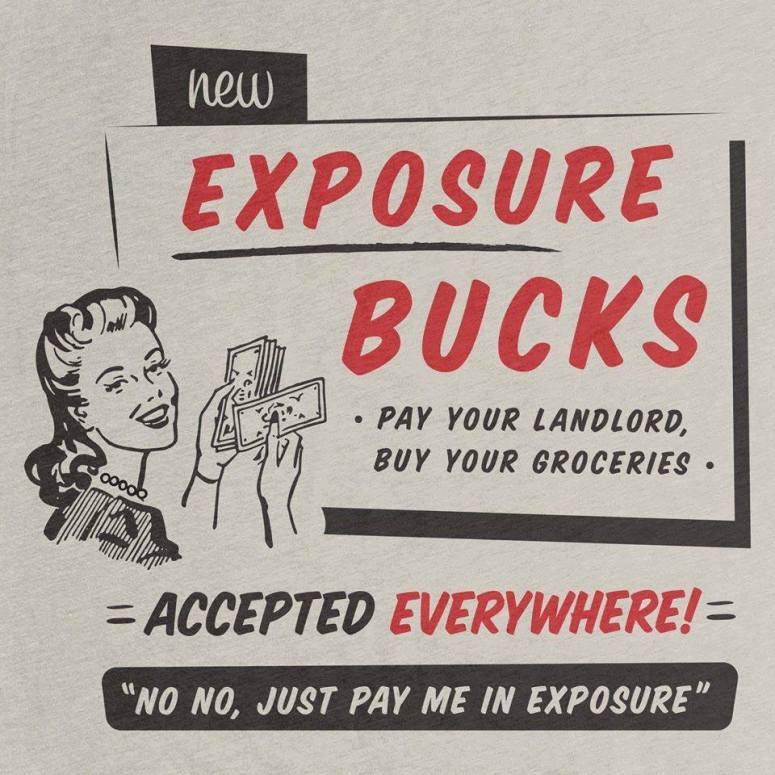
That’s why this hearing matters. It’s the first Senate-level engagement with the issue since 2009. The ground is shifting. Gene Simmons’ presence signals something bigger: artists are done pretending that “exposure” is a form of compensation.

AMFA would finally require AM/FM broadcasters to pay for the sound recordings they exploit, the same way every other democratic nation already does. It would give session musicians, backup vocalists, and countless independent artists a revenue stream they should have had all along. It would even unlock international royalties currently withheld from American performers because the U.S. refuses reciprocity.

And let’s be honest: Gene Simmons is an ideal messenger. He built KISS from nothing, understands the grind, and knows exactly how many hands touch a recording before it reaches the airwaves. His testimony exposes the truth: radio isn’t “free promotion” — it’s a commercial business built on someone else’s work.

Simmons once paraphrased the music economy as a game where artists are expected to give endlessly while massive corporations act like the only “god of thunder,” taking everything and returning nothing. AMFA is an overdue correction to that imbalance.

When Gene sits down before the Senate Judiciary Committee, he won’t be wearing the makeup. He won’t need to. He’ll be carrying something far more powerful: the voices of artists who’ve waited 80 years for Congress to finally turn the volume up on fairness.

A New Twist in the AM Radio Debate: Why Tying AM Mandates to AMFA Is a Game-Changer #IRespectMusic

The latest twist in the long-running AM radio saga comes from a new alliance: cars and music. Automaker trade groups Alliance for Automotive Innovation, Consumer Technology Association, and Zero Emission Transportation Association are shoulder to shoulder with the musicFIRST Coalition and SoundExchange in urging Congress to link the “AM Radio in Every Vehicle Act” with the American Music Fairness Act (AMFA). If we’re going to mandate AM radios be placed in new cars then music played on those radios should pay the people who made that music. It’s unfair and fundamentally inconsistent to require one without the other, so broadcasters should pay artists.

What Is the American Music Fairness Act?

If you haven’t run across it yet, AMFA is bipartisan legislation sponsored by our champion Senator Marsha Blackburn in the Senate and our long-time ally Rep. Darrell Issa in the House of Representatives that would finally require AM/FM radio stations to pay performance royalties to recording artists and performers when their recordings are played over the air. Currently, the U.S. remains the only democracy that allows terrestrial radio to make billions from music without compensating performers.

Why Artists Get Left Out

As incredible as it may seem, under U.S. copyright law, terrestrial radio must pay songwriters and publishers—but not performers or sound recording rights holders. That means backup singers, session musicians, and producers receive zero compensation, even when their work drives–literally–billions in broadcast revenue. This is what allows the National Association of Broadcasters shillery to claim “we pay for music” and then try to pit artists against songwriters. That dog won’t hunt, but that never stops them from trying.

The musicFIRST Coalition, including SoundExchange and tons of artists and creators, has been front and center pushing Congress to close this loophole for years and we have been right there with them along with our friend Blake Morgan and his #IRespectMusic campaign.


“Mandating AM radio without addressing the performance royalty issue would perpetuate an inequity that denies hundreds of millions of dollars in compensation to countless recording artists every year. Congress should not pass a mandate for radio without ensuring appropriate royalties for artists… They deserve to have their hard work respected and valued with fair compensation — like they receive in every other industrialized country.”
SoundExchange CEO Michael Huppe


The Math on AMFA

  • U.S. radio plays over 240 million songs annually without compensating performers
  • The music industry could gain an estimated $200–300 million annually if Americans were paid for domestic and foreign broadcast plays 
  • Aligns U.S. copyright with global norms—terrestrial radio already pays performers in virtually every other developed nation.

What is to be done

If Congress is going to mandate AM radio in every car, it can’t ignore the rights of the very artists who create the content. By demanding performance royalties through AMFA, we can preserve public safety benefits while ensuring creators are paid for their work. This is a rare chance for Congress to get it right—fairness and infrastructure can go hand-in-hand.

If you believe artists deserve fairness when their music plays on the radio, now is the time to act:

  1. Sign the letter to Congress. The musicFIRST Action Center has made it easy—just a few clicks to add your name. 
  2. Call your Senator and Representative and tell them to support both:
    • American Music Fairness Act (H.R. 861 / S. 326)
    • AM Radio in Every Vehicle Act—(S. 315 / H.R. 979–but only inclusive of performance royalties
  3. Spread the word on social media with tags like #PassAMFA#FairPayForArtists#IRespectMusic

@ArtistRights Institute Newsletter 2/17/25

The Artist Rights Institute’s news digest Newsletter

#FreeJImmyLai: Update on Chinese Communist Party Free Speech Enemy No. 1: Jimmy Lai, the Hong Kong publisher of Apple Daily

Why case of jailed Briton Jimmy Lai is major sticking point for [UK Prime Minister] Keir Starmer’s relations with China (Sky News/Alix Culbertson)

American Music Fairness Act

@MARSHABLACKBURN, @REPDARRELLISSA, COLLEAGUES REINTRODUCE AMERICAN MUSIC FAIRNESS ACT TO ENSURE ARTIST PAY FOR RADIO PLAY #IRESPECTMUSIC #AMFA (MusicTechPolicy/Editor Charlie)

Copyright Royalty Board

What Must be Done in CRB 5? (MusicTechSolutions/Chris Castle)

Copyright

The MTP Interview: Attorney Tim Kappel and Abby North Discuss Vetter v. Resnick with Chris Castle

First of Its Kind Decision Finds AI Training Is Not Fair Use (Copyright Alliance/Kevin Madigan)

‘Mass theft’: Thousands of artists call for AI art auction to be cancelled. (The Guardian/Dan Milmo)

Artificial Intelligence in China

Featured Translation:  China’s most humble profession is being squeezed out by Artificial Challenged Intelligence(ChinaAI/Jeffrey Ding)

Great Power Competition in AI

It’s Not Just Technology: What it Means to be a Global Leader in AI (Just Security/Kayla Blomquist and Keegan McBride)

AI, Great Power Competition & National Security (MIT Press/Daedalus/Eric Schmidt)

AI at a Geopolitical Crossroads: The Tension Between Acceleration and Regulation (US Institute for Peace/Andrew Cheatham)