
Remember that BMI sale? And how they said they’d bonus all their writers and publishers with $100 million of the billion dollar plus sale price?

Remember that BMI sale? And how they said they’d bonus all their writers and publishers with $100 million of the billion dollar plus sale price?
By Chris Castle
What’s a better way to hide a story than a Friday news dump? A long weekend news dump. (Remember when The MLC announced that they had “decided” to pick the Harry Fox Agency as their principal vendor after jerking chains for months?).
So I’m not surprised that the BMI sale got a turkey press release on the Thanksgiving long weekend. BMI’s press release is remarkable for what it doesn’t do. For example, it doesn’t announce the financial terms of the deal in favor of the bright and shiny object of a $100,000,000 tip to its 1.4 million “affiliates” which works out to about $71 each. Want to bet that BMI’s shareholders and executive team are pocketing a bit more on the deal?
Which is fine—it’s their company, they can decide how they want to share the sale price windfall. But if you’re going to be a capitalist, be a capitalist and don’t try to sugar coat the fact that you got rich(er) selling data that doesn’t belong to you and trading on the efforts of songwriters. In the great tradition of streaming that we’ve become accustomed to from Big Tech, songwriters get the shortest end of the stick. Oh, and don’t overlook how BMI intends to distribute that $100 million—my bet is that 90% of BMI songwriters won’t even net anything like $71.
But here’s the line that BMI definitely buried in the very last sentence of their press release: “As part of New Mountain’s investment, CapitalG will also invest a passive minority stake in BMI.”
Now who might CapitalG be? CapitalG is a side venture fund owned by Google. So that’s right—after 20 years of fighting the biggest copyright offender in the history of commerce, a seller of advertising on pirate sites like Megavideo, BMI has invited them inside the wire.
“Passive” normally means the party does not participate in the management decisions of a company they have invested in. However, without knowing the terms of the investment, there’s really no way to know what that means. “Minority” typically means that the party holds less than 50% plus one of the outstanding voting shares of the target company on an as-converted basis, in this case the BMI shares following the closing of the sale transaction. Again, without seeing the post-money capitalization table, you really have no way of knowing what “passive minority stake” really means.
So that leads me to look at the public statements of CapitalG, such as on its website. Here’s a couple of examples:
“CapitalG is Alphabet’s (Google’s) independent growth fund.”
“By maintaining a small, concentrated portfolio, we are able to invest heavily in each company’s success, fueling them with recurring, significant capital and consistent, hands-on operational and strategic support.”
What this sounds like is what you would expect—a very engaged, Silicon Valley style venture investment. It is inevitable that this investment will result in at least one board seat or “board observer” which is even worse from the company’s point of view. And that investment style is confirmed by another statement on CapitalG’s website:
“3000 Googlers have advised 4500 portfolio employees. Hands-on go-to-market, people & talent, and product & engineering support, often producing multimillion-dollar value within the first year.”
What that means is that Google will be all up in your grill, BMI folk. Get ready for it, because they will now be able to push you around for real with your jobs on the line because THEY OWN YOU.
What is worse than Boston Consulting Group telling you what you ought to do? Google telling you what you must do. And they will.
Why do they do it?
“16 IPOs and 9 M&A exits. Laser focused on each company’s success–with the track record to prove it.”
“Each company’s success” means the exit. That’s all it means. All those smiling people are smiling for a reason. They don’t care about songs, songwriters, writer relations or anything else. They are about the data, the tech, and all their hairbrained ideas about how the music business really should work in their utopia. Assuming “owning” the MLC and BMI passes antitrust scrutiny at President Biden’s FTC.
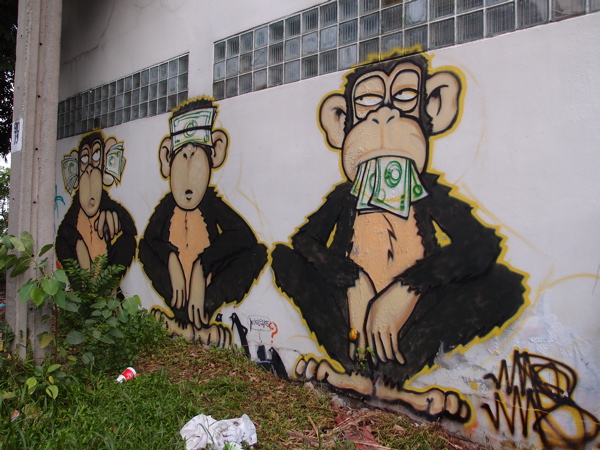
In other words, they are going to pump you up and sell your ass. And they’ll do it with the blood money they made by ripping us off for decades. That’s one way to get a job at Google.
So—as long as we understand each other. Something to think about when your writers and publishers start firing you.
[This post first appeared on MusicTechPolicy]
Greed is good!! Or not.
We’ve all looked on in horror as executives at BMI are structuring a way to extract the value that generations of songwriters have bestowed on the broadcasters’ PRO. Because BMI had operated as a nonprofit corporation since 1939, extracting that value in the form of a sale of BMI was a bit of a problem because nonprofits have pretty extensive restrictions on who they can sell to (most prominently, other non profits and not the for profits who have the money) not to mention the responsibility of board members and no stock ownership by board members, liquidation preferences, etc. Some songwriter advocacy groups sent a letter asking a number of questions to BMI’s head honcho Mike O’Neil. You can read the letter and O’Neil’s non-answer on Music Business Worldwide. After reading the nonanswer see if you have the same reaction a lot of people have had–yep, it’s bullshit.
Enter the team that BMI and their broadcaster board plays for: The White Shoes of Wall Street with their notorious manager Goldman “Shifty” Sachs. As we know, the most dangerous geography in the world is the conflict zone between Shifty Sachs and fees not yet doing the english shift into Shifty’s pockets. So unsurprisingly, BMI did some kind of rollout (aka the Delaware two step) that presto changeo turned BMI into a for profit company ready for serving up on Shifty’s fees menu. And extracting songwriter value for BMI executives with tips all round for Shifty and his White Shoes.
And they’re getting away with it by the look of things. Are you surprised?
One reason they are getting away with it is that the rumored competitive offer from a songwriter buyer group hasn’t materialized yet. But the main reason they are getting away with it is because somehow a firm that has no connection to the music business (North Mountain Capital) seems to be interested in forking over a rumored $1.7 billion price tag for BMI. And that’s a lot of streams.
Because North Mountain have no detectable connection to the music business (aside from a valuation firm which to our knowledge hasn’t humped a trap case in quite a while) they are not really focused on a songwriter revolt against a business whose core asset is rented songs. We say “rented” because any BMI songwriter or publisher agreement can be unilaterally terminated by the songwriter or publisher. Even though that termination can be delayed a while, we wonder if Shifty has really taken that into account.
Of course, North Mountain itself may have some investors who are familiar with the music business. We can’t help noticing that the MLC invests hundreds of millions of other peoples black box money and they may very well have put some of your millions into North Capital as they have with mutual funds in which they are a “controlling person.” Since MLC refuses–under oath–to disclose their investments for the ludicrous reason that they might move markets…sheesh…and since the Copyright Office doesn’t compel the MLC to disclose those investments, we have no idea what they are up to. (There may be a simple explanation for this lack of spine given the Copyright Office’s past revolving door activities.) But we cannot rule out that the black box might be used to fund, albeit indirectly, an acquisition that the songwriters don’t want. In fact, there’s nothing to say that MLC has not already either directly invested in a takeover fund or made loans of black box money to publishers or their buddies who want to buy catalogs.
Unless something’s changed this morning, the BMI sale still isn’t done yet, but we have every confidence in Shifty and the White Shoes.
Because as Gordon Gekko taught us, greed is good.
 The Trichordist
You must be logged in to post a comment.