Letter from Congressman Lloyd Doggett about Frozen Mechanicals to Librarian of Congress and Register of Copyrights

[This is a letter from Austin Congressman Lloyd Doggett (D-TX) to the Librarian of Congress (who appoints and can sack the Copyright Royalty Judges) and the head of the Copyright Office about procedures in the Copyright Royalty Board’s proceeding on frozen mechanicals. Download the original letter here.]


Dr. Carla Hayden, Librarian of Congress
Shira Perlmutter, Register of Copyrights
The Library of Congress
101 Independence Ave SE Washington, DC 20540

Dear Dr. Hayden and Ms. Perlmutter,

As a Representative covering music communities from San Antonio to Austin, the “Live Music Capitol of the World,” some of my songwriter constituents[1] are concerned about some procedural and substantive issues arising in the ongoing “Determination of Royalty Rates and Terms for Making and Distributing Phonorecords (Phonorecords IV)” currently pending before the Copyright Royalty Board (CRB). I write to seek some clarity for them and for me. The statutory rates set by the CRB are binding on all songs ever written or that may ever be written by anyone in the world who exploits songs in copyright in the United States. While referred to as a “minimum” I am told that statutory rates in practice are a maximum and are, of course, compulsory. Naturally, I am concerned that we not misstep.

While I know the CRB has not rendered a decision in Phonorecords IV, I am trying to understand the process by which the CRB: (1) evaluates settlement agreements proffered by certain parties to a proceeding prior to publishing those settlements for public comment, (2) determines the application of the new “willing buyer/willing seller” standard for rate setting when buyer and seller are related parties, and (3) the degree of transparency that the CRB may require of participants in the proceeding particularly terms of private settlements that the parties voluntarily disclose related to the rates they have negotiated.

In particular, I draw your attention to the Motion To Adopt Settlement Of Statutory Royalty Rates And Terms For Subpart B Configurations, Docket No. 21-CRB-0001-PR (2023-2027) filed by the National Music Publishers Association (NMPA), Nashville Songwriters Association International, Sony Music Entertainment, UMG Recordings, Inc. and Warner Music Group Corp.[2]     This settlement has provoked concern because of its disclosed terms regarding an additional five-year freeze for “mechanical” royalty rates on phonorecords in the physical and permanent download configurations, and undisclosed terms if adopted by the CRB in its determination.

The settling parties apparently refer to both a settlement agreement relating to certain mechanical royalty rates and another agreement that refers to undisclosed “negotiated licensing processes and late fee waivers.” Those settling parties ask the CRB to adopt their settlement on an “industry-wide basis,” and I am trying to better understand what this request means.  I do not wish to interfere in the CRB’s adjudication of the matters before it, but I hope you can help me understand certain procedural matters relating to the CRB itself.

I would appreciate your answering the following questions at your earliest convenience due to the ongoing nature of both Phonorecords IV and other rate setting proceedings before the CRB and thank you in advance for your courtesy.

(1) There appear to be two settlements referenced in the Motion, being the rate setting settlement summarized in draft regulations attached and this other “memorandum of understanding” (“MOU”) between Sony Music Entertainment, UMG Recordings, Inc. and Warner Music Group Corp. (i.e., the same parties to the private rate settlement except the NSAI).

Question: May the CRB disclose (or compel the settlement participants to disclose) the unredacted actual settlement agreements referenced in the Motion, including the MOU?

(2) In the Music Modernization Act,[3]  Congress directed CRB Judges to set the statutory mechanical royalty rate by utilizing a “willing buyer/willing seller” rate standard designed to model the rates that would be reflected in a free market. In the case of the “industry-wide” settlements proposed by the Motion, it appears that there may be joint ownership of some of the members of the NMPA and the record companies proposing the settlement on rates.

Question: Are the Subpart B rates subject to the “willing buyer/willing seller” rate standard?

Question: If so, what is the rule when the “willing buyer” and “willing seller” are under the same corporate umbrella?

(3) It seems that the participants in the proceeding, and certainly the participants in the settlement, are dominated by major publishers and record companies seeking to impose their private settlement on all other songwriters. If other songwriter groups are not participating in the proceeding but object to the settlement (such as songwriters from more diverse communities) I am concerned that those songwriters may have no recourse.

Question: May the CRB limit the scope of a private party settlement to the parties, but determine a higher rate applies to others?

The Motion and the “frozen mechanicals” issue has prompted considerable public debate in the United States and Europe as reported in The Trichordist artist blog[,[4] Billboard, [5]   Complete Music Update[  [6]  and the Creative Industries Newsletter[7].   Three NSAI songwriters have published a defense[8] of their participation in the Motion. The Trichordist notes that the CRB produces considerable frustration and passion on all sides because the process is “inequitable, unwieldy and prohibitively expensive.”[9]

On page 4 of the Motion, the parties advise the CRB that this settlement represents the “consensus of buyers and sellers representing the vast majority of the market for “mechanical ” rights for [physical, permanent downloads]…” Setting aside the issue of the settlement participants representing “buyers” and “sellers” under the same corporate umbrellas, it seems appropriate that every songwriter who will be affected by the outcome of this proceeding, from San Antonio and Austin, Memphis, to Detroit and beyond, should have the opportunity to read and comment meaningfully on the actual settlement agreement posed for adoption, and the related MOU referenced.

I look forward to your response and to continuing to work with you on these matters of such critical importance to our culture and to songwriters everywhere. Please also let me know if you have any other insights to this which may be helpful for my constituents.

Sincerely,

Lloyd Doggett

[1] ATX Musicians Joins Opposition to Frozen Mechanicals, The Trichordist, https://thetrichordist.com/2021/05/28/atx-musicians-joins-opposition-to- frozen-mechanicals/

[2] Available at https://app.crb.gov/docwnent/download/25288

[3] 17 U.S.C. § 115(c)(2)(A).

[4] https://thetrichordist.com/category /frozen-mechanicals/

[5] https://www.billboard.com/articles/business/9577976/songwriters-crb-royalty-rate-comments-letters

[6] https://completemusicupdate.com/article/songwriter-groups- urge-us-copyright-royalty-board-to-open­ submissions-on-proposed-new-mechanical-royalty-rate-on-discs-and-downloads/

[7]  http: //legrandnetwork.blogspot.com/2021/06/songwriters-organisations-object-to.html

[8] https://musicrow.com/2021/06/nsai-son gwriters-respond-to-criticism-of-decision-not-to-challenge-physical­ royalty-rates/

[9] https://thetrichordist.com/2021/06/03/three-nashville-songwriters-respond-on-frozen-mechanicals/

How to Register to Comment at the Copyright Royalty Board on the Frozen Mechanicals Rate Hearing

[This post first appeared on MusicTech.Solutions]

By Chris Castle

If you’ve been following the heated controversy around the frozen mechanicals crisis, you’ll know that the Copyright Royalty Board has received a proposal from the NMPA, NSAI and the major labels to freeze the statutory rate for songwriter mechanical royalties on physical (like CDs and vinyl) and permanent downloads (like iTunes) for another five years. That proposal mentions a settlement to establish the frozen rates (which extends the rates that were first frozen in 2006 for another 5 years) and a memorandum of understanding between the NMPA and the major labels for something, we’re not quite sure what.

There’s quite a bit of material about the problem that was posted on the Trichordist, so you can check there to read up on the background. You can also subscribe to the Artist Rights Watch podcast and listen to our first episode about frozen mechanicals. This post today assumes you already know the background and are ready to file your comment.

Filing comments with the CRB is not quite as simple as filing comments with the Copyright Office and it takes a bit of time–comments close on July 26, so do not leave setting up your account until July 26, or even July 25. I would do it today. You can set up your account before you file your comments so that the account part is all ready to go.

Here are some steps you will probably go through to set up your account:

  1. Go to app.crb.gov. Look for “Register for an account” (the one in small print at the bottom of the list)


2. “Register for an account” will take you to a sign up page. Scroll down to “User Information”. You only need to complete the required fields with a red star (so ignore the bar number, etc.)

There is a pull down menu under “Register as” with a few different roles listed. The one you want is “Commenter”

Then complete the form completing only the required fields.

3. The CRB will then authenticate your account and send you an email confirmation. That part goes pretty quickly. However, once your account is authenticated, make sure you log on. You should be taken to a dashboard, but the question is whether your dashboard looks like this:

Note that the dashboard does not have a button to “File a comment”. If this is what you see when you log into your account, you are not done. Contact the CRB support people ecrbsupport@egov.com and tell them that your account has not been activated to comment.

4. Your account should look like this:

The comment you want to file is for Phonorecords IV. You can ignore the other dockets. It took me several trips to the support desk to get the correct filing tabs on my account, hopefully you won’t have that problem. But–just in case, don’t be running around crazy on July 26 trying to file the comment you slaved over because you left the account to the last minute.

The @ArtistRights Watch Podcast: Episode 1: The Frozen Mechanicals Crisis with Guest @CrispinHunt

Nik Patel, David Lowery, and Chris Castle feature in this podcast where they discuss the current issues of artists’ rights in the music industry. Find the Artist Rights Watch on your favorite podcast platform here https://linktr.ee/artistrightswatchpod Please subscribe, rate and share!

On the first episode of the Artist Rights Watch, Nik Patel, David Lowery, and Chris Castle sit down with Ivors Academy Chair, Crispin Hunt to talk about the frozen mechanical royalties crisis currently playing out in the United States and how it threatens UK songwriters and indeed songwriters around the world.

Crispin gives us his invaluable analysis of how the frozen mechanicals crisis affects songwriters around the world and the highly effective #brokenrecord and #fixstreaming campaigns that Ivors Academy supports in the UK that has lead to a parliamentary inquiry and legislation introduced in the UK Parliament.

The “frozen mechanicals” crisis is rooted in a private deal between big publishers and their big label affiliates to essentially continue the freeze on the already-frozen U.S. mechanical royalty rate paid by the record companies for CDs, vinyl and permanent downloads. The private deal freezes the rate for another five years but does not even account for inflation. Increasing the royalty rate for inflation, does not actually increase songwriter buying power.

The major publishers and labels have asked the Copyright Royalty Board in the US to make their private deal the law and apply that frozen rate to everyone.

In the past, the music industry has experienced a $0.02 mechanical royalty rate that lasted for 70 years, and with the current mechanical royalty rate of $0.091 being set in 2006, advocates hope it’s not a repeat of the past.

In this Artist Rights Watch episode, we cover its numerous implications and consequences such as controlled compositions clauses, the Copyright Royalty Board, CPI and fixed increases, how the UK compares, and potential resolutions.

Below are some links for further reading on frozen mechanicals and Crispin Hunt:

Take the Artist Rights Watch Survey on Mechanical Royalty Rates

How to file your comment with the Copyright Royalty Board on the frozen mechanicals crisis!

Controlled Compositions Clauses and Frozen Mechanicals. Chris Castle

https://musictechpolicy.com/2020/10/10/controlled-compositions-clauses-and-frozen-mechanicals/embed/#?secret=Rftsxg1vsl

What Would @TaylorSwift13 and Eddie @cue Do? One Solution to the Frozen Mechanical Problem. Chris Castle

https://musictech.solutions/2021/05/13/what-would-taylor-and-eddie-do-one-solution-to-the-frozen-mechanical-problem/embed/#?secret=N8n44nO4gn

The Trichordist posts on frozen mechanicals

https://thetrichordist.com/category/frozen-mechanicals/

The Ivors Academy Joins the No Frozen Mechanicals Campaign

Year-End 2020 RIAA Revenue Statistics

Click to access 2020-Year-End-Music-Industry-Revenue-Report.pdf

Below are our social links and terms of use:

Crispin: https://twitter.com/crispinhunt

Chris: http://www.christiancastle.com/chris-castle

David: https://twitter.com/davidclowery?s=20

https://www.instagram.com/davidclowery/

Nik: https://www.instagram.com/nikpatelmusic/

Website: https://artistrightswatch.com
Facebook: https://www.facebook.com/artistrightswatch
Twitter: https://twitter.com/ArtistRights?s=20

Terms of Use: https://artistrightswatchdotcom.files.wordpress.com/2021/01/arw-podcast-terms-of-use-v-1-i-1.pdf

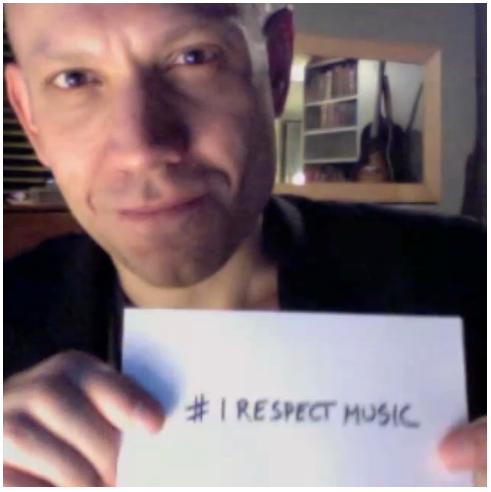
@theBlakeMorgan Joins the List Opposing Frozen Mechanicals at the Copyright Royalty Board #irespectmusic

Blake Morgan songwriter, publisher, producer and label owner, two-time U.S. Supreme Court amicus, founder of the #irespectmusic campaign and relentless artist rights advocate joins the list opposing frozen mechanicals on vinyl and physical. “This is about so many things, but we simply must fight to keep digging out from a 68 year injustice. Big thanks to the inspirational Abby North for standing up for fairness and transparency!”

BlakeIRespectMusic

Against Frozen MechanicalsSupporting Frozen Mechanicals
Songwriters Guild of AmericaNational Music Publishers Association
Society of Composers and LyricistsNashville Songwriters Association International
Alliance for Women Film Composers 
Songwriters Association of Canada 
Screen Composers Guild of Canada 
Music Creators North America 
Music Answers 
Alliance of Latin American Composers & Authors 
Asia-Pacific Music Creators Alliance 
European Composers and Songwriters Alliance 
Pan African Composers and Songwriters Alliance 
North Music Group 
Blake Morgan 

@NorthMusicGroup Joins the List Opposing Frozen Mechanicals With the Copyright Royalty Board

We’ve been keeping track of those who are for freezing the statutory mechanical royalty rate for physical and permanent downloads for another five years out to 2027. The issue is currently part of the rate setting proceeding before the Copyright Royalty Board–which froze the same rate at 9.1¢ in 2006 and was first extended in 2009.

Frozen Mechanicals

Here is the current list of those for and against freezing mechanicals on these categories for a total of 21 years:

Against Frozen MechanicalsSupporting Frozen Mechanicals
Songwriters Guild of AmericaNational Music Publishers Association
Society of Composers and LyricistsNashville Songwriters Association International
Alliance for Women Film Composers 
Songwriters Association of Canada 
Screen Composers Guild of Canada 
Music Creators North America 
Music Answers 
Alliance of Latin American Composers & Authors 
Asia-Pacific Music Creators Alliance 
European Composers and Songwriters Alliance 
Pan African Composers and Songwriters Alliance 
North Music Group 

Guest Post: What Would @TaylorSwift13 and Eddie @cue Do? One solution to the frozen mechanical problem

By Chris Castle [this post first appeared on the MusicTechSolutions blog]

Who can forget how Taylor Swift stood up for songwriters, producers and artists against Apple’s bizarre decision to impose a royalty-free three month trial period on the launch of Apple Music. (Of course, songwriters, producers and artists weren’t the only ones involved, but that’s a story for another day.)

What is equally memorable is how fast Apple changed course and all the goodwill that came to Apple as a result. Faster than you can say “Arsenal”, Eddie Cue announced that Apple would scale it back. Lemonade out of lemons. Of course, the issue should have been obvious, but sometimes smart people miss the point like everyone does sometimes. (Rolling Stone has a good short post on the backstory.)

The point of the story is that when you make a mistake, it’s better to fix it quickly than let it fester. So it is with the “frozen mechanical” problem that has become all the rage in recent days. The good news is the problem can be solved with the payment of money. It won’t be easy, but as a great man once said, this is the business we’ve chosen.

The Copyright Royalty Board decides on the statutory rate that’s paid under compulsory content licenses in the United States. For mechanical royalties, the CRB makes that decision every five years which means that if there isn’t a CRB hearing going on at any given moment, wait a little while and there will be one. (Needless to say, the volume of CRB hearings varies directly with full employment for lawyers and lobbyists in Washington, DC.) The “frozen mechanical” issue dates back to 2006 (or 2009 depending on how you count it) when the CRB allowed the end of rising mechanical royalty rates on physical and permanent downloads (and a couple others). However, the sour memories of frozen mechanicals date to 1909–also a story for another day.

Instead, the CRB has allowed a private agreement among the biggest players to become the law. This has happened at least one other time and it appears that it is about to happen again according to public documents filed with the CRB on March 2, 2021 (read it here). Contrast that private agreement to the bitter struggle against the streaming services over streaming mechanicals that is still in the appeal process. Different people paying, same songwriters getting paid.

If you haven’t heard about the tentative settlement by private agreement at the CRB, it admittedly was not well socialized.

The inescapable problem is that any fixed or “frozen” rate determined at one point in time but paid over relatively long periods of time is at the mercy of inflation in the economy that may rise in that intervening time period. The Congress and the industry recognized this harsh truth in the 1976 revision to the Copyright Act and eventually indexed mechanical rates, meaning that they floated upward with the Consumer Price Index. (CPI has its own problems, but it’s a bogey that lots of people use so it’s easier than reinventing the wheel with a bespoke factor.)

Given what has been happening in the economy, it was inevitable that inflation was about to come back strong in the U.S. and global economy. Sure enough, the Department of Labor announced yesterday:

The Consumer Price Index for All Urban Consumers (CPI-U) increased 0.8 percent in April on a seasonally adjusted basis after rising 0.6 percent in March, the U.S. Bureau of Labor Statistics reported today. Over the last 12 months, the all items index increased 4.2 percent before seasonal adjustment. This is the largest 12-month increase since a 4.9-percent increase for the period ending September 2008.

Yes, the CPI ignored the Fed and increased like the pesky little devil it is. There’s no reason to think that this is going to stop any time soon. (If you were born after 1960 or so, you may not remember that inflation and stagflation resulted in the prime interest rate peaking at 21.5% in December of 1980. That drove mortgage rates to 13.41% in 1981 (often plus points). And then there were the credit cards. That’s where inflation can lead. Personally, my money is on stagflation in the form of high inflation and high unemployment due to what Secretary Yellen called the scarring effects of the pandemic which the music business is experiencing in spades.)

April 2021 DOL Inflation

It just wouldn’t be prudent to enter into a long term contract at a fixed rate that does not take into account inflation. Yet that is exactly what the tentative settlement wants to do with the mechanical rate for physical, downloads, and a couple other categories. Yet, we must acknowledge that it is very difficult to herd the cats to get them to agree to anything. But having gotten everyone to agree to freezing mechanicals and having gotten the CRB to agree to adopt that agreement in the past, it may be the case that the parties can get the CRB to let them increase mechanicals going forward.

In other words, take a lesson from Taylor Swift and Eddie Cue and do a quick course correction before the final settlement gets announced on May 18.

So what would that look like? Precedent suggests that the CRB (and its predecessors) have accepted two principal methods of increasing the rate, which is phased in over time: fixed penny-rate increases and CPI indexing. My suggestion would be to employ both methods in a greater of formula (so popular with streaming).

If phased in over 5 years like other rates, it seems that there could be an immediate step up to compensate songwriters for a rate was frozen starting at the time that physical was still a very significant percentage of sales back in 2006. That stepped up rate could then gradually increase with a greater of a fixed penny increase or CPI. I wouldn’t presume to tell anyone what that step up should be, but if you apply the CPI index, it should probably be about 4¢, bringing the minimum rate to 13¢ from 9.1¢. Given that big–albeit entirely justified–jump, increases over the out years might be more modest.

Now that we know that there’s a strong possibility that inflation will be in our lives for the foreseeable future, the good news is there’s still time to do something about it. The CRB has shown us that they are willing to accept radical changes in the mechanical royalty rate by adopting private settlements, so there seems to be no impediment. I’m not aware of a rule that says the CRB only adopts rules that freeze songwriters in place, so it should work to the songwriters betterment and not just to their detriment.

We should ask, what would Taylor and Eddie do?