The American Music Fairness Act: Will Justice Cross the Finish Line

The American Music Fairness Act is still alive in the 119th Congress in the post-Labor Day political season, and with Congress heading toward the final stretch of the year, it is worth remembering both what the bill actually does and why it matters.

The basic proposition behind AMFA is remarkably simple: when terrestrial radio uses a sound recording to make money, the people who made the recording should be paid. That is not currently the law in the United States, and that’s what the #I Respect Music campaign is all about.
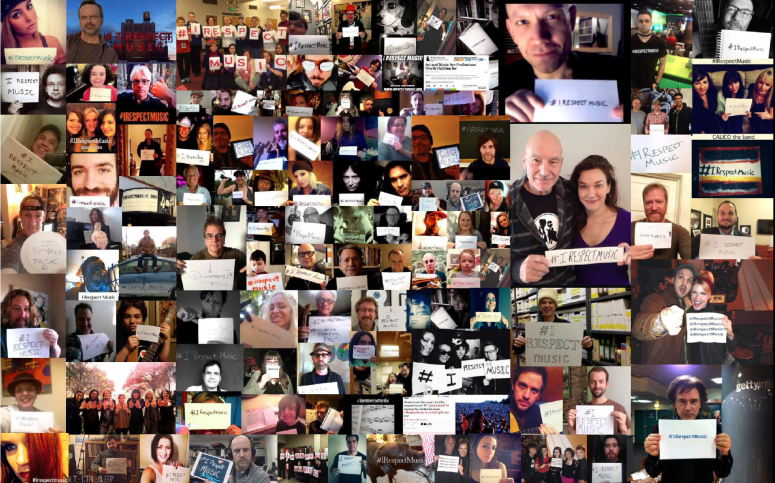
Songwriters and music publishers receive public-performance royalties when AM/FM radio plays a song. But the recording artists, background singers, session musicians and owners of the sound recording receive nothing for the terrestrial performance of that recording. Digital radio services, by contrast, already pay sound-recording performance royalties.

AMFA—S. 326 in the Senate and H.R. 861 in the House—would finally close that anomaly by extending the Section 106(6) sound-recording performance right to terrestrial audio transmissions and bringing AM/FM broadcasts within the Section 114 statutory licensing system.

This Is Not a Small-Radio-Killer Bill

One of the more persistent arguments against AMFA is that a new royalty would threaten small and community broadcasters. Congress has addressed that concern rather directly.

Under S. 326, a qualifying station with less than $100,000 in annual revenue would pay $10 per year. Qualifying public broadcasters with revenues between $100,000 and $1.5 million would pay $100 per year, while other qualifying stations in that range would pay $500. Those protections are limited to genuinely smaller operations; among other requirements, the station’s owner and affiliated entities must have aggregate revenues below $10 million. Let’s be real; that’s a fair deal for small broadcasters, come on.

For everyone else, the Copyright Royalty Judges would establish the rate. And Congress expressly tells the judges that they can consider radio’s much-invoked “exposure” value when determining that rate. (I’m so sure they’ll net out the indie payments, but hush my mouth.)

In other words, “radio promotes records” is not ignored by AMFA. It becomes an economic proposition that can be tested in an actual rate-setting proceeding rather than a vague slogan chanted by NAB lobbyists in sack cloth and ashes justifying a permanent entitlement for large broadcasters to use recordings for free.

And Artists Actually Get Paid

There is another important feature of AMFA that deserves considerably more attention. The bill plugs a potential direct-licensing loophole. If a copyright owner directly licenses transmissions that otherwise could have been made under the Section 114 statutory license, the broadcaster doesn’t get to use that deal to contract the performers out of their statutory share. The transmitting entity must pay 50 percent of the applicable direct-license royalties to SoundExchange (the collective Congress designated to distribute Section 114 royalties), which then distributes the money according to the statutory performer allocations.

That protection is important. It means AMFA isn’t merely creating another revenue stream payable to record companies with the hope that something eventually trickles through an artist’s recording agreement around recoupment in the royalty waterfall. The legislation deliberately preserves a statutory payment path for featured and nonfeatured performers.

That’s an important piece of artist protection and one of the better features of the bill.

The Whip Count

The reality is that AMFA is not sitting on the President’s desk. Neither chamber has reported the bill so far, and that’s the reality in the cold light of dawn. But— look at the Senate sponsorship.

S. 326 is led by Sen. Marsha Blackburn (R-TN) and now has Thom Tillis (R-NC), Bill Hagerty (R-TN), Alex Padilla (D-CA), Cory Booker (D-NJ), and Adam Schiff (D-CA) aboard. That is a 3–3 Republican/Democratic lineup, and importantly, Tillis chairs the Senate Judiciary Intellectual Property Subcommittee while Schiff is its ranking member.

That’s only six senators including the sponsor, so this is certainly not a 60-vote whip count. But six names don’t tell the whole story. Having the chairman and ranking member of the relevant subcommittee supporting the legislation is rather different from having six random cosponsors.

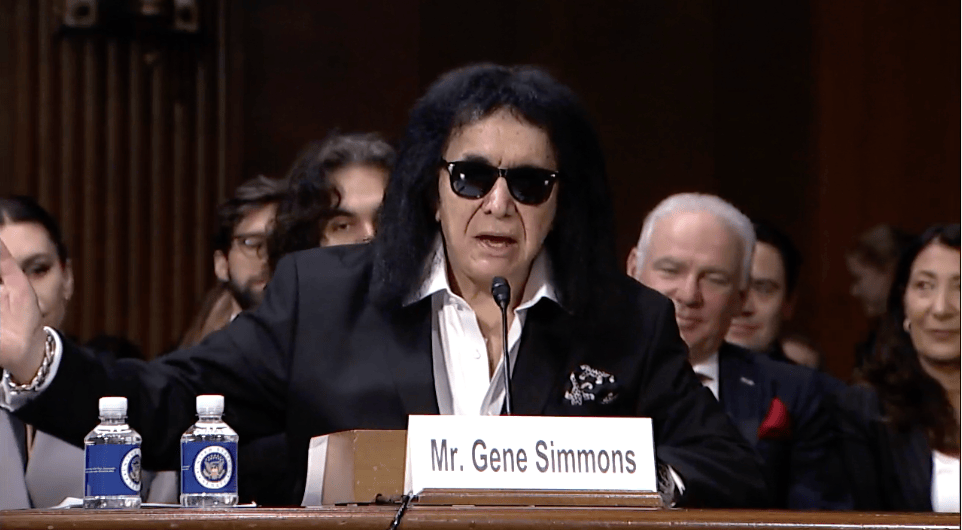
The Senate also did something important in December: it held an actual IP Subcommittee hearing on terrestrial performance rights, with Gene Simmons and SoundExchange President Michael Huppe making the case for performers and broadcasters presenting the opposing view.  And when Gene Simmons makes the case before Congress (“the word ‘if’ is for losers….”) and in his Washington Post op-ed, that’s a sight to behold and is must-see TV if you haven’t watched it.
AMFA support in the House of Representatives is also bipartisan. H.R. 861 is sponsored by Rep. Darrell Issa (R-CA), with support that crosses the aisle, including our long-time supporters Jerry Nadler and Ted Lieu. The House bill has accumulated additional cosponsors since introduction, although it likewise has not yet been reported from Judiciary.

So call the whip count what it is: not enough yet, but unusually well positioned institutionally for a music bill that hasn’t moved through committee.  And let’s be clear—fighting the National Association of Broadcasters is tough work, right up there with the Augean Stables and Sisyphus.  Although closer to the Stables in our opinion.

Don’t Rule Out the Lame Duck

That brings us to the calendar. There isn’t much legislative runway remaining in the 119th Congress, and AMFA still faces formidable opposition from the broadcast lobby. A conventional committee-to-floor path is getting increasingly difficult. But Congress will return after the November elections, and that is where things could get interesting before January 3, 2027 when unpasted bills die.

Music legislation has a history of moving when bipartisan agreement finally intersects with a legislative vehicle. The Music Modernization Act itself ultimately became a package containing several pieces of music legislation and passed with overwhelming bipartisan support.

AMFA now has something it did not have at the beginning of this Congress: a Senate hearing, bipartisan support from the leadership of the relevant IP subcommittee, bipartisan sponsorship in both chambers, and a legislative record establishing both the case for paying performers and the protections afforded small broadcasters.

While that doesn’t guarantee anything, it does make AMFA a plausible candidate for a lame-duck legislative vehicle if the right copyright, intellectual-property or broader year-end package starts moving.  Stranger things have happened.

And this is one of those issues where Congress has been “studying” the problem for a very long time. As SoundExchange CEO Mike Huppe reminded the Senate last December, the Senate Judiciary Committee actually reported the predecessor Performance Rights Act in 2009. It never reached the floor.

Seventeen years later, the underlying inequity is still the law:  American radio broadcasters can build a commercial business around recorded performances without paying the performers for those performances. Digital services pay. Broadcasters in most other developed music markets pay. American terrestrial radio does not.  Artists still die of exposure.

The American Music Fairness Act would finally change that.

Six Senate sponsors isn’t 60 votes. But with Blackburn, Tillis, Hagerty, Padilla, Booker and Schiff already aboard—and Tillis and Schiff occupying the two key positions on the IP Subcommittee—there may be enough bipartisan infrastructure here to keep watching very closely as Congress heads toward the lame duck.

Sometimes the last few weeks of a Congress are when supporters of legislation that has been waiting years finally ride Justice across the finish line.
Meet the New AI Boss, Worse Than the Old Internet Boss

Congress is considering several legislative packages to regulate AI. AI is a system that was launched globally with no safety standards, no threat modeling, and no real oversight. A system that externalized risk onto the public, created enormous security vulnerabilities, and then acted surprised when criminals, hostile states, and bad actors exploited it.

After the damage was done, the same companies that built it told governments not to regulate—because regulation would “stifle innovation.” Instead, they sold us cybersecurity products, compliance frameworks, and risk-management services to fix the problems they created.

Yes, artificial intelligence is a problem. Wait…Oh, no sorry. That’s not AI.

That’s was Internet. And it made the tech bros the richest ruling class in history.

And that’s why some of us are just a little skeptical when the same tech bros are now telling us: “Trust us, this time will be different.” AI will be different, that’s for sure. They’ll get even richer and they’ll rip us off even more this time. Not to mention building small nuclear reactors on government land that we paid for, monopolizing electrical grids that we paid for, and expecting us to fill the landscape with massive power lines that we will pay for.

The topper is that these libertines want no responsibility for anything, and they want to seize control of the levers of government to stop any accountability. But there are some in Congress who are serious about not getting fooled again.

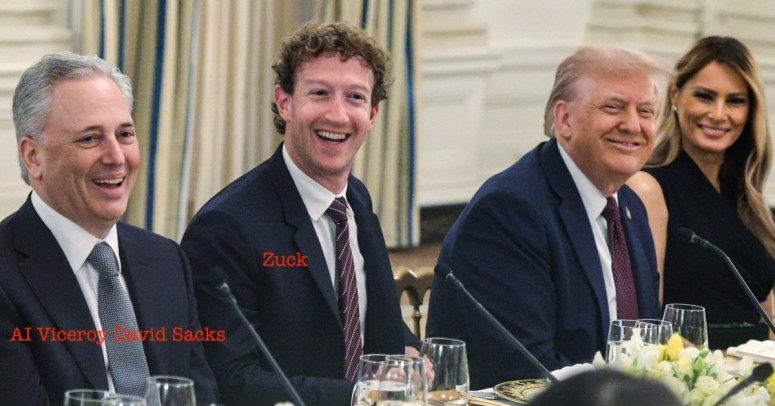
Senator Marsha Blackburn released a summary of legislation she is sponsoring that gives us some cause for hope (read it here courtesy of our friends at the Copyright Alliance). Because her bill might be effective, that means Silicon Valley shills will be all over it to try to water it down and, if at all possible, destroy it. That attack of the shills has already started with Silicon Valley’s AI Viceroy in the Trump White House, a guy you may never have heard of named David Sacks. Know that name. Beware that name.

Senator Blackburn’s bill will do a lot of good things, including for protecting copyright. But the first substantive section of Senator Blackburn’s summary is a game changer. She would establish an obligation on AI platforms to be responsible for known or predictable harm that can befall users of AI products. This is sometimes called a “duty of care.”

Her summary states:

Place a duty of care on AI developers in the design, development, and operation of AI platforms to prevent and mitigate foreseeable harm to users. Additionally, this section requires:

• AI platforms to conduct regular risk assessments of how algorithmic systems, engagement mechanics, and data practices contribute to psychological, physical, financial, and exploitative harms.

• The Federal Trade Commission (FTC) to promulgate rules establishing minimum reasonable safeguards.

At its core, Senator Blackburn’s AI bill tries to force tech companies to play by rules that most other industries have followed for decades: if you design a product that predictably harms people, you have a responsibility to fix it.

That idea is called “products liability.” Simply put, it means companies can’t sell dangerous products and then shrug it off when people get hurt. Sounds logical, right? Sounds like what you would expect would happen if you did the bad thing? Car makers have to worry about the famous exploding gas tanks. Toy manufacturers have to worry about choking hazards. Drug companies have to test side effects. Tobacco companies….well, you know the rest. The law doesn’t demand perfection—but it does demand reasonable care and imposes a “duty of care” on companies that put dangerous products into the public.

Blackburn’s bill would apply that same logic to AI platforms. Yes, the special people would have to follow the same rules as everyone else with no safe harbors.

Instead of treating AI systems as abstract “speech” or neutral tools, the bill treats them as what they are: products with design choices. Those choices that can foreseeably cause psychological harm, financial scams, physical danger, or exploitation. Recommendation algorithms, engagement mechanics, and data practices aren’t accidents. They’re engineered. At tremendous expense. One thing you can be sure of is that if Google’s algorithms behave a certain way, it’s not because the engineers ran out of development money. The same is true of ChatGPT, Grok, etc. On a certain level of reality, this is very likely not guess work or predictability. It’s “known” rather than “should have known.” These people know exactly what their algorithms do. And they do it for the money.

The bill would impose that duty of care on AI developers and platform operators. A duty of care is a basic legal obligation to act reasonably to prevent foreseeable harm. “Foreseeable” doesn’t mean you can predict the exact victim or moment—it means you can anticipate the type of harm that flows to users you target from how the system is built.

To make that duty real, the bill would require companies to conduct regular risk assessments and make them public. These aren’t PR exercises. They would have to evaluate how their algorithms, engagement loops, and data use contribute to harms like addiction, manipulation, fraud, harassment, and exploitation.

They do this already, believe it. What’s different is that they don’t make it public, anymore than Ford made public the internal research that the Pinto’s gas tank was likely to explode. In other words, platforms would have to look honestly at what their systems actually do in the world—not just what they claim to do.

The bill also directs the Federal Trade Commission (FTC) to write rules establishing minimum reasonable safeguards. That’s important because it turns a vague obligation (“be responsible”) into enforceable standards (“here’s what you must do at a minimum”). Think of it as seatbelts and crash tests for AI systems.

So why do tech companies object? Because many of them argue that their algorithms are protected by the First Amendment—that regulating how recommendations work is regulating speech. Yes, that is a load of crap. It’s not just you, it really is BS.

Imagine Ford arguing that an exploding gas tank was “expressive conduct”—that drivers chose the Pinto to make a statement, and therefore safety regulation would violate Ford’s free speech rights. No court would take that seriously. A gas tank is not an opinion. It’s an engineered component with known risks and risks that were known to the manufacturer.

AI platforms are the same. When harm flows from design decisions—how content is ranked, how users are nudged, how systems optimize for engagement—that’s not speech. That’s product design. You can measure it, test it, audit it, which they do and make it safer which they don’t.

This part of Senator Blackburn’s bill matters because platform design shapes culture, careers, and livelihoods. Algorithms decide what gets seen, what gets buried, and what gets exploited. Blackburn’s bill doesn’t solve every problem, but it takes an important step: it says tech companies can’t hide dangerous products behind free-speech rhetoric anymore.

If you build it, and it predictably hurts people, you’re responsible for fixing it. That’s not censorship. It’s accountability. And people like Marc Andreessen, Sam Altman, Elon Musk and David Sacks will hate it.

Senator Cruz Joins the States on AI Safe Harbor Collapse— And the Moratorium Quietly Slinks Away

Silicon Valley Loses Bigly

In a symbolic vote that spoke volumes, the U.S. Senate decisively voted 99–1 to strike the toxic AI safe harbor moratorium from the vote-a-rama for the One Big Beautiful Bill Act (HR 1) according to the AP. Senator Ted Cruz, who had previously actively supported the measure, actually joined the bipartisan chorus in stripping it — an acknowledgment that the proposal had become politically radioactive.

To recap, the AI moratorium would have barred states from regulating artificial intelligence for up to 10 years, tying access to broadband and infrastructure funds to compliance. It triggered an immediate backlash: Republican governors, state attorneys general, parents’ groups, civil liberties organizations, and even independent artists condemned it as a blatant handout to Big Tech with yet another rent-seeking safe harbor.

Marsha Blackburn and Maria Cantwell to the Rescue

Credit where it’s due: Senator Marsha Blackburn (R–TN) was the linchpin in the Senate, working across the aisle with Sen. Maria Cantwell to introduce the amendment that finally killed the provision. Blackburn’s credibility with conservative and tech-wary voters gave other Republicans room to move — and once the tide turned, it became a rout. Her leadership was key to sending the signal to her Republican colleagues–including Senator Cruz–that this wasn’t a hill to die on.

Top Cover from President Trump?

But stripping the moratorium wasn’t just a Senate rebellion. This kind of reversal in must-pass, triple whip legislation doesn’t happen without top cover from the White House, and in all likelihood, Donald Trump himself. The provision was never a “last stand” issue in the art of the deal. Trump can plausibly say he gave industry players like Masayoshi Son, Meta, and Google a shot, but the resistance from the states made it politically untenable. It was frankly a poorly handled provision from the start, and there’s little evidence Trump was ever personally invested in it. He certainly didn’t make any public statements about it at all, which is why I always felt it was such an improbable deal point that it was always intended as a bargaining chip whether the staff knew it or not.

One thing is for damn sure–it ain’t coming back in the House which is another way you know you can stick a fork in it despite the churlish shillery types who are sulking off the pitch.

One final note on the process: it’s unfortunate that the Senate Parliamentarian made such a questionable call when she let the AI moratorium survive the Byrd Bath, despite it being so obviously not germane to reconciliation. The provision never should have made it this far in the first place — but oh well. Fortunately, the Senate stepped in and did what the process should have done from the outset.

Now what?

It ain’t over til it’s over. The battle with Silicon Valley may be over on this issue today, but that’s not to say the war is over. The AI moratorium may reappear, reshaped and rebranded, in future bills. But its defeat in the Senate is important. It proves that state-level resistance can still shape federal tech policy, even when it’s buried in omnibus legislation and wrapped in national security rhetoric.

Cruz’s shift wasn’t a betrayal of party leadership — it was a recognition that even in Washington, federalism still matters. And this time, the states — and our champion Marsha — held the line. 

Brava, madam. Well played.

This post first appeared on MusicTechPolicy

@jemaswad: Senators Introduce American Music Fairness Act, Which Would Require Radio to Pay Royalties to Musicians [thanks to Senators @MarshaBlackburn and @AlexPadilla4CA] #IRespectMusic

[Introducing AMFA in the Senate is a huge thing and a major win by MusicFirst over the evil NAB and their $50 handshake. The bipartisan legislation has to pass both Senate and House to become law.]

Since the dawn of radio, the United States has been and remains the only major country in the world where terrestrial radio pays no royalties to performers or recorded-music copyright owners of the songs it plays — a situation that is largely due to the powerful radio lobby’s influence in Congress. While the more than 8,300 AM and FM stations across the country pay royalties to songwriters and publishers, they have never paid performers or copyright holders, although streaming services and satellite radio do.

On Thursday morning, Senators Alex Padilla (D-Calif.) and Marsha Blackburn (R-Tenn.) introduced the bipartisan American Music Fairness Act, which aims to rectify that situation by “ensur[ing] artists and music creators receive fair compensation for the use of their songs on AM/FM radio. This legislation will bring corporate radio broadcasters up-to-speed with all other music streaming platforms, which already pay artists for their music.”

Read the post on Variety