
Tag: music industry
The AI “License” That Isn’t: A Musician’s Checklist for Spotting a Covenant Not to Sue Censorship Trap in Disguise
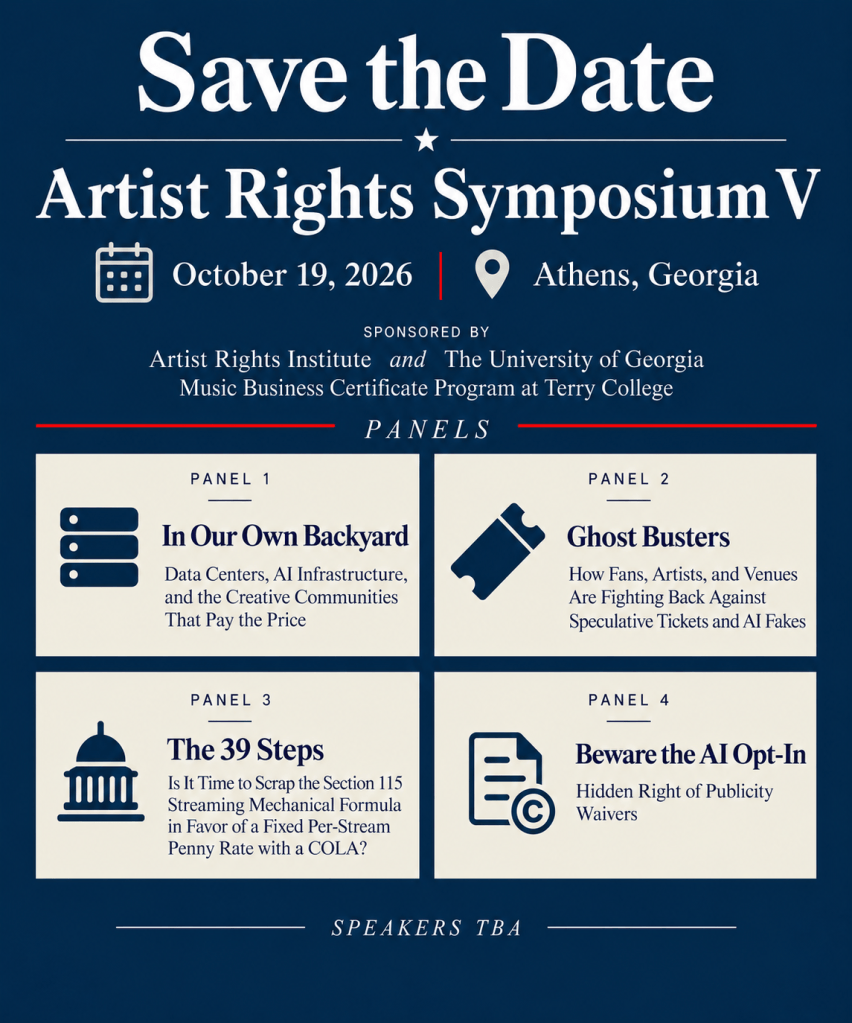
If you saw the adverb “forever” in a contract, would it give you pause? It would me—I would wonder who allowed that to slip through. As text-to-audio generative AI models desperately try to normalize their shoot-ready-aim ingestion of likely stolen works to support their next round of financing (or in some cases perhaps a VC exit by IPO), it’s likely that we will see some efforts at “licensing” reminiscent of the Napster era. “Licenses” that actually paper over the main act—stop the lawsuit before they start. What will that look like and what should we look for buried in the not so fine print?
Generative AI companies are coming to the negotiating table with “music licensing agreements” (and probably other artists’ too). That sounds encouraging — it suggests they want to do the right thing and pay for the content they use. Trust me, they don’t. What they want is to get away with it.
Not every document titled “license” actually functions like one. Some of these deals are better described as litigation insurance dressed up in licensing language, and if you sign one without reading the small print, you may be giving away far more than you realize. Because as Tom Waits taught us in the classic Step Right Up, the large print giveth and the small print taketh away.
Here’s a practical checklist of red flags to watch for if you want to look past the hype:
☐ Check Whether the “License” Actually Includes a Perpetual “Covenant Not to Sue”
A quick definitional note: a covenant not to sue is a contractual promise in which you agree in advance never to bring a legal claim against the other party — regardless of what happens, regardless of whether you even know you have a claim, and often regardless of whether the conduct at issue would otherwise be something you could sue for or get a court to stop (like with an injunction). Unlike a license, which grants permission and can expire, a covenant not to sue can be a permanent waiver of your right to seek a remedy. It’s the difference between handing someone a key to your house and signing a contract promising you’ll never call the police no matter what they do inside.
A real license gives someone permission to use your work under defined conditions, and when the term ends, so does the permission. Watch out for agreements that include a separate clause in which you irrevocably promise — both during and after the term — never to bring any claim against the company or even its users. If the covenant not only covers copyright, publicity rights, moral rights, defamation, and lawsuits over issues that may not exist yet, you are not licensing your work. You are surrendering your right to enforce your rights, permanently. Or you know, “forever.” Make sure you understand the difference before you sign.
☐ Beware a “Non-Exclusive” License That Binds Your Co-Writers
Remember the 100% licensing debacle back in 2016? Tenants-in-common co-ownership of a copyright means any co-owner can grant a non-exclusive license without the others’ consent — but that principle can be weaponized. If an agreement requires you to represent and warrant that no third-party consent is needed, and that you will not encourage your fellow songwriters to take any position inconsistent with the deal (again with the censorship), you may be dragging your co-writers into an arrangement they never agreed to. Worse, if the covenant not to sue extends to all contributors, your co-writers’ enforcement rights could be compromised by a deal they had no say in. Before you sign, make sure the AI platform isn’t leveraging TIC principles to bind people who aren’t at the table. Here’s why this matters in practice: under TIC co-ownership, a non-exclusive license granted by one co-owner is generally binding on all co-owners, even without their consent. That means if you grant a non-exclusive license — or, more critically, a covenant not to sue — covering the full composition, your co-writer may be unable to bring an infringement claim against the same company for the same use, because the company can point to your grant as a complete defense. The co-writer’s right to sue isn’t technically extinguished, but it’s rendered practically worthless. The result is that one publisher’s signature can neutralize enforcement rights across an entire song’s ownership chain. Ask your lawyer.
☐ Look for a Sweeping Pre-Signing Release
Some agreements bury a broad release of all claims arising before the effective date — known and unknown, suspected and unsuspected. That’s not a license, it’s a preemptive settlement masquerading as a license. Worse, they may ask you to preemptively waive protections like California Civil Code Section 1542, which exists specifically to protect people in this exact situation. The statute prevents people from accidentally releasing claims they don’t yet know about. If an AI company has been training on your catalog without permission for years, a release like this could function like a contractual safe harbor and eliminate any leverage you had to seek compensation for that unauthorized use, or better yet an injunction. You know, kind of like the Music Modernization Act. Ask yourself: why does a forward-looking license need a backward-looking release? Aside from wanting a pony.
☐ Make Sure “Training Rights” Aren’t Irrevocable in Practice
A license to include your works in a training corpus sounds civilized, but look closely at the removal mechanics (and take a class in “machine unlearning“). If the company is only required to retrain its model a limited number of times per year — say, twice — then even if you pull your catalog, your works may remain embedded in the AI model for months or even “forever”. There are no guarantees that “retraining” will actually remove your works from the model and, in fact, the literature suggests it won’t. And if the covenant not to sue survives the term for anything created while the deal was active (or before the deal was active), the training that already happened is effectively locked in. You may be inadvertently granting a right for yourself and maybe your co-writers that you can never meaningfully take back.
☐ Don’t Pre-Approve a Statutory Streaming License They May Not Be Entitled To
Some AI music platforms aspire to become full on-demand streaming services — and their agreements may include language contemplating exactly that expansion, with provisions stating the company will simply obtain a blanket mechanical license from the Mechanical Licensing Collective under 17 U.S.C. § 115(d). But whether a generative AI platform that creates synthetic music qualifies for the statutory compulsory license designed for traditional on-demand streaming is a genuinely open legal question. If you agree to terms that treat this expansion as a foregone conclusion — or worse, if your covenant not to sue or conditional authorization greenlights streaming functionality by default — you may be conceding the argument before it’s ever litigated. Don’t let an agreement’s assumptions about statutory eligibility become your assumptions. That question should be tested, not waived.
There’s a deeper problem here, too. The Section 115 compulsory license has always contained an anti-piracy prerequisite: you cannot obtain a compulsory license to use a musical composition if the sound recording you’re working from was not lawfully fixed or authorized by the sound recording’s copyright owner. If an AI platform trained its model on sound recordings it ingested without authorization (as is currently being litigated), its entire statutory license theory may be built on a foundation of infringement. The compulsory license was never designed to launder unauthorized use of sound recordings into lawful use of the compositions they embody. By agreeing to terms that treat the platform’s eligibility as settled, you may be implicitly conceding that the platform’s use of those sound recordings was authorized — a concession likely worth far more than anyone is probably paying for it and that can get you sideways with the sound recording owners.
☐ Scrutinize “Guardrail Failure” Safe Harbors
Technical safeguards — input filters, output filters, vocal classifiers — are only as good as the consequences for failure. Be wary of provisions that excuse the AI company from breach liability when its guardrails fail, so long as the failures are characterized as “inadvertent” and “de minimis” which are in the eye of the beholder and just buying a lawsuit. If the agreement treats guardrail failures as non-breaches by default, you’ve effectively agreed that the company can produce unauthorized outputs of your works without meaningful accountability, as long as it promises to try to fix the problem after the fact with no stick if it fails.
☐ Watch Who Owns the AI Model — and Learned “Insights”
Ownership clauses in AI agreements often go further than you’d expect. The company may claim ownership not just of the AI model, but of all “insights” it learns which can be damn near anything. That “learning” is including those developed using your content. That language could be read to mean that everything the AI extracts, learns, or derives from your catalog belongs to the platform. Make sure you are not inadvertently ceding ownership of the creative intelligence embedded in your works.
☐ Don’t Let a Third Party’s Binding Calculation Determine Your Payment
I am no fan of market share revenue share deals, particularly when the revenue pool is a fixed number. Some revenue pool deals delegate the calculation of your market share — and therefore your payment — to a third party, and then declare that calculation to be binding on you, even if you had nothing to do with calculating either your market share (under the “license” not in general) or your share of the revenue or minimum guarantee. If you have no right to challenge the methodology or the math, or to audit that third party, you could be found to have agreed to be paid whatever someone else decides you’re owed, with no recourse if they get it wrong.
☐ Trace the Revenue Through Every Deduction Before Celebrating the Rate
A headline royalty rate means nothing if it’s applied to a revenue base that has already been carved down by layers of deductions including off the top fees, advertising costs, technical fees, inference compute costs, app-store commissions, performance royalties, and more. Each deduction may sound reasonable in isolation, but stacked together, they can reduce the revenue pool to a fraction of what you’d expect. Always model your actual payout, not just the stated percentage.
☐ Beware Conditional Authorizations That Expand the Deal Without Your Active Consent
Some agreements include provisions for future features such as API access, enterprise customer pricing, new product versions, downloads, or interactive streaming that automatically activate once a majority of other rightsholders sign on. If the trigger is what other labels or publishers do rather than what you approve, you may find that the scope of the license has expanded well beyond what you agreed to, without any additional negotiation or compensation. And remember what they say about if everyone else was running off a cliff.
☐ Censorship Clauses: Don’t Agree to Never Contradict the Deal
Representation and warranty sections sometimes include a covenant that you will not take, or encourage your artists or songwriters to take, any position at any time (whether during or after the term and whether or not truthful) that is inconsistent with the hoorah narrative about AI or the applicable license. Read that carefully. It could be interpreted to prevent you — or your writers — from ever publicly criticizing the deal, advocating for stronger protections, or supporting legislation that conflicts with the agreement’s framework, even years after it expires even if the AI platform is in breach. Aside from censoring your freedom of speech, this has nothing, and I mean nothing, to do with a license.
☐ Understand What Walled Garden Actually Means for Your Writers
A service that restricts AI-generated content to a “walled garden” with no downloads sounds contained. But if users can generate unlimited content using your works, share tracks or links to tracks across social media, and the company retains the right to expand into other product lines (including non-AI product lines like an on-demand streaming service) all within the same agreement, any “walled garden” may be pretty ephemeral.
☐ Confirm That Your Minimum Guarantee Is Actually Guaranteed
A minimum guarantee that is “fully recoupable” against future royalties is not a floor — it’s an advance. If the service underperforms, you keep the advance, but if it succeeds, the guarantee is just an interest-free loan. Make sure you understand whether the guarantee represents real minimum compensation or simply front-loaded royalties you would have earned anyway. Also, plan for both failure and success—if you’re a publisher or label, how on earth are you going to be able to account to your songwriters or artists while you’re recouping any minimum guarantee or afterwards?
☐ Demand Flow-Down Protections in the Platform’s Terms of Service
An AI platform’s Terms of Service are where your contractual protections actually meet the end user — and if the ToS doesn’t carry your rights forward, your rights may exist only on paper, if at all. Before you sign, confirm that the agreement requires the platform’s user-facing ToS to include, at a minimum:
- An ownership disclaimer — users must acknowledge they acquire no copyright or ownership interest in AI outputs that embody your works.
- A reverse-engineering prohibition — users must be prohibited from extracting, reconstructing, or isolating your works from the model’s outputs.
- A downstream training restriction — users must be barred from using AI-generated outputs containing your works to train their own AI models.
- User indemnification that flows to you — if a user misuses your works, you shouldn’t have to rely solely on the platform to make you whole.
- A meaningful commercial-use definition and enforcement mechanism — if the deal says “personal, non-commercial use only,” the ToS needs to define what that means and impose real consequences for violations, not just account revocation. Remember, “non-commercial” has been used for text and data mining exceptions in various countries that are huge and unintended exceptions to copyright.
- An anti-circumvention clause — users should be explicitly prohibited from attempting to bypass input/output filters and guardrails, not just prevented by technology that may fail.
- Publisher review and approval rights over ToS language — if the agreement references ToS protections as part of your deal, you should have the right to review and approve the actual language implementing them.
If the platform isn’t required to flow these protections down to users, then the guardrails in your agreement are a ceiling, not a floor.
☐ Ask Whether Any Other Rightsholders Are Getting Equity — and Whether You Are, Too
If the agreement includes an MFN clause promising you’ll receive the “most favorable economic terms” offered to any other licensor, ask the obvious follow-up: are large rightsholders receiving equity stakes in the AI platform as part of their deals like the majors and Merlin did with Spotify? We’ve seen this movie before. When streaming platforms launched, labels negotiated equity positions that dramatically increased the total value of their agreements — value that was never shared with publishers or songwriters. If an AI company is offering stock, warrants, or other equity consideration to labels while offering publishers only cash royalties and a minimum guarantee, then the MFN clause is cosmetic. The “most favorable economic terms” aren’t favorable at all if they exclude the most valuable component of the deal. Before you accept the premise that you’re being treated equally, ask what the royalty rate would look like if nobody were getting equity. That’s the number that tells you whether the cash terms are fair on their own — or whether they’re subsidized by equity you’ll never see.
Now What: When an AI company presents you with a “licensing agreement,” read it like a litigator, not a dealmaker. (When presented with a contract, dealmakers look at the money, litigators look at the remedies.). The title of the document matters far less than what’s inside it. If the agreement includes a perpetual covenant not to sue, a retroactive release of claims, and an ownership clause that captures everything the AI learns from your work, what you’re being offered isn’t a license — it’s capitulation with a royalty attached.
Know what you’re signing. Read it yourself, don’t buy the hoorah.
This Isn’t Just Copyright—It’s Trade Discrimination Against American Creators
Readers of this blog know we’ve spent years supporting the American Music Fairness Act and its predecessor legislation, as well as the tireless efforts of the MusicFIRST Coalition and Blake Morgan’s #IRespectMusic campaign to modernize U.S. law. The argument has always been simple: the United States is virtually alone among developed nations in refusing to pay recording artists when their music is played on AM/FM radio. We’ve long argued that this is unfair to American performers.
Now it may become something even worse.
On July 8, an unusually broad coalition representing virtually every corner of the American music industry—including performers, musicians, independent labels, collecting societies, unions, songwriters’ organizations, managers, and the Recording Academy—sent a letter to U.S. Trade Representative Jamieson Greer warning that the European Commission has indicated it may consider legislation that could use this gap in U.S. law as the basis for reducing or denying royalties to American performers and record companies in Europe.
According to the coalition, nearly $300 million in annual royalties could be at risk if Europe abandons the longstanding principle of national treatment in favor of what proponents call “material reciprocity,” the latest mercantilist dodge. The coalition urged the Administration to oppose any such proposal as a trade matter. They identified passage of the American Music Fairness Act as the most direct way to eliminate the rationale behind Europe’s proposed policy shift.
That makes this story about far more than royalties for broadcasts (“neighboring rights”). It is about whether a longstanding defect in U.S. copyright law is beginning to produce real economic consequences for American creators overseas—and why organizations that rarely agree have united to ask the United States government to respond and protect American creators.
What Is National Treatment?
For generations, national treatment has been one of the foundational principles of international copyright and neighboring rights. Simply put, when another country uses an American recording, American performers generally receive the same treatment that country gives its own creators. That principle has helped ensure that American musicians, background singers, session players, independent artists, and record companies receive compensation when their recordings are broadcast or publicly performed overseas.
The policy now being discussed in Europe would move away from that principle in favor of what proponents call material reciprocity. The phrase sounds technical—even fair. It is anything but straightforward.
“Material reciprocity” sounds like a neutral rule requiring countries to treat one another equally. It is more accurately an optional exception to national treatment derived from the reservation provisions of the WIPO Performances and Phonograms Treaty. The treaty permits a country to limit protection to the extent another country has limited its own remuneration right; it does not require that result.
In practice, the proposed European approach would allow royalties generated by the use of American recordings in Europe to be withheld from the American performers whose recordings generated them, based on a defect in U.S. law over which those creators have little control and have done their best to rid themselves.
In other words, Europe would not be saying American recordings have no value. Make no mistake, those recordings would still be broadcast. Broadcasters would still pay royalties. The question—as usual—would simply become who gets the money? Spoiler alert—it’s not the artist who earned the money.
Why This Is Happening
The immediate backdrop is the 2020 decision of the Court of Justice of the European Union in RAAP, which held that American performers are entitled to equitable remuneration under existing European law. Following that decision, most EU member states amended their laws to comply.
Not everyone welcomed that result.
IMPALA, which represents independent record companies across Europe, has been among the organizations urging the European Commission to restore “material reciprocity” after RAAP. Its position is straightforward: European performers and labels should not be required to share European neighboring-rights royalties with American performers when the United States provides no comparable terrestrial radio right to Europeans—even if the U.S. performers earned those royalties in Europe. Get it?
There is a certain irony here.
For years, supporters of the American Music Fairness Act argued that Congress should fix the terrestrial radio loophole because it unfairly denied American performers compensation at home. Now that same loophole is being cited overseas as justification for reducing compensation paid to American performers abroad.
Whether one agrees with IMPALA or not, the dispute illustrates that copyright policy increasingly operates as trade policy.
A Remarkably Broad Coalition
One of the most significant aspects of the coalition’s July 8 letter to the USTR is who signed up to it. The coalition includes organizations representing performers, musicians, recording artists, independent labels, managers, unions, composers, songwriters, and collecting societies. These organizations represent different constituencies, pursue different priorities, and advocate competing legislative agendas.
Yet on this issue they have found common ground. Their message is straightforward: American creators should continue receiving the same treatment in Europe that European countries provide their own creators.
That breadth of commitment is significant.
In an era when the music industry is often divided over artificial intelligence, streaming economics, licensing reform, Copyright Royalty Board proceedings, and virtually every other major policy debate, this level of agreement is unusual.
That alone should command policymakers’ attention.
This Is About More Than $300 Million
The dollar figure understandably grabs headlines. But the larger issue is fundamental fairness.
American recordings account for a substantial share of music played on European radio—royalty generating plays on European radio. The royalties generated by those performances are not theoretical. They represent meaningful income for performers whose recordings continue to create value around the world, often years or decades after they were made.
Once governments begin replacing national treatment with reciprocity tests, the stability of international rights system begins to erode. Other countries may decide to revisit their own neighboring-rights systems, creating a patchwork of nationality-based rules that ultimately harms creators everywhere.
For many American performers—particularly independent artists, session musicians, and legacy performers—these foreign neighboring-rights royalties are not windfalls. They are earned compensation for recordings that continue to succeed internationally.
More Than Copyright: A Trade Issue
The coalition is not asking merely for a change in IP policy. It is asking the United States Trade Representative to treat this as a matter of international trade affecting American creators and one of America’s most successful cultural exports.
That is a significant development.
The music industry has long viewed copyright disputes primarily through the lens of intellectual property. This coalition letter recognizes that international copyright rules increasingly function as trade rules as well. Decisions made in Brussels can directly affect the income of American creators and the competitiveness of American cultural exports. As the coalition letter states:
National treatment has long been a cornerstone of the global copyright system, ensuring American creators—including recording artists, musicians, and performers—are treated no less favorably than domestic rightsholders abroad. The Commission’s proposed shift to reciprocity would condition these protections on U.S. law, replacing a clear, rules-based system with one that is fragmented, uncertain and would directly disadvantage U.S. creators in foreign markets….Left unchecked, this approach will erode nondiscrimination principles, invite retaliatory measures, and weaken transatlantic cooperation on intellectual property.
The central trade question is not difficult to understand: should a foreign government be permitted to collect royalties generated by the exploitation of American recordings while denying those royalties to the American performers and producers whose work generated them? Again from the letter:
USTR has already taken an important step by placing the European Union on the Special 301 Watch List. We encourage the Administration to build on this action by fully leveraging available trade tools—including sustained bilateral engagement, coordinated multilateral pressure, and, if necessary, targeted enforcement measures—to prevent the adoption of material reciprocity and ensure compliance with national treatment obligations.
Calling that result “material reciprocity” does not make it any less discriminatory in practice.
Why This Is Significant
International copyright rarely receives widespread public attention until the consequences become irreversible.
The debate over artificial intelligence has reminded us how quickly longstanding norms can come under pressure. Whether the issue is AI training, streaming economics, or neighboring rights, the underlying question remains remarkably consistent:
Will creators continue to receive fair compensation when others profit from their work?
When the Industry Speaks With One Voice
The music industry rarely agrees on anything. Artists and record labels disagree. Major labels and independent labels disagree. Managers, unions, publishers, collecting societies, and digital services often find themselves on opposite sides of legislative and regulatory debates. That is precisely why this coalition is important..
Organizations representing performers, musicians, managers, independent labels, unions, composers, and collecting societies, have all concluded that this issue deserves the immediate attention of the United States government. Whether the European Commission ultimately moves forward with legislation remains to be seen. But the coalition deserves credit for bringing the issue to the attention of the U.S. Trade Representative before any formal legislative proposal has been introduced.
If nothing else, the letter serves as an early warning that international copyright policy and international trade policy are becoming increasingly intertwined—and that decisions made in Brussels can have significant consequences for American creators.
For now, the most important takeaway is simple: pay attention. The music industry rarely speaks with one voice. When it does, policymakers should listen.
This is a story worth watching, and we’ll continue to follow it as it develops.
As Suno Celebrated a $5.4 Billion Valuation, Artists Took Their Message Directly to Wall Street
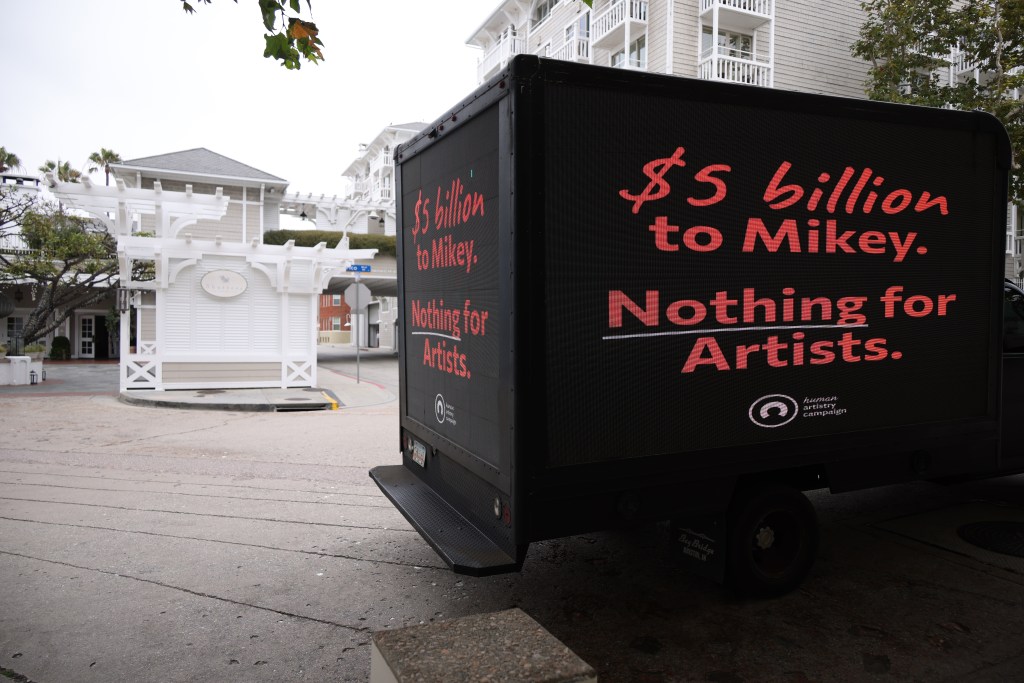
On June 3, 2026, as investors and technology executives gathered at the UBS AI in Entertainment Summit at Shutters on the Beach in Santa Monica, a plane circled overhead carrying a simple message: “SAY NO TO SUNO.” A second banner could just as easily have read, “Stealing Music Is Bad Karma.” The scene was more than a protest against a single AI music company. It was a reminder that technology itself is neither good nor evil; what matters is how humans choose to use it. Throughout history, some of the most transformative technologies have been driven by the same motivations that power every bully: greed and fear. Fear of being left behind. Fear of missing out. Greed for market share, dominance, and wealth and crushing anyone who gets in the way. The generative AI race increasingly appears to be driven—and corroded—by both.
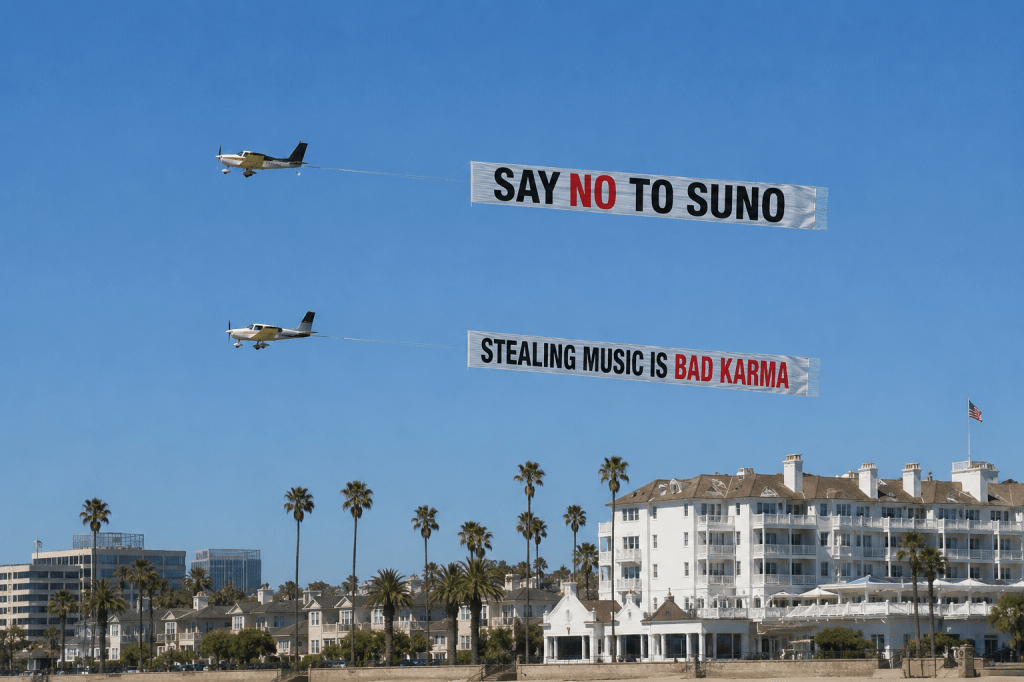
That is why the protest above Santa Monica was about more than music. It connected directly to a broader national backlash against the infrastructure being built to support the AI economy. Across the United States, communities are fighting data centers, transmission lines, water consumption, tax subsidies, and industrial development projects that many believe are being imposed without meaningful public consent. Residents from Texas to Georgia to Louisiana are asking the same basic question: who benefits, and who pays the price?
In the case of generative AI, artists argue that they are among those paying the price.
The Human Artistry Campaign demonstration took place on the same day that Suno announced a funding round exceeding $400 million at a valuation of approximately $5.4 billion. Let it not be said that music has no value and that Suno is not free riding on a thriving market to extract their absurd valuation.
While Silicon Valley investors celebrated another milestone in AI’s rapid expansion, the protest highlighted an uncomfortable reality: much of the value being created by generative AI companies originates from extracting human expression while paying no regard whatsoever to those humans. Whether the source material is music, visual art, photography, authors, voice performances, or other creative works, creators continue to ask how their contributions found their way into commercial AI systems and demand the right to say no to Suno.
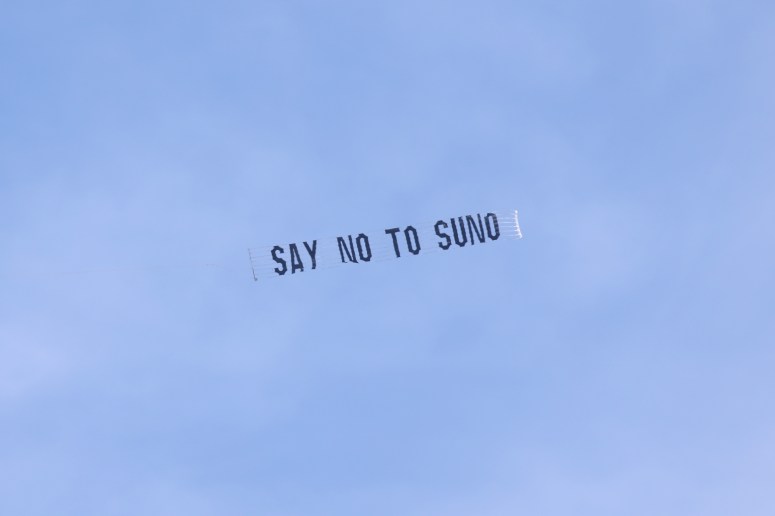
The narrative that the AI labs want you to focus on is often framed as a conflict between innovation and regulation. That framing misses the point. The real question is whether innovation requires the abandonment of consent, compensation, and accountability. Human Artistry’s message was not anti-technology. Rather, it was that technology should serve human beings rather than treating them as raw material for extraction.
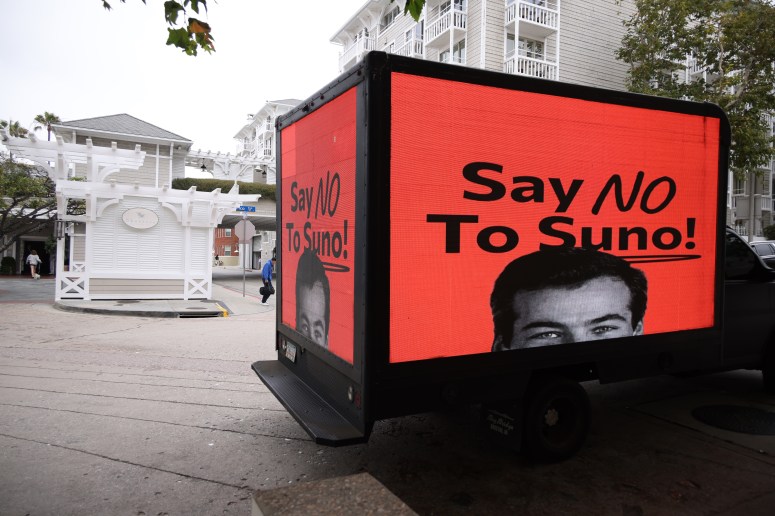
That concern increasingly links artist-rights advocates with communities opposing AI infrastructure projects using eminent domain powers to seize homes and compel residents to acept 765kV transmission lines. Both groups are confronting different manifestations of the same phenomenon: the concentration of economic gains among a relatively small number of companies while costs are dispersed across creators, workers, taxpayers, ratepayers, and local communities. One side sees its creative works absorbed into training datasets. The other sees land, water, energy resources, and public subsidies redirected toward facilities designed to power those systems.
Viewed through that lens, the protest at Shutters on the Beach becomes part of a much larger story. The controversy surrounding generative AI is no longer confined to copyright litigation or entertainment-industry politics. It now reaches questions of energy policy, infrastructure planning, local governance, environmental impact, and economic fairness.
The image of a protest banner flying above an investor summit captures that convergence perfectly. Below, financiers discussed the future of artificial intelligence and celebrated millions of dollars in new investment while licking their IPO chops in drooling anticipation of getting richer still on the backs of humanity. Above, artists and advocates posed a simpler question: if the future is being built on human creativity, shouldn’t the humans who created it have a meaningful voice in how that future is constructed?

That question is impossible to ignore. As billions continue to flow into AI companies and the infrastructure supporting them, the debate is no longer merely about technology. It is about power, consent, and who gets to decide how the benefits of human creativity and expression are captured by the Big Tech kleptocrats.
A Subtle Shift in US AI Policy and Why Artists Should Pay Attention
Something is moving in Washington.
A recent report suggests that the Trump administration is considering a new executive order on artificial intelligence. On its face, that might sound like more of the same—another round of AI policy chatter promoted by David Sacks, the Silicon Valley lobbyist and billionaire investor who has been pushing a “don’t slow it down” approach.
But this time feels different.
Sacks appears to have gotten pushed out at least a bit. Don’t count the chickens just yet. But the shift in tone matters. And the timing matters even more. The order is reportedly being weighed ahead of Trump’s visit to China, where AI development has become a central axis of geopolitical competition.
That context changes the story. For the past several years, the dominant policy posture around AI has been simple: don’t slow down innovation. Because China.
That argument has been doing a lot of work. It has been used to wave away concerns about training data, to discourage state and local oversight of data center buildouts, and to greenlight massive infrastructure commitments—including dedicated nuclear power for AI campuses run by Google, Microsoft, Meta, and Amazon.
In other words: build the machine first. Deal with the consequences later.
Artists have been the raw material for that strategy.
Musicians, book authors, visual artists—these are not just inputs. They are the training ground for systems that are now capable of producing substitutive outputs that overwhelm creators and flood markets. And until now, the White House policy conversation has largely treated that massive theft as an acceptable cost of staying ahead led by David Sacks, R Street Institute and the hyperscalers.
What makes this potential executive order interesting is that it suggests a shift away from that posture. If the administration is preparing to meet with China on AI, it has an incentive to show that the United States takes control, governance, and strategic resources seriously. And in this context, creative works start to look less like “free fuel” and more like national assets.
That may matter for artists.
Because once you recognize that AI systems derive value from the signals embedded in creative works—voice, tone, style, expression—you start to see those works differently. They are not just content. They are repositories of identity and cultural value.
And they are being extracted at scale.
A more protective policy framework—whether it focuses on model review, training data standards, or provenance—creates an opening. It creates space for the idea that artists are not just upstream contributors, but stakeholders whose work underpins the entire system.
This doesn’t mean the executive order, if it comes, will solve the problem. It won’t.
But it could mark an inflection point.
If policymakers begin to treat AI not just as a technology race but as a resource competition, then the role of creators becomes harder to ignore. You can’t claim to lead in AI while simultaneously disregarding the human material that makes those systems work.
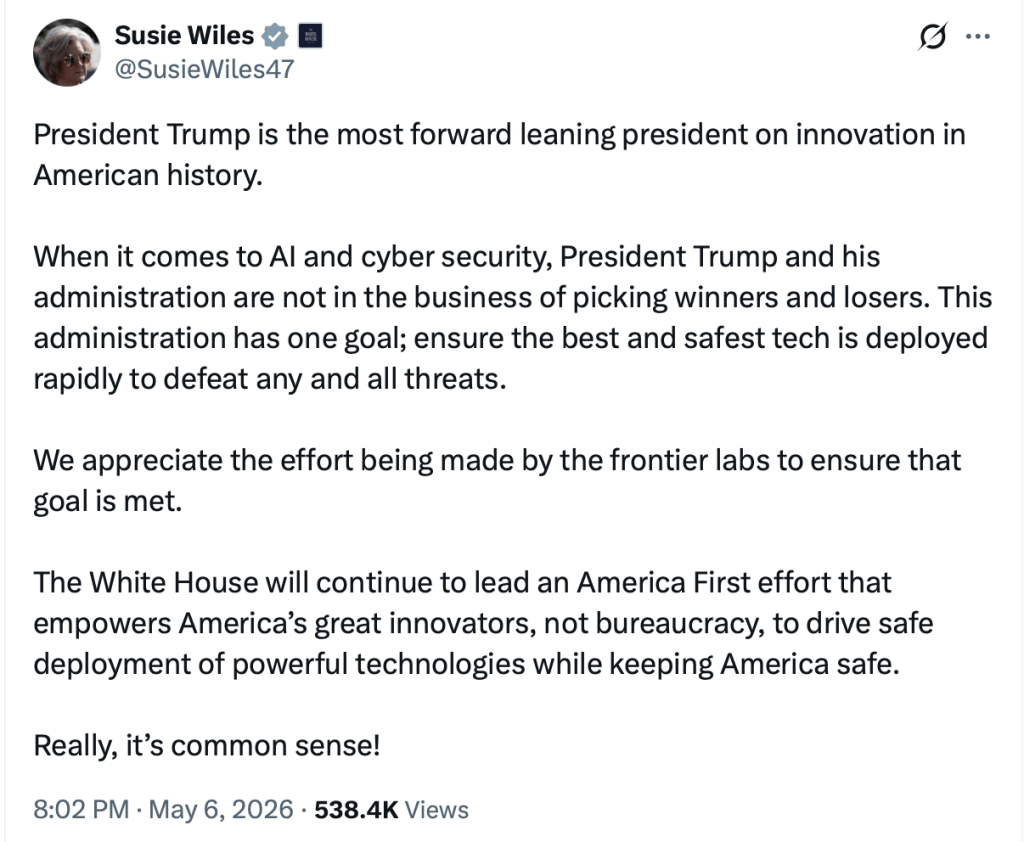
That contradiction is starting to surface. The industry allowed artists and even copyright itself to be lumped in with zoning boards as “bureaucracy” which in turn allowed David Sacks and his ilk to try to create an alternate universe where “innovation” ran wild to “beat China” while also selling chips to China out the back door.
For artists, the takeaway is simple: pay attention to the shift in tone. Policy signals often precede legal ones. What gets framed as a national priority today can become a regulatory framework tomorrow.
For the first time in a while, there are signs that the conversation may be moving—however slightly—toward recognizing the value that artists bring to the AI ecosystem.
Sacks may not be gone. Silicon Valley rarely loses outright, just look at the MLC. But even a partial shift away from the “move fast and ingest everything” playbook is meaningful.
Because for artists, the question has never been whether AI will be built.
The question is whether it will be built on you or with you.
@hypebot: Jay Gilbert, Ryan Vaughn, & Benji Stein Share Expert Tips for Artist Growth in 2026
Check out a great discussion from our friends at Hypebot: The latest panel from MusicPro ’26 offers a useful snapshot of where “artist growth” advice stands heading into 2026—and where it may still be missing the mark.
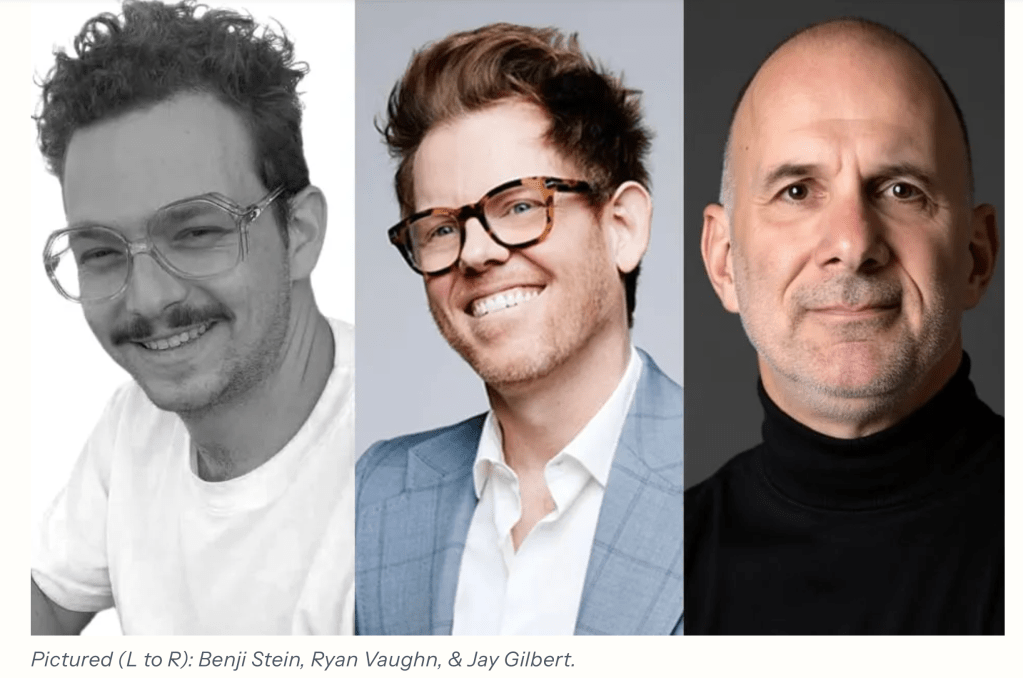
In this Hypebot discussion, Jay Gilbert, Ryan Vaughn, and Benji Stein walk through the evolving toolkit for independent artists: data, audience development, and the growing skepticism around social media metrics. The throughline is clear—streams and followers don’t build careers; real fans do. The panel repeatedly returns to the importance of identifying and nurturing “actionable” fans over vanity metrics.
But the more interesting takeaway may be what sits beneath that advice. As platforms flood artists with data, the real advantage increasingly lies in owning the relationship through email lists, direct engagement, and signals that actually convert into tickets, merch, and sustained attention. (And in our experience, owning the relationship is the one thing Spotify doesn’t want you to do.)
The result is a subtle but important shift: away from platform-defined success, and toward artist-controlled audience infrastructure.
The question, of course, is whether the current system actually rewards that shift—or quietly undermines it.
Say No to Suno
Late last year, thieves disguised as construction workers broke into the Louvre during broad daylight, grabbed more than $100 million worth of crown jewels, and roared off on their motorbikes into the busy streets of Paris. While some of those thieves were later arrested, the jewelry they stole has yet to be recovered, and many fear those historic works of artistry have already been recut, reset, and resold.
Closer to home, but no less nefarious, is the brazen rip-off of artists enabled by irresponsible AI, whose profiteers are recutting, remixing, and reselling original works of artistry as something new. The hijacking of the world’s entire treasure-trove of music floods platforms with AI slop and dilutes the royalty pools of legitimate artists from whose music this slop is derived.
Meanwhile, those who are promoting this new business model are operating in broad daylight, too – minus the yellow safety vests. That is AI music company Suno, the brazen “smash and grab” platform whose “Make it Music” ad campaign suggests that the most personal and meaningful forms of music can now be fabricated by their unauthorized AI platform machinery trained on human artists’ work.
How significant is this activity? Publicly revealed data says Suno is used to generate 7 million tracks a day, a massive quantity that suggests a dominant market share of AI tracks. According to recent reports, Deezer “deems 85% of streams of fully AI-generated tracks [on its service] to be fraudulent,” and that such tracks include outputs from major generative models. As JP Morgan’s analysts said, Deezer’s data “should be indicative of the broader market.” Suno has yet to demonstrate persuasively that its platform does not, in practice, serve as a scalable input into streaming-fraud schemes — raising a serious concern that Suno has, in effect, become a fraud-fodder factory on an industrial scale.
In a February 2 LinkedIn post, Paul Sinclair, Suno’s Chief Music Officer, claims that his company’s platform is about “empowerment” that enables “billions of fans to create and play with music.” He argues that closed systems are “walled gardens” that deny people access to the full joy of music.
Ironically, Sinclair’s choice of analogy undermines his own argument. Ask yourself: just why are most gardens surrounded by fences or walls? To keep out rabbits, deer, raccoons and wild pigs seeking a free lunch. We cultivate, nurture and protect our gardens precisely because that makes them much more productive over the long run.
While Sinclair may be loath to admit it, AI is fundamentally different from past disruptive innovations in the music industry. The phonograph, cassettes, CDs, MP3s, downloads, streaming – all these technologies were about the reproduction and distribution of creative work. By contrast, irresponsible AI like Suno appropriates and plunders such creative work while undermining the commercial ecosystem for artists.
Think back to the days of Napster. What brought the music industry back from the ruinous abyss of unfettered digital piracy? It was the very “closed systems” that Sinclair derides as exclusionary. At least streaming platforms maintain access controls and content management systems that enable creator compensation, even if the economic outcomes for many creators remain inadequate. Should we be against Apple Music, Spotify, Deezer, YouTube Music, and Amazon Music? What about Netflix, Disney+ and HBO, too, while we’re at it?
At its core, Sinclair’s argument is just a tired remix of the old trope that “information wants to be free.” What that really means is: “We want your music for free.”
Artists need to understand Suno’s game. They are not putting technology in the service of artists; they are putting artists in the service of their technology. Every time artists’ creations are used by the platform, those creations have just unwittingly been contributed to the creation of endless derivatives of artists’ own work, not to mention AI slop, with limited or no remuneration back to the human creators. Suno built its business on our backs, scraping the world’s cultural output without permission, then competing against the very works exploited.
It’s also important to keep in mind that using Suno to generate audio output calls into question the copyrightability of whatever Suno creates. Most countries around the world including the US Copyright Office have been clear that generative AI outputs are largely ineligible for a copyright – meaning the economic value of the Suno creation lies solely with Suno, not with the artist using it. The only ones gaining empowerment from Suno are Suno themselves.
Many in our community are embracing responsible AI as a tool for creation, and as a means for fans to explore and interact with our artistry. That’s wonderful. But it’s not the same as creating an environment where AI-generated works sourced from our music are mass distributed to dilute our royalties or, worse yet, reward those actively seeking to commit fraud. Artists need to know the difference – all AI platforms are not the same, and Suno, which is being sued for copyright infringement, is not a platform artists should trust.
Responsible AI-generated music must evolve within a framework that respects and remunerates artists, enhances human creativity rather than supplants it, and empowers fans to engage with the music they love. At the same time, AI services must preclude mass distribution of slop and prevent fraudsters from destroying the very ecosystem that has been built to reward and sustain artists and audiences alike.
All of us, including billions of music fans, share an urgent, deep and abiding interest in protecting and rewarding human genius, even as AI continues to change our industry and the world in unimaginable ways. So in 2026, even as the Louvre continues to revamp its own approach to security, we in the arts must rise to confront those who would “smash-and-grab” our creativity for their own benefit.
Together, while embracing innovation, we must work to establish more effective safeguards – both legal and technological – that better promote and protect all creative artists, our intellectual property, and the spark of human genius.
Say no to Suno. Say yes to the beauty and bounty of the gardens that feed us all.
Signed:
Ron Gubitz, Executive Director, Music Artist Coalition
Helienne Lindvall, Songwriter and President, European Composer and Songwriter Alliance
David C. Lowery, Artist and Editor The Trichordist
Tift Merritt artist, Practitioner in Residence, Duke University and Artist Rights Alliance Board Member
Blake Morgan, artist, producer, and President of ECR Music Group.
Abby North, President, North Music Group
Chris Castle, Artist Rights Institute
Meet the New AI Boss, Worse Than the Old Internet Boss
Congress is considering several legislative packages to regulate AI. AI is a system that was launched globally with no safety standards, no threat modeling, and no real oversight. A system that externalized risk onto the public, created enormous security vulnerabilities, and then acted surprised when criminals, hostile states, and bad actors exploited it.
After the damage was done, the same companies that built it told governments not to regulate—because regulation would “stifle innovation.” Instead, they sold us cybersecurity products, compliance frameworks, and risk-management services to fix the problems they created.
Yes, artificial intelligence is a problem. Wait…Oh, no sorry. That’s not AI.
That’s was Internet. And it made the tech bros the richest ruling class in history.
And that’s why some of us are just a little skeptical when the same tech bros are now telling us: “Trust us, this time will be different.” AI will be different, that’s for sure. They’ll get even richer and they’ll rip us off even more this time. Not to mention building small nuclear reactors on government land that we paid for, monopolizing electrical grids that we paid for, and expecting us to fill the landscape with massive power lines that we will pay for.
The topper is that these libertines want no responsibility for anything, and they want to seize control of the levers of government to stop any accountability. But there are some in Congress who are serious about not getting fooled again.
Senator Marsha Blackburn released a summary of legislation she is sponsoring that gives us some cause for hope (read it here courtesy of our friends at the Copyright Alliance). Because her bill might be effective, that means Silicon Valley shills will be all over it to try to water it down and, if at all possible, destroy it. That attack of the shills has already started with Silicon Valley’s AI Viceroy in the Trump White House, a guy you may never have heard of named David Sacks. Know that name. Beware that name.
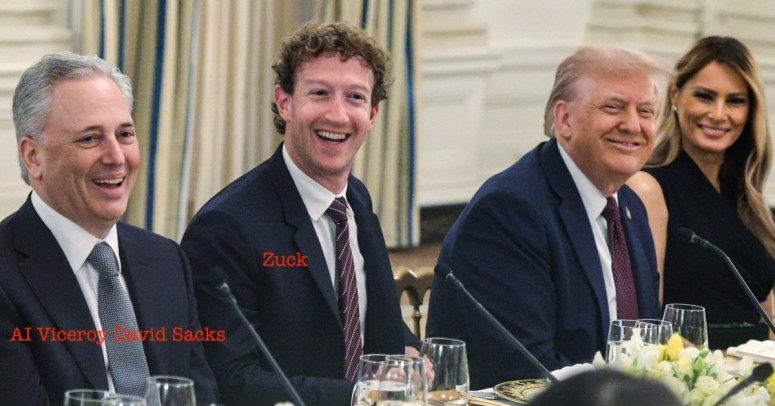
Senator Blackburn’s bill will do a lot of good things, including for protecting copyright. But the first substantive section of Senator Blackburn’s summary is a game changer. She would establish an obligation on AI platforms to be responsible for known or predictable harm that can befall users of AI products. This is sometimes called a “duty of care.”
Her summary states:
Place a duty of care on AI developers in the design, development, and operation of AI platforms to prevent and mitigate foreseeable harm to users. Additionally, this section requires:
• AI platforms to conduct regular risk assessments of how algorithmic systems, engagement mechanics, and data practices contribute to psychological, physical, financial, and exploitative harms.
• The Federal Trade Commission (FTC) to promulgate rules establishing minimum reasonable safeguards.
At its core, Senator Blackburn’s AI bill tries to force tech companies to play by rules that most other industries have followed for decades: if you design a product that predictably harms people, you have a responsibility to fix it.
That idea is called “products liability.” Simply put, it means companies can’t sell dangerous products and then shrug it off when people get hurt. Sounds logical, right? Sounds like what you would expect would happen if you did the bad thing? Car makers have to worry about the famous exploding gas tanks. Toy manufacturers have to worry about choking hazards. Drug companies have to test side effects. Tobacco companies….well, you know the rest. The law doesn’t demand perfection—but it does demand reasonable care and imposes a “duty of care” on companies that put dangerous products into the public.

Blackburn’s bill would apply that same logic to AI platforms. Yes, the special people would have to follow the same rules as everyone else with no safe harbors.
Instead of treating AI systems as abstract “speech” or neutral tools, the bill treats them as what they are: products with design choices. Those choices that can foreseeably cause psychological harm, financial scams, physical danger, or exploitation. Recommendation algorithms, engagement mechanics, and data practices aren’t accidents. They’re engineered. At tremendous expense. One thing you can be sure of is that if Google’s algorithms behave a certain way, it’s not because the engineers ran out of development money. The same is true of ChatGPT, Grok, etc. On a certain level of reality, this is very likely not guess work or predictability. It’s “known” rather than “should have known.” These people know exactly what their algorithms do. And they do it for the money.
The bill would impose that duty of care on AI developers and platform operators. A duty of care is a basic legal obligation to act reasonably to prevent foreseeable harm. “Foreseeable” doesn’t mean you can predict the exact victim or moment—it means you can anticipate the type of harm that flows to users you target from how the system is built.
To make that duty real, the bill would require companies to conduct regular risk assessments and make them public. These aren’t PR exercises. They would have to evaluate how their algorithms, engagement loops, and data use contribute to harms like addiction, manipulation, fraud, harassment, and exploitation.
They do this already, believe it. What’s different is that they don’t make it public, anymore than Ford made public the internal research that the Pinto’s gas tank was likely to explode. In other words, platforms would have to look honestly at what their systems actually do in the world—not just what they claim to do.
The bill also directs the Federal Trade Commission (FTC) to write rules establishing minimum reasonable safeguards. That’s important because it turns a vague obligation (“be responsible”) into enforceable standards (“here’s what you must do at a minimum”). Think of it as seatbelts and crash tests for AI systems.
So why do tech companies object? Because many of them argue that their algorithms are protected by the First Amendment—that regulating how recommendations work is regulating speech. Yes, that is a load of crap. It’s not just you, it really is BS.
Imagine Ford arguing that an exploding gas tank was “expressive conduct”—that drivers chose the Pinto to make a statement, and therefore safety regulation would violate Ford’s free speech rights. No court would take that seriously. A gas tank is not an opinion. It’s an engineered component with known risks and risks that were known to the manufacturer.
AI platforms are the same. When harm flows from design decisions—how content is ranked, how users are nudged, how systems optimize for engagement—that’s not speech. That’s product design. You can measure it, test it, audit it, which they do and make it safer which they don’t.
This part of Senator Blackburn’s bill matters because platform design shapes culture, careers, and livelihoods. Algorithms decide what gets seen, what gets buried, and what gets exploited. Blackburn’s bill doesn’t solve every problem, but it takes an important step: it says tech companies can’t hide dangerous products behind free-speech rhetoric anymore.
If you build it, and it predictably hurts people, you’re responsible for fixing it. That’s not censorship. It’s accountability. And people like Marc Andreessen, Sam Altman, Elon Musk and David Sacks will hate it.
Gene Simmons and the American Music Fairness Act
Gene Simmons is receiving Kennedy Center Honors with KISS this Sunday, and is also bringing his voice to the fair pay for radio play campaign to pass the American Music Fairness Act (AMFA).
Gene will testify on AMFA next week before the Senate Judiciary Committee. He won’t just be speaking as a member of KISS or as one of the most recognizable performers in American music. He’ll be showing up as a witness to something far more universal: the decades-long exploitation of recording artists whose work powers an entire broadcast industry and that has never paid them a dime. Watch Gene’s hearing on December 9th at 3pm ET at this link, when Gene testifies alongside SoundExchange CEO Mike Huppe.
As Gene argued in his Washington Post op-ed, the AM/FM radio loophole is not a quirky relic, it is legalized taking. Everyone else pays for music: streaming services, satellite radio, social-media platforms, retail, fitness, gaming. Everyone except big broadcast radio, which generated more than $13 billion in advertising revenue last year while paying zero to the performers whose recordings attract those audiences.
Gene is testifying not just for legacy acts, but for the “thousands of present and future American recording artists” who, like KISS in the early days, were told to work hard, build a fan base, and just be grateful for airplay. As he might put it, artists were expected to “rock and roll all night” — but never expect to be paid for it on the radio.
And when artists asked for change, they were told to wait. They “keep on shoutin’,” decade after decade, but Congress never listened.
That’s why this hearing matters. It’s the first Senate-level engagement with the issue since 2009. The ground is shifting. Gene Simmons’ presence signals something bigger: artists are done pretending that “exposure” is a form of compensation.
AMFA would finally require AM/FM broadcasters to pay for the sound recordings they exploit, the same way every other democratic nation already does. It would give session musicians, backup vocalists, and countless independent artists a revenue stream they should have had all along. It would even unlock international royalties currently withheld from American performers because the U.S. refuses reciprocity.
And let’s be honest: Gene Simmons is an ideal messenger. He built KISS from nothing, understands the grind, and knows exactly how many hands touch a recording before it reaches the airwaves. His testimony exposes the truth: radio isn’t “free promotion” — it’s a commercial business built on someone else’s work.
Simmons once paraphrased the music economy as a game where artists are expected to give endlessly while massive corporations act like the only “god of thunder,” taking everything and returning nothing. AMFA is an overdue correction to that imbalance.
When Gene sits down before the Senate Judiciary Committee, he won’t be wearing the makeup. He won’t need to. He’ll be carrying something far more powerful: the voices of artists who’ve waited 80 years for Congress to finally turn the volume up on fairness.
9/18/25: Save the Date! @ArtistRights Institute and American University Kogod School to host Artist Rights Roundtable on AI and Copyright Sept. 18 in Washington, DC
🎙️ Artist Rights Roundtable on AI and Copyright: Coffee with Humans and the Machines
📍 Butler Board Room, Bender Arena, American University, 4400 Massachusetts Ave NW, Washington D.C. 20016 | 🗓️ September 18, 2025 | 🕗 8:00 a.m. – 12:00 noon
Hosted by the Artist Rights Institute & American University’s Kogod School of Business, Entertainment Business Program
🔹 Overview:
Join the Artist Rights Institute (ARI) and Kogod’s Entertainment Business Program for a timely morning roundtable on AI and copyright from the artist’s perspective. We’ll explore how emerging artificial intelligence technologies challenge authorship, licensing, and the creative economy — and what courts, lawmakers, and creators are doing in response.
☕ Coffee served starting at 8:00 a.m.
🧠 Program begins at 8:50 a.m.
🕛 Concludes by 12:00 noon — you’ll be free to have lunch with your clone.
🗂️ Program:
8:00–8:50 a.m. – Registration and Coffee
8:50–9:00 a.m. – Introductory Remarks by Dean David Marchick and ARI Director Chris Castle
9:00–10:00 a.m. – Topic 1: AI Provenance Is the Cornerstone of Legitimate AI Licensing:
Speakers:
Dr. Moiya McTier Human Artistry Campaign
Ryan Lehnning, Assistant General Counsel, International at SoundExchange
The Chatbot
Moderator Chris Castle, Artist Rights Institute
10:10–10:30 a.m. – Briefing: Current AI Litigation, Kevin Madigan, Senior Vice President, Policy and Government Affairs, Copyright Alliance
10:30–11:30 a.m. – Topic 2: Ask the AI: Can Integrity and Innovation Survive Without Artist Consent?
Speakers:
Erin McAnally, Executive Director, Songwriters of North America
Dr. Richard James Burgess, CEO A2IM
Dr. David C. Lowery, Terry College of Business, University of Georgia.
Moderator: Linda Bloss Baum, Director Business and Entertainment Program, Kogod School of Business
11:40–12:00 p.m. – Briefing: US and International AI Legislation
🎟️ Admission:
Free and open to the public. Registration required at Eventbrite. Seating is limited.
🔗 Stay Updated:
Watch Eventbrite, this space and visit ArtistRightsInstitute.org for updates and speaker announcements.


You must be logged in to post a comment.