
Trump’s Historic Kowtow to Special Interests: Why Trump’s AI Executive Order Is a Threat to Musicians, States, and Democracy

There’s a new dance in Washington—it’s called the KowTow

Most musicians don’t spend their days thinking about executive orders. But if you care about your rights, your recordings, your royalties, or your community, or even the environment, you need to understand the Trump Administration’s new executive order on artificial intelligence. The order—presented as “Ensuring a National Policy Framework for AI”—is not a national standard at all. It is a blueprint for stripping states of their power, protecting Big Tech from accountability, and centralizing AI authority in the hands of unelected political operatives and venture capitalists. In other words, it’s business as usual for the special interests led by an unelected bureaucrat, Silicon Valley Viceroy and billionaire investor David Sacks who the New York Times recently called out as a walking conflict of interest.

You’ll Hear “National AI Standard.” That’s Fake News. IT’s Silicon valley’s wild west

Supporters of the EO claim Trump is “setting a national framework for AI.” Read it yourself. You won’t find a single policy on:
– AI systems stealing copyrights (already proven in court against Anthropic and Meta)
– AI systems inducing self-harm in children
– Whether Google can build a water‑burning data center or nuclear plant next to your neighborhood 

None of that is addressed. Instead, the EO orders the federal government to sue and bully states like Florida and Texas that pass AI safety laws and threatens to cut off broadband funding unless states abandon their democratically enacted protections. They will call this “preemption” which is when federal law overrides conflicting state laws. When Congress (or sometimes a federal agency) occupies a policy area, states lose the ability to enforce different or stricter rules. There is no federal legislation (EOs don’t count), so there can be no “preemption.”

Who Really Wrote This? The Sacks–Thierer Pipeline

This EO reads like it was drafted directly from the talking points of David Sacks and Adam Thierer, the two loudest voices insisting that states must be prohibited from regulating AI.  It sounds that way because it was—Trump himself gave all the credit to David Sacks in his signing ceremony.

– Adam Thierer works at Google’s R Street Institute and pushes “permissionless innovation,” meaning companies should be allowed to harm the public before regulation is allowed. 
– David Sacks is a billionaire Silicon Valley investor from South Africa with hundreds of AI and crypto investments, documented by The New York Times, and stands to profit from deregulation.

Worse, the EO lards itself with references to federal agencies coordinating with the “Special Advisor for AI and Crypto,” who is—yes—David Sacks. That means DOJ, Commerce, Homeland Security, and multiple federal bodies are effectively instructed to route their AI enforcement posture through a private‑sector financier.

The Trump AI Czar—VICEROY Without Senate Confirmation

Sacks is exactly what we have been warning about for months: the unelected Trump AI Czar

He is not Senate‑confirmed. 
He is not subject to conflict‑of‑interest vetting. 
He is a billionaire “special government employee” with vast personal financial stakes in the outcome of AI deregulation. 

Under the Constitution, you cannot assign significant executive authority to someone who never faced Senate scrutiny. Yet the EO repeatedly implies exactly that.

Even Trump’s MOST LOYAL MAGA Allies Know This Is Wrong

Trump signed the order in a closed ceremony with sycophants and tech investors—not musicians, not unions, not parents, not safety experts, not even one Red State governor.

Even political allies and activists like Mike Davis and Steve Bannon blasted the EO for gutting state powers and centralizing authority in Washington while failing to protect creators. When Bannon and Davis are warning you the order goes too far, that tells you everything you need to know. Well, almost everything.

And Then There’s Ted Cruz

On top of everything else, the one state official in the room was U.S. Senator Ted Cruz of Texas, a state that has led on AI protections for consumers. Cruz sold out Texas musicians while gutting the Constitution—knowing full well exactly what he was doing as a former Supreme Court clerk.

Why It Matters for Musicians

AI isn’t some abstract “tech issue.” It’s about who controls your work, your rights, your economic future. Right now:

– AI systems train on our recordings without consent or compensation. 
– Major tech companies use federal power to avoid accountability. 
– The EO protects Silicon Valley elites, not artists, fans or consumers. 

This EO doesn’t protect your music, your rights, or your community. It preempts local protections and hands Big Tech a federal shield.

It’s Not a National Standard — It’s a Power Grab

What’s happening isn’t leadership. It’s *regulatory capture dressed as patriotism*. If musicians, unions, state legislators, and everyday Americans don’t push back, this EO will become a legal weapon used to silence state protections and entrench unaccountable AI power.

What David Sacks and his band of thieves is teaching the world is that he learned from Dot Bomb 1.0—the first time around, they didn’t steal enough. If you’re going to steal, steal all of it. Then the government will protect you.

It’s Back: The National Defense Authorization Act Is No Place for a Backroom AI Moratorium

David Sacks Is Bringing Back the AI Moratorium

WHAT’S AT STAKE

The moratorium would block states from enforcing their own laws on AI accountability, deepfakes, consumer protection, energy policy, discrimination, and data rights. Tennessee’s ELVIS Act is a prime example. For ten years — or five years in the “softened” version — the federal government would force states to stand down while some of the most richest and powerful monopolies in commercial history continue deploying models trained on unlicensed works, scraped data, personal information, and everything in between. Regardless of whether it is ten years or five years, either may as well be an eternity in Tech World. Particularly since they don’t plan on following the law anyway with their “move fast and skip things” mentality.

Ted Turns Texas Glowing

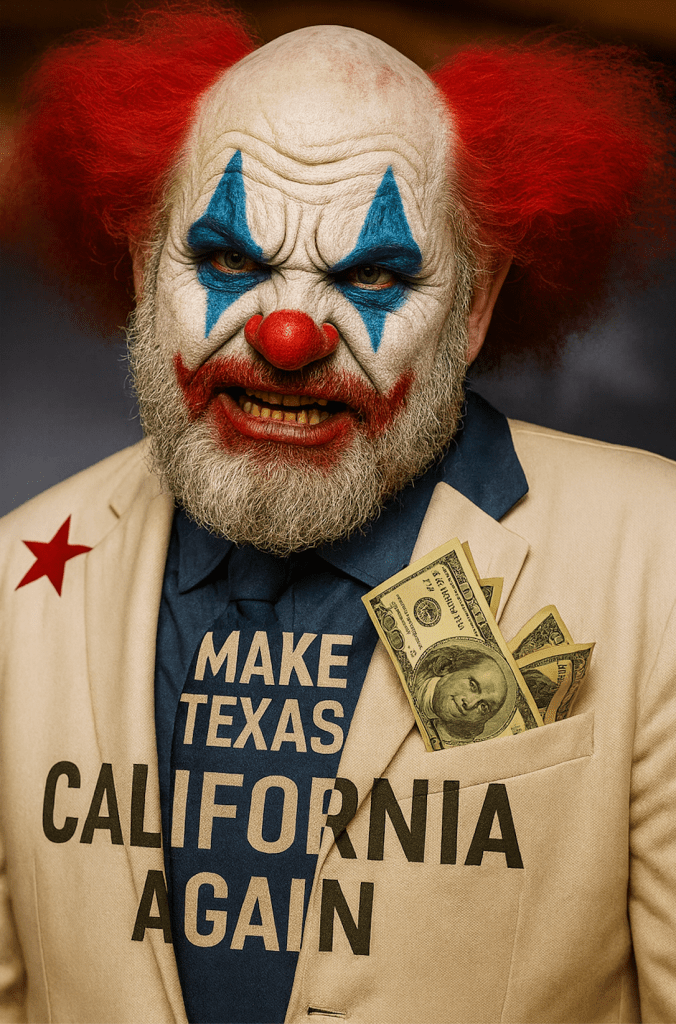
99-1/2 just won’t do—Remember the AI moratorium that was defeated 99-1 in the Senate during the heady days of the One Big Beautiful Bill Act? We said it would come back in the must-pass National Defense Authorization Act and sure enough that’s exactly where it is courtesy of Senator and 2028 Presidential hopefull Ted Cruz (fundraising off of the Moratorium no doubt for his “Make Texas California Again” campaign) and other Big Tech sycophants according to a number of sources including Politico and the Tech Policy Press:

It…remains to be seen when exactly the moratorium issue may be taken up, though a final decision could still be a few weeks away.

Congressional leaders may either look to include the moratorium language in their initial NDAA agreement, set to be struck soon between the two chambers, or take it up as a separate amendment when it hits the floor in the House and Senate next month.

Either way, they likely will need to craft a version narrow enough to overcome the significant opposition to its initial iterations. While House lawmakers are typically able to advance measures with a simple majority or party-line vote, in the Senate, most bills require 60 votes to pass, meaning lawmakers must secure bipartisan support.

The pushback from Democrats is already underway. Sen. Brian Schatz (D-HI), an influential figure in tech policy debates and a member of the Senate Commerce Committee, called the provision “a poison pill” in a social media post late Monday, adding, “we will block it.”

Still, the effort has the support of several top congressional Republicans, who have repeatedly expressed their desire to try again to tuck the bill into the next available legislative package.

In Washington, must-pass bills invite mischief. And right now, House leadership is flirting with the worst kind: slipping a sweeping federal moratorium on state AI laws into the National Defense Authorization Act (NDAA).

This idea was buried once already — the Senate voted 99–1 to strike it from Trump’s earlier “One Big Beautiful Bill.” But instead of accepting that outcome, Big Tech trying to resurrect it quietly, through a bill that is supposed to fund national defense, not rewrite America’s entire AI legal structure.

The NDAA is the wrong vehicle, the wrong process, and the wrong moment to hand Big Tech blanket immunity from state oversight. As we have discussed many times the first time around, the concept is probably unconstitutional for a host of reasons and will no doubt be immediately challenged.

AI Moratorium Lobbying Explainer for Your Electric Bill

Here are the key shilleries pushing the federal AI moratorium and their backers:

Lobby Shop / OrganizationSupporters / FundersRole in Pushing MoratoriumNotes
INCOMPAS / AI Competition Center (AICC)Amazon, Google, Meta, Microsoft, telecom/cloud companiesLeads push for 10-year state-law preemption; argues moratorium prevents ‘patchwork’ lawsIdentified as central industry driver
Consumer Technology Association (CTA)Big Tech, electronics & platform economy firmsLobbying for federal preemption; opposed aggressive state AI lawsHigh influence with Commerce/Appropriations staff
American Edge ProjectMeta-backed advocacy orgFrames preemption as necessary for U.S. competitiveness vs. China; backed moratoriumUsed as indirect political vehicle for Meta
Abundance InstituteTech investors, deregulatory donorsArgues moratorium necessary for innovation; publicly predicts return of moratoriumMessaging aligns with Silicon Valley VCs
R Street InstituteMarket-oriented donors; tech-aligned fundersOriginated ‘learning period’ moratorium concept in 2024 papers by Adam ThiererNot a lobby shop but provides intellectual framework
Corporate Lobbyists (Amazon/Google/Microsoft/Meta/OpenAI/etc.)Internal lobbying shops + outside firmsPromote ‘uniform national standards’ in Congressional meetingsOperate through and alongside trade groups

PARASITES GROW IN THE DARK: WHY THE NDAA IS THE ABSOLUTE WRONG PLACE FOR THIS

The National Defense Authorization Act is one of the few bills that must pass every year. That makes it a magnet for unrelated policy riders — but it doesn’t make those riders legitimate.

An AI policy that touches free speech, energy policy and electricity rates, civil rights, state sovereignty, copyright, election integrity, and consumer safety deserves open hearings, transparent markups, expert testimony, and a real public debate. And that’s the last thing the Big Tech shills want.

THE TIMING COULD NOT BE MORE INSULTING

Big Tech is simultaneously lobbying for massive federal subsidies for compute, federal preemption of state AI rules, and multi-billion-dollar 765-kV transmission corridors to feed their exploding data-center footprints.

And who pays for those high-voltage lines? Ratepayers do. Utilities that qualify as political subdivisions in the language of the moratorium—such as municipal utilities, public power districts, and cooperative systems—set rates through their governing boards rather than state regulators. These boards must recover the full cost of service, including new infrastructure needed to meet rising demand. Under the moratorium’s carve-outs, these entities could be required to accept massive AI-driven load increases, even when those loads trigger expensive upgrades. Because cost-of-service rules forbid charging AI labs above their allocated share, the utility may have no choice but to spread those costs across all ratepayers. Residents, not the AI companies, would absorb the rate hikes.

States must retain the power to protect their citizens. Congress has every right to legislate on AI. But it does not have the right to erase state authority in secret to save Big Tech from public accountability.

A CALL TO ACTION

Tell your Members of Congress:
No AI moratorium in the NDAA.
No backroom preemption.
No Big Tech giveaways in the defense budget.

The AI Safe Harbor is an Unconstitutional Violation of State Protections for Families and Consumers

By Chris Castle

The AI safe harbor slavered onto President Trump’s “big beautiful bill” is layered with intended consequences. Not the least of these is the affect on TikTok.

One of the more debased aspects of TikTok (and that’s a long list) is their promotion through their AI driven algorithms of clearly risky behavior to their pre-teen audience. Don’t forget: TikTok’s algorithm is not just any algorithm. The Chinese government claims it as a state secret. And when the CCP claims a state secret they ain’t playing. So keep that in mind.

One of these risky algorithms that was particularly depraved was called the “Blackout Challenge.” The TikTok “blackout challenge” has been linked to the deaths of at least 20 children over an 18-month period. One of the dead children was Nylah Anderson. Nylah’s mom sued TikTok for her daughter because that’s what moms do. If you’ve ever had someone you love hang themselves, you will no doubt agree that you live with that memory every day of your life. This unspeakable tragedy will haunt Nylah’s mother forever.

Even lowlifes like TikTok should have settled this case and it should never have gotten in front of a judge. But no–TikTok tried to get out of it because Section 230. Yes, that’s right–they killed a child and tried to get out of the responsibility. The District Court ruled that the loathsome Section 230 applied and Nylah’s mom could not pursue her claims. She appealed.

The Third Circuit Court of Appeals reversed and remanded, concluding that “Section 230 immunizes only information ‘provided by another’” and that “here, because the information that forms the basis of Anderson’s lawsuit—i.e., TikTok’s recommendations via its FYP algorithm—is TikTok’s own expressive activity, § 230 does not bar Anderson’s claims.”

So…a new federal proposal threatens to slam the door on these legal efforts: the 10-year artificial intelligence (AI) safe harbor recently introduced in the House Energy and Commerce Committee. If enacted, this safe harbor would preempt state regulation of AI systems—including the very algorithms and recommendation engines that Nylah’s mom and other families are trying to challenge. 

Section 43201(c) of the “Big Beautiful Bill” includes pork, Silicon Valley style, entitled the “Artificial Intelligence and Information Technology Modernization Initiative: Moratorium,” which states:

no State or political subdivision thereof may enforce any law or regulation regulating artificial intelligence models, artificial intelligence systems, or automated decision systems during the 10-year period beginning on the date of the enactment of this Act.

The “Initiative” also appropriates “$500,000,000, to remain available until September 30, 2035, to modernize and secure Federal information technology systems through the deployment of commercial artificial intelligence, the deployment of automation technologies, and the replacement of antiquated business systems….” So not only did Big Tech write themselves a safe harbor for their crimes, they also are taking $500,000,000 of corporate welfare to underwrite it courtesy of the very taxpayers they are screwing over. Step aside Sophocles, when it comes to tragic flaws, Oedipus Rex got nothing on these characters.

Platforms like TikTok, YouTube, and Instagram use AI-based recommendation engines to personalize and optimize content delivery. These systems decide what users see based on a combination of behavioral data, engagement metrics, and predictive algorithms. While effective for keeping users engaged, these AI systems have been implicated in promoting harmful content—ranging from pro-suicide material to dangerous ‘challenges’ that have directly resulted in injury or death.

Families across the country have sued these companies, alleging that the AI-driven algorithms knowingly promoted hazardous content to vulnerable users. In many cases, the claims are based on state consumer protection laws, negligence, or wrongful death statutes. Plaintiffs argue that the companies failed in their duty to design safe systems or to warn users about foreseeable dangers. These cases are not attacks on free speech or user-generated content; they focus specifically on the design and operation of proprietary AI systems. 

If you don’t think that these platforms are depraved enough to actually raise safe harbor defenses, just remember what they did to Nylah’s mom–raised the exceptionally depraved Section 230 as a defense to their responsibility in the death of a child.

The AI safe harbor would prohibit states from enacting or enforcing any law that regulates AI systems or automated decision-making technologies for the next 10 years. This sweeping language could easily be interpreted to cover civil liability statutes that hold platforms accountable for the harms their AI systems cause. This is actually even worse than the vile Section 230–the safe harbor would be expressly targeting actual state laws. Maybe after all the appeals, say 20 years from now, we’ll find out that the AI safe harbor is unconstitutional commandeering, but do we really want to wait to find out?

Because these wrongful death lawsuits rely on arguments that an AI algorithm caused harm—either through its design or its predictive content delivery—the companies could argue that the moratorium shields them from liability. They might claim that the state tort claims are an attempt to “regulate” AI in violation of the federal preemption clause. If courts agree, these lawsuits could be dismissed before ever reaching a jury.

This would create a stunning form of corporate immunity even beyond the many current safe harbors for Big Tech: tech companies would be free to deploy powerful, profit-driven AI systems with no accountability in state courts, even when those systems lead directly to preventable deaths. 

The safe harbor would be especially devastating for families who have already suffered tragic losses and are seeking justice. These families rely on state wrongful death laws to hold powerful platforms accountable. Removing that path to accountability would not only deny them closure, but also prevent public scrutiny of the algorithms at the center of these tragedies.

States have long held the authority to define standards of care and impose civil liability for harms caused by negligence or defective products. The moratorium undermines this traditional role by barring states from addressing the specific risks posed by AI systems, even in the context of established tort principles. It would represent one of the broadest federal preemptions of state law in modern history—in the absence of federal regulation of AI platforms.

• In Pennsylvania, the parents of a teenager who committed suicide alleged that Instagram’s algorithmic feed trapped their child in a cycle of depressive content.
• Multiple lawsuits filed under consumer protection and negligence statutes in states like New Jersey, Florida, and Texas seek to hold platforms accountable for designing algorithms that systematically prioritize engagement over safety.
• TikTok faced multiple class action multidistrict litigation claims it illegally harvested user information from its in-app browser.

All of such suits could be in jeopardy if courts interpret the AI moratorium as barring state laws that impose liability on algorithm-driven systems and you can bet that Big Tech platforms will litigate the bejeezus out of the issue. Even if the moratorium was not intended to block wrongful death and other state law claims, its language may be broad enough to do so in practice—especially when leveraged by well-funded corporate legal teams.

Even supporters of federal AI regulation should be alarmed by the breadth of this safe harbor. It is not a thoughtful national framework based on a full record, but a shoot-from-the-hip blanket prohibition on consumer protection and civil justice. By freezing all state-level responses to AI harms, the AI safe harbor is intent on consolidating power in the hands of federal bureaucrats and corporate lobbyists, leaving ordinary Americans with fewer options for recourse, not to mention a clear violation of state police powers and the 10th Amendment.

To add insult to injury, the use of reconciliation to pass this policy—without full hearings, bipartisan debate, or robust public input—only underscores the cynical nature of the strategy. It has nothing to do with the budget aside from the fact that Big Tech is snarfing down $500 million of taxpayer money for no good reason just so they can argue their land grab is “germane” to shoehorn it into reconciliation under the Byrd Rule. It’s a maneuver designed to avoid scrutiny and silence dissent, not to foster a responsible or democratic conversation about how AI should be governed.

At its core, the AI safe harbor is not about fostering innovation—it is about shielding tech platforms from accountability just like the DMCA, Section 230 and Title I of the Music Modernization Act. By preempting state regulation, it could block families from using long-standing wrongful death statutes to seek justice for the loss of their children and laws protecting Americans from other harms. It undermines the sovereignty of states, the dignity of grieving families, and the public’s ability to scrutinize the AI systems that increasingly shape our lives. 

Congress must reject this overreach, and the American public must remain vigilant in demanding transparency, accountability, and justice. The Initiative must go.

[A version of this post first appeared on MusicTechPolicy]

Big Beautiful AI Safe Harbor asks If David Sacks wants to Make America Screwed Again?

In a dramatic turn of events, Congress is quietly advancing a 10-year federal safe harbor for Big Tech that would block any state and local regulation of artificial intelligence (AI). That safe harbor would give Big Tech another free ride on the backs of artists, authors, consumers, all of us and our children. It would stop cold the enforcement of state laws to protect consumers like the $1.370 billion dollar settlement Google reached with the State of Texas last week for grotesque violations of user privacy. The bill would go up on Big Tech’s trophy wall right next to the DMCA, Section 230 and Title I of the Music Modernization Act.

Introduced through the House Energy and Commerce Committee as part of a broader legislative package branded with President Trump’s economic agenda, this safe harbor would prevent states from enforcing or enacting any laws that address the development, deployment, or oversight of AI systems. While couched as a measure to ensure national uniformity and spur innovation, this proposal carries serious consequences for consumer protection, data privacy, and state sovereignty. It threatens to erase hard-fought state-level protections that shield Americans from exploitative child snooping, data scraping, biometric surveillance, and the unauthorized use of personal and all creative works. This post unpacks how we got here, why it matters, and what can still be done to stop it.

The Origins of the New Safe Harbor

The roots of the latest AI safe harbor lie in a growing push from Silicon Valley-aligned political operatives and venture capital influencers, many of whom fear a patchwork of state-level consumer protection laws that would stop AI data scraping. Among the most vocal proponents is tech entrepreneur-turned White House crypto czar David Sacks, who has advocated for federal preemption of state AI rules in order to protect startup innovation from what he and others call regulatory overreach also known as state “police powers” to protect state residents.

If my name was “Sacks” I’d probably be a bit careful about doing things that could get me fired. His influence reportedly played a role in shaping the safe harbor’s timing and language, leveraging connections on Capitol Hill to attach it to a larger pro-business package of legislation. That package—marketed as a pillar of President Trump’s economic plan—was seen as a convenient vehicle to slip through controversial provisions with minimal scrutiny. You know, let’s sneak one past the boss.

Why This Is Dangerous for Consumers and Creators

The most immediate danger of the AI safe harbor is its preemption of state protections at a time when AI technologies are accelerating unchecked. States like California, Illinois, and Virginia have enacted—or are considering—laws to limit how companies use AI to analyze facial features, scan emails, extract audio, or mine creative works from social media. The AI mantra is that they can snarf down “publicly available data” which essentially means everything that’s not behind a paywall. Because there is no federal AI regulation yet, state laws are crucial for protecting vulnerable populations, including children whose photos and personal information are shared by parents online. Under the proposed AI safe harbor, such protections would be nullified for 10 years–and don’t think it won’t be renewed.

Without the ability to regulate AI at the state level, we could see our biometric data harvested without consent. Social media posts—including photos of babies, families, and school events—could be scraped and used to train commercial AI systems without transparency or recourse. Creators across all copyright categories could find their works ingested into large language models and generative tools without license or attribution. Emails and other personal communications could be fed into AI systems for profiling, advertising, or predictive decision-making without oversight.

While federal regulation of AI is certainly coming this AI safe harbor includes no immediate substitute. Instead, it freezes state level regulatory development entirely for a decade—an eternity in the technology world—during which time the richest companies in the history of commerce can entrench themselves further with little fear of accountability. And it likely will provide a blueprint for federal legislation when it comes.

A Strategic Misstep for Trump’s Economic Agenda: Populism or Make America Screwed Again?

Ironically, attaching the moratorium to a legislative package meant to symbolize national renewal may ultimately undermine the very populist and sovereignty-based themes that President Trump has championed. By insulating Silicon Valley firms from state scrutiny, the legislation effectively prioritizes the interests of data-rich corporations over the privacy and rights of ordinary Americans. It hands a victory to unelected tech executives and undercuts the authority of governors, state legislators, and attorney generals who have stepped in where federal law has lagged behind. So much for that states are “laboratories of democracy” jazz.

Moreover, the manner in which the safe harbor was advanced legislatively—slipped into what is supposed to be a reconciliation bill without extensive hearings or stakeholder input—is classic pork and classic Beltway maneuvering in smoke filled rooms. Critics from across the political spectrum have noted that such tactics cheapen the integrity of any legislation they touch and reflect the worst of Washington horse-trading.

What Can Be Done to Stop It

The AI safe harbor is not a done deal. There are several procedural and political tools available to block or remove it from the broader legislative package.

1. Committee Intervention – Lawmakers on the House Energy and Commerce Committee or the Rules Committee can offer amendments to strip or revise the moratorium before it proceeds to the full House.
2. House Floor Action – Opponents of the moratorium can offer floor amendments during debate to strike the provision. This requires coordination and support from members across both parties.
3. Senate “Byrd Rule” Challenge and Holds – Because reconciliation bills must be budget-related, the Senate Parliamentarian can strike the safe harbor if it’s deemed “non-germane” which it certainly seems to be. Senators can formally raise this challenge.
4. Conference Committee Negotiation – If different versions of the legislation pass the House and Senate, the final language will be hashed out in conference. There is still time to remove the moratorium here.
5. Public Advocacy – Artists, parents, consumer advocates, and especially state officials can apply pressure through media, petitions, and direct outreach to lawmakers, highlighting the harms and democratic risks of federal preemption. States may be able to sue to block the safe harbor as unconstitutional (see Chris’s discussion of constitutionality) but let’s not wait to get to that point. It must be said that any such litigation poses a threat to Trump’s “Big Beautiful Bill” courtesy of David Sacks.

Conclusion

The AI safe harbor may have been introduced quietly, but there’s a growing backlash from all corners. Its consequences would be anything but subtle. If enacted, it would freeze innovation in AI accountability, strip states of their ability to protect residents, and expose Americans to widespread digital exploitation. While marketed as pro-innovation, the safe harbor looks more like a gift to data-hungry monopolies at the expense of federalist principles and individual rights.

It’s not too late to act, but doing so requires vigilance, transparency, and an insistence that even the most powerful Big Tech oligarchs remain subject to democratic oversight.

Tashaki Miyaki Asks People to Please Stop Pirating Music

It’s not just mainstream artists like Tom Yorke and Beck who are speaking up about the challenges facing the new generation of musicians. We’re seeing more artists are speaking up as they face the financial reality that music piracy is having on their careers. We applaud Tashaki Miyaki for taking a public stand in an effort to educate and inform their fans about the challenges musicians are facing today.

the large number of people who are okay with uploading music which one does not own, is truly unfortunate. many musicians have multiple jobs in order to be able to tour and make recordings without becoming homeless. aside from it being copyright infringement, which is an illegal act, uploading tracks onto these torrent sites is robbing the artist of money which would otherwise allow him or her to continue to work. it doesn’t matter the level of the artist. more successful artists support more people, and often successful acts support their label, which then allows the label to take a chance on signing smaller, unknown artists.

please stop pirating music.

Support the band and read the full post here on their Facebook Page:
https://www.facebook.com/tashakimiyaki/posts/744509558897013