@ArtistRights Newsletter 8/18/25: From Jimmy Lai’s show trial in Hong Kong to the redesignation fight over the Mechanical Licensing Collective, this week’s stories spotlight artist rights, ticketing reform, AI scraping, and SoundExchange’s battle with SiriusXM.

Save the Date! September 18 Artist Rights Roundtable in Washington produced by Artist Rights Institute/American University Kogod Business & Entertainment Program. Details at this link!

Artist Rights

JIMMY LAI’S ORDEAL: A SHOW TRIAL THAT SHOULD SHAME THE WORLD (MusicTechPolicy/Chris Castle)

Redesignation of the Mechanical Licensing Collective

Ex Parte Review of the MLC by the Digital Licensee Coordinator

Ticketing

StubHub Updates IPO Filing Showing Growing Losses Despite Revenue Gain (MusicBusinessWorldwide/Mandy Dalugdug)

Lewis Capaldi Concert Becomes Latest Ground Zero for Ticket Scalpers (Digital Music News/Ashley King)

Who’s Really Fighting for Fans? Chris Castle’s Comment in the DOJ/FTC Ticketing Consultation (Artist Rights Watch)

Artificial Intelligence

MUSIC PUBLISHERS ALLEGE ANTHROPIC USED BITTORRENT TO PIRATE COPYRIGHTED LYRICS(MusicBusinessWorldwide/Daniel Tencer)

AI Weather Image Piracy Puts Storm Chasers, All Americans at Risk (Washington Times/Brandon Clemen)

TikTok After Xi’s Qiushi Article: Why China’s Security Laws Are the Whole Ballgame (MusicTechSolutions/Chris Castle)

Reddit Will Block the Internet Archive (to stop AI scraping) (The Verge/Jay Peters) 

SHILLING LIKE IT’S 1999: ARS, ANTHROPIC, AND THE INTERNET OF OTHER PEOPLE’S THINGS(MusicTechPolicy/Chris Castle)

SoundExchange v. SiriusXM

SOUNDEXCHANGE SLAMS JUDGE’S RULING IN SIRIUSXM CASE AS ‘ENTIRELY WRONG ON THE LAW’(MusicBusinessWorldwide/Mandy Dalugdug)

PINKERTONS REDUX: ANTI-LABOR NEW YORK COURT ATTEMPTS TO CUT OFF LITIGATION BY SOUNDEXCHANGE AGAINST SIRIUS/PANDORA (MusicTechPolicy/Chris Castle)

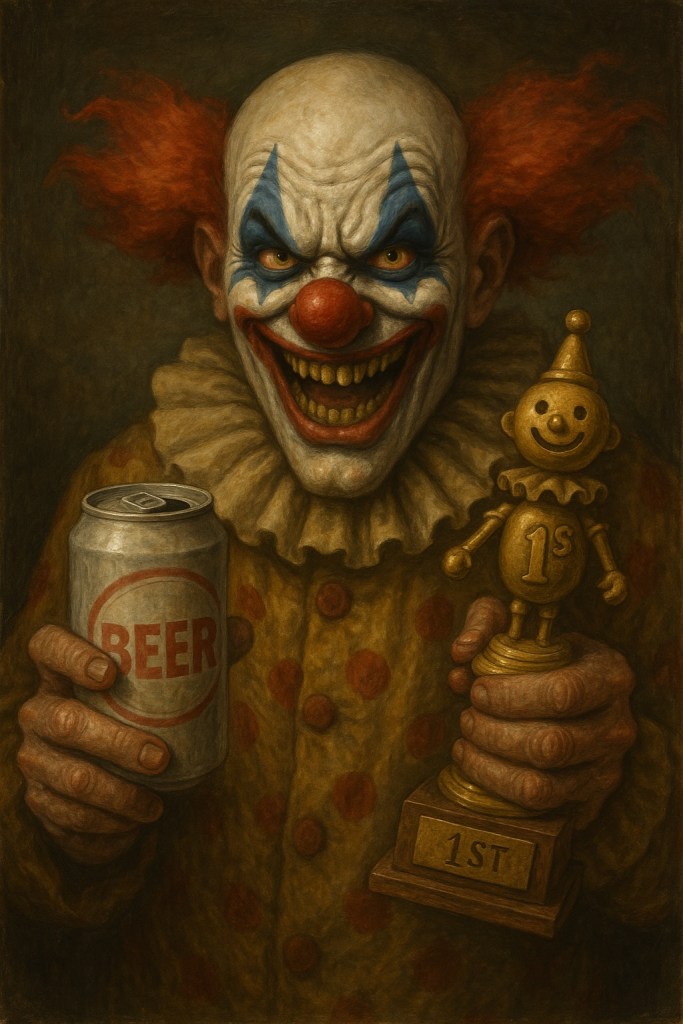
Hey Budweiser, You Give Beer a Bad Name

In a world where zero royalties becomes a brag, and one second of music is one second too far.

Let me set the stage: Cannes Lions is the annual eurotrash…to coin a phrase…circular self-congratulatory hype fest at which the biggest brands and ad agencies in the world if not the Solar System spend unreal amounts of money telling each other how wonderful they are. Kind of like HITS Magazine goes to Cannes but with a real budget. And of course the world’s biggest ad platform–guess who–has a major presence there among the bling and yachts of the elites tied up in Yachtville by the Sea. And of course they give each other prizes, and long-time readers know how much we love a good prize, Nyan Cat wise.

Enter the King of Swill, the mind-numbingly stupid Budweiser marketing department. Or as they say in Cannes, Le roi de la bibine.

Credit where it’s due: British Bud-hater and our friend Chris Cooke at CMU flagged this jaw-dropper from Cannes Lions, where Budweiser took home the Grand Prix for its “One‑Second Ad” campaign—a series of ultra-short TikTok clips that featured the one second of hooks from iconic songs. The gimmick? Tease the audience just long enough to trigger nostalgia, then let the internet do the rest. The beer is offensive enough to any right-thinking Englishman, but the theft? Ooh la la.

Cannes Clown

Budweiser’s award-winning brag? “Zero ads were skipped. $0 spent on music right$.” Yes, that’s correct–“right$”.

That quote should hang in a museum of creative disinformation.

There’s an old copyright myth known as the “7‑second rule”—the idea that using a short snippet of a song (usually under 7 seconds) doesn’t require a license. It’s pure urban legend. No court has ever upheld such a rule, but it sticks around because music users desperately want it to be true. Budweiser didn’t just flirt with the myth—it took the myth on a date to Short Attention Span Theater, built an ad campaign around it, and walked away with the biggest prize in advertising to the cheers of Googlers everywhere.

When Theft from artists Becomes a Business Model–again

But maybe this kind of stunt shouldn’t come as a surprise. When the richest corporations in commercial history are openly scraping, mimicking, and monetizing millions of copyrighted works to train AI models—without permission and without payment—and so far getting away with it, it sends a signal. A signal that says: “This isn’t theft, it’s innovation.” Yeah, that’s the ticket. Give them a prize.

So of course Budweiser’s corporate brethren start thinking: “Me too.

As Austin songwriter Guy Forsyth wrote in Long Long Time“Americans are freedom-loving people, and nothing says freedom like getting away with it.” That lyric, in this context, resonates like a manifesto for scumbags.

The Immorality of Virality

For artists and the musicians and vocalists who created the value that Budweiser is extracting, the campaign’s success is a masterclass in bad precedent. It’s one thing to misunderstand copyright; it’s another to market that misunderstanding as a feature. When global brands publicly celebrate not paying for music–in Cannes, of all places—the very tone-deaf foundation of their ad’s emotional resonance sends a corrosive signal to the entire creative economy. And, frankly, to fans.

Oops!… I Did It Again, bragged Budweiser, proudly skipping royalties like it’s Free Fallin’, hoping no one notices they’re just Smooth Criminals playing Cheap Thrills with other people’s work. It’s not Without Me—it’s without paying anyone—because apparently Money for Nothing is still the vibe, and The Sound of Silence is what they expect from artists they’ve ghosted.

Because make no mistake: even one second of a recording can be legally actionable particularly when the intentional infringing conspiracy gets a freaking award for doing it. That’s not just law—it’s basic respect, which is kind of the same thing. Which makes Budweiser’s campaign less of a legal grey area and more of a cultural red flag with a bunch of zeros. Meaning the ultimate jury award from a real jury, not a Cannes jury.

This is the immorality of virality: weaponizing cultural shorthand to score branding points, while erasing the very artists who make those moments recognizable. When the applause dies down in Yachtville, what’s left is a case study in how to win by stealing — not creating.

TikTok Sale Extended…Again

By Chris Castle

Imagine if the original Napster had received TikTok-level attention from POTUS?  Forget I said that.  The ongoing divestment of TikTok from its parent company ByteDance has reached yet another critical point with yet another bandaid.  Congress originally set a January 19, 2025 deadline for ByteDance to either sell TikTok’s U.S. operations or face a potential ban in the United States as part of the Protecting Americans from Foreign Adversary Controlled Applications Act or “PAFACA” (I guess “covfefe” was taken). The US Supreme Court upheld that law in TikTok v. Garland.

When January 20 came around, President Trump gave ByteDance an extension to April 5, 2025 by executive order. When that deadline came, President Trump granted an extension to the extension to the January 19 deadline by another executive order, providing additional time for ByteDance to finalize a deal to divest. The extended deadline now pushes the timeline for divestment negotiations to July 1, 2025.

This new extension is designed to allow for further negotiation time among ByteDance, potential buyers, and regulatory authorities, while addressing the ongoing trade issues and concerns raised by both the U.S. and Chinese governments. 

It’s getting mushy, but I’ll take a stab at the status of the divestment process. I might miss someone as they’re all getting into the act. 

I would point out that all these bids anticipate a major overhaul in how TikTok operates which—just sayin’—means it likely would no longer be TikTok as its hundreds of millions of users now know it.  I went down this path with Napster, and I would just say that it’s a very big deal to change a platform that has inherent legal issues into one that satisfies a standard that does not yet exist.  I always used the rule of thumb that changing old Napster to new Napster (neither of which had anything to do with the service that eventually launched with the “Napster” brand but bore no resemblance to original Napster or its DNA) would result in an initial loss of 90% of the users. Just sayin’.

Offers and Terms

Multiple parties have expressed interest in acquiring TikTok’s U.S. operations, but the terms of these offers remain fluid due to ongoing negotiations and the complexity of the deal. Key bidders include:

ByteDance Investors:  According to Reuters, “the biggest non-Chinese investors in parent company ByteDance to up their stakes and acquire the short video app’s U.S. operations.” This would involve Susquehanna International Group, General Atlantic, and KKR. ByteDance looks like it retains a minority ownership position of less than 20%, which I would bet probably means 19.99999999% or something like that. Reuters describes this as the front runner bid, and I tend to buy into that characterization. From a cap table point of view, this would be the cleanest with the least hocus pocus. However, the Reuters story is based on anonymous sources and doesn’t say how the deal would address the data privacy issues (other than that Oracle would continue to hold the data), or the algorithm. Remember, Oracle has been holding the data and that evidently has been unsatisfactory to Congress which is how we got here. Nothing against Oracle, but I suspect this significant wrinkle will have to get fleshed out.

Lawsuit by Bidder Company Led by Former Myspace Executive:  In a lawsuit in Florida federal court by TikTok Global LLC filed April 3, TikTok Global accuses ByteDance, TikTok Inc., and founder Yiming Zhang of sabotaging a $33 billion U.S.-based TikTok acquisition deal by engaging in fraud, antitrust violations, and breach of contract. TikTok Global LLC is led by Brad Greenberg the former MySpace executive and Internet entrepreneur. The factual allegations in the complaint start in 2020 with the executive order in Trump I, and alleges that:

This set the stage for what should have been a straightforward process of acquisition and divestment, but instead, it became a twisted tale of corporate intrigue, conspiracy, and antitrust violations….Plaintiff would soon discover, the game was rigged from the start because ByteDance had other plans, plans that circumvented proper procedures, stifled competition, and maintained ByteDance’s control over TikTok’s U.S. operations – all under the guise of compliance with the executive order.

The fact-heavy complaint alleges ByteDance misled regulators, misappropriated the “TikTok Global” brand, and conspired to maintain control of TikTok in violation of U.S. government directives. The suit brings six causes of action, including tortious interference and unjust enrichment, underscoring a complex clash over corporate deception and national security compliance. Emphasis on “alleged” as the case is pretty fact-dependent and plaintiff will have to prove their case, but the well-drafted complaint makes some extensive claims that may give a window into the behind the scenes in the world of Mr. Tok. Watch this space, it could be a sleeper that eventually wakes up to bite, no pun intended.

Oracle and Walmart: This proposal, which nearly closed in 2024 (I guess), involved a sale of TikTok’s U.S. business to a consortium of U.S.-based companies, with Oracle managing data security and infrastructure. ByteDance was to retain a minority stake in the new entity. However, this deal has not closed, who knows why aside from competition and then there’s those trade tariffs and the need for approval from both U.S. and Chinese regulators who have to be just so chummy right at the moment.

AppLovin: A preliminary bid has been submitted by AppLovin, an adtech company, to acquire TikTok’s U.S. operations. It appears that AppLovin’s offer includes managing TikTok’s user base and revenue model, with a focus on ad-driven strategies, although further negotiations are still required.  According to Pitchbook, “AppLovin is a vertically integrated advertising technology company that acts as a demand-side platform for advertisers, a supply-side platform for publishers, and an exchange facilitating transactions between the two. About 80% of AppLovin’s revenue comes from the DSP, AppDiscovery, while the remainder comes from the SSP, Max, and gaming studios, which develop mobile games. AppLovin announced in February 2025 its plans to divest from the lower-margin gaming studios to focus exclusively on the ad tech platform.”  It’s a public company trading as APP and seems to be worth about $100 billion.   Call me crazy, but I’m a bit suspicious of a public company with “lovin” in its name.  A bit groovy for the complexity of this negotiation, but you watch, they’ll get the deal.

Amazon and Blackstone: Amazon and Blackstone have also expressed interest in acquiring TikTok or a stake in a TikTok spinoff in Blackstone’s case. These offers would likely involve ByteDance retaining a minority interest in TikTok’s U.S. operations, though specifics of the terms remain unclear.  Remember, Blackstone owns HFA through SESAC.  So there’s that.

Frank McCourt/Project Liberty:  The “People’s Bid” for TikTok is spearheaded by Project Liberty, founded by Frank McCourt. This initiative aims to acquire TikTok and change its platform to prioritize user privacy, data control, and digital empowerment. The consortium includes notable figures such as Tim Berners-Lee, Kevin O’Leary, and Jonathan Haidt, alongside technologists and academics like Lawrence Lessig.  This one gives me the creeps as readers can imagine; anything with Lessig in it is DOA for me.

The bid proposes migrating TikTok to a new open-source protocol to address concerns raised by Congress while preserving its creative essence. As of now, the consortium has raised approximately $20 billion to support this ambitious vision.  Again, these people act like you can just put hundreds of millions of users on hold while this changeover happens.  I don’t think so, but I’m not as smart as these city fellers.

PRC’s Reaction

The People’s Republic of China (PRC) has strongly opposed the forced sale of TikTok’s U.S. operations, so there’s that. PRC officials argue that such a divestment would be a dangerous precedent, potentially harming Chinese tech companies’ international expansion. And they’re not wrong about that, it’s kind of the idea. Furthermore, the PRC’s position seems to be that any divestment agreement that involves the transfer of TikTok’s algorithm to a foreign entity requires Chinese regulatory approval.  Which I suspect would be DOA.

They didn’t just make that up– the PRC, through the Cyberspace Administration of China (CAC), owns a “golden share” in ByteDance’s main Chinese subsidiary. This 1% stake, acquired in 2021, grants the PRC significant influence over ByteDance including the ability to influence content and business strategies.

Unsurprisingly, ByteDance must ensure that the PRC government (i.e., the Chinese Communist Party) maintains control over TikTok’s core algorithm, a key asset for the company. PRC authorities have been clear that they will not approve any sale that results in ByteDance losing full control over TikTok’s proprietary technology, complicating the negotiations with prospective buyers.  

So a pressing question is whether TikTok without the algorithm is really TikTok from the users experience.  And then there’s that pesky issue of valuation—is TikTok with an unknown algo worth as much as TikTok with the proven, albeit awful, current algo.

Algorithm Lease Proposal

In an attempt to address both U.S. security concerns and the PRC’s objections, a novel solution has been proposed: leasing TikTok’s algorithm. Under this arrangement, ByteDance would retain ownership of the algorithm, while a U.S.-based company, most likely Oracle, would manage the operational side of TikTok’s U.S. business.

ByteDance would maintain control over its technology, while allowing a U.S. entity to oversee the platform’s operation within the U.S. The U.S. company would be responsible for ensuring compliance with U.S. data privacy laws and national security regulations, while ByteDance would continue to control its proprietary algorithm and intellectual property.

Under this leasing proposal, Oracle would be in charge of managing TikTok’s data security and ensuring that sensitive user data is handled according to U.S. regulations. This arrangement would allow ByteDance to retain its technological edge while addressing American security concerns regarding data privacy.

The primary concern is safeguarding user data rather than the algorithm itself. The proposal aims to address these concerns while avoiding the need for China’s approval of a full sale.

Now remember, the reason we are in this situation at all is that Chinese law requires TikTok to turn over on demand any data it gathers on TikTok users which I discussed on MTP back in 2020. The “National Intelligence Law” even requires TikTok to allow the PRC’s State Security police to take over the operation of TikTok for intelligence gathering purposes on any aspect of the users’ lives.  And if you wonder what that really means to the CCP, I have a name for you:  Jimmy Lai. You could ask that Hong Konger, but he’s in prison. 

This leasing proposal has sparked debate because it doesn’t seem to truly remove ByteDance’s influence over TikTok (and therefore the PRC’s influence). It’s being compared to “Project Texas 2.0,” a previous plan to secure TikTok’s data and operations.  I’m not sure how the leasing proposal solves this problem. Or said another way, if the idea is to get the PRC’s hands off of Americans’ user data, what the hell are we doing?

Next Steps

As the revised deadline approaches, I’d expect a few steps, each of which has its own steps within steps:

Finalization of a Deal: This is the biggest one–easy to say, nearly impossible to accomplish.  ByteDance will likely continue negotiating with interested parties while they snarf down user data, working to secure an agreement that satisfies both U.S. regulatory requirements and Chinese legal constraints. The latest extension provides runway for both sides to close key issues that are closable, particularly concerning the algorithm lease and ByteDance’s continued role in the business.

Operational Contingency:  I suppose at some point the buyer is going to be asked if whatever their proposal is will actually function and whether the fans will actually stick around to justify whatever the valuation is.  One of the problems with rich people getting ego involved in a fight over something they think is valuable is that they project all kinds of ideas on it that show how smart they are, only to find that once they get the thing they can’t actually do what they thought they would do.  By the time they figure out that it doesn’t work, they’ve moved on to the next episode in Short Attention Span Theater and it’s called Myspace.

China’s Approval: ByteDance will need to secure approval from PRC regulatory authorities for any deal involving the algorithm lease or a full divestment. So why introduce the complexity of the algo lease when you have to go through that step anyway?  Without PRC approval, any sale or lease of TikTok’s technology is likely dead, or at best could face significant legal and diplomatic hurdles.

Legal Action: If an agreement is not reached by the new deadline of July 1, 2025, further legal action could be pursued, either by ByteDance to contest the divestment order or by the U.S. government to enforce a ban on TikTok’s operations.  I doubt that President Trump is going to keep extending the deadline if there’s no significant progress.

If I were a betting man, I’d bet on the whole thing collapsing into a shut down and litigation, but watch this space.

[This post first appeared on MusicTech.Solutions]

New Songwriter Union Survey and @ArtistRights Institute Newsletter 3/10/25

The Artist Rights Institute’s news digest Newsletter

New Survey for Songwriters: We are surveying songwriters about whether they want to form a certified union. Please fill out our short Survey Monkey confidential survey here! Thanks!

Big Tech’s “Text and Data Mining” Lobbying Head Fake

George York of Digital Creators Coalition and RIAA gives an excellent overview of international AI Text and Data Mining (TDM) loopholes and how to plug them. Nov. 20, 2024 Artist Rights Symposium, Washington, DC. Watch the Symposium playlist here.

Music

“I felt like a puppet”: the Motown hit Marvin Gaye felt like he didn’t deserve (Ben Forrest/Far Out) (h/t @ElizaNealsRocks

TikTok

Negotiations over a TikTok US deal have reportedly yet to begin (Stuart Dredge/Music Ally)

Artificial Intelligence: Text and Data Mining Exceptions

Digital Creators Coalition Letter to USTR on US Trade Policy for Threats from Text and Data Mining Exceptions Misapplied in AI Training (Chris Castle/Artist Rights Watch)

Sony slams ‘unworkable’ AI plans as music theft (William Turvill/The Sunday Times)

AI copyright shake-up could breach international law (Mark Sellman/The Times). (Tracks comments on Berne et al made by Digital Creators Coalition to USTR)

REPORT ON PIRATED CONTENT USED IN THE TRAINING OF GENERATIVE AI (Rights Alliance for Creative Industry on the Internet)

Ticketing

TWO PEOPLE ARRESTED ON CYBERCRIME CHARGES AFTER STEALING STUBHUB TICKETS TO ERAS TOUR(Daniel Kreps/Rolling Stone)

It’s the Stock, Stupid:  Will the Centrifugal Force of the Public Market Nix the TikTok Divestment?

It’s a damn good thing we never let another MTV build a business on our backs.

In case you were wondering, the founder of TikTok’s parent corporation Bytedance is now reportedly China’s richest man according to the Hurun Rich List at a net worth of US$49.3 billion.  Is that because of “profits”?  Ah, no.  It’s due to his share of the Bytedance stock valuation. This is why any royalty deal with Big Tech that is based solely on a percentage of revenue rather than a dollar rate based on total value is severely lacking.

Revenue is a factor in determining stock valuation, of course.  ByteDance’s first-half 2024 revenue increased to $73 billion, making Bytedance’s revenues almost as big as Facebook but potentially growing faster. (Meta/Facbook’s first half  revenue increased about 25% to $75.5 billion.)

But where does TikTok’s revenue come from? ByteDance’s international revenue reached $17 billion in the first half of 2024, largely driven by TikTok. Non-China revenues for ByteDance rose by nearly 60% during this period. ByteDance continues to leverage TikTok to expand into international e-commerce, sustaining its global popularity. So the company is throwing off a pile of cash–yet they are unable to come up with a functioning royalty system.

Then what would a Bytedance IPO price at?  We kind of have to guess because Bytedance is not publicly traded and doesn’t report its financials to the public (and even if they did, China-based companies got special beneficial treatment during the Obama Administration so PRC companies haven’t reported on the same basis as everyone else until recently).  Continuing the Meta/Facebook comparison, Meta has a market capitalization of $1.4 trillion give or take, while ByteDance’s valuation on the secondary market for private stocks is about $250 billion, according to a CapLight subscriber. 

That gap is not lost on our friends at mega-venture capital firm Sequoia China and other influential investors in Bytedance such as Susquehanna,  SoftBank, and  General Atlantic.  And, of course, the Chinese Communist Party investing through its Cyberspace Administration of China censorship operation. The CCP’s CAC owns elite “golden shares” in Bytedance that allows it to name directors to the board.  These cats did not put up cold hard cash for a distress asset sale of Bytedance’s principal operating unit aka TikTok.  

Assuming a constant growth rate, Bytedance is trading at a paltry 1.7 times its 2024 revenues compared to Meta which is trading at about 8.7x its revenues.  There are some differences between Meta and Bytedance, like operating profits:  Meta has a 38% operating margin compared to Bytedance at about 25%.  But we all know why Bytedance’s valuation is depressed—the TikTok divestment which seems to be on track to happen on or about January 19.

The Protecting Americans from Foreign Adversary Controlled Applications Act aka the TikTok Divestment Act, requires that Bytedance must sell TikTok.  There’s a pretty good argument that the divestment is enforceable for a variety of reasons.  The law applies not only to TikTok, but also to any entity controlled by China, Iran, North Korea or Russia that distributes an application in the United States.  That’s a pretty significant barrier to IPO riches, or at least one major risk factor that could sour underwriters if not investors.  How to get around it?

As we saw with the Music Modernization Act that solved Spotify’s IPO issues due to the company’s massive copyright infringement business model, if you spread enough cash around Capitol Hill, it’s astonishing what can happen with the vast number of people on the take.  Whatever it costs, lobbyists and lawmakers are cheap dates compared to IPO riches.  Even so, it doesn’t look like the US government is quite ready to allow one of the biggest foreign agent data harvesting and user profiling operations in history to get its snout in the public markets trough.  At least not yet.

But an argument could be made that Bytedance is missing about $1 trillion in market cap.  Greed and resentment are a powerful combination.  To add insult to injury, even Triller managed to get to the public markets, so things could start to get weird while Mr. Tok watches his paper billions evaporate on January 19.

[This post first appeared on MusicTech.Solutions]
They Deserve It: TikTok Forced Sale Legislation Advances to Senate

The most remarkable aspect of the pending legislation in Congress that would force a sale of TikTok is how much money and how many high profile lobbyists have taken the CCP’s shilling (or maybe yuan) to push the obviously corrupt company’s water. And yet…the legislation is advancing by leaps and bounds and TikTok is failing.

David was interviewed by Billboard to give a perspective. The headline here is that TikTok appears to be doing the same thing that Spotify was doing when Spotify was sued by Melissa Ferrick and David–using songs without a license.

The music industry’s view of the proceedings in Washington is mixed. The perspective of artists and songwriters is arguably best expressed by David Lowery, the artist rights activist and frontman for the bands Cracker and Camper Van Beethoven, who also was one of more than 200 creators that, in early April, signed an open letter to tech platforms urging them to stop using AI “to infringe upon and devalue the rights of human artists.”

“The rates TikTok pays artists are extremely low, and it has a history — at least with me — of using my catalog with no licenses,” Lowery says. “I just checked to make sure and there are plenty of songs that I wrote on TikTok, and I have no idea how they have a license for those songs.” 

As a result, Lowery says that while “I’m kind of neutral as to whether TikTok needs to be sold to a U.S. owner, the bill pleases me in a general way because I feel that they’ve gotten away with abusing artists for so long that they deserve it. I realize the bill doesn’t punish them for doing that,” he continues, “but that’s why a lot of musicians feel they really deserve it.” 

Guest post by @TheBlakeMorgan: A musician’s view of the TikTok legislation

Here’s a musician’s perspective on the TikTok legislation before Congress: I hope it passes, both as an American, and as a music maker. (The bill is “Protecting Americans From Foreign Adversary Controlled Applications Act, (HR 7521),” It was recently introduced by Representatives Mike Gallagher (R-Wi.) and Raja Krishnamoorthi (D-Ill.)The bill passed the House by a vote of 352-65, demonstrating deep bipartisan support)

First––this bill restricts TikTok, it does not “ban” the app. It forces the company to separate its ties to the Chinese Communist Party and prevents them from accessing the data of Americans. That’s a good thing.

The bill doesn’t mandate or regulate speech, it’s focused on national security: the FCC called TikTok “a clear and present danger” to our country.

Second––music makers already know what music lovers are just now learning: TikTok is the worst, most exploitative streaming platform for music, anywhere. The vast majority of music on TikTok generates virtually no revenue for the musicians who made it, and even more music on the platform is completely unlicensed (stolen), copied (stolen via AI), or pirated (stolen).

Simply put, TikTok is trying to build a music-based business without paying music makers fair value for the music.

Lastly––musicians (and Americans) are all too familiar with being underpaid and undervalued, with our data being scraped and sold, with platforms which promote hate speech, bigotry, and bullying.

But TikTok does all of this and more, while posing an existential national security threat to our country.

It’s rare to see independent musicians (like me) stand with major labels, and it’s rare to see Republicans and Democrats stand together about anything. But here we are. I hope it passes the Senate and that President Biden signs it.

Must Read by @ebakerwhite: TikTok Parent ByteDance Planned To Use TikTok To Monitor The Physical Location Of Specific American Citizens — Artist Rights Watch

[Well, here it is. Two years ago we warned everyone who would listen that TikTok were apparatchiks for the Chinese Communist Party–by law in China because of the CCP’s civil-military fusion–“If Google is the Joe Camel of data, then TikTok is the Joe Camel of intelligence.” We did panels warning about TikTok including the CEO’s struggle session and the CCP constitution–facts, you know. Tim Ingham warned that on top of everything else, the deals suck. And then there’s Twinkletoes, who is in our view a walking, talking Foreign Agent Registration Act violation.

Emily Baker White warns of the harms from TIkTok we identified 2 years ago coming home to roost.

[According to Emily Baker White writing in Forbes:]

China-based team at TikTok’s parent company, ByteDance, planned to use the TikTok app to monitor the personal location of some specific American citizens, according to materials reviewed by Forbes.

The team behind the monitoring project — ByteDance’s Internal Audit and Risk Control department — is led by Beijing-based executive Song Ye, who reports to ByteDance cofounder and CEO Rubo Liang. 

The team primarily conducts investigations into potential misconduct by current and former ByteDance employees. But in at least two cases, the Internal Audit team also planned to collect TikTok data about the location of a U.S. citizen who had never had an employment relationship with the company, the materials show. It is unclear from the materials whether data about these Americans was actually collected; however, the plan was for a Beijing-based ByteDance team to obtain location data from U.S. users’ devices.

Read the post on Forbes