Ready The Clown Car : Kim Dotcom Contemplates Suing Google, Twitter and Facebook

Serious folks, we can’t make this up.

“Twitter introduces Two-Step-Authentication. Using my invention. But they won’t even verify my Twitter account?!,” Dotcom tweeted.

“Google, Facebook, Twitter, Citibank, etc. offer Two-Step-Authentication. Massive IP (intellectual property) infringement by U.S. companies. My innovation. My patent,” he added.

But it get’s better…

“I never sued them. I believe in sharing knowledge & ideas for the good of society. But I might sue them now cause of what the US did to me,” he said.

However, he said a more productive approach would be if the tech giants helped cover his legal bills to fight prosecution under the Digital Millennium Copyright Act (DCMA), which he estimated would exceed US$50 million.

“Google, Facebook, Twitter, I ask you for help. We are all in the same DMCA boat. Use my patent for free. But please help fund my defence,” he tweeted.

So essentially he’s threatening to sue the very same people he’s asking for money. Interesting strategy. We’re not sure that Google, Facebook and Twitter feel they are in the same boat. It’s difficult to believe these companies would want to be anywhere near the imploding public spectacle known as Kim Dotcom.

READ THE FULL STORY HERE:
http://www.channelnewsasia.com/news/technology/kim-dotcom-mulls-suing-tech-giants-for-c/685072.html

you may also enjoy…

UPDATE:
Kim Dotcom claims he invented two-factor authentication—but he wasn’t first | Ars Technica

Dotcom’s European patent was revoked in 2011 largely because AT&T had a patent on the same technology with a priority date from 1995. (Thanks to Emily Weal of patent law firm Keltie for pointing out Dotcom’s European patent travails in the IP Copy blog.)

While Dotcom’s patent in the US is still in force, AT&T also has a US patent pre-dating hisThe Guardian pointed out that Ericsson and Nokia also have patent filings for two-factor systems predating Dotcom’s.

The Constitutional Foundations of Intellectual Property Law

via copyhype:

Randolph May and Seth Cooper of the Free State Foundation look at some of the philosophical underpinnings that drove the inclusion of copyright and patent protection into the United States Constitution. According to May and Cooper, the origin of the right is explicitly Lockean, while the protection of the right is explicitly Madisonian. An engaging and enlightening read.

READ THE FULL REPORT HERE:
The Constitutional Foundations of Intellectual Property Law

Two Sincere Questions for The Future Of Music Coalition #SFMUSICTECH

We notice that Future of Music Coalition has submitted testimony to congress asking that they “represent” artists in the Copyright Reform process begun by Congress.

So since they’ve  volunteered to represent us.  We feel it only fair that they answer these two questions:

1. Who selects your advocacy positions?  
AFM, AFTRA, NARAS, Nashville Songwriters Assn, and ASCAP all have democratically elected boards who set the organizations’ positions.  Do you have members who vote for leadership?  If not, who is making those decisions?

2. Who funds your organization?
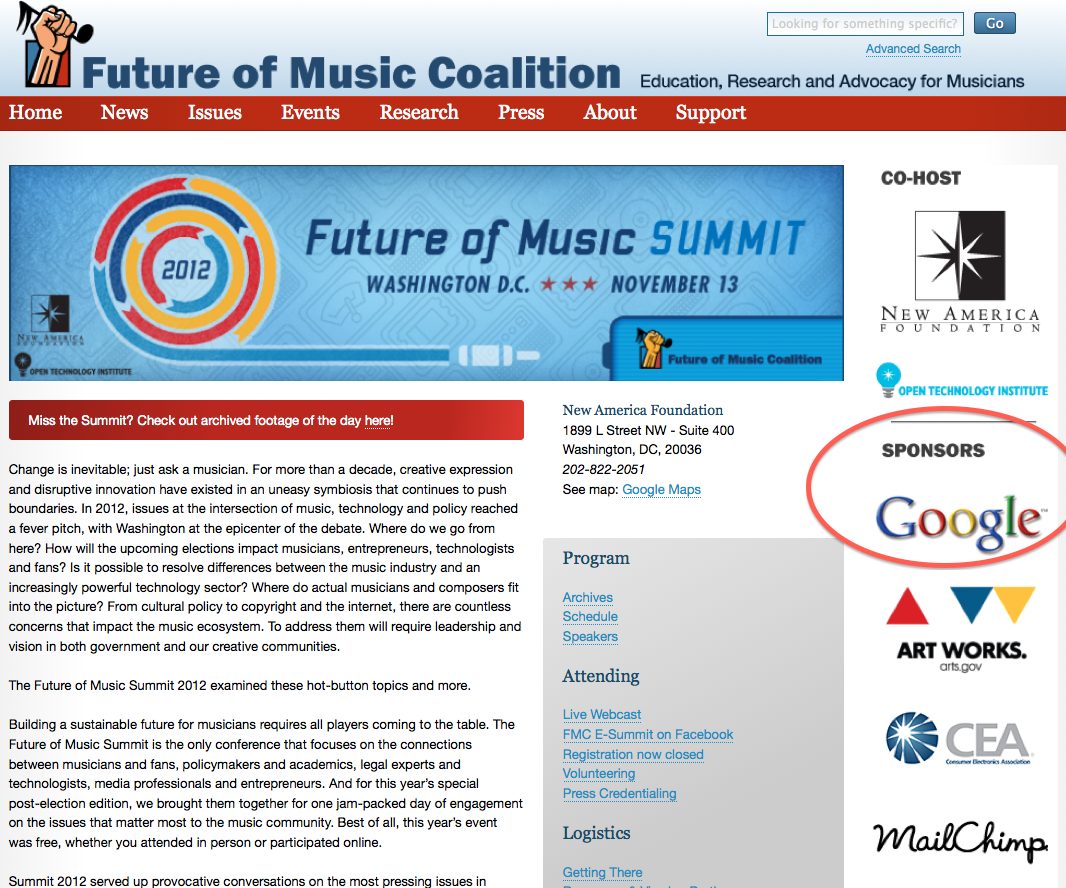
Google is listed as your first sponsor of your primary event.
http://futureofmusic.org/events/future-music-summit-2012

How much money do you get from Google?  Do you think you should be taking funding from a source many artists believe to be opposed to their interests?

FOMC Spondors

Loser Generated Content – The Exploitation Economy Explained

Essential reading by Soren Mork Petersen, “Loser Generated Content: From Participation to Exploitation.”

Abstract
In this article [1] some of the critical aspects of Web 2.0 are mapped in relation to labor and the production of user generated content. For many years the Internet was considered an apt technology for subversion of capitalism by the Italian post–Marxists.

What we have witnessed, however, is that the Internet functions as a double–edged sword; the infrastructure does foster democracy, participation, joy, creativity and sometimes creates zones of piracy. But, at the same time, it has become evident how this same infrastructure also enables companies easily to piggyback on user generated content.

Different historical and contemporary examples are provided to map how the architecture of participation sometimes turns into an architecture of exploitation.

READ THE FULL PAPER HERE:
http://journals.uic.edu/ojs/index.php/fm/article/view/2141/1948

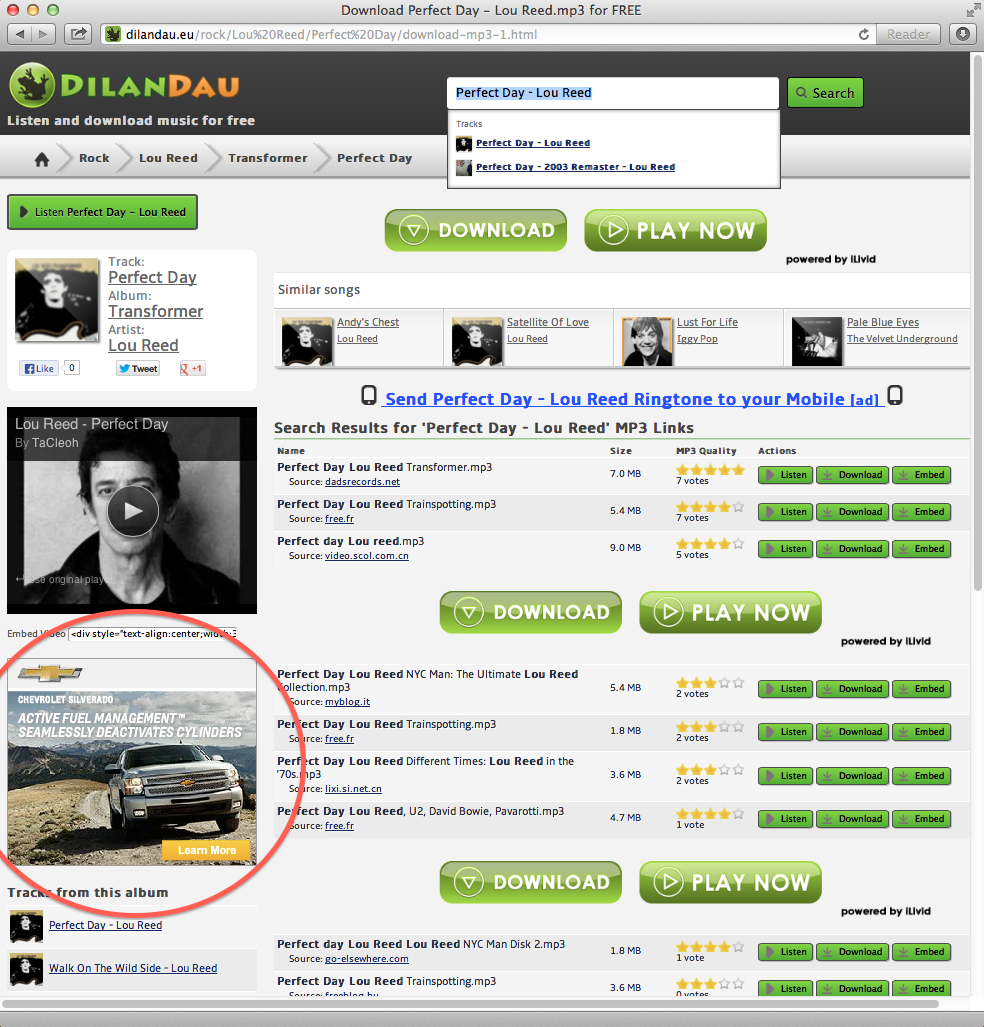
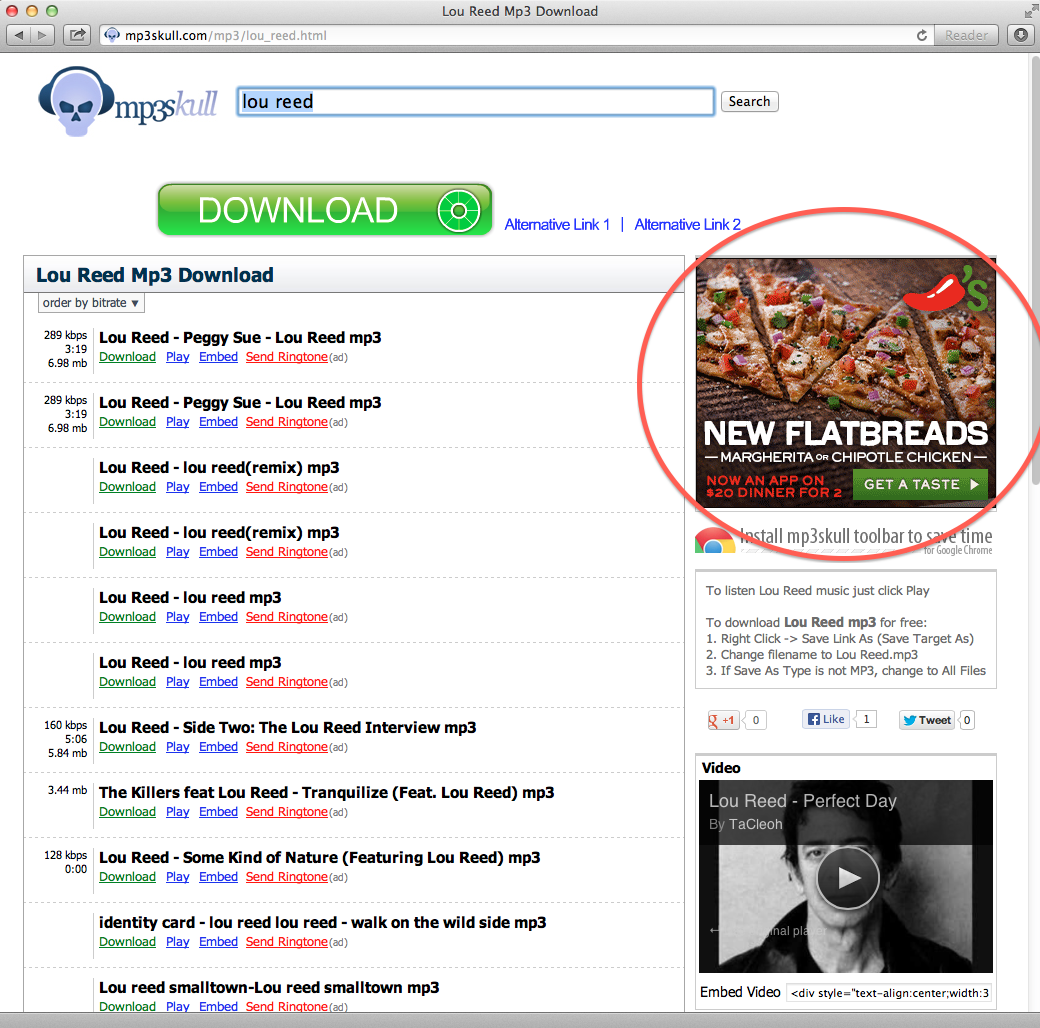
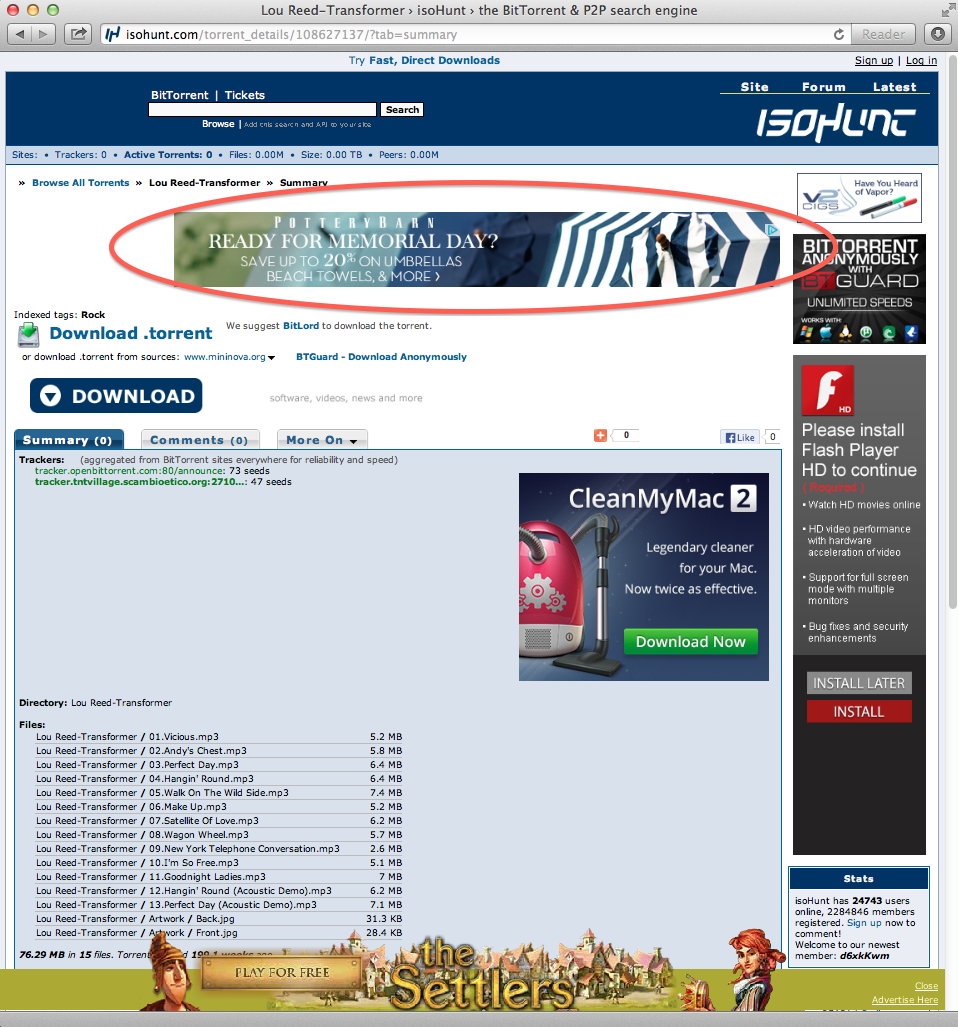
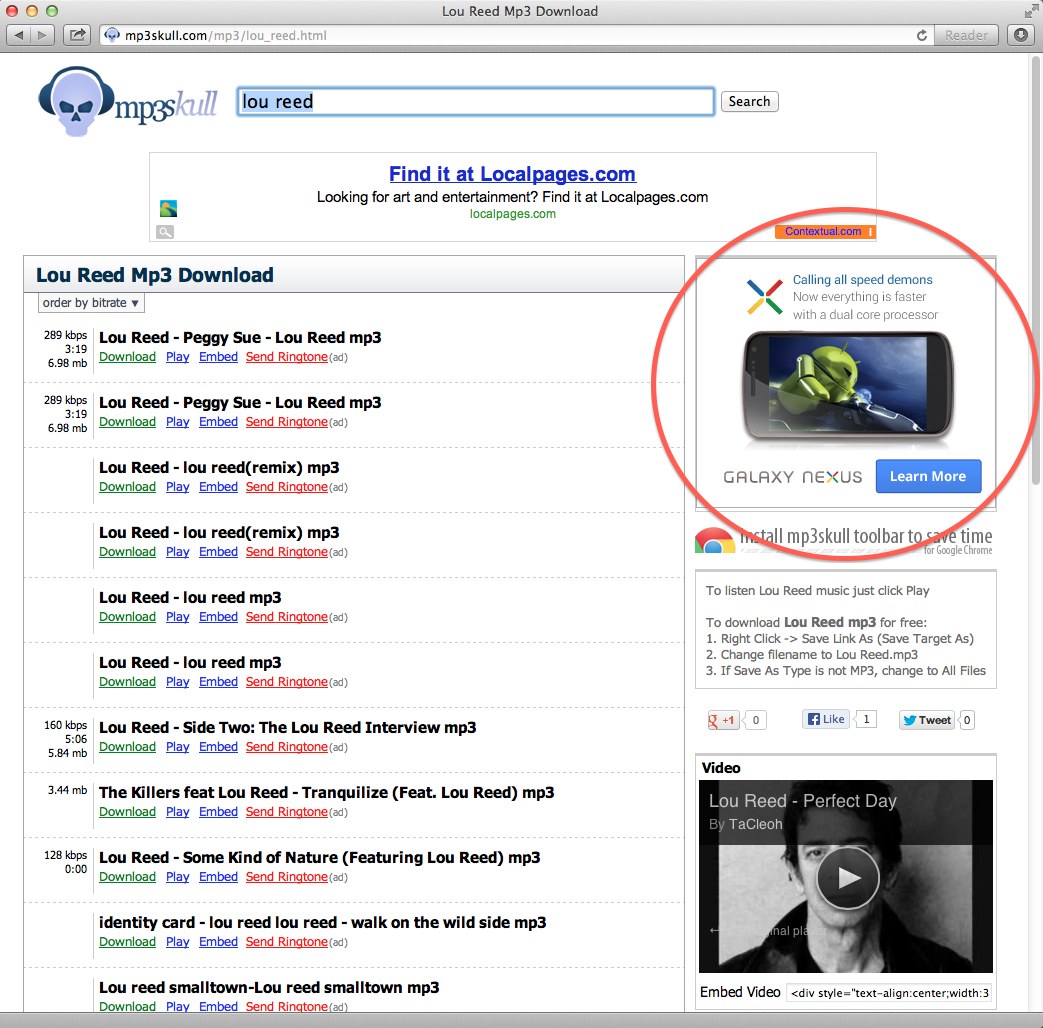
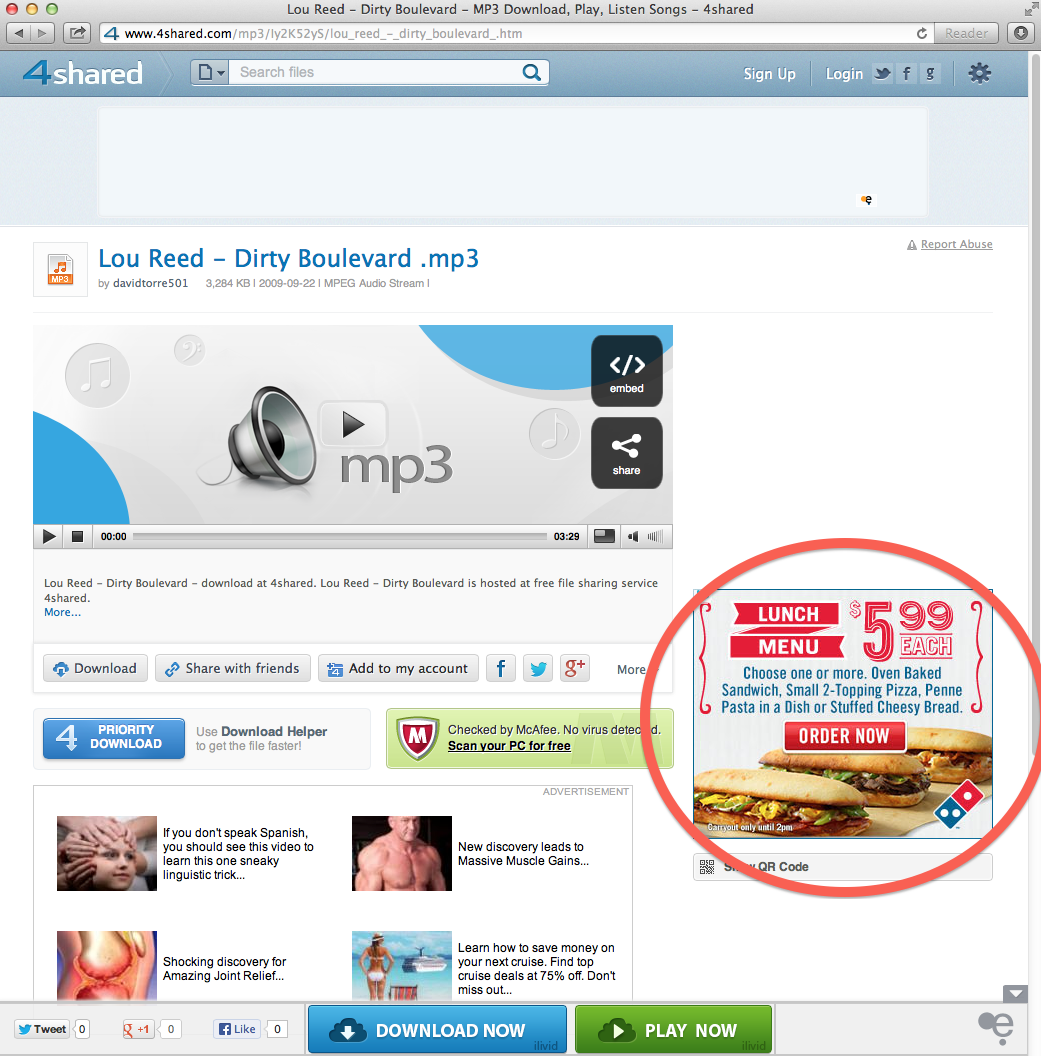
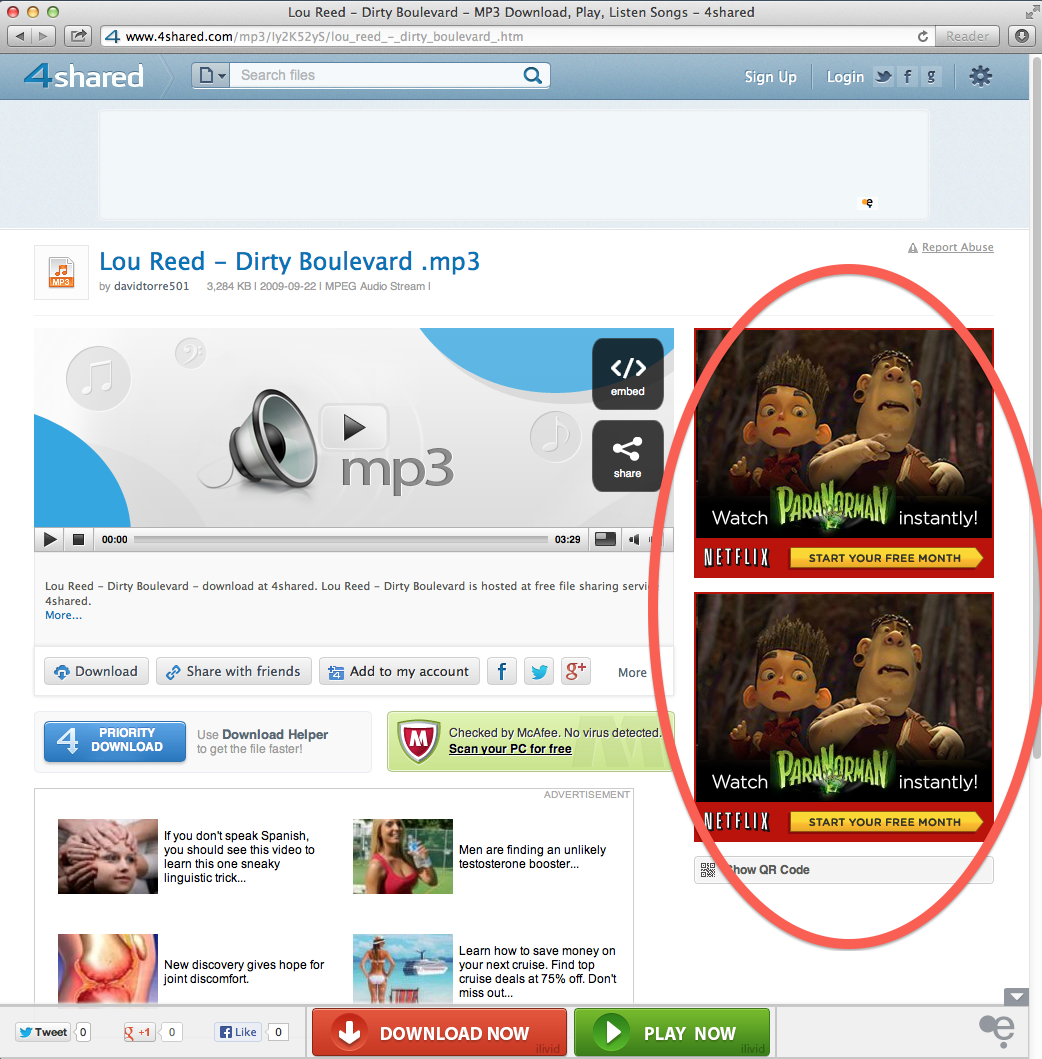
Lou Reed Exploited By American Express, AT&T, Chevrolet, Chili’s, Lysol, Pottery Barn, Vons, Domino’s Pizza, Netflix, Galaxy Nexus and Ron Jeremy!

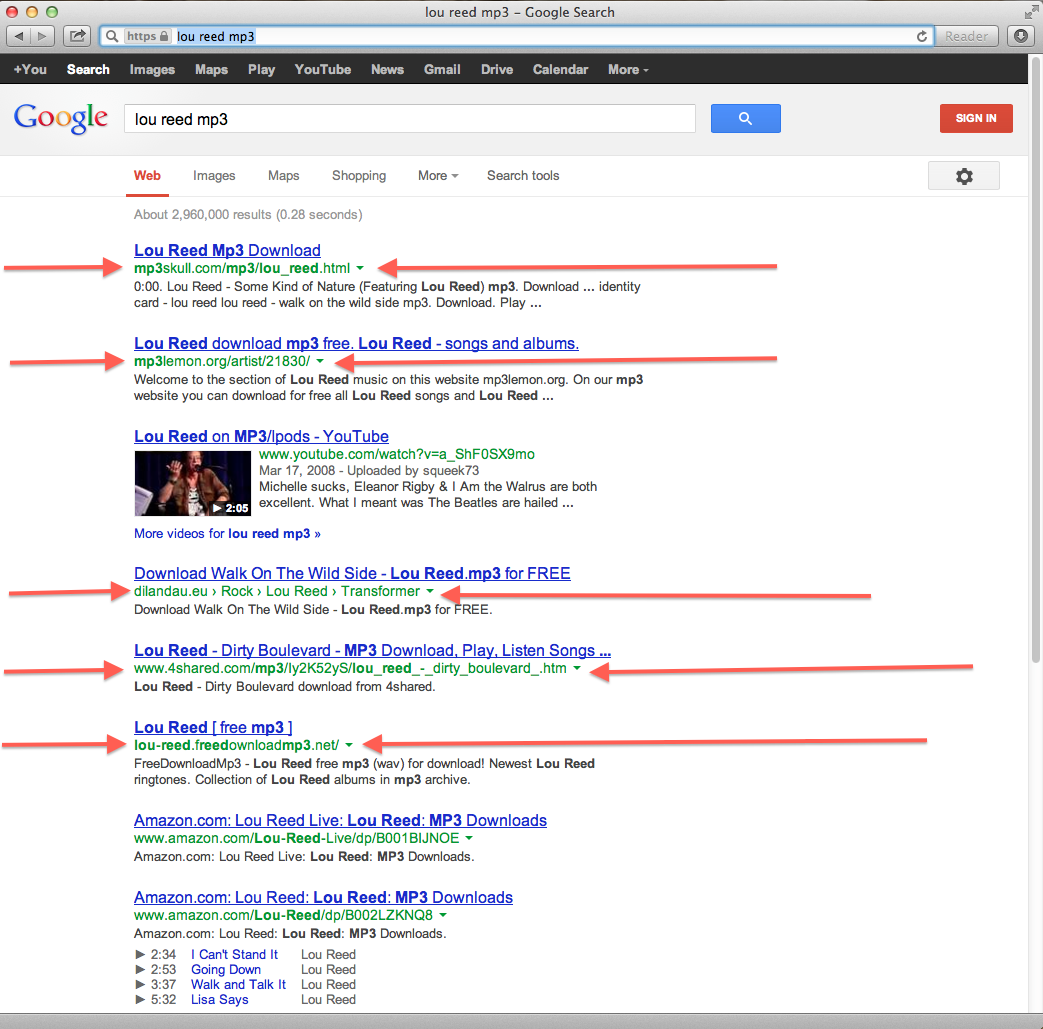
Here we go again… We can go to Google and within minutes search for an artist of stature such as Lou Reed and quickly find unlicensed and infringing internet businesses exploiting his life’s work illegally while paying the him nothing, zero, zilch, nadda, zippo.

There are many disappointing things about all of this, but the first is that when doing a simple Google search for “Lou Reed Mp3” the first five returns are for illegally operating and infringing sites.

This doesn’t count YouTube which may or may not be infringing, and may or may not actually be paying Lou from the advertising revenue (on this video, in the screen shots below for example). This is all the more troubling because we know that this can be easily filtered if there is the will to do so.

The ad networks have been highlighted in the fantastic work done by Jonathan Taplin in the USC Annenberg Innovation Lab’s Advertising Transparency Reports.

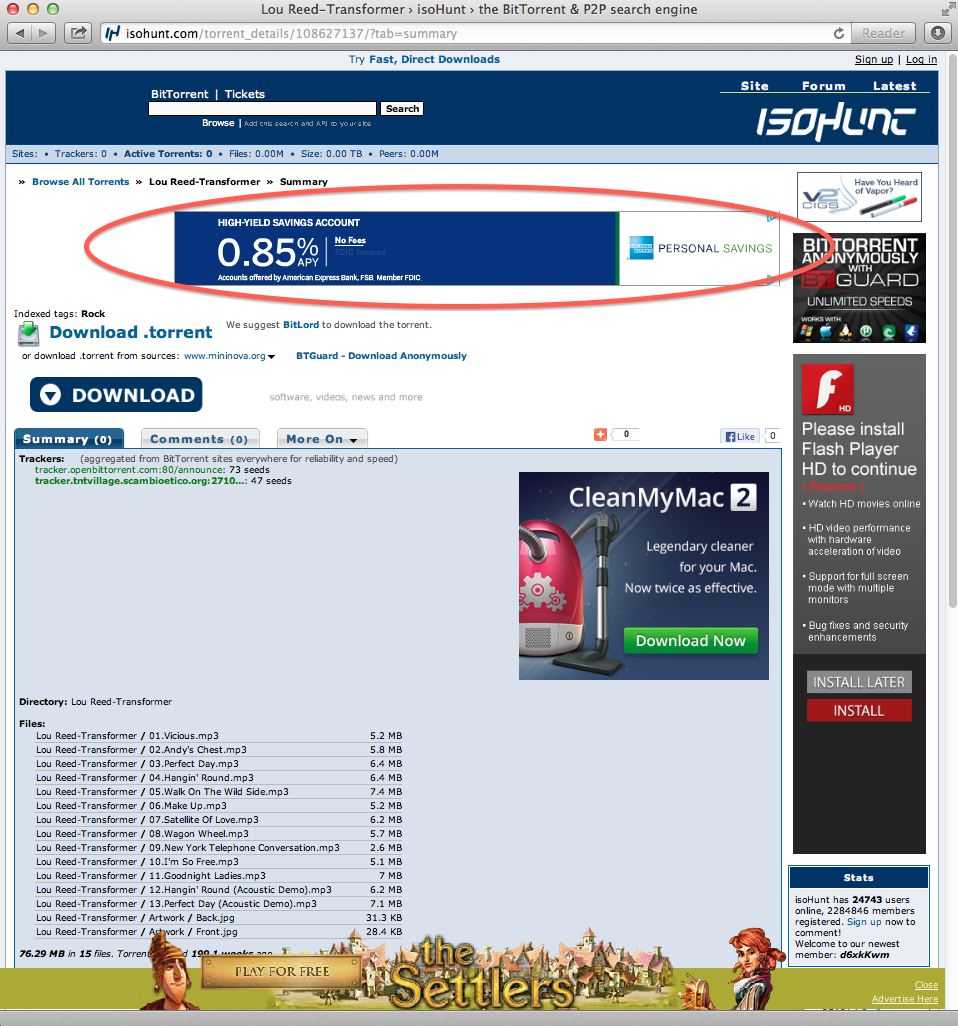
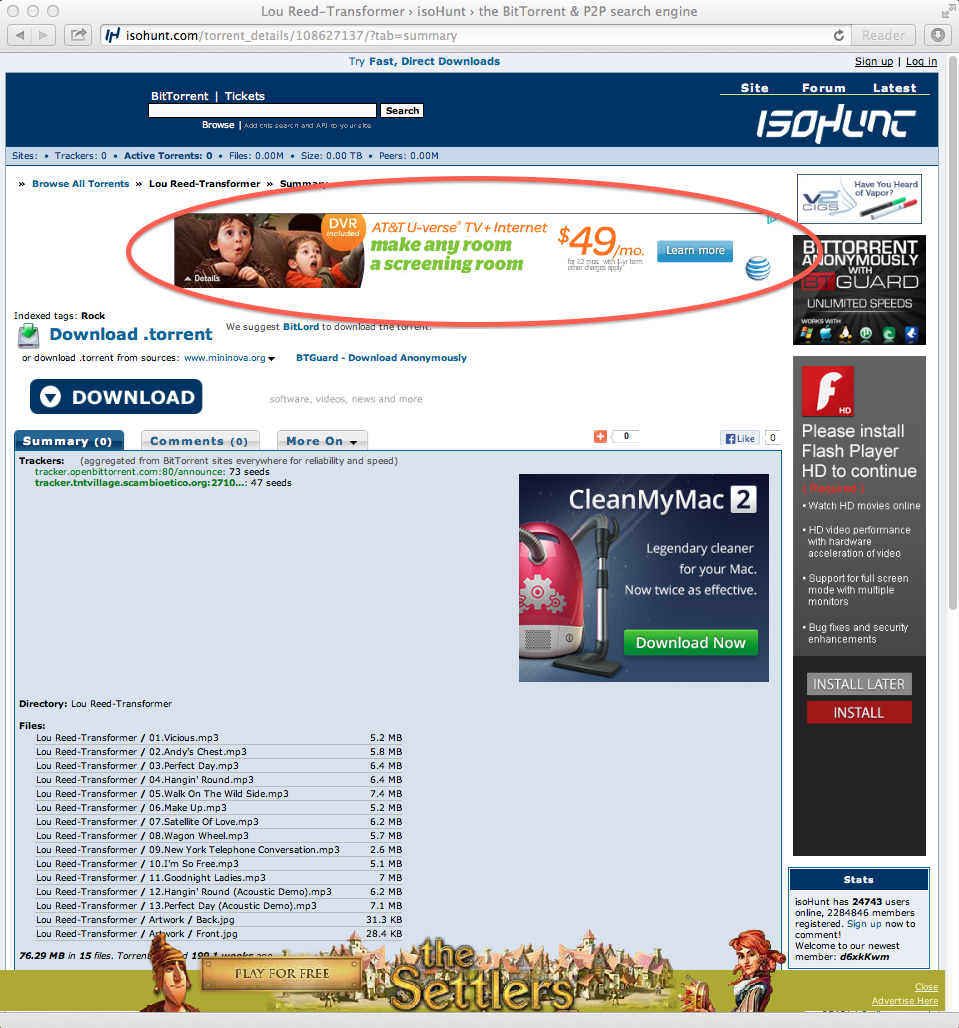
Perhaps most disappointing however is that major companies like American Express, AT&T Chevorlet, Chili’s, Lysol, Pottery Barn, Vons, Domino’s Pizza, Netflix and Galaxy Nexus are still supporting the this exploitation of artists with corporate advertising dollars. These companies not only supply the funding for these sites exploiting artists to exist, but perhaps even worse they add legitimacy to music piracy by lending their brand identity to it.

Clearly there is a lot of money being made in the distribution of music on the internet. Sadly not much of that money (or in this case NONE of it) is being distributed (or uhm, “shared”) with the artists themselves.

In any value chain where the artists work is being distributed and/or exploited for profit, the artist should be included in that value chain.

LouReedGoogleSearch

LouReedAMEX

LouReedATT

LouReedCHEVY LouReedCHILI'S LouReedLYSOL

LouReedPOTTERYBARN

LouReedGalaxyNexus

LouReedDOMINOS

LouReedNETFLIX

Not only do we see the major companies supporting these sites but there’s also the scam ads, rip offs and bogus services. And here’s where it gets even uglier…on sites like The Pirate Bay the work of Lou Reed is promoting adult (escort services?) and porn products like the one offered by Ron Jeremy below.

LouReedTPBPORN

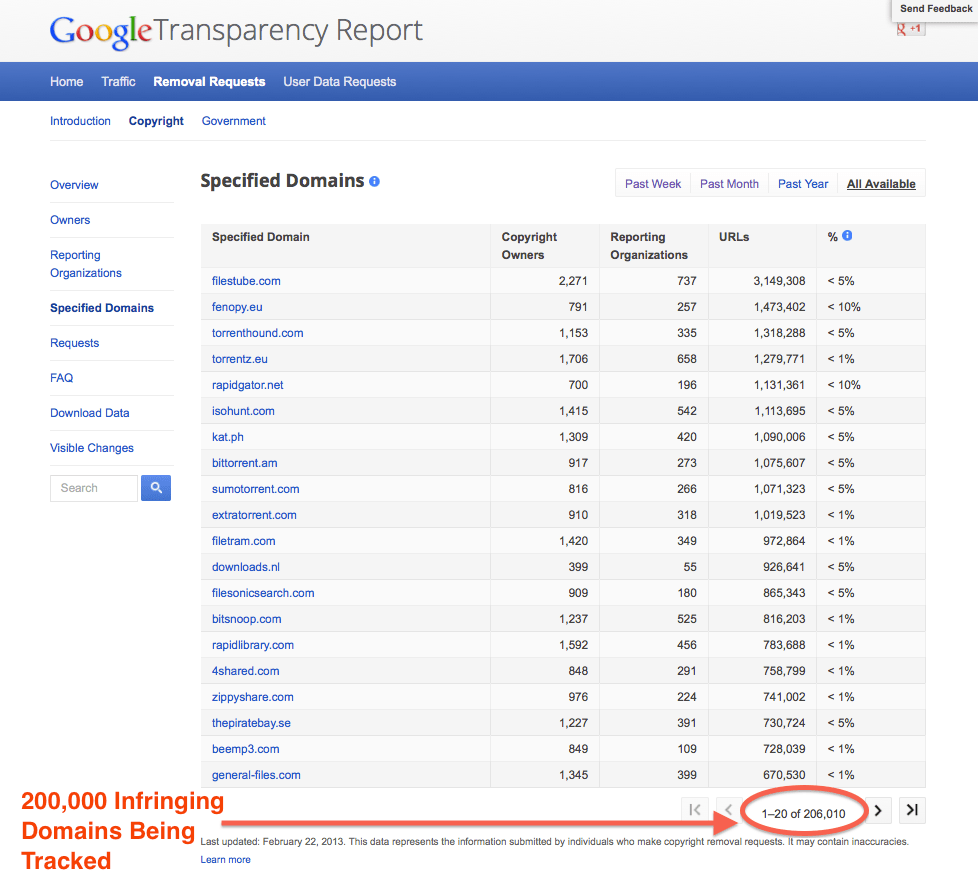
Let us not forget that the above examples represent a drop in the ocean of the over 200,000 infringing sites that Google alone is tracking.

See more Corporate Advertising Funded Exploitation of Artists:
Tom Waits * Neil Young * Aimee Mann * Neko Case * U2 * Ben Gibbard/Death Cab For Cutie * East Bay Ray / Dead Kennedy’s * Billy Corgan/Smashing Pumpkins

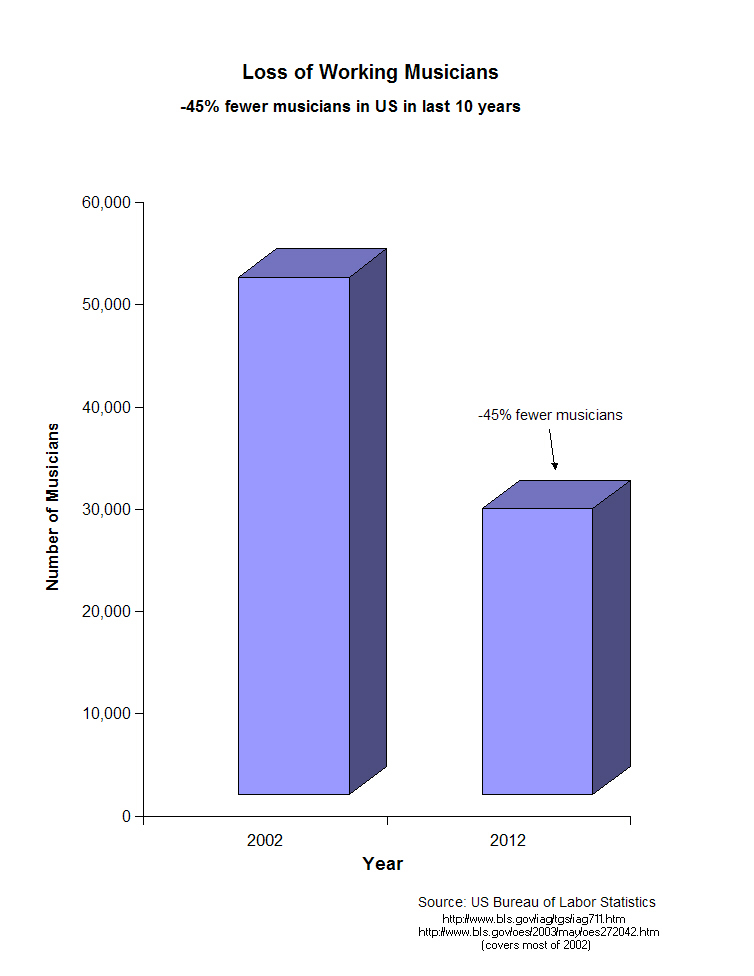
45% Fewer Professional Working Musicians Since 2002

The numbers are simple and staggering. The internet has not empowered musicians, it has exploited them.

-45% fewer working musicians-2

Of course there will always be people to nit pick the numbers, to argue and quibble about the Bureau Of Labor Statistics (BLS) methodology. It may be impossible to estimate the exact effect of unethical internet exploitation, but the trend is definite.

Those who debate the exact numbers are using that to delay action. Their job is similar to the commentators and ‘scientists’ funded by oil companies’ to deny global warming or say it needs “more study.”

The Bureau Of Labor Statistics is an agnostic government agency, not the RIAA.

It is also important to note that these cuts are made from the bottom up, not the top down. It is the struggling and middle class musician that gets hurt first. The difference between “making a living, making music” or not is represented in these numbers.

We should also like to point out that while musicians are making less money, those in Silicon Valley are making more money. Jaron Lanier says that “the internet destroyed the middle class” and we can see for ourselves that through the systematic process of removing the cost of labor from their offerings the elite few, are making more money, while everyone else is doing more of the work.

Hey Tumblr Users, Why Is This Man Smiling? Because he sold your content and you worked for him for free.

“Loser Generated Content…”

Music Technology Policy

Great news for Tumblr users–the eponymous Mr. Dave Karp just sold your content for $1.1 billion!  In cash!  And of course, he’s sharing that money with you, right?

No, he’s not.  But then again, record companies, movie studios, newspapers and music publishers don’t share the proceeds with their artists, journalists, songwriters or actors, when they’re sold either.  Of course…that’s not an apt comparison because all those companies paid for the “content” they’re selling.  As Francis Cianfrocca noted adroitly on Coffee and Markets, much of the value of companies like Tumblr is based on the appropriation of user content (and I think you could add YouTube to that list).

I really enjoyed the part of the Copyright Principles Project that dealt with artist rights issue of compensating users when the product of their free labor is sold for big bucks…no wait, that wasn’t covered.

So meet the new boss…worse than…

View original post 32 more words

Trichordist Bookshelf – Essential Reading for Artists Rights

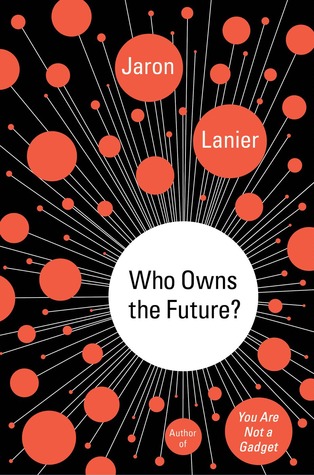
“WHO OWNS THE FUTURE” by JARON LANIER – BUY AT AMAZON:
http://www.amazon.com/Who-Owns-Future-Jaron-Lanier/dp/1451654960/

The Dazzling New Masterwork from the Prophet of Silicon Valley

Jaron Lanier is the bestselling author of You Are Not a Gadget, the father of virtual reality, and one of the most influential thinkers of our time. For decades, Lanier has drawn on his expertise and experience as a computer scientist, musician, and digital media pioneer to predict the revolutionary ways in which technology is transforming our culture.

Who Owns the Future? is a visionary reckoning with the effects network technologies have had on our economy. Lanier asserts that the rise of digital networks led our economy into recession and decimated the middle class. Now, as technology flattens more and more industries—from media to medicine to manufacturing—we are facing even greater challenges to employment and personal wealth.

But there is an alternative to allowing technology to own our future. In this ambitious and deeply humane book, Lanier charts the path toward a new information economy that will stabilize the middle class and allow it to grow. It is time for ordinary people to be rewarded for what they do and share on the web.

Insightful, original, and provocative, Who Owns the Future? is necessary reading for everyone who lives a part of their lives online.

“FREELOADING” by CHRIS RUEN – BUY AT AMAZON:
http://www.amazon.com/Freeloading-Insatiable-Content-Starves-Creativity/dp/1935928996

“A wonderful book that catches an encouraging shift in the zeitgeist. Ruen’s epiphany regarding the effects of his own piracy and freeloading of the bands he loves was eye opening.” – David Byrne

“Fascinating.” – The Village Voice

“The original slacker’s dream of free everything may have been realized by the Internet-but along with it came the slacker’s nightmare of never getting paid for one’s creativity. Freeloading seeks-and to a large extent succeeds-to wrestle with the collapse of the commons and the possibilities for a renewed social contract.” – Douglas Rushkoff

“Brooklyn’s Chris Ruen is one of the most compelling and forward thinking critics of our current download culture.” – M3 Music Conference, Netherlands

“A book…that promises to contribute greatly to copyright debates.” – Terry Hart, Copyhype

Author Chris Ruen, himself a former dedicated freeloader, came to understand how illegal downloads can threaten an entire artistic community after spending time with successful Brooklyn bands who had yet to make a significant profit on their popular music. The product of innumerable late-night, caffeine-fueled conversations and interviews with contemporary musicians such as Craig Finn of The Hold Steady, Ira Wolf Tuton of Yeasayer, and Kyp Malone of TV on the Radio, Freeloading not only dissects this ongoing battle-casting a critical eye on the famous SOPA protests and the attendant rhetoric-but proposes concise, practical solutions that would provide protection to artists and consumers alike.

“FREE RIDE” by ROBERT LEVINE – BUY AT AMAZON:
http://www.amazon.com/Free-Ride-Parasites-Destroying-Business/dp/0307739775

“A book that should change the debate about the future of culture….With this stylishly written and well-reported manifesto, Levine has become a leading voice on one side of our most hotly contested debate involving law and technology.”
—Jeffrey Rosen, The New York Times Book Review

“Turbo-reported….Free Ride is a timely and impressive book–part guilt trip, part wake-up call, and full of the kind of reporting that could only have been done with a book advance from an Old Media company.”
—Businessweek

“[A] smart, caustic tour of the modern culture industry.”
—Fortune

“Brilliant…A crash course in the existential problems facing the [media].”
—Richard Morrison, The Times

“The most convincing defense of the current predicament of the creative industries that I have read.”
—James Crabtree, Financial Times

“With penetrating analysis and insight, Levine, a former executive editor of Billboard magazine, dissects the current economic climate of the struggling American media companies caught in the powerful fiscal grip of the digital industry…. This incisive book is a start at an informed dialogue.”
—Publishers Weekly

“Can the culture business survive the digital age? That’s the burning question Robert Levine poses in his provocative new book. And his answer is one that will get your blood boiling. Rich with revealing stories and telling tales, Free Ride makes a lucid case that information is actually expensive – and that it’s only the big technology firms profiting most from the work of others that demand information be free.”
—Gary Rivlin, author of Broke, USA

“One of the great issues of the digital age is how people who create content will be able to make a living. Robert Levine’s timely and well-researched book provides a valuable look at how copyright protection was lost on the internet and offers suggestions about how it could be restored.”
—Walter Isaacson, President/CEO of the Aspen Institute and author of Benjamin Franklin

“This book thoroughly documents a wide-spread outbreak of cyber amnesia. Despite libertarian delusions, industries often get Free Rides, especially in their early days, but they eventually give back. Taxpayers build roads, then get hired to build cars. The Internet gives back a lot in exchange for its Free Ride, but one thing it defiantly isn’t giving back is a way for enough people to make a living. No matter how amusing or addictive the Internet becomes, its foundation will crumble unless it starts returning the favors it was given and still depends on.”
—Jaron Lanier, author of You Are Not a Gadget

“Free Ride is a brilliantly written book that exposes the dark side of the Internet. A must read for anyone interested in the horrific undermining of our intellectual culture.”
—Edward Jay Epstein, author of The Big Picture: Money and Power in Hollywood

“Robert Levine deftly dissects the self-serving Orwellian freedom-speak being served up by Silicon Valley’s digital new lords as they amass fortunes devaluing the work of artists, journalists and other old-fashioned ‘content creators.’ Free Ride begs us to remove our blinders and take a hard look down a cultural dead-end road.”
—Fred Goodman, author of Fortune’s Fool: Edgar Bronfman Jr., Warner Music, and an Industry in Crisis

“Without being a Luddite, Levine makes the phony digital media gurus of our day seem as simple-minded as their slogans.”
—Ron Rosenbaum, author of How the End Begins and Explaining Hitler

“YOU ARE NOT A GADGET” by JARON LANIER – BUY AT AMAZON:
http://www.amazon.com/You-Are-Not-Gadget-Manifesto/dp/0307389979

A NATIONAL BESTSELLER

A programmer, musician, and father of virtual reality technology, Jaron Lanier was a pioneer in digital media, and among the first to predict the revolutionary changes it would bring to our commerce and culture. Now, with the Web influencing virtually every aspect of our lives, he offers this provocative critique of how digital design is shaping society, for better and for worse.

Informed by Lanier’s experience and expertise as a computer scientist, You Are Not a Gadget discusses the technical and cultural problems that have unwittingly risen from programming choices—such as the nature of user identity—that were “locked-in” at the birth of digital media and considers what a future based on current design philosophies will bring. With the proliferation of social networks, cloud-based data storage systems, and Web 2.0 designs that elevate the “wisdom” of mobs and computer algorithms over the intelligence and wisdom of individuals, his message has never been more urgent.


The Return of IRFA: Million a Month Tim Charges On

Tim Westergren wants to take money away from musicians and give more to himself, wow… Follow. The. Money.

Music Technology Policy

Timmy

In case you were wondering, as Tim Westergren’s crew prepares to reintroduce legislation to require the Congress to reduce artist royalties paid by SoundExchange, old “million a month” Tim continues to make bank on Pandora stock sales.  Pandora’s only product?  Music.

View original post