Call To Action! DMCA Notice and Takedown Comments to Copyright Office Deadline April 1st

We’ve all experienced the astonishing absurdity of how YouTube and other New Boss tech companies interpret the DMCA notice and takedown debacle.  (Or as my friend Rick Carnes would say, “notice and shakedown.”)  What was once a safety valve to offer reasonable protection to ISPs from users sending infringing files by email has turned into a “catch me if you can” business model based on misuse of the very same law by people who know exactly what they are doing.  No independent artist can afford to monitor the Internet–or even YouTube–24/7, but that’s what the New Boss wants everyone to believe the law requires.

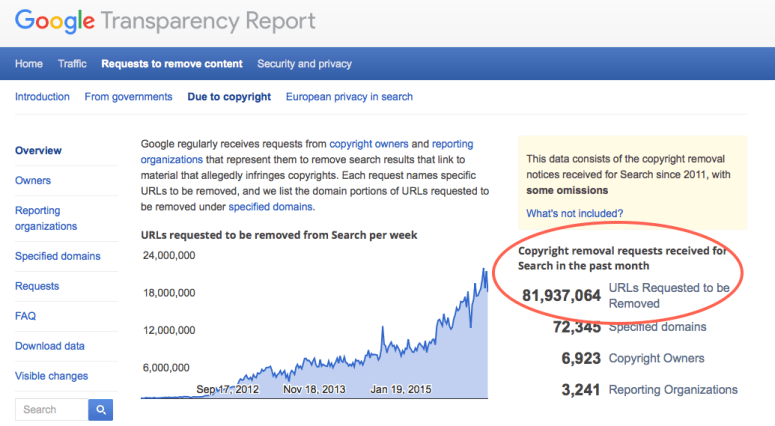
How can Congress ever have intended that one company–Google–receive over 80 MILLION DMCA notices in ONE MONTH and FOR SEARCH ONLY (not including YouTube, Blogger or any other Google property)?

Google DMCA 3-31-16


The Copyright Office is giving us a chance to tell them what we think about the DMCA and how it’s working out for us.  Most of the time these comments only get filed by big companies, but you have the chance to be heard on this issue, too.  You can email your comments using the comment form at https://www.regulations.gov/#!submitComment;D=COLC-2015-0013-0002 or if that doesn’t work email to Karyn Temple Claggett, Director of the Office of Policy and International Affairs and Associate Register of Copyrights, by email at kacl@loc.gov.  (Don’t get confused by the “Extension of Comment Period” language you’ll see on the link, this is the correct one.)

I will be filing comments, too, and will post when I file them.

THE DEADLINE IS APRIL 1 AT 11:59 PM ET.  That’s TOMORROW NIGHT!

We all really appreciate the way Trichordist readers have stepped up on these public comments in the past, and it’s really vitally important that they hear from somebody besides the lobbyists and the New Boss.  Thank you guys so much for all you do to support artist rights!

What’s Next for Pandora?

It was just announced that Pandora founder Tim Westergren has returned as CEO. The markets did not like the news, punishing Pandora’s stock, but Chris Castle asks a fair question: Should we give Westergren a chance to undo past misdeeds that Pandora made under different CEOs?

Music Tech Solutions

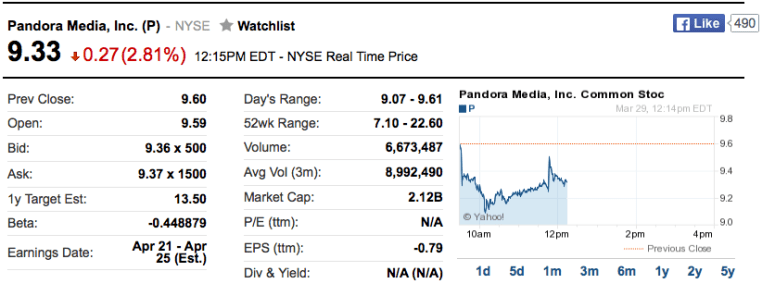
Tim Westergren has returned to Pandora as the company’s CEO.  He’s got a golden opportunity to change how Pandora is viewed–we all want Pandora to succeed, but there’s little support for the path the company has been on for years now.  The 42% decline in Pandora’s stock price over the last 12 months hasn’t been helped by the company’s rocky relationship with the vendors of their main product: music.

pandora stock price

With some analysts giving Pandora a fair value stock price of $7, here’s a little unsolicited advice.

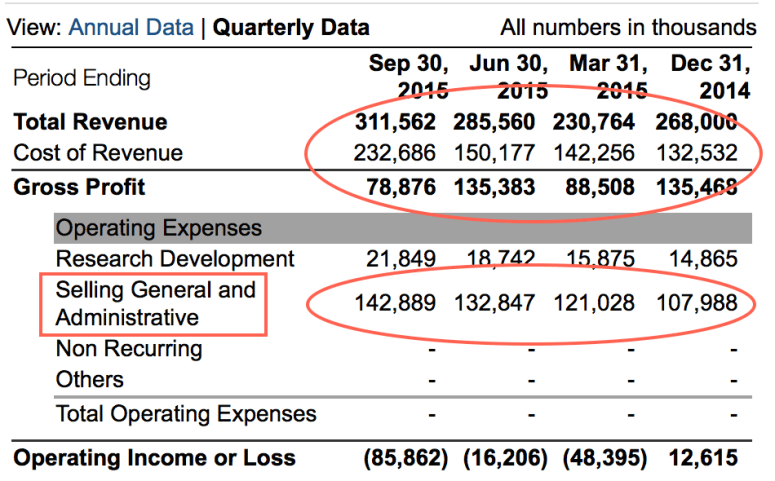
Overhead:  Pandora’s overhead is out of control.  They will blame it on royalties, but a closer look shows that the company has a problem with its operating costs that they would like you to ignore (hence the $7 fair value price target).

Pandora 2015 YOYIntegrity:  Westergren arrives at Pandora in a much different point in the zeitgeist than when he founded the company in terms…

View original post 529 more words

The DMCA Still is Not An Alibi: How is Google Search Like the Ford Pinto?

As YouTube founder Steve Chen said of infringing CNN videos on YouTube: “[I] really don’t see what will happen. what? someone from cnn sees it? he happens to be someone with power? he happens to want to take it down right away. he gets in touch with cnn legal. 2 weeks later, we get a cease & desist [takedown] letter. we take the video down.”

Music Technology Policy

The Pinto Gap

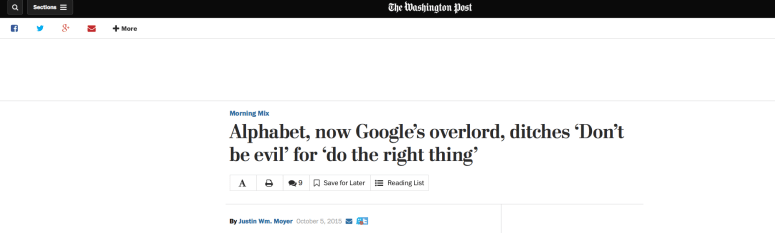
Google frequently defends what I would call the “Pinto Gap”–Google’s business practice named after the notorious Ford Pinto model with the exploding gas tank.  Why the “Pinto Gap”?  Because one would have to believe that Google has determined, just like Ford, that the cost benefit of programming their search algorithm to play whack a mole with artists profits them more than “doing the right thing.”  One day we may find out if there is a “Pinto memo” at Google.

google motto

Recall that the reason Ford was nailed so badly for products liability on the Pinto was that it turns out that Ford knew that the Pinto gas tank was dangerous and would probably explode.  Ford made a horrendously cold-blooded decision to put the Pinto into commerce anyway.  Why?  Because during the gap between the time that Ford put the car into commerce and the…

View original post 1,447 more words

The Truth About Vinyl And Streaming – And It Is Not Pretty…

More talk about vinyl and streaming, here’s more clarity…

The Trichordist

vinylcu

There’s a romanticism about vinyl, and we share that enthusiasm of the format for obvious reasons. However it should be noted that the romanticism that surrounds vinyl, is largely that- romanticism. Below we’ve assembled a number of recent editorials and reports about the state of vinyl production to shed some light and much needed perspective on this subject.

There several important take-a-ways from our friends who are on the front lines of vinyl production that are also noted in the reports below.

1) Vinyl revenues are grossing more than free streaming receivables. This sounds impressive at first but said another way it means that free streaming is just not generating a lot of revenue in the aggregate of the total business (not a surprise, free streaming is a big problem).

Second, and more sadly is the fact that vinyl production is very expensive and miscalculations on selecting a title or…

View original post 904 more words

Register of Copyrights: Please Support Take Down-Stay Down | Nova.Edu

“Why can’t everyone see that section 512 is an abysmal failure? If take down worked, the number of notices should go down. Instead the number of takedown notices sent increases exponentially every year. This is an enormous waste of time and resources for everyone involved. “

READ THE FULL POST AT NOVA.EDU:
http://copyright.nova.edu/take-down-stay-down/


Safe Harbor Not Loophole: Five Things We Could Do Right Now to Make the DMCA Notice and Takedown Work Better


DMCA “Take Down and Stay Down” Is The Logical Solution to a Flawed Loophole [VIDEO]

From Hypebot: “We Know Compulsory Licensing Is “Broken” – Here Is How To Fix It”

A must read Hypebot guest post by Keith Bernstein, Crunch Digital Founder that reprises the important themes he raised in his inspirational presentation at the invitation-only closed-door meetings on music-tech solutions held last fall.

The best solution is a direct licensing service that connects digital music services with music publishers, which would allow streaming services to effectively and efficiently obtain the licenses they need and make sure they have all the data they need to report royalties –  this will help shield them from future problems. Such a licensing service would act as an administrator to the digital streaming service and as an agent to the music publishers and songwriters  – and be able to update song ownership information, essentially functioning as a back office to make sure everything was running smoothly. Currently, Crunch Digital has built a database of a majority of US music publishing copyrights that are in use among digital services and they keep their data fresh with updates coming from the music publishers they work with.  As an independent company that is not tied to a trade organization or a PRO, Crunch is in a position to provide a direct licensing solution for streaming services that will work for all parties involved.

Read it all here: “We Know Compulsory Licensing Is “Broken” – Here Is How To Fix It

2010 A Brief History Of Spotify, “How Much Do Artists Make?” @SXSW #SXSW (Shill By Shill West)

For those of you at SXSW… here’s a little trip back in the time machine…

The Trichordist

SXSW Rewind… Back in 2010 during Daniel Ek’s Keynote Speech an audience member who identified themselves as an  independent musician asked how much activity it would take on Spotify to earn just one US Dollar. The 27 year old wunderkind and CEO of the company was stumped for an answer… Five years later we have a pretty good idea why.

2010… #SXSW Rewind…


Live Blog: Spotify CEO Daniel Ek Says Music Service Now Has 320,000 Paid Subscribers | TechCrunch

Q: How many plays equals one dollar?
A: Depends on the type on contract with the publisher/record labels. We share the rev we bring in. You can’t really equate to ‘per play’ we look at all our ad rev. Creates a bucket. For instance how do you account for a purchase of a song. There is no easy answer to your question. Over time our ad revs are growing, number of…

View original post 184 more words

Things Every Songwriter Should Know Before They Join NMPA-Spotify Settlement

Digital Music News has a Q&A with Mona Hanna lead counsel for the proposed songwriters Spotify class action.  She compares the relative merits of the private-behind-closed-doors major publishers/HFA/Spotify settlement to the class action.   Excerpt below:

“Q: I’m a songwriter. How do I benefit from this settlement?

A: It is impossible to determine the true benefit to songwriters because the settlement negotiations between NMPA and Spotify have been conducted without Court oversight. In stark contrast, a class action settlement requires the class counsel – the attorneys representing the songwriters – to submit the settlement terms to a Court and provide the Court with evidence that the settlement was reached in an arm’s-length transaction. In other words, Courts ensure that there was no collusion in the negotiation and that the settlement is fair and reasonable to all class members. Unfortunately those safeguards are absent from the NMPA / Spotify settlement negotiations.”

Read more here:

Songwriters: Should You Sign the Spotify Settlement Agreement?

Billboard Finally Agrees the Pandora-Merlin Deal Could Cost Rights Holders A Billion Dollars in SoundExchange Royalties

A recent Billboard article has prompted a re-examination of the controversial Pandora-Merlin direct deal that included lower rates in exchange for additional spins for MERLIN labels.  Billboard has finally admitted that the Pandora-MERLIN deal has been successfully used by webcasters to significantly lower ALL rights holders rates.   While Billboard terms the effect of the MERLIN deal as “surprising” it was not surprising to readers of this blog and our friends at MusicTechPolicy.
Over a year ago we predicted that the direct deal between independent label licensing authority Merlin and Pandora would lead to lower webcasting rates for ALL performers and labels in the US. We weren’t particularly clever, we simply looked at the DMX direct deal that Pandora’s chief negotiating counsel Chris Harrison did with Sony in 2007 for a reduced publishing rate in exchange for a 2.7 million dollar advance (without taking into account the advance).  This was then successfully used by as evidence of a “free market rate” against BMI in rate proceedings shortly thereafter.  As the Future of the Music Business reported in 2014:

“In 2007 Sony negotiated a direct deal with DMX, the digital background music service. In doing so, it received an advance payment of 2.7 million dollars. It is doubtful whether Sony’s writers received any portion of this money. And this is why: Individual music publishing contracts vary depending on the bargaining power of individual writers or the negotiating skills of their lawyers (among other reasons), but almost all agreements have a provision similar to this one.”

We simply guessed that it was highly likely that Harrison and Pandora were gonna use the Merlin deal to do exactly what they did with the DMX deal.  And we told anyone that would listen. And then Pandora did just as we predicted.

Let me back up for a moment and explain a little background on this. In 2014 Charles Caldas CEO of MERLIN negotiated a direct deal with Harrison and Pandora that effectively lowered independent labels per spin rate well below the statutory rate in exchange for increased airplay.  MERLIN termed this exchange “steering” but it should more properly have been called “digital payola.”   We correctly predicted that Harrison and Pandora would use the direct deal as evidence of a willing seller willing buyer rate in the Copyright Royalty Board Web IV rates settings.  In particular  Pandora would cite the lower effective rate that was achieved when Pandora algorithms “steered” additional Merlin recordings to users above and beyond the “natural” amount generated by user listening habits and preferences.  In short payola:

“Here’s some music that we wouldn’t normally play for you based on your preferences.  And this is because MERLIN gave us something of value (lower rates).”

The bottom range effective rate for the steered spins was reported by Pandora to be $0.001105.   Pandora argued that this lower “steered” rate should be considered by the Copyright Royalty Judge as an example of a willing seller-willing buyer rate.   The judges agreed.

The only other direct market rate cited as evidence in the CRB proceedings was a direct deal between WMG and IHeartRadio that effectively set the rate at $0.0022.   It is clear from the CRB proceedings that the judges took the two direct deals as  upper and lower bounds and essentially split the difference between the two rates and enacted a webcasting rate of $0.0017.  Without the MERLIN steering deal the only evidence of a free market rate was the WMG-IHeartRadio deal at $0.0022.

So Billboard calculates that for each $0.0001 increase this means and additional $60 Million dollars a year to rights holders.  So it’s not unreasonable to conclude that the MERLIN deal lowered the CRB rate 2017 through 2020 from $0.0022 to $0.0017.    Using Billboard’s math this would appear to be a net loss to rights holders of approximately $300 million per year or $1.2 billion over four years.  This represents almost 10% of wholesale recorded music revenues!  Wow!  For independent labels that opted into the MERLIN deal the economics may be even worse.  Why?  It appears that these independent labels and artists are now locked into the much lower MERLIN steering rate for the next few years.   Ouch!

As much as an outrage this may be, it is worth asking some further questions at this point.

  1. Since the 2016 Web IV rate setting process was looming, what was the hurry?  Why didn’t Merlin just wait for the rate setting process to conclude and then negotiate a lower steering rate downward from there? Surely it couldn’t have resulted in a worse rate?
  2. What did MERLIN get out of the deal?
  3. Did MERLIN accurately describe the terms of the deal to its member labels?

The last question is very important.  Because in 2014 Billboard reported this:

Caldas added the partnership will financially benefit Merlin’s artists and labels. Although no financial details were made available, he suggested the terms are no worse than the statutory rates previously received. “We wouldn’t do any deal where there was any risk we were going to get paid less.”

But the CRB proceedings make it clear that this turned out to not be the case.  Merlin labels were getting a rate lower than the existing statutory rate.  I’m not a Merlin member, but if I were, and if this is what he told his label members I would lawyer up and put Merlin and Caldas on the spot for this.

Read more of our coverage on this deal here:

MERLIN “Pandola” Secret Deal Violates WIN Fair Trade Principles

@sydell Raises the Issue of Pandora and Payola Platform Parity

Return of the $50 Handshake: My FCC Comments on Proposed Payola Waiver and “Steering” Agreements PT 2

Charles Caldas of MERLIN: Independent Labels’ Minus $15 Million Dollar Man

Indie Labels Should Demand that MERLIN and Caldas Immediately Repudiate Pandora Filing or Step Down.

Did Merlin’s Caldas Lie in Billboard Article About Lower Rates?

How MERLIN’s “PANDOLA” Deal Could Give Labels Access to Your Share of SoundExchange Royalties

WIN Fair Digital Deals Declaration vs MERLIN’S “PANDOLA” Deal

https://thetrichordist.com/2015/04/08/copyright-royalty-board-filing-suggests-that-pandorachris-harrison-created-evidence-for-rate-court-proceedings/

https://thetrichordist.com/2014/10/28/set-match-and-game-to-pandora-and-chris-harrison-merlin-gives-pandora-the-rate-cut-they-wanted/

Bumps Not Dumps: Merlin’s Pandora Catastrophe Continues



Spotify’s Rush to Blame HFA May Be Misplaced

Music Technology Policy

The knives are out for the Harry Fox Agency in Spotify’s mechanical licensing debacle but that blame is a little too convenient and may well be misplaced.  Discovery in the songwriter class actions will no doubt shed a spotlight on the situation, but when you think about it, there’s actually an alternative explanation that has the appeal of elegance.

Think about it.  In order for any licensing company to clear songs on a service someone at the service has to tell them which songs to license.  That’s where it starts.  With the service.  That is—with Spotify.  So Spotify knows which songs it needs to license.

HFA is a special case because it is both a publisher’s agent (licensing “out”) and a clearance company (licensing “in”).  This is the source of ambiguity for those who are unfamiliar with the landscape.

When HFA is licensing out for compulsory licenses, it probably has…

View original post 663 more words