95 Percent of Streaming Music Catalogs Are ‘Irrelevant’ to Consumers, Study Finds | Digital Music News

So about that long tail and digital empowerment for indie artists, hmmmmmm…

So why aren’t those numbers better?

Mulligan feels that a big part of the problem is that the average consumer simply doesn’t care about enormous selections and vast catalogs, and they’re definitely not willing to pay for it. “Most people aren’t interested in all the music in the world and most people aren’t interested in spending $9.99 (or the local market equivalent) a month for music,” Mulligan continued.

“Indeed, just 5% of streaming catalogues is regularly frequented. Most of the rest is irrelevant for most consumers.”

Surprise! Not all music is equal despite how much of it is being made.

Charge a premium for top shelf professional music and let everyone else give their music away if they want to. Stop exploiting professional artiss into free streaming schemes and scams.

As we reported in our post “Streaming Is The Future, Spotify Is Not Let’s Talk Solutions” we suggested consumer based tiered pricing based on value proposition. Glad to see this is starting to get some notice.

READ THE FULL POST AT DIGITAL MUSIC NEWS:
http://www.digitalmusicnews.com/2015/09/10/95-percent-of-streaming-music-catalogs-are-irrelevant-to-consumers-study-finds/

Artists Rights Watch – A Collection Of Weekly Required Reading 09.08.15

Artists and Internet Stories from around the Web.

Why intellectual property rights matter | The Washington Times
http://www.washingtontimes.com/news/2015/sep/3/randolph-may-seth-cooper-why-intellectual-property/
* The Founders believed ownership of one’s labor is a natural right

What the Internet’s free culture has cost us in art | PBS Newshour
http://www.pbs.org/newshour/bb/internets-free-culture-cost-us-art/

Film Producers Sue 16 Popcorn Time Users in Bid to Curb Piracy | PC Mag
http://www.pcmag.com/article2/0,2817,2490549,00.asp

The MovieTube Litigation Part I: Who Needs SOPA? | Law Theories
http://lawtheories.com/?p=2269

Hollywood, Silicon Valley Sharpen Their Swords in Piracy War | Variety
http://variety.com/2015/digital/news/hollywood-silicon-valley-internet-piracy-1201572854/

Amazon, Facebook and Google have the same secret  | Salon
http://www.salon.com/2015/08/30/amazon_facebook_and_google_have_the_same_secret/
* Our modern tech monopolies made billions and transformed the economy in different ways, but this was the base

With advertising on WDBJ-TV murder clips, YouTube sinks to new low | Vox Indie

With advertising on WDBJ-TV murder clips, YouTube sinks to new low

Transparency for Thee But Not for Me: Google Tries to Censor India’s Link Rigging Investigation of Google | MTP
https://musictechpolicy.wordpress.com/2015/09/04/transparency-for-thee-but-not-for-me-google-tries-to-censor-indias-link-rigging-investigation-of-google/

The Pirate Hunter | Williamette Week
http://www.wweek.com/portland/article-25279-the_pirate_hunter.html

The More Money Spotify Makes, The Less Artists Get Paid | Digital Music News

The More Money Spotify Makes, The Less Artists Get Paid

A Stream on Apple Music Pays Songwriters And Publishers 33% More Than A Stream On Spotify | Hypebot

A Stream on Apple Music Pays Songwriters And Publishers 33% More Than A Stream On Spotify

Making Free Work (Hint Cannibalize Radio Not Sales) | Music Industry Blog
https://musicindustryblog.wordpress.com/2015/07/24/making-free-work-hint-cannibalize-radio-not-sales/

Imogen Heap: saviour of the music industry? | The Guardian
http://www.theguardian.com/music/2015/sep/06/imogen-heap-saviour-of-music-industry


[RELATED] Understanding Music And Blockchain Without The Hype | Trichordist

https://thetrichordist.com/2015/08/20/understanding-music-and-blockchain-without-the-hype-2/

WashingtonWatch: Pre-’72 Royalty Battle Adds Another New York Lawsuit | Grammy Pro
https://www.grammypro.com/advocacy/news/washingtonwatch-pre-72-royalty-battle-adds-another-new-york-lawsuit

Radio Giants Facing Bicoastal Legal Demands to Stop Playing Pre-1972 Songs | Billboard
http://www.billboard.com/articles/news/6678790/radio-giants-facing-bicoastal-legal-demands-to-stop-playing-pre-1972-songs

What EMI’s six-month sample amnesty means for the music industry | The Guardian
http://www.theguardian.com/music/2015/sep/01/emi-sample-amnesty-means-for-the-music-industry

Rosanne Cash: ‘I’ve always been a union member’ | Local802afm
http://www.local802afm.org/2015/08/rosanne-cash-ive-always-been-a-union-member/

‘Halo,’ ‘Destiny’ composer Marty O’Donnell wins lawsuit against Bungie | Engadge
http://www.engadget.com/2015/09/04/halo-destiny-composer-marty-odonnell-wins-lawsuit-against/

According To U.S. Big Data, We Won The Vietnam War | Forbes
http://www.forbes.com/sites/jonathansalembaskin/2014/07/25/according-to-big-data-we-won-the-vietnam-war/

Robert Reich: The sharing economy will be our undoing | Salon
http://www.salon.com/2015/08/25/robert_reich_the_sharing_economy_will_be_our_undoing_partner/

The Hypocrisy of the Internet Journalist | Medium
View at Medium.com
* I’m selling you out as hard as I can, and I’m sorry.

“I Ain’t Gonna Work On Google’s Farm No More” | Creators are Forced Labor* On The Ad-Funded Piracy Fields Of The Advertnet

Advertising is killing internet. Soon most online advertising will be forced pre-rolls of TV commercials. You finally have a DVR to skip commercials, and soon there will be no way to avoid them. Do you really think this is what what the internet’s founding founders had envisioned? One great big inescapable advertising machine? No, we didn’t think so either.

Creators are now forced labor* on the digital fields of the AdvertNet, where the Borg like overlords of internet advertising have forced us into being unwilling participants on their digital plantations against our will. We have no defense against the advertising funded, illegal exploitation of our labor.

Now we want to be clear, we’re not opposed to advertising in general, the advertising industry overall or the many highly talented creatives who work in advertising. We all love those Superbowl ads, right? And let’s not forget that many a band in recent history has found fortune from a well placed song in a high profile commercial (Hello, Phoenix).

No, we’re talking about the highly invasive, privacy invading, personal data tracking, internet advertising slathered on pirate sites that illegally distribute copyrighted works and destroy the livelihoods of professional artists and creators against their will.

Digital Advertising Agencies are on the wrong side of artists rights. They have sold us out.

Here’s the elephant in the room. The internet as a business has a math problem and it goes something like this. There are only a few ways to make money on the online. First is transactional sales where the company can take a margin on each transaction (Amazon, Itunes, Etc). Second is a transactional service where the company can take a margin on each transaction (Uber, AirBnB, etc). Third is subscription based access to content and software (Netflix and Adobe respectively). Fourth is advertising for pretty much everything else including the big categories of Software As Service or SAAS. SAAS models including everything from Google, Facebook, Twitter and Instagram to newspapers, blogs and community based bulletin boards like Reddit, etc.

The fundamental problem here is attempting to transform all businesses to advertising supported models. This is because the largest most successful internet company ever (Google) just happens to work under that model. But the economics at large don’t generate enough revenue to pay for the cost of labor for the production of art, photography, music, movies, book, etc being distributed.

Think about it. How could it be possible that everything that once required transactional revenues to be sustainable can now be paid for with just advertising revenue? It can’t. Not under current models that do not allow for scarcity and exclusivity.

Scarcity and exclusivity are what make broadcasting models work. Television networks invest in creating exclusive content that is scarce. The scarcity and exclusivity allows for maximum monetization of that asset. The Superbowl and the Academy Awards are two of the highest grossing advertising based products specifically because they are scarce.

Take the above one step further. Imagine that everything on the internet, every single site that is not selling merchandise, a service or a subscription has to be self supporting on advertising revenue alone. Do you really think that’s possible? No, it is not. This is simply because to the cost of production of professional content can not be created at the cost that internet advertising provides.

The work around this math problem is to steal the labor of professional creators and monetize it against their will.

No budgets to pay for production, no problem. Steal It. 

Just make the margin on the cost of running the business without paying for content production. A business that does not have to pay for its inventory or cost of goods is far more profitable than one that does pay those costs. This is exactly how pirate sites and Google’s YouTube operate.

The creators of YouTube admitted as much in private emails that were exposed during the lawsuit with Viacom:

• A July 29 email conversation about competing video sites laid out the importance to YouTube of continuing to use the copyrighted material. “Steal it!” Chen said , and got a reply from Hurley, “hmmm, steal the movies?” Chen’s answer: “we have to keep in mind that we need to attract traffic. how much traffic will we get from personal videos? remember, the only reason our traffic surged was due to a video of this type.”

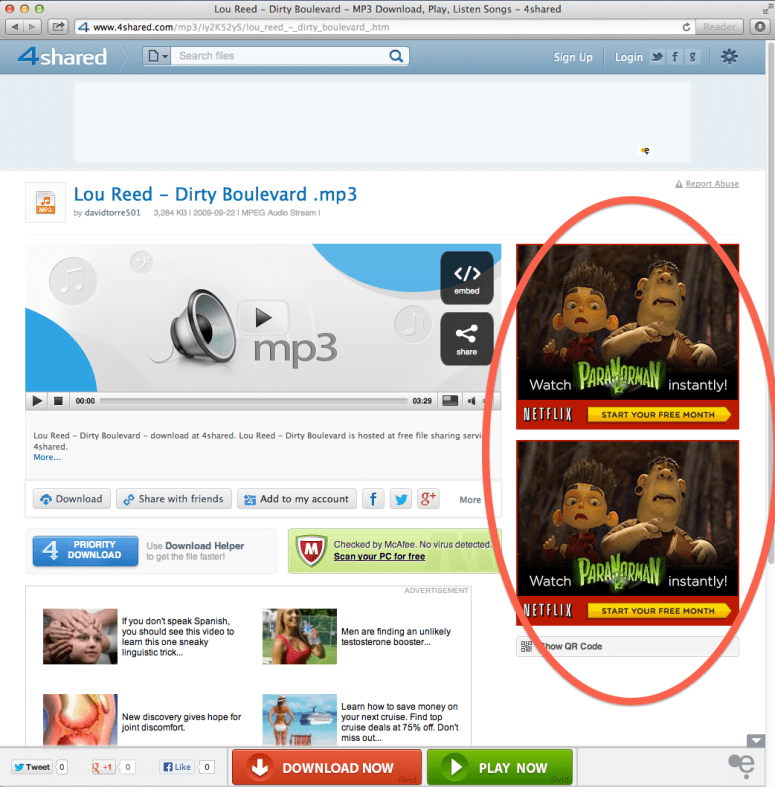
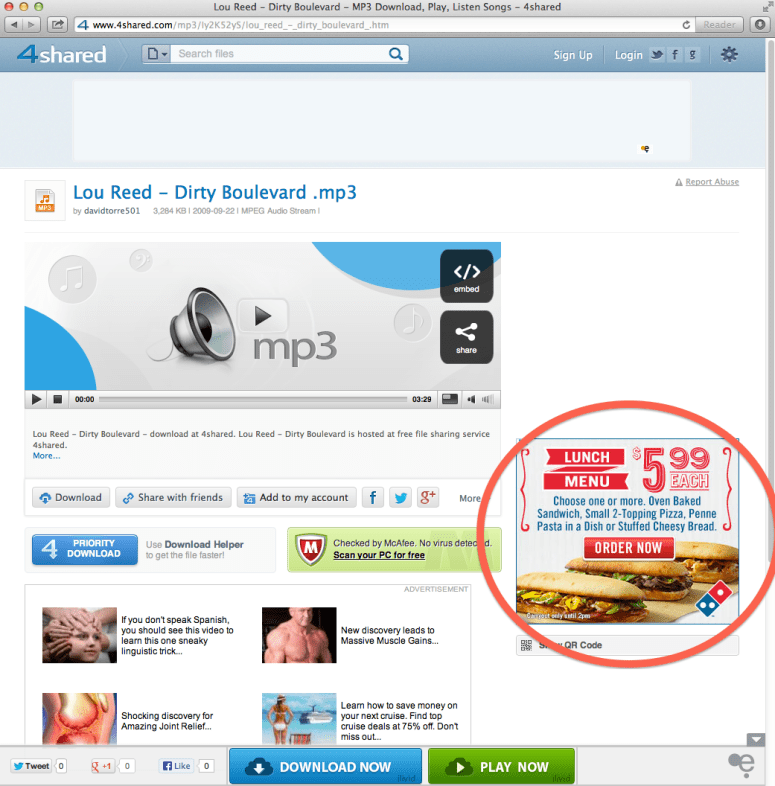
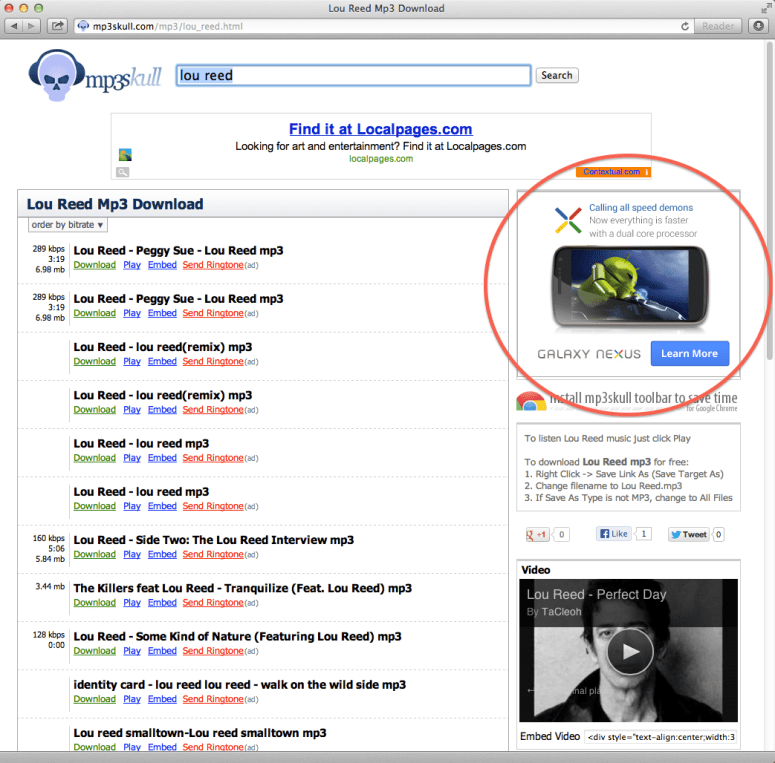
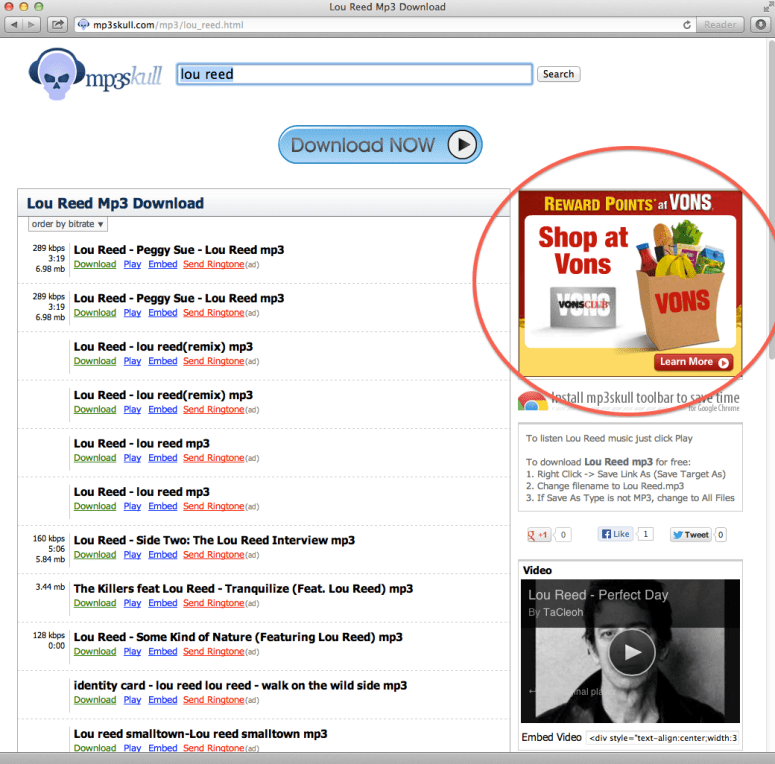
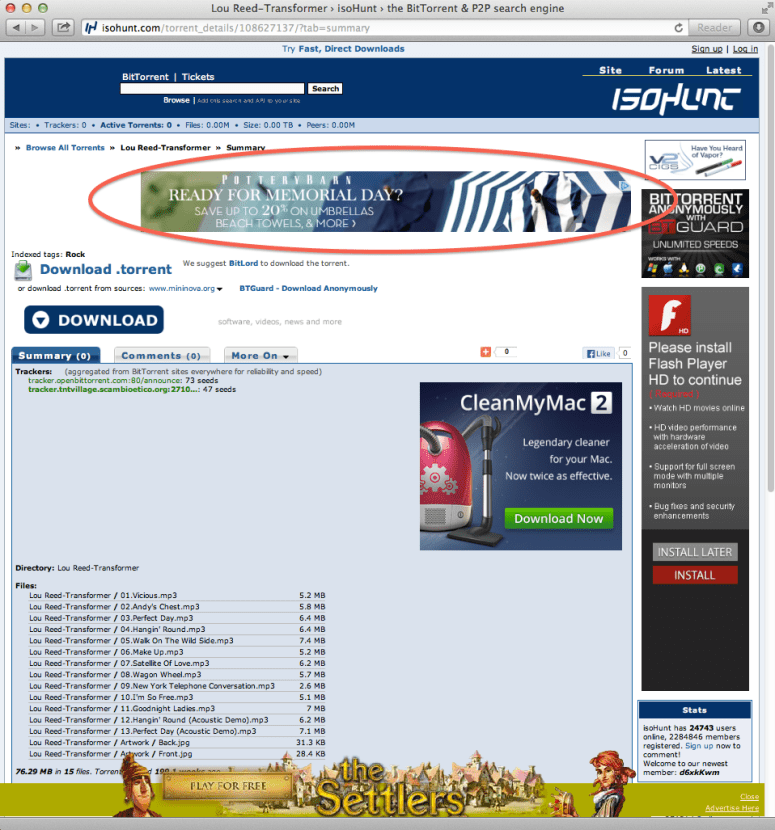
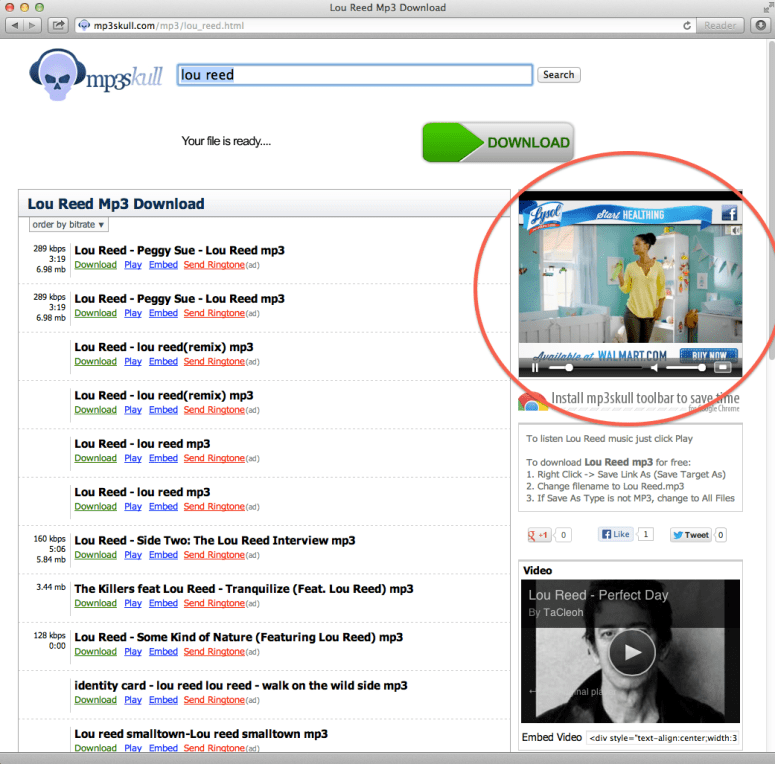
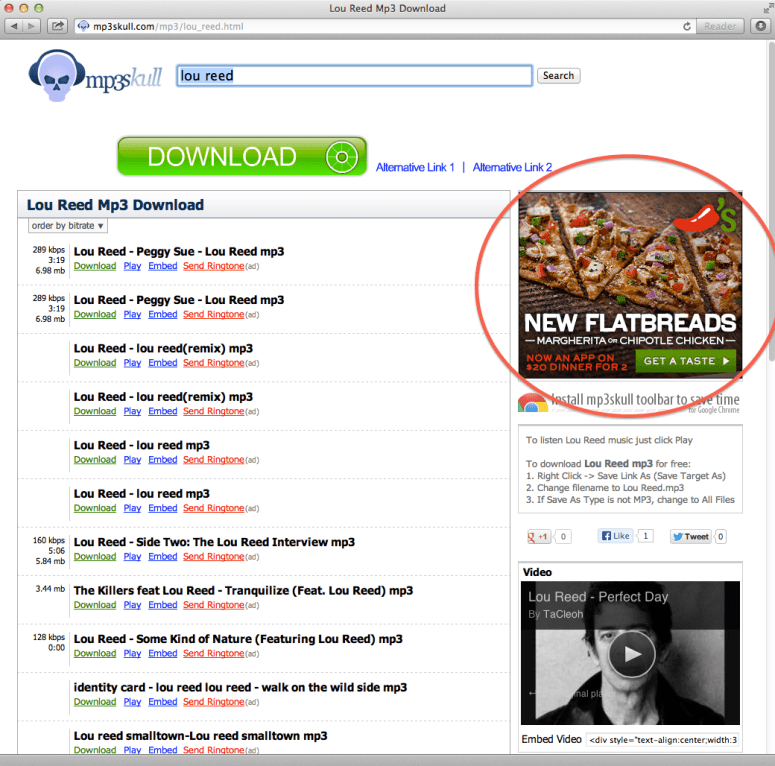
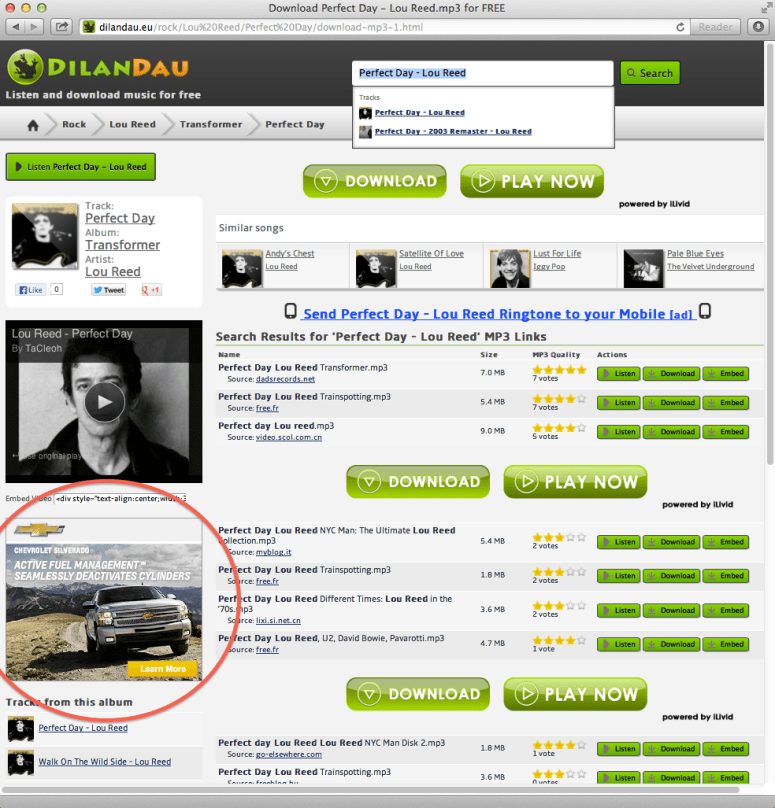
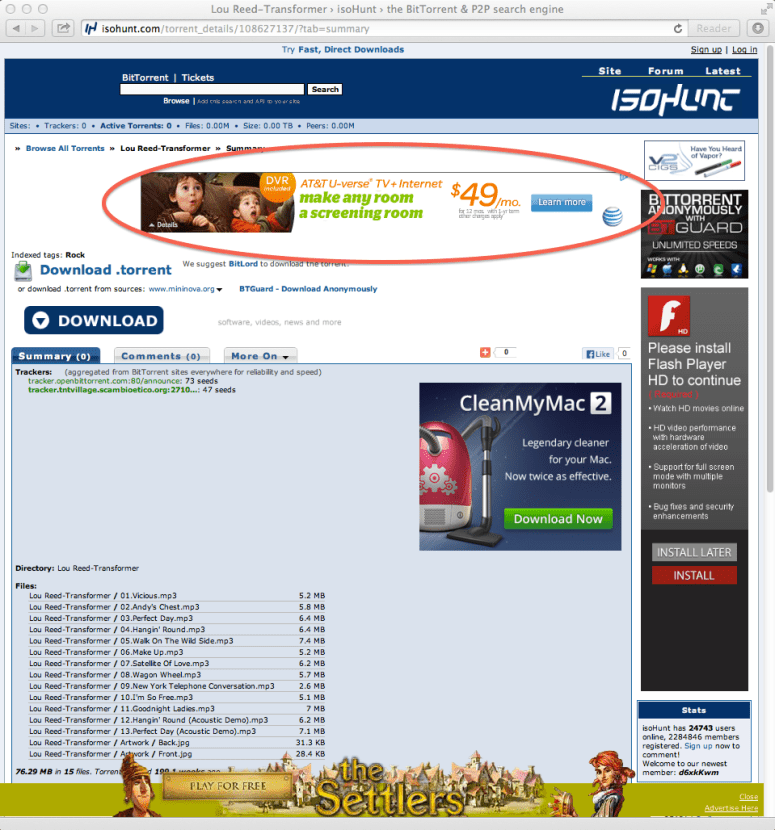
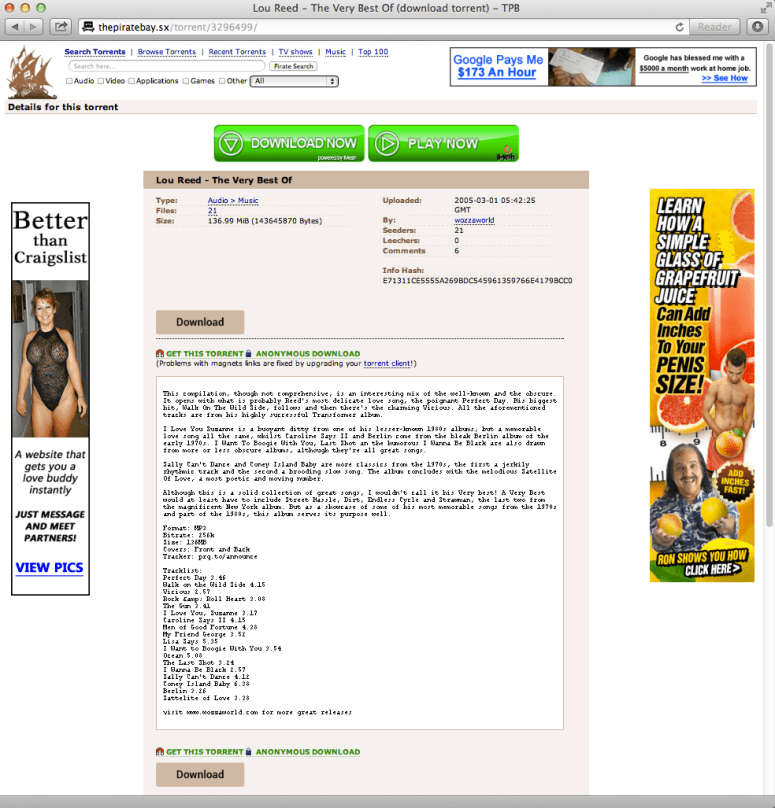
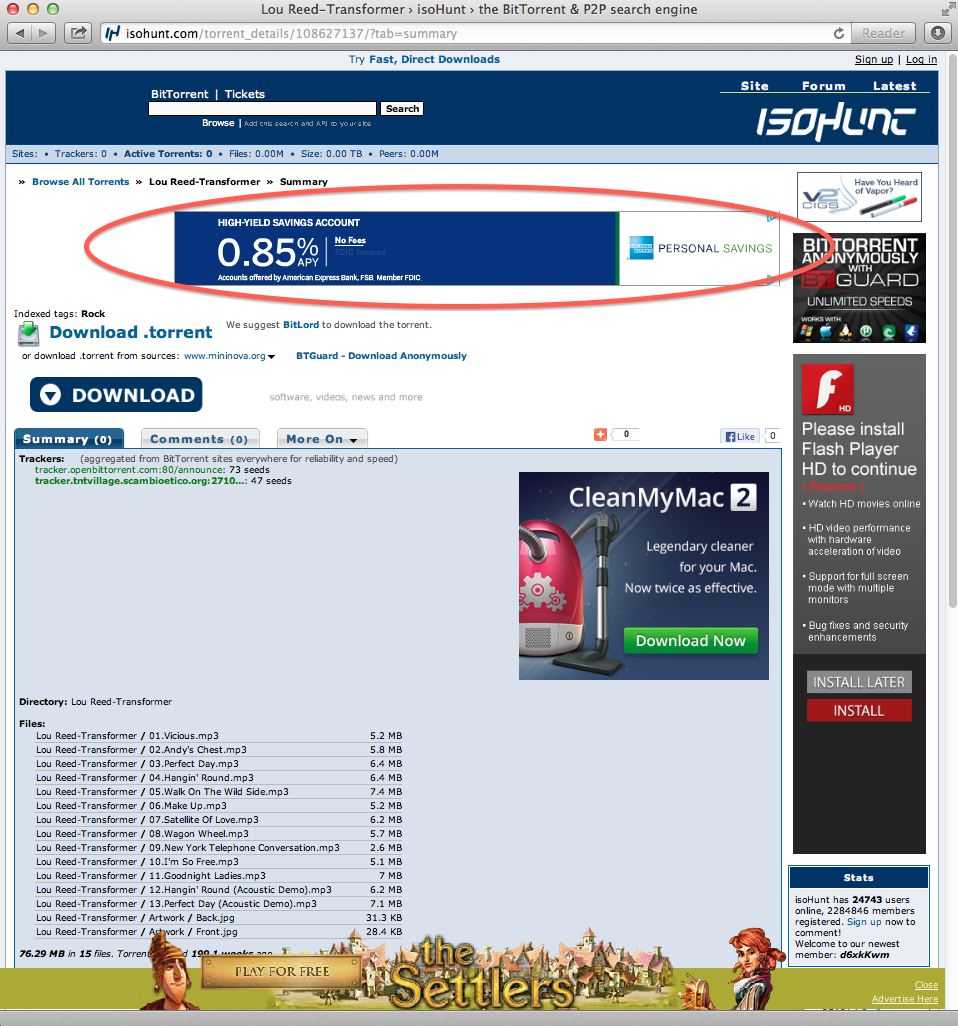
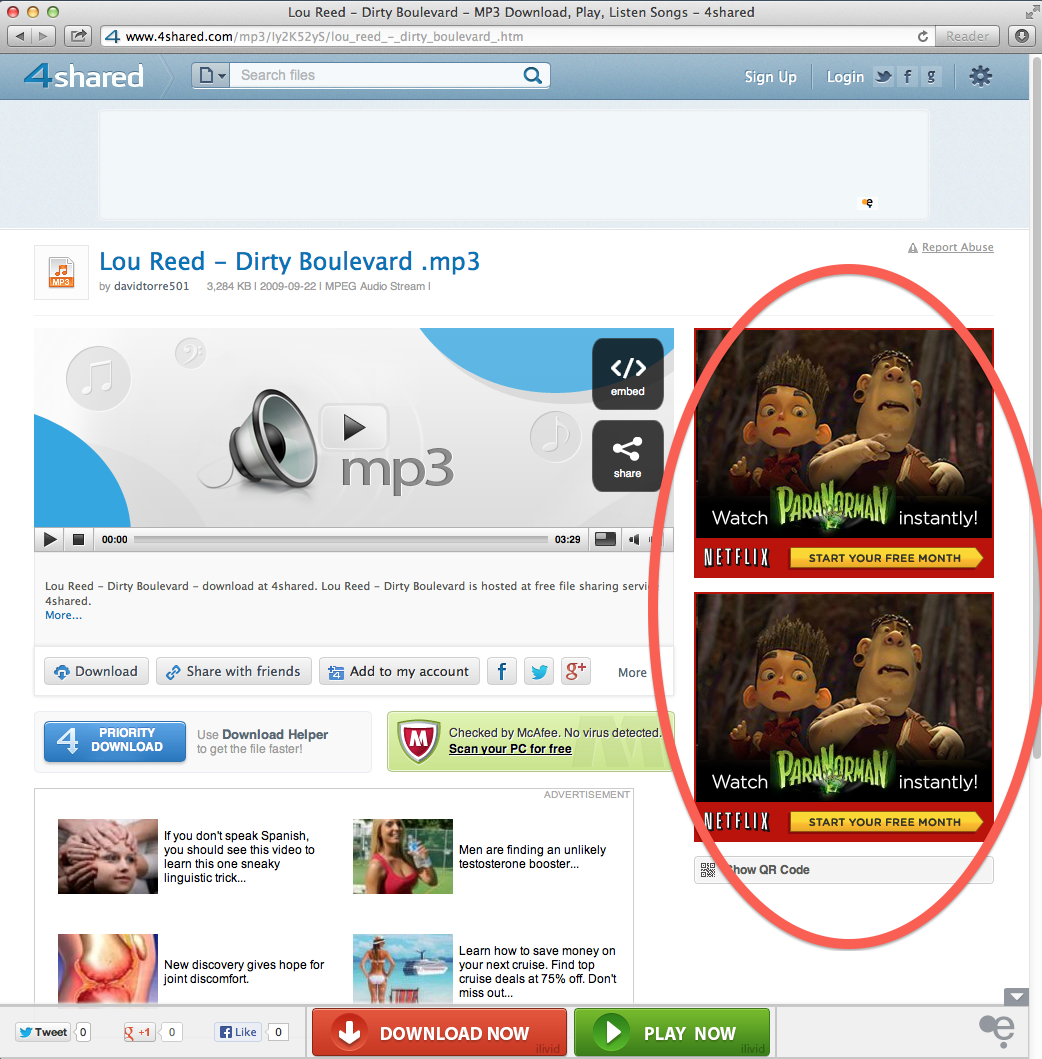
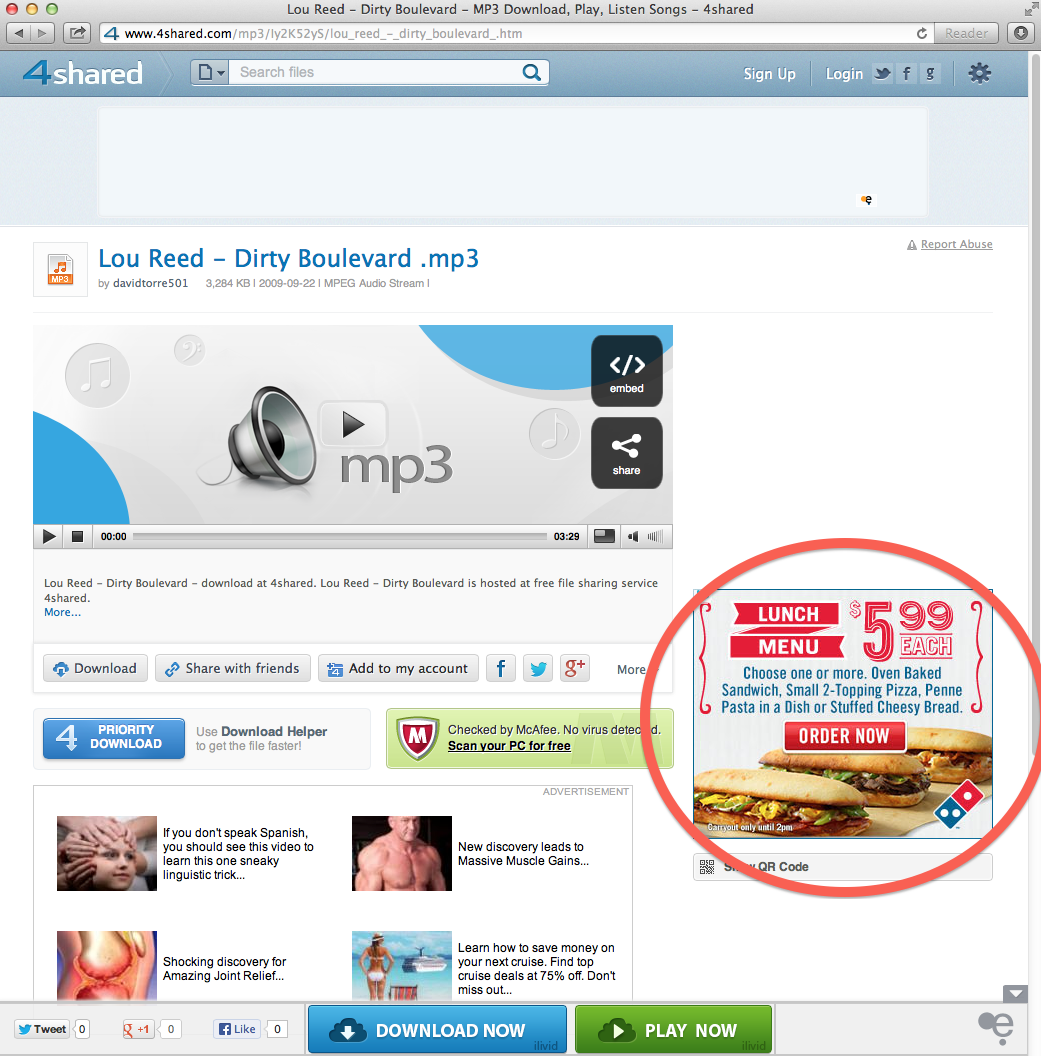
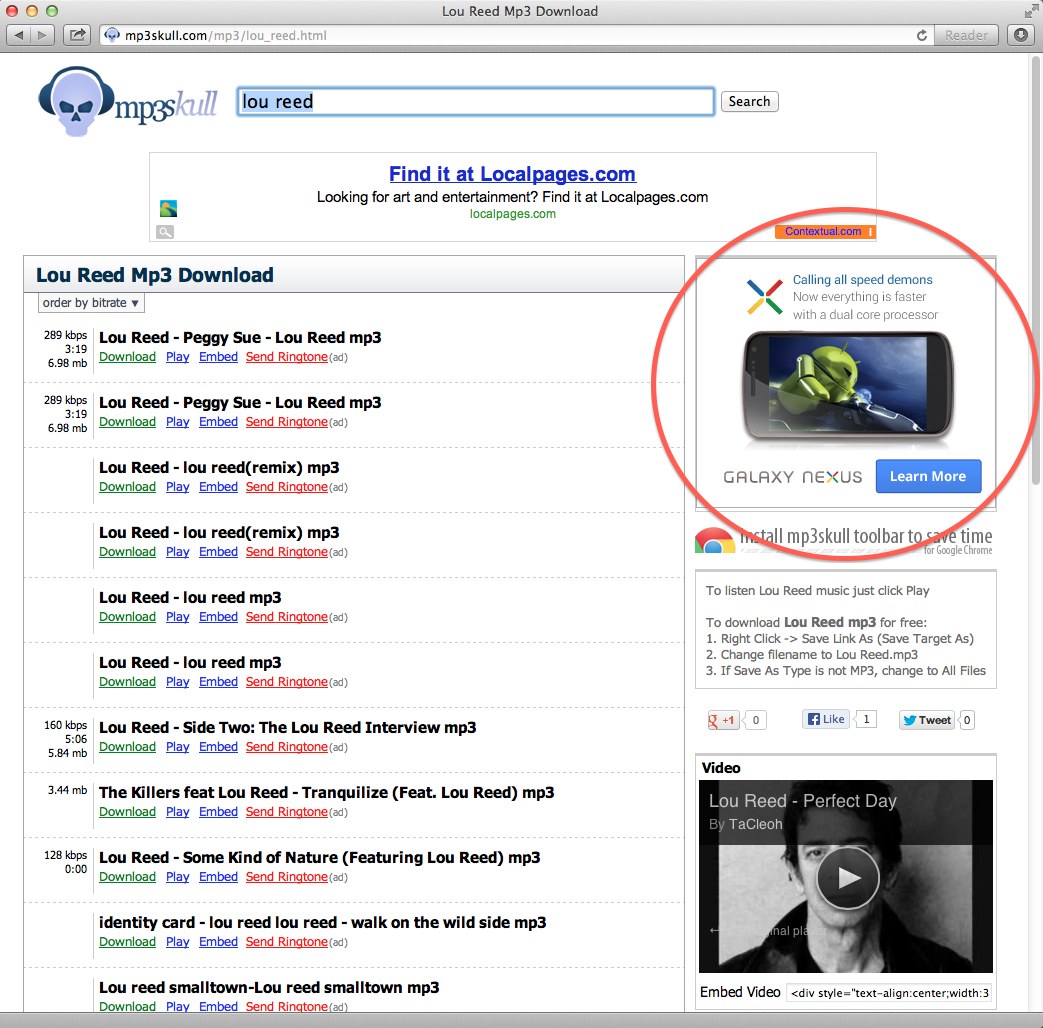
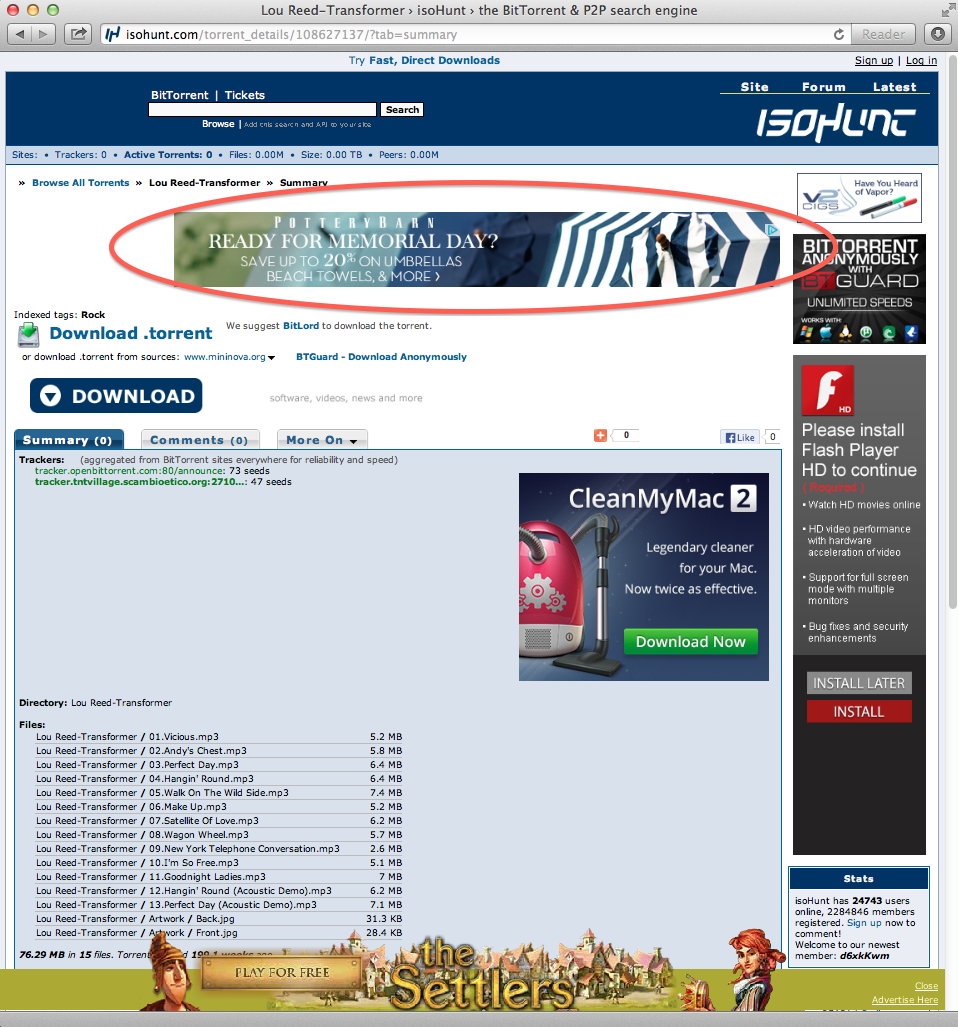
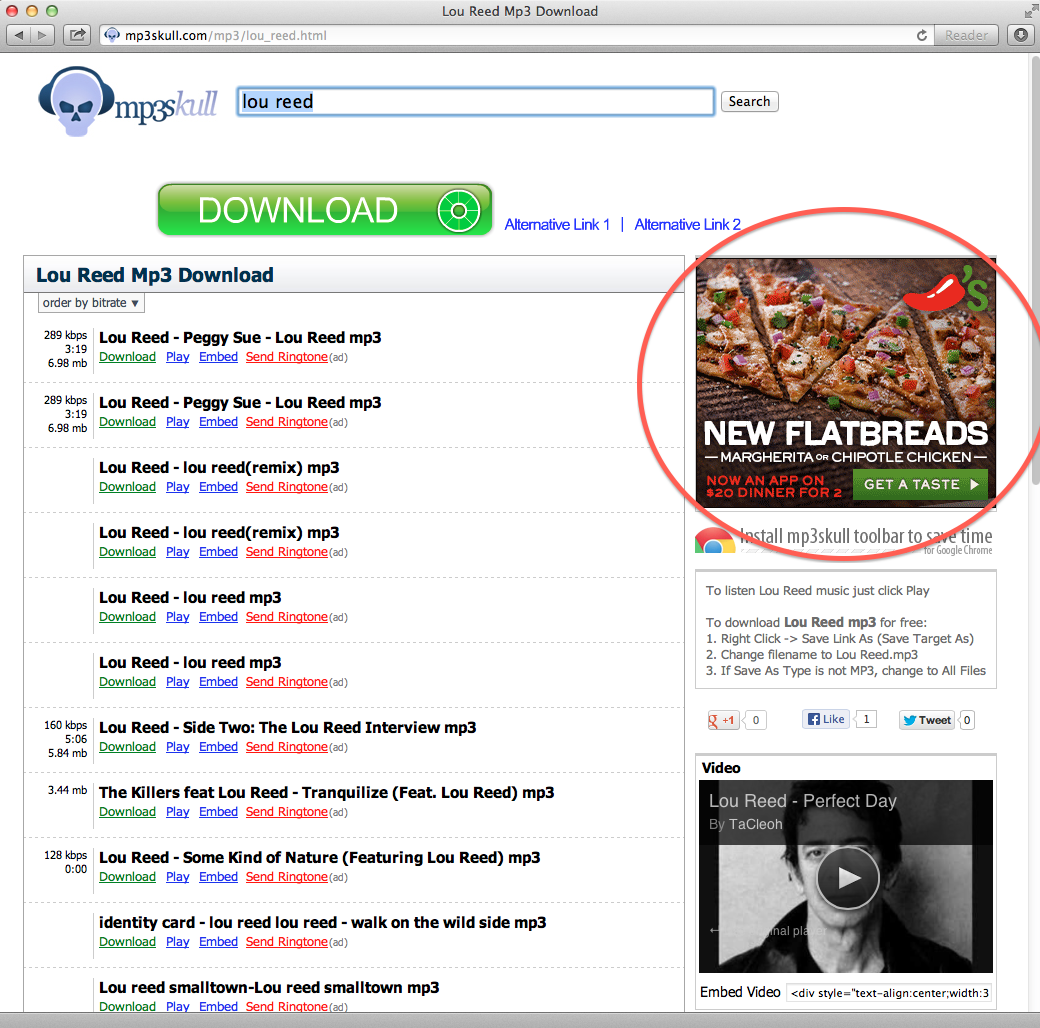
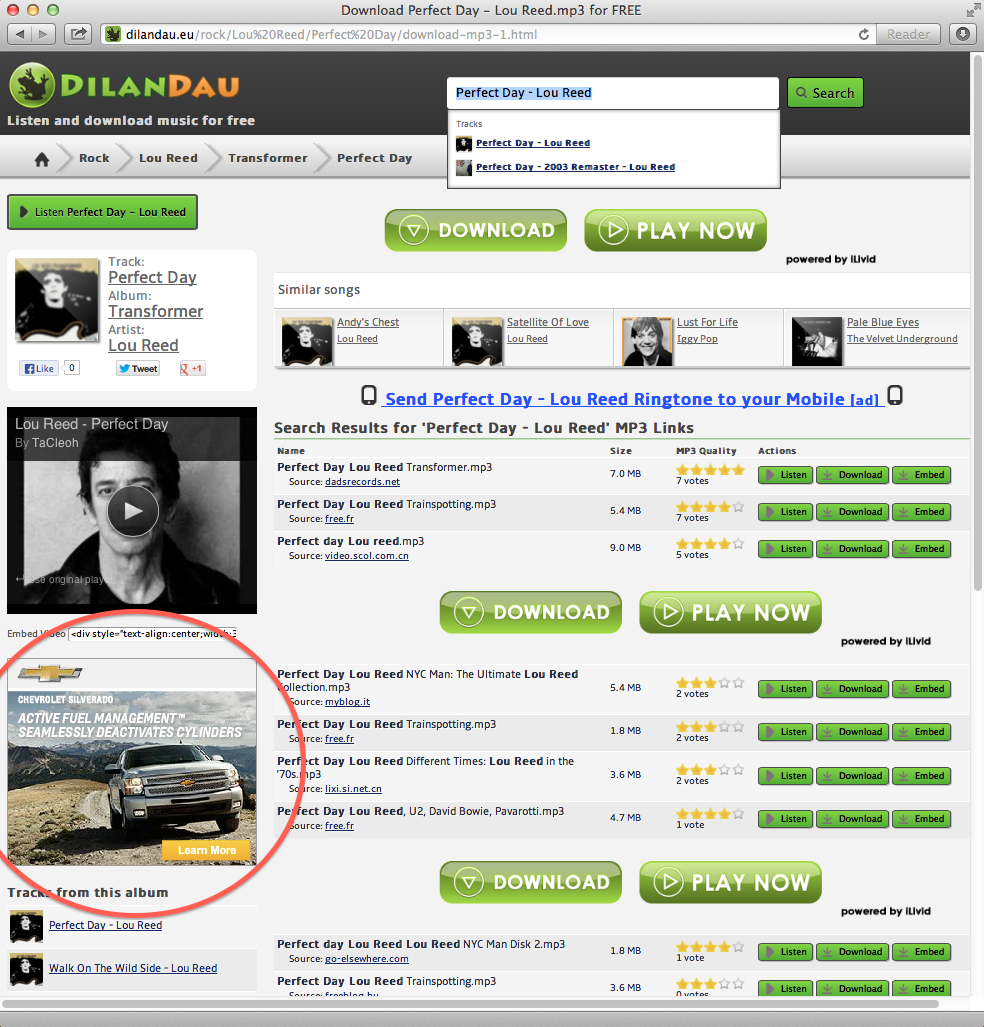
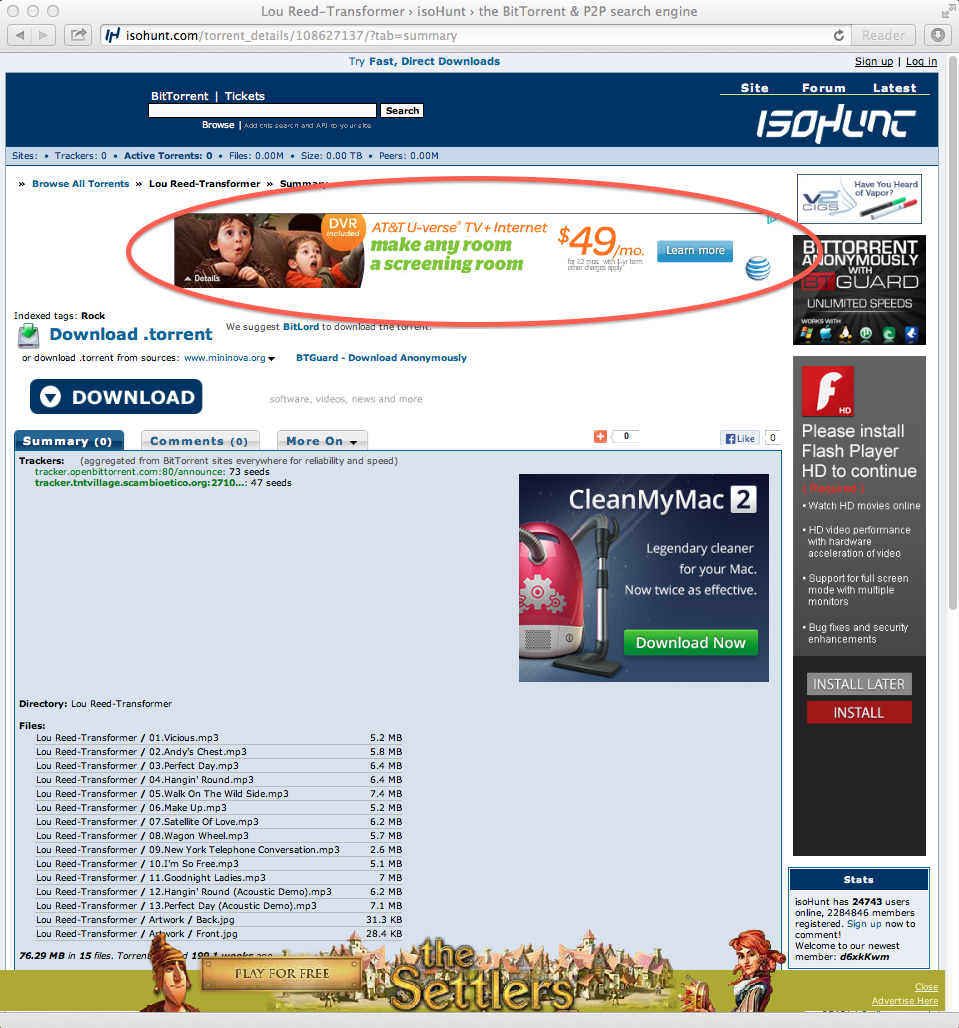
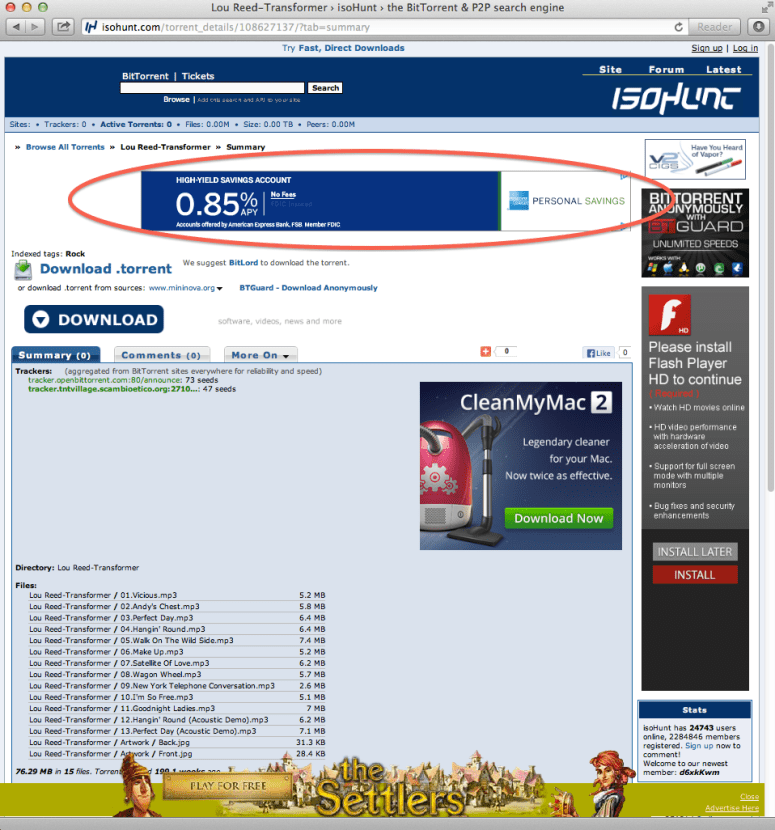
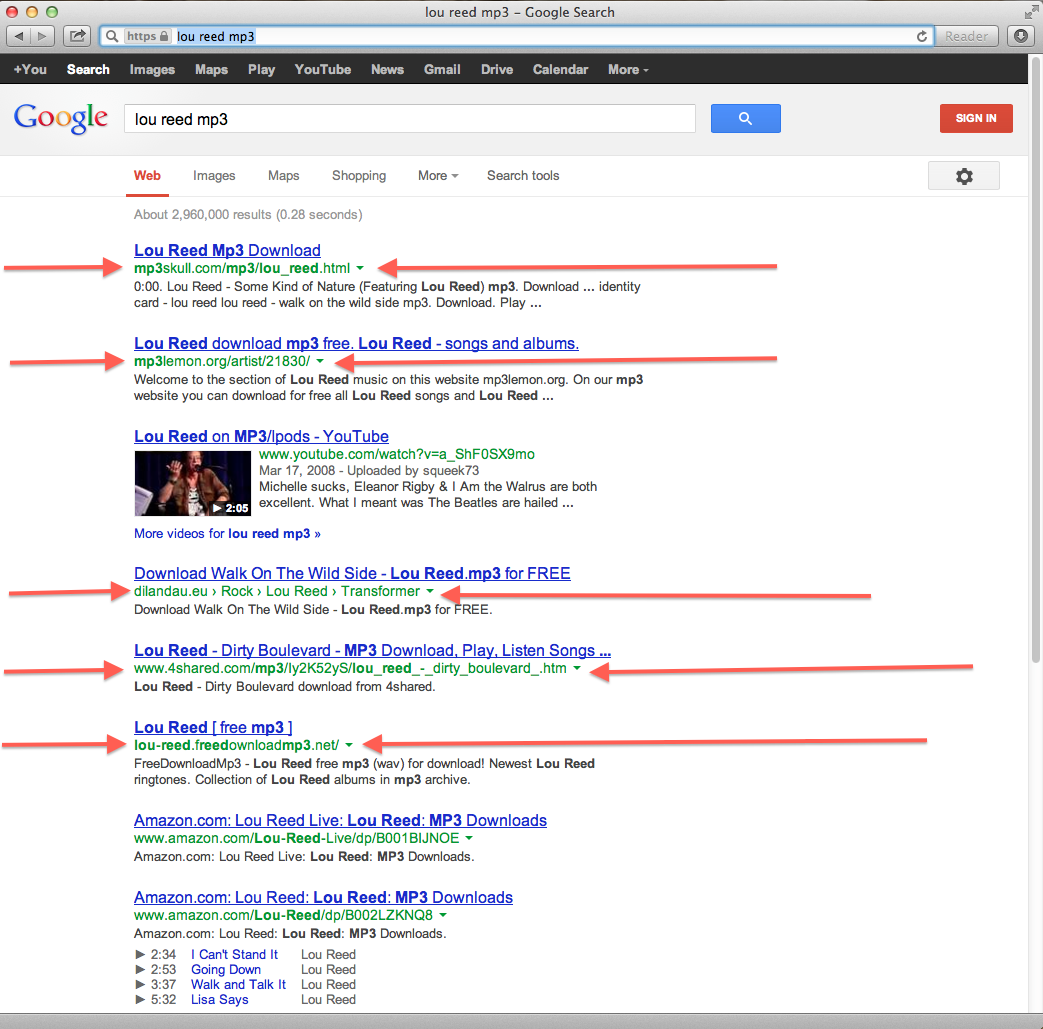
And here’s what it looks like… Lou Reed Exploited By American Express, AT&T, Chevrolet, Chili’s, Lysol, Pottery Barn, Vons, Domino’s Pizza, Netflix, Galaxy Nexus and Ron Jeremy!
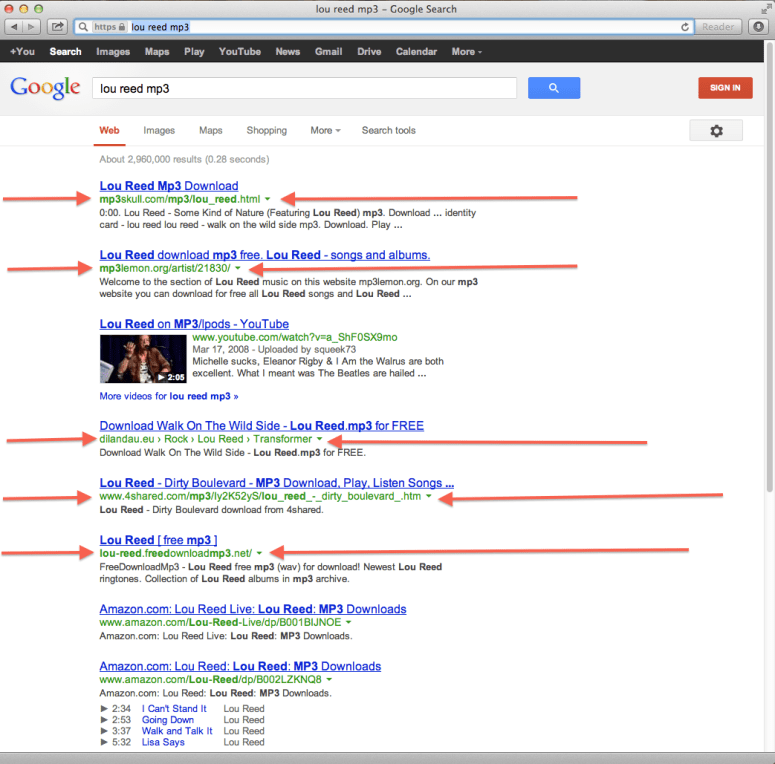
LouReedGoogleSearch

LouReedAMEX

LouReedNETFLIX

LouReedDOMINOS

LouReedGalaxyNexus

LouReedVONS

LouReedPOTTERYBARN

LouReedLYSOL

LouReedCHILI'S

LouReedCHEVY

LouReedATT

LouReedTPBPORN

* Forced Labor? Hyperbole? With no ability to opt out, without being granted choice, consent or the ability to negotiate our wages, what else is it?

About Social Media and Internet Advertising | AdLand

Our friends at AdLand recently posted this story “Nice ad you got. Be a shame if no one saw it.” They detail how social media sites like YouTube and Facebook are becoming more and more aggressive in leveraging their platforms to require payment for engagement.

Bands take note, these platforms are charging you to reach the audience you built for them…

The article is a must read, a small except below.

In 2012, GM stopped advertising on Facebook. It took its 40 million dollars elsewhere. When Facebook started reducing organic reach it became even clearer that social media is not the bargain, or effective juggernaut it was purported to be.

Consider that analog media print for a moment. You spend money to place an ad in GQ, and it goes in GQ’s across the country. There is no guarantee someone will buy the magazine, of course, but if they do, there is a good chance they’d see your ad. If Facebook owned GQ, you’d place an ad in it, and then Facebook would hide 90% of the magazines unless you paid them to put the magazine featuring your ad on the magazine stands.

So we live in the digital age where media channels like Youtube and Facebook seem only effective if you pay for views to inflate your numbers (and likes if you’re even more smarmy). And remember, a vast majority of Youtube videos (ads or otherwise) do not go viral. Then in Facebook’s case you’re dealing with a a quasi-Mafia-style practice of paying them to “boost” your post to an audience you worked hard to cultivate.

PLEASE READ THE FULL STORY AT ADLAND:
http://adland.tv/adnews/nice-ad-you-got-be-shame-if-no-one-saw-it/1541959236

With advertising on WDBJ-TV murder clips, YouTube sinks to new low | VoxIndie

It’s no secret that YouTube slaps advertising on pretty much anything without regard for subject matter or ownership, but making money off of last week’s on-air murder of WDBJ-TV reporter Alison Parker and her cameraman Adam Ward is a new low. A source tipped me off to the fact that a number of opportunistic (and shameless) YouTube “partners” have uploaded and monetized clips of both the station’s live broadcast and the video taken, (and uploaded to Twitter) by the deranged murderer as he executed the two journalists during a televised live-shot for the morning news.

READ THE FULL POST AT VOX INDIE:
http://voxindie.org/with-advertising-aside-tv-murder-clips-youtube-sinks-to-new-low/

No, Internet Piracy is Not A “Service Issue”…

Popcorn Time is now using the tired old Kim Dotcom defense that piracy is a “service issue”. We’ve heard this nugget for over a decade.  The argument may have had some merit in 1999, but that is just not the case today more than a decade and a half later.

So with that in mind, here is our response to the “service issue” argument when Mr. Dotcom attempted it back in 2013…

In the anticipation of the announcement of the new Mega launch, Pat Pilcher at The New Zealand Herald wrote an article titled “Kim Dotcom on Ending Piracy” in which the journalist listed Mr.Dotcom’s five steps to ending piracy. Pilcher writes,

As ironic as that may sound, Kim Dotcom’s logic is inescapably robust. Here’s what his end to piracy manifesto says:

1. Create great stuff
2. Make it easy to buy
3. Same day worldwide release
4. Fair price
5. Works on any device

Looking at what Kim is saying, the 5 points seem pretty obvious, although each could quickly get bogged down once Hollywood gets involved.

So let’s look at these one by one.

1. Create Great Stuff
Well, that’s a no brainer. The content industries create the most prized and sought after “stuff” in the world including films such as Avatar, The Avengers, and The Dark Night Rises as well as franchises like Iron Man, Transformers, Harry Potter and others. Music artists include the likes of Adele, The Black Keys, Taylor Swift, The Beatles and countless others. Making great stuff has never been a problem.

2. Make It Easy To Buy
Another no brainer. Perhaps a decade plus ago this might have been an argument, but not today. There are over 500 legal and licensed music services alone. For the film industry there are services like Netflix, Vudu and Cinemanow as well as other direct to home video on demand providers that give consumers more access to more content across more platforms than at any time in history.

3. Same Day World Wide Release
For music this is more less the standard now and is also more and more common for feature film releases as well. This is a common practice for the largest and most anticipated releases of music and films, the “stuff” that is the most aggressively pirated. For smaller indie releases this may not always be possible but than again I’m not sure that the problem we are combating is in Nigeria on indie rock albums and movies that are more or less film festival darlings.

4. Fair price
Done. Netflix is $7.99 a month for unlimited access to it’s entire library of films and tv shows. Spotify is $9.99 for unlimited access to it’s entire library which consist of probably 95% of every known recording in print. Add to this the cost of a song download is 99 cents. Less than the cost of a candy bar. Renting a movie from a video on demand service ranges from 3.99 to 5.99. Price is no longer an issue and has not been for years.

5. Works on Any Device
Music is DRM free and has been for at least half a decade. Streaming Services such as Netflix and Spotify are also available on every major platform including not only Mac and PC computers, but also mobile devices such as smart phones and tablets by a variety of manufacturers. Additionally most new video game consoles and blu-ray players also include many of these same apps.

So there you have it, the end of piracy. Even Pat Pilcher at The New Zealand Herald agrees a referring to a similar response from the New Zealand record industry. He writes,

Well there it is, RIANZ’s response in full. I can’t argue with much that they’ve said, as they’ve pretty much complied with most of Kim’s 5 points.

So Kim Dotcom’s five suggestions have been fulfilled and yet, I don’t think we’ll see an end to piracy anytime soon. There is still one thing piracy offers that legal, licensed and legitimate services do not, and that is compensation to the artists, musicians, filmmakers and creators which requires that consumers actually do pay the fair price asked.

It’s all pretty simple and by Kim Dotcom’s own suggestions and admission it’s pretty clear where the problem is from here on out, and it’s not in his five suggestions…

And, of course, let us not forget this classic… Kim Dotcom Parody Video Appears on YouTube


The Times They Are A-Changin | Guest Post by Marc Ribot

Guest post by Marc Ribot.

The deceptive premises of the NYTimes Editorial “Keep the Internet Free of Borders” 8/10, begin with the title, which leads one to believe that this ITC case will take something away that actually exists.   In fact, the Internet is not now and has never been,  “free of borders”. Copyright law prohibits unlawful distribution of copyrighted works outside national borders and has strict provisions on import and export of copyrighted works. The Internet has never been free of copyright law, because copyright  is nation-based. That’s why a new treaty was adopted to address the cross-border issue of distribution of works for blind and reading impaired persons- the Marrakesh Treaty adopted in 2012-, and why a global treaty for libraries is now under discussion: to make cross-border distribution legal in certain cases,  precisely because right now it’s restricted.  Even Google knows that the Internet has national borders.  It found a way to respect them for Google Books-  a mechanism to prevent export of copyrighted works to other countries. There are patent rules too.  All universities have policies regarding import and export of patented material. Export control rules and guidelines already cover patented material/trade competition and have NEVER  been restricted to physical goods.

When the editorial extrapolates its argument to the record industry, it goes even further afield.  ” The I.T.C. has long had the power to forbid companies from importing physical goods like electronics, books and mechanical equipment that violate the patents, copyrights and trademarks of American businesses…The commission’s order to ClearCorrect was the first time it had sought to bar the transfer of digital information.”

The Times takes the RIAA to task for supporting the decision: “Groups like the…Recording Industry Association of America are supporting the commission’s view… that, as trade increasingly becomes digital, the definition of “article” should include data.”

Yet when there was actually legislation on the table supporting the alternative remedies to ITC intervention that the editorial now claims to favor,  the NY Times took the exact opposite position ( Beyond SOPA 1/28/12), and supported empowering the ITC:  “By giving the International Trade Commission sole authority to determine infringement, [the OPEN Act] would…[give]  copyright holders powerful new tools to protect themselves [while] protecting legitimate expression on  the Web from overzealous content owners.

Funny how ‘Times’ change.

In any case, the alternate remedies proposed in last weeks editorial simply don’t apply to recording artists works.  “There are far better ways to [protect…patents and copyrights]….Align could sue ClearCorrect and seek damages for patent infringement. Or the company could ask a judge to order ClearCorrect to stop selling products made using the information contained in the files.”

Sounds great: but asking a judge to order an infringing company to stop selling [physical] products made using information contained in infringing files’ isn’t relevant for people whose product is the files themselves.  And  of course, suing companies profiting from infringement is precisely what musicians can’t do, thanks to the Safe Harbor Clause of the DMCA. That clause exempts online businesses from the normal responsibility of companies for violations of the law occurring on their premises.

Is the NY Times now going to support ending Safe Harbor protection for companies whose business models are based on aiding, abetting, and profiting  from infringement?  Such a position would be the only way musicians could have access to its suggested remedy.

We certainly hope so, because while congress has failed to effectively regulate the unfair black market destroying the value of our work, our industry has crashed and our livelihoods are suffering.

Our problem isn’t new technology itself, but the failure of government to regulate new and unfair forms of exploitation. The internet has borders: it is bound internationally by the laws of sovereign nations, and internally by laws which protect the rights of citizens. It also has hugely powerful corporations attempting to violate those borders on a massive scale in order to create consumer ‘facts on the ground’ which render those rights politically un-enforceable.

International borders aren’t the only boundaries threatened by big tech’s drive to profit from infringement: the consequences of the failure of government to stand up to this corporate manipulation won’t stay neatly contained within the music industry.  Nor will the effective nullification of citizens rights stop at those protecting artists.  Its a slippery slope, baby.

– M ribot

The New York Times sells out artists: Shallow data paints a too-rosy picture of “thriving” creative class in the digital age| Salon

A must read from Scott Timberg at Salon.

Musicians, writers, and other creative folk are still scratching their heads over the cover story in Sunday’s New York Times Magazine: “The New Making It” — packaged online as “The Creative Apocalypse That Wasn’t” — looked at how the Internet economy, instead of destroying creative careers, had redrawn them in “complicated and unexpected ways.” The story’s author, Steven Johnson, is an engaging writer, and the piece is told largely through statistics, which most readers assume to be beyond criticism. So why are so many people who work in the world of culture wondering why the article seemed to describe a best-of-all-worlds planet very different from the one they live on?

READ THE FULL STORY AT SALON:
http://www.salon.com/2015/08/24/the_new_york_times_sells_out_artists_shallow_data_paints_a_too_rosy_picture_of_thriving_creative_class_in_the_digital_age/

The 1 Percent: Income Inequality Has Never Been Worse Among Touring Musicians… | Digital Music News

One of the mantra’s that we always hear about the internet and musicians is that the revenue has shifted from recording sales to live ticket sales. So the great accomplishment of the internet according to Silicon Valley wisdom (and Steven Johnson of the NY Times Mag) is that artists can hit the road. “The dream of the 90s is alive, the 1890s…”

Well, if you’re not an established hit artist, here’s how that is working out in the post-napster era. Oh, and by the way, songwriters don’t tour, record producers don’t tour, recording engineers don’t tour… well, you get the point. Here’s the stat as reported by Digital Music News.

Note that in 1982 almost 40% of the revenue was divided between the “bottom” 95% of artists, while in 2003 they received only 15% of all revenue.

Could it be that these top-grossing artists benefited from launching in an era when artists didn’t have to be in the top 1% to develop a healthy live following over years of touring?

READ THE FULL POST AT DIGITAL MUSIC NEWS:
http://www.digitalmusicnews.com/2013/07/05/onepct/