UNSOUND @SXSW Meet Filmmaker Mikael (Count) Eldridge #SXSW

Filmmaker, producer and musician Mikael (Count) Eldridge will be speaking at SXSW Monday about new tech, start ups, and the impact on creators.

http://schedule.sxsw.com/2014/events/event_OE02908

Monday, March 10  | 2:00PM – 3:00PM
Austin Convention Center | Next Stage EH 3/4
500 E Cesar Chavez St

From the forthcoming documentary Unsound: Bad Religion guitarist and Epitaph Records founder Brett Gurewitz talks about how large tech corporations make millions of dollars selling advertising- essentially making people the product, without them even realizing. The promise of free or cheap music is often used to draw eyeballs to websites, apps, and social networking platforms, allowing corporations to make large amounts of money from advertising. The public is generally unaware and happy to have free/cheap music, corporations make tons of money from advertising, but how is the musician benefiting from this?

LEARN MORE HERE:
https://www.facebook.com/unsoundthemovie

Unsound uncovers the dramatic collapse of the music industry and its impact on musicians and creators of all kinds trying to survive in the ‘age of free’.

RELATED:

“Zoe Keating on How Big Business Wins…”| UNSOUND Little Cast

Reality for Indie Artists : Zoë Keating’s Annual Music Sales & Streaming Data @SXSW #SXSW

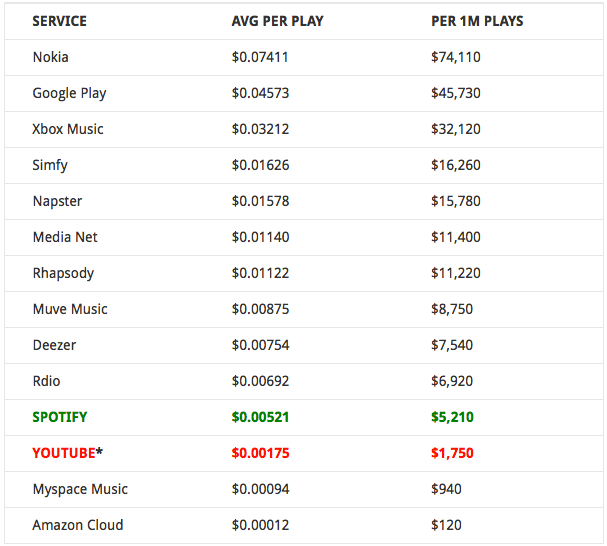
Zoë Keating released her Annual Music Sales & Streaming Data Spreadsheet a little bit ago and we stayed out of the fray, although we did also publish an update of the Music Streaming Price Index for 2014 as well.

This quote from Zoë in a follow up post about her open and transparent sharing of information on Hypebot got our attention.

I want you to know that I don’t release these numbers as a marketing tool. I’ve always tabulated stuff as part of doing my annual accounting and last year I decided to make a portion of them public. Music commentators were saying, over and over, that artists are not making a living selling music, they make all their money touring, etcetera etcetera. I noted that in my case that wasn’t true and never had been. In the commentary I wasn’t seeing a lot of actual numbers from artists and thought I’d offer some details of how it all works for me: a non-labeled artist whose career has existed entirely in the internet-age.

It’s curious to us that someone would insinuate the motivation behind sharing information in an open, human and transparent way was an attempt at self serving marketing. Shame on those who have made such comments. Zoë should be celebrated for doing what the interweb companies claim to do, and ask others to do, but do not do themselves.

We also found the following statement to be true of our experience of the vast number of artists we hear from who report similar experiences with streaming services ranging from Spotify to YouTube. These services only financially serve the very large artists and the very large labels. In other words, Spotify, YouTube and the like have not empowered artists towards financial freedom and very well appear to be achieving the very opposite.

Meanwhile yes, the big money is to be made at the top of the tail…and therein lies the promise of commercial music streaming services. It will be financially valuable to those who make hits and those who aggregate legions of artists. For a single artist like me commercial streaming will never be more than promo. I accept that. But will keep talking about it until streaming companies do more to make that promo more useful (i.e data).

But there appears to be more to this story. In this recently posted video clip by “Unsound” documentary  filmmaker Mikeal Eldridge, Zoë reveals that she has dug a bit deeper into the realities of streaming economics noting that the more streams that are served, the less the artists makes per stream. Again, this is consistent with her observation that “the promise of commercial music streaming services… will be financially valuable to those who make hits and those who aggregate legions of artists.”

We’ve yet to see anyone propose how streaming can actually scale and be sustainable for artists. We love streaming services, what we don’t like are the economics.

92% of Zoë’s recording income is from transactional digital sales. If these streaming businesses are claiming to be the future, the question to ask is whose future?

Downloads Streams Total % Downloads
$75,341 $6,380 $81,721 92%

RELATED:

Music Streaming Math, Can It All Add Up?

Why Spotify is not Netflix (But Maybe It Should Be)

Musicians POV: Spotify Isn’t Good for You – Full Post

On Spotify (and Why I’m not a Conspiracy Theorist After All) | Tape Op

The real reason why the major labels love Spotify | Guardian UK

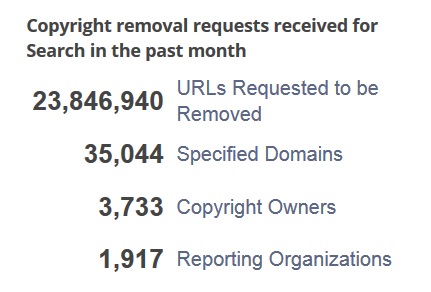
Safe Harbor Not Loophole: Five Things We Could Do Right Now to Make the DMCA Notice and Takedown Work Better

The Trichordist

There has been considerable discussion about how the DMCA notice and takedown procedures are “broken.”  We don’t think that this is quite true—the procedures are manipulated, misunderstood and abused on a grand scale.  That doesn’t mean that the notice and takedown procedure is “broken” any more than the laws against burglary, theft and tax evasion are “broken.”  No statute can control unethical behavior by those who use the law as a flimsy excuse to get away with bad behavior.

Many Internet companies have interpreted the DMCA to permit bad behavior until the victim of the bad behavior notified the bad actor that they were behaving badly—each time they behaved badly.  This “catch me if you can” interpretation of the DMCA was not at all what the Congress had in mind.  We would go further and suggest that not only was it not what the Congress had in mind, it also wasn’t what…

View original post 1,165 more words

DMCA Safe Harbor is NOT a “License to Infringe”

The Trichordist

Thanks to Music Tech Policy for alerting us to this post from The Association of Independent Music Publishers:

Apparently, some internet users interpret the DMCA “safe harbor,” which is designed to strike a balance between copyright and technology, as something quite different, a “license” to post anything you like, even if you know it is infringing, unless and until the copyright owner complains.

The distinction may seem small, but it may represent how the general public regards copyright on the internet.  Instead of avoiding infringement and respecting copyright, the concept of the “DMCA License” is that you don’t have to respect copyright.  Do what you like, and at the worst the copyright owner might force your ISP to remove the material.

There is no such thing as a “DMCA License” because under the DMCA, copyright owners are not in any way consenting to unauthorized use.  They are simply trying to…

View original post 22 more words

Text of Songwriter Equity Act of 2014

Music Technology Policy

[Congressional Bills 113th Congress]
[From the U.S. Government Printing Office]
[H.R. 4079 Introduced in House (IH)] 113th CONGRESS 2d Session H. R. 4079 To amend title 17, United States Code, to ensure fairness in the establishment of certain rates and fees under sections 114 and 115 of such title, and for other purposes. _______________________________________________________________________ IN THE HOUSE OF REPRESENTATIVES February 25, 2014 Mr. Collins of Georgia (for himself and Mrs. Blackburn) introduced the following bill; which was referred to the Committee on the Judiciary _______________________________________________________________________ A BILL To amend title 17, United States Code, to ensure fairness in the establishment of certain rates and fees under sections 114 and 115 of such title, and for other purposes. Be it enacted by the Senate and House of Representatives of the United States of America in Congress assembled, SECTION 1. SHORT TITLE. This Act may be cited as the ``Songwriter Equity…

View original post 493 more words

What ASCAP Members Need to Know About the Songwriter Equity Act and What You Can Do | ASCAP

Songwriters, composers and music publishers earn royalty income through two separate rights: the right to publicly perform their music works, and the right to make reproductions of those works and distribute those reproductions.

However, two outdated portions of the Copyright Act, Section 114(i) and Section 115, prevent songwriters and composers from receiving royalty rates that reflect fair market value for the use of their intellectual property. This has created inequity in the marketplace that harms America’s songwriters, composers and music publishers in the digital age. Now is the time to fix it.

READ THE FULL POST AT ASCAP:
http://www.ascap.com/playback/2014/02/action/songwriter-equity-act.aspx

A Great Question from @ZoeCello: Should Digital Retailers Own the Artist’s Fan Data?

Music Technology Policy

I want my data and in 2012 I see absolutely no reason why I shouldn’t own it. It seems like everyone has it, and exploits it…everyone but the creators providing the content that services are built on. I wish I could make this demand: stream my music, but in exchange give me my listener data. But the law doesn’t give me that power. The law only demands I be paid in money, which at this point in my career is not as valuable as information. I’d rather be paid in data.

Zoë Keating, What I Want From Internet Radio

Zoë Keating has raised a number of interesting points in a recent blog post about digital music services and one of them caught my eye–why is it that artists can’t get in the loop with the fans who buy or listen to their music?  When artists spend significant amounts of time and…

View original post 780 more words

The Tyranny of Legality | The Cynical Musician

Music piracy is a subject that has been talked to death over the past decade. So much, in fact, that it seems scarce conceivable that we could say anything more of interest on the subject.

The fundamental point I’d like you to take away from this is: it’s a lot more important to keep a watchful eye on ostensibly legal services – recall that both Pandora and (perhaps to a lesser extent) YouTube are legit – than to agonize over overt piracy.

That pirate services should be hunted to as close to extinction as is feasible goes without saying, but we mustn’t lose sight of the fact that nobody deserves a medal for going legit. It’s what you’re f-ing supposed to do.

READ THE FULL POST AT THE CYNICAL MUSICIAN:
http://thecynicalmusician.com/2014/01/the-tyranny-of-legality/

How You’re Murdering the Music Industry. | unEARTH Music Hub

Oddly, few people are talking about how much money they are actually making through Spotify, but it’s estimated that the average play is worth an abysmal $0.005. That’s half a cent…if you’re getting anything at all. An artist needs to rack up 200 plays to make $1. How are we letting this happen?! Is the general population truly oblivious to the tremendous effort and cost involved in making music?

Surprise! Songs don’t just pop out of artists like perfectly polished Easter eggs. These creative humans have dedicated a large amount of their time, money and soul to create a tangible piece of art for your listening pleasure. Studio time is expensive! Rehearsal space is expensive! Gas is expensive! Instruments are expensive! Craft beer is expensive!!! Strike that last one.

But seriously guys, when you buy music, you’re not just paying for a song, you’re supporting the artist and the process.

READ THE FULL STORY AT unEARTH MUSIC Hub:
http://unearthmusichub.com/articles/streaming-music/