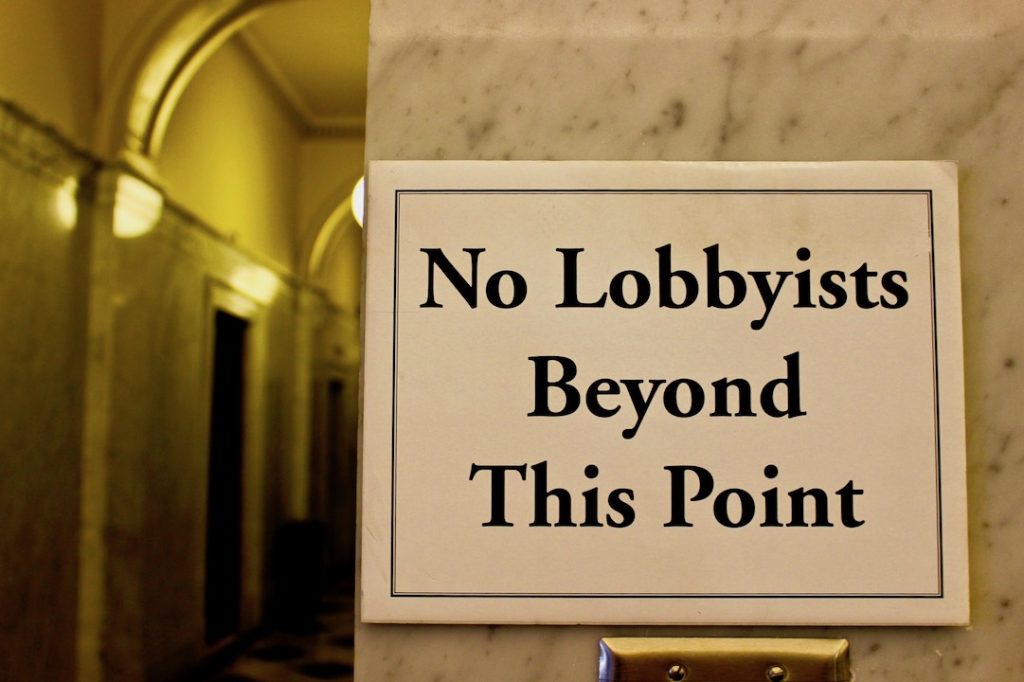
The First Shot Across the Bow at the MLC’s “Redesignation” Proceeding #TheReup

We must always tell what we see. Above all, and this is more difficult, we must always see what we see.
Charles Peguy

By Chris Castle

The Reup is on! MTP readers will remember that The MLC, Inc. is in the beginning of its “redesignation” proceeding before the U.S. Copyright Office that we call “the rep,” because…because….well, you have to laugh at some point. Having appointed (or “designated”) The MLC, Inc. as the statutory mechanical licensing collective in 2019, the Copyright Office is required by statute to review The MLC, Inc. to see how they are doing with their exclusive monopoly over songwriter streaming mechanical collections.

It’s important to remember that the mechanical licensing collective (lower case) is a statutory body. Congress tasked the head of the Copyright Office with selecting an entity to actually do the work. In a shocker that rocked the industry, the Copyright Office selected (or “designated”) the favorite corporation of the National Music Publishers Association and the Nashville Songwriters Association International that styled itself “The MLC, Inc.” 

The MLC, Inc. then turned right around and selected the Harry Fox Agency as its data vendor to actually run the accounting part of the collective–another shocker. If you thought you were going to escape the hubris and incompetence of HFA under the glorious revolution of the Music Modernization Act, tough break. So it is now the Copyright Office’s decision to either redesignate The MLC, Inc. (and by default, HFA) for another five years of holding onto your money in their vast black box, or find someone else.

And just to be clear, these exclusive appointments or “designations” last for five years. Every five years, Congress required the Copyright Office to take a critical look at the wisdom of their prior decision and determine after soul-searching and self-criticism whether they should ratify their previous genius by extending the monopoly another five years. As Congress said in the legislative history narrative:

The Register [the head of the Copyright Office] is allowed to re-designate an entity to serve as the collective every 5 years after the initial designation. Although there is no guarantee of a continued designation by the collective, continuity in the collective would be beneficial to copyright owners so long as the entity previously chosen to be the collective has regularly demonstrated its efficient and fair administration of the collective in a manner that respects varying interests and concernsIn contrast, evidence of fraud, waste, or abuse, including the failure to follow the relevant regulations adopted by the Copyright Office, over the prior five years should raise serious concerns within the Copyright Office as to whether that same entity has the administrative capabilities necessary to perform the required functions of the collective. In such cases, where the record of fraud, waste, or abuse is clear, the Register should give serious consideration to the selection of a new entity even if not all criteria are met pursuant to section 115(d)(3)(B)(iii).

So the way this is going to go down according to the Copyright Office is that they will seek a kind of thesis defense from each of The MLC, Inc. and the MLC’s counterpart for the digital services called the Digital Licensee Coordinator or “the DLC” which we often forget is there. Then the public gets to comment on how things are going.

Let’s understand how this game is played. Nobody likes to open the kimono and have their operations examined. But opening the kimono is actually a much bigger deal for the MLC than for the DLC. The MLC has a lot of functionality that perpetuates the same old spaghetti code from HFA and the need to hide it from sunlight. In my view the sense of entitlement and hubris is overwhelmingly stronger at The MLC, Inc. than at the DLC. Remember, the DLC pretty much just writes the overpriced checks to keep MLC executives in the style to which they have become accustomed (see Trichordist “Know Your MLC 2022“).

We are starting to get a sense of how the DLC is going to approach the reup proceeding given a recent blog post by Graham Davies, the new head of the Digital Media Association. DiMA essentially is the DLC. Technically, the DLC’s mission is to represent all users of the blanket mechanical license, and I think perhaps for the first time, the DLC will represent all the users both large and small, not just DiMA members. Let’s take a look at some of the points Graham raised.

The Insult of Governance

But first, remember that the MMA created the first US mechanical licensing CMO. This was an event that had been coming for oh, say 100 years round numbers. The first difference between the US and most other countries is that in the US there is not equal board representation between publishers and songwriters. This is an insult to songwriters. 

That’s right–in the rest of the world, songwriters have at least equal representation. Just call it what it is, it’s an insult. And not a casual insult or the insult of low expectations. This insult is right in your face.

There will be a lot of rending of garments about the unfairness of the MLC’s board composition and that’s all fine, but know this: You will not change the board composition until you change the mindset that produced the board composition.

What is astonishing about how this happened is that before they get to Washington, all these publishers with board seats have good relations with songwriters and value their writers. Do we have arguments inside the family? Sure. But something happens to these publishers when they get to Washington, DC and they go rogue or they are encouraged to go rogue. 

So I would encourage these board members to come back to your values and what you hold dear and don’t listen to the bad advice. The bad advice didn’t build your companies; your relations with your songwriters did. Yet there is such hostility toward this board composition that it will take you years to overcome the insult and the distrust it produced. It didn’t have to happen that way and it should not be allowed to continue.

No Free Lunch

The next big difference is that the cost of standing up and operating the MLC is born by the licensees. There is a reason that this doesn’t happen in any other country–it is a bullshit idea. It OBVIOUSLY produced an inherent conflict of interest at the outset. Does it shovel money onto the kitchen tables of the insiders? Of course. Does it feed into salaries, bonuses and T&E of the MLC? Oh, yes. So let’s see what Graham Davies has to say about this one.

For starters, here’s a headline: THE MONEY IS NOT HAPPY. Get it? What do you think happens when the money is not happy? Maybe, just maybe, you think they might not want to keep paying? Maybe just maybe they gave you your lead for five years and let you get good and hooked before they started reeling you in?

As Graham says:

All around the world, it is the rightsholders who bear the cost of the collectives licensing their rights, and copyright offices or similar government bodies often have oversight powers over the collectives to ensure that royalties are distributed fairly and the collectives operate efficiently.  

In the US, unlike anywhere else in the world, legislators placed the burden of funding the collective’s operations on the licensees as opposed to the rightsholders. This particular arrangement was a feature of the statute, but means a collective’s traditional incentives for optimum performance are not inherently built in and may become skewed. [Now there’s a shocker.]

This structure makes it even more important that the Copyright Office ensures fair and efficient operation of the collective, including for those who fund it.

How can you read that and not realize that THE MONEY IS NOT HAPPY. See what you see. Anyone who believed that the licensees large and small would just go on writing the checks for absurd salaries and ridiculous travel and entertainment expenses must be from Washington.

Oversight Culture Clash

This goes hand-in-hand with the true problem with the entire megillah which is where Graham starts: Lack of oversight. Don’t blow past this. 

Remember, DiMA represents the biggest corporations in commercial history and make no mistake–they own Washington, DC. So when the DiMA members look at this oversight issue, from their point of view the government works for them and the government is falling down on the job. The money is not happy. See what you see.

Oversight is a key part of Graham’s complaint.

As we embark on the redesignation process, oversight of the mechanical licensing collective is a key issue. Collective licensing is common for many rights in the music sector, because it is a sensible solution for reducing transaction costs and improving efficiencies between rightsholders and licensees….

The MMA mandated that the MLC be run by a Board made up largely of music publishers and some songwriters. While it makes sense for rights holders to have oversight over a collective of their rights, it has become apparent in the five years since the MMA was passed, that this structure, without guardrails and robust oversight, provides little incentive for the collective to carefully weigh risks and conduct rigorous cost-benefit analysis of decisions before action. [Like any CMO conducts a “rigorous cost-benefit analysis”–try not to laugh, but you get the idea.] This is of great importance because without a clearly circumscribed remit for The MLC, the positions the collective takes can have significant consequences for the functioning of the US music market.

The record shows that in passing the MMA, Congress chose to establish a collective that would serve as the administrator of  the mechanical blanket license….Congress [did not] intend to write the collective a blank check.  Indeed, Congress was astute in requiring that streaming services be responsible only for the reasonable costs of the collective. Such reasonable costs relate to the collective’s core functions – such as work registration and matching. Where The MLC has focused on these core functions, there is good work [no there isn’t], particularly in the context of the relatively short window from designation to operation [already making excuses]. However, where The MLC has gone beyond its remit, there has been, and continues to be cause for concern. Reasonable costs of the collective cannot include everything from traveling to distant countries to conduct outreach to songwriters far beyond the U.S. licensing system, to suing one of the licensees that pays its costs — using licensee money to pursue its allegations against a licensee on a novel legal theory. [This is the Pandora lawsuit filed by The MLC, Inc. I was wondering how long that would take to get under the skin.]

I take Graham’s point and understand his frustration (and discretion in not calling out the ridiculous salaries). But it must also be said that only lobbyists in the Imperial City would have drafted Title I of the MMA to provide for oversight of a private company by a government agency. That’s just idiotic. First of all, it’s really unfair to expect the Copyright Office to supervise the MLC’s travel and entertainment expenses. They barely have the resources to manage their own operations much less have oversight on Kris Ahrend’s tips in transit. It’s also just not in the cerebral culture of the Copyright Office to have the kind of dressing down relationship with the MLC that would be necessary for financial oversight. 

I also have to call bullshit on this complaint about costs being framed as an oversight issue. Yeah, sure, I guess on some level everything is an oversight issue. But if anything, this is an issue for the board of directors at the MLC which includes the DLC. But in most companies it’s a management issue for the CEO and the CFO. So if Graham has a beef about T&E (which sounds like a legitimate beef and is not the first I’ve heard of it), he needs to take it up with the management. You know, the management that reports to the board the DLC sits on (nonvoting or not).

Alternatively, the operating budget of the MLC comes through the Copyright Royalty Board which approves the budget in the form of the “Administrative Assessment.” The DLC can raise these complaints about spending in that forum as well and really should.

So Graham raises some important points that we should be aware of as the MLC enters its all-important reup proceeding. Stay tuned for responses.

MLC “ReUp” Proceeding Highlights Ownership Issues for Your Musical Works Database When You Correct To Collect?

Guest post By Chris Castle

Ever wonder who owns the registration data you have slaved to correct and recorrect at your own cost when you “Play Your Part” to “Correct to Collect” at the MLC?

Remember the sainted Music Modernization Act allowed the lobbyists a vehicle to create their mechanical licensing collective in the US that was going to solve all of Big Tech’s problems. The MMA, unsurprisingly, also gave Big Tech a brand new copyright infringement safe harbor arising out of the Spotify class actions. Generations of the children of lawyers and lobbyists will be put through college–thank you songwriters!

One of the few things Congress got right in Title I of the Music Modernization Act is the five-year review of the mechanical licensing collective. Or more precisely, whether the private company previously designated by the Copyright Office to conduct the functions of the Mechanical Licensing Collective (The MLC, Inc.) should have another five years to continue doing whatever it is they do.

Impliedly, and I think a bit unfairly, Congress told the Copyright Office to approve its own decision to appoint the current MLC or admit they made a mistake. This is yet another one of the growing list of oversights in the oversight. Wouldn’t it make more sense for someone not involved in the initial decision to be evaluating the performance of the MLC? Particularly when there are at least tens of millions of dollars changing hands as well as some highly compensated MLC employees, any one of whom makes more than the Copyright Royalty Judges. The MLC’s budget (paid by the services they oversee) was $32,900,000 in 2023 and will be $39,050,000 this year because, you know, the budget is indexed to inflation, just like streaming mechanicals…oh sorry. Not like streaming mechanicals.

Who Owns the Database?

What happens if the Register of Copyright actually fires The MLC, Inc. and designates a new MLC operator? The first question probably should be what is The MLC, Inc.’s plan for a hand off to a successor. But since that doesn’t exist, it instead should be what happens to the vaunted MLC musical works database and the attendant software and accounting systems which seem to be maintained out of the UK for some reason.

I actually raised this ownership question in a comment to the Copyright Office back in 2020. In short, my question was probably more of a statement: ‘‘The musical works database does not belong to the MLC or The MLC and if there is any confusion about that, it should be cleared up right away.” 

The Copyright Office had a very clear response:

While the mechanical licensing collective must ‘‘establish and maintain a database containing information relating to musical works,’’ the statute and legislative history emphasize that the database is meant to benefit the music industry overall and is not ‘‘owned’’ by the collective itself….Any use by the Office referring to the public database as ‘‘the MLC’s database’’ or ‘‘its database’’ was meant to refer to the creation and maintenance of the database, not ownership. [85 FR at 58172, text accompanying notes 30 and 31.]

So if the current operator of the MLC is fired, we know from the MMA and the Copyright Office guidance that one thing The MLC, Inc. cannot do is hold the database and its attendant systems hostage, or demand payment, or any other shadiness. These items do not belong to them so they must not assert control over that which they do not own. Neither does the database belong to any contractor if for no other reason than the MLC, Inc. cannot transfer to a contractor something that the MLC, Inc. doesn’t own in the first place.

Another thing that doesn’t belong to The MLC, Inc. is the hundreds of millions of black box money that the MLC, Inc. has failed to distribute in going on four years. I’ve even heard cynics suggest that the market share distribution of black box will occur immediately following The MLC, Inc.’s redesignation and the corresponding renewal of HFA’s back office contract which seems to be worth about $10 million a year all by itself.

What would also have been helpful would be for Congress to have required the Copyright Office to publish evaluation criteria for what they expected the MLC’s operator to actually do as well as performance benchmarks. Like I said, it’s a bit unfair of Congress to put the Copyright Office in the unprecedented position of evaluating such an important role with no usable guidance whatsoever. Surely Congress did not intend for the Copyright Office to have unfettered autonomy in deciding what standards to apply to their review of a quasi-governmental agency like the MLC? Yet Congress seems to have defaulted to the guardrail of the Administrative Procedures Act or some other backstop to sustain checks and balances on the situation.

But at least the ownership question is settled.

The Broadcasters are Still Free Riding on Artists #IRespectMusic

Broadcasters set the example followed by Google, YouTube, Spotify and now TikTok. Let’s tell Congress broadcasters have to pay reasonable royalties in the bi-partisan American Music Fairness Act.

Please join the fight and sign the petition at the MusicFirst Coalition!

In the fight for AI Justice, “The music industry is the tip of the spear” @MikeHuppe #IRespectMusic

Get smart about the NO AI Fraud Act with this MTP Mini Brief on the NO AI Fraud Act.

@RepMariaSalazar and @RepDean Introduce No AI Fraud Act to protect artists against AI Fakes #irespectmusic @human_artistry

Press Release

SUPPORT THE No AI FRAUD ACT

AI-Generated Fakes Threaten All Americans

New personalized generative artificial intelligence (AI) cloning models and services have enabled human impersonation and allow users to make unauthorized fakes using the images and voices of others. The abuse of this quickly advancing technology has affected everyone from musical artists to high school students whose personal rights have been violated.

AI-generated fakes and forgeries are everywhere. While AI holds incredible promise, Americans deserve common sense rules to ensure that a person’s voice and likeness cannot be exploited without their permission.

The Threat Is Here

Protection from AI fakes is needed now. We have already seen the kinds of harm these cloning models can inflict, and the problem won’t resolve itself.

From an AI-generated Drake/The Weeknd duet, to Johnny Cash singing “Barbie Girl,” to “new” songs by Bad Bunny that he never recorded to a false dental plan endorsement featuring Tom Hanks, unscrupulous businesses and individuals are hijacking professionals’ voices and images, undermining the legitimate works and aspirations of essential contributors to American culture and commerce.

But AI fakes aren’t limited to famous icons. Last year, nonconsensual, intimate AI fakes of high school girls shook a New Jersey town. Such lewd and abusive AI fakes can be generated and disseminated with ease. And without prompt action, confusion will continue to grow about what is real, undermining public trust and risking harm to reputations, integrity, and human wellbeing.   

Inconsistent State Laws Aren’t Enough

The existing patchwork of state laws needs bolstering with a federal solution that provides baseline protections, offering meaningful recourse nationwide.

The No AI FRAUD Act Provides Needed Protection

The No AI Fake Replicas and Unauthorized Duplications (No AI FRAUD) Act of 2024 builds on effective elements of state and federal law to:

  • Reaffirm that everyone’s likeness and voice is protected, giving individuals the right to control the use of their identifying characteristics.
  • Empower individuals to enforce this right against those who facilitate, create, and spread AI frauds without their permission.
  • Balance the rights against the 1st Amendment to safeguard speech and innovation.

The No AI FRAUD Act is an important and necessary step to protect our valuable and unique personal identities.

What would Lars say? Artificial Intelligence: Nobel or RICO?

All the true promise of AI does not require violating writers, artists, photographers, voice actors etc copyrights and rights of publicity. You know, stuff like reading MRIs and X-rays, developing pharmaceuticals, advanced compounds, new industrial processes, etc.

All the shitty aspects of AI DO require intentional mass copyright infringement (a RICO predicate BTW). You know stuff like bots, deep fakes, autogenerated “yoga mat” music, SEO manipulation, autogenerated sports coverage, commercial chat bots, fake student papers, graphic artist knockoffs, robot voice actors etc. But that’s where the no-value-add-parasitic-free-rider-easy-money is to be made. That’s why the parasitic free-riding VCs and private equity want to get a “fair use” copyright exemption.

Policy makers should understand that if they want to reduce the potential harms of AI they need to protect and reinforce intellectual property rights of individuals. It is a natural (and already existing) brake on harmful AI. What we don’t need is legislative intervention that makes it easier to infringe IP rights and then try to mitigate (the easily predictable and obvious) harms with additional regulation.

This is what happened with Napster and internet 1.0. The DMCA copyright infringement safe harbor for platforms unleashed all sorts of negative externalities that were never fairly mitigated by subsequent regulation.

Why do songwriters get 0.0009 a stream on streaming platforms? Because the platforms used the threat of the DMCA copyright safe harbor by “bad actors” (often connected to the “good actors” via shared board members and investors*) to create a market failure that destroyed the value of songs. To “fix” the problem federal legislation tasks the Copyright Royalty Board in LOC to set royalty rates and forced songwriters to license to the digital platforms (songwriters can not opt out). The royalty setting process was inevitably captured by the tech companies and that’s how you end up with 0.0009 per stream.

TBF the DMCA safe harbor requires the platforms to set up “technical measures” to prevent unlicensed use of copyrights, but this part of the DMCA safe harbor were never implemented and the federal government never bothered to enforce this part of the law. This is the Napster playbook all over again.

1. Unleash a technology that you know will be exploited by bad actors**.

2. Ask for federal intervention that essentially legalizes the infringing behavior.

3. The federal legislation effectively creates private monopoly or duopoly.

4. Trillions of dollars in wealth transferred from creators to a tiny cabal of no-value-add-parasitic-free-rider-easy-money VCs in silicon valley.

5. Lots of handwringing about the plight of creators.

6. Bullshit legislation that claims to help creators but actually mandates a below market rate for creators.

The funny thing is Lars Ulrich was right about Napster. [See our 2012 post Lars Was First and Lars Was Right.] At the time he was vilified by what in reality was a coordinated DC communication firm (working for Silicon Valley VCs) that masqueraded as grassroots operation.

But go back and watch the Charlie Rose debate between Lars Ulrich and Chuck D, everything Lars Ulrich said was gonna happen happened.

If Lars Ulrich hadn’t been cowed by a coordinated campaign by no-value-add-parasitic-free-rider-easy-money Silicon Valley VCs, he’d probably say the same thing about AI.

And he’d be right again.

Bridgeport Music Files Notice of The MLC’s First Royalty Audit

[Editor Charlie sez: a royalty “audit” is a right of the song owner to look inside the books and records of the party paying royalties to confirm that all royalties were paid and that all royalties were paid correctly, usually during a specified period of time. This usually results in the song owner discovering an underpayment that would have gone unpaid without the audit.]

By Chris Castle

It is commonplace for artists to conduct a royalty examination of their record company, sometimes called an “audit.” Until the Music Modernization Act, the statutory license did not permit songwriters to audit users of the statutory license. The Harry Fox Agency “standard” license for physical records had two principal features that differed from the straight statutory license: quarterly accounting and an audit right. When streaming became popular, the services both refused to comply with the statutory regulations and also refused to allow anyone to audit because the statutory regulations they failed to comply with did not permit an audit. I brought this absurdity to the attention of the Copyright Office in 2011.

After much hoopla, the lobbyists wrote an audit right for copyright owners into the Music Modernization Act. However, rather than permitting copyright owners to audit music users as is long standing common practice on the record side, the lobbyists decided to allow copyright owners to audit the Mechanical Licensing Collective. At the expense of the copyright owner, of course, no matter how many mistakes the copyright owner discovered or how big the underpayment. This is consistent with the desire of services to distance themselves from those pesky songwriters by inserting the MLC in between the services and their ultimate vendors, the songwriters and copyright owners. The services can be audited by the MLC (whose salaries are paid by the services), but that hasn’t happened yet to my knowledge.

But the MLC has received what I believe is its first audit notice that was just published by the Copyright Office after receiving it on November 9. First up is Bridgeport Music, Inc. for the period January 1, 2021, through December 31, 2023. January 1, 2021 was the “license availability date” or the date that the MLC began accounting for royalties under the MMA’s blanket license.

Why Audit Now?

Bridgeport’s audit is wise. There are no doubt millions if not billions of streams to be verified. The MLC’s systems are largely untested, compared to other music users such as record companies that have been audited hundreds, if not thousands of times depending on how long they are operating. Competent royalty examiners will look under the hood and find out whether it’s even possible to render reasonably accurate accounting statements given the MLC’s systems. Maybe it’s all fine, but maybe it’s not. The wisdom of Bridgeport’s two year audit window is that two years is long enough to have a chance at a recovery but it’s not so long that you are drowned in data and susceptible to taking shortcuts. 

In other words, why wait around?

Auditing the Black Box

A big difference between the audit rules the lobbyists wrote into the MMA and other audits is that the MLC audit is based on payments, not statements. The relevant language in the statute makes this very clear (17 USC §115(d)(3)(L):

A copyright owner entitled to receive payments of royalties for covered activities from the mechanical licensing collective may, individually or with other copyright owners, conduct an audit of the mechanical licensing collective to verify the accuracy of royalty payments by the mechanical licensing collective to such copyright owner…The qualified auditor shall determine the accuracy of royalty payments, including whether an underpayment or overpayment of royalties was made by the mechanical licensing collective to each auditing copyright owner.

Royalty payments would include a share of black box royalties distributed to copyright owners. It seems reasonable that on audit a copyright owner could verify how this share was arrived at and whatever calculations would be necessary to calculate those payments, or maybe the absence of such payments that should have been made. Determining what is not paid that should have been paid is an important part of any royalty verification examination.

Systems Transparency

Information too confidential to be detected cannot be corrected.  It is important to remember that copyright owner audits of the MLC will be the first time an independent third party has had a look at the accounting systems and functional technology of The MLC. If those audits reveal functional defects in the MLC’s systems or technology that affects any output of The MLC, i.e., not just the royalties being audited, it seems to me that those defects should be disclosed to the public. Audit settlements should not be used as hush money payments to keep embarrassing revelations from being publicly disclosed.

Unsurprisingly, The MLC lobbied to have broadly confidential treatment of all audits. Realize that there may well be confidential financial information disclosed as part of any audit that both copyright owners and The MLC will want to keep secret. There is no reason to keep secrets about The MLC’s systems. To take an extreme example, if on audit the auditors discovered that The MLC’s systems added 2 plus 2 and got 5, that is a fact that others have a legitimate interest in having disclosed to include the Copyright Office itself that is about to launch a 5 year review of The MLC for redesignation. Indeed, auditors may discover systemic flaws that could arguably require The MLC to recalculate many if not all statements or at least explain why they should not. (Note that a royalty auditor is required to deliver a copy of the auditor’s final report to The MLC for review even before giving it to their client. This puts The MLC on notice of any systemic flaws in The MLC’s systems found by the auditor and gives it the opportunity to correct any factual errors.)

I think that systemic flaws found by an auditor should be disclosed publicly after taking care to redact any confidential financial information. This will allow both the Copyright Office and MLC members to fix any discovered flaws.

The “Qualified Auditor” Typo

It is important to realize that there is no good reason why a C.P.A. must conduct the audit; this is another drafting glitch in the MMA that requires both The MLC’s audited financial statements and royalty compliance examinations be conducted by a C.P.A, defined as a “qualified auditor” (17 USC § 115(e)(25)). It’s easy to understand why audited financials prepared according to GAAP should be opined by a C.P.A. but it is ludicrous that a C.P.A. should be required to conduct a royalty exam for royalties that have nothing to do with GAAP and never have. 

To be frank, I doubt seriously whether anyone involved in drafting the MMA had ever personally conducted or managed a royalty verification examination. That assessment is based on the fact that royalty verification examinations are one of the most critical parts of the royalty payment process and is the least discussed subject in the lengthy MMA; at the time, the lobbyists did not represent songwriters and tried very hard to keep songwriters inside the writer room and outside of the drafting room as you can tell from The MLC, Inc.’s board composition; and that the legislative history (at 20) has one tautological statement about copyright owner audits: ”Subparagraph L sets forth the verification and audit process for copyright owners to audit the collective, although parties may agree on alternate procedures.” Well no kidding, smart people. We’ll take some context if you got it.

As Warner Music Group’s Ron Wilcox testified to the Copyright Royalty Judges, “Because royalty audits require extensive technical and industry-specific expertise, in WMG’s experience a CPA certification is not generally a requirement for conducting such audits. To my knowledge, some of the. most experienced and knowledgeable royalty auditors in the music industry are not CPAs.” (Testimony of Ron Wilcox, In re Determination of Royalty Rates and Terms for Ephemeral Recording and Digital Performance of Sound Recordings (Web IV), Copyright Royalty Judges, Docket No. 14-CRB-0001-WR (Oct. 6, 2014) at 15.). 

I would add to Ron’s assessment that the need for “extensive technical and industry-specific expertise” has grown exponentially since he made the statement in 2014 due to the complexity and numerosity of streaming. I’m sure Ron would agree if he had a chance to revisit his remarks. But inside the beltway of the Imperial City, it ain’t that way and you can tell by reading their laws handed down by the descendants of Marcus Licinius Crassus. All accountants are CPAs, all accounting is according to GAAP, all the women are strong, all the men are good-looking, and all the children are above average and go to Sidwell Friends. In the words of London jazzman and club owner Ronnie Scott to an unresponsive audience, “And now, back to sleep.”

The “qualified auditor” defined term should be limited to the MLC’s financials and removed from the audit clauses. This was a point I made to Senate staff during the drafting of MMA, but was told that while they, too, agreed it was stupid, it’s what the parties wanted (i.e., what the lobbyists wanted). And you know how that can be. So now we sweep up behind the elephants in the circus of life. But then, I’m just a country lawyer from Texas, what do I know.

All praise to Bridgeport for stepping up.

This post first appeared on MusicTech.Solutions

Must See Testimony by @MMercuriadis at @KevinBrennanMP Hearing on Streaming Economy

Very important testimony by Merck Mercuriadis at the UK House of Commons Culture Media and Sport Committee revisiting the Committee’s inquiry into the economics of streaming.

Read Merck’s fireside chat with Chris at last year’s Artist Rights Symposium at the University of Georgia.