@ArtistRights Symposium 5 Panel: In Our Own Backyard: Data Centers, AI Infrastructure, and the Creative Communities That Pay the Price

Registration is open for Artist Rights Symposium V at Eventbrite!

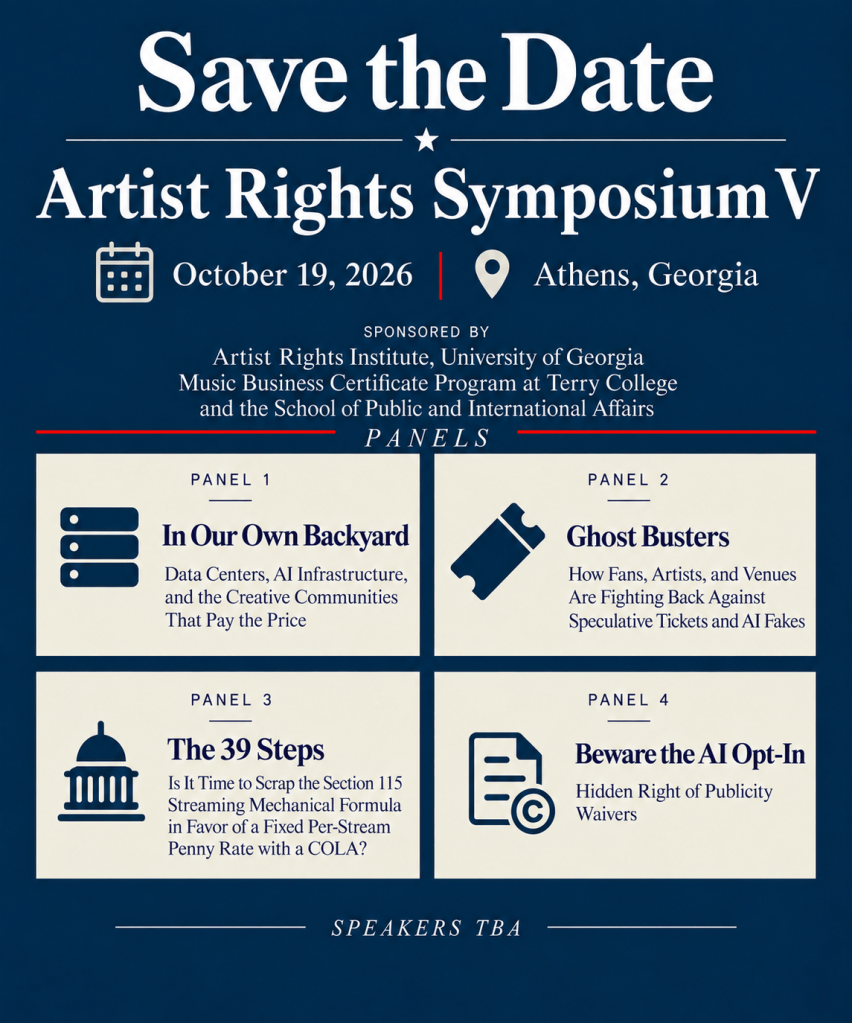
The Artist Rights Symposium V is coming on October 19 at Tweed Recording in Athens, GA hosted by the University of Georgia Terry College of Business Music Certificate Program and the School of Policy and International Affairs, and the Artist Rights Institute. More about the Symposium here and register on Eventbrite here. We’ll be posting panel overviews to introduce you to the speakers, this post is about the connection between data center opposition and artist rights.

When AI Comes for Your Dreams

Artificial intelligence is usually presented as something almost immaterial: software in the cloud, trained on data, producing an answer, an image or a song at the push of a button. But there is nothing immaterial about the massive physical infrastructure behind it.

Does somebody else’s need for your property give them the right to take it?

That is the connection we’ll explore at Artist Rights Symposium V with Ansley Brown; Georgia State Senator Sonya Halpern; and Dr. Moiya McTier of the Human Artistry Campaign and Moderator Chris Castle of Artist Rights Institute—bringing together community, public-policy and artist-rights perspectives on different sides of the same extraordinary AI buildout.

The panel highlights the increasingly important connection between data center protests and artist rights, bringing together leading human-creator advocates with a prominent Georgia community advocate whose family home was taken for data centers.

The panel will examine how AI not only depends on scraping vast swaths of human culture, but also requires enormous data centers, staggering amounts of electricity and water, sprawling new transmission infrastructure—real land in real communities. Someone bears the costs when family farms, homes and intellectual property become inputs to the AI economy.

Readers of the Data Center Backlash SITREP will remember Ansley Brown and her family’s fight in Coweta County, Georgia, where a proposed hyperscale data-center development brought AI’s extraordinary power demands quite literally to her doorstep—including Georgia Power’s effort to use eminent domain to take her family home for data center transmission lines.

Ansley did not set out to become a public advocate. She became one because a multibillion-dollar development threatened something deeply personal: the home and life her family had built in Coweta County, Georgia.

But Ansley’s story is also the story of thousands like her across America—and, indeed, around the world—as communities confront unprecedented demands for land, electricity, water and transmission capacity to support the accelerating AI buildout. At the same time, creators are watching their works appropriated by AI platforms that flood the attention economy with AI-generated content that competes directly with the human works used to build those systems.

Who bears the cost when someone else’s dream is reduced to an input for AI?

Artists have been asking essentially the same question—whether they’re protesting data centers next to the Nashville Zoo or suing to protect their works and personhood from unauthorized AI exploitation. Songwriters, recording artists, musicians, actors, writers and other creators have watched their work become an input into enormously valuable AI systems—without consent or compensation, if there even is a price for taking their dreams.

The AI economy has both i nputs and infrastructure. It needs creative works to build its products, and it needs land, power and water to run them. The legal issues are different, but the underlying question is remarkably similar: Ansley has described the human consequence in memorable terms: having to take the dream you built in one place and try to recreate it somewhere else—somewhere you hope will be safe from the next wave of AI development.

A family home and an artist’s life’s work are very different kinds of property. But neither becomes free for the taking merely because somebody else needs it to build a business.

What happens when the price of somebody else’s technological dream is that you have to surrender your own?

That’s the discussion we’re bringing to Athens on October 19 at Artist Rights Symposium V.  Registration is open at Eventbrite!

@ArtistRights Symposium 5 Panelists: Ghost Busters: Fighting Back Against Speculative Tickets

Registration is open for Artist Rights Symposium V at Eventbrite!

The Artist Rights Symposium V is coming on October 19 at Tweed Recording in Athens, GA hosted by the University of Georgia Terry College of Business Music Certificate Program and the School of Policy and International Affairs, and the Artist Rights Institute. More about the Symposium here and register on Eventbrite here.

We’ll be posting panel overviews to introduce you to the speakers, starting with the ticketing panel. From nonexistent World Cup tickets to a growing state-by-state push for resale reform, the ticketing debate is moving quickly. “Ghost Busters: How Fans, Artists, and Venues Are Fighting Back Against Speculative Tickets” will examine what artists, venues and lawmakers can do about ghost tickets, predatory resale and a secondary market increasingly disconnected from the artists who create the event. 

The panel begins at 11:30 a.m. on October 19 at Tweed Recording with these experts: 

Randy Nichols, a board member of the National Independent Talent Organization, leads NITO research and policy efforts addressing predatory resale practices. A longtime artist manager and entrepreneur, his advocacy draws on two decades of experience in the live-music business.

Jay Gilbert, co-founder of Label Logic and co-host of Your Morning Coffee, brings decades of music-industry experience, including executive roles with Universal, Sony and Warner and marketing campaigns for artists ranging from Nirvana and The Police to Bob Marley and Johnny Cash.

Moderating is Mala Sharma, co-founder and president of Georgia Music Partners, whose career spans record labels, artist management, entertainment banking, the Atlanta Symphony Orchestra and public policy.

The conversation:  Who should control a ticket after it goes on sale—and how do we stop people from selling tickets they never owned in the first place?

UGA School of Public and International Affairs Joins Artist Rights Symposium V

We’re pleased to announce that the University of Georgia’s School of Public and International Affairs has joined the Artist Rights Institute and UGA’s Music Business Certificate Program at Terry College as a sponsor of the fifth annual Artist Rights Symposium, October 19, 2026, in Athens, Georgia.

The addition of SPIA is especially timely. This year’s Symposium reaches beyond traditional music-industry issues to examine the broader public-policy consequences of artificial intelligence—from the massive data centers, energy infrastructure, and local communities supporting AI development to the legal and policy questions surrounding artist consent, identity, compensation, and the use of creative work.

Bringing together music business, law, public policy, artists, advocates, and policymakers is exactly what this moment requires.

Artist Rights Symposium V
October 19, 2026 — Athens, Georgia
Speakers and additional program details coming soon.

Inside Royalty Audits with Keith Bernstein: Lessons from Chris Castle’s Music Contracts & AI Class at UT Law

Let’s face it: Audit rights are only as good as your auditor.

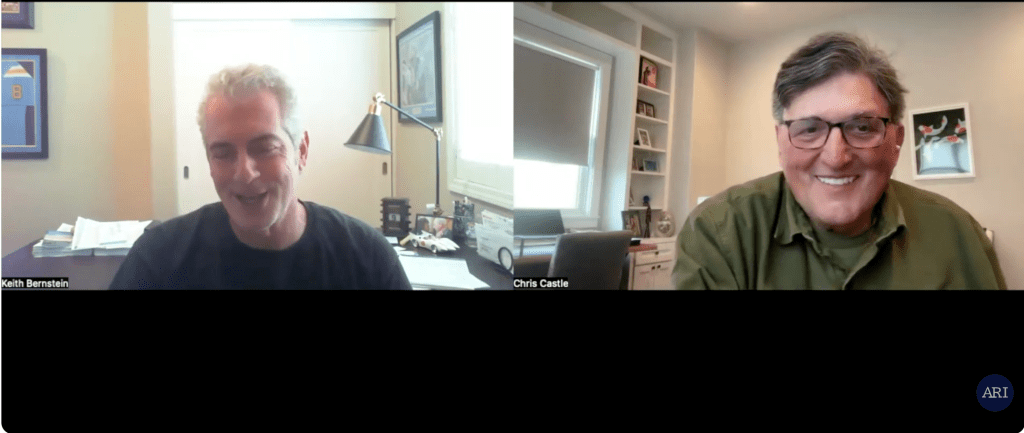
In this ARI Artist Financial Education session—recorded for Chris Castle’s music business and AI class at the University of Texas School of Law—we got a gem. Keith Bernstein, one of the top royalty auditors in the music business, joins Chris for a practical discussion of DSP and royalty audits. As the force behind Royalty Review Council and Crunch Digital, and its proprietary clearance tool Tempo, Keith has spent decades uncovering how royalties are reported, misreported, and contested.

Keith walks us through how audits actually work, contract limitations on audit rights, where discrepancies tend to surface, and why leverage often matters more than contract language. After decades in the field, Keith has seen where the money goes and where it doesn’t. This conversation cuts through the theory and gets into how audits really work, where the gaps are, and why audit rights only matter if you can enforce them.

Watch the video https://www.youtube.com/watch?v=cirxW12BS2k

Background reading: Donald S. Passman, All You Need to Know About the Music Business 11th Edition, 54–55, 70, 313, 408.

@ArtistRights Institute Newsletter 01/05/26: Grok Can’t Control Itself, CRB V Starts, Data Center Rebellion, Sarah Wynn-Williams Senate Testimony, Copyright Review

Artist Rights Institute logo - Artist Rights Weekly newsletter

Phonorecords V Commencement Notice: Government setting song mechanical royalty rates

The Copyright Royalty Judges announce the commencement of a proceeding to determine reasonable rates and terms for making and distributing phonorecords for the period beginning January 1, 2028, and ending December 31, 2032. Parties wishing to participate in the rate determination proceeding must file their Petition to Participate and the accompanying $150 filing fee no later than 11:59 p.m. eastern time on January 30, 2026. Deets here.

US Mechanical Rate Increase

Songwriters Will Get Paid More for Streaming Royalties Starting Today (Erinn Callahan/AmericanSongwriter)

CRB Sets 2026 Mechanical Rate at 13.1¢ (Chris Castle/MusicTechPolicy)

Spotify’s Hack by Anna’s Archive

No news. Biggest music hack in history still stolen.

MLC Redesignation

The MMA’s Unconstitutional Unclaimed Property Preemption: How Congress Handed Protections to Privatize Escheatment (Chris Castle/MusicTechPolicy)

Under the Radar: Data Center Grass Roots Rebellion

Data Center Rebellion (Chris Castle/MusicTechSolutions)

The Data Center Rebellion is Here and It’s Reshaping the Political Landscape (Washington Post)

Residents protest high-voltage power lines that could skirt Dinosaur Valley State Park (ALEJANDRA MARTINEZ AND PAUL COBLER/Texas Tribune)

US Communities Halt $64B Data Center Expansions Amid Backlash (Lucas Greene/WebProNews)

Big Tech’s fast-expanding plans for data centers are running into stiff community opposition (Marc Levy/Associated Press)

Data center ‘gold rush’ pits local officials’ hunt for new revenue against residents’ concerns (Alander Rocha/Georgia Record)

AI Policy

Meet the New AI Boss, Worse Than the Old Internet Boss (Chris Castle/MusicTechPolicy)

Deloitte’s AI Nightmare: Top Global Firm Caught Using AI-Fabricated Sources to Support its Policy Recommendations (Hugh Stephens/Hugh Stephens Blog)

Grok Can’t Stop AI Exploitation of Women

Facebook/Meta Whistleblower Testifies at US Senate

Copyright Case 2025 Review

Year in Review: The U.S. Copyright Office (George Thuronyi/Library of Congress)

Copyright Cases: 2025 Year in Review (Rachel Kim/Copyright Alliance)

AI copyright battles enter pivotal year as US courts weigh fair use (Blake Brittain/Reuters)

9/18/25: Save the Date! @ArtistRights Institute and American University Kogod School to host Artist Rights Roundtable on AI and Copyright Sept. 18 in Washington, DC

🎙️ Artist Rights Roundtable on AI and Copyright:  Coffee with Humans and the Machines            

📍 Butler Board Room, Bender Arena, American University, 4400 Massachusetts Ave NW, Washington D.C. 20016 | 🗓️ September 18, 2025 | 🕗 8:00 a.m. – 12:00 noon

Hosted by the Artist Rights Institute & American University’s Kogod School of Business, Entertainment Business Program

🔹 Overview:

Join the Artist Rights Institute (ARI) and Kogod’s Entertainment Business Program for a timely morning roundtable on AI and copyright from the artist’s perspective. We’ll explore how emerging artificial intelligence technologies challenge authorship, licensing, and the creative economy — and what courts, lawmakers, and creators are doing in response.

☕ Coffee served starting at 8:00 a.m.
🧠 Program begins at 8:50 a.m.
🕛 Concludes by 12:00 noon — you’ll be free to have lunch with your clone.

🗂️ Program:

8:00–8:50 a.m. – Registration and Coffee

8:50–9:00 a.m. – Introductory Remarks by Dean David Marchick and ARI Director Chris Castle

9:00–10:00 a.m. – Topic 1: AI Provenance Is the Cornerstone of Legitimate AI Licensing:

Speakers:
Dr. Moiya McTier Human Artistry Campaign
Ryan Lehnning, Assistant General Counsel, International at SoundExchange
The Chatbot
Moderator Chris Castle, Artist Rights Institute

10:10–10:30 a.m. – Briefing: Current AI Litigation, Kevin Madigan, Senior Vice President, Policy and Government Affairs, Copyright Alliance

10:30–11:30 a.m. – Topic 2: Ask the AI: Can Integrity and Innovation Survive Without Artist Consent?

Speakers:
Erin McAnally, Executive Director, Songwriters of North America
Dr. Richard James Burgess, CEO A2IM
Dr. David C. Lowery, Terry College of Business, University of Georgia.

Moderator: Linda Bloss Baum, Director Business and Entertainment Program, Kogod School of Business

11:40–12:00 p.m. – Briefing: US and International AI Legislation

🎟️ Admission:

Free and open to the public. Registration required at Eventbrite. Seating is limited.

🔗 Stay Updated:

Watch Eventbrite, this space and visit ArtistRightsInstitute.org for updates and speaker announcements.

@ArtistRights Newsletter 8/18/25: From Jimmy Lai’s show trial in Hong Kong to the redesignation fight over the Mechanical Licensing Collective, this week’s stories spotlight artist rights, ticketing reform, AI scraping, and SoundExchange’s battle with SiriusXM.

Save the Date! September 18 Artist Rights Roundtable in Washington produced by Artist Rights Institute/American University Kogod Business & Entertainment Program. Details at this link!

Artist Rights

JIMMY LAI’S ORDEAL: A SHOW TRIAL THAT SHOULD SHAME THE WORLD (MusicTechPolicy/Chris Castle)

Redesignation of the Mechanical Licensing Collective

Ex Parte Review of the MLC by the Digital Licensee Coordinator

Ticketing

StubHub Updates IPO Filing Showing Growing Losses Despite Revenue Gain (MusicBusinessWorldwide/Mandy Dalugdug)

Lewis Capaldi Concert Becomes Latest Ground Zero for Ticket Scalpers (Digital Music News/Ashley King)

Who’s Really Fighting for Fans? Chris Castle’s Comment in the DOJ/FTC Ticketing Consultation (Artist Rights Watch)

Artificial Intelligence

MUSIC PUBLISHERS ALLEGE ANTHROPIC USED BITTORRENT TO PIRATE COPYRIGHTED LYRICS(MusicBusinessWorldwide/Daniel Tencer)

AI Weather Image Piracy Puts Storm Chasers, All Americans at Risk (Washington Times/Brandon Clemen)

TikTok After Xi’s Qiushi Article: Why China’s Security Laws Are the Whole Ballgame (MusicTechSolutions/Chris Castle)

Reddit Will Block the Internet Archive (to stop AI scraping) (The Verge/Jay Peters) 

SHILLING LIKE IT’S 1999: ARS, ANTHROPIC, AND THE INTERNET OF OTHER PEOPLE’S THINGS(MusicTechPolicy/Chris Castle)

SoundExchange v. SiriusXM

SOUNDEXCHANGE SLAMS JUDGE’S RULING IN SIRIUSXM CASE AS ‘ENTIRELY WRONG ON THE LAW’(MusicBusinessWorldwide/Mandy Dalugdug)

PINKERTONS REDUX: ANTI-LABOR NEW YORK COURT ATTEMPTS TO CUT OFF LITIGATION BY SOUNDEXCHANGE AGAINST SIRIUS/PANDORA (MusicTechPolicy/Chris Castle)

@ArtistRights Newsletter 8/11/25: @DavidCLowery on Streaming, SX v. Sirius, AI the Cult and “Dual Use AI” Culture is Upstream of War

Save the Date! September 18 Artist Rights Roundtable in Washington produced by Artist Rights Institute/American University Kogod Business & Entertainment Program. Details at this link!

Artist Rights Institute logo - Artist Rights Weekly newsletter

Save the Date! September 18 Artist Rights Roundtable in Washington produced by Artist Rights Institute/American University Kogod Business & Entertainment Program. Details at this link!

Streaming Economics

@nickgillespie and @davidclowery: Streaming is a Regulated Monopoly (Reason Magazine/Nick Gillespie)

Spotify’s Royalty Threshold Is Conscious Parallelism Reshaping the Music Business—But Not in a Good Way (The Trichordist/Chris Castle)

SoundExchange v. SiriusXM

Did the Court Misread Congress? Rethinking SoundExchange v. SiriusXM Through the Lens of Legislative Design

Copyright Terminations Vetter v. Resnik

Controversial ruling on US termination right fulfills the intention of Congress, say creators (Complete Music Update/Chris Cooke)

Amicus Brief Supporting Cyril Vetter of Artist Rights Institute (David Lowery, Nikki Rowling), Blake Morgan, Abby North, and Angela Rose White (Chris Castle)

Cult of the AI Singularity

AI Frontier Labs and the Singularity as a Modern Prophetic Cult (MusicTech.Solutions/Chris Castle)

AI Czar David Sacks Shortcut to Nowhere: How the Seven Deadly Since Keep Him From Licensing Solutions

Dual Use AI

America Isn’t Ready for the Wars of the Future (Foreign Affairs/GEN Mark Milley and Eric Schmidt)

Spotify CEO Daniel Ek Named Chairman of Military AI Firm Following €600M Investment (Playy Magazine)

Eric Schmidt Is Building the Perfect AI War-Fighting Machine (Wired/Will Knight)

Souls for Sale: The Long Con Behind AI Weapons and Cultural Complicity (MusicTechPolicy/Chris Castle)

Eric Schmidt-led panel pushing for new defense experimentation unit to drive military adoption of generative AI(Defense Scoop/Brandi Vincent)

The Lords of War: Daniel Ek, Eric Schmidt and the Militarization of Tech (MusicTechPolicy/Chris Castle)

@human_artistry Campaign Letter Opposing AI Safe Harbor Moratorium in Big Beautiful Bill HR 1

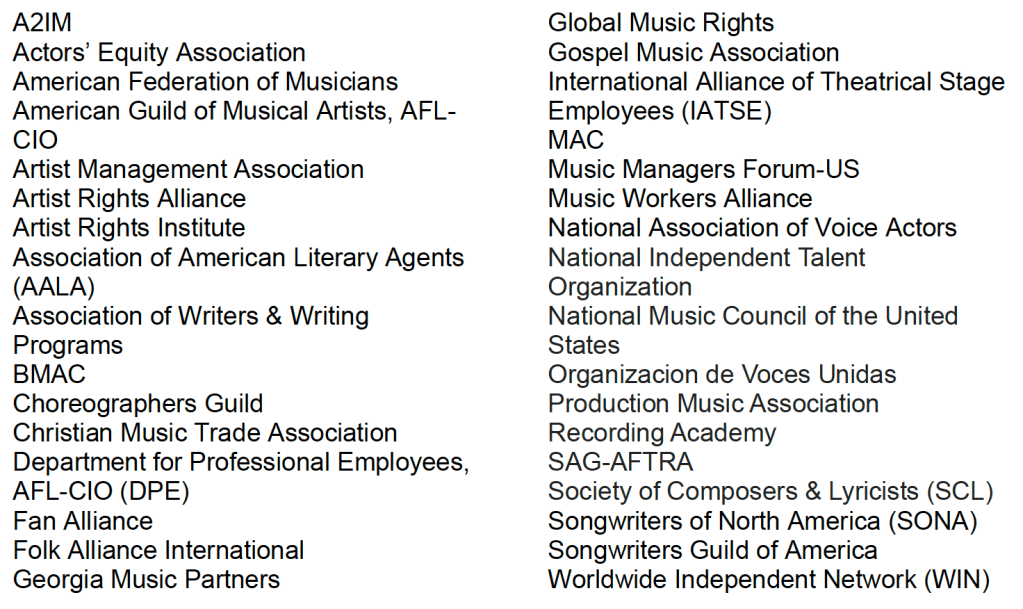
Artist Rights Institute is pleased to support the Human Artistry Campaign’s letter to Senators Thune and Schumer opposing the AI safe harbor in the One Big Beautiful Bill Act. ARI joins with:

Opposition is rooted in the most justifiable reasons:

By wiping dozens of state laws off the books, the bill would undermine public safety, creators’ rights, and the ability of local communities to protect themselves from a fast-moving technology that is being rushed to the market by tech giants. State laws protecting people from invasive AI deepfakes would be at risk, along with a range of proposals designed to eliminate discrimination and bias in AI. For artists and creators, preempting state laws requiring Big tech to disclose the material they used to train their models, often to create new products that compete with the human creators’ originals, would make it difficult or impossible to prove this theft has occurred. As the Copyright Office’s Fair Use Report recently reaffirmed, many forms of this conduct are illegal under longstanding federal law. 

The moratorium is so vague that it is unclear whether it would actually prohibit states from addressing construction of data centers or the vast drain on the power grid to implement AI placement in states. This is a safe harbor on steroids and terrible for all creators.

@JayGilbert Discusses Record Release Marketing Strategies

Our friend and long time music marketing consultant Jay Gilbert sits down with Chris Castle to discuss release planning and strategies on Part 3 of the Artist Rights Institute’s Record Release Checklist. You may have seen Jay on podcasts like Your Morning Coffee, Behind the Setlist (with Glenn Peoples) and Michael Brandvold’s Music Biz Weekly.

Jay discusses his excellent Release Planner and made a copy available for download on the Artist Rights Institute Artist Financial Education vertical. You can also listen to the podcast on The Artist Rights Watch podcast.

Don’t miss Parts 1 and 2 on getting your record ready with legal and business issues available on the Financial Education Vertical here and here and checklist for YouTube videos here.