Marc Ribot Talks Respecting Artists’ Rights | The Talk House

We’re organizing to fight back. We’re going to give value to the ineffable, uncountable and immeasurable beauty being destroyed. We’re going to give voice to the creators whose work — and lives — are being devalued by tech-corporate greed. We’re going to fight for the sustainability of the culture we all enjoy. We don’t have the lobbying millions of the tech-corporate giants, but we’re going to win. Because the truth is a powerful slingshot.

Editor’s note: If you’re in the New York area, by all means go to “Benefit for Content Creators Coalition (c3): Defend Artists’ Rights: Economic Justice in the Digital Domain!” on Saturday, October 18, 2014 at Roulette.  The show features: John Zorn, Eric Slick (Dr. Dog), Steve Coleman, Marc Ribot, Henry Grimes, Marina Rosenfeld, Trevor Dunn, Brandon Seabrook, Satomi Matsuzaki (Deerhoof), Amir ElSaffar and more. You can buy tickets here.

READ THE FULL INTERVIEW HERE:
http://thetalkhouse.com/music/talks/marc-ribot-talks-respecting-artists-rights/

Mythbusting : Music Is Too Expensive!?

Something to consider amongst the chatter of proposals to reduce streaming subscription costs. We couldn’t think of anything more silly, and here’s why…

The Trichordist

Music has never been less expensive to own, legally. We often hear that if music were cheaper, artists would sell more, but this is simply not true. Myth busted, read on.

Digital Music News – Worse Than Worst Ever? Tommy Boy Starts Number-Crunching Again…

“The first Beatles album in America came out in 1964 at $4.98 list,” Tommy Boy continued. “In today’s dollars that would be $35 for a 28 minute, monophonic 8-song album.”

In other words, using today’s pricing of $9.99 for an Itunes album would have only cost $1.35 in 1964… Even if you wanted to entertain a $20 CD (are there any $20 CDs these days?), the same would have only cost $2.70 in 1964. That’s nearly half of what it actually cost then.

So in the very worst case scenario, music is STILL 45% less expensive today than it was in 1964! And that’s calculated on…

View original post 373 more words

Will Spotify IPO Show Managers and Artists Got Options and Stock? Who Will Get Legal Scrutiny?

I can’t wait for the Spotify IPO filing.  That’s when Spotify must disclose all kinds of things.  Like which artists, artists representatives and managers  got stock options.

It’s  entirely possible that a bunch of artists and managers are gonna find themselves on the wrong end of the Securities and Exchange Commission’s pointy stick.

Why? When you present yourself as an expert in the music business and sing the praises of a music business company  going public  without disclosing that you have a financial stake you can end up in a lot of trouble.

Those managers, artist representatives  and artists who have been blogging or writing guest editorials  concerning the financial viability of Spotify and streaming  have the biggest problems.  An attorney can argue that they were part of a conspiracy to defraud investors if the company goes belly up because it has no viable business model.

Even those that spoke at the invitation-only Spotify meetings the last few weeks may be in trouble as well. There may have been  potential investors  in the room or what was said may get repeated to potential investors.  The SEC doesn’t like it when you don’t disclose your financial stake in those situations public or private.

If someone somewhere knows that the company is a piece of shit this is PUMP AND DUMP and then EVERYONE gets investigated. And if you didn’t disclose your financial stake in the company? You’re gonna look guilty whether you are or not.   Might as well put a big target on your back.

Shit, you may be in trouble if you took anything of value from Spotify?  Data? Promotion?  Promise of a job?

Doesn’t matter how smart you may think you are,  it just takes one idiot to screw it up for everyone.

So how do we know that Spotify is gonna tank?  Do the math.   $5 a month streaming subscription even at 100 million households (the penetration of cable and satellite)  70% of revenue to rightsholders means that recorded music is a $4.2 billion dollar business.  That is mass adoption of Spotify shrinks the business dramatically from it’s current 7 billion.  THIS IS SIMPLE MATH AND ANY EXECUTIVE WHO CAN”T DO THIS MATH SHOULD BE FIRED.

But it is highly unlikely that all the streaming services put together will ever reach that level of paid subscriptions.   Why?   they offer a free version.   Why would 100 million subscribers pay for something they get for free?  It’s more likely that streaming creates a much more dramatic drop in recorded music revenue.

Do you think someone like  Lucian Grainge is gonna let his revenue get cut in half? or worse?  No he isn’t.  Therefore Spotify in it’s current incarnation and model dies.  If you don’t want to be investigated by the SEC you better hope that this happens before the IPO.

We also believe (we have access to Soundscan too!) the widely reported dramatic drop in paid downloads radically understates the problem to record labels. Digital downloads have a higher “net” to the recorded music business than physical sales.  Physical sales have much higher expenses associated with their manufacture, distribution and delivery.   Outside of the magic unicorn land of Silicon Valley, profits do matter.  And profits are gonna get nuked this year.  This means real job cuts and real salary reductions.

Finally we should mention we had  moles in many meetings on the recent Spotify roadshow.  Including the manager only meetings.  WE KNOW WHO ATTENDED AND WHAT WAS SAID.  This could really end up being a shit show.

+++++++++++++++++++++++++++++++

Later this week:  How  record executives may be PERSONALLY  liable in potential lawsuits that argue that artists were defrauded in the deals labels cut with Spotify.


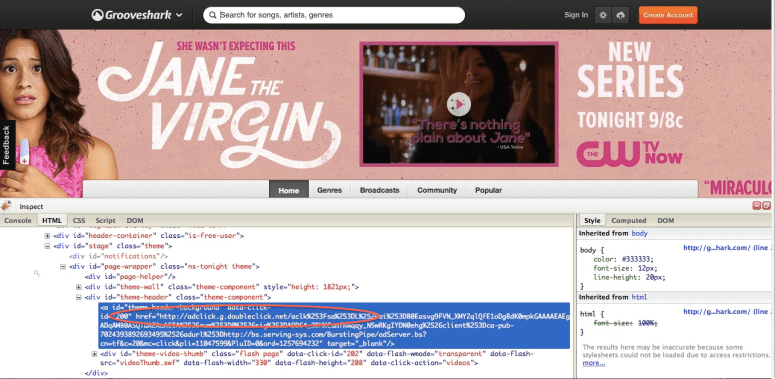
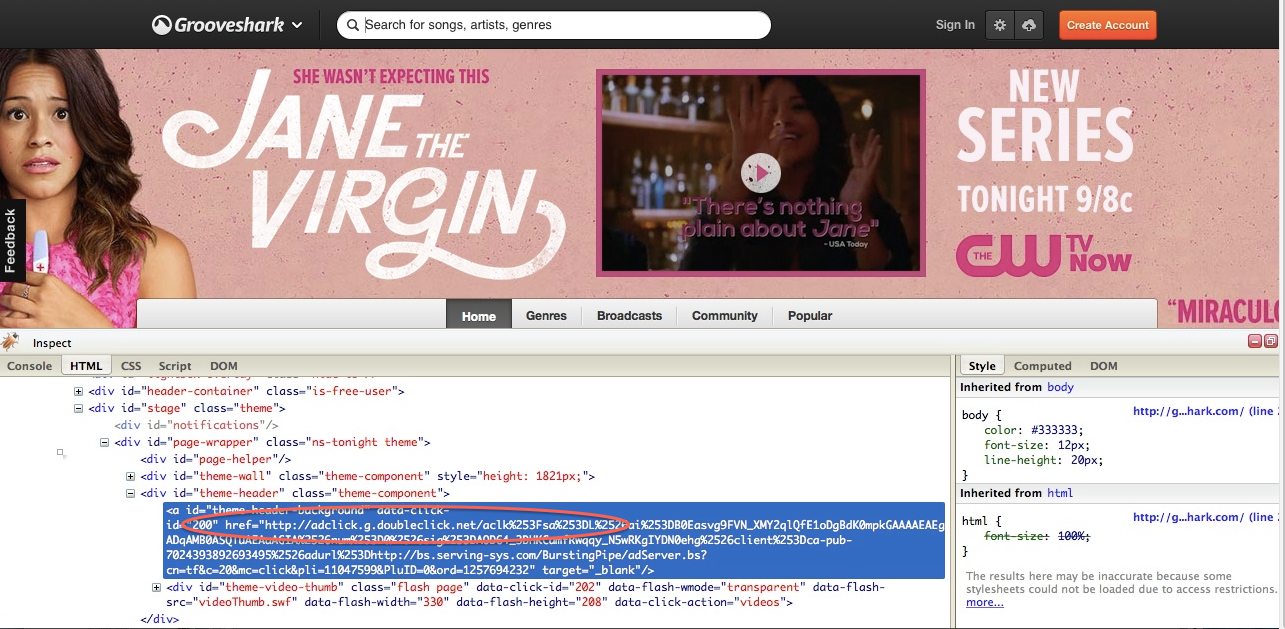
Is Google still serving ads on illegal sites?

I searched a website during my panel at Columbia Law School. It’s a website that is well known for infringing content. I also captured the source code. There is code on this website that shows this site is expecting advertising from parts of Google’s Advertising ecosystem. I have reason to believe this site and advertising code will shortly disappear. II post these screenshots here to preserve the evidence.


Dilandau.eu  (redirectes to dilandua.la)  by Google’s own DMCA Transparency Report ranks this site as #3 in the number of takedown notices received.

IMG_8212.PNG


Here is website.


IMG_8211.PNG


“served” source code clearly showing the website is expecting “ads by google” to be served into this page.  It also displays some sort of publisher ID which would presumably identify this website to the Google Ad servers.


IMG_8208.PNG


A second block of code farther down the page which also seems to be waiting for google ads to be served.  Again note the publisher ID.


IMG_8210.PNG


IMG_8208-0.PNG


Why Spotify is not Netflix (But Maybe It Should Be)

From the “Let’s start talking solutions” file. If Spotify wants to have a conversation with musicians, this may be a starting point for an honest partnership. Let’s see more flexibility in the model.

The Trichordist

If we are to explore the digital marketplace for both streaming and transactional downloads the music business might do well to look at what the film business is actually doing in the same space. We will quickly see that Spotify is not Netflix, but maybe it should be.

Readers will note the film business has not bought into the faulty logic that the only way to combat internet piracy is to make every film ever made, available instantly, on an all you can eat service for $9.99 a month. Some might argue that is what Netflix is, but people making that argument are obviously not current subscribers!

One thing that has struck us in the comparisons between Spotify and Netflix is that Netflix does not have every film, or even every current film, or even a large percentage of popular films. For the vast inventory that Netflix has, you also…

View original post 905 more words

We Got Trouble My Friends, Right Here in Music City: The Spotify Meltdown Tour Continues

Music Technology Policy

I think we’re being run by maniacs for maniacal ends.

John Lennon

The Spotify “artist relations” team continued their swing West last night with a stop in Nashville at City Winery where a songwriter can grab a burger and a glass of red for a mere 350,000 plays–including tip!  And don’t forget to take home a bottle of Tres Amigos, a disruptive little house blend of malbec, bonarda and cab for a modestly priced 400,000 plays.

Now here’s the problem–the Featured Artist Coalition spent a good deal of time putting together these meetings with the best of intentions.  Although I was not present (I live in a flyover state, and you know how that can be), it appears to me that Spotify seems to think that these three events in New York, Nashville and Los Angeles are opportunities to sell their company by repeating their talking points as opposed to…

View original post 833 more words

Meltdown at the Soho House: Spotify’s Artist Charm Offensive Tour Self-Destructs on Opening Night

Uh oh…

Music Technology Policy

Spotify is conducting a artist relations charm offensive in New York, Nashville and Los Angeles.  (This is a time to be thankful I live in a flyover state–they won’t be coming to Austin!)

The idea was there would be a meeting at the toney Soho House in New York, a membership only location that costs more to join than most artists make in a year or two.  Of course, Spotify no doubt has a corporate membership for impressing…business people.  Right.  Business people.

What Spotify wasn’t expecting was a bunch of feisty artists who were not on the payroll who came expecting actual answers and not shillery.

Here are three of the many issues that Spotify were confronted with:

1.  “The Per-Stream Royalty Will Never Increase“:  There was a big dustup over royalty rates that boils down to why should artists take it in the shorts while Spotify executives…

View original post 332 more words

#irespectmusic says There You Go Again: Pandora’s Spinmeister Hiding the Truth

Unbelievable. After the stunning Smackdown to Sirius last week on Pre-72 recordings, Pandora chooses to double down on it’s own bad behavior.

Music Technology Policy

AVOID EXCUSES LIKE THE PLAGUE.

Reef Points

The Wall Street Journal reports Pandora’s side of Pandora’s latest artist relations debacle:

Pandora is confident in its legal position, said Pandora’s public affairs director, Dave Grimaldi, and is open to supporting federal legislation that would require all music services to pay performance royalties on pre-1972 sound recordings.

Here’s the ambiguity:  “…federal legislation that would require all music services to pay performance royalties on pre-1972 sound recordings…”  This depends on what the mean of “all” is.

First of all, Pandora doesn’t get to decide when they get to follow the law.  If this is Pandora’s best argument for stiffing legacy artists, then why are they paying royalties to anyone at all?

The law only requires digital music services to pay performances for sound recordings, not allmusic services.  So what is the deeply experienced Washington lobby boy Grimaldi actually saying?  Pandora wants to…

View original post 589 more words

Goliath Never Learns: Breaking: Sirius Appeals and Turtles Sue Pandora on Pre-72

Music Technology Policy

A quick note to point out that as we predicted, Sirius has announced they are appealing the ruling against them in the Turtles case–which may not put off the damages phase of the trial.  This was to be expected.

In even better news, The Turtles are now pursuing Pandora on the band’s pre72 recordings.   Eriq Gardner at the Hollywood reporter has the story:

Represented by Harvey Geller and Henry Gradstein at Gradstein & Marzano, the duo filed a proposed class action lawsuit on Thursday.

“Pandora understands that having a vast range and array of music is critical to the success of any music service which is why pre-1972 recordings constitute a significant part of the Music Service,” says the lawsuit. “Pandora offers and advertises stations dedicated to pre-1972 recordings, such as ’50s Rock n’ Roll,’ ’60s Oldies,’ ‘Motown,’ ‘Doo-Wop, ’70s Folk,’ ‘Early Jazz,’ ‘Standards,’ ‘Classic Soul,’ ‘Jam Bands,’…

View original post 77 more words