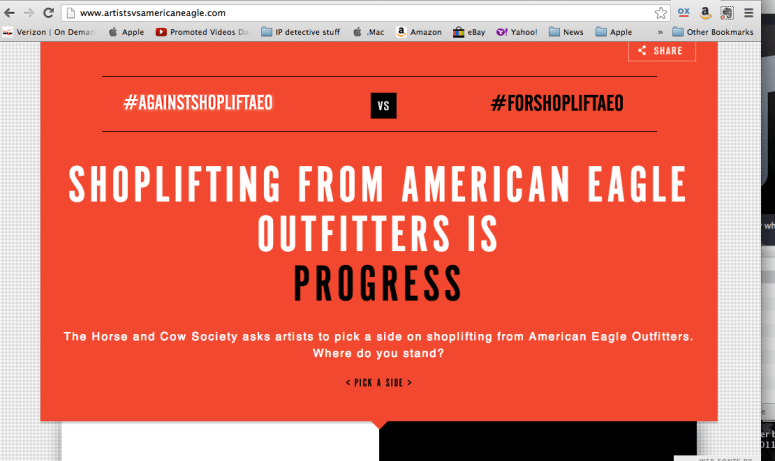
Madison Avenue Firm TWBA Chiat Day Runs Pro-Piracy Billboards In Times Square. Is this Payback For Calling Them Out on Ad Supported Piracy?

As we have detailed here many many times on The Trichordist,  the advertising industry profits by selling advertising to pirate sites like www.webgalu.com.   But we were  mightily surprised to see advertising firm  TBWA Chiat Day,  apparently doubling down and actually running billboards in Times Square that say things like “Piracy is Progress”.   I can see why they think it’s “progress” if they profit from this exploitative practice.  Here at The Trichordist we have repeatedly called out companies that TBWA Chiat Day lists as their clients for advertising on these sites–and we know in some cases the complaints went up the flagpole.

That is why we ask:

 Is this some sort of Ad-Agency-Gone-Cowboy payback scheme?  We’re open to other explanations, but the “PIRACY IS PROGRESS” campaign seems to us to be both straight out of Orwell’s 1984 and retaliatory against the many brand sponsored piracy efforts.

Especially since another aspect of this campaign is a highly manipulative and cynical attempt to pit artists against artists.  

Examples of companies that TBWA Chiat Day claims as clients that we spotted also advertising on pirate sites:

bk_mp3boonissan

lyrics007-adele-pepsi

adele-rolling-in-the-deep1

Like A Rock. Digital Music News Reports that Chevrolet Is Sponsoring Grooveshark’s Mobile App.

Paul Resnikoff at Digital Music News is reporting that Chevrolet is sponsoring the new Grooveshark App. We verified this.  For those that don’t know, Grooveshark is NOT a legitimate streaming service.  Like most artists, Grooveshark has my entire catalogue available for streaming despite the fact they do not have permission to use my songs  nor have they ever paid me the proper royalties.

But what is amusing about all of this is that Chevrolet more than any other truck brand has relied on performers to build their brand and their image.  In particular they have relied on Bob Seger.   “Like A Rock”  the Bob Seger track was the Chevy truck theme song for years.

Here is Chevrolet exploiting Bob Seger via Grooveshark.  This was at 12:35 pm EDT  March 21 2013.

chevy grooveshark

like a rock and grooveshark

My Cracker catalogue on Groove shark.  (Oh yeah screw you WestJet).

cracker on grooveshark

My CVB Catalogue on Grooveshark (again screw you WestJet).

cvb on grooveshark

Ad Sponsored Piracy is a land grab by internet BUSINESSES to steal money from musicians, artists, photographers, authors and other creators. It’s about money.

Music Technology Policy

I’ve had enough questions lately about why I started focusing on brand sponsored piracy that I thought it important enough to give credit where it’s due.  It all started with this quotation from Professor Eric Goldman, commenting on the dip in Google’s stock price after the announcement that it had dodged a career-ending indictment for promoting the sale of illegal drugs when the Department of Justice allowed the company’s executives to pay a fine with $500,000,000 of the stockholders money.

The Google drug dealing case was followed by a still-ongoing shareholder lawsuit that named, among others, the entire Google board of directors and certain executives including Larry Page and Sheryl Sandberg.  Yes, that Sheryl Sandberg.

Shareholder Suite

Here’s Professor Goldman’s money quote, so to speak from the New York Times:

“Web companies can be held liable for advertising on their sites that breaks federal criminal law, and Google and…

View original post 344 more words

Band Quiet Company says Internet Has Made Things Worse for Artists “New Boss is Worse Than Old Boss”

A decade into the snake oil and lies of the empowered internet musician the truth bares itself out over and over again. In a recent case study the band Quiet Company said of their promotional experiment with Grooveshark in an interview with Digital Trends,

“I think for years now, as far as back as [Quiet Company] has been together, people have been talking about how different the music industry is and how the Internet has changed everything and how we’re all looking for a new model.”

“After everything, I’m not sure there is a new model. The old model is still the model, it’s just that the Internet made it way worse.”

We’re not surprised in the least as we’ve previously noted how Grooveshark’s infringement based business model could easily be described as “Notice and Shakedown.” Even tech progressive artists such as Zoë Keating have struggled with the service. Zoë could not get her music removed from the site after issuing at least six DMCA notices to Grooveshark.

So it’s strange to us despite there being near universal agreement on just how bad this service is for artists that some people still don’t get it. Of course these always seem to be the same people that defend every other service that rips off musicians and pays them nothing like The Pirate Bay.

One tech blog actually said after the Pirate Bay verdict, “The folks this will hurt the most are those content creators who actually do value The Pirate Bay.” But we doubt that as it’s not like there aren’t tons opportunities for artists to give away their work willing, with consent, should they so chose. What we find most disturbing is why the choice of consent to give away one’s work should be forcefully take from them by companies who are profiting from advertising revenue?

It’s all pretty simple. Artists need to get paid and so many of these so called “new models” seem to be built on the “new model” of not paying artists anything at all, or next to nothing at all. Again, from Digital Trends,

But now the contract is up and not being renewed, because – you guessed it – a monetization strategy couldn’t be found for Grooveshark. “We were the test monkeys,” says Osbon.

Once again we see that The New Boss is Worse Than The Old Boss, indeed. We’re not surprised, we know there’s a lot of money being made on the internet in music distribution, it’s just not being “shared” with musicians. So once again we ask where are all of these self empowered, independent new middle class musicians? The answer is, like most things where the truth is self evident, they just don’t exist.

So Much For Innovation, YouTuber’s Meet The New Boss…

The persistent myth that artists and creators neither want or need partners in the self empowered digital age seems to have hit a wall. The LA Weekly recently reported on a number of high profile YouTube Artists who have found themselves on the bad end of bad deals with YouTube Producers. Get that. Artists have found themselves on the bad end of deals with business people exploiting them.

Ben Vacas, the creator of Braindeadly posted a video on his YouTube channel explaining the situation to his fans and audience,

“I woke up today hoping to make a video, but I went into a call with Machinima this evening and they said that my contract is completely enforceable. I can’t get out of it,” Vacas tells the camera. “They said I am with them for the rest of my life — that I am with them forever.

How could this happen in this digital age when no one should ever need any help or support from anyone else? So many in the tech blogosphere are constantly on the bullhorn bemouning the evils of record labels and movie studios, so the hypocrisy and irony of this new generation of creators falling prey to the same old types of exploitation is telling.

What’s worse is these artists appear to have entered into the types of agreements that the traditional record and film businesses have long since left behind as those industries matured and the rights of artists have been won in long hard fought battles.

As Chris Castle of Music Tech Policy commented in his post, It’s Called A Union, Numbnuts he sadly points out the obvious that the more things change the more they stay the same. Artists and creators are still prey for those seeking opportunistic exploitation of the creative class.

Well kids, welcome to the new boss. There is a reason why talent and craft unions exist and it’s not to “stifle innovation” of filmmakers any more than copyright exists to “stifle innovation” of musicians, artists, photographers, writers, authors, filmmakers and other creators.

But perhaps it is this more recent story that is more revealing. All Things D wrote this in “YouTube’s Show-Me-The-Money Problem“,

“It’s hard, given YouTube’s low [revenue-sharing] numbers and lack of marketing infrastructure to make the unit economics for premium programming work,” says Steve Raymond, who runs Big Frame, a YouTube network/programmer that says it has generated 3.2 billion views.

So let’s do the math on this. YouTube, which is the great white hope of, and often cited embodiment of the independent new digital culture for creators has bred an environment of draconian contracts for individual creators and at the same time it can not generate enough revenue for it’s most successful producers to maintain a sustainable business model.

How is this “innovation and progress”? Answer, it’s not. Of course readers of this blog will be familiar with David Lowery’s insightful and accurate analysis of the music business “Meet The New Boss, Worse Than The Old Boss” and now we can see that the same forces are also shaping the new reality for more artists and creators than just musicians.

For all of the hype, it’s really funny what happens when you actually just look at the math. What’s more funny is when some tech blogs make statements like, “First of all, YouTube revenue is incremental revenue on top of other revenue.” Well apparently they haven’t spoken to Big Frame about that, unless of course they are suggesting that Big Frame’s primary business (and the creators that work for them) should have day jobs to supplement their revenue from YouTube. You know, jobs like selling t-shirts and touring…

It’s about money. It’s about education of musicians and creators that the money is out there, it’s just not being “shared” with musicians.

Music Technology Policy

It’s been a pretty surprising SXSW so far–on the conference side it has become very similar to the Consumer Electronics Show.  Lots of panels about copyright and artist rights, but no artists.  Lots of suits–consultants, lawyers, some consultants who are lawyers, lawyers who are consultants and even journalists who are lawyers.  Lots of organizations on the Google Shill List–but no artists.  And don’t forget–every consultant has a client.  As one of these wanna-be shill listers said, “Sorry for the tirade, but my boss was in the audience.”

To the very great credit of the Recording Academy, today marked the first panel in a week that actually included artists.  Three of them, in fact: Nakia, David Lowery and East Bay Ray along with Daryl Friedman of the Academy.

A few observations–Nakia is of the generation of artists that came up in a post-Napster world.  He mentioned several times that he gave…

View original post 184 more words

The Beautiful People are so misunderstood….!

Music Technology Policy

It’s really important that we protect the rights of really good looking people in this society,”

Attorney Andrew Bridges of Fenwick & West quoted at Beautiful Person Derek Khanna’s SXSW “Fashion Week” Panel

In today’s News of the Beautiful, we find that the  founders of the very beautiful Pirate Bay–who are both beautiful and innovative–have discovered yet another law that must be reformed and “updated”.  Yes, we are of course speaking of the unspeakably out of date European Convention of Human Rights.  We, of course, commend the beauties to take their appeal to only the highest level of appeal for they are obviously Too Beautiful to be judged merely by their peers.  Yes, the Beautiful may only be judged by the European Court of Human Rights–but they unfortunately found that the reach of the running dogs of the MPAA penetrate even unto that august body.

The section…

View original post 764 more words

#SXSW Fart Club : “The Artists’ Copyright Conundrum” Panel has No Artists Rights Representatives!

Remember the CES Fart Club “Pro-Artist Copyright Panel” that didn’t have a single artists rights representitive? Well, here’s the redux unilog at SXSW, “The Artists’ Copyright Conundrum” that also features no artists reps.

Here it is…

Thursday, March 14  : 3:30PM – 4:30PM

The Artists’ Copyright Conundrum

So if you happen to drop by that panel, and when they open for Q&A maybe ask them what artists they represent…

Derek Khanna & Co. Continue Attack on Artists Rights at SXSWi Panel

The recent SXSW Interactive panel titled “Copyright & Disruptive Technologies” was merely another single point of view attack on artists, musicians and creators as artists rights are copyrights. It’s interesting that this panel offered no differing perspective from the view point of the artists and creators whose work is actually being exploited, without permission (or compensation).

On the panel were those who are advocating for “Permissionless Innovation” including Andrew Bridges, partner at Fenwick & West LLP, Ben Huh, CEO of the Cheezburger Network as well as a trio from Yale Law School’s Information Society Project including Wendy Seltzer, Margot Kaminski and Derek Khanna.

Glen Peoples at Billboard reported on the ongoing unilog of the copyleft attack on artists rights. The panel presented the usual anti-artist, anti-creator maximalist talking points which don’t believe in the artists right to grant consent for the exploitation of their work (and in many cases don’t believe in granting the creator compensation as well).

We’ve previously pointed out in some detail that Derek Khanna is wrong while highlighting all of the obvious fallacies and self created myths in his disavowed RSC “memo” on copyright. Now it appears that Derek himself is confused over the who may have even requested the memo. As our reader Jonathan Bailey (@plagiarismtoday) noted,

“Right now, we know who wrote the paper, but not who requested it, what supervision it was under and who, if anyone, approved its publication. This is not an acceptable way to interject a work into the public discourse.”

The persistent use of the meme “permissionless innovation” might just as well be called what they want it to really be, “permission to steal, and profit with immunity.” There is nothing innovative about stealing from or exploiting artists. In fact it’s a very, very old narrative sadly.

Panelist, Ben Huh complained that it might actually cost him money to track down rights holders whose work he is profiting from, how unfair right? Ben says…

“The cost of tracking down the rights owner is a minimum of $300 to $500 [per image]– if you’re successful.

Of course Mr. Huh went on to illustrate his problem in not paying creators in greater detail stating,

I have 23 million images, and I’m one of the smaller [online businesses] out there.

Yeah, what a drag to actually compensate the creators! So in simple math 23 Million multiplied by $500 equals $11.5 trillion dollars. One might determine that perhaps this is not a well thought out business model that requires such vast capital to support it’s inventory, if the cost of that inventory actually requires payment to the creators. Here again we see another internet business supported by advertising that earns revenue on marginal costs, but refuses to pay the creators fair compensation for their labor.

Of course, the site does provide a DMCA link, but we have to wonder how many rights holders are actually using it.

cheezburgeDMCA

What is clear is that the war on artists and creators which is now over a decade old continues to rage on by those who are profiting. Let’s once again be clear that this discussion is about money. It is about mass scale, enterprise level, commercial businesses profiting from the illegal exploitation of works by artists, photographers, musicians, filmmakers, authors and other creators.

Just for fun, we went over to Mr.Huh’s website Cheezeburger dot com to see why he would be so invested in the battle against artists rights. Well, as it turns out the first two items we saw were the products of well known and beloved mainstream creators (you know, the companies the copyleft hates but can’t seem to live without).

In this first screenshot below we see images from Fox Tv’s “King Of The Hill” show. What we also see is that Toyota, one of the already identified 50 Brands Supporting Music Piracy paying the bills to Mr.Huh. Good work if you can get it, being able to monetize content of a major TV network without the pesky need to ask permission or to share in that advertising revenue.

chezburgerKingOfTheHillToyota

And, the second post we noticed were images from the Disney Pictures film “Up.” This time with advertising courtesy of Google and AT&T, also previously identified as two more of the 50 Brands Supporting Music Piracy.

cheezburgerDISNEYUP

And here’s the kicker from the man who doesn’t want to ask permission to monetize creators content for profit… hmmm… hypocrisy much?

http://corp.cheezburger.com/legal/api-terms-of-service/

(d) Pre-Approval Required. The license described in 1.1(a) above is contingent on you submitting all application-related materials that are requested by the Company and the Company subsequently approving your application. The Company may approve or reject your application in its sole discretion. The approval of your application by the Company shall not constitute an endorsement or legal review of your application.

But wait there’s more…

http://corp.cheezburger.com/legal/terms-of-service/

3. General Use of the Websites — Permissions and Restrictions
Cheezburger hereby grants you a revocable, non-transferable, and non-exclusive permission to access and use the Websites as set forth in these Terms of Service, provided that:
A. You agree not to distribute in any medium any part of the Websites, including but not limited to Content and User Submissions (each as defined below), without Cheezburger’s prior written authorization.
B. You agree not to alter or modify any part of the Websites, including but not limited to Cheezburger’s technologies.
C. You agree not to access User Submissions (defined below) or Content through any technology or means other than any as authorized by this Terms of Service or a written agreement between you and Cheezburger.
D. You agree not to use the Websites for any commercial use without the prior written authorization of Cheezburger. Prohibited commercial uses include, but are not limited to, any of the following actions taken without Cheezburger’s express approval:
1. Sale of access to the Websites, Content or services via another website or medium (such as a mobile application);
2. Use of the Websites, Content or services for the purpose of gaining advertising or subscription revenue;
3. The sale of advertising, on the Websites or any third-party website, targeted to the content of specific User Submissions or the Content;
4. Any use of the Websites, Content, User Submissions or services that Cheezburger finds, in its sole discretion, has the effect of competing with or displacing the market for the Websites, Content or User Submissions.

And it continues to go on from there into another set of rights, and restrictions. Wow. Ok then… well, so much for permissionless innovation afterall…

Perfect timing for SXSW!

Music Technology Policy

In case you were wondering what ever happened to the so-called Internet Radio “Fairness Act”, here’s another little taste of what Big Tech has in store for artists–particularly “legacy” artists, meaning artists with strong catalog from the past.  Let’s say from before 1972.

What’s magic about 1972?  That was the year that the US Congress recognized a copyright in sound recordings (February 15, 1972 to be precise).  “Pre-72 masters” as the recordings are known were protected by state law before that.  So it is not that these older recordings are not protected–such as those by Ella Fitzgerald, Count Basie, Bob Wills, Duke Ellington, Louis Armstrong, Buddy Holly, Glenn Miller or Robert Johnson–it’s just that they are not protected by federal law.

True to form, Big Tech and their pals at the National Association of Broadcasters are busily trying to screw artists on pre-72 masters out of public performance royalties on…

View original post 662 more words