@RonanFarrow and @AndrewMarantz: Sam Altman May Control Our Future—Can He Be Trusted?

Ronan Farrow and Andrew Marantz investigate Sam Altman’s leadership of OpenAI, based on internal documents and more than 100 interviews. They center on a core tension: Altman has positioned himself as a steward of humanity’s most powerful technology, yet many colleagues and insiders question whether he can be trusted with that responsibility. Internal memos compiled by senior figures—including chief scientist Ilya Sutskever—allege a pattern of misleading statements and evasiveness, particularly around AI safety and governance.  Shocking, ain’t it?

The piece traces OpenAI’s evolution from a nonprofit founded to prioritize safety over profit into a commercially driven company pursuing massive scale and valuation. Along the way, Altman is portrayed as highly ambitious, politically savvy, and willing to push boundaries—sometimes at the expense of transparency or institutional safeguards. 

It also situates these concerns within the broader stakes of artificial general intelligence: if such systems emerge, the individuals controlling them could wield unprecedented global power. The article ultimately raises an unresolved question—whether the rapid centralization of technological authority in a single leader and company is compatible with the level of trust and accountability that such power demands.

Read it on the New Yorker.

Inside Royalty Audits with Keith Bernstein: Lessons from Chris Castle’s Music Contracts & AI Class at UT Law

Let’s face it: Audit rights are only as good as your auditor.

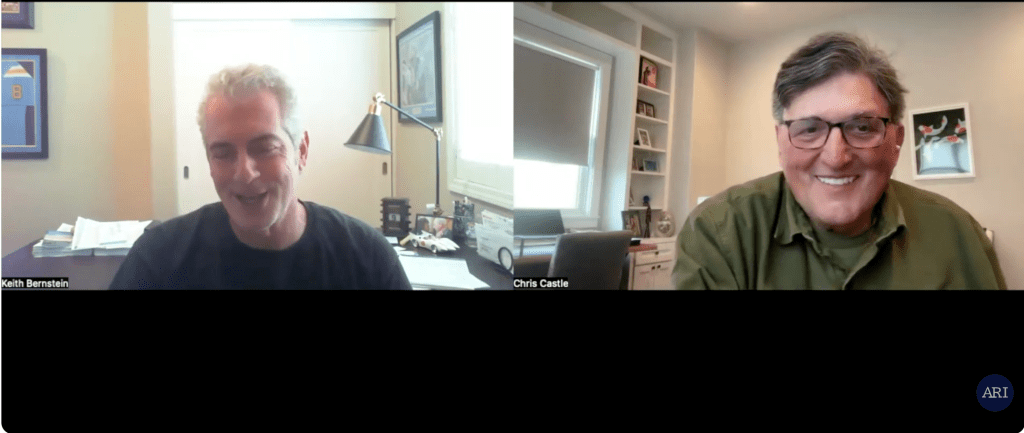
In this ARI Artist Financial Education session—recorded for Chris Castle’s music business and AI class at the University of Texas School of Law—we got a gem. Keith Bernstein, one of the top royalty auditors in the music business, joins Chris for a practical discussion of DSP and royalty audits. As the force behind Royalty Review Council and Crunch Digital, and its proprietary clearance tool Tempo, Keith has spent decades uncovering how royalties are reported, misreported, and contested.

Keith walks us through how audits actually work, contract limitations on audit rights, where discrepancies tend to surface, and why leverage often matters more than contract language. After decades in the field, Keith has seen where the money goes and where it doesn’t. This conversation cuts through the theory and gets into how audits really work, where the gaps are, and why audit rights only matter if you can enforce them.

Watch the video https://www.youtube.com/watch?v=cirxW12BS2k

Background reading: Donald S. Passman, All You Need to Know About the Music Business 11th Edition, 54–55, 70, 313, 408.

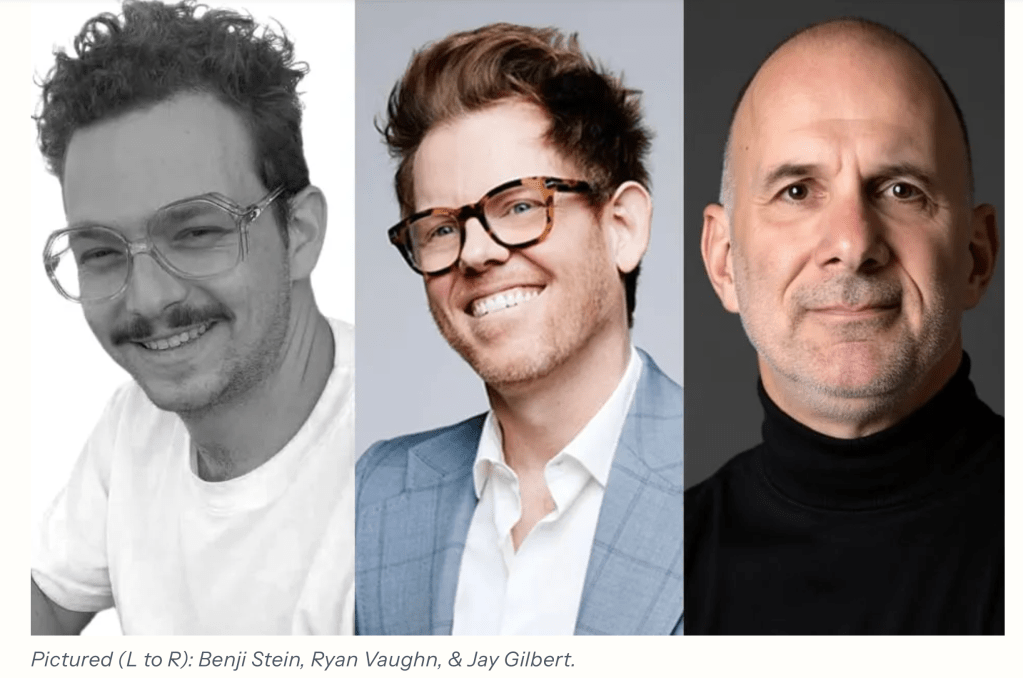
@hypebot: Jay Gilbert, Ryan Vaughn, & Benji Stein Share Expert Tips for Artist Growth in 2026

Check out a great discussion from our friends at Hypebot: The latest panel from MusicPro ’26 offers a useful snapshot of where “artist growth” advice stands heading into 2026—and where it may still be missing the mark.

In this Hypebot discussion, Jay Gilbert, Ryan Vaughn, and Benji Stein walk through the evolving toolkit for independent artists: data, audience development, and the growing skepticism around social media metrics. The throughline is clear—streams and followers don’t build careers; real fans do. The panel repeatedly returns to the importance of identifying and nurturing “actionable” fans over vanity metrics. 

But the more interesting takeaway may be what sits beneath that advice. As platforms flood artists with data, the real advantage increasingly lies in owning the relationship through email lists, direct engagement, and signals that actually convert into tickets, merch, and sustained attention. (And in our experience, owning the relationship is the one thing Spotify doesn’t want you to do.)

The result is a subtle but important shift: away from platform-defined success, and toward artist-controlled audience infrastructure.

The question, of course, is whether the current system actually rewards that shift—or quietly undermines it.

Read the post on Hypebot

Synthetic Emotion from The Music Department: Suno’s Unsettling Ad Campaign and the Return of Orwell’s Machine-Made Culture from 1984

In George Orwell’s 1984, the “versificator” was a machine designed to produce poetry, songs, and sentimental verse synthetically, without human thought or feeling. Its purpose was not artistic expression but industrial-scale cultural production—filling the air with endless, disposable content to occupy attention and shape perception. Nearly a century later, the comparison to modern generative music systems such as Suno is difficult to ignore. While the technologies differ dramatically, the underlying question is strikingly similar: what happens when music is produced by machines at scale rather than by human experience?

Orwell’s versificator was built for scale, not meaning (reminding you of anyone?). It generated formulaic songs for the masses, optimized for emotional familiarity rather than originality. Suno, by contrast, uses sophisticated machine learning trained on vast corpora of human-created music to generate complete recordings on demand that would be the envy of Big Brother’s Music Department. Suno can reportedly generate millions of tracks per day, a level of output impossible in any human-centered musical economy. When music becomes infinitely reproducible, the limiting factor shifts from creation to distribution and attention—precisely the dynamic Orwell imagined.

Nothing captures the versificator analogy more vividly than Suno’s own dystopian-style “first kiss” advertisingcampaign. In one widely circulated spot, the product is promoted through a stylized, synthetic emotional narrative that emphasizes instant, machine-generated musical cliche creation untethered from human musicians, vocalists, or composers. The message is not about artistic struggle, collaboration, or lived expression—it is about mediocre frictionless production. The ad unintentionally echoes Orwell’s warning: when culture can be manufactured instantly, expression becomes simulation. And on top of it, those ads are just downright creepy.

The versificator also blurred authorship. In 1984, no individual poet existed behind the machine’s output; creativity was subsumed into a system. Suno raises a comparable question. If a system trained on thousands or millions of human performances produces a new track, where does authorship reside? With the user who typed a prompt? With the engineers who built the model? With the countless musicians whose expressive choices shaped the training data? Or nowhere at all? This diffusion of authorship challenges long-standing cultural and legal assumptions about what it means to “create” music.

Another parallel lies in standardization. The versificator produced content that was emotionally predictable—pleasant, familiar, subservient and safe. Generative music systems often display a similar gravitational pull toward stylistic averages embedded in their training data that has been averaged into pablum. The result can be competent, even polished output that nevertheless lacks the unpredictability, risk, and individual voice associated with human artistry. Orwell’s concern was not that machine-generated culture would be bad, but that it would be flattened—replacing lived expression with algorithmic imitation. Substitutional, not substantial.

There is also a structural similarity in scale and economics. The versificator’s value to The Party lay in its ability to replace human labor in cultural production and to force the creation of projects that humans would find too creepy. Suno and similar systems raise analogous questions for modern musicians, particularly session players and composers whose work historically formed the backbone of recorded music. When a single system can generate instrumental tracks, arrangements, and stylistic variations instantly, the economic pressure on human contributors becomes obvious. Orwell imagined machines replacing poets; today the substitution pressure may fall first on instrumental performance, arrangement, sound designer, and production roles.

Yet the comparison has limits, and those limits matter. The versificator was a tool of centralized control in a dystopian state, designed to narrow human thought. Suno operates in a pluralistic technological environment where many artists themselves experiment with AI as a creative instrument. Unlike Orwell’s machine, generative music systems can be used collaboratively, interactively, and sometimes in ways that expand rather than suppress creative exploration. The technology is not inherently dystopian; its impact depends on how institutions, markets, and creators choose to shape it.

A deeper difference lies in intention. Orwell’s versificator was never meant to create art; it was meant to simulate it. Modern generative music systems are often framed as tools that can assist, augment, or inspire human creativity. Some artists use AI to prototype ideas, explore unfamiliar styles, or generate textures that would be difficult to produce otherwise. In these contexts, the machine functions less like a replacement and more like a new instrument—one whose cultural role is still evolving.

Still, Orwell’s versificator is highly relevant to understanding Suno’s corporate direction. When cultural production becomes industrialized, quantity can overwhelm meaning. The risk is not merely that machine-generated music exists, but that its scale reshapes attention, value, and recognition. If millions of synthetic tracks flood listening environments as is happening with some large DSPs, the signal of individual human expression may become harder to perceive—even if human creativity continues to exist beneath the surface.

The comparison between Suno and the versificator symbolizes the moment when technology challenges the boundaries of authorship, creativity, and cultural labor. Orwell warned of a world where machines produced endless culture without human voice. Today’s question is subtler: can society integrate generative systems in ways that preserve the distinctiveness of human expression rather than dissolving it into algorithmic slop?

The answer will not come from technology alone. It will depend on choices—legal, cultural, and economic—about how machine-generated music is labeled, valued, and integrated into the broader creative ecosystem. Orwell imagined a future where the machine replaced the poet. The task now is to ensure that, even in an age of generative AI, the humans remains audible.

Don’t Sell What You Don’t Have: Why AB 1349’s Crackdown on Speculative Event Tickets Matters to Touring Artists and Fans

Update: AB 1349 passed the California Assembly, on to the Senate.

I rely on ticket revenue to pay my band and crew, and I depend on trust—between me and my fans—for my career to work at all. That’s why I support California’s AB 1349. At its core, this bill confronts one of the most corrosive practices in touring: speculative ticketing.

Speculative ticketing isn’t normal resale. It’s when sellers list tickets they don’t actually own and may never acquire. These listings often appear at inflated prices on reseller markets before tickets even go on sale, with no guarantee the seller can deliver the seat. In other words, it’s selling a promise, not a ticket. Fans may think they bought a ticket, but what they’ve really bought is a gamble that the reseller can later obtain the seat—usually at a lower price—and flip it to them while the reseller marketplace looks the other way.

Here’s how it works in practice. A reseller posts a listing, sometimes even a specific section, row, and seat, before they possess anything. The marketplace presents that listing like real inventory: seat maps, countdown timers, “only a few left” banners. That creates artificial scarcity before a single legitimate ticket has even been sold. Once tickets go on sale, the reseller tries to “cover” the sale—buying tickets during the onsale (often using bots or multiple accounts), buying from other resellers who did secure inventory, or substituting some “comparable” seat if the promised one doesn’t exist at an arbitrage price. If they can source lower than what they sold to the fan, they pocket the difference.

When that gamble fails, the risk gets dumped on the fan. Prices jump. Inventory really sells out. The reseller can’t deliver. What follows is a last-minute cancellation, a refund that arrives too late to help, a downgrade to worse seats, or a customer-service maze between the seller and the platform. Fans blame artists even if the artists had nothing to do with the arbitrage. I’ve seen fans get priced out because listings appeared online that had nothing to do with the actual onsale.   The reseller and the marketplace profit themselves while the fan, artist and venue suffer.

AB 1349 draws a bright-line rule that should have existed years ago: if you don’t actually have the ticket—or a contractual right to sell it—you can’t list it. That single principle collapses the speculative model. You can’t post phantom seats or inflate prices using imaginary inventory. It doesn’t ban resale. It doesn’t cap prices. It does stop a major source of fraud.

The bill also tackles the deception that makes speculative ticketing profitable. Fake “sold out” claims, copycat websites that look like official artist or venue pages, and listings that bury or hide face value all push fans into rushed, fear-based decisions. AB 1349 requires transparency about whether a ticket is a resale, what the original face price was, and what seat is actually being offered. That information lets fans make rational choices—and it reduces the backlash that inevitably lands on performers and venues when fans feel tricked.

Bots and circumvention tools are another part of the speculative pipeline. Artists and venues spend time and money designing fair onsales, presales for fan clubs, and purchase limits meant to spread tickets across real people. Automated systems that evade those limits defeat the entire purpose, feeding inventory into speculative listings within seconds. AB 1349 doesn’t outlaw resale; it targets the deliberate technological abuse that turns live music into a high-speed extraction game.

I also support the bill’s enforcement structure. This isn’t about turning fans into litigants or flooding courts. It’s about giving public enforcers real tools to police a market that has repeatedly shown it won’t self-regulate.

AB 1349 won’t fix everything overnight. But by stopping people from selling what they don’t have, it moves ticketing back toward a system built on possession, truth, and accountability. If every state prohibited speculative ticketing, it would largely disappear because resale would finally be backed by real inventory. For fans who just want to see the music they love—that’s not radical. It’s essential.

[This post first appeared on Hypebot]

Victory in the Vetter v. Resnik Lawsuit: Artist Rights, Songwriter Advocacy, and the Power of Termination

At the center of Vetter v. Resnik are songwriters reclaiming what Congress promised them in a detailed and lengthy legislative negotiation over the 1976 revision to the Copyright Act—a meaningful second chance to terminate what the courts call “unremunerative transfers,” aka crappy deals. That principle comes into sharp focus through Cyril Vetter, whose perseverance brought this case to the Fifth Circuit, and Cyril’s attorney Tim Kappel, whose decades-long advocacy for songwriter rights helped frame the issues not as abstractions, but as lived realities.

Cyril won his case against his publisher at trial in a landmark judicial ruling by Chief Judge Shelly Dick. His publisher appealed Judge Dick’s ruling to the Fifth Circuit. As readers will remember, oral arguments in the case were earlier this year. A bunch of songwriter and author groups including the Artist Rights Institute filed “friend of the court” briefs in the case in favor of Cyril.

In a unanimous opinion, the United States Court of Appeals for the Fifth Circuit affirmed Judge Shelly Dick’s carefully reasoned trial-court ruling, holding that when an author terminates a worldwide grant, the recapture also worldwide. It is not artificially limited to U.S. territory only, which had been the industry practice. The court understood that anything less would hollow out Congress’s intent.

It is often said that the whole point of the termination law is to give authors (including songwriters) a “second bite at the apple”. Which is why the Artist Rights Institute wrote (and was quoted by the 5th Circuit) that limiting the reversion to US rights only is a “second bite at half the apple” which was the opposite of Congressional intent.

25-30108-2026-01-12Download


What made this 5th Circuit decision especially meaningful for the creative community is that the Fifth Circuit did not reach it in a vacuum. Writing for the panel, Judge Carl Stewart expressly quoted the Artist Rights Institute amicus brief, observing:

“Denying terminating authors the full return of a worldwide grant leaves them with only half of the apple—the opposite of congressional intent.”

That sentence—simple, vivid, and unmistakably human—captured what this case has always been about.

ARI.Amicus.Vetter.Final RDownload


The Artist Rights Institute’s amicus brief did not appear overnight. It grew out of a longstanding relationship between songwriter advocate Tim Kappel and Chris Castle, a collaboration shaped over many years by shared concern for how statutory rights actually function—or fail to function—for creators in the real world.

When the Vetter appeal crystallized the stakes, that history mattered. It allowed ARI to move quickly, confidently, and with credibility—translating dense statutory language into a narrative to help courts understand that termination rights are supposed to restore leverage, not preserve a publisher’s foreign control veto through technicalities.

Crucially, the brief was inspired and strengthened by the voices of songwriter advocates and heirs, including Abby North (heir of composer Alex North), Blake Morgan (godson of songwriter Lesley Gore), and Angela Rose White (heir of legendary music director David Rose) and of course David Lowery and Nikki Rowling. The involvement of these heirs ensured the court understood context—termination is not merely about renegotiating deals for living authors. It is often about families, estates, and heirs—people for whom Congress explicitly preserved termination rights as a matter of intergenerational fairness.

The Fifth Circuit’s opinion reflects that understanding. By rejecting a cramped territorial reading of termination, the court avoided a result that would have undermined heirs’ rights just as surely as authors’ rights.

Vetter v. Resnik represents a rare and welcome alignment: an author willing to press his statutory rights all the way, advocates who understood the lived experience behind those rights, a district judge who took Congress at its word, and an appellate court willing to say plainly that “half of the apple” is not enough.

For the Artist Rights Institute, it was an honor to participate—to stand alongside Cyril Vetter, Tim Kappel, and the community of songwriter advocates and heirs whose experiences shaped a brief that helped the court see the full picture.

And for artists, songwriters, and their families, the decision stands as a reminder that termination rights mean what Congress said they mean—a real chance to reclaim ownership, not an illusion bounded by geography.

@ArtistRights Institute Newsletter 01/05/26: Grok Can’t Control Itself, CRB V Starts, Data Center Rebellion, Sarah Wynn-Williams Senate Testimony, Copyright Review

Artist Rights Institute logo - Artist Rights Weekly newsletter

Phonorecords V Commencement Notice: Government setting song mechanical royalty rates

The Copyright Royalty Judges announce the commencement of a proceeding to determine reasonable rates and terms for making and distributing phonorecords for the period beginning January 1, 2028, and ending December 31, 2032. Parties wishing to participate in the rate determination proceeding must file their Petition to Participate and the accompanying $150 filing fee no later than 11:59 p.m. eastern time on January 30, 2026. Deets here.

US Mechanical Rate Increase

Songwriters Will Get Paid More for Streaming Royalties Starting Today (Erinn Callahan/AmericanSongwriter)

CRB Sets 2026 Mechanical Rate at 13.1¢ (Chris Castle/MusicTechPolicy)

Spotify’s Hack by Anna’s Archive

No news. Biggest music hack in history still stolen.

MLC Redesignation

The MMA’s Unconstitutional Unclaimed Property Preemption: How Congress Handed Protections to Privatize Escheatment (Chris Castle/MusicTechPolicy)

Under the Radar: Data Center Grass Roots Rebellion

Data Center Rebellion (Chris Castle/MusicTechSolutions)

The Data Center Rebellion is Here and It’s Reshaping the Political Landscape (Washington Post)

Residents protest high-voltage power lines that could skirt Dinosaur Valley State Park (ALEJANDRA MARTINEZ AND PAUL COBLER/Texas Tribune)

US Communities Halt $64B Data Center Expansions Amid Backlash (Lucas Greene/WebProNews)

Big Tech’s fast-expanding plans for data centers are running into stiff community opposition (Marc Levy/Associated Press)

Data center ‘gold rush’ pits local officials’ hunt for new revenue against residents’ concerns (Alander Rocha/Georgia Record)

AI Policy

Meet the New AI Boss, Worse Than the Old Internet Boss (Chris Castle/MusicTechPolicy)

Deloitte’s AI Nightmare: Top Global Firm Caught Using AI-Fabricated Sources to Support its Policy Recommendations (Hugh Stephens/Hugh Stephens Blog)

Grok Can’t Stop AI Exploitation of Women

Facebook/Meta Whistleblower Testifies at US Senate

Copyright Case 2025 Review

Year in Review: The U.S. Copyright Office (George Thuronyi/Library of Congress)

Copyright Cases: 2025 Year in Review (Rachel Kim/Copyright Alliance)

AI copyright battles enter pivotal year as US courts weigh fair use (Blake Brittain/Reuters)

What Don Draper Knew That AI Forgot: Authorship, Ownership, and Advertising

David is pointing to a quiet but serious problem hiding behind the rush to use generative AI in advertising, film, and television: copyright law protects authorship, not outputs. AI muddies or even erases authorship altogether in some cases

Under current U.S. Copyright Office guidance, works generated primarily by AI are often not registrable in the Copyright Office because they lack a human author exercising creative control. That means a brand that relies on AI to generate a commercial may not actually own exclusive rights in the finished work. If someone copies, remixes, or repurposes that ad, even in a way that damages the brand, the company may have little or no legal recourse under copyright law.

The Copyright Office guidance says:

In the Office’s view, it is well-established that copyright can protect only material that is the product of human creativity. Most fundamentally, the term “author,” which is used in both the Constitution and the Copyright Act, excludes non-humans. The Office’s registration policies and regulations reflect statutory and judicial guidance on this issue….If a work’s traditional elements of authorship were produced by a machine, the work lacks human authorship and the Office will not register it For example, when an AI technology receives solely a prompt from a human and produces complex written, visual, or musical works in response, the “traditional elements of authorship” are determined and executed by the technology—not the human user

David has not identified a theoretical risk. Copyright is the backbone of brand control in media. It’s what allows companies to stop misuse, dilution, parody-turned-weapon, or hostile appropriation. In the US, a copyright registration is required to protect those rights. Remove that protection, and brands are left relying on weaker tools like trademark or unfair competition law, which are narrower, slower, and often ill-suited to digital remix culture.

David’s warning extends beyond ads. Film and TV studios experimenting with AI-generated scripts, scenes, music, or visuals may be undermining their own ability to control, license, or defend those works. In trying to save money upfront, they may be giving up the legal leverage that protects their brand, reputation, and long-term value.