Guest Post By Alan Graham
Since I wrote my last piece on deciphering the importance of blockchain without the hype, the hype machine has actually kicked it up several notches. I feel it has gotten so ridiculously far out of hand it is time to bring some additional context to the discussion and take it down a peg, because the overabundance of passion is lacking a fair amount of context. And I’m saying this as someone who uses the blockchain daily.
We need to temper our approach to blockchain because frankly, I’ve seen many pie in the sky ideas run up this flagpole lately with the flag being that of Fair Trade Music (this will solve everything!), but not a lot of discussion of what it actually means, how it will function, how to get buy in from every major/minor player and artist and songwriter etc. in the music industry, and then the most important factor of all, convince listeners. We all see the iceberg, and there is still time to turn the ship before it hits, yet I keep seeing people ready to jump in rowboats and proclaim, “we did all we can”.
Blockchain, for all of what it could do, will not solve the underlying issue that all kinds of creators are facing. That issue is societal. It is at the very heart of everything, and no amount of talk about blockchain, improved transparency, or fair trade is going to change what is ultimately broken.
It’s us…we’re broken.
Globally, citizens have decided that the value to access virtually all the music in the world, is worth less than two cups of coffee.
The average price of a Starbucks latte in New York City is about $4. The cup, lid, water, milk, and beans are negligible in comparison to the actual labor itself. We all know we pay a remarkable markup on that cup of coffee, yet we have no qualms about it. In fact, a study in 2012 showed the average American worker (18-34) paid over $1,100 a year on coffee.
Now, you can purchase an album for around 2-3 cups of coffee. For the price of 1-2 cups of coffee, you can pay a monthly subscription fee for music which gives you nearly all the music you could ever want to listen to, instantly at your fingertips.
Unlike coffee, music has incredible lasting value yet something really weird is happening. Even though it is easier and cheaper to buy music than coffee, people are not only buying less music, they believe that the music they are purchasing, or even the streaming subscriptions they are paying for, are still too much money:
According to the study, the top…reasons that consumers gave for not subscribing was that services are too expensive (46%), they can stream music for free elsewhere (42%)…
What. The. Fuck.
In fact, Starbucks global revenue for 2014 outpaced the entire music industries sales by over $1B. Just think about this a second and what it says about our cultural values. If people are willing to spend $1,100 a year on coffee and Starbucks actually generates more revenue than global music sales and subscriptions, how will more transparency, fair trading, and blockchain technologies help artists? Is it the lack of transparency or is it the fact that the money just isn’t there? And it isn’t.
Blockchain solves none of this.
Is Fair Trade Music & Blockchain the Answer?
Who doesn’t like the idea of Fair Trade? Sounds great, but the first thing we need to define is what Fair Trade Music actually means. I’ve seen the term used quite a bit and found numerous definitions as to what it means. The only thing I am 100% sure of is that it means different things depending on who you ask. For some it seems to mean having more control and transparency over the supply chain (à la blockchain). For others it is about educating consumers on where and how to source their music that best remunerates artists. For some it is both. If you go to the website Fair Trade Music.info you’ll find the following:
“Fair Trade Music” is an initiative designed to transform music in much the same way “fair trade” has transformed the value chain for agricultural products such as coffee.
As with coffee, “Fair Trade Music” will provide consumers with the information they need to make “fair” choices in deciding which music providers and services to use in order to access and enjoy music.
Music providers and services that abide by certain criteria, such as fair compensation for music creators and transparency will be certified by an independent fair trade music certification body. They will then be authorized to display a Fair Trade Music certification “seal of approval” on their website, apps, promotional materials, etc..
First of all, citizens don’t want choices. They want convenience. This is the lesson we’ve learned from the age we now live in. We have an overabundance of everything and we are absolutely drowning in choices. Citizens certainly know that buying a song is more financially beneficial to an artist than streaming a song, yet the growth is in subscriptions, not sales, and unfortunately most of those subscriptions are freemium. That is a choice that citizens already made. As it is with rivers and lightning, people will always choose the path of least resistance. Hello YouTube.
Secondly, if you are using coffee as a parallel to the type of movement you want in music, and as someone who had a coffee company and studied the sourcing of fair trade coffee, you need to more carefully examine that comparison. From the fair trade coffee site:
The coffee supply chain is complex as beans pass hands through growers, traders, processors, exporters, roaster, retailers and finally the consumer. Most farmers have little idea of where their coffee goes or what price it ends up selling for. The more lucrative export of green coffee is only an option for farmers if they can form co-operatives, purchase processing equipment and organise export or hire a contractor to carry out these services.
Lack of supply chain transparency. Sounds familiar to the music industry, right? However, the Fair Trade music movement needs to recognize and push the most powerful aspect of what fair trade coffee set out to do. It wasn’t about transparency, feel good labels, or choice. It wasn’t even having complete control (farmers give up a lot control to be fair trade certified). Fair Trade works as a collective (50% of it is owned by the members) to guarantee a minimum price for coffee beans. Working as a collective it gives them that negotiating power.
In a volatile marketplace, without the power to exact that influence, all the feel good badges in the world mean nothing.
In addition to that, part of the money collected by Fair Trade (premium) funds programs for economic, social, and environmental issues.
Through their producer organisations, farmers also receive the additional Fairtrade Premium to invest in business or community improvements and must use at least 25 per cent of it to enhance productivity and quality
Fair Trade is not a bunch of farmers working independently so they have complete control of their farming process, beans, and supply chain. It is a collaborative endeavor for change and stability that works to protect members, but each of them has to give something up. They all have to make sacrifices for the greater good. What I hear from many artists these days is quite the opposite.
In the music industry, traditionally artists are terrible at organizing and working collectively, but excellent when it comes to voicing an opinion about things, the one thing there is no shortage of (admit it, you know it’s true). Many artists in the music business can’t really even be bothered with the “business” part. I get that, it isn’t any fun. This is why there are PROs and other organizations that essentially do the exact same work as Fair Trade coffee on the behalf of artists to help set standards, pricing, collect money, negotiate, and social programs. For example, PRS for Music:
We are a society of songwriters, composers and music publishers. We license organisations to play, perform or make available copyright music on behalf of our members and overseas societies, and distribute the resulting royalties to them fairly and efficiently. We promote and protect the value of copyright. Achieving fair value for copyright music in the face of changing technology and legislation. Forging international alliances to enable cost-effective and transparent copyright administration around the world. Striving to increase distributions to members and improve the service we offer.
We are owned by and accountable to our members. After deducting the costs of running our organisation, all the income we receive from licence fees is distributed back to our members
and
The PRS for Music Members Benevolent Fund offers assistance to songwriters, composers and their dependants, who are suffering financial hardship due to illness, accident or problems associated with old age.
and
Since 2000 PRS for Music Foundation has given more than £14 million to over 4,000 new music initiatives by awarding grants and leading partnership programmes that support music sector development.
- Collaborative Organization? Check
- Working on behalf of member owners? Check
- Working to establish fair value? Check
- Collectively negotiate on behalf of members? Check
- Fund charitable/community projects? Check
- Give a sticker/badge to denote proper use? Check
The language and functions of PRS are actually very much aligned with those of Fair Trade coffee. So, perhaps instead of starting another movement and maligning these types of organizations we should be working to help make them stronger and more efficient. Instead of burning it down, we build it up.
Fair Trade is pointless and powerless if it is just a collection of smart contracts on a blockchain without any muscle. And unless you can get every artist to coordinate, set a guaranteed value for work, and be able to get consumers to pay it, what’s the point?
So let’s break down the argument I’ve made so far.
- Society no longer values paying for music and has instead transferred this value to other areas in their lives.
- Artists today actually have more control, independence, and insight into their industry than ever before, yet are still struggling to make ends meet.
- While costs to create, distribute, acquire music have all dropped, and access to purchasing music is easier than at any point in history, sales continue to drop.
- While streaming as a technology continues to grow in popularity, subscriptions (payment) have lagged behind, with many consumers saying the cost is still too high.
- The average American spends 89% more on coffee each year than music.
- Adjusting for inflation, there is roughly a $35B hole of lost revenue still missing from the peak of the music industry in 1999. We have a long path ahead of us.
- While more transparency and efficiency will help reduce waste within the music industry, that money will likely not reverse the fortunes of the music industry (see coffee supply chain).
- Reducing the obfuscation of the music industry (contracts, deals, negotiations) may reveal additional revenue that should go towards artists, however it means very little if consumer spending continues to drop. 100% more of zero is still zero.
- There is no clear definition of what fair trade for music actually is, how it will organize, collectively bargain, strengthen the global music industry. Negotiating only works if you have the muscle to back it.
- How exactly will Fair Trade Music negotiate and enforce on behalf of rights owners and how will it sustain itself financially?
- There is no evidence to support simply having a fair trade designation will suddenly change public opinion on paying for music, simply because it makes them feel good about their choices. Survey any group of people and they will tell you artists should be paid, but the evidence is contrary.
- Blockchain solves none of this.
There are many solutions for increasing the efficiencies of the music industry, including blockchain. But there is only one solution for changing the fortunes of the music industry. That is getting people to once again value music enough to pay for it. How to do that is a discussion for another time. But I do believe it can be done.
Incorrect Assumptions Lead To Incorrect Solutions
In the 90’s, I was VP of two very early e-commerce companies. We did something unique in that we were two of the very first technology solutions that allowed ordinary people to sell things on the Internet. Yes, there was a time when, unless you were a multi-million dollar company, it was nearly impossible to sell a product online.
We helped change that. However, what we later discovered was a bigger issue so obvious, we had completely missed it. E-commerce was so new (just like blockchain) we were working off of incorrect assumptions, which is the worst way to approach solving any problem with technology.
You see it turned out that having an online store and processing a transaction was the easy part.
Getting people to discover you and convincing them to spend their money was the hard part.
What we hadn’t realized at the time (but soon became apparent), was that it wasn’t enough to solve the problem of transacting, the true challenge, it turned out, was the exact same problem we have with music.
Getting discovered>Getting Paid
You have to get people into your store, and convince them what you have is valuable and have them part with their money. This truth cannot be ignored, as the entire world has struggled with it for thousands of years.
Blockchain doesn’t solve this.
After all is said and done, at the end of the day, the mechanisms of public relations, communications, marketing, promotion, management (essentially running your business), will always be the most important and the most costly components of getting music heard or purchased. If not always in financial costs, in time costs. And what’s your time worth if you’re spending it not creating music or performing it? Simply solving an issue of transparency, while important, means very little if you are simply illuminating there is no money.
In those early days of e-commerce we learned the hard way that being 100% in control of your destiny was only as good as your ability to get customers to hand over their cash, and if we don’t fundamentally solve this issue for the music industry, what good is a fair and open system that no one wants to pay for?
I absolutely agree that having a fair system with great efficiency is paramount, and that it is important to continue to bring these issues to light and to push forward ideas that speak to the value of art and the need to pay for it. But unless we solve that last part…pay for it…we’re only wasting both time and money on what boils down to rhetoric.
In my next piece I’ll break down the technical challenges facing blockchain and the music industry.
Alan Graham is the Co-Founder of OCL

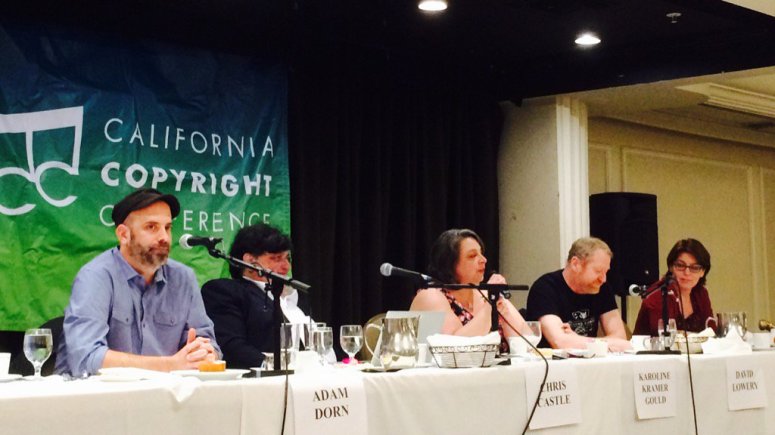 Photo courtesy @amyraasch




You must be logged in to post a comment.