Why The Music Business Continues To Stumble Toward Its Demise | Cognoscenti

Food for thought, for today’s new artists.

Modern capitalism’s shell game means bands aren’t getting the support they need; corporations have found a way to get it instead.

Marx believed capitalism would ultimately fail when the shift to mechanism displaced so many workers there would be no one left with enough money to buy the goods produced. In other words, no buyers, no market, ballgame over. His timing was off. The Industrial Revolution didn’t bring his theory of collapse to fruition, but Internet piracy did, and it’s why the music business as we’ve known it continues to stumble toward its demise.

READ THE FULL POST HERE:
http://cognoscenti.wbur.org/2014/03/21/download-nation-south-by-southwest-john-winters

#SXSW REWIND : Venture Capitalist Admits Artists Can Not Make A Living Streaming

The grand irony here is that the panel which asked the question “”Will Artists Make Money on Big Music Platforms?” not only reported that artists could not, but also suggested that artists needed to focus on selling concert tickets and merchandise. You know, things artists did BEFORE the internet.

We admire the honesty of Hany Nada, Managing Partner GGV Capital who bluntly and glibly admitted during the SXSW Panel “Will Artists Make Money on Big Music Platforms?” that he believed that they would not be able to do so. He also added that he the point of digital streaming platforms such as Pandora, Spotify, and others was promotion to help the artists tour, sell t-shirts and offer other non-digitally distributable “experiences” to fans (why is this sounding more and more like prostitution?).

At least Mr.Nada is honest, which is refreshing given that the man has more integrity than most of the executives at that streaming services who claim the problem of royalties is one of scale and not sustainability. Mr. Nada (ironically named in this context) may be well intentioned and honest but he is also grossly misguided.

Mr. Nada’s statement and philosophy that streaming sites should be viewed by artists as a promotional platform more so than a financial one are an admission of the failure of these unprofitable start ups to serve musicans. As such, let artists decide if there is a value proposition in these companies that benefits the artist and allow them to opt out. Not every album should be on streaming services. Not every artist should be on streaming services. And if streaming is nothing more than promotion with little value proposition, than artists need to rethink their relationships and strategies regarding those businesses.

To be fair, it’s not just Mr.Nada who has promoted this philosophy. It appears that many of the music streaming company executives on panels at SXSW alternate between two talking points. First is that these services will support musicians when they scale (which we can find no evidence of). And second, when pressed on the first point, that streaming platforms offer promotional value for artists to make money in other ways. Oddly, other than “t-shirts and touring” no one seems to have any idea how to translate an artists participation on streaming services into a sustainable revenue stream.

In almost every way streaming companies represent the worst of both the old boss and the new boss.

So here’s the take away, which was put forth by a series of questions from the floor that largely went unanswered.

1) If artists can’t be expected to make a living from streaming music why should streaming executives make a living from streaming businesses at the artists expense? These are essentially, artists subsidized corporations.

2) As artist’s are bringing the audience to the platform, why should the platform profit, but not the artists? Test this theory, No Music = No Business. Done.

3) Artists have been able to sell t-shirts and tour long before the internet and without streaming platforms, but streaming platforms can’t exists without the artists music. Again, No Music = No Business. Done.

4) Given that the streaming music thought leaders believe that the”new revenue model’s” for musicians are “touring and t-shirts” when are the streaming company executives going on tour to sell t-shirts to support their businesses? We find it odd that the executives running companies that are not profitable are giving business advice to musicians.

Sons of Anarchy Creator Kurt Sutter Responds to Google Shill Marvin Ammori, and boy is it good!

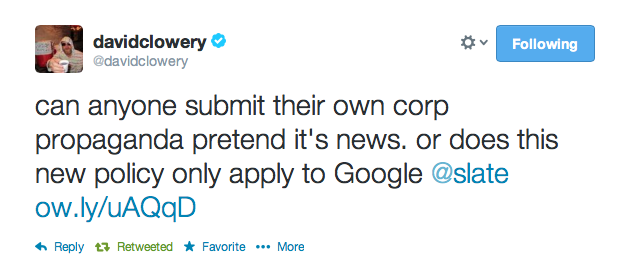
So Google shill Marvin Ammori wrote an Asperger’s ridden anti-copyright, anti-artist tirade on Slate. Of course in doing so Marvin failed to represent his past and current affiliations to Google. Slate, to their credit amended the rant with the following:

Update, March 11, 2014: Disclosure: The author represented Google and other companies fighting SOPA/PIPA in 2011 and 2012. He currently represents Google and other companies on several issues, including copyright reform. These views are his own.

googlepropagandaasnews

Of course, this isn’t the first time that those with a political agenda haven’t disclosed their affiliations. Who can forget Timothy B. Lee’s Epic Fail in the Washington Post on Piracy?

And so, we present the brilliant rebuttal to Google’s disingenuous attack on the rights of individual creators and artists by Kurt Sutter.

Not-So-Zen and the Art of Voluntary Agreements
Google’s anti-copyright stance is just a way to devalue content. That’s bad for artists and bad for consumers. By Kurt Sutter

It’s so absurd that Google is still presenting itself as the lovable geek who’s the friend of the young everyman. Don’t kid yourself, kids: Google is the establishment. It is a multibillion-dollar information portal that makes dough off of every click on its page and every data byte it streams. Do you really think Google gives a shit about free speech or your inalienable right to access unfettered content? Nope. You’re just another revenue resource Google can access to create more traffic and more data streams. Unfortunately, those streams are now pristine, digital ones of our work, which all flow into a huge watershed of semi-dirty cash. If you want to know more about how this works, just Google the word “parasite.” And if you think I’m exaggerating, ask yourself why Google spends tens of millions of dollars each year to hire lawyers and lobbyists (like Marv) whose sole purpose is to erode creative copyright laws.

Do they do this because they hate artists? No. They do it because they love money.

READ THE FULL STORY AT SLATE:
http://www.slate.com/articles/technology/technology/2014/03/sons_of_anarchy_creator_kurt_sutter_google_s_copyright_stance_is_bad_for.html

RELATED:

Google, Advertising, Money and Piracy. A History of Wrongdoing Exposed.|Trichordist

Why Google Really is Evil | Fox Business News

Google and Trichordist to debate piracy profits in London | Music Week

New Adventures in Copyright Enforcement @SXSW #SXSW

Friday, March 14 | 2:00PM – 3:00PM
New Adventures in Copyright Enforcement
Austin Convention Center | Room 17B | 500 E Cesar Chavez St

lthough debates about how to protect copyright online might seem so 2010, they certainly haven’t abated. The current conversations aren’t as contentious as the SOPA skirmishes, but that doesn’t necessarily mean consensus. Current attempts to address piracy are taking place outside of Congress, and include efforts to establish “best practices” between stakeholders. From the recently-minted Copyright Alert System to voluntary agreements meant to curb unauthorized activity within ad networks and payment processors, new experiments in rights protection abound. What’s the thinking behind the various approaches? What does a “win” look like, and what are the parameters for oversight? How can artists get involved?

MMODERATOR
Casey Rae
Interim Exec Dir – Future of Music Coalition

Sherwin Siy
VP, Legal Affairs- Public Knowledge

Jill Lesser
Exec Dir- Center For Copyright Information

David Lowery
Musician/Internet Content Provider – Cracker

UNSOUND @SXSW Meet Filmmaker Mikael (Count) Eldridge #SXSW

Filmmaker, producer and musician Mikael (Count) Eldridge will be speaking at SXSW Monday about new tech, start ups, and the impact on creators.

http://schedule.sxsw.com/2014/events/event_OE02908

Monday, March 10  | 2:00PM – 3:00PM
Austin Convention Center | Next Stage EH 3/4
500 E Cesar Chavez St

From the forthcoming documentary Unsound: Bad Religion guitarist and Epitaph Records founder Brett Gurewitz talks about how large tech corporations make millions of dollars selling advertising- essentially making people the product, without them even realizing. The promise of free or cheap music is often used to draw eyeballs to websites, apps, and social networking platforms, allowing corporations to make large amounts of money from advertising. The public is generally unaware and happy to have free/cheap music, corporations make tons of money from advertising, but how is the musician benefiting from this?

LEARN MORE HERE:
https://www.facebook.com/unsoundthemovie

Unsound uncovers the dramatic collapse of the music industry and its impact on musicians and creators of all kinds trying to survive in the ‘age of free’.

RELATED:

“Zoe Keating on How Big Business Wins…”| UNSOUND Little Cast

Reality for Indie Artists : Zoë Keating’s Annual Music Sales & Streaming Data @SXSW #SXSW

Zoë Keating released her Annual Music Sales & Streaming Data Spreadsheet a little bit ago and we stayed out of the fray, although we did also publish an update of the Music Streaming Price Index for 2014 as well.

This quote from Zoë in a follow up post about her open and transparent sharing of information on Hypebot got our attention.

I want you to know that I don’t release these numbers as a marketing tool. I’ve always tabulated stuff as part of doing my annual accounting and last year I decided to make a portion of them public. Music commentators were saying, over and over, that artists are not making a living selling music, they make all their money touring, etcetera etcetera. I noted that in my case that wasn’t true and never had been. In the commentary I wasn’t seeing a lot of actual numbers from artists and thought I’d offer some details of how it all works for me: a non-labeled artist whose career has existed entirely in the internet-age.

It’s curious to us that someone would insinuate the motivation behind sharing information in an open, human and transparent way was an attempt at self serving marketing. Shame on those who have made such comments. Zoë should be celebrated for doing what the interweb companies claim to do, and ask others to do, but do not do themselves.

We also found the following statement to be true of our experience of the vast number of artists we hear from who report similar experiences with streaming services ranging from Spotify to YouTube. These services only financially serve the very large artists and the very large labels. In other words, Spotify, YouTube and the like have not empowered artists towards financial freedom and very well appear to be achieving the very opposite.

Meanwhile yes, the big money is to be made at the top of the tail…and therein lies the promise of commercial music streaming services. It will be financially valuable to those who make hits and those who aggregate legions of artists. For a single artist like me commercial streaming will never be more than promo. I accept that. But will keep talking about it until streaming companies do more to make that promo more useful (i.e data).

But there appears to be more to this story. In this recently posted video clip by “Unsound” documentary  filmmaker Mikeal Eldridge, Zoë reveals that she has dug a bit deeper into the realities of streaming economics noting that the more streams that are served, the less the artists makes per stream. Again, this is consistent with her observation that “the promise of commercial music streaming services… will be financially valuable to those who make hits and those who aggregate legions of artists.”

We’ve yet to see anyone propose how streaming can actually scale and be sustainable for artists. We love streaming services, what we don’t like are the economics.

92% of Zoë’s recording income is from transactional digital sales. If these streaming businesses are claiming to be the future, the question to ask is whose future?

Downloads Streams Total % Downloads
$75,341 $6,380 $81,721 92%

RELATED:

Music Streaming Math, Can It All Add Up?

Why Spotify is not Netflix (But Maybe It Should Be)

Musicians POV: Spotify Isn’t Good for You – Full Post

On Spotify (and Why I’m not a Conspiracy Theorist After All) | Tape Op

The real reason why the major labels love Spotify | Guardian UK

What ASCAP Members Need to Know About the Songwriter Equity Act and What You Can Do | ASCAP

Songwriters, composers and music publishers earn royalty income through two separate rights: the right to publicly perform their music works, and the right to make reproductions of those works and distribute those reproductions.

However, two outdated portions of the Copyright Act, Section 114(i) and Section 115, prevent songwriters and composers from receiving royalty rates that reflect fair market value for the use of their intellectual property. This has created inequity in the marketplace that harms America’s songwriters, composers and music publishers in the digital age. Now is the time to fix it.

READ THE FULL POST AT ASCAP:
http://www.ascap.com/playback/2014/02/action/songwriter-equity-act.aspx

Beggars said to have contributed more in UK Taxes than Apple, Google, Facebook and Amazon combined. | Telegraph UK

The Government has been “seduced” by technology companies such as Google, and is “cosying up” to them, even though they keep their tax contributions to a minimum, leading music executive Martin Mills has warned.

Mr Mills, who founded Adele’s record label, Beggars Group, claimed his company pays more tax in Britain than Google, Facebook, Apple and Amazon. But he said creative businesses like his receive less support from the Government.

READ THE FULL STORY AT THE TELEGRAPH UK:
http://www.telegraph.co.uk/finance/newsbysector/mediatechnologyandtelecoms/9844225/Government-seduced-by-tech-firms-like-Google.html

Why Streaming Music Isn’t Like Bottled Water… | Digital Music News

Streaming music is just like bottled water, right?  Not all, actually.

1. People happily pay outrageous premiums for bottled water (a glass of tap water costs about $0.001).
Relatively few people actually pay for streaming music.

2.  People are convinced that there’s a difference between bottled water and tap water.
Not enough people feel there’s a difference between ad-based (free) streaming and premium (paid) streaming.

3. Sometimes, tap water tastes funny.
Free streaming always tastes good!  You just have to wait for it a little longer.

4. Bottled water is a proven, $100 billion industry that’s been around for decades.
Streaming music isn’t a profitable industry, hasn’t been around for more than a decade, and remains financially speculative.

READ THE REST OF THE 11 POINT LIST AT DIGITAL MUSIC NEWS:
http://www.digitalmusicnews.com/permalink/2014/02/26/bottledwaterstreaming

Homegrown Music: The Challenges Of Running A Record Label in D.C. | DC Music Download

“I don’t think people understand the idea that music is someone else’s property because it’s just in digital bits,” Feigenbaum says. “It’s intangible. People who feel music has no value and want to steal from you will steal from you. It’s so ubiquitous—it’s so easy”.

“I have people come up to me and tell me how much they love what I do, and I’ll be like, ‘That’s great, where do you buy it?’” notes Feigenbaum. “And you can see they weren’t expecting that and they start to stammer. It’s like, ‘You’re not helping me. You’re not a fan-you’re a leech.’”

“I could go on and on about the things I don’t like about iTunes,” he says, “But they do pay. It’s not my favorite business model, but I get paid from them.” Spotify, however, is another matter.

“They don’t pay shit,” he says. “The only people who make money off of Spotify is Spotify. We were getting thousands of listens on Spotify, which added up to literally one and a quarter pennies. So we opted out.”

READ THE FULL STORY AT DC MUSIC DOWNLOAD:
http://dcmusicdownload.com/2014/02/12/homegrown-music-the-challenges-of-running-a-record-label-in-d-c/