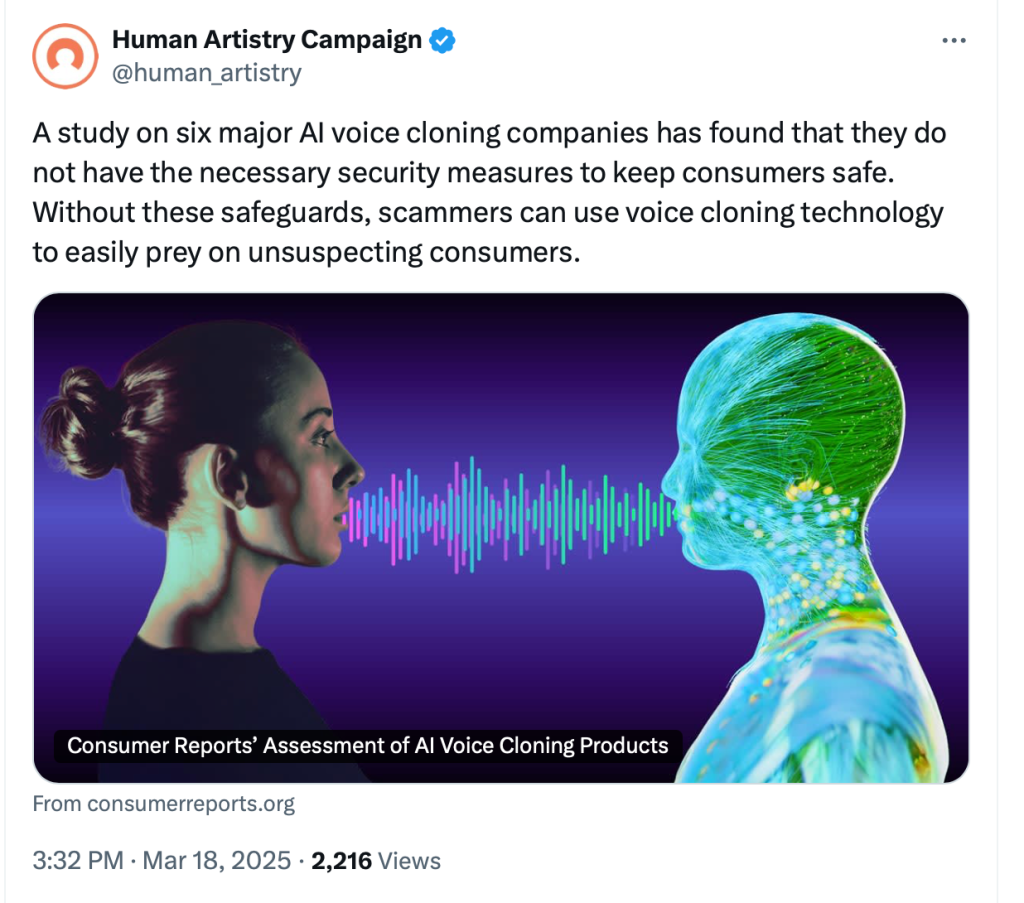
@human_artistry Calls Out AI Voice Cloning

Here’s just one reason why we can’t trust Big Tech for opt out (or really any other security that stops them from doing what they want to do)

@ArtistRights Institute Newsletter 2/17/25

The Artist Rights Institute’s news digest Newsletter

#FreeJImmyLai: Update on Chinese Communist Party Free Speech Enemy No. 1: Jimmy Lai, the Hong Kong publisher of Apple Daily

Why case of jailed Briton Jimmy Lai is major sticking point for [UK Prime Minister] Keir Starmer’s relations with China (Sky News/Alix Culbertson)

American Music Fairness Act

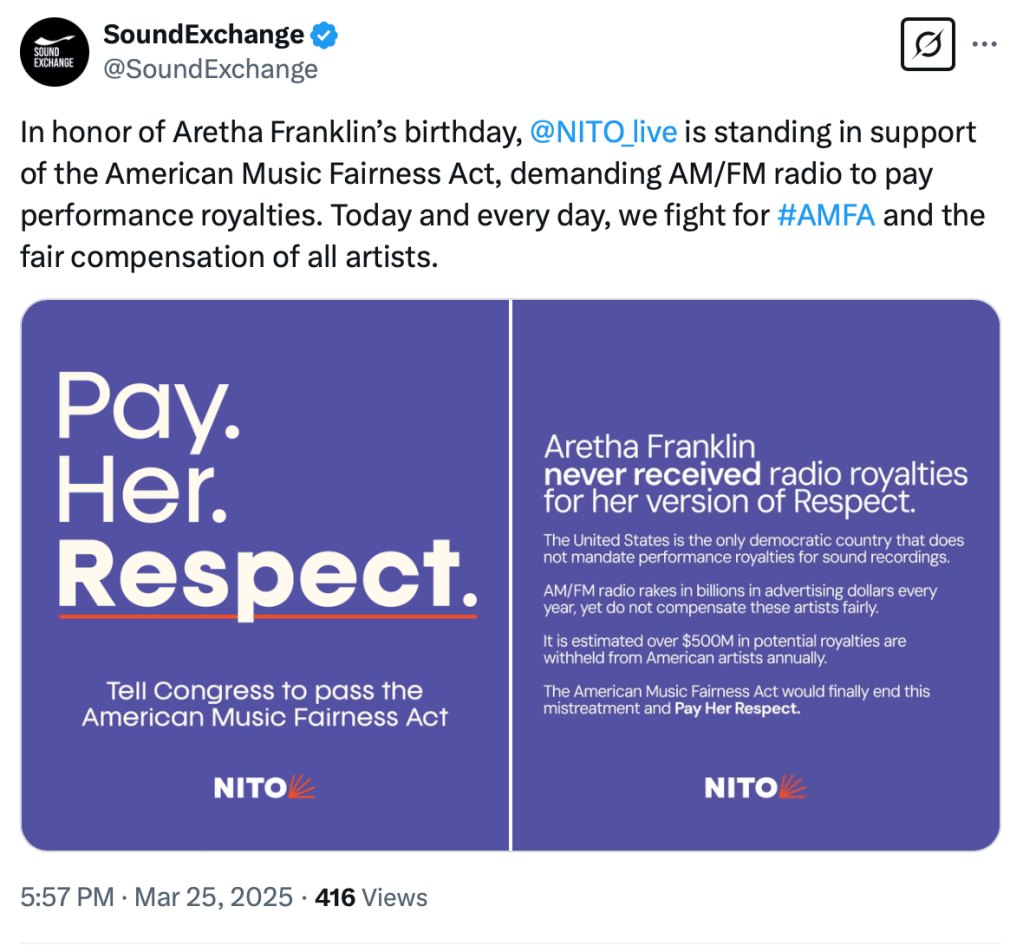
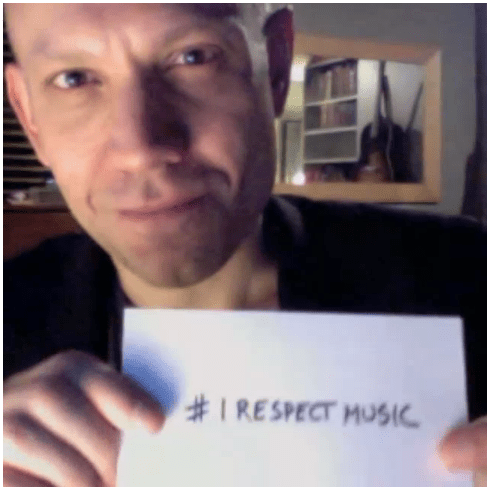
@MARSHABLACKBURN, @REPDARRELLISSA, COLLEAGUES REINTRODUCE AMERICAN MUSIC FAIRNESS ACT TO ENSURE ARTIST PAY FOR RADIO PLAY #IRESPECTMUSIC #AMFA (MusicTechPolicy/Editor Charlie)

Copyright Royalty Board

What Must be Done in CRB 5? (MusicTechSolutions/Chris Castle)

Copyright

The MTP Interview: Attorney Tim Kappel and Abby North Discuss Vetter v. Resnick with Chris Castle

First of Its Kind Decision Finds AI Training Is Not Fair Use (Copyright Alliance/Kevin Madigan)

‘Mass theft’: Thousands of artists call for AI art auction to be cancelled. (The Guardian/Dan Milmo)

Artificial Intelligence in China

Featured Translation:  China’s most humble profession is being squeezed out by Artificial Challenged Intelligence(ChinaAI/Jeffrey Ding)

Great Power Competition in AI

It’s Not Just Technology: What it Means to be a Global Leader in AI (Just Security/Kayla Blomquist and Keegan McBride)

AI, Great Power Competition & National Security (MIT Press/Daedalus/Eric Schmidt)

AI at a Geopolitical Crossroads: The Tension Between Acceleration and Regulation (US Institute for Peace/Andrew Cheatham)

@wordsbykristin: Legal Fights, Transparency & Neutrality: DiMA’s CEO On Improvements Streamers Suggest for the MLC

Kristin Robinson makes another important contribution to the artist rights conversation with her interview of Graham Davies, the new head of the Digital Media Association. Graham comes to DiMA from a background in the artist rights movement at our friends the Ivors Academy in the UK. We have high hopes for Graham who brings his intellect to clean up a long, long line of mediocrity at the DiMA leadership who are from Washington and here to help.

Kristin’s interview highlights DiMA’s recent filings in The Reup–the redesignation of the MLC by the Copyright Office that we’ve highlighted on Trichordist. He also has some well thought out analysis on how the MLC is not HFA, however similar the two may seem in practice.

This is an important interview and you can find it on Billboard (subscription required).

Here’s an example of Graham’s insight:

Do you think a re-designation every five years is not enough on its own?

I think it’ll be interesting to see what the re-designation process brings forward from the Copyright Office. Maybe the Copyright Office leans in on governance and says, “We’ve heard enough, and we can come forward with ideas.” But the re-designation process is a different thing than a governance review, which would bring in a special team to actually dig into governance-related issues and bring forward recommendations and proposals that could then be implemented. It would be something more specific and something the MLC could just do. You wouldn’t need the Copyright Office to sponsor it, though they could if they wanted to.

Press Release: @RandyTravis and @MikeHuppe to Testify on Capitol Hill June 26th on Artist Pay for Radio Play #IRespectMusic

House IP Subcommittee slated to hold American Music Fairness Act hearing on Wednesday, June 26th, watch at this link.

WASHINGTON D.C. (June 20, 2024) – Country music icon Randy Travis and SoundExchange CEO and President Michael Huppe will testify before the House Judiciary Committee’s Subcommittee on Courts, Intellectual Property, and the Internet, next Wednesday, June 26, for a hearing entitled, “Radio, Music, and Copyrights: 100 Years of Inequity for Recording Artists.” Travis and Huppe will take questions from lawmakers on the American Music Fairness Act (H.R. 791) – bipartisan, bicameral legislation that will close a century-old loophole and require AM/FM radio stations to pay artists royalties when their songs are played on the air. Travis will also be in Washington advocating for protecting music creators around the advancement of Artificial Intelligence (AI).

The two issues are especially relevant for Travis, who suffered a stroke in 2013 that has prevented him from continuing to keep up a rigorous touring schedule that had been a primary source of income for decades. Last month, Travis released his first new song since the stroke, “Where That Came From,” with the use of groundbreaking – and artist-sanctioned – AI tools.

“Royalties are critical for survival in today’s music industry, and that’s especially true for working class musicians and performers who are not able to tour,” said Travis. “The American Music Fairness Act will make a real difference in the lives of working musicians – not just big-name artists, but folks all around the country who play on albums or sing backup vocals on top of a nine-to-five job. I’m looking forward to this hearing and talking about the urgent need for Congress to pass this bill and level the playing field for creators.”

AM/FM radio remains the most popular music delivery platform in the U.S., reaching nearly 300 million people (88% of the country) each week while playing an estimated 967 million songs each year.

“I’m honored to testify alongside Randy Travis, a true legend in the history of American music,” added Huppe. “Randy has faced incredible challenges throughout his career, and his resilience in the face of adversity is a model to all of us. The American Music Fairness Act would end a 100 year era of unfair treatment to the creators of the music that feeds the most popular music delivery platform in our country.

The American Music Fairness Act was introduced in the U.S. House by U.S. Representatives Darrell Issa (R-CA) and Jerry Nadler (D-NY), and in the U.S. Senate by Senators Alex Padilla (D-CA) and Marsha Blackburn (R-TN). The legislation offers a balanced solution that ensures music creators are fairly compensated when their songs are played on AM/FM radio and that small, independent broadcasters are able to thrive. The legislation enjoys support from a diverse coalition of artists, broadcasters, labels, and music lovers:

• Broadcasters, such as the Alliance for Community Media, Common Frequency, Media Alliance, the National Federation of Community Broadcasters (NFCB), Prometheus Radio Project, and REC Networks – which represent a broad coalition of community broadcasters – also support AMFA.
• Artists from Gloria Estefan to Dionne Warwick to David Byrne to Common to Sammy Hagar – and thousands more – have voiced their support for AMFA.
• Every Democratic and Republican administration since President Carter has supported a performance right for sound recordings in the U.S.
• Americans support passing a law to give artists performance royalties for AM/FM radio plays by a 4:1 ratio.

Who Will Get to the Bottom of The Hundreds of Millions of Black Box Money at MLC?

By Chris Castle

One of the most common questions we get from songwriters about the MLC concerns the gigantic level of “unmatched funds” that have been sitting in the MLC’s accounts since February 2021.  Are they really just waiting until The MLC, Inc. gets redesignated and then distributes hundreds of millions on a market share basis like the lobbyists drafted into the MMA?  

Not My Monkey

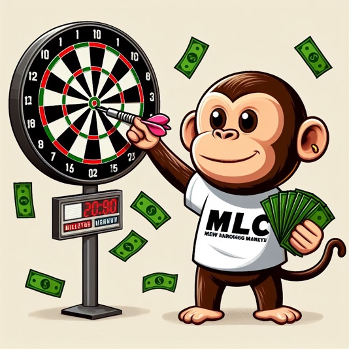
Nobody can believe that the MLC can’t manage to pay out several hundred million dollars of streaming mechanical royalties for over three years so far.  (Resulting in the MLC holding $804,555,579 in stocks as of the end of 2022 on its tax return, Part X, line 11.) The proverbial monkey with a dart board could have paid more songwriters in three years.  Face it—doesn’t it just sound illegal?  In my experience, when something sounds or feels illegal, it probably is.

What’s lacking here is a champion to extract the songwriters’ money.  Clearly the largely unelected smart people in charge could have done something about it by now if they wanted to, but they haven’t.  It’s looking more and more like nobody cares or at least nobody wants to do anything about it.  There is profit in delay.

Or maybe nobody is taking responsibility because there’s nobody to complain to.  Or is there? What if such a champion exists?  What if there were no more waiting?  What if there were someone who could bring the real heat to the situation?

Let’s explore one potentially overlooked angle—a federal agency called the Office of the Inspector General.  Who can bring in the OIG?  Who has jurisdiction?  I think someone does and this is the primary reason why the MLC is different from HFA.

Does The Inspector General Have MLC Jurisdiction?

Who has jurisdiction over the MLC (aside from its severely conflicted board of directors which is not setting the world on fire to pump the hundreds of millions of black box money back into the songwriter economy).  The Music Modernization Act says that the mechanical licensing collective operates at the pleasure of the Congress under the oversight of the U.S. Copyright Office and the OIG has oversight of the Copyright Office through its oversight of the Library of Congress.

But, hold on, you say.  The MLC, Inc. is a private company and the government typically does not have direct oversight over the operations of a private company.

The key concept there is “operates” and that’s the difference between the statutory concept of a mechanical licensing collective and the actual operational collective which is a real company with real employees and real board members.  Kind of like shadows on the wall of a cave for you Plato fans.  Or the magic 8 ball.

The MLC, Inc. is all caught up with the government.  It exists because the government allows it to, it collects money under the government’s blanket mechanical license, its operating costs are set by the government, and its board members are “inferior officers” of the United States.   Even though The MLC, Inc. is technically a private organization, it is at best a quasi-governmental organization, almost like the Tennessee Valley Authority or the Corporation for Public Broadcasting.  So it seems to me that The MLC, Inc. is a stand-in for the federal government.

But The MLC, Inc. is not the federal government.  When Congress passed the MMA and it charged the Copyright Office with oversight of the MLC.  Unfortunately, Congress does not appear to have appropriated funds for the additional oversight work it imposed on the Office.  

Neither did Congress empower the Office to charge the customary reasonable fees to cover the oversight work Congress mandated.  The Copyright Office has an entire fee schedule for its many services, but not MLC oversight.  

Even though the MLC’s operating costs are controlled by the Copyright Royalty Board and paid by the users of the blanket license through an assessment, this assessment money does not cover the transaction cost of having the Copyright Office fulfill an oversight role.

An oversight role may be ill suited to the historical role of the Copyright Office, a pre-New Deal agency with no direct enforcement powers—and no culture of cracking heads about wasteful spending like sending a contingent to Grammy Week.

In fact, there’s an argument that The MLC, Inc. should write a check to the taxpayer to offset the additional costs of MLC oversight.  If that hasn’t happened in five years, it’s probably not going to happen.  

Where Does the Inspector General Fit In?

Fortunately, the Copyright Office has a deep bench to draw on at the Office of the Inspector General for the Library of Congress, currently Dr. Glenda B. Arrington.  That kind of necessary detailed oversight is provided through the OIG’s subpoena power, mutual aid relationships with law enforcement partners as well as its own law enforcement powers as an independent agency of the Department of Homeland Security.  Obviously, all of these functions are desirable but none of them are a cultural fit in the Copyright Office or are a realistic resource allocation.

The OIG is better suited to overseeing waste, fraud and abuse at the MLC given that the traditional role of the Copyright Office does not involve confronting the executives of quasi-governmental organizations like the MLC about their operations, nor does it involve parsing through voluminous accounting statements, tracing financial transactions, demanding answers that the MLC does not want to give, and perhaps even making referrals to the Department of Justice to open investigations into potential malfeasance.  

Or demanding that the MLC set a payment schedule to pry loose the damn black box money.

One of the key roles of the OIG is to conduct audits.  A baseline audit of the MLC, its closely held investment policy and open market trading in hundreds of millions in black box funds might be a good place to start.  

It must be said that the first task of the OIG might be to determine whether Congress ever authorized MLC to “invest” the black box funds in the first place.  Congress is usually very specific about authorizing an agency to “invest” other people’s money, particularly when the people doing the investing are also tasked with finding the proper owners and returning that money to them, with interest. 

None of that customary specificity is present with the MLC.

For example, MLC CEO Kris Ahrens told Congress that the simple requirement that the MLC pay interest on “unmatched” funds in its possession (commonly called “black box”) was the basis on which the MLC was investing hundreds of millions in the open market.  This because he assumed the MLC would have to earn enough from trading securities or other investment income to cover their payment obligations.  That obligation is mostly to cover the federal short term interest rate that the MLC is required to pay on black box.

The Ghost of Grammy Week

The MLC has taken the requirement that the MLC pay interest on black box and bootstrapped that mandate to justify investment of the black box in the open market.  That is quite a bootstrap.

An equally plausible explanation would be that the requirement to pay interest on black box is that the interest is a reasonable cost of the collective to be covered by the administrative assessment.  The plain meaning of the statute reflects the intent of the drafters—the interest payment is a penalty to be paid by the MLC for failing to find the owners of the money in the first place, not an excuse to create a relatively secret $800 million hedge fund for the MLC.  

I say relatively secret because The MLC, Inc. has been given the opportunity to inform Congress of how much money they made or lost in the black box quasi-hedge fund, who bears the risk of loss and who profits from trading.  They have not answered these questions.  Perhaps they could answer them to the OIG getting to the bottom of the coverup.

We do not really know the extent of the MLC’s black box holdings, but it presumably would include the hundreds of millions invested under its stewardship in the $1.9 billion Payton Limited Maturity Fund SI (PYLSX). Based on public SEC filings brought to my attention, The MLC, Inc.’s investment in this fund is sufficient to require disclosure by PYLSX as a “Control Person” that owns 25% or more of PYLSX’s $1.9 billion net asset value. PYLSX is required to disclose the MLC as a Control Person in its fundraising materials to the Securities and Exchange Commission (Form N-1A Registration Statement filed February 28, 2023).  This might be a good place to start.

Otherwise, the MLC’s investment policy makes no sense.  The interest payment is a penalty, and the black box is not a profit center.

But you don’t even have to rely on The MLC, Inc.’s quasi governmental status in order for OIG to exert jurisdiction over the MLC.  It is also good to remember that the Presidential Signing Statement for the Music Modernization Act specifically addresses the role of the MLC’s board of directors as “inferior officers” of the United States:

Because the directors [likely both voting and nonvoting] are inferior officers under the Appointments Clause of the Constitution, the Librarian [of Congress] must approve each subsequent selection of a new director. I expect that the Register of Copyrights will work with the collective, once it has been designated, to ensure that the Librarian retains the ultimate authority, as required by the Constitution, to appoint and remove all directors.

The term “inferior officers” refers to those individuals who occupy positions that wield significant authority, but whose work is directed and supervised at some level by others who were appointed by presidential nomination with the advice and consent of the Senate. Therefore, the OIG could likely review the actions of the MLC’s board (voting and nonvoting members) as they would any other inferior offices of the United States in the normal course of the OIG’s activities.

Next Steps for OIG Investigation

How would the OIG at the Library of Congress actually get involved?  In theory, no additional legislation is necessary and in fact the public might be able to use the OIG whistleblower hotline to persuade the IG to get involved without any other inputs.  The process goes something like this:

  1. Receipt of Allegations: The first step in the OIG investigation process is the receipt of allegations. Allegations of fraud, waste, abuse, and other irregularities concerning LOC  programs and operations like the MLC are received from hotline complaints or other communications. 
  2. Preliminary Review: Once an allegation is received, it undergoes a preliminary review to determine if OIG investigative attention is warranted. This involves determining whether the allegation is credible and reasonably detailed (such as providing a copy of the MLC Congressional testimony including Questions for the Record). If the Office is actually bringing the OIG into the matter, this step would likely be collapsed into investigative action.
  3. Investigative Activity: If the preliminary review warrants further investigation, the OIG conducts the investigation through a variety of activities. These include record reviews and document analysis, witness and subject interviews, IG and grand jury subpoenas, search warrants, special techniques such as consensual monitoring and undercover operations, and coordination with other law enforcement agencies, such as the FBI, as appropriate.  That monitoring might include detailed investigation into the $500,000,000 or more in black box funds, much of which is traded on open market transactions like PYLSX.
  4. Investigative Outputs: Upon completing an investigation, reports and other documents may be written for use by the public, senior decision makers and other stakeholders, including U.S. Attorneys and Copyright Office management. Results of OIG’s administrative investigations, such as employee and program integrity cases, are transmitted to officials for appropriate action. 
  5. Monitoring of Results: The OIG monitors the results of those investigations conducted based on OIG referrals to ensure allegations are sufficiently addressed.

So it seems that the Office of the Inspector General is well suited to assisting the Copyright Office by investigating how the MLC is complying with its statutory financial obligations.  In particular, the OIG is ideally positioned to investigate how the MLC is handling the black box and its open market investments that it so far has refused to disclose to Members of Congress at a Congressional hearing as well as in answers to Questions for the Record from Chairman Issa.

This post previously appeared on MusicTech.Solutions

Guest post by @TheBlakeMorgan: A musician’s view of the TikTok legislation

Here’s a musician’s perspective on the TikTok legislation before Congress: I hope it passes, both as an American, and as a music maker. (The bill is “Protecting Americans From Foreign Adversary Controlled Applications Act, (HR 7521),” It was recently introduced by Representatives Mike Gallagher (R-Wi.) and Raja Krishnamoorthi (D-Ill.)The bill passed the House by a vote of 352-65, demonstrating deep bipartisan support)

First––this bill restricts TikTok, it does not “ban” the app. It forces the company to separate its ties to the Chinese Communist Party and prevents them from accessing the data of Americans. That’s a good thing.

The bill doesn’t mandate or regulate speech, it’s focused on national security: the FCC called TikTok “a clear and present danger” to our country.

Second––music makers already know what music lovers are just now learning: TikTok is the worst, most exploitative streaming platform for music, anywhere. The vast majority of music on TikTok generates virtually no revenue for the musicians who made it, and even more music on the platform is completely unlicensed (stolen), copied (stolen via AI), or pirated (stolen).

Simply put, TikTok is trying to build a music-based business without paying music makers fair value for the music.

Lastly––musicians (and Americans) are all too familiar with being underpaid and undervalued, with our data being scraped and sold, with platforms which promote hate speech, bigotry, and bullying.

But TikTok does all of this and more, while posing an existential national security threat to our country.

It’s rare to see independent musicians (like me) stand with major labels, and it’s rare to see Republicans and Democrats stand together about anything. But here we are. I hope it passes the Senate and that President Biden signs it.

The Broadcasters are Still Free Riding on Artists #IRespectMusic

Broadcasters set the example followed by Google, YouTube, Spotify and now TikTok. Let’s tell Congress broadcasters have to pay reasonable royalties in the bi-partisan American Music Fairness Act.

Please join the fight and sign the petition at the MusicFirst Coalition!

MTP Interview: We ask @Creators_ECSA President @Helienne Lindvall to Explain the European Parliament’s Streaming Economy Report from the Committee on Culture and Education

This post first appeared on MusicTechPolicy by Chris Castle.

The Culture and Education of the European Parliament issued an important report on the state of the creative economy. Our friend Helienne Lindvall, President of the European Composer and Songwriter Alliance, gives us some insights into the report and the context.

I know ECSA was involved in testifying for the EU cultural diversity report, can you tell us a little about the report, what prompted it and how does it help or hurt?

Streaming and the amount of issues it brought with it has been at the top of the agenda for European songwriters since the launch of Spotify. As an Ivors Academy Board Director, I was part of the inception of the UK #FixStreaming campaign which resulted in the UK Government calling for a complete overhaul of music streaming, and for the creation of music industry working groups to fix these problems. Meanwhile, similar lobbying efforts have been applied in Brussels by music creators across Europe. The EU has a fine history of promoting, supporting and protecting culture – in 2019, legislators proved it by adopting the DSM Copyright Directive. Now we need it to step up to help create a sustainable streaming environment. 

Rapporteur Iban Garcia del Blanco and his fellow CULT MEPs took their time to really listen to and understand the reality that music authors (ie songwriters and composers) face, and our proposed remedies, and I think the report reflects that.

Is the report designed to shape future legislation or rulemaking in the EU?

We look forward to seeing the European Commission work on such a strategy and take concrete actions to build a fair and sustainable music streaming ecosystem for all music creators.. 

MEP Garcia del Blanco said at the press conference that he would prefer if the industry stakeholders could sit down and fix these problems without further legislation, but judging from our experience in the UK, certain areas are easier to get a consensus on than others. The UK metadata working group has set parameters for improvements, which I believe can easily be adopted across Europe and beyond. However, when it comes to remuneration and making it fairer for songwriters and performers, we have met with resistance from labels and platforms – unsurprisingly, perhaps. Getting increased transparency has also proved more difficult. If this resistance remains we will keep pushing for Government intervention and legislation. 

The report calls for a comprehensive and ambitious strategy based on independent data and a structured dialogue with all stakeholders, and we stand ready to work with the entire music value chain towards a fairer distribution of revenues, and we support the establishment of a European Music Observatory to collect and analyse data.

I noticed this language in the report calling on EU parliament:  “Calls for action to be taken at the European Union level to guarantee the visibility and accessibility of European musical works, considering the overwhelming amount of content constantly growing on music streaming platforms and the lack of Union rules to regulate them in a harmonised manner”.  and algorithmic dominance? 

It may come as no surprise that American and major label records still dominate on streaming platforms.

Is this designed to keep local language artists from being overwhelmed by English language tracks due to algorithmic bias or Spotify’s stream discrimination plans?

The short answer is: yes. During our stakeholder testimonials in the EU Parliament, Spotify claimed that streaming has increased diversity. And, yes, it may be true that some European countries have seen plenty of local acts in their local charts, though by no means all countries have experienced this, but on an international level there’s still a huge dominance of Anglo-American repertoire. Then we have the issue of the dominance of legacy artists and catalogue albums, such as ABBA, Fleetwood Mac and Elton John. 

In a post-Brexit reality, does the report have any effect on the UK?

The EU doesn’t have any legislative powers when it comes to the UK, due to Brexit, but as streaming is cross-border, as is the music industry, an improvement in either would have an impact on both. Some EU members have already implemented their own versions of equitable remuneration, such as Belgium and Spain – and France is establishing a streaming tax to support local music – but we would like to see solutions and changes that help ALL music creators, in particular songwriters, who currently are at the bottom when it comes to their share of the streaming royalty “pie”, and are finding it next to impossible to survive on their music, despite getting millions of streams. 

Given the attention that the Bad Dog story is getting, would the metadata accuracy proposals in the report help to stop outright fraud and impersonation? 

Yes, it would. Overall, we need more transparency, accountability and accuracy to deal with fraud. These are all words that get thrown around the industry willy-nilly but are rarely truly abided by. In this industry, companies rarely make an effort when it comes to accuracy unless there is an incentive for them to do so. What is the incentive for distributors and platforms to clean up their act and make an effort to prevent bad actors from profiting from fraudulent streams when they still get a share of those streams? I make the comparison to physical stores: If a supermarket sold counterfeit products, they’d be in trouble with the law. Why not these platforms and distributors? And this is before we even get into what’s happening on TikTok, which is the wild west when it comes to unlicensed usage. 

Does the metadata accuracy help to enforce “know your customer” type minimum indentifiable data requirements?

Accurate metadata is vital for so many reasons. Not only because more than 20% of all song revenue is unallocable and won’t go to the rightful recipient, but it will help in the fight against fraud. The way I put it to legislators is: You wouldn’t be able to buy a tuna sandwich in the supermarket without being able to read EXACTLY what is in it on the package, or the trader knowing who to pay for those ingredients. So how can it be legal for streaming services to accept, display and charge for recordings without knowing who created the underlying composition? How can they collect money without having any information on who to pay it to? And, as we’ve discovered with cases such as the Bad Dog story and Swedish criminal gangs using Spotify streams to launder money, that money could even be funding drug and weapons trafficking. 

Anything else you think is important about the report? 

The report calls for action when it comes competition issues and the dominance of a handful of labels and platforms, issues that we believe suppresses our bargaining power. It also stresses that authors, performers and other rights holders should be allowed to reserve and license the rights for the use of their work for AI training, and it acknowledges that this requires transparency. Overall it’s an important report that aims to correct the imbalances that have led to the unsustainable situation music creators find themselves in, and to build a sustainable, thriving and diverse cultural future. It couldn’t come soon enough.