
Join us for the launch of the Fair #Culture Charter on 10 Sept. 2024 @ 14:00 CEST!
— FIM (@fim_musicians) September 4, 2024
The Charter promotes decent working conditions for all cultural workers. It is supported by the German Commission for #UNESCO + international partners.
Register here: https://t.co/a02iyYBeNE pic.twitter.com/CPP9LwY4Kq
Category: Musician’s POV
The Videogame Industry is Larger Than Film and TV Combined, Why Aren’t They Paying Musicians Fairly?
The videogame industry is larger than the film and tv industries, combined. Despite this, most if not all of the composers creating original videogame music are not paid the same as they would be doing the same work for films and tv shows. Here’s why.
Composers who create the music for your favorite films and tv shows are paid a fee which generally covers the actual hard costs of writing, producing and recording the music for that show. Most of the time that fee doesn’t leave a lot for the composer to live on after the hard costs listed above. However, film and tv composers also typically receive a royalty in the form of an additional payment when the film or show is broadcast or streamed.
This is called a public performance royalty. In most countries the composers are also paid in the same manner for theatrical exhibition (the United States is one of the few countries that does not pay this).
In addition to the public performance royalty most countries also pay a mechanical reproduction royalty. Both of these royalties may vary slightly from territory to territory but both are long established norms for the composer as the songwriter, and hence the creator of the copyright of the original music.
It is these royalties that have long been established as an essential form of compensation that allows composers to actually make a living. Videogame Composers however do not receive these long established payments that their film and tv composer counterparts receive.
To be fair to the videogame industry the early distribution methods of games and gameplay operated in a very different manner than that of film & tv. Even in the 90s for example, games were still distributed on cartridges and music was written for the hardware chipset of each console (or standard pc soundcard).
Since that time the videogame industry has evolved significantly with emerging technologies bringing the gameplay closer to traditional media in user experience and workflow. In fact the videogame industry has grown so large, that its annual revenues now exceed those of the film & tv industries combined. Unfortunately for videogame composers, they are still being compensated under a business model that is half a century old, where music was played by a chipset, not a live orchestra (and the commercial internet was in its infancy).
Game composers are now working under many of the same requirements and expectations as film and tv composers, delivering massively epic scores recorded at major studios with large classical orchestras. In fact, the process of writing music for videogames is a larger and more complex process and requires writing much, much more music due to the scale of the games.
The distribution methods of games has changed as well with many now streamisng in real-time multiplayer modes across a range of consoles, computers, phones and tablets. Some streaming games are free to play, but generate billions of dollars from in-game purchases. Videogame Composers do not participate in any of these revenues created by the new distribution technologies (both downloads or streaming).
The current labor strikes in Hollywood by Writers and Actors highlight and underscore the changing economic realities for creatives presented by these new distribution technologies such as streaming media. A similar situation affects the videogame industry who are transitioning from physical transactional sales to various types of streaming models. Streaming equals broadcast. Broadcast requires both public performance and mechanical reproduction royalties (although these may differ slightly from territory to territory). Streaming is not a transactional model. Streaming is a real-time broadcast and delivery of the media. This is not controversial. Even audio only interactive music streaming services are also bound by these same long established standards and norms.
There is talk of SAG (the Screen Actors Guild) extending the reach of their strike from traditional linear media to video game production. It should be noted that film & tv composers are barred from unionizing and have no collective bargaining power. It is against this backdrop that Videogame Composers recognize their need to advocate for the same royalties that have been long established by traditional media which are currently being reevaluated and updated for the streaming era.
In conclusion, now is the time for this fundamental and long overdue misaligned inequity to be addressed and resolved. A healthy industry is one the invests in itself, its talent and its next generation of creatives who will continue to ensure the growth of the business.
Spotify might not suppress search, but that doesn’t mean artists with exclusives get treated equally | Tech Crunch
Hmmmm…
However, while Spotify has been clear about rejecting one part of the argument against the company, there is another piece of the story that remains unaddressed. Hidden in the details, the accusations are really twofold, including both the notion that
* Spotify directly suppresses tracks from artists that have previously signed exclusives with Apple Music or Tidal in search results.
* And, Spotify indirectly targets artists who have signed exclusives with Apple Music and Tidal but promoting music differently in playlists and banner ads.
READ THE FULL STORY AT TECHCRUNCH:
https://techcrunch.com/2016/08/26/spotify-might-not-suppress-search-but-that-doesnt-mean-artists-with-exclusives-get-treated-equally/
Spotify Is Burying Musicians for Their Apple Deals | Bloomberg
New boss, worse than the old boss…
Spotify has been retaliating against musicians who introduce new material exclusively on rival Apple Music by making their songs harder to find, according to people familiar with the strategy. Artists who have given Apple exclusive access to new music have been told they won’t be able to get their tracks on featured playlists once the songs become available on Spotify, said the people, who declined to be identified discussing the steps. Those artists have also found their songs buried in the search rankings of Spotify, the world’s largest music-streaming service, the people said. Spotify said it doesn’t alter search rankings.
READ THE FULL STORY AT BLOOMBERG:
http://www.bloomberg.com/news/articles/2016-08-26/spotify-said-to-retaliate-against-artists-with-apple-exclusives
Gently Down The Stream (Songwriters Streaming Royalties Explained) | SONA [VIDEO]
Thank You Songwriters Of North America (SONA)
Songwriter Would Need 288 Million Spins To Equal Average Spotify Employee Salary
Spotify just posted their financials and Paul Resnikoff at Digital Music News was quick to point out that the average Spotify employee salary is $168, 747.
Contrast that to the plight of songwriters. There would be no music business without the fundamental efforts of songwriters. Yet, there is not a free market in songs. The federal government sets compensation for songwriters/publishers based on a percentage of revenue. An abysmal below market rate. In effect a subsidy for streaming services. Last I checked this rate was working out to about $0.00058 per spin. This includes both the public performance (BMI/ASCAP) and the streaming mechanical (IF they happen to pay it).
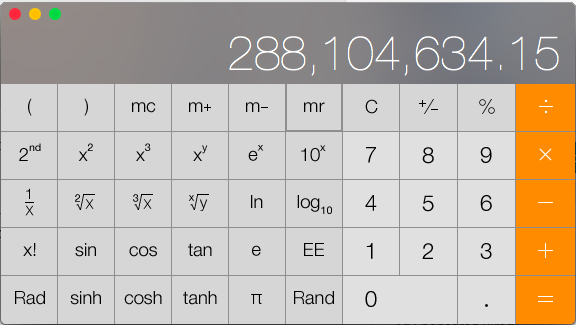
Best case scenario, if a songwriter retains all publishing rights to their song then a songwriter would need 288,104,634.15 spins to earn the reported average salary of a Spotify employee.
Any questions?
++++++++++++++++++++++++++++++++++++++++++++++++++++
Related see this post on failure of techies to understand that streaming services are subsidized by government mandates
Clueless Spotify Defender Illustrates Tech Ignorance about Federal Cap On Songwriter Pay
Spotify Hit With $150 Million Class Action Over Unpaid Royalties | Billboard
Vocal artist rights advocate David Lowery brings a massive action against the largest streaming service.
Camper Van Beethoven and Cracker frontman David Lowery, retaining the law firm of Michelman & Robinson, LLP, has filed a class action lawsuit seeking at least $150 million in damages against Spotify, alleging it knowingly, willingly, and unlawfully reproduces and distributes copyrighted compositions without obtaining mechanical licenses.
READ THE FULL STORY AT BILLBOARD:
http://www.billboard.com/articles/business/6828092/spotify-class-action-royalties-david-lowery-cracker-150-million
#irespectmusic
Music is the Product. | Adland.tv
Yup. Music is the product. Justin Vernon talks about Bon Iver and advertising. The music is the product, not just the business card to book advertising and sponsorship gigs which some would like to suggest – and here’s why…
We did a photo shoot for Bushmills. To be clear: They gave us a bunch of money and we were able to finish without borrowing. It was great for us, and everybody that worked at the company was great, and I love Bushmills and wanted to do the deal because my dad loved Bushmills — we bond over Irish whiskey.
But the problem is that it isn’t just Bushmills. It’s run by a corporation, and you kind of forget that they’re not interested in you or really what you’re doing. They’re interested in your popularity and your reach, and it felt really sickening after a while. Not badmouthing Bushmills the company, but I regret it.
I regret it because it wasn’t us and they put my face on a fucking billboard, even though it was a cool billboard and I was with my brother and my sound engineer and we’re buds and we got drunk while we had the photo shoot. I just missed it. I missed the mark on that one and I let it all kind of get to me. It just doesn’t feel right after the fact, you know?
READ THE FULL STORY AT ADLAND:
http://adland.tv/adnews/music-product/971380697
NP AAAARGGHHHHH: @NPR CEO Jarl Mohn Funded Piracy Client Vuze and Vuze Sponsors Torrent Freak
We’ve been reporting for the last few days on NPR joining Pandora, Clear Channel, National Association of Broadcasters and Google in the MIC Coalition which seeks to lower rates paid to artists and to keep songwriters under DOJ supervision (because what these large corporate and state chartered near monopolies need is “anti-competition” protection from songwriters? WTF?).
This has puzzled us because NPR already enjoys a dramatically lower royalty rate than most other radio. Further we artists often waive our rights and allow NPR use of our recordings royalty free in perpetuity. We willingly support NPR in this manner because we believe they provide a public service. We have been a solid ally of public and community radio. Why would they turn against us and join this dark side coalition?
Now we think we have the answer.
NPR CEO Jarl Mohn is a card carrying member of the dark side. He funded the bittorrent piracy client Vuze not once but twice. He was part of the B series round of $12 million and the C series round of $20 million. And make no mistake Vuze is a key part of the piracy ecosystem.
Yeah yeah yeah, we heard it before: “Vuze is just a tool and they don’t profit from piracy” Bullshit. Vuze profits directly from the illegal distribution of my material by knowingly serving advertising against it.
Allow me to demonstrate with the tracks from my latest album.

This is a screenshot of the Vuze client while downloading an unlicensed copy of my new album Berkeley to Bakersfield. Down in the left hand corner there is an ad for American Express served by the publicly traded web advertising firm Quantcast. (Coincidentally a couple of years ago I privately defended Quantcast against similar charges, now I feel like a fucking idiot.)
To be clear this is not a webpage and ad exchange banner advertising. No one played some “tunneling” or DNS forwarding trick to make American Express and Quantcast think it wasn’t advertising on this site. This advertising is embedded into a piece of software that is used almost exclusively for downloading illegally distributed films music and pornography. How does American Express not know this? Quantcast? Or Jarl Mohn?
How did NPR come up with a CEO with such questionable ethics? This guy had to know what he was funding: A tool to infringe the rights of artists on global scale. If not he’s really really dim.

But it gets worse. The piracy advocating website Torrent Freak appears to be sponsored by the very same company: Vuze. That’s right the piracy revolution will not be televised but it will be sponsored by amoral Silicon Valley Venture Capitalists. You really thought Torrent Freak was an ideological true believer fighting for your rights to “share” against the man? Nope looks they are the marketing department for the man who makes advertising money off of your sharing activity.
Tool.
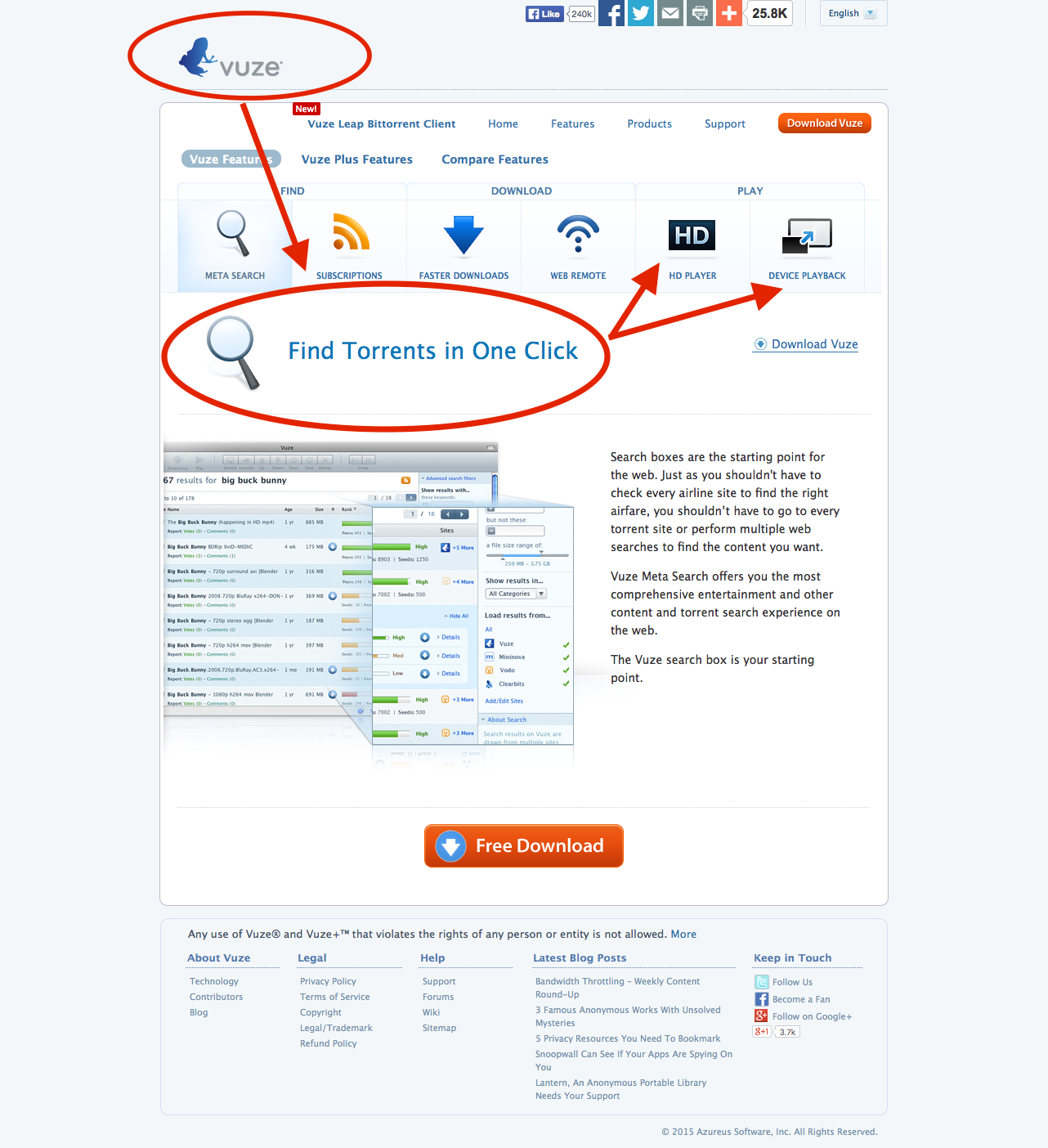
Here’s a screenshot from the Torrent Freak website helpfully alerting it’s readers to availability of the leaked Game of Thrones Season 5 on Kick Ass Torrents and the Pirate Bay. Look carefully at the code. The ad for Vuze isn’t just randomly served by some online adexchange. It’s embedded into the site. Someone had to go in and place that link and that JPG into the code. Plus the visible text actually claims them a “sponsor.”
So you are really gonna tell me with a straight face that no money is changing hands here? Vuze is not paying “Ernesto” the editor of Torrent Freak? While Ernesto is pretty much inducing piracy and giving advice on how to avoid prosecution?
How is this not a conspiracy? I mean conspiracy like RICO Conspiracy (See details below).
And it all started with money from NPR CEO Jarl Mohn.
Fire this guy.
NPR affiliates, DJs, Journalists and independent public radio stations need to stand with artists against these assholes. Heres our olive branch. Please join us.
Otherwise?
It’s Torches and Pitchforks time. It’s not gonna be prett.y
+++++++++++++++++++++++++++++++++
STOP IF YOU DON’T WANT TO GO INTO A DEEP DIVE ON RACKETEERING AND CORRUPT ORGANIZATION (RICO) STATUTES.
+++++++++++++++++++++++++++++++++++++
I’m not a lawyer but the intent of the law seems pretty clear. To prevent groups of people-even if only informally organized-from engaging in coordinated criminal activity. Specifically when it disrupts legitimate marketplaces like those for recorded music or online advertising.
“RICO is designed to attack organized criminal activity and preserve marketplace integrity by investigating, controlling, and prosecuting persons who participate or conspire to participate in racketeering.” Black’s Law Dictionary 1286 (8th ed. 2005).
There are a host of organized “scams” that generally occur in the peer to peer advertising ecosystem including within the Vuze client. Maybe there are some prosecutors or litigators out there who can help me with this? Aren’t the following part of the RICO statute?
1) Mass copyright infringement.
2) Advertisers publicly claim to not know where there ads are being served. If this is true then there is fraud going on. Someone along the way, advertising agencies, ad exchanges, and/or companies like Vuze are behaving improperly. Since it involves the online ad ecosystem wouldn’t this be Wire Fraud?
3) Uh… how do I say the obvious? P2P networks have a lot of pornography? A lot! I could be wrong, but I can’t imagine illegal pornography isn’t also being monetized with advertising as it’s transferred using the Vuze client. How can you possible be allowed to make money off of illegal pornography and not be prosecuted?
4) Anyone visiting a site like The Pirate bay has probably noticed the relentless advertising for Russian or Asian Brides. Human trafficking anyone?
5) These same sites often feature ads for third party websites that claim to enroll applicants into a “US Green Card Lottery.” The US has never used third parties for its “Diversity Visa” program and at the present time the US is not accepting applications for diversity visas. All websites advertising for the 2017 lottery are highly suspect. (An early version of this article made it seem as if the US never had a Diversity Visa or “Green Card Lottery” that was incorrect).
Now check out the RICO definitions. My bold italics added.
18 U.S. Code § 1961 – Definitions:
As used in this chapter—
(1) “racketeering activity” means (A) any act or threat involving murder, kidnapping, gambling, arson, robbery, bribery, extortion, dealing in obscene matter, or dealing in a controlled substance or listed chemical (as defined in section 102 of the Controlled Substances Act), which is chargeable under State law and punishable by imprisonment for more than one year; (B) any act which is indictable under any of the following provisions of title 18, United States Code: Section 201 (relating to bribery), section 224 (relating to sports bribery), sections 471, 472, and 473 (relating to counterfeiting), section 659 (relating to theft from interstate shipment) if the act indictable under section 659 is felonious, section 664 (relating to embezzlement from pension and welfare funds), sections 891–894 (relating to extortionate credit transactions), section 1028 (relating to fraud and related activity in connection with identification documents), section 1029 (relating to fraud and related activity in connection with access devices), section 1084 (relating to the transmission of gambling information), section 1341 (relating to mail fraud), section 1343 (relating to wire fraud), section 1344 (relating to financial institution fraud), section 1351 (relating to fraud in foreign labor contracting), section 1425 (relating to the procurement of citizenship or nationalization unlawfully), section 1426 (relating to the reproduction of naturalization or citizenship papers), section 1427 (relating to the sale of naturalization or citizenship papers), sections 1461–1465 (relating to obscene matter), section 1503 (relating to obstruction of justice), section 1510 (relating to obstruction of criminal investigations), section 1511 (relating to the obstruction of State or local law enforcement), section 1512 (relating to tampering with a witness, victim, or an informant), section 1513 (relating to retaliating against a witness, victim, or an informant), section 1542 (relating to false statement in application and use of passport), section 1543 (relating to forgery or false use of passport), section 1544 (relating to misuse of passport), section 1546 (relating to fraud and misuse of visas, permits, and other documents), sections 1581–1592 (relating to peonage, slavery, and trafficking in persons)., [1] section 1951 (relating to interference with commerce, robbery, or extortion), section 1952 (relating to racketeering), section 1953 (relating to interstate transportation of wagering paraphernalia), section 1954 (relating to unlawful welfare fund payments), section 1955 (relating to the prohibition of illegal gambling businesses), section 1956 (relating to the laundering of monetary instruments), section 1957 (relating to engaging in monetary transactions in property derived from specified unlawful activity), section 1958 (relating to use of interstate commerce facilities in the commission of murder-for-hire), section 1960 (relating to illegal money transmitters), sections 2251, 2251A, 2252, and 2260 (relating to sexual exploitation of children), sections 2312 and 2313 (relating to interstate transportation of stolen motor vehicles), sections 2314 and 2315 (relating to interstate transportation of stolen property), section 2318 (relating to trafficking in counterfeit labels for phonorecords, computer programs or computer program documentation or packaging and copies of motion pictures or other audiovisual works), section 2319 (relating to criminal infringement of a copyright), section 2319A (relating to unauthorized fixation of and trafficking in sound recordings and music videos of live musical performances), section 2320 (relating to trafficking in goods or services bearing counterfeit marks), section 2321 (relating to trafficking in certain motor vehicles or motor vehicle parts), sections 2341–2346 (relating to trafficking in contraband cigarettes), sections 2421–24 (relating to white slave traffic), sections 175–178 (relating to biological weapons), sections 229–229F (relating to chemical weapons), section 831 (relating to nuclear materials), (C) any act which is indictable under title 29, United States Code, section 186 (dealing with restrictions on payments and loans to labor organizations) or section 501 (c) (relating to embezzlement from union funds), (D) any offense involving fraud connected with a case under title 11 (except a case under section 157 of this title), fraud in the sale of securities, or the felonious manufacture, importation, receiving, concealment, buying, selling, or otherwise dealing in a controlled substance or listed chemical (as defined in section 102 of the Controlled Substances Act), punishable under any law of the United States, (E) any act which is indictable under the Currency and Foreign Transactions Reporting Act, (F) any act which is indictable under the Immigration and Nationality Act, section 274 (relating to bringing in and harboring certain aliens), section 277 (relating to aiding or assisting certain aliens to enter the United States), or section 278 (relating to importation of alien for immoral purpose) if the act indictable under such section of such Act was committed for the purpose of financial gain, or (G) any act that is indictable under any provision listed in section 2332b (g)(5)(B);
(2) “State” means any State of the United States, the District of Columbia, the Commonwealth of Puerto Rico, any territory or possession of the United States, any political subdivision, or any department, agency, or instrumentality thereof;
(3) “person” includes any individual or entity capable of holding a legal or beneficial interest in property;
(4) “enterprise” includes any individual, partnership, corporation, association, or other legal entity, and any union or group of individuals associated in fact although not a legal entity;

Zoë Keating Publishes Google/YouTube Transcript : Clarity | Zoë Keating Blog
With friends like these…
If i wanted to just let content ID keep doing it’s thing, and it does a great job at and i’m totally happy with it and i don’t want to participate in the music service, is that an option?
That’s unfortunately not an option.
Assuming i don’t want to, then what would occur?
So what would happen is, um, so in the worst case scenario, because we do understand there are cases where our partners don’t want to participate for various reasons, what we basically have to do is because the music terms are essentially like outdated, the content that you directly upload from accounts that you own under the content owner attached to the agreement, we’ll have to block that content. but anything that comes up that we’re able to scan and match through content ID we could just apply a track policy but the commercial terms no longer apply so there’s not going to be any revenue generated.
Wow that’s pretty harsh.
Yeah, it’s harsh and trust me, it is really difficult for me to have this conversation with all of my partners but we’re really, what we’re trying to do is basically create a new revenue stream on top of what exists on the platform today.
PLEASE READ THE ENTIRE POST/TRANSCRIPT AT:
http://zoekeating.tumblr.com/post/109312851929/clarity
 The Trichordist
You must be logged in to post a comment.