Will the Copyright Royalty Board approve Big Tech’s attempted cover-up? 

By Chris Castle

[This MusicTechPolicy post appeared on Hypebot]

There’s an old saying among sailors that water always wins. Sunlight does, too. It may take a while, but time reveals all things in the cold light of dawn. So when you are free riding on huge blocks of aged government cheese like the digital music services do with the compulsory mechanical license, the question you should ask yourself is why hide from the sunlight? It just makes songwriters even more suspicious. 

This melodrama just played out at the Copyright Royalty Board with the frozen mechanicals proceeding. Right on cue, the digital services and their legions of lawyers proved they hadn’t learned a damn thing from that exercise. They turned right around and tried to jam a secret deal through the Copyright Royalty Board on the streaming mechanicals piece of Phonorecords IV. 

To their great credit, the labels handled frozen physical mechanicals quite differently. They voluntarily disclosed the side deal they made with virtually no redactions and certainly didn’t try to file it “under seal” like the services did. Filing “under seal” hides the major moving parts of a voluntary settlement from the world’s songwriters. Songwriters, of course, are the ones most affected by the settlement–which the services want the CRB to approve–some might say “rubber stamp”–and make law.

To fully appreciate the absolute lunacy of the services attempt at filing the purported settlement document under seal, you have to remember that the Copyright Royalty Judges spilled considerable ink in the frozen mechanicals piece of Phonorecords IV telling those participants how important transparency was when they rejected the initial Subpart B settlement.  

This happened mere weeks ago in the SAME PHONORECORDS IV PROCEEDING.

Were the services expecting the Judges to say “Just kidding”? What in the world were they thinking? Realize that filing the settlement–which IF ACCEPTED is then published by the Judges for public comment under the applicable rules established long ago by Congress–is quite different than filing confidential commercial information. You might expect redactions or filings under seal, “attorneys eyes only,” etc., in direct written statements, expert testimony or the other reams of paper all designed to help the Judges guess what rate a willing buyer would pay a willing seller. That rate to be applied to the world under a compulsory license which precludes willing buyers and willing sellers, thank you Franz Kafka. 

When you file the settlement, that document is the end product of all those tens of millions of dollars in legal fees that buy houses in the Hamptons and Martha’s Vinyard as well as send children to prep school, college and graduate school. Not the songwriters’ children, mind you, oh no. 

The final settlement is, in fact, the one document that should NEVER be redacted or secret. How else will the public–who may not get a vote but does get their say–even know what it is the law is based on assuming the Judges approve the otherwise secret deal. It’s asking the Judges to tell the public, the Copyright Office, their colleagues in the appeals courts and ultimately the Congress, sorry, our version of the law is based on secret information.

Does that even scan? I mean, seriously, what kind of buffoons come up with this stuff?  Of course the Judges will question the bona fides and provenance of the settlement. Do you think any other federal agency could get away with actually doing this? The lawlessness of the very idea is breathtaking and demonstrates conclusively in my view that these services like Google are the most dangerous corporations in the world. The one thing that gives solace after this display of arrogance is that some of them may get broken up before they render too many mechanical royalty accounting statements.

To their credit, after receiving the very thin initial filing the Judges instructed the services to do better–to be kind. The Judges issued an order that stated:

The Judges now ORDER the Settling Parties to certify, no later than five days from the date of this order, that the Motion and the Proposed Regulations annexed to the Motion represent the full agreement of the Settling Parties, i.e., that there are no other related agrements and no other clauses. If such other agreements or clauses exist, the Settling Parties shall file them no later than five days from the date of this order.

Just a tip to any younger lawyers reading this post–you really, really, really do not want to be on the receiving end of this kind of order.

Reading between the lines (and not very far) the Judges are telling the parties to come clean. Either “certify” to the Judges “that there are no other related agreements and no other clauses” or produce them. This use of the term “certify” means all the lawyers promise to the Judges as officers of the court that their clients have come clean, or alternatively file the actual documents.

That produced the absurd filing under seal, and that then produced the blowback that led to the filing of the unsealed and unreacted documents. But–wait, there’s more.

Take a close look at what the Judges asked for and what they received. The Judges asked for certification “that there are no other related agrements and no other clauses. If such other agreements or clauses exist, the Settling Parties shall file them no later than five days from the date of this order.”

What the Judges received is described in the purportedly responsive filing by the services:

The Settling Participants [aka the insiders] have provided all of the settlement documentsand, with this public filing, every interested party can fully evaluate and comment upon the settlement. The Settling Participants thus believe that the Judges have everything necessary to “publish the settlement in the Federal Register for notice and comment from those bound by the terms, rates, or other determination set by the” Settlement Agreement, as required under 37 C.F.R. 351.2(b)(2). The Settling Participants respectfully request that the Judges inform them if there is any further information that they require.

Notice that the Judges asked for evidence of the “full agreement of the Settling Parties”, meaning all side deals or other vigorish exchanged between the parties including the DSPs that control vast riches larger than most countries and are super-conflicted with the publishers due to their joint venture investment in the MLC quango.

The response is limited to “the settlement documents” and then cites to what the services no doubt think they can argue limits their disclosure obligations to what is necessary to “publish the settlement”. And then the services have the brass to add “The Settling Participants respectfully request that the Judges inform them if there is any further information that they require.” Just how are the Judges supposed to know if the services complied with the order? Is this candor?

It must also be noted that Google and the NMPA have “lodged” certain documents relating to YouTube’s direct agreements which they claim are not related to the settlement to be published for public comment. These documents are, of course, secret:

[And] are not part of the settlement agreement or understanding of the settling participants concerning the subject matter of the settlement agreement, and do not supersede any part of the settlement agreement with respect to the settling participants’ proposed Phonorecords IV rates and terms. Further, the letter agreements do not change or modify application of the terms to be codified at 37 C.F.R. 385 Subparts C and D, including as they apply to any participant. Rather, the letter agreements simply concern Google’s current allocation practices to avoid the double payment of royalties arising from YouTube’s having entered into direct agreements with certain music publishers while simultaneously operating under the Section 115 statutory license.

You’ll note that there are a number of declarative statements that lets the hoi polloi know that the Data Lords and Kings of the Internet Realms have determined some information involving their royalties is none of their concern. How do you know that you shouldn’t worry your pretty little head about some things? Because the Data Lords tell you so. And now, back to sleep you Epsilons.

So you see that despite the statements in the group filing to the CRB that the “Settling Participants” (i.e., the insiders) claim to have provided all of the settlement documents required by the Judges, Google turns right around and “lodges” this separate filing of still other documents that they think might be related documents with some bearing on the settlement that should be disclosed to the public but they apparently will not be disclosing without a fight. How do we know this? Because they pretty much say so:

Because the letter agreements are subject to confidentiality restrictions and have each only been disclosed to their individual signatories, each such music publisher having an extant direct license agreement with Google, Google and NMPA are lodging the letter agreements directly with the Copyright Royalty Judges, who may then make a determination as to whether the letter agreements are relevant and what, if anything, should be disclosed notwithstanding the confidentiality restrictions in each of the letter agreements.

Ah yes, the old “nondisclosure” clause. You couldn’t ask for a better example of how NDAs are used to hide information from songwriters about their own money.

The Judges noted when rejecting the similar initial frozen mechanical regulations that:

Parties have an undeniable right of contract. The Judges, however, are not required to adopt the terms of any contract, particularly when the contract at issue relates in part, albeit by reference, to additional unknown terms that indicate additional unrevealed consideration passing between the parties, which consideration might have an impact on effective royalty rates. 

So there’s that.

What this all boils down to is that the richest and most dangerous corporations in commercial history are accustomed to algorithmically duping consumers, vendors and even governments in the dark and getting away with it. The question is, if you believe that sunlight always wins, do they still want to hide as long as they can and then look stupid, or do they want to come clean to begin with and be honest brokers.

As Willie Stark famously said in All the King’s Men, “Time reveals all things, I trust it so.”
Thinking Outside the Pie: @legrandnetwork Study for GESAC Highlights Streaming Impact on Choking Diversity and Songwriter Royalties

By Chris Castle

[This post first appeared in MusicTech.Solutions]

Emmanuel Legrand prepared an excellent and important study for the European Grouping of Societies of Authors and Composers (GESAC) that identifies crucial effects of streaming on culture, creatives and especially songwriters. The study highlights the cultural effects of streaming on the European markets, but it would be easy to extend these harms globally as Emmanuel observes.

For example, consider the core pitch of streaming services that started long ago with the commercial Napster 2.0 pitch of “Own Nothing, Have Everything”. This call-to-serfdom slogan may sound good but having infinite shelf space with no cutouts or localized offering creates its own cultural imperative. And that’s even if you accept the premise the algorithmically programed enterprise playlists on streaming services should not be subject to the same cultural protections for performers and songwriters as broadcast radio–its main competitor.

[This] massive availability of content on [streaming] platforms is overshadowed by the fact that these services are under no positive obligations to ensure visibility and discoverability of more diverse repertoires, particularly European works….[plus]  the initial individual subscription fee of 9.99 (in Euros, US dollars, or British pound) set in 2006, has never increased, despite the exponential growth in the quality, amount of songs, and user-friendliness of music streaming services.

Artists working new recordings, especially in a language other than English, are forced to fight for “shelf space” and “mindshare”–that is, recognition–against every recording ever released. While this was always true theoretically; you never had that same fight the same way at Tower Records.

This is not theoretically true on streaming platforms–it is actually true because these tens of millions of historical recordings are the competition on streaming services. When you look at the global 100 charts for streaming services, almost all of the titles are in English and are largely Anglo-American releases. Yes, we know–Bad Bunny. But this year’s exception proves the rule.

And then Emmanuel notes that it is the back room algorithms–the terribly modern version of the $50 handshake–that support various payola schemes:

The use of algorithms, as well as bottleneck represented by the most popular playlists, exacerbates this. Furthermore, long-standing flaws in the operations of music streaming platforms, such as “streaming fraud”, “ghost/fake artists”, “payola schemes”, “royalty free content” and other coercive practices [not to mention YouTube withholding access to Content ID] worsen the impact on many professional creators….

This report suggests solutions to bring greater transparency in the use of algorithms and invites stakeholders to undertake a review of the economic models of streaming services and evaluate how they currently affect cultural diversity which should be promoted in its various forms — music genres, languages, origin of performers and songwriters, in particular through policy actions.

Trichordist readers will recall my extensive dives into the hyperefficient market share distribution of streaming royalties known as the “big pool” compared to my “ethical pool” proposal and the “user centric” alternative. As Emmanuel points out, the big pool royalty model belies a cultural imperative–if you are counting streams on a market share basis that results in the rich getting richer based on “stream share” that same stream share almost guarantees that Anglo American repertoire will dominate in every market the big streamers operate.

Emmanuel uses French-Canadian repertoire as an example (a subject I know a fair amount about since I performed and recorded with many vedettes before Quebecoise was cool).

A lot of research has been made in Canada with regards to discoverability, in particular in the context of French-Canadian music, which is subject to quotas for over the air broadcasters which however do not apply to music streaming services. The research shows that while the lists of new releases from Québec studied are present in a large proportion on streaming platforms, they are “not very visible and very little recommended.” 

It further shows that the situation is even worse when it is not about new releases, including hit music, when the presence of titles “drops radically.” It is not very difficult to imagine that if we were to swap Québec in the above sentence with the name of any country from the European Union [or any non-Anglo American country], and even with music from the European Union as a whole, we could find similar results.

In other words, there may be aggregators with repertoire in languages other than English that deliver tracks to streamers in their countries, but–absent localized airplay rules–a Spotify user might never know the tracks were there unless the user already knew about the recording, artist or songwriter. (Speaking of Canada, check the MAPL system.)

This is a prime example of why Professor Feijoo and I proposed streaming remuneration in our WIPO study to allow performers to capture the uncompensated capital markets value to the enterprise driven by these performers. Because of the market share royalty system, revenues and royalties do not compensate all performers, particularly regional or non-featured performers (i.e., session players and singers) who essentially get zero compensation for streaming.

Emmanuel also comments on the imbalance in song royalty payments and invites a re-look at how the streaming system biases against songwriters. I would encourage everyone to stop thinking of a pie to be shared or that Johnny has more apples–when the services refuse to raise prices in order to tell a growth story to Wall Street or The City, measuring royalties by a share of some mythical royalty pie is not ever going to get it done. It will just perpetuate a discriminatory system that fails to value the very people on whose backs it was built be they songwriters or session players.

We must think outside the pie.

@MMercuriadis on the @CMAgovUK’s Whiff on the Streaming Report

Hipgnosis CEO Merck Mercuriadis had a strong statement in Music Week about the Competition and Markets Authority’s swing and a miss at the obviously absurd music streaming system as it was clearly identified by the groundbreaking report from the Digital Culture Media and Sport Select Committee of the UK Parliament. Given the good work done by the DCMS committee, the CMA report is simply insulting to those Members of Parliament.

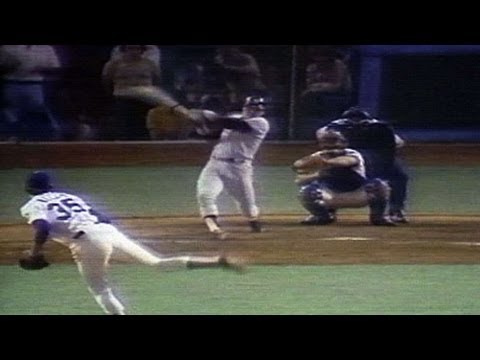
Bob Welch and Reggie Jackson, Game 2 1978 World Series

Unfortunately the CMA report reads like a lobbyist’s press release and Mercuriadis lays it down and calls them out. Even though this is a little inside baseball in the UK, Trichordist readers understand that the underlying issues involve every songwriter and involve every artist regardless of where you live and regardless of where you claim as home. Mercuriadis is exactly right, the money is there it’s just not getting to the right people.

The battle continues.

“[Hipgnosis] would like to thank the Competition and Markets Authority for acknowledging in its report today the lack of transparency in the music streaming market, and for highlighting the continued dominance of the market by the major labels and recorded music, along with the severely adverse impact this is having on songwriters’ ability to earn a living,” he said. “However, with 70% of all those responding to the CMA consultation calling for reform, it is regrettable that the CMA is not minded to investigate and address the clear failures its study identified.

“The Digital Culture Media and Sport select committee in its July 2021 report on the economics of music streaming – ‘Music streaming must modernize. Is anybody listening?’ – called for the CMA to address the economic impact of the music majors’ dominance.

“Today the CMA has not acted to address the impact on the creative songwriting community, and this is a missed opportunity to follow up on those concerns raised by Members of Parliament on the Digital Culture Media and Sport select committee. It is a disappointment for songwriters who earn pitiful returns from streaming, not because there is not enough to go round, but simply because it is not being shared fairly and equitably.”

Mercuriadis added: “Hipgnosis will continue to call for fundamental reform of a broken system which does not recognise the paramount role of the songwriter in the music ecosystem. We have always believed that the ultimate solution lies within the music industry itself and we will continue to advocate on behalf of songwriters with the major recorded music companies to push for a fair and equitable split. There would be no recorded music industry without songwriters.

“Legislative and government authorities have the power to redress the economic imbalance where major recorded music companies that own and control the major publishing companies are purposefully undervaluing the songwriter’s contribution. The Intellectual Property Office [UK’s Copyright Office] has a key role to play in redressing the imbalance and we will continue to support its work and efforts.

“Hipgnosis will continue to campaign for change at the highest levels, using our success to advocate and fight on behalf of the songwriting community and to take the songwriter from the bottom of the economic equation to the top.”

Save the date: A2IM Indie Week Panel with @musictechpolicy on the Impact on Indie Labels of Unfreezing Mechanicals

If you are coming to Indie Week, Trichordist readers might enjoy a panel Chris Castle is on to discuss the impact on indie labels of the Great Unfreeze! 

Entitled How the CRB’s Rejection of Frozen Mechanicals Will Affect Your Label?, the panel goes off at 10:30 am ET on Wednesday, June 15 at the New York Law School.

Speakers are Victor Zaraya: Concord (Moderator), Danielle Aguirre: NMPA (National Music Publishers’ Association), Glen Barros: Exceleration, and Chris.

If you want to read up on the issues that caused the Copyright Royalty Board to reject the failed settlement, here’s some background:

Copyright Royalty Board’s Rejection of NMPA, NSAI, Sony, Warner, Universal settlement

Copyright Royalty Board’s Reaction to Second Settlement Proposal by NMPA, NSAI, Sony, Warner and Universal

Survey Results from Songwriter Survey on Frozen Mechanicals

Comments:

Rosanne Cash

Helienne Lindvall, David Lowery, Blake Morgan

David Poe

Abby North, Erin McAnally, Chelsea Crowell

Kevin Casini

NMPA, NSAI, Sony, Warner, Universal Comment with Copy of MOU4

Chris will post about the panel afterward.

@DavidCLowery: Address on Acceptance of the American Eagle Award from the National Music Council

June 2nd 2022 Anaheim California

Hello and thank you. Thanks to the board for this award. President James Weaver. Chair Charlie Sanders. Thanks to David Sanders for help with logistics.

And while I have him here, special thanks to Rick Carnes for his help a few years ago with the University of Georgia Artists Rights Symposium.

I wanted to start out today, by saying it is a great honor to receive this award.

When I look at past recipients and see names like Odetta, Dizzy Gillespie, Quincy Jones, Lena Horne, Hal David, Phil Ramon and Kris Kristofferson, I feel like the protagonist in the Talking Heads song:

“How did I get here?”

You see, my original claim to fame is the song Take The Skinheads Bowling. How did the guy that wrote that song end up amongst such musical luminaries?

By way of introduction and explanation:

The song Take the Skinheads Bowling is the first single from a band I started in 1983 in Santa Cruz California.

The band is called Camper Van Beethoven. And it’s still around after 39 years.

I would describe that band as a psychedelic folk-rock garage band but we didn’t have a garage. We actually rehearsed in an attic.

Three flights of stairs… SVT.

Go figure.

Around the same time I started an indie record label to promote and distribute the records of Camper Van Beethoven. We later signed to Virgin Records.

I then started another band called Cracker. This band went on to have platinum hits. You’ve probably heard a few.

I produced albums by groups like Counting Crows.

I ran a recording studio complex for many years.

And in 2012 I began to speak out on behalf of artists at various technology conferences.

In particular I wrote a rather long essay, quite controversial at the time, “Meet the New Boss, Worse Than the Old Boss?”

In this essay I argued that the emerging digital landscape for music was one in which the new bosses (mostly tech companies) would pay nothing up front for our work, and very little on the back-end. I predicted this would shift most of the financial burden and risk onto those who could least afford it, the working class artist.

Unfortunately, my predictions were correct.

Now, It is important to note I am not hostile to technology and technology companies per se. Indeed I graduated with a degree in mathematics from UC Santa Cruz, and before Camper Van Beethoven became my full time job I worked as a computer programmer.

In addition I have had some success as a seed investor in technology startups. Since we are at NAMM I assume you all have heard of Reverb.com?

Technology is important in my life. It’s important to how I make music. Most other artists I know feel the same way. I don’t think technology companies and artists should always be at odds.

So let’s rewind for a second…

“I started a band in my attic (not garage) and later a record label.”

The foundational myth of Silicon Valley is the garage startup that becomes a global brand.
(Think Apple).

Look at my own startup: Camper Van Beethoven. A few kids in a faded beach town start a band. With a small personal loan from a singing cowboy-true story- we made a record and went from the attic to competing on a global scale in a few short years.

In the 80’s and 90s, this story was replicated, to different degrees, by hundreds of indie rock bands all across The United States.

And this story is not unique to the US or rock music. In1990 while traveling around Morocco I met many musicians who sold their recordings on cassettes in souks all across North Africa, the Middle East and southern Europe.

In 2014 I toured China as a cultural and Intellectual property ambassador for the US State Department. I met a Mongolian folk-rock ensemble that was doing essentially the same thing across central Asia.

If Silicon Valley is widely hailed for its entrepreneurial energy and innovation shouldn’t artists and bands also be praised and seen in the same light? We are certainly as creative.

We generate jobs and substantial economic activity. Some political scientists even think it was really American Pop Music that ended the cold war.

It has always seemed like something worth protecting to me.

Turning our attention back to this room, I see a similar entrepreneurial spirit in the boutique amp, instrument, and music software makers represented here by the National Music Council.

Conversely the big manufacturers and major rights holders represented here have problems that will feel familiar to artists:

The unlicensed use of their intellectual property and designs.

We have a lot in common.

Now this award is ostensibly given to me for my work as an artists rights activist. But I want to put that in a bigger context.

Many of you may have first heard of my efforts on behalf of artists when I filed a class action lawsuit against Spotify for failing to pay self published songwriters.

This, indeed, was a milestone as it gave songwriters the first opportunity in the digital age to extract some concessions from digital services.

Also the 2018 Music Modernization Act may be understood as an unintended consequence of this lawsuit.

But in the big picture, this lawsuit was a minor skirmish in what I call “the long war” to protect the rights of the creators.

And In this long war, I submit, I am just a foot soldier.

I look at the members of the National Music Council, whether music creators, unions, manufacturers, music associations, labels, educators or performing rights organizations and I can think of many many times when I have been aided in my efforts by the good folks from these organizations.

Because ultimately, we have this in common:

We are all fighting to protect our intellectual property

our copyrights,
our neighboring rights,
our patents,
our trademarks
and our designs

We fight to protect them from freeloaders that too often convince policymakers and courts that in the name of “innovation” they should have access to our Intellectual Property without permission or payment.

Sadly this is nothing new. There have always been and there will always be unscrupulous schemers that claim their exploitative business model is somehow “the future.”

The problem is, that in their vision of “the future” they get rich while little of that money trickles down to us. Those that create the intellectual property.

To paraphrase Led Zeppelin: The scam remains the same.

But it is here that the National Music Council has always been helpful. The council and its members provide the long lasting intellectual infrastructure that allows individual artists like myself, to fight.

To fight Today.

To fight 5 years from now

and to fight into the foreseeable future.

I humbly accept this award as someone who has simply followed in the footsteps of other council members and award recipients.

Keep up the good fight my friends,

You are truly on the right side of history.

Series 3 of the @ArtistRights Watch Podcast is here! Nik Patel, @DavidCLowery, @MusicTechPolicy and @KCEsq Discuss The Future of Frozen Mechanicals — Artist Rights Watch

Series 3 of The Artist Rights Watch Podcast is here! Nik, David, and Chris are joined by attorney Kevin Casini to talk about the latest with the Copyright Royalty Board and mechanical rates in the Phonorecords IV proceeding and discuss alternatives so songwriters are better represented at the CRB compared to the status quo. 

Check out the podcast here!! Available on all platforms! 

ARW Podcast S3E1: Unfreezing Mechanicals show notes

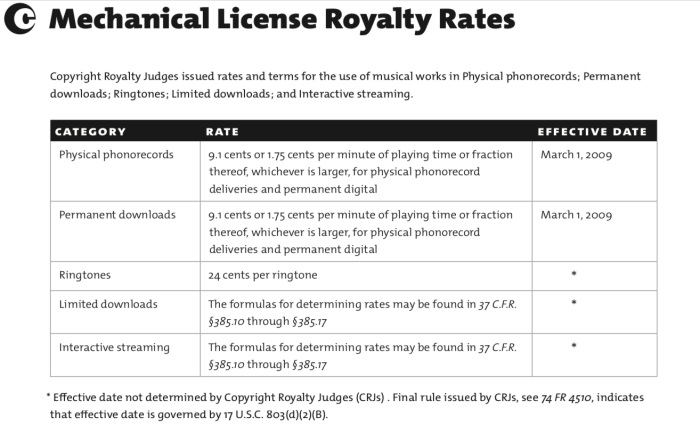
On the this episode of the Artist Rights Watch, Nik, David, and Chris sit down to talk about the recent developments with the CRB and mechanicals with lawyer and advocate, Kevin Casini. The Copyright Royalty Board who herein will more than likely be referred to as the CRB, ‘is a US system of three copyright reality judges who determines rates and terms for copyright statutory licenses and make determinations on distribution of statutory license royalties collected by the US Copyright Office.’ The US mechanical royalties are determined by the CRB and they meet every 5 years to determine the rate. Songwriter groups argued for a higher rate, and the CRB agreed. On March 29, 2022 the CRB agreed to unfreeze the $0.091 mechanical royalty rate which would commence a fight for a new rate in the 2023-2027 period. Over the past few years, there has been numerous criticisms about the constant rule for freezing the mechanical royalty rate. The royalty rate currently is $0.091 which was set back in 2006, and frankly, songwriters are making less  money due to economic inflation.

Show Notes and Background Materials

Copyright Royalty Board’s Rejection of NMPA, NSAI, Sony, Warner, Universal settlement

Survey Results from Songwriter Survey on Frozen Mechanicals

Selected Frozen Mechanicals Comments:

Rosanne Cash

Helienne Lindvall, David Lowery, Blake Morgan

David Poe

Abby North, Erin McAnally, Chelsea Crowell

Kevin Casini

NMPA, NSAI, Sony, Warner, Universal Comment with Copy of MOU4

Below are some links about Guest Kevin Casini:

Tweets by KCEsq

https://kcesq.medium.com

Below are some links for further reading:

https://completemusicupdate.com/article/us-copyright-royalty-board-rejects-proposal-to-keep-mechanical-royalty-on-discs-and-downloads-unchanged/embed/#?secret=CDnkY1xuT7#?secret=GoUJkY3oLr

https://variety.com/2022/music/news/copyright-royalty-board-crb-rate-1235219872/

https://musictechpolicy.com

https://www.crb.gov

https://variety.com/2022/music/news/songwriters-win-copyright-royalty-board-mechanical-royalties-1235259518/ 

https://www.musicbusinessworldwide.com/record-labels-and-publishers-ink-major-settlement-moving-from-9-1-cents-to-12-cents-per-track-for-us-mechanical-royalties-on-physical-sales1/

Below are our social links and terms of use:

Chris: http://www.christiancastle.com/chris-castle

David: https://twitter.com/davidclowery?s=20

https://www.instagram.com/davidclowery/

Nik: https://www.instagram.com/nikpatelmusic/

www.nikpatelmusic.com

Website: https://artistrightswatch.com

Facebook: https://www.facebook.com/artistrightswatch

Twitter: https://twitter.com/ArtistRights?s=20

Terms of Use: https://artistrightswatchdotcom.files.wordpress.com/2021/01/arw-podcast-terms-of-use-v-1-i-1.pdf

Intro/Outro song: “All My Years” by Nik Patel

More Bizarre Goings On At the Copyright Royalty Board, this time with additional Google, fava beans and a fine Chianti

[This post first appeared on MusicTechPolicy]

by Chris Castle

One of the main beefs I’ve had with the Copyright Royalty Board is the secrecy in plain sight. Very few people follow what’s going on there, yet every time you move a rock, another toad hops out. Now that we are turning our attention to the streaming mechanical proceeding–which as we were told ad nauseam is the important one, don’t you know–the first thing we find is the shameful antics of Google on full display.

Remember–the Copyright Royalty Board split the rate proceedings in two. One was for the physical and download mechanical (paid by record companies) and one for the streaming mechanical (paid by digital music services), all under the compulsory license which was adopted for the huge benefit of each music user. And of course if it’s compulsory it takes (there’s that word again) away the rights of songwriters to bargain and set their own price without government intervention. (There are alternative ways to do this such as the Nordic model of extended collective licensing that David Lowery discussed in an important blog post a few years ago.)

The Copyright Royalty Judges are given the unenviable task of divining what a willing buyer would pay a willing seller in the open market. Of course that willing/willing rate is a complete legal fiction because in the novella of statutory rates there hasn’t been an open market for over 100 years which for rate setting purposes means there has never been an open market for songwriters. Why? Not sure, really, but there must have been an original sin, the novella tells us so. We can only assume that when that writer room door closes, those pesky songwriters just naturally start colluding, unlike Facebook, Amazon, Apple, Spotify and especially Google. Google who have never been prosecuted for violating the Controlled Substances Act for which they paid a $500,000,000 fine and who we let take over our children like they were a trustworthy television network or something.

So since there’s never been an open market because the government took the songwriters’ rights back in 1909 in this case (and 1941 in the case of the ASCAP consent decree), you can well imagine that a cottage industry of executives, lawyers and lobbyists have grown up to service the bizarre rate setting process that has totally lost their way in my view. It’s hard to believe when we read the shenanigans going on in front of the Judges that this is all designed to determine the value of songs. There are 38 lawyers billing time in the streaming proceeding which will raise the transaction cost of the proceeding to an absurd and Kafka-esque level, but it does help you understand why the lobbyists think that proceeding is so important–it’s definitely more important to them.

Which leads us to the extremely Googley discovery request that Google has filed and the Judges appear to have approved. In a nutshell, Google has said that they only way that the rates can be set is if the Judges force the National Music Publishers Association and the Nashville Songwriters Association International to turn over all to Google of your accounting statements and licenses so Google can determine if the past earnings back up the NMPA and NSAI royalty claims made by their many Lecterian lawyers.

But don’t feel bad–it’s not like they will be turning over the data to the public, just to Google. What a relief, right?

Here’s what the order actually says:

That’s right–Google wants “Music Publishers” to produce all the royalty statements for the most successful songwriters in the world to “test” whether songwriters are struggling financially. Given that this will involve many, many statements which probably have to have personally identifiable information redacted, it’s going to take many hours which is great for those who get paid by the hour but not so great for those who get paid by the song.

Is there no other way to determine whether mechanical royalties have declined to subsistence levels? Surely there must be, and you know what else? There’s also a way to test whether mechanical royalties have declined to below subsistence levels which is really the point here, right?

Yes, I got your test right here, soulless Google lawyers.

But wait, there’s more. Google also wants to raise transaction costs on songwriters by forcing the production of all “free market” licenses. (“Free market” benchmarks are themselves a laughable concept in a hugely distorted market that still suffers from the governments negligent wage and price control of a 2¢ rate from 1909 to 1978).

And given the parameters of the Copyright Royalty Board, the Judges seem to have granted Google’s request in part for the statements and entirely for the licenses.

You do have to ask whether there’s anything songwriters can do to keep their confidential royalty statements and license agreements out of the hands of the Leviathan of Mountain View. It does seem that there could be a process to intervene in the Phonorecords IV case to stop this from happening. Just because Google is trying to prove that songwriter income has not been decimated when we all know it has been does not seem to require the humiliation of having your royalty statements put on display. This is definitely something to speak about to your lawyer and your publisher.

This entire exchange is exceptionally bizarre because the “Copyright Owners” are the NMPA and NSAI, neither of whom own copyrights, send statements or enter licenses. And yet there seems to be an assumption that some group of publishers are bound by the order. I can only assume that the publishers who are on the receiving end of this order are the music publisher affiliates of the CRB participants at the group level of Sony, Universal and Warner, although the order doesn’t really demonstrate that connective tissue because…well, it doesn’t. Publisher affiliates are not participating and if the principle and policy is that every stand alone affiliate of a corporate parent is participating and subject to discovery because the corporate parent is…well, that’s an interesting proposition.

Before you heave a sigh of relieve that only the songwriters signed to a major will have their privacy invaded by the greatest privacy invader of all time, that would be Google hands down, just realize the cost of what can happen if you were to have the temerity to think you could participate in the Copyright Royalty Board. 

You can have one of the biggest corporations in commercial history that rips you off every minute of every day and essentially prints money in the public market that they use to destroy your rights and creations sick their army of soul-crushing lawyers on you to prove that songwriters are dying penniless because of Google’s income transfer. And still pay you a number that starts many decimal places to the right and laugh about it over steaks at The Palm with fava beans and a fine Chianti.

Keeping the Songwriter Survey Open!!

Thanks for the HUGE response to the songwriter survey on what you think the new unfrozen mechanical rate should be!! The response has been so strong we’re going to keep the survey open so more of you can participate.

This Survey Monkey questionnaire is anonymous and easy to take–3 minutes to complete–and you could really help a lot by giving your opinions on what you think the rate should be! We will post the results so everyone can see.

You can start the survey at this link. Thank you!

The Effect of Unfrozen Mechanicals on Controlled Compositions

[A “controlled compositions clause” explainer for artists and songwriters by Chris Castle on MusicTech.Solutions]

Nice post by Ed Christman in Billboard explaining the continuing crisis on frozen mechanicals. Ed comes up with a rough justice quantification of the impact on songwriter and music publisher revenues in light of controlled compositions clauses in recording contracts that apply to (a) songs written and recorded by artists, or (b) songs by “outside writers” if and only if the artist can get the outside writer to accept the controlled compositions terms and rates.

For those reading along at home, one theory (aside from sheer leverage) that gets used in this context is that the artist/writer can agree on behalf of all co-writers to accept the terms of the license granted by the artist to the label in the controlled compositions clause because they are co-owners of an undivided interest in the song copyright and can grant nonexclusive licenses in the whole subject to a duty to account provided the license is not economic waste or self-dealing. Let’s just leave all that where it lays for now, but that story has never really been properly challenged–particularly the economic waste part given the rate fixing date issue and even the frozen mechanicals crisis itself. We’ll come back to that bit some other time.

The rate fixing date is a key part of the discussion for understanding the impact of unfreezing mechanicals. So what is that rate fixing provision? 

Remember, the controlled compositions clause starts with reducing the minimum statutory mechanical rate in the US (and in theory in Canada subject to MLA) in effect at a point in time. That point in time is either commencement of recording (booo!), delivery, release or sale of a unit embodying the song at issue. Remember that the labels only pay mechanical royalties on physical and downloads (the rates at issue in the frozen mechanicals crisis)–streaming services pay for the interactive streaming mechanicals (and there is no mechanical for webcasting, a whole other beef).

You say, wait–isn’t the mechanical rate 9.1¢? Why does it matter when the record was recorded, delivered, released or sold? Won’t the rates all be the same? And you’d be right if you were asking about a record recorded and released in 2006 or after, or a record recorded and released between 1909 and 1978, like, say some titles by Bob Dylan, The Beatles, Otis Redding or Miles Davis. 

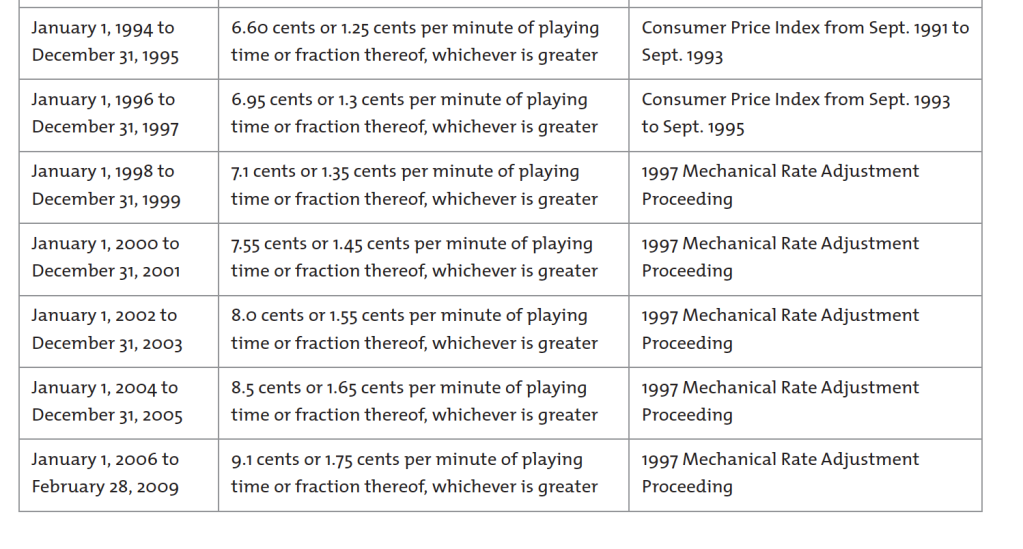
But–it wasn’t always this way. The mechanical royalty rate was set at 2¢ by Congress with the first statutory license, i.e., compulsory license, in 1909 and did not change until the 1976 revision of the US Copyright Act effective 1978. The rate then began to incrementally increase over the years until it reached 9.1¢ in 2006, a phased increase that was to compensate for Congress failing to increase the rate for 70 years, aka “the Ice Age”. The Congress really screwed up songwriters’ lives by freezing the rate at 2¢ during the Ice Age and songwriters and their heirs have been paying for it ever since, right up to the 2006-2022 period, aka “the Second Ice Age” or the Return of the Neanderthals. 

In an effort to help songwriters shovel out from the Ice Age, The Congress also authorized indexing the minimum rate to inflation from 1988 to 1995. Indexing is again on the mind of the Copyright Royalty Board right now–bearing in mind that an increase in rates due to inflation has nothing to do with the intrinsic value of the song copyrights so there’s no confusion. Indexing simply applies any increase in the consumer price index to the statutory rate and preserves buying power. In a way, it is the opposite of a case about value. Indexing assumes that the value issue was already decided (in this case in 2006) and simply preserves buying power so that the “nominal” rate of 9.1¢ in 2006 can still buy the same amount of goods or services in 2022 (or 2023 in the case of the CRB rate period). Otherwise the “real” rate, i.e., the inflation adjusted rate, is not 9.1¢ it is about 6¢.

Remember–the proposed rate increase to 12¢ by the CRB is not about value, it’s about buying power because it’s solely focused on inflation.

So back to controlled compositions. It is no coincidence that at the same time as the 1978 increases were phased in, the labels established controlled compositions clauses that knocked songwriters back down. They would probably not have gotten away with freezing by contract at 2¢ so they let the rate float up but much more slowly and with several caps. The first cap is the maximum number of songs, usually 10 or 11. The next cap is the infamous 3/4 rate, where the label pays based on 75% of the minimum statutory rate. But the third cap is the rate fixing date and that’s the one we want to focus on in the unfrozen mechanicals context.

In simple form, it looks something like this contract language:

If the copyright law of the United States provides for a minimum compulsory rate: The rate equal to seventy-five percent (75%) of the minimum compulsory license rate applicable to the use of musical compositions on audio Records under the United States copyright law (hereinafter referred to as the “U.S. Minimum Statutory Rate”) at the time of the commencement of the recording of the Master concerned but in no event later than the last date for timely Delivery of such Master (the applicable date is hereinafter referred to as the “Copyright Fixing Date”). (The U.S. Minimum Statutory Rate is $.091 per Composition as of January 1, 2006); 

The way that the statutory rate increases come into the controlled compositions clause is because from 1978-2006 the statutory rates increased across albums delivered across album cycles. If you consider that the rates used to increase about every two years and that an album cycle can be two years, it’s likely that LP 1 would have a lower rate than LP2, LP 2 than LP3 and so on right up to 2006.

Also remember that the increases in rates are prospective, meaning that the controlled compositions rate on recordings delivered in the future will, of course, get the higher rate, even if the past rates don’t change which they don’t, at least not yet. Also consider that permanent downloads often are excluded from controlled comp treatment and are paid at full rate, probably on the rate fixing date in the artist’s agreement. Sometimes the download rates “float” or increase in line with increases in the statutory rate, but that’s part of individual negotiations.

If there is an outside songwriter who does not agree to accept the artist’s controlled composition rate (and there are plenty of these) what happens? Typically the label will account to the outside writer at their full minimum statutory rate but will deduct that payment from the maximum aggregate mechanical royalty payable to the artist (i.e., the 10 song cap). There’s some twists and turns to this involving rates on different units “made and distributed”, but for our purposes there is one clear thing to understand:

Because of the rate fixing date which is frozen by contract (the Mini Ice Age) the artist/songwriter will be paying a higher mechanical to the outside writer from a frozen royalty “pool”. 

This is why you should always, always demand “protection” for at least one outside song in your contract and then review each album to determine if that needs to be increased. This is particularly true for records made in places like Nashville where the record company will demand you work with “A” list songwriters (assume none of whom will take 3/4 rate) and then try to deduct the difference between the uncontrolled rate and the controlled rate from you (and if it gets big enough, cross it to your record royalties). (Not only will A list writers not take the 3/4 rate, they’re pissed because they can’t charge you double stat like they do double scale for sessions.)

Example: You have a 10 x 3/4 rate cap on mechanicals, the “cap rate”. That’s the 68.25¢ album rate you hear about (10 x .75 x 9.1¢). Say you have 10 songs on your album and you wrote all of them. You get the entire 68.25¢. If you had two outside songs whose writers get 9.1¢ under current rates, you deduct 18.2¢ from the cap rate, and that leaves 50.05¢ as the “controlled pool” or the total mechanical royalty payable to the artist/songwriter (actually all controlled writers, but leave aside that wrinkle).

So you can see, that’s no longer a 75% rate, it’s actually more like a 55% rate.

Now let’s assume that the new rate is 12¢. Same calculation, two outside songs now get 24¢, but the cap rate stays the same because of the rate fixing date. During the Mini Ice Age, i.e., while that cap rate is fixed at 9.1¢ x 10 x .75, the controlled pool now is expressed as 68.25¢ – 24¢ = 44.25¢, or about 48% (44.25 ÷ 91). The artist’s publisher is not going to be wild about that; the outside writer’s publishers will be thrilled.

This will start to true up on the next LP that takes a rate fixing date after the 12¢ rates go into effect. In that situation you’d be increasing both sides of the equation, so the cap rate would increase to 90¢ (10 x .12 x .75). The outside writers still get 12¢ each for two songs (or 24¢) which is deducted from the cap rate to get a controlled pool of 66¢. The true controlled comp rate is then back to about 55%.

These effects will be less pronounced if you have protection for one or more songs (or fractions of songs) or you have a higher cap, say 11 or 12 instead of 10 (with corresponding increases on other configurations). But you see the trend line.

I think this leads to the conclusion that increasing the statutory rate is a huge step forward and we should all be grateful to the Judges. The rate fixing dates for catalog titles (really the entire rate fixing date concept) must also be considered and any new effort to tweak the controlled compositions clause to effectively nullify the Judges’ rate increase will no doubt cause further conflict.

One day Congress will again act to reduce the effects of the controlled compositions clause and especially the rate fixing date, but in the meantime the Judges may well visit the issue to the extent they are able before we see the Return of the Neanderthals.

What’s Next for Unfrozen Mechanicals? One proposal.

It was a big week for songwriters last week! The Copyright Royalty Judges rejected the frozen mechanicals settlement put forward by the majors in the current rate-setting proceeding at the Copyright Royalty Board thanks in part to the best audience in the world–that would be you! All that hammering on the issue paid off.

We also acknowledge the hard work of all the commenters who spoke straight from the heart and of course songwriter George Johnson who has been fighting the good fight in the Copyright Royalty Board all by himself for years now. We’re also very grateful to the Judges for a well-thought out ruling and a thorough vetting of the issues, George’s many filings and the songwriter public comments.

The question we’ve heard a lot in recent days is where do we go from here? Clearly the answer is “Up” but how far up is the question. We need to be mindful of the economic impact that increased rates will have on independent labels in particular, but at the same time acknowledge that all record companies have gotten the benefit of frozen rates for 16 years and that songwriters have taken it in the shorts for a long, long time.

The Judges seem to be hinting at a deal in their ruling (remembering this is the rate for physical and downloads only (called “Subpart B rates”) and not for Spotify-type streaming which is not affected by these rate changes). Here’s the relevant quote from the ruling:

Commenters advocated application of an inflation adjustment beginning, at a minimum, in 2006. See, e.g. [Songwriters Guild of America] Comments at 4; [Monica] Corton Comments at 4; [Kevin] Casini Comments at 4. According to the proponents of a cost of living adjustment (COLA) applied to the 2006 rates, that adjustment would yield a 2021 royalty rate of $ 0.12 (an upward 31.9% inflation adjustment over the sixteen-year period). See, e.g., SGA Comments at 4. SGA conceded that the COLA extrapolation cannot be considered dispositive on the issue of new rate-setting, but they contended that it does “starkly demonstrate the outrageous unfairness that has been imposed on the music creator community over a period of more than an entire century.”

Step one, then, could be to increase the minimum statutory rate to 12¢ (or 13¢ depending on how you do the math) with customary adjustments for the “long song” formula for songs over 5 minutes.

That increase in the rate would be significant and probably the biggest rate increase ever on a percentage basis for the statutory rate. Will that satisfy everyone? Probably not, but it’s a step forward.

But–and this is a big but–that’s not the end of the story. We do not want to be right back in the same position in a few years time. One way to avoid this is to increase the new rate for inflation every 12 months (called “indexing”) the same way that the webcasting rates are indexed for sound recordings.

The Judges also hint at indexing as a potential solution to avoid just another rate freeze:

[George Johnson] has long advocated inclusion of an inflation index in royalty rates set by the Judges, including the…rates at issue here. In support of his advocacy, GEO has filed 27 pleadings, including motions seeking imposition of an inflation index on section 115 rates and periodic notices of U.S. inflation rates. His plea is bolstered by the many commenters who, almost unanimously, included this suggestion.

So the way this would work is that starting in 2023, the current 9.1¢ rate would be increased to 12¢. After 12 months, the rate would be increased by the Consumer Price Index (the CPI-U rate) for each 12 month period until 2027 when new rates would get decided by the CRB in the next rate proceeding (Phonorecords V). Example: If the CPI is 10%, then the minimum statutory rate would increase to 13.2¢ for the next 12 months. If the CPI in the second year was also 10%, then the 13.2¢ rate would be increased to 14.52¢ and so on until the last year of the period (2027). (Of course we can’t tell today what the CPI will be in 2023.)

Given the Judge’s rejection of the frozen rates, it is very doubtful that there will ever be another freeze, but we have to stay alert and vocal. When the new rates come up, we all have to pay attention.

It’s important to remember that “indexing” to inflation just preserves buying power. Meaning that 12¢ today is what 9.1¢ was worth in 2006. Would it be the fair thing to index all the way back to 1909? Sure, but while the Judges hint at going back further (the “at a minimum” reference), the Judges may not be inclined to go further back than 2006 when the current freeze started, but we’ll see what happens.

We’d be very interested in hearing from you with any questions you have or other ideas for solutions. Obviously, this post is just sharing ideas with our audience and isn’t a formal statement by any particular person or group. There may be a number of proposals coming out and we’ll of course post them on Trichordist.

It must also be said that George Johnson has yet to weigh in on the situation and may very well have a different idea. There’s also some twists and turns to sort out, such as the black box “MOU” (the fourth of its name) but especially the controlled compositions rates that the Judges discussed in some detail (as Judge Barnett said, “The disparity between the static rate and the dynamic market is even more stark when considering the “controlled composition clause.””).

In any event, feel free to comment and we welcome the discussion.