Should take down mean stay down? EU’s Big Internet quiz leaks | The Register UK

Wha-wha-whackamole

Safe harbour’s takedown provisions mean that rights holders must play whackamole, as the black supply chain ensures the goods reappear in the shop window, usually the very next day. Rightsholders file millions of takedown notices with little effect. The BPI alone has filed 66 million with Google in the past year.

The clumsy YouTube deal with indies was never supposed to become public, but it simply made clear what everyone already knew: the platform held all the power, and takedowns were ineffective. But as one US legal expert told us, “limiting liability was never intended to be a shield for criminal behavior”.

READ THE FULL STORY AT THE REGISTER UK:
http://www.theregister.co.uk/2015/09/14/should_takedown_mean_staydown_eu_internet_probe_leaks/?page=2

Americana Music Conference Goes Down the Streaming Rabbit Hole

Music Technology Policy

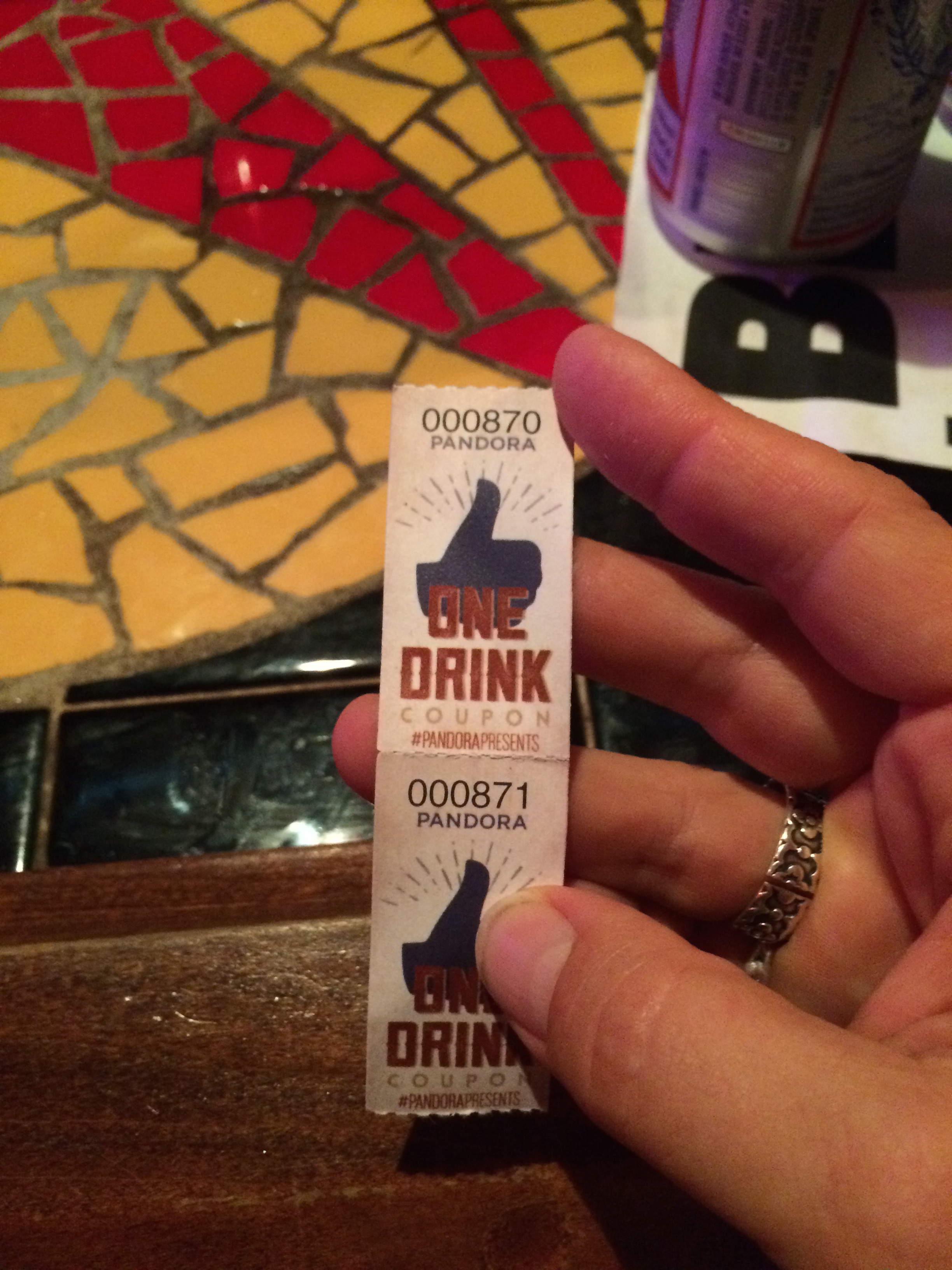
Americana Drink Ticket

A conference has to make a buck, you know?  We all understand that, and the Americana Music Conference is no exception.  The conference that is attached to the Americana Music Awards is a stalwart in our business and has managed to maintain its true authenticity for a very long time.  We appreciate the sponsors who line up to support the show and the conference–it’s a great group.  For the most part.

How anyone thought that it was a good idea to include Pandora in the mix of sponsors is a bit beyond me.  Pandora is getting sued in the Turtles class action because they don’t pay to play artists who happened to record before 1972.  That list includes a huge number of Americana, bluegrass, roots and country music artists.  So how the Americana Music Conference could allow these people in the door is beyond me.  Well, if they’re…

View original post 449 more words

ATX Music Office and TALA Host “Get Your Money!” From SoundExchange and the Union IP Funds

Another great result from the Austin Music Census!

Music Technology Policy

If you live in Austin, the ATX Music Office and Texas Accountants and Lawyers for the Arts are hosting a workshop to help you “Get Your Money!”  This workshop is focusing on SoundExchange and the union IP funds.  Both SoundExchange and the AFM/SAG-AFTRA IP Rights Distribution Fund make a big effort to encourage artists and musicians to sign up and claim money that each organization may already be holding for creatives.

REGISTER AT EVENTBRITE ADMISSION IS FREE!

The workshop is the first of a series co-sponsored by ATX Music, Texas Accountants and Lawyers for the Arts and Capitol View Arts.

This is a “how to” event led by Don Pitts of the ATX Music Office, Sean Glover of SoundExchange and TALA volunteer attorney Chris Castle to help Austin artists sign up for SoundExchange and the union IP funds.  The idea for the workshop grew out of the ATX Music…

View original post 191 more words

95 Percent of Streaming Music Catalogs Are ‘Irrelevant’ to Consumers, Study Finds | Digital Music News

So about that long tail and digital empowerment for indie artists, hmmmmmm…

So why aren’t those numbers better?

Mulligan feels that a big part of the problem is that the average consumer simply doesn’t care about enormous selections and vast catalogs, and they’re definitely not willing to pay for it. “Most people aren’t interested in all the music in the world and most people aren’t interested in spending $9.99 (or the local market equivalent) a month for music,” Mulligan continued.

“Indeed, just 5% of streaming catalogues is regularly frequented. Most of the rest is irrelevant for most consumers.”

Surprise! Not all music is equal despite how much of it is being made.

Charge a premium for top shelf professional music and let everyone else give their music away if they want to. Stop exploiting professional artiss into free streaming schemes and scams.

As we reported in our post “Streaming Is The Future, Spotify Is Not Let’s Talk Solutions” we suggested consumer based tiered pricing based on value proposition. Glad to see this is starting to get some notice.

READ THE FULL POST AT DIGITAL MUSIC NEWS:
http://www.digitalmusicnews.com/2015/09/10/95-percent-of-streaming-music-catalogs-are-irrelevant-to-consumers-study-finds/

Guest Post: @JanitaArtist’s #IRespectMusic Interview for Forbes That Forbes Refused to Publish

Music Technology Policy

Janita

[Editor Charlie sez: Hot on the heels of the Steven Johnson debacle in the New York Times, we find out that our friend Janita was approached by Forbes to do an interview about the #irespectmusic campaign–an offer that was quickly withdrawn once Forbes found out what she had to say.  So naturally…here it is.]

Guest Post by Janita

I have great respect for journalists, and I respect Forbes magazine. As a newly-minted American citizen myself, I’ve gained a deep love and understanding for the inherent––in fact unique––importance reporters have in U.S. society. So, I was excited and honored when told I’d been “confirmed to be the subject of a major Q&A with Forbes.com,” specifically about my involvement in the #IRespectMusic campaign.

I was sent five thought provoking questions from the writer at Forbes, and I answered them as authentically and truthfully as I could. I sent the completed written interview back.

View original post 1,365 more words

Artists Rights Watch – A Collection Of Weekly Required Reading 09.08.15

Artists and Internet Stories from around the Web.

Why intellectual property rights matter | The Washington Times
http://www.washingtontimes.com/news/2015/sep/3/randolph-may-seth-cooper-why-intellectual-property/
* The Founders believed ownership of one’s labor is a natural right

What the Internet’s free culture has cost us in art | PBS Newshour
http://www.pbs.org/newshour/bb/internets-free-culture-cost-us-art/

Film Producers Sue 16 Popcorn Time Users in Bid to Curb Piracy | PC Mag
http://www.pcmag.com/article2/0,2817,2490549,00.asp

The MovieTube Litigation Part I: Who Needs SOPA? | Law Theories
http://lawtheories.com/?p=2269

Hollywood, Silicon Valley Sharpen Their Swords in Piracy War | Variety
http://variety.com/2015/digital/news/hollywood-silicon-valley-internet-piracy-1201572854/

Amazon, Facebook and Google have the same secret  | Salon
http://www.salon.com/2015/08/30/amazon_facebook_and_google_have_the_same_secret/
* Our modern tech monopolies made billions and transformed the economy in different ways, but this was the base

With advertising on WDBJ-TV murder clips, YouTube sinks to new low | Vox Indie

With advertising on WDBJ-TV murder clips, YouTube sinks to new low

Transparency for Thee But Not for Me: Google Tries to Censor India’s Link Rigging Investigation of Google | MTP
https://musictechpolicy.wordpress.com/2015/09/04/transparency-for-thee-but-not-for-me-google-tries-to-censor-indias-link-rigging-investigation-of-google/

The Pirate Hunter | Williamette Week
http://www.wweek.com/portland/article-25279-the_pirate_hunter.html

The More Money Spotify Makes, The Less Artists Get Paid | Digital Music News

The More Money Spotify Makes, The Less Artists Get Paid

A Stream on Apple Music Pays Songwriters And Publishers 33% More Than A Stream On Spotify | Hypebot

A Stream on Apple Music Pays Songwriters And Publishers 33% More Than A Stream On Spotify

Making Free Work (Hint Cannibalize Radio Not Sales) | Music Industry Blog
https://musicindustryblog.wordpress.com/2015/07/24/making-free-work-hint-cannibalize-radio-not-sales/

Imogen Heap: saviour of the music industry? | The Guardian
http://www.theguardian.com/music/2015/sep/06/imogen-heap-saviour-of-music-industry


[RELATED] Understanding Music And Blockchain Without The Hype | Trichordist

https://thetrichordist.com/2015/08/20/understanding-music-and-blockchain-without-the-hype-2/

WashingtonWatch: Pre-’72 Royalty Battle Adds Another New York Lawsuit | Grammy Pro
https://www.grammypro.com/advocacy/news/washingtonwatch-pre-72-royalty-battle-adds-another-new-york-lawsuit

Radio Giants Facing Bicoastal Legal Demands to Stop Playing Pre-1972 Songs | Billboard
http://www.billboard.com/articles/news/6678790/radio-giants-facing-bicoastal-legal-demands-to-stop-playing-pre-1972-songs

What EMI’s six-month sample amnesty means for the music industry | The Guardian
http://www.theguardian.com/music/2015/sep/01/emi-sample-amnesty-means-for-the-music-industry

Rosanne Cash: ‘I’ve always been a union member’ | Local802afm
http://www.local802afm.org/2015/08/rosanne-cash-ive-always-been-a-union-member/

‘Halo,’ ‘Destiny’ composer Marty O’Donnell wins lawsuit against Bungie | Engadge
http://www.engadget.com/2015/09/04/halo-destiny-composer-marty-odonnell-wins-lawsuit-against/

According To U.S. Big Data, We Won The Vietnam War | Forbes
http://www.forbes.com/sites/jonathansalembaskin/2014/07/25/according-to-big-data-we-won-the-vietnam-war/

Robert Reich: The sharing economy will be our undoing | Salon
http://www.salon.com/2015/08/25/robert_reich_the_sharing_economy_will_be_our_undoing_partner/

The Hypocrisy of the Internet Journalist | Medium
View at Medium.com
* I’m selling you out as hard as I can, and I’m sorry.

So Prince released his new album today Exclusively on TIDAL… how long will that last before it’s on YouTube?

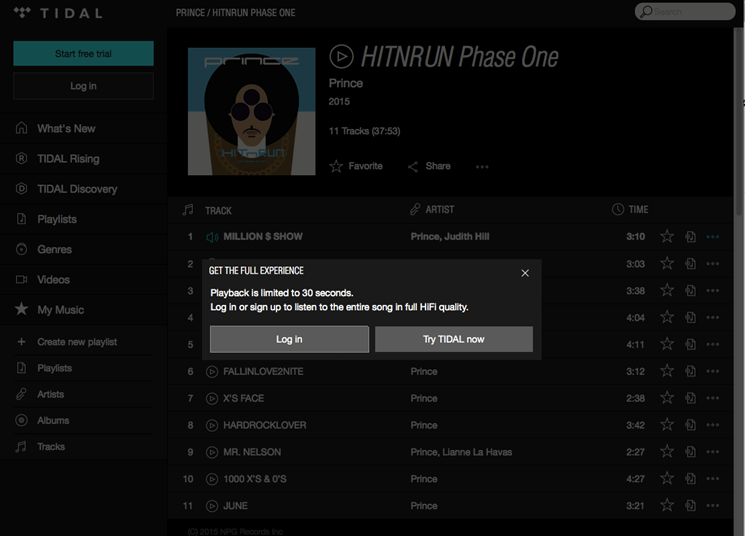
Today Prince released his new album “HITNRUN Phase One” exclusively on TIDAL. The real question is, how long will it be before the album in part or in whole is on YouTube and every other pirate site in the world?

image001

You can listen to :30 of each song at the link below without signing up for the service.
http://listen.tidal.com/album/50767183

Music Tech Policy detailed why we can’t have nice things in the post “The Great Disappointment: Tidal Highlights YouTube’s Moral Hazard for All the World to See”.

Part of Tidal’s business model relies on artists being able to grant exclusives.  The concept of an exclusive requires property rights that are respected by other platforms in the channel.

Imagine if Showtime began showing rips of Game of Thrones day and date with its HBO release.  Forget that HBO would sue them and win.  The actors, screenwriters, producers and the vast below the line personnel would think twice about working for Showtime in the future.

And that’s exactly what should happen to YouTube.

Beyonce released “Die With You” on Tidal as an exclusive.  Everyone at YouTube knows that it was intended to be an exclusive just like everyone at YouTube knows that YouTube could keep the track from being uploaded to YouTube if YouTube wanted to do that.

YouTube has worked hard at getting the world to accept the concept of “user generated content” as some kind of great cultural event–even, when like “Die With You”, there isn’t anything particularly “user generated” about it, unless you call a one-to-one rip of Beyonce’s track that was distributed in clear violation of Beyonce’s rights “user generated”.

READ THE FULL POST AT MUSIC TECH POLICY:
https://musictechpolicy.wordpress.com/2015/04/07/tidal-highlights-youtubes-moral-hazard-for-all-the-world-to-see/

“I Ain’t Gonna Work On Google’s Farm No More” | Creators are Forced Labor* On The Ad-Funded Piracy Fields Of The Advertnet

Advertising is killing internet. Soon most online advertising will be forced pre-rolls of TV commercials. You finally have a DVR to skip commercials, and soon there will be no way to avoid them. Do you really think this is what what the internet’s founding founders had envisioned? One great big inescapable advertising machine? No, we didn’t think so either.

Creators are now forced labor* on the digital fields of the AdvertNet, where the Borg like overlords of internet advertising have forced us into being unwilling participants on their digital plantations against our will. We have no defense against the advertising funded, illegal exploitation of our labor.

Now we want to be clear, we’re not opposed to advertising in general, the advertising industry overall or the many highly talented creatives who work in advertising. We all love those Superbowl ads, right? And let’s not forget that many a band in recent history has found fortune from a well placed song in a high profile commercial (Hello, Phoenix).

No, we’re talking about the highly invasive, privacy invading, personal data tracking, internet advertising slathered on pirate sites that illegally distribute copyrighted works and destroy the livelihoods of professional artists and creators against their will.

Digital Advertising Agencies are on the wrong side of artists rights. They have sold us out.

Here’s the elephant in the room. The internet as a business has a math problem and it goes something like this. There are only a few ways to make money on the online. First is transactional sales where the company can take a margin on each transaction (Amazon, Itunes, Etc). Second is a transactional service where the company can take a margin on each transaction (Uber, AirBnB, etc). Third is subscription based access to content and software (Netflix and Adobe respectively). Fourth is advertising for pretty much everything else including the big categories of Software As Service or SAAS. SAAS models including everything from Google, Facebook, Twitter and Instagram to newspapers, blogs and community based bulletin boards like Reddit, etc.

The fundamental problem here is attempting to transform all businesses to advertising supported models. This is because the largest most successful internet company ever (Google) just happens to work under that model. But the economics at large don’t generate enough revenue to pay for the cost of labor for the production of art, photography, music, movies, book, etc being distributed.

Think about it. How could it be possible that everything that once required transactional revenues to be sustainable can now be paid for with just advertising revenue? It can’t. Not under current models that do not allow for scarcity and exclusivity.

Scarcity and exclusivity are what make broadcasting models work. Television networks invest in creating exclusive content that is scarce. The scarcity and exclusivity allows for maximum monetization of that asset. The Superbowl and the Academy Awards are two of the highest grossing advertising based products specifically because they are scarce.

Take the above one step further. Imagine that everything on the internet, every single site that is not selling merchandise, a service or a subscription has to be self supporting on advertising revenue alone. Do you really think that’s possible? No, it is not. This is simply because to the cost of production of professional content can not be created at the cost that internet advertising provides.

The work around this math problem is to steal the labor of professional creators and monetize it against their will.

No budgets to pay for production, no problem. Steal It. 

Just make the margin on the cost of running the business without paying for content production. A business that does not have to pay for its inventory or cost of goods is far more profitable than one that does pay those costs. This is exactly how pirate sites and Google’s YouTube operate.

The creators of YouTube admitted as much in private emails that were exposed during the lawsuit with Viacom:

• A July 29 email conversation about competing video sites laid out the importance to YouTube of continuing to use the copyrighted material. “Steal it!” Chen said , and got a reply from Hurley, “hmmm, steal the movies?” Chen’s answer: “we have to keep in mind that we need to attract traffic. how much traffic will we get from personal videos? remember, the only reason our traffic surged was due to a video of this type.”

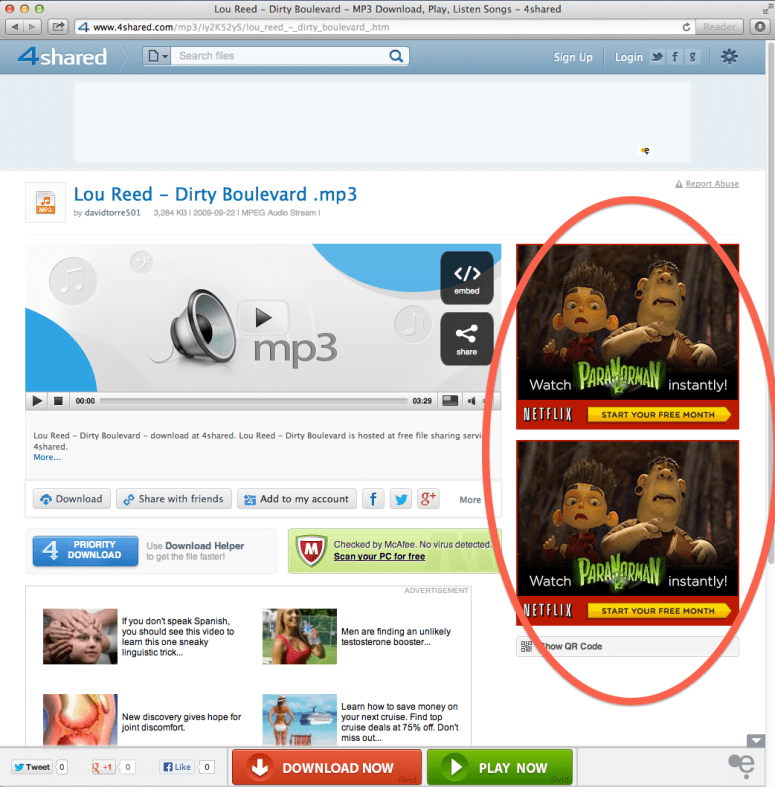
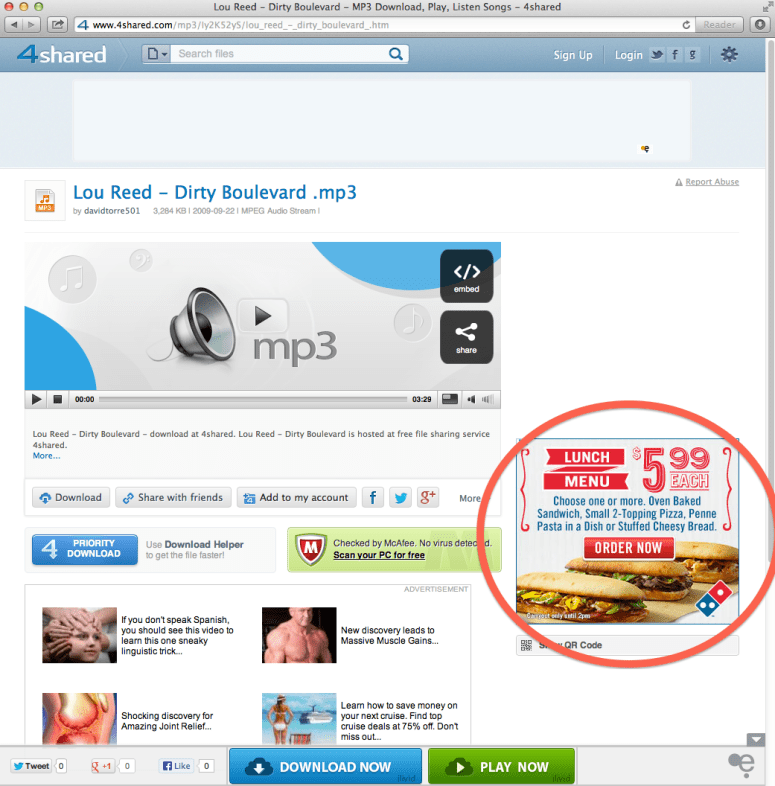
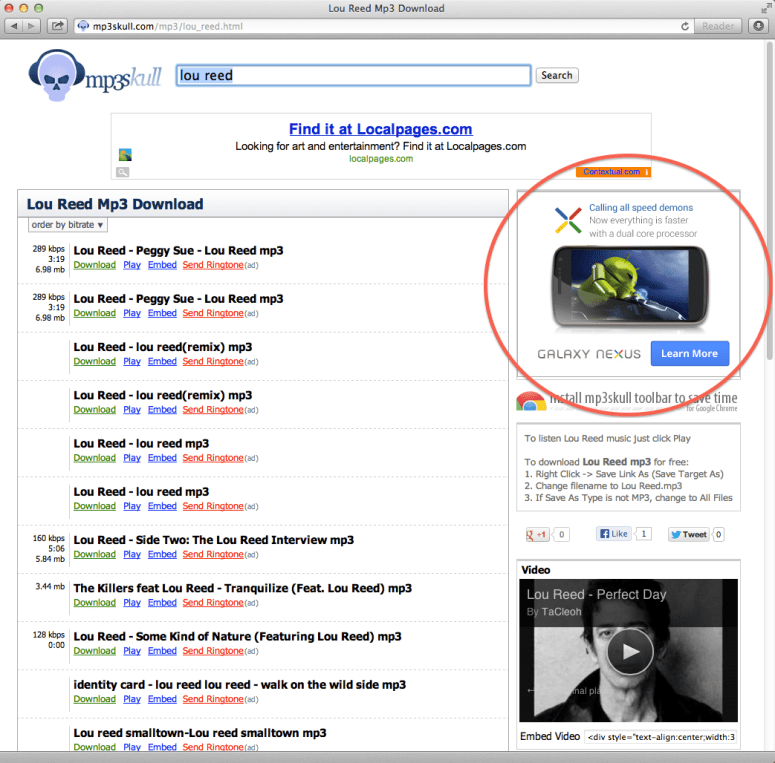
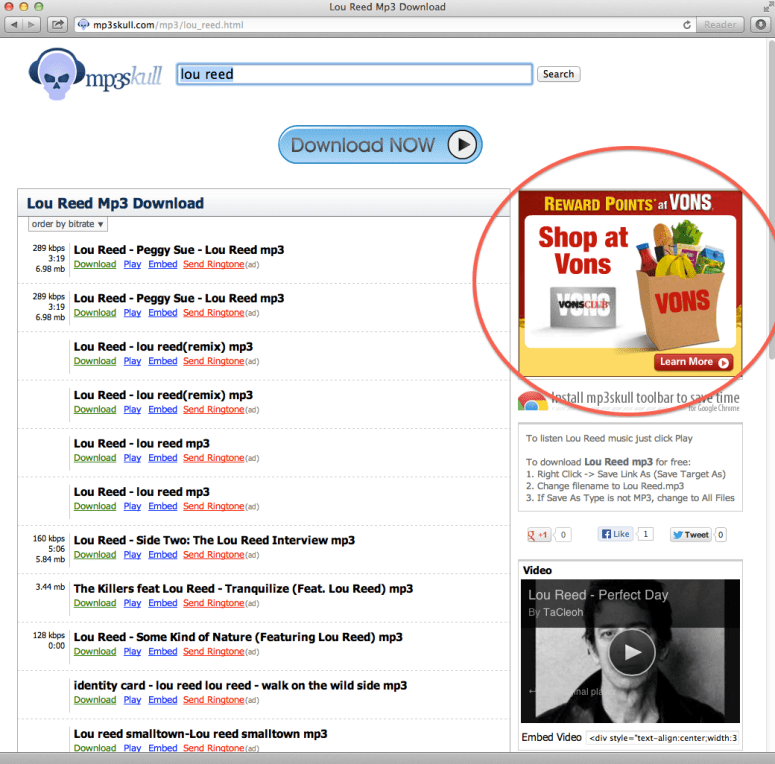
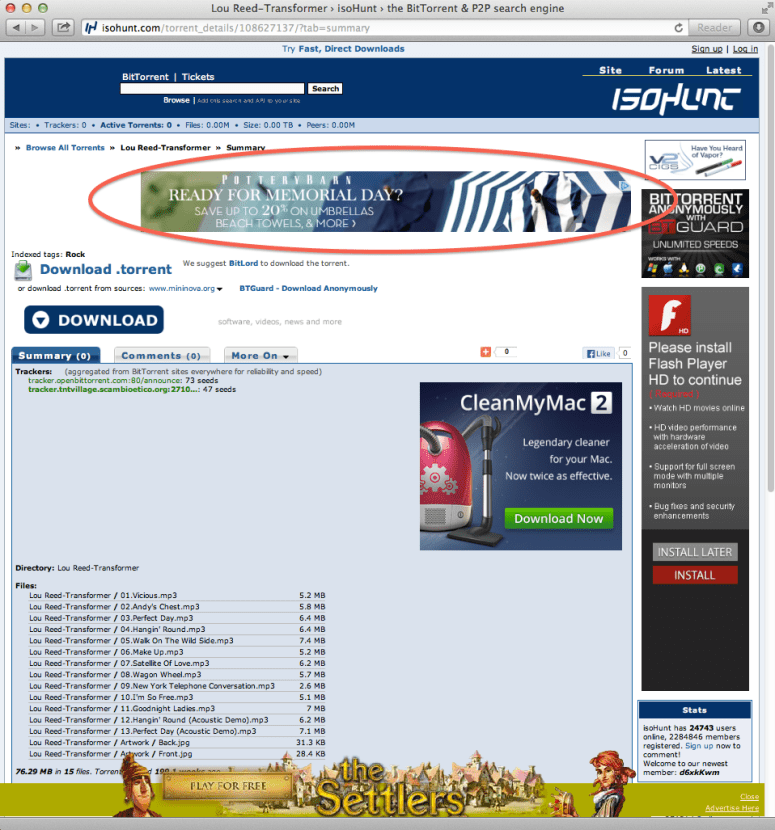
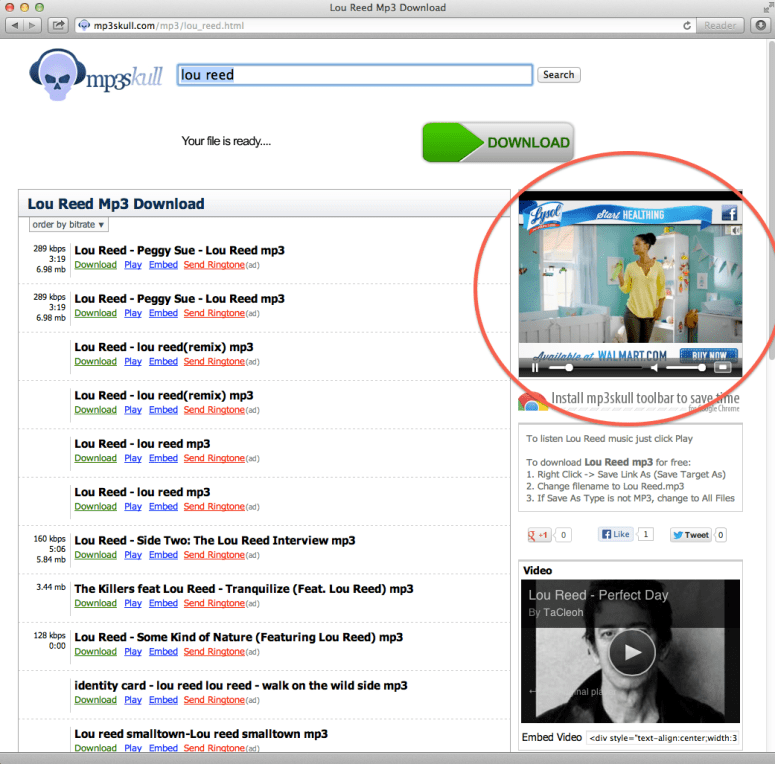
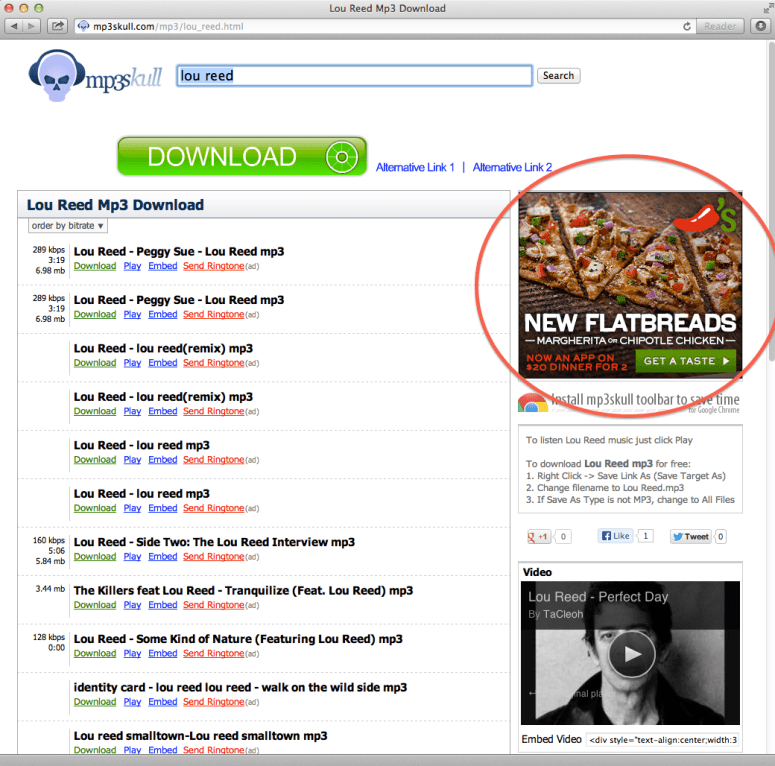
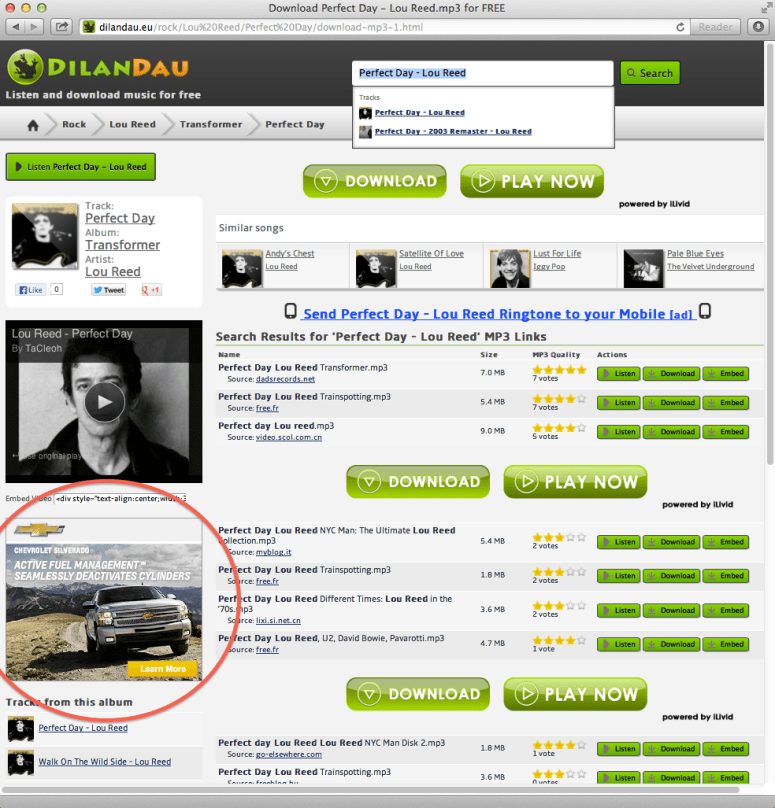
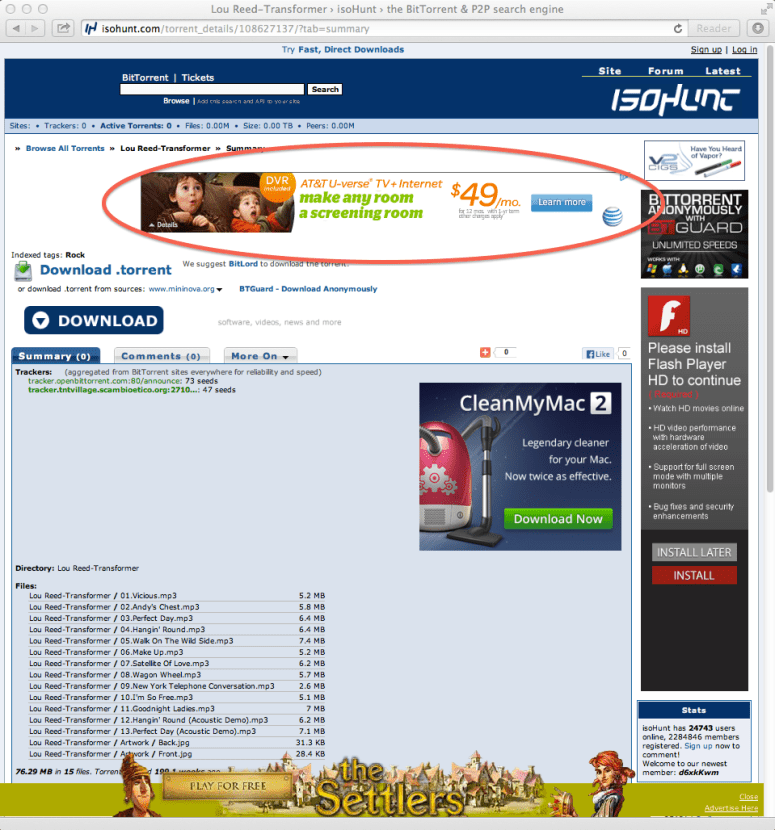
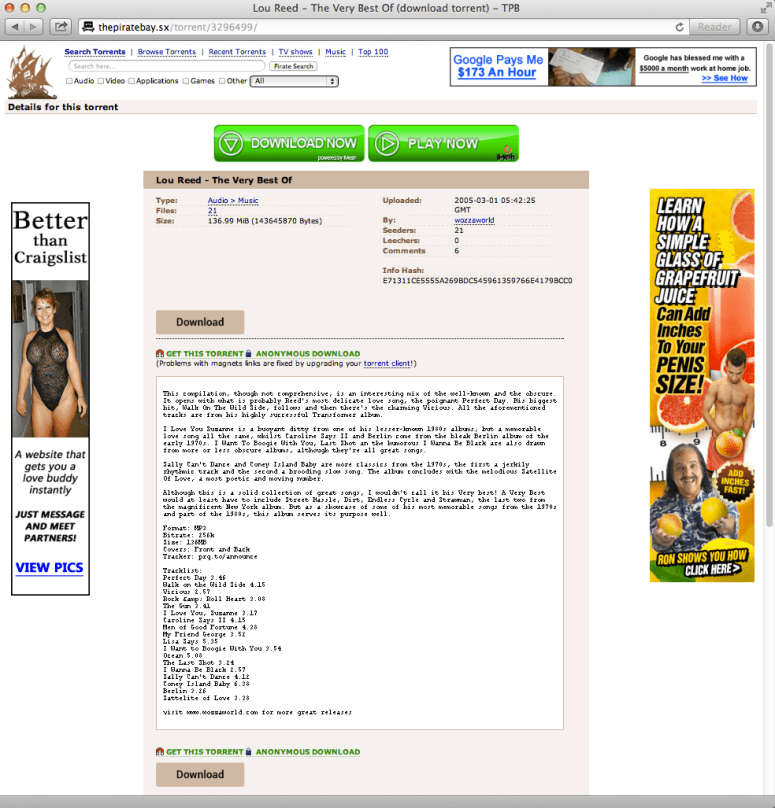
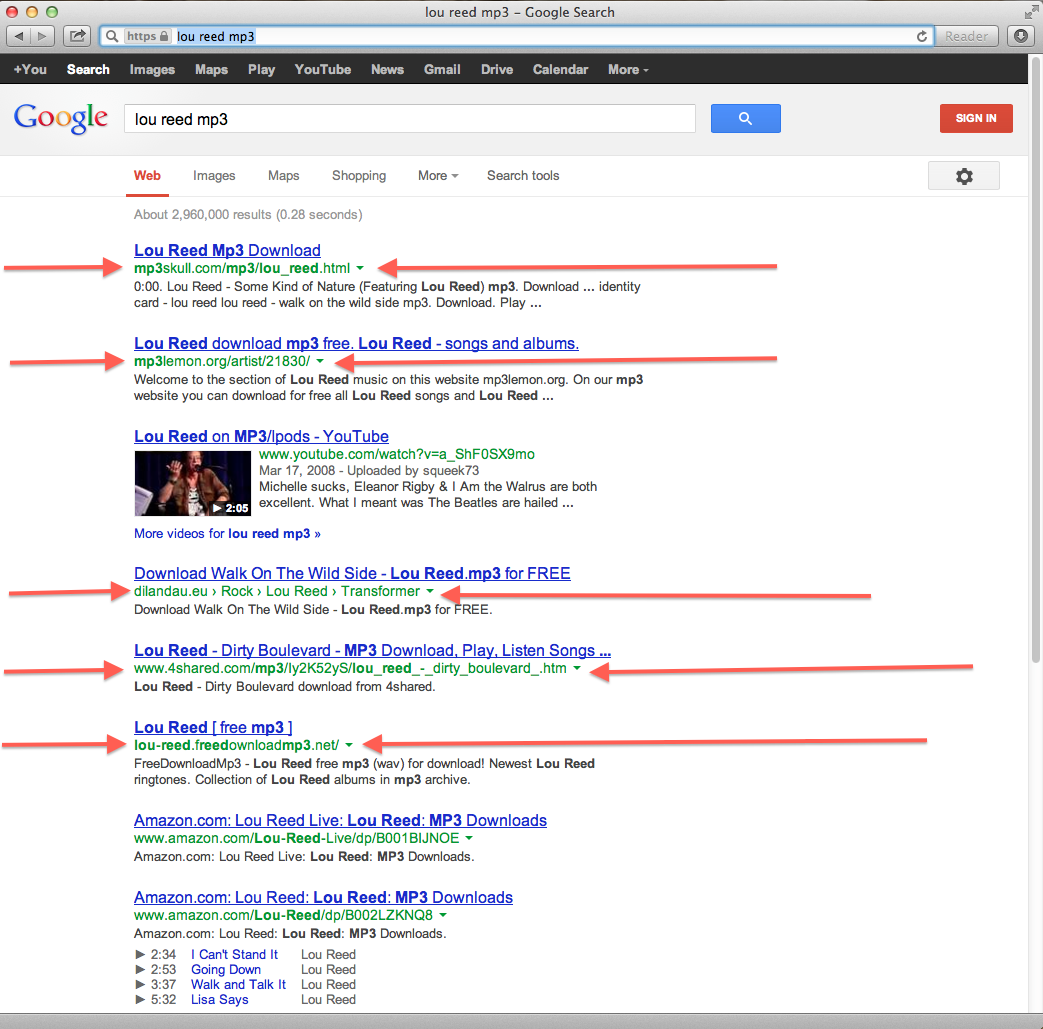
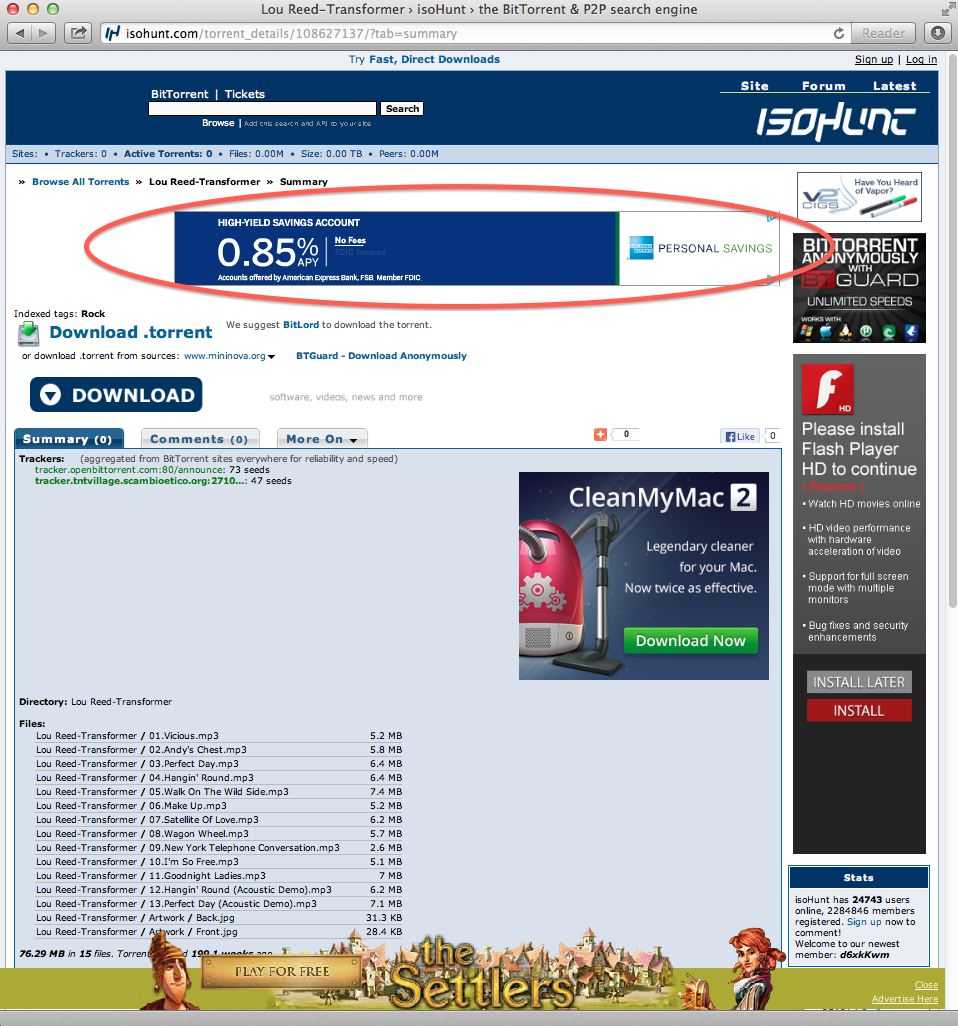
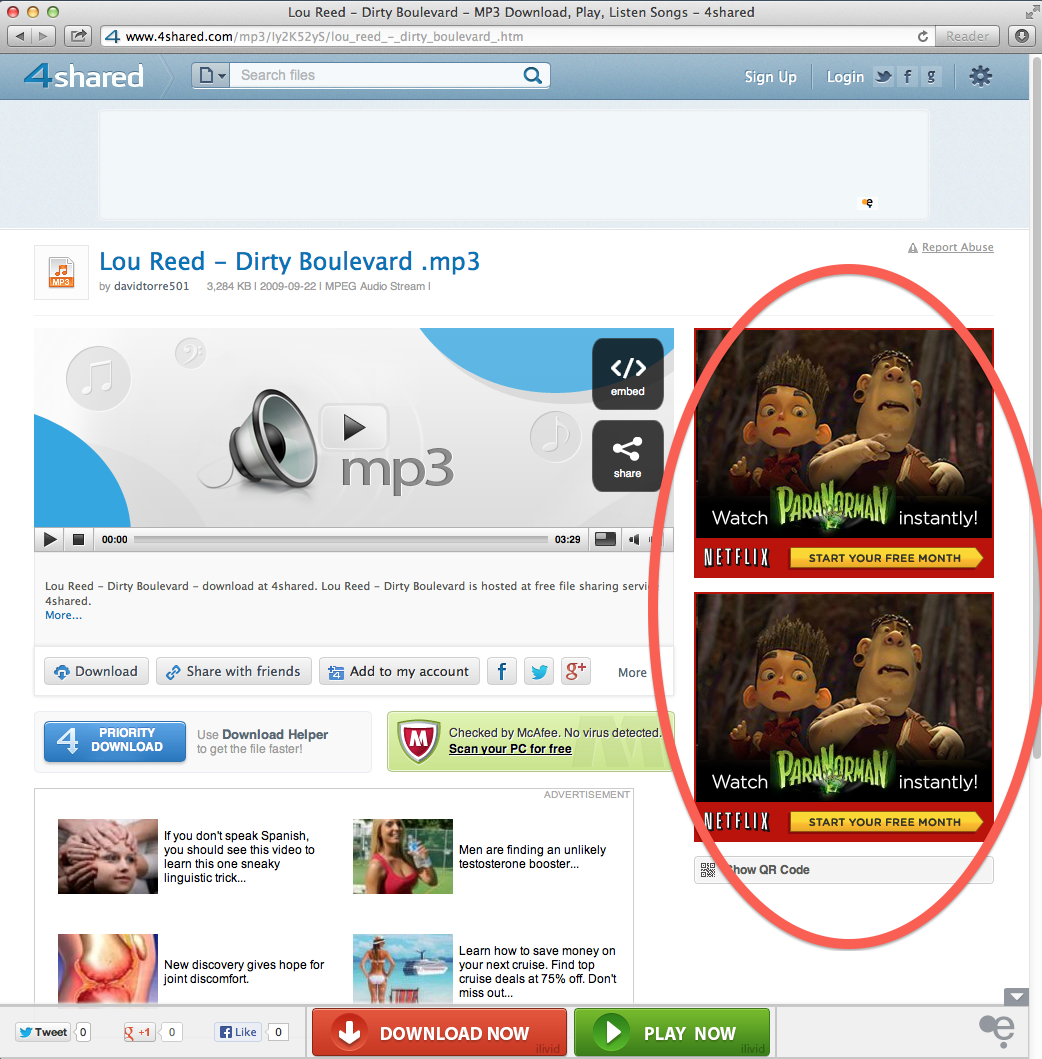
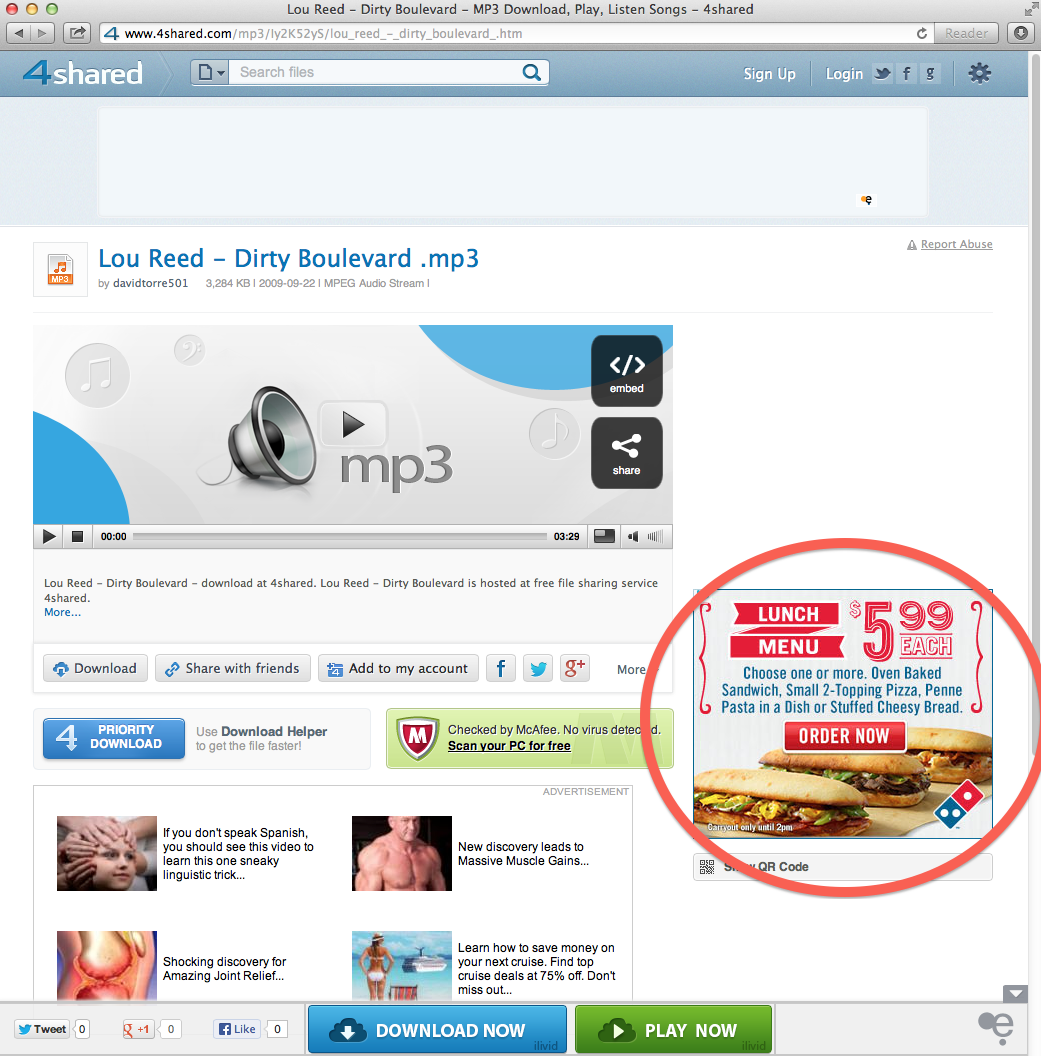
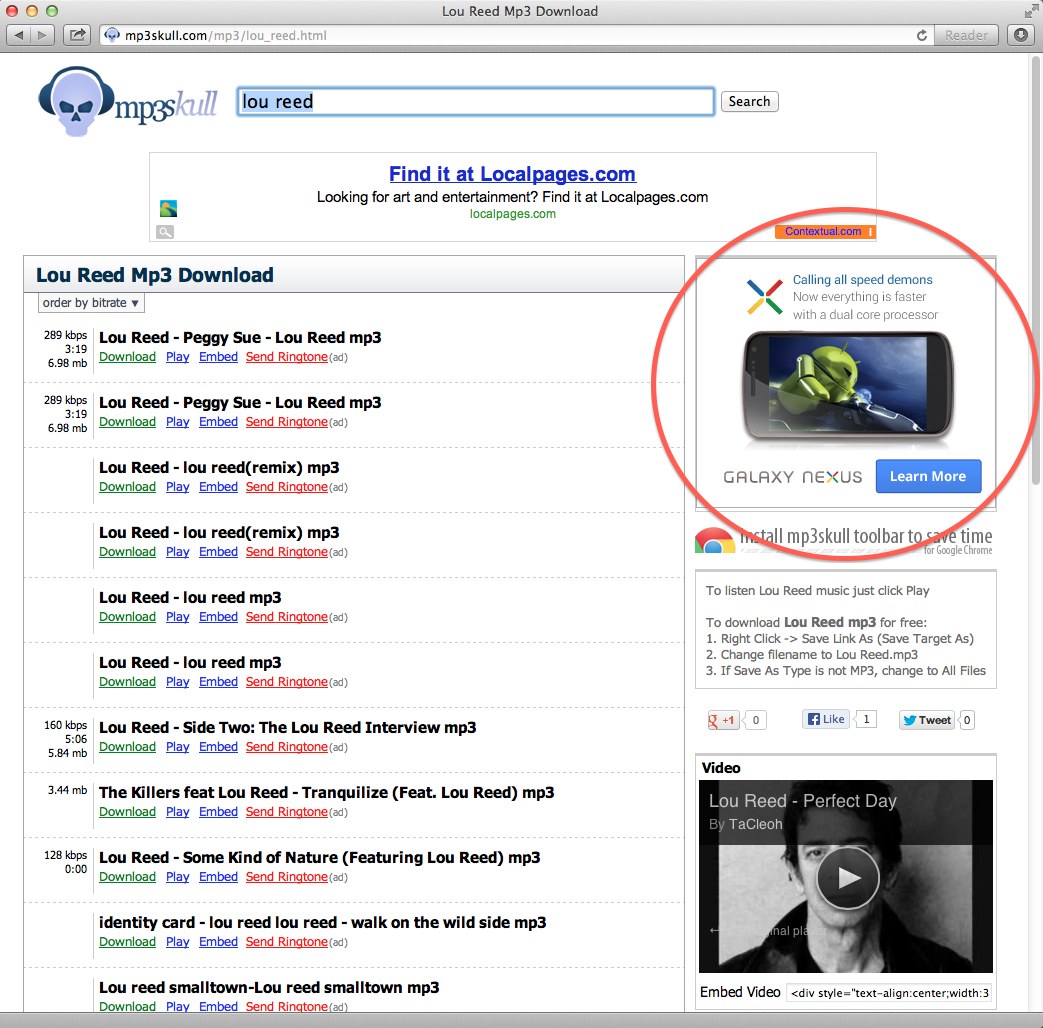
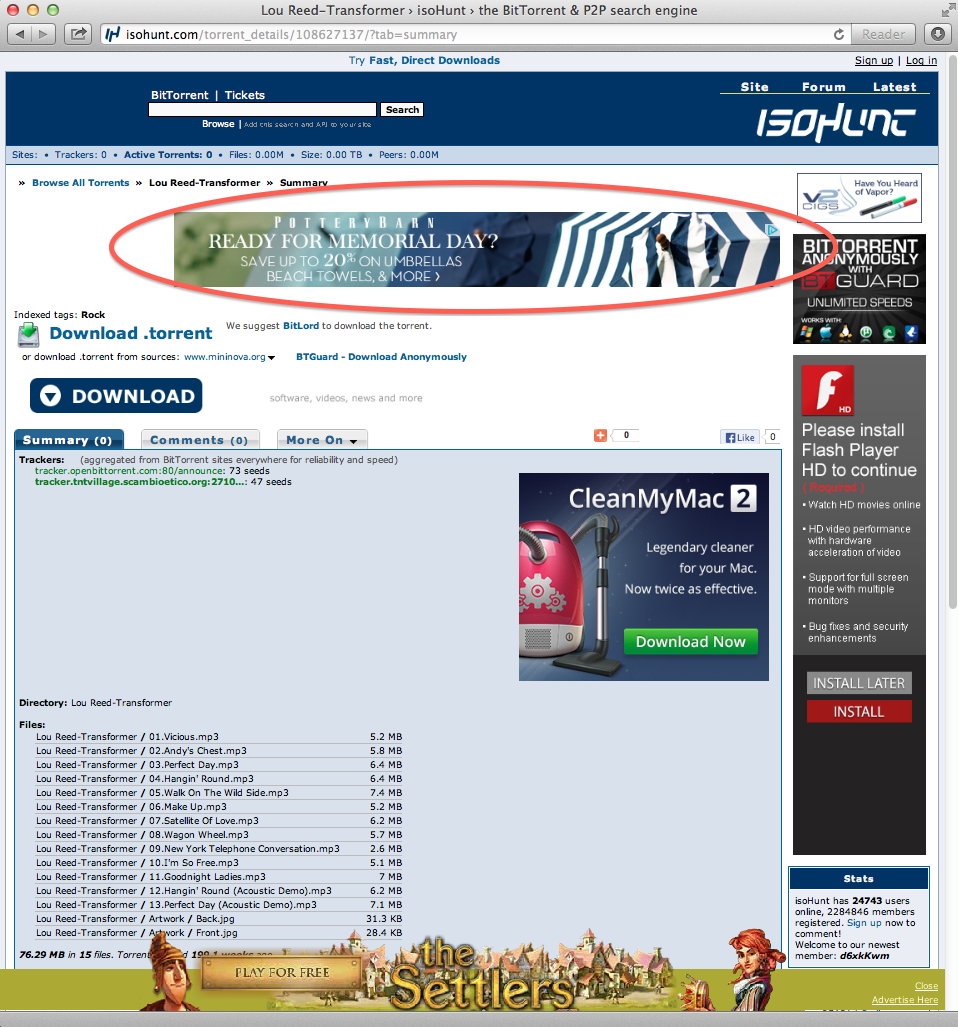
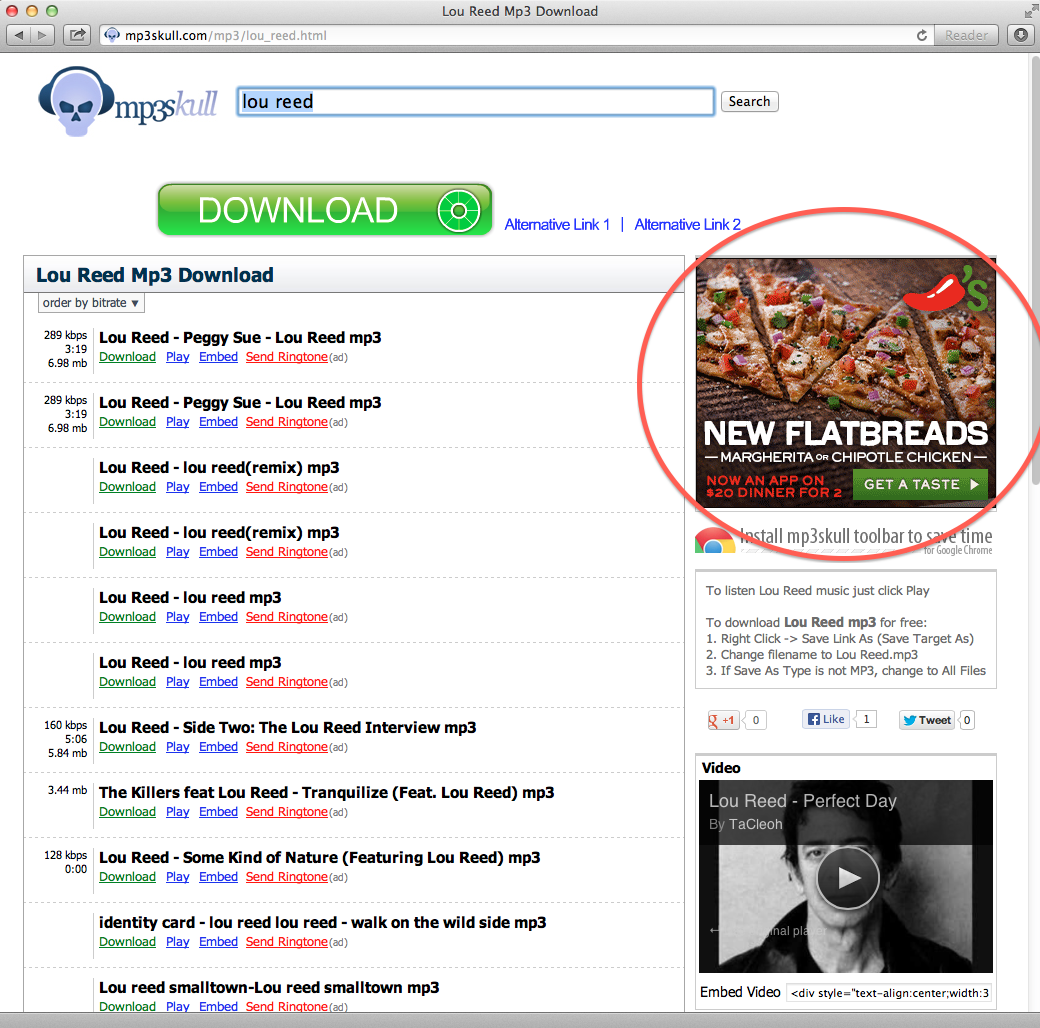
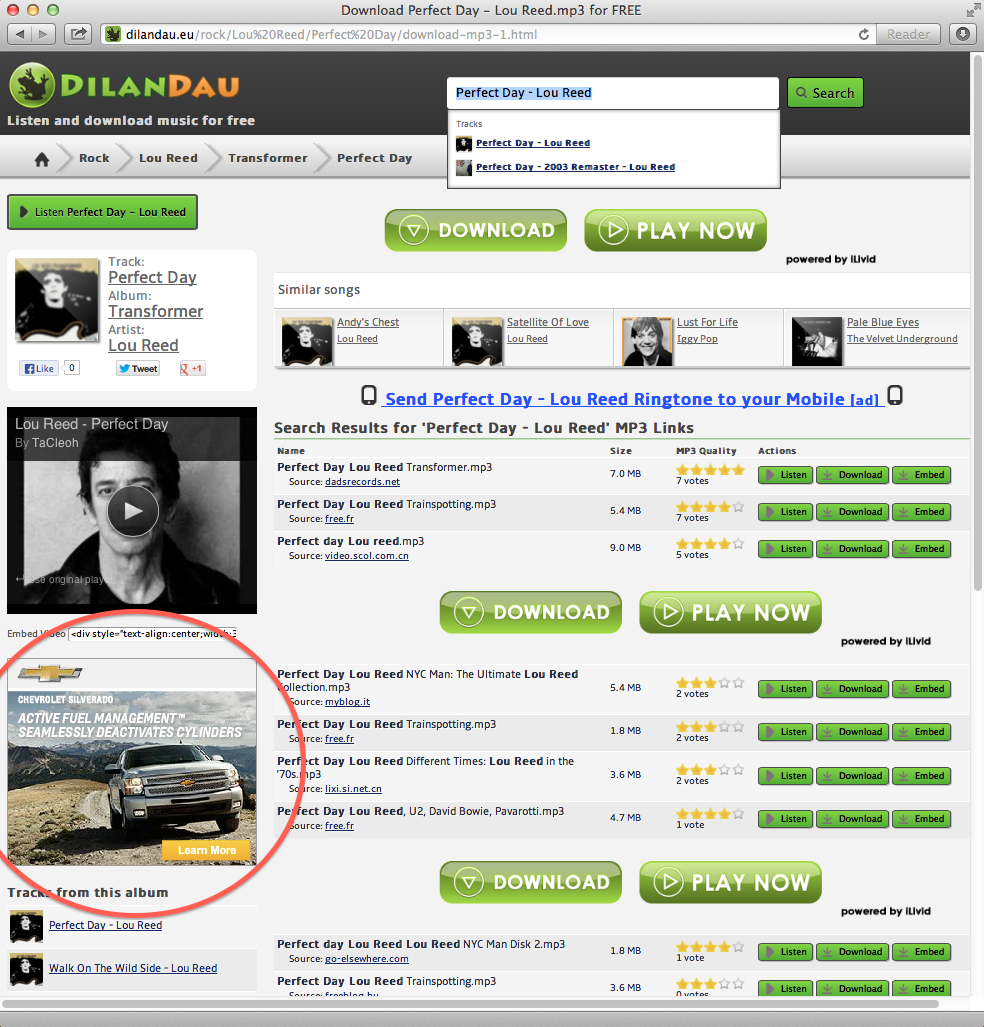
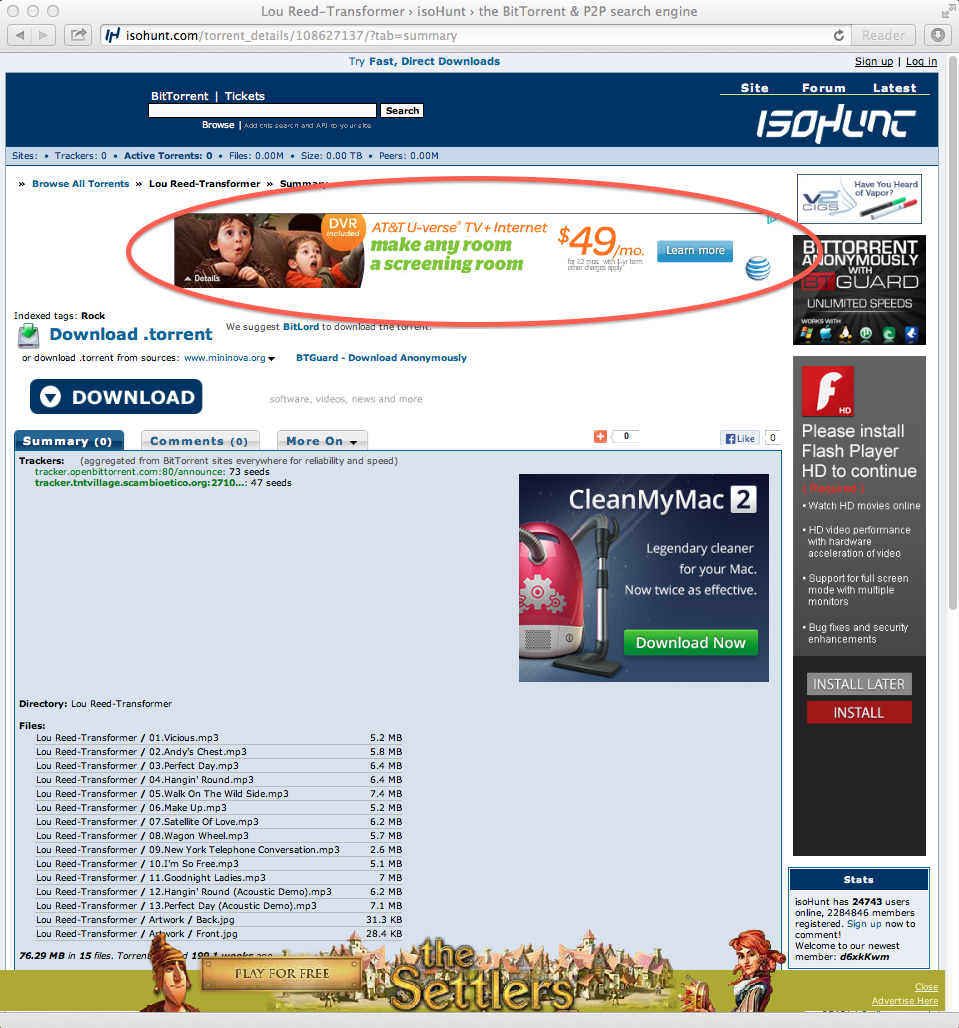
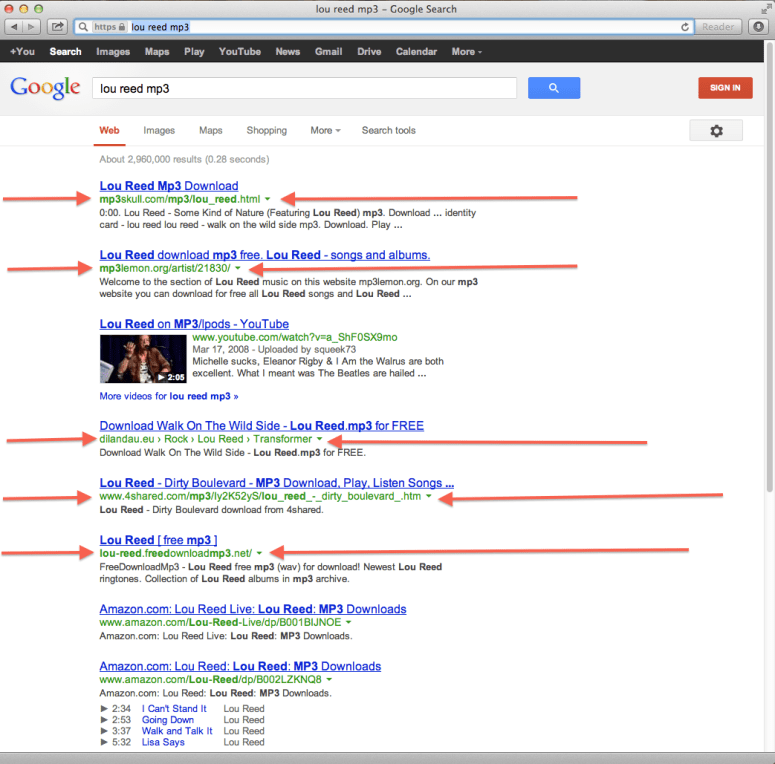
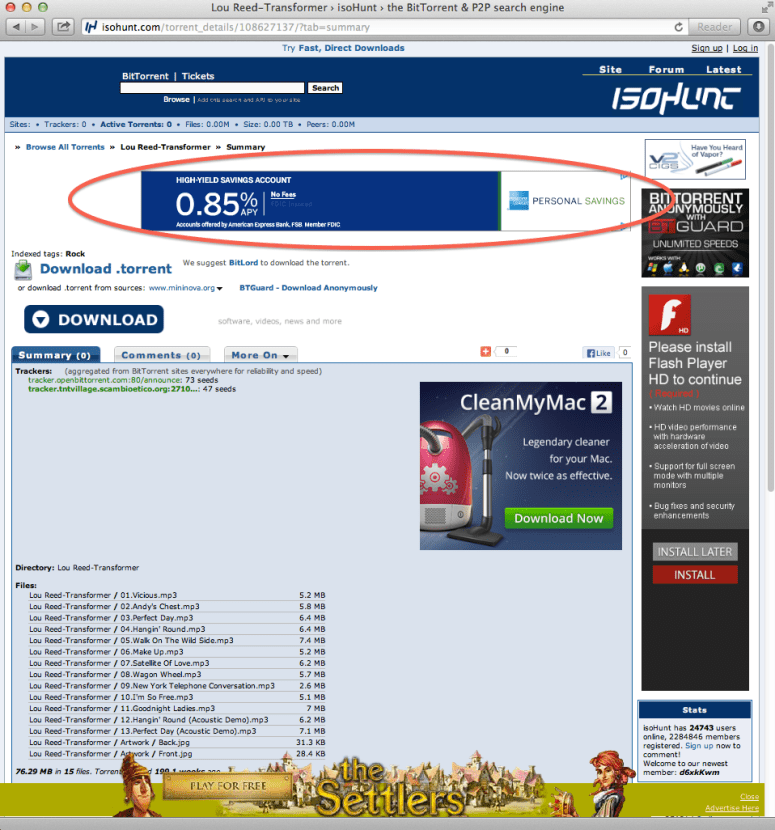
And here’s what it looks like… Lou Reed Exploited By American Express, AT&T, Chevrolet, Chili’s, Lysol, Pottery Barn, Vons, Domino’s Pizza, Netflix, Galaxy Nexus and Ron Jeremy!
LouReedGoogleSearch

LouReedAMEX

LouReedNETFLIX

LouReedDOMINOS

LouReedGalaxyNexus

LouReedVONS

LouReedPOTTERYBARN

LouReedLYSOL

LouReedCHILI'S

LouReedCHEVY

LouReedATT

LouReedTPBPORN

* Forced Labor? Hyperbole? With no ability to opt out, without being granted choice, consent or the ability to negotiate our wages, what else is it?

About Social Media and Internet Advertising | AdLand

Our friends at AdLand recently posted this story “Nice ad you got. Be a shame if no one saw it.” They detail how social media sites like YouTube and Facebook are becoming more and more aggressive in leveraging their platforms to require payment for engagement.

Bands take note, these platforms are charging you to reach the audience you built for them…

The article is a must read, a small except below.

In 2012, GM stopped advertising on Facebook. It took its 40 million dollars elsewhere. When Facebook started reducing organic reach it became even clearer that social media is not the bargain, or effective juggernaut it was purported to be.

Consider that analog media print for a moment. You spend money to place an ad in GQ, and it goes in GQ’s across the country. There is no guarantee someone will buy the magazine, of course, but if they do, there is a good chance they’d see your ad. If Facebook owned GQ, you’d place an ad in it, and then Facebook would hide 90% of the magazines unless you paid them to put the magazine featuring your ad on the magazine stands.

So we live in the digital age where media channels like Youtube and Facebook seem only effective if you pay for views to inflate your numbers (and likes if you’re even more smarmy). And remember, a vast majority of Youtube videos (ads or otherwise) do not go viral. Then in Facebook’s case you’re dealing with a a quasi-Mafia-style practice of paying them to “boost” your post to an audience you worked hard to cultivate.

PLEASE READ THE FULL STORY AT ADLAND:
http://adland.tv/adnews/nice-ad-you-got-be-shame-if-no-one-saw-it/1541959236

Guest Post: A response to Michael Geist’s Defense of Bootleg Beatles Records by Canadian Music Publishers Association’s Executive Director, Robert Hutton

Music Technology Policy

[This post by Canadian Music Publishers Association Executive Director Robert Hutton is reprinted with permission from the CMPA’s Sept. 3, 2015 newsletter.]

We recently read the article posted by Michael Geist to his website earlier this week on the matter of Stargrove Entertainment’s legal action against parties allegedly impeding their sale of recordings which were, at the time, in the public domain in Canada.

We are frequently asked by our members and international partners to offer some counterbalance to Mr. Geist’s views and have been reluctant to do so until now, feeling that it is best not to feed the flames or enter into something that is not based on facts or fairness.

CMPA has no interest in or ability to comment on a legal action. We have no position in the matter, nor can we. We are not going to comment here about the legal aspects of this case.

However…

View original post 1,777 more words