Again with the Bad Napster Analogies

As David pointed out, Merlin’s Charles Caldas has gotten himself sideways again over Spotify.  Well he’s nothing if not consistent.  Will someone just give this guy a CBE, please?  Maybe that will calm him down.

This time Caldas is reacting to statements by Lucian Grainge and Doug Morris that they’re taking a relook at their deals with Spotify on ad supported streaming.  Sidebar: Let’s not forget something–Grainge and Morris ARE REALLY LATE TO THE PARTY on questioning the value of the ad supported model.  So the fact that it took Taylor Swift to get these guys focused is the real story.

But Caldas wades steps right into it by giving a quote to the tech press:

“Treating consumers like children and telling them that everything they’ve enjoyed about these streaming services is going to be taken away because the biggest record companies don’t like it, that’s another Napster moment,” Charles Caldas, the CEO of Merlin Network, the global licensing agency for independent music labels, tells Quartz. “The major labels screwed Napster and screwed the market by killing what was potentially the biggest opportunity the industry could imagine in getting into the digital space early. If they follow through with this, they are going to do it again”.

So here’s a fact check–Napster may have had a license from AIM labels, but Napster did not have enough licenses to launch a commercial version of the Napster platform.  It also takes two to tango, so if there was any screwing of Napster, Napster was the one that got themselves in that position, so to speak.

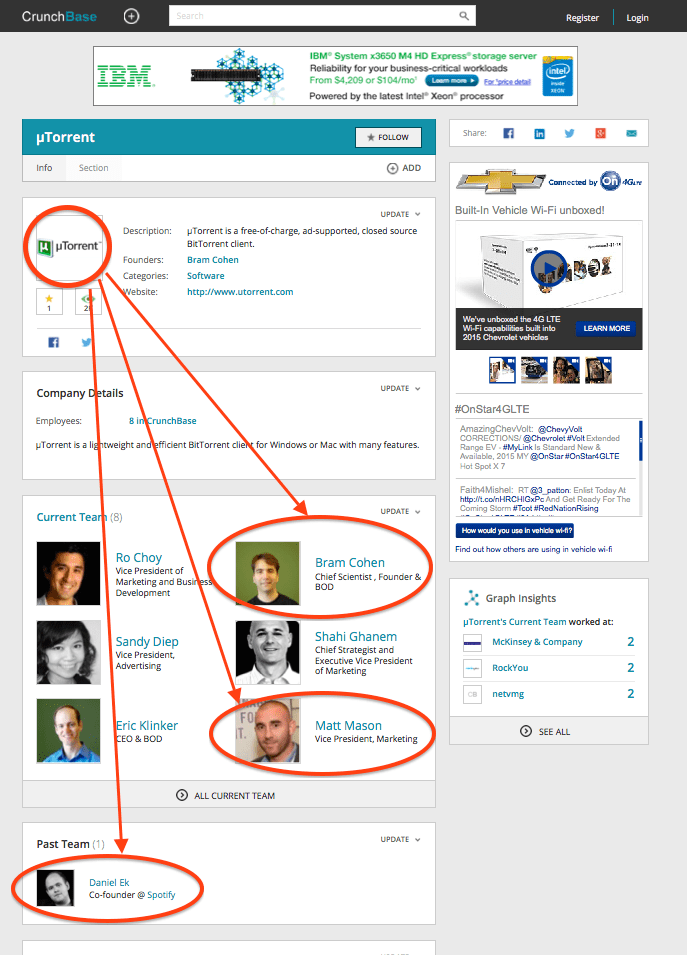
Despite Daniel Ek’s connection to Bit Torrent, Spotify is nothing like Napster so Caldas is really reaching to jam Spotify into that box.  Almost all the labels and a bevy of independent artists have licensed Spotify as have songwriters.  Again, nothing like Napster.  If you have a license with a music service, that deal eventually comes to an end and then you get to decide if you like the deal and want to renew.  You also get to decide if you want to renew on the same terms or different terms.  And guess what?  The service gets to decide if they want to take your renewal terms.  If they don’t, you’re done.  The service has to get along without you.

We’ve long complained of Spotify’s absurdly low royalty rates.  Here’s how it works.  The major labels–and possibly Merlin–got extra goodies that they may or may not share with their artists like equity, breakage (unrecouped advances that don’t roll over) “technology fees” and other nonrecoupable payments.  And a royalty rate that is artificially low because all those goodies are not included in the value of the royalty rate.

When independent artists or labels (presumably that are not part of Merlin) license to Spotify, we don’t get those goodies, but we get the shit royalty.  So if Caldas wants to talk about “screwing the market”, we think this little structure qualifies.  And as far as we can tell Merlin went right along with it and still is.  To Merlin’s credit, many of the Merlin member labels have adopted the “Fair Digital Deals Declaration” to promote sharing of the “goodies” with artists.  There will be a time to discuss how the majors treat the pass through of the goodies, but that time is not today.  Everyone should be very clear that is a discussion that will be had the easy way or the hard way.

But make no mistake–they’re sharing because they got the goodies in the first place.  Just like the majors.  And we’re still taking the shit royalty because of it.

Here’s the larger point.  License deals eventually expire and according to Billboard and others, it looks like Universal’s and Sony’s  Spotify licenses are coming up for renewal.

Stop picture for a second–when Daniel Ek got into a public argument with Taylor Swift in October, he had to know with 100% certainty that he was publicly dissing the most successful artist on his biggest label partner over what was sure to be the biggest selling record of the year.  All because she didn’t like his deal.  How was that supposed to help him renegotiate with Universal on terms favorable to Spotify’s stockholders?

NOT!!

What Ek should have been telling his team was that Spotify needed to be in business with Taylor Swift PERIOD.  END OF DISCUSSION.  MAKE IT HAPPEN.  SCREW THE PRECEDENT.  But no, his strong move was to insult her publicly.  He should be summarily fired for this reason alone.  Which makes you ask, who’s in charge over there?

But back to the Universal and Sony licenses that Ek knew were coming up for renewal.  Here’s the issue:  Ek sold everyone on the idea that he could convert ad supported users to subscribers.  He has tried, but if you ask us, he hasn’t tried very hard.  You may disagree, and if you do, you leave your music on Spotify.  If you don’t, you pull it down.

Or you reach some compromise in the middle.  There’s no reason for people to get in a huff over this.  It’s nothing personal, it’s just business.

Here’s the interesting part.  When we look at the calendar and the history, it’s possible and maybe even likely that the major label deals are up before the Merlin deals.  If the majors get the terms they want–and they almost surely will, one way or another–Merlin labels may find themselves suffering under the old terms for quite a while.  We can’t know that for sure, but that might be motivating the invective.

What is hopeful about the Universal and Sony position on Spotify is that they are focused on the shit royalty.  Having raised that point, it’s probably not going to get lost with some under the table payment.  And far from “screwing the market” that could have the affect of boosting the market and boosting the actual royalty rate paid to all artists.

For the first time we’re hearing the majors talk about the royalty rates and not the “industry” payments.  Spotify is fond of touting the total royalty it pays out to labels and publishers, independent artists and songwriters.  For the individual artist, that “total” is a largely unpersuasive number, practically irrelevant.  What matters to us is what we get in our stocking.  Spotify is fond of trying to push the blame for low royalty rates onto labels, but we know better because we know what the independent artists get who receive the label’s share of the ad supported service.

And guess what–it’s still shite.

If there’s any screwing of the market going on, we know where it’s really coming from.

We said it before and we’ll say it again:  Lars was first and Lars was right.  So spare us the Napster analogies, Mr. Caldas.
MERLIN Wizardry: Caldas Position on Free Streaming Makes Major Labels Look Benevolent

Look MERLIN the industry consortium that represents nominally “independent” labels is often held up as a spokesperson for the independent labels and artists.  You see this in the press all the time. First a comment from a major label spokesperson then a representative from MERLIN to give the “indie” viewpoint.   At the Trichordist we’ve long held the view that in  actuality MERLIN represents the interests of a tiny minority of “independents” that have some of the largest artists in the world. They DO NOT represent the interests of what most people would think of as “independent” labels.   The economics for those that produce mass market products (like pop hits)   is totally different than those that produce niche products (like progressive metal or indie rock). Yet time and time again we have seen MERLIN advocate for models and ideas that only work for the biggest players. Not independents.

Our suspicions were confirmed earlier this year when we saw MERLIN cut a payola- oops I mean “steering” deal with the famously anti-artist Pandora.   The history of payola clearly shows that it is a tool by which the entrenched players with substantial resources and market share keep the upstart independent players off of major media platforms.  We don’t see how this “steering” deal ends any differently.

Further MERLIN was so (there really is no other word to report the facts correctly) STUPID that they fell for a trick that Pandora’s Chris Harrison had previously used at DMX.   That trick was widely reported at the time. It’s jaw dropping that MERLIN was not aware it was being played. And exactly as we predicted Harrison took this “steering”deal a to the Copyright Royalty Board in an attempt to lower royalties for ALL labels.   Just as he did with the DMX deal. The pure incompetence of MERLIN regarding this deal should make independent labels reconsider their membership in MERLIN.

But this weekend at the  “Spotify House” at SXSW Caldas and MERLIN went further and made it abundantly clear where their loyalties lie.  Their loyalties lie with Spotify.   Caldas accused the major labels of having a “Napster moment” in regards to the free platform of Spotify.  While we are happy to see Caldas compare Spotify “free” to the original unlicensed Napster (because like the original Napster it pays jack shit to artists)  it seems a very very odd position for Caldas and MERLIN to take.  Why the hell does Caldas care that the major labels want to move away from the free tier and move it’s product to the premium tier?  Who the fuck is he working for?

If Caldas is right and the free tier is better for indie artists and the indie labels that he represents,  won’t the fact the major label product is behind a paywall help MERLIN labels?   Let them go dude!  Bigger audience for MERLIN labels.  But Caldas wants them to stay on the free platform?  Caldas position makes no sense. The only way this makes sense is if Caldas and MERLIN have some vested interest in Spotify.  Emotional, religious, ideological or otherwise, that is at odds with the interests of independent labels.   (BTW can’t wait for that Spotify IPO.  I bet there will be some artist attorneys interested in the who got stock.  Hell might even get an Eliot Spitzer type investigation.)

What’s really freaking bizarre about this whole episode, is within a few months we suddenly have the major labels taking a position against free streaming and letting artists opt out of the platform (despite their ownership stake in Spotify),meanwhile the leader of the consortium of independent labels angrily takes the opposite position.   What the hell is going on?

Tomorrow:  The math on why the current streaming model is a net transfer of wealth from small and middle class artists/labels to the big artists and labels.   


Charles Caldas (MERLIN) Praises Napster, Piracy and Promises to Reform His 1990s Rap Metal Band

Ha Ha. Okay Charles Caldas was never in a Rap Metal band.  As far as we know of anyway. So maybe this was all a joke. Maybe the Spotify house party was actually a 1999 theme party. It’s entirely possible he could have been in character and we got this out of context.   But we think not.  We didn’t see many folks dressed in black cargo shorts nor was their a tribute to Limp Bizkit on stage.

For all you independent labels who are “represented” by MERLIN  and don’t know what I’m talking about?  At the Spotify house party at SXSW Caldas  helpfully compared free Spotify to the original Napster.  He said:

“The major labels screwed Napster and screwed the market by killing what was potentially the biggest opportunity the industry could imagine in getting into the digital space early. If they follow through with this (moving Spotify from free to paid subscription), they are going to do it again”.

Yeah that’s right Chuck,  Napster which paid zero revenues to artists and songwriters was such a great “opportunity.”  Well that’s not fair, it was a great opportunity for the Multi-Billionaire Sean Parker.   Not so much for the little people.

Who’s side is MERLIN on?  Shouldn’t we independent artists and  labels be represented by someone who isn’t so obviously a fawning sycophant for Spotify?


Dead Kennedys’ East Bay Ray: The ‘Free Internet’ Will Not Set You Free | NY Observer

These Internet theorists also invariably fail to distinguish between the profound moral difference between sharing something with a friend and distributing, without permission, other people’s files for profit. It’s a crucial distinction.

One of the reasons that this distinction is not brought up is because the Internet corporations don’t want you to see much discussion about the enormous riches being made on the Internet from both the consensual and nonconsensual selling of your information to advertisers, as if it didn’t matter. The advertising system has money and money is power. Ask yourself: Are you gaining real power over your destiny from the Internet, or just stuff?


#howgoogleworks: Why did the Federal Trade Commission ignore staff recommendations to prosecute Google for antitrust violations?

Must read from Music*Tech*Policy… on #howgoogleworks

Music Technology Policy

OK, now that you’ve stopped laughing, that’s not a trick question.  We all know why Google has never been prosecuted by the U.S. government.  One way or another, they buy their way out of it through Google’s unprecedented network of lobbyists, fake academics and shadowy nonprofits like the Electronic Frontier Foundation and Public Knowledge.  (For the detail, see Public Citizen’s extensive report on Google’s three-dimensional influence network “Mission Creep-y–Google Is Quietly Becoming One of the Nation’s Most Powerful Political Forces While Expanding Its Information-Collection Empire“.)

The Wall Street Journal and a tidal wave of other publications are reporting on a previously secret internal FTC memo demonstrating conclusively that the FTC’s professional investigating staff recommended prosecuting Google.  The secret memo was produced by the FTC under a Freedom of Information Act request as disclosed in the Wall Street Journal.  If that wasn’t enough news, the copy of the secret…

View original post 1,303 more words

Sell T-shirts? Gigaom Goes Out Of Business.

As we have recently noted, we are all pro-digital, it’s just some of us do the math, while others seem to believe in magic unicorns.

The digital news site Gigaom has spent the last several years scolding songwriters, musicians and the rest of the entertainment industry for its “antiquated” business models.   These complaints seemed to largely center around around what they regarded as a quaint notion: payment for content.

Not to spike the ball in the end zone, but I’m still in business and Gigaom is not. Maybe they should have sold T-shirts?

Well actually that is spiking the ball in the end zone.  But hey, they deserve it.  Just google “piracy” and “Gigaom” if you don’t believe me.

My bands have been web-enabled businesses since 1993 (Mosaic).  They’ve been web-based since 1999 (Napster).  Artists like myself know as much (if not more) about the digital economy than your average tech journalist. We’ve lived it for over 20 years.  Yet we are often portrayed as technophobes or luddites.  Or portrayed as too stupid to understand the “new economy” which doesn’t rely on revenues but is instead somehow powered by Magic Unicorn Dust™  and TED Talks™.   I can’t tell you how tired I am of hearing this bullshit from people who have never made a profit.

The New York Times has an uncharacteristically sloppy article which tries (and fails) to make the case that somehow Gigaom went out of business because they had 4 extra employees in the research division, and that it’s downfall isn’t a bad omen for other tech oriented news blogs.

The New York Times may be right, however as a profitable tech entrepreneur, I really don’t see many tech blogs like Gigaom surviving without ongoing underwriting provided by silicon valley venture funds.   I could be wrong.  But just to be safe  I suggest that these blogs begin to transition to other revenue streams like merchandise and T-shirts.

( a reader noted this was relevant:  Here is a recent article from Gigaom chiding the NYTimes for taking so long to “get” digital.  They were out of business three weeks later.)


2012 A Brief History Of Spotify, “It Increases Itunes Sales”… @SXSW #SXSW

Stop us if you’ve heard this one before… Spotify doesn’t cannibalize Itunes sales it actually increases them… Uh huh. That was the rap they wanted us to believe. Smart and cautious artists and labels seem to have been right by avoiding Spotify.

In 2014 Itunes sales are reported to have declined by 12-14% and that is pretty much directly attributed to the cannibalization done by Spotify.

So here’s what they said in 2012…


Spotify Plays Can Increase iTunes Sales. Here’s Proof! | TechCrunch

… there’s no evidence of Spotify or other streaming services negatively impacting music sales. More data like this could encourage artists and labels to promote their streaming music presences, and push acts like The Black Keys and Paul McCartney who’ve pulled their catalogues from Spotify to come back.


Spotify launches new apps, as Universal again defends the service| CMU

Paul Smernicki did some more defending at a Guardian conference. According to Music Ally, Smernick told the conference: “We’ve looked really really hard for evidence of cannibalisation, almost unobjectively. Across the business, we’ve been unable to find that evidence. And in [European] markets where Spotify has launched, the growth in the digital business has been about 40%, in territories where it doesn’t it’s around 10%. There’s a healthy ecosystem and it can be served by many of those services”.


Spotify chief: streaming services boost music sales | The Telegraph UK

Speaking to digital music site Evolver.fm in a pre-Grammys interview, Ek strenuously denied that his streaming service cannibalises sales of music through services such as Apple’s iTunes.

“There’s not a shred of data to suggest that. In fact, all the information available points to streaming services helping to drive sales,” he said.


Does Streaming Cannibalize Albums? | Billboard

Wilson points out that the number of digital downloads has increased-up 15% for albums and 6% for tracks in the first 46 weeks of 2012, according to SoundScan-suggesting that the widespread availability of free on-demand streaming hasn’t led to a sales apocalypse.

Rhapsody chief executive Jon Irwin says, “The only thing streaming music cannibalizes is piracy.”


So there you have it.  Three years later and meanwhile back on earth the actual effects of Spotify on the transactional sales of recorded music have been a disaster. Which is why there are major changes happening at the major labels as Spotify licenses come up for renewal.

2010 A Brief History Of Spotify, “How Much Do Artists Make?” @SXSW #SXSW (Shill By Shill West)

SXSW Rewind… Back in 2010 during Daniel Ek’s Keynote Speech an audience member who identified themselves as an  independent musician asked how much activity it would take on Spotify to earn just one US Dollar. The 27 year old wunderkind and CEO of the company was stumped for an answer… Five years later we have a pretty good idea why.

2010… #SXSW Rewind…


Live Blog: Spotify CEO Daniel Ek Says Music Service Now Has 320,000 Paid Subscribers | TechCrunch

Q: How many plays equals one dollar?
A: Depends on the type on contract with the publisher/record labels. We share the rev we bring in. You can’t really equate to ‘per play’ we look at all our ad rev. Creates a bucket. For instance how do you account for a purchase of a song. There is no easy answer to your question. Over time our ad revs are growing, number of downloads growing. Amount of rev we bring in is growing.


Will Spotify Be Fair to Artists? | Technology Review

I couldn’t help noticing, however, Ek’s artful dodge to the question of how artists are paid by his service. The subject was broached by an audience member, who identified himself as an independent musician and thanked Ek profusely for the great application. He wanted to know how much he would be paid.

“It’s complicated,” was, in essence, Ek’s reply. But he did reveal that it’s a revenue sharing model; artists get paid a proportion of whatever Spotify gets paid, presumably based on the number of plays on the site they receive.

Ek’s reply was disappointing because this is the million dollar question for many music sites.


Dodgy from the start. What do you expect from one of the co-founders of U-Torrent… Economics only a pirate could understand?


A Tale of Two Pirates? Daniel Ek (uTorrent) and Kim Dotcom (Megaupload)


USA Spotify Streaming Rates Reveal 58% of Streams Are Free, Pays Only 16% Of Revenue


How to Fix Music Streaming in One Word, “Windows”… two more “Pay Gates”…