Pandora Sues Songwriters For Lower Rates While it Pays Execs $122 Million in Stock This Year

To me Pandora looks like a stock scam supported by DOJ songwriter consent decrees.

The Trichordist

There they go again!

Pandora is currently suing BMI songwriters for lower rates.  Last year it was ASCAP.  They’ve also been been  sued by  The Turtles for refusing to pay royalties to artists who recorded before 1972.    Pandora’s entire business model seems to be either suing songwriters or artists and trying to set us against each other.

And taking money off investors.

Pandora plans to pay its top executives $122 million in “Stock Compensation” for this year alone.  That’s right, the money-losing Pandora plans on paying executives $122 million in stock this year. Unbelievable.  This is on top of their already inflated Silicon Valley size salaries. No wonder their stock is collapsing. It sure looks like the executives are vampires sucking the company dry.  While pleading poverty to the BMI rate court judge and public.  I don’t understand how these people stay out of jail.

“The Specialist” at Seeking Alpha has carefully…

View original post 25 more words

Will Senator Lee Challenge the Rate Court–an intellectual elite in a far away Eastern city?

Chris Castle: Somehow these companies with combined market capitalizations in excess of $2 trillion, companies including the richest companies in the history of commerce, are so threatened by a truly free market that they need to hide behind consent decrees that predate all of them.” Read more.

Music Technology Policy

Senator Mike Lee is presiding over a hearing tomorrow before the U.S. Senate Antitrust Subcommittee with the provocative title “How Much For a Song?: The Antitrust Decrees that Govern the Market for Music“.

There are three fundamental questions presented to Senator Lee and the Subcommittee regarding the antitrust decrees that govern two of the three U.S. performing rights organizations.

1.  How Much Longer Will The Government Throttle America’s Innovators?   Whatever the rationale once was for the ASCAP and BMI consent decrees, it is long lost in the dustbin of history.  Let’s be clear–the National Association of Broadcasters, the Digital Media Association, the Computer and Communications Industry Association, the Consumer Electronics Association and their overlapping membership and boards of directors want the Congress to think that this dispute is about “Big Music” versus innovation.

Somehow these companies with combined market capitalizations in excess of $2 trillion, companies including the richest…

View original post 871 more words

Artist Rights Villians: Pandora’s Christopher Harrison

As we stated. Pandora’s Chris Harrison has a thing for screwing artists. Read more here.

The Trichordist

It’s common for lawyers to try to defend their poor moral choices in clients by saying, “I was just the lawyer,” kind of like “I was just following orders.”  If you were talking about a criminal defense lawyer or someone who chose to defend a controversial bad guy because everyone is entitled to a defense, that would be one thing.  Particularly if the lawyer was a poorly compensated public defender.  But when you’re talking about someone who takes a job complete with stock options that makes them rich, that “I was just the lawyer” thing is harder to rationalize.

Pandora’s Assistant General Counsel Christopher Harrison not only brings with him the Pandora baggage, but as Billboard reports, he’s seen this movie and he knows how it ends.  In Billboard’s post about the payola issues in Merlin’s direct deal with Pandora we discover some details about Harrison’s past that every…

View original post 347 more words

Did Pandora’s Chris Harrison Intentionally Mislead Congress and Investors When He Claimed Pandora Purchased Radio Station?

The senate should ask him about this tomorrow.

The Trichordist

christopher-harrison

Pandora’s Publicity Stunt: Pandora bought  South Dakota terrestrial radio station minus the broadcast license.

Back in June of 2013 Pandoras Associate Chief Counsel Chris Harrison (Songwriter Enemy #1) wrote an article for The Hill that implied that Pandora had purchased a radio station in South Dakota. The idea was that they were somehow now equivalent to Clear Channel and deserved the same percentage of revenue deal for sound recordings that Clear Channel receives.  Never mind that much of Clear Channel’s content IS NOT MUSIC and terrestrial broadcast has enormous capital costs so percentages of revenues are not comparable.  THE REAL PROBLEM and why this is misleading is that Pandora did not own the broadcast license of this station.   Transfer of this license requires FCC approval and as far as we can tell it appears Pandora had not even filed for transfer of this license at the time of…

View original post 177 more words

Liar Liar Streams On Fire #5: Pandora is Wildly Profitable, Can Afford to Pay Artists

I hope the senate asks about this tomorrow!

The Trichordist

Screen Shot 2015-02-25 at 1.33.09 PM

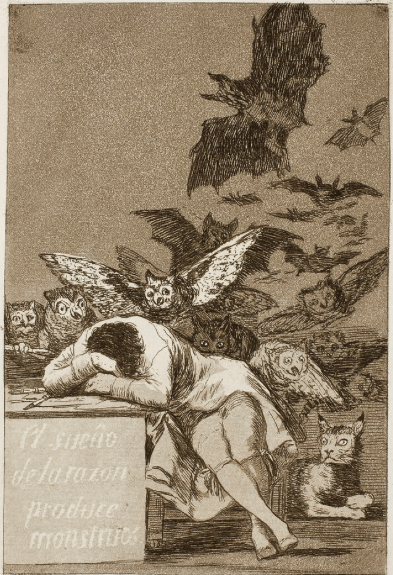
“The sleep of reason produces monsters”-Goya

By the end of 2015 Pandora Executives  and Investors will have sucked nearly 1/2 a billion dollars in “stock compensation” out of the company.  Yet Pandora complains very publicly to the US Congress about being unable to cover royalties to performers and Songwriters. Hence the massive lobbying effort in Washington DC and endless lawsuits against performers and songwriters.  Pandora is currently pleading for lower royalties before the Copyright Royalty Board in Washington DC.

Sen Ron Wyden the hand puppet of webcasters and broadcasters (and our vote for Manchurian Candidate) even repeated this crap when he announced the Pandora/broadcaster backed Internet Radio Fairness Act.

“Senator Wyden is introducing the Internet Radio Fairness Act (S.3609) to remove the regulatory shackles preventing Internet radio from being commercially viable” (italics added for emphasis).

But this is not true.  The interactive radio monopoly Pandora is not profitable simply because…

View original post 68 more words

These Charts Show Why The US Government Should Stop Setting Prices For Songs and Recordings

The consent decree has destroyed the value of the song. Numbers don’t lie. Well in this case relative percentages…

The Trichordist

First I bet you didn’t know that US Government sets the prices for many uses of songs and recordings?  What? Are you telling me that in 2015 there is not a technologically feasible way to let the free market set the price of songs and recordings for broadcast, webcasting and streaming?   Bat-shit crazy ain’t it?

Well if you consider that some of the largest most politically powerful corporations benefit from this process it makes a little more sense.  I’ll name just two: Clear Channel and Google. Pay to play government at its finest.

Before you accuse me of pie-ism (arguing over who gets how much songwriters or performers get of the paltry and shrinking pie) I am not. I’m simply pointing out how irrational it is to have the government setting prices in this day and age.   It is not even clear that the process is constitutional as much…

View original post 289 more words

The Consent Decrees Violate Individual Rights. My comments to DOJ.

I believe the “temporary” (1941) consent decrees are unconstitutional. Here’s my letter to the DOJ. On the eve of the Senate hearing read this.

The Trichordist

What follows are the comments I submitted to the DOJ against the  ASCAP/BMI consent decrees. You have until the end of the day today to submit comments.  http://www.justice.gov/atr/cases/ascap-bmi-decree-review.html

The Consent Decrees Violate Individual Rights.

I am an American songwriter, a member of BMI and a member of the bands Cracker and Camper van Beethoven. I’m submitting this comment on my own behalf in opposition to the ASCAP and BMI consent decrees. I believe these government actions essentially are a compulsory license outside of the Congress and take away songwriters’ rights to due process of law.


Just to be clear, I am not saying that Justice Department consent decrees in general are oppressive. I am saying that the way these particular consent decrees operate is oppressive to songwriters. That operation is oppressive because of the extremely long period of time they have been in effect, because they take away…

View original post 1,555 more words

DOJ Has Collusion Backwards. Google and YouTube Executives Move Into Spotify.

As the Senate hearing on the songwriter anti trust consent decrees loom, we thought you might want to read this!

The Trichordist

As the guardian reported last week, a high ranking Google Executive has taken a seat on Spotify’s Board. This weekend we learned that the Google/YouTube’s Shiva Rajaraman is moving from YouTube to Spotify.  Rajaraman was part of the team launching YouTube’s music subscription service that would compete with Spotify.   While it is quite common for technology executives (and entertainment executives)  to move from one company to another, and for one company to have a seat on the board of another company, the fact that both of these companies are involved in licensing songs and recordings should raise concerns with The DOJ. Why?  Because it makes a mockery of the consent decrees that govern songwriters in their negotiations with these services. Because in effect the consent decrees are now backwards. There is a very real possibility of collusion and anti-competitive behavior from the services. (some would argue it’s already…

View original post 440 more words

Why Some Mangers and Agents Love Streaming and Piracy.

We thought you might be interested in this little story we ran last year. Seems like it’s more right on than we could ever imagine. News coming shortly….

The Trichordist

Seems like every six months or so I have friends  forward me an article or interview with a manager or agent extolling the virtues of streaming (and sometimes even piracy.)  Usually this comes with some note that reads something like this “Agent/Manager  X thinks streaming/piracy is a good thing, Why don’t you?”  I am always  perplexed by this.   Of course some managers and agents love streaming and piracy! Less revenue from recorded music means their artists must play more and more live shows to make up the difference.  I thought everyone knew this.

You see managers and agents make virtually all their money from an artist’s live performance not from the artist’s recorded music.    However screwed up it might seem from an artist’s perspective it makes perfect financial sense (at least in the short term) for managers and agents to turn a blind eye to piracy and low…

View original post 1,219 more words

Sell! Pandora Can’t Do Streaming Unless They Fire Chris Harrison

I like reading stock analyst and blogger reports on companies like Pandora and Google.  I think this is where you really get a read on the machiavellian strategies of these predatory monopolies.  Not necessarily taking the analysts and bloggers at their word, but by interpolating the truth from what these folks are being fed.

I’ve noticed recently that  “someone” is floating the idea that Pandora will add on demand streaming to their offerings.  This  has become a lively topic on the stock trading blogs.

The problem is that Pandora can’t do streaming.  There is no compulsory license and they would have to negotiate in the free market with rights holders.  But rights holders no longer trust Pandora’s main legal strategist Chris Harrison. He has pulled two nasty bait and switch routines on rights holders with the CRB.  Here just read my comment on Seeking Alpha:

“… that’s just not true. Easy to google the facts on this one.  IF McAndrews and Herring really wanted to play nice with rightsholders they’d get rid of Chris Harrison. Harrison is still there and still up to the same old tricks. Harrison just pulled a bait and switch with MERLIN (the independent label alliance and about 16% of market). The same old one he pulled when he worked with DMX. He negotiated a sort of “payola” scheme with MERLIN, essentially a discount on spins in bulk for the MERLIN alliance (Payola is not illegal at digital unless maybe like Pandora you own a radio station). He then baited and switched on the labels and took this deal to the Copyright Royalty Board as evidence of a lower free market rate. I doubt the majors and large independents are gonna forgive him for this (a) second time.

Across the board in the music business there is the impression that Pandora, but especially Harrison, will not negotiate in good faith. Harrison always seems to have a trick up his sleeve. They aren’t gonna negotiate a favorable free market streaming deal with Harrison, and they are not required to. On demand streaming is not governed by feds, and Pandora/Harrison’s bad faith is now being used as an example of bad behavior in the copyright review process.

Frankly though, I think Harrison is brilliant. Like a hyena he picked off the dull witted sickly gazelle of the music business, MERLIN/Charles Caldas, and now he’s using its rotting corpse to bludgeon the CRB to lower rates across the board to all labels. Take that UMG! Now that’s leverage! If your strategy is just simply buying some time so Pandora executives can unload this years haul of $122 million dollars in stock compensation, it’s perfect.

Now this may seem to contradict everything I just said, but I don’t disagree with you that Pandora may be a buy (below $15?) But it’s a buy because it will be a takeover target.

Check these links  for background.”

http://bit.ly/1E5T3kp

http://bit.ly/1E5T3kq