Streaming services may be paying you pennies, but at least they’re lowering piracy. But what if that isn’t true?
At present, there are three major types of piracy ecosystems that are used worldwide: they are BitTorrent, video streaming, and direct download cyberlockers.
The vast majority of BitTorrent sites make money through advertising.
So the piracy sites that we’ve focused on for this study are very much driven by profit: they are generating revenue from advertising, they are generating revenue sometimes from premium subscription fees. And obviously when enforcement shuts these sites down and or shuts down their payment processors, it’s hitting directly at their revenue streams.
Ads for Adidas, Acura, Bertolli, Crest, Charmin, Domino’s, Ford, Geico, Hellmann’s, Lowe’s, Panera, Papermate, PG&E, Post and more share space with sex ads.
Ad Industry Best Practices?
The ad industry and ad service providers have made a show of agreeing to voluntary “best practices” agreements to fight ad-sponsored piracy, but despite their talk and White House support, not much has changed. Take a look at the graphic below…What kind of industry “best practices” do these ad placements represent?
As sales of CDs plunged over the last decade, the music industry clung to one comfort: downloads continued to sell briskly as people filled their computers and iPods with songs by the billions.
Now even that certainty seems to have disappeared, as downloads head toward their first yearly decline.
So far this year, 1.01 billion track downloads have been sold in the United States, down 4 percent from the same time last year, according to the tracking service Nielsen SoundScan. Album downloads are up 2 percent, to 91.9 million; combining these results using the industry’s standard yardstick of 10 tracks to an album, total digital sales are down almost 1 percent.
A new study from North Eastern University is getting some attention and it’s interesting how some people are spinning the numbers, so we decided to take a look.
“For Megaupload (MU) the researchers found that 31% of all uploads were infringing, while 4.3% of uploads were clearly legitimate. This means that with an estimated 250 million uploads, 10.75 million uploads were non-infringing. For the remaining 65% the copyrighted status was either unknown, or the raters couldn’t reach consensus.” – Torrent Freak
In a recent BBC interview Breaking Bad’s creator Vince Gilligan has been quoted talking about the effect of internet piracy on the show.
Piracy is “ultimately a problem and will continue to be a problem going forward,” Gilligan said. “Because we all need to eat. We all need to get paid.”
It’s been reported that the show’s final episode was illegally downloaded over 500,000 times in 12 hours of the first pirated copy turning up on piracy and torrent sites. Many have seized on Gilligan’s remark that piracy helped the popularity of the show. That’s highly unlikely as those seeking the illegal copies, were seeking them as demand for the show grew from conventional marketing. These people were opposed to paying for the show from the many outlets where the episodes were legally available like Netflix and Itunes. Gilligan clearly understand the impact…
“The downside is a lot of folks who worked on the show would have made more money, myself included, if all those downloads had been legal.”
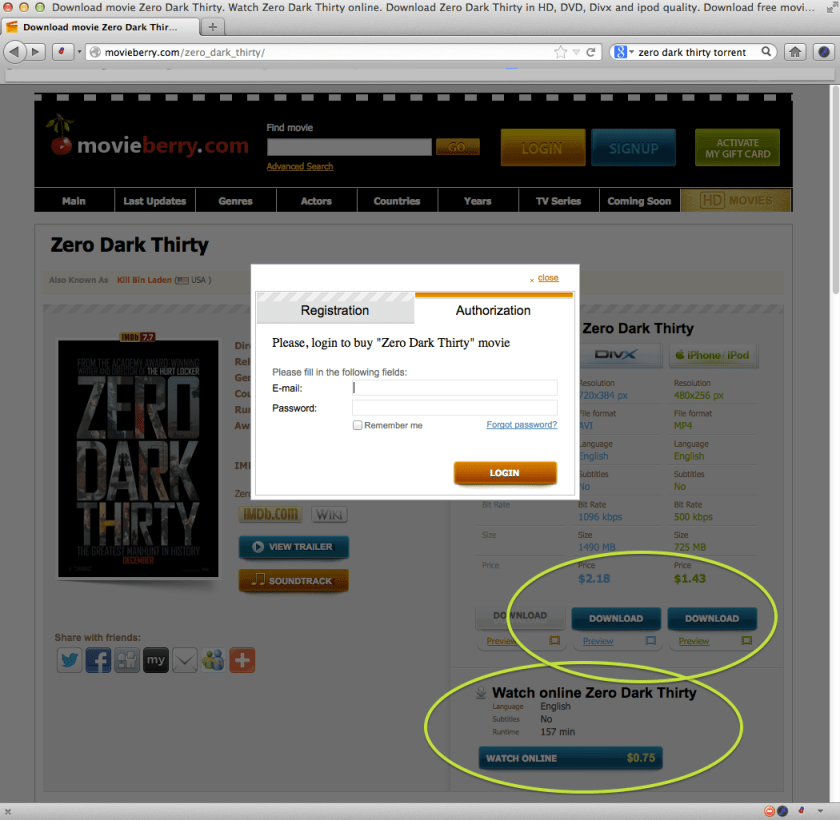
Many piracy apologists and proponents are quick to suggest (incorrectly) that not every illegal download represent a lost sale, but we disagree and here’s why. Looking at the links below you can quickly see that the piracy sites are monetizing the access and availability of the illegal downloads with advertising. Additionally some sites even charge greatly discounted transactional fees via dubious payment processors.
Simply put, piracy is about infringement as a business model. Every illegal download generates revenue for the pirate sites and ad tech companies, none of which is “shared” with the creators.
The BitTorrent Billboard advertising campaign story has taken an interesting turn spawning a satirical response spoof banner ad campaign appearing on sites such as Grooveshark, Mashable, MediaFire and Rollingstone.com. The banner ads read “All your content are belong to us” and “Instead of paying artists, we spent money on banners.”
Clicking on the faux ad banners lands on the site RightTheMusic.Org that presents internet piracy fun facts such as “Worldwide, 432.0m unique internet users explicitly sought infringing content during January 2013” and provides an additional click through the source of the quote.
We can’t help but notice that when an artist publicly criticizes Spotify there are three bloggers that seem to quickly post rebuttals as if they are members of a synchronized swimming-er blogging team. To paraphrase Spin Magazine on these guys: “#TeamSpotify.”
Meanwhile Jay Frank calls David Byrne “bad at Math.” Now while Jay is always careful to be right, if you look at the big picture it turns out he’s arguing over things like whether it takes 150 million Spotify spins or 75 million Spotify spins a year to reach minimum wage (and is that federal or state minimum wage, and which state Jay? ) . Does that really matter? Byrne’s points still stand. Either way it’s a fuckload and it’s not sustainable. Yes Jay, technically you’re right but It’s like a Larry David episode. You’re making my brain hurt and I AM A MATHEMATICIAN.
But here’s the real problem with these guys: I can’t take them seriously.
And it’s not because I don’t like what they write. It’s because there are just three of them.
If 6 is the number of The Beast. 3 is the number of the comedian.
“Dave Allen, Bob Lefsetz, and Daniel Ek walk into a bar”
If you want to be seen as a powerful, elite or even sinister force three is not a good number. Think about it. “Three Stooges”, “Three Blind Mice”, “The Three Amigos”, “The Jonas Brothers” etc etc.
Four is much better. Four is a masculine world-changing number.
“The Fab Four” “The Fantastic Four” and of course “The Four Horsemen of the Apocalypse.”
These guys will not be taken seriously until they add another horseman.
The pro-spotify-anti-artist-blogging business is no different from the boy band business. You need some variety among your bloggers for broadest appeal. And the more bloggers the better. They should really take a cue from some of the great boy bands of the past. As Bob Lefsetz might say “Work hard, be excellent, and add another member” “The Four Horsemen of the Spotocalypse” is so much more serious sounding.
And they are almost there. They’ve got three great ingredients already!
Book authors are now learning what it’s been like to be a musician for the past decade.
Pirating digital content is illegal. Full stop.
Yet people continually steal eBooks and movies and television shows and treat it like it’s no big deal. There’s a couple of reasons it happens: Torrenting is easy and the chance of getting caught is low. And saving money is fun, especially when the economy isn’t at its strongest. But the biggest reason was summed up perfectly by Devin Faraci of Badass Digest (who tweeted the following while I was writing this, and I couldn’t possibly say it better myself):
In our culture today people think they deserve their entertainment, not that it’s a perk.
An eBook is a luxury, not a right. If you can’t afford it, too bad, but that’s life.
Still, people excuse the practice of pirating with a plethora of ridiculous reasons that don’t hold up to scrutiny. I have yet to hear a single legitimate argument in favor of it. Here’s the ones I’ve heard so far–and why they’re complete nonsense:
Some great work has been done this year by Jonathan Taplin and the USC Annenberg Innovation Lab in studying the relationship between online ad networks and media piracy for profit.
Large Pirate sites distribute illegal content and continue to steal trademarked, copyrighted content and siphon millions of dollars away from the creative community, making it much harder for artists to make a living. We do not believe that government regulation alone is the answer to the Piracy problem, but rather that the self-regulation of major sectors like the online advertising industry could make it harder for the “Kim Dotcom’s” of the world to unfairly exploit artists.
We’ve reported before on BitTorrent’s claim that they are “not designed for piracy” despite multiple studies and research finding over 99% infringing content being distributed using it.
The latest comes to us from AdLand.tv who are offering commentary on BitTorrent’s recent move into outdoor advertising that first appeared in Gizmodo.
“Torrenting” is kind of a dirty word. It makes you think piracy, doesn’t it? Well it shouldn’t. Torrenting isn’t illegal. It’s not even morally ambiguous. It’s just a way to send data, and it’s awesome.
Yes. That’s right. Keep telling yourself that. Guns don’t kill people. People do. It’s not the syringe, it’s the heroin. It’s not the file sharing platform enabling copyright infringement; its the millions of users using the site to infringe.
Baa, baa, baa, Sheeple.
As usual the folks at AdLand have a wonderful way of exploring the ad campaign by BitTorrent.
“The internet should be regulated people-powered.”
What other industry do you know that has near zero regulation except Big Tech? We have Alcohol, Tobacco and Firearms (ATF) the Environmental Protection Agency, the Food And Drug Administration, and the Occupational Safety and Health Administration (OSHA) to name a few of the regulators. Big Tech doesn’t even police itself because if it did, it would be losing money by the truck load. This isn’t even up for debate.
People-powered, my ass. In the immortal words of our dear president, we didn’t build that. Someone else did. They built the internet, the websites, the software. The search engines. The email programs. Just as someone else created the content you’re helping yourself to for free. Don’t fall for this “people-powered” bullshit at all. The artists and musicians (you know– the people) do not make money off torrent sites from the ‘exposure.’ This has been reported on ad nauseam. The only people who have the power are the Big Tech companies getting rich off of content they don’t own.



 The Trichordist
You must be logged in to post a comment.